Dodo Roadshow: Tullie House

Red Kite

To mark our selection as a Finalist in the Art Fund Prize for Museum of the Year 2015 we’re embarking on a unique and ambitious tour of the country – the Dodo Roadshow.

Beginning at Land’s End on 8 June and concluding in John O’Groats one week later, the famous Oxford Dodo will visit more than 20 museums and galleries along the way. At each stop the Dodo will ‘interview’ one of the venue’s star objects.

Tullie House: Portinscale Red Kite
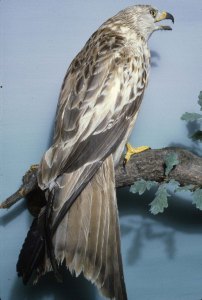
Red Kite Portinscale 1840So, tell me about yourself – who are you and where do you come from?
I’m the Portinscale Red Kite and I’m Cumbrian, born and bred. I live in Tullie House Museum and Art Gallery in Carlisle.

What is it that makes you so special?
I was one of the very last native red kites in Cumbria. We suffered intense persecution from humans in the 1800s and were driven to extinction in the county and then England. I am the oldest mounted bird specimen in the Museum here in Carlisle.

Who looks after you in this place?
I’m looked after by the Curator of Natural Sciences. Information about me and other biological specimens, as well as other historical and modern records of Cumbrian wildlife, are looked after by the Cumbria Biodiversity Data Centre. This is the Local Environmental Records Centre for Cumbria, which is based here at the museum and managed by Teresa Frost.

Do you remember life before the museum?
I can remember in the late 1800s the Rev. H. A. Macpherson visiting me whilst researching his book, A Vertebrate Fauna of Lakeland. He wrote “Mr. Sawyer of Threlkeld showed me a fine kite, which he bought for £2 at a sale. This bird had been shot by John Pearson at Portinscale near Keswick, in 1840, and is perhaps the last of the indigenous race of Kites that inhabited the Lake District from prehistoric times.” I can’t remember exactly when I moved to the Museum, but Macpherson campaigned for natural history to be a part of the then new Carlisle Museum and encouraged people to give their collections here.

What does the future hold for you?
I’ll be kept safely here in the Museum and be a reminder of how persecution can drive birds of prey to local extinction; sadly something which is not completely in the past. But the future for Red Kites in Cumbria is looking much brighter these days. Thanks to historic records like mine showing where Kites used to live, 90 birds were released in the Lake District between 2010 and 2012 as part of a nationwide reintroduction programme. Last summer we had wonderful news – 3 chicks hatched from a nest in Grizedale. This was the first confirmed breeding of Red Kites in Cumbria for around 200 years.

Stickers small - Dodo Roadshow_crop

Dodo Roadshow: Yorkshire Sculpture Park

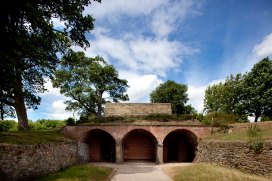
James Turrell, Deer Shelter Skyspace, 2006. An Art Fund Commission. Courtesy the artist. Photo Jonty Wilde To mark our selection as a Finalist in the Art Fund Prize for Museum of the Year 2015 we’re embarking on a unique and ambitious tour of the country – the Dodo Roadshow.

Beginning at Land’s End on 8 June and concluding in John O’Groats one week later, the famous Oxford Dodo will visit more than 20 museums and galleries along the way. At each stop the Dodo will ‘interview’ one of the venue’s star objects.

Yorkshire Sculpture Park: Skyspace

So, tell me about yourself – who are you and where do you come from?

I am the Deer Shelter Skyspace in the grounds of Yorkshire Sculpture Park. I was created by American artist James Turrell within the 18th century Grade II listed building, the Deer Shelter, in 2006. I am a large chamber within the existing Deer Shelter structure with an aperture in my roof open to the elements. This opening creates a frame for the sky to be viewed through. Loving the Yorkshire landscape, the artist first proposed this idea in 1993 but it was only following a commission by the Art Fund that I was made possible.

What is it that makes you so special?

Created specifically for Yorkshire Sculpture Park, I do not alter the landscape but I create a tranquil environment for visitors to contemplate and enjoy the changing light of the Yorkshire sky. Turrell is known for manipulating light and is interested in how viewers perceive the light in different ways. Here, light is used as a medium for bringing the sky closer to viewers and to fill the space around them. The quality of light and feeling within me change with the seasons and weather so every visit can be a different experience.

Who looks after you in this place?

The Curatorial team, front of house staff and a team of Sculpture Technicians take care of me. I am pretty low maintenance but sometimes a little help is needed as I am always open to the elements.

Do you remember life before the museum?

For me, there was no life before YSP. James Turrell has created other skyspaces across the world, each one unique and specific to their location. I was designed and made just the way I am and permanent here at YSP.

What does the future hold for you?

I will continue to be a place for contemplation in the changing landscape here and I hope visitors will continue to enjoy stopping by Skyspace.

Stickers small - Dodo Roadshow_crop

Dodo Roadshow: Derby Museum and Art Gallery


To mark our selection as a Finalist in the Art Fund Prize for Museum of the Year 2015 we’re embarking on a unique and ambitious tour of the country – the Dodo Roadshow.

Beginning at Land’s End on 8 June and concluding in John O’Groats one week later, the famous Oxford Dodo will visit more than 20 museums and galleries along the way. At each stop the Dodo will ‘interview’ one of the venue’s star objects.

Derby Museum: ‘The Alchymist’

So, tell me about yourself – who are you and where do you come from?
I’m Joseph Wright of Derby’s famous painting of an ‘Alchymist’. I have a very long title “The Alchymist, in Search of the Philosopher’s Stone, Discovers Phosphorus, and prays for the successful Conclusion of his operation, as was the custom of the Ancient Chymical Astrologers” that very few people can remember. Painted in 1771, I came to the Derby Art Gallery after they launched a public campaign to buy me in 1883 and the people of Derby raised the money for me to take pride of place in the gallery where I still live.

What is it that makes you so special?
Paintings that show alchemists in a good light are rare – many pictures of alchemists poked fun, but Wright’s is more respectful. I show that sometimes it is possible to discover something by accident. As I search for the magic ingredient to turn base metal into gold I find phosphorus. Only the most forward thinking and controversial philosophers believed it was possible to discover things by accident when I was painted.

Who looks after you in this place?
My guardian is the Senior Curator of Art, Lucy Bamford. She makes sure that I am cared for and studied so that I am better understood in the future.

Do you remember life before the museum?
I was painted in 1771 but no one bought me. Joseph Wright took me to Italy to try to sell me there but I was still in his studio when he added to me in 1795 and remained there until he died. I was never really loved until I came here.

What does the future hold for you?
I have never been so happy as in 2011, when Derby Museums included me as part of the collection that Arts Council England recognised as being of national importance. Since then the collection has been redisplayed and Joseph Wright’s drawings like the sketch of me are available in a study room. I’m now planning to be part of a big touring exhibition with lots of other paintings by Wright and will hopefully travel all the way to America in a few years time.

Stickers small - Dodo Roadshow_crop

Dodo Roadshow: Plymouth City Museum

Lead image

To mark our selection as a Finalist in the Art Fund Prize for Museum of the Year 2015 we’re embarking on a unique and ambitious tour of the country – the Dodo Roadshow.

Beginning at Land’s End on 8 June and concluding in John O’Groats one week later, the famous Oxford Dodo will visit more than 20 museums and galleries along the way. At each stop the Dodo will ‘interview’ one of the venue’s star objects.

Plymouth was a special treat; the Museum is currently closed so the Dodo got to explore behind the scenes.

Plymouth City Museum and Art Gallery: Tub Gurnard

OLYMPUS DIGITAL CAMERASo, tell me about yourself – who are you and where do you come from?
I am a fish. Marine biologists call me Trigla lucerna. But that is a bit of a tongue twister, so you can call me a Tub Gurnard. Marine biologists give me that name so they know what they are looking at when they read about me in books and articles around the world. I was caught in a mackerel fishing net near Plymouth in October 1902 so I’m a pretty old fish – 113 years old in fact! I am a deformed fish, but I have lived a good life. For over 100 years I have been informing researchers about my distribution, as well as the rich ecosystem my species live in.

What is it that makes you so special?
My species can be found in a few spots along the south west and south east coasts of England, along with some spots around Wales and north eastern Scotland. What makes me special is that I am an example of what makes Plymouth the city it is today. Plymouth lies by the sea. This sea has helped to shape Plymouth. The city has a rich maritime history which includes famous characters like Drake and the Spanish Armada. It also has a large Dockyard and Naval Base and occupied a strategic position during World War II. This heritage and more is reflected in the rich collections at the City Museum and Art Gallery and the Plymouth and West Devon Record Office.

Who looks after you in this place?
At the minute I am in a store room with my other pickled friends. The Curator of Natural History, Jan Freedman, looks after me here. He is pretty good. He makes sure we are well taken care of, that we don’t get too warm and have enough fluids. He takes me out to teach University students about marine zoology who gaze through my curved jar and always seem excited to see me. In fact I get out quite a lot, to events in the museum and beyond. I like the reaction people have when they see us and the smiles it brings. I am in good, passionate, hands.

Do you remember life before the museum?
I arrived at the Museum and Art Gallery in 2000, as a donation along with 3,500 other creatures in jars. Before that I lived with the collections at the Marine Biological Association of the United Kingdom. I was swimming, like you do, and then used for scientific research. It felt good to be part of science: to help people understand marine ecosystems and the impact of humans on it.

What does the future hold for you?
There are exciting times ahead. We should be ‘online’ in a few years. Photos of me will be available for you to see no matter where you are in the world! The internet is an amazing place with so much potential. It was the stuff of sci-fi novels when I was growing up.

One of the most exciting things in the coming years is the History Centre project. Plymouth City Museum and Art Gallery, the Plymouth and West Devon Records Office, the South West Film and Television Archive and the South West Image Bank are working together (and with other partners such as Plymouth University), to create a brand new extension to the existing museum to house all our nationally and internationally important collections. Who knows, perhaps my 4000 or so friends and I will be sat comfortably on a glass shelf in a glass store room in the new building. It would be nice to watch you watching me every day.

Stickers small - Dodo Roadshow_crop

Ready for the road

IMG_4934

Tomorrow is the official launch of the Dodo Roadshow. Our 8 day adventure from Land’s End to John O’Groats kicks off at the southern tip of the country, before zooming on to 4 other museums during the day. It’s certainly a busy one to get us going!

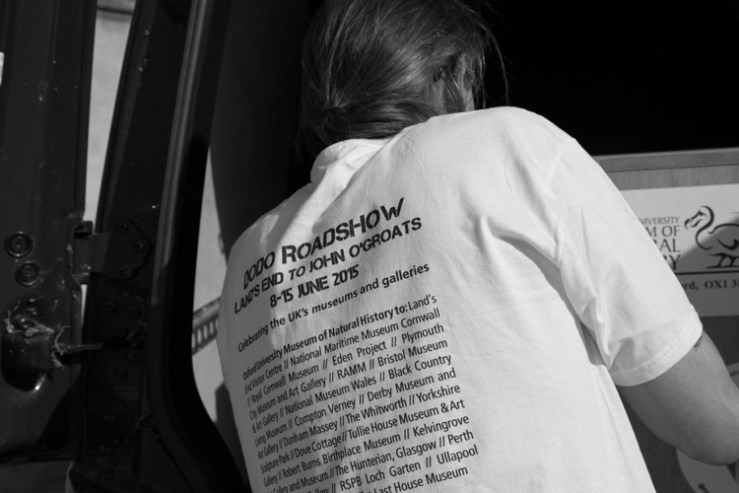
The ambitious itinerary on the back of Darren's t shirt
The ambitious itinerary on the back of Darren’s t shirt

IMG_4936

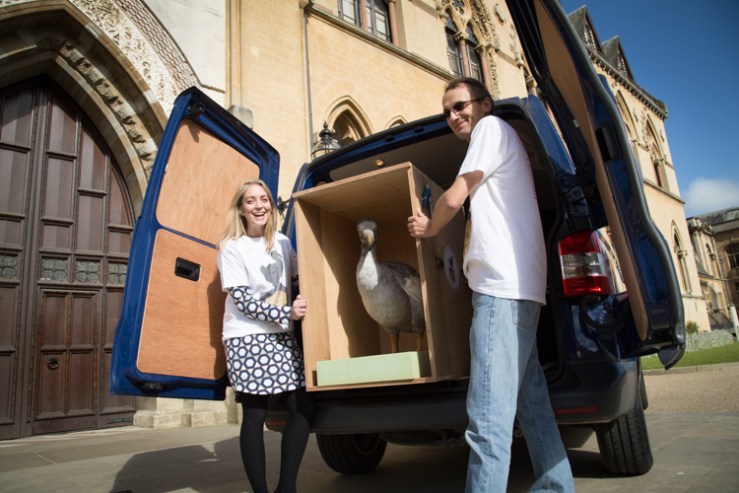
Ellie Smith and Darren Mann, part of the first leg team have packed up the Museum van with the essentials. They’ll be joined by Julia Parker and will head down to Cornwall today. Next stop Land’s End!

Ellie and Darren lift the Dodo into the van

Rachel Parle, Interpretation and Education Officer

It’s the Dodo Roadshow!

Stickers small - Dodo Roadshow_crop

We are definitely more than just a Dodo, but sometimes we do like to celebrate our famous specimen. This month we’ll be doing that in two exciting ways: putting the real Dodo remains on display, and taking Dodo bits and pieces on an epic tour – the Dodo Roadshow.

The Oxford Dodo display in the centre court of the Museum tells the story of the famous specimen that’s been under the care of Oxford University since the 17th century. But it doesn’t contain the real head and foot remains of the original animal: this uniquely precious specimen has to be kept behind the scenes, so it’s rare to get even a glimpse… until now!

On show until 19 July, you have a one-off opportunity to see the real deal on display in the climate-controlled Presenting case near the Welcome Desk. You can find out more about the display on the Museum website too.

Gently placing the Oxford Dodo into the Presenting case

As you’ll probably know by now, we’ve been shortlisted for the Art Fund Prize Museum of the Year 2015. To mark this, we’re embarking on a unique and ambitious tour of the country. Beginning at Land’s End on 8 June, the Dodo Roadshow will travel the full length of Britain in the colourful Museum van. Staff will journey all the way to John O’Groats in just one week, visiting over 20 museums and galleries along the way.

Oh, and we’ll be taking a Dodo with us too. While the original head is on display in the Museum, we’ll get the striking Dodo model out on the road, and we’ll also take along real Dodo foot and limb bones, from the same original animal as the head. These will be used as part of a ‘show and tell’ with visitors at each stop.

The Dodo model (right) which will be joining us for the adventure

But it’s not just about the Dodo. In a bid to celebrate the rich diversity of museum collections in the UK, the Dodo will meet with star objects from every museum and gallery on the tour too. And in a small expression of cultural heritage exchange, the Dodo will ‘interview’ these star objects for a series of Q&A articles, which you’ll be able to read about right here on the blog.

We wanted to do something special to celebrate our nomination for the Art Fund Prize for Museum of the Year 2015. Getting out on the road to visit museums and galleries far and wide seemed like a great way to talk about the huge breadth of collections that we have in the UK, both in natural history and well beyond.

The Dodo Roadshow is a chance for some people to meet the iconic Oxford Dodo, and for the Dodo – and us – to meet equally important objects in other museum collections.

– Professor Paul Smith, Museum director

Here’s the full breakdown of where we’re going:

Monday 8 JuneLAND’S END Visitor Centre; National Maritime Museum Cornwall; Royal Cornwall Museum; Eden Project; Plymouth City Museum and Art Gallery
Tuesday 9 JuneRAMM; Bristol Museum and Art Gallery
Wednesday 10 JuneNational Museum Wales; Black Country Living Museum; Compton Verney
Thursday 11 JuneDerby Museum and Art Gallery
Friday 12 JuneYorkshire Sculpture Park; The WhitworthDove Cottage
Saturday 13 JuneTullie House Museum & Art Gallery; Robert Burns Birthplace Museum; Kelvingrove Art Gallery and Museum
Sunday 14 JuneThe Hunterian, Glasgow; Perth Museum & Art Gallery; RSPB Loch Garten
Monday 15 JuneUllapool Museum & Visitor Centre; Information Centre, JOHN O’GROATS

Look out for travel snaps, postcards and drawings from the Dodo here on the blog and @morethanadodo on Twitter – #dodoroadshow.

Right, I’m off to pack – squawk!

Spot the staff wearing these t shirts out on the road

Rachel Parle, Interpretation and Education Officer