Poo, pooters and pitfall traps

018

On a sunny Wednesday morning, the entomologists in the Life Collections and the Museum Director, Professor Paul Smith, left the safety of the Museum and headed out into the great outdoors. The aim of the day was to study the huge variety of insect life that’s found in the area, and to do a bit of team bonding along the way.

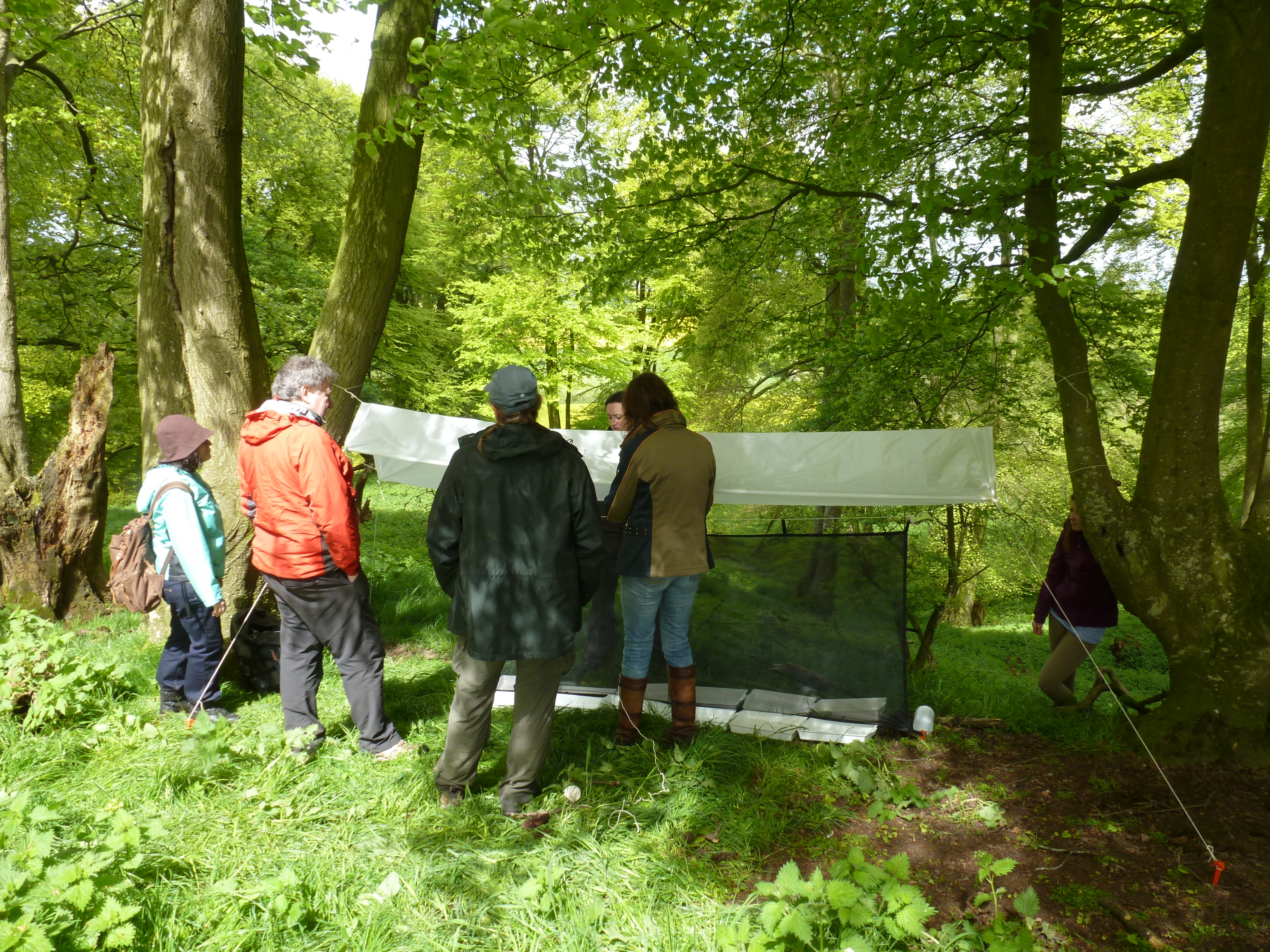
Zoë and Darren putting up a malaise trap

This new territory was a beautiful farm in Ashbury, in the Vale of the White Horse, which belongs to our friend and fellow insect lover, Sally-Ann Spence. If you’ve ever taken part in live bug handling at the Museum, you may know Sally-Ann as the energetic face behind Minibeast Mayhem.

Molly and I were very proud of our attempt at a baited pitfall trap

The day had been carefully planned out and consisted of putting up insect traps in the morning, leaving the afternoon free to play… in poo!

Head of Life Darren Mann taught us all how to put up a flight interception trap (FIT), a malaise trap and a dung-baited pitfall trap. Darren beautifully summed-up the purpose of the different traps, “The first two catch insects that are flying, and the dung trap catches ones that are attracted to poo.” We used sheep poo, in case you were wondering.

After washing our hands and enjoying a lovely lunch, it was time to head back out to a different part of the farm. More poo was involved. We spent a reasonable amount of time (way too long for some of you) playing in horse and cow poo looking for dung beetles – Darren’s favourites.

Clipboard, pooter and a cow pat!
Clipboard, pooter and a cow pat

Then came a short but heavy downpour of rain, followed by a chance to beat trees to coax out more insects, use pooters and swish nets around in a fancy manner. Darren talked us all through it, but essentially it was a ‘hit and hope’ method that resulted in plenty of us getting stung by nettles – all part of the great outdoors experience.

Pooters, in case you are wondering, are a vital piece of kit used to suck insects into a tube (pictured above on the clipboard) via plastic tubing – don’t worry there’s no chance of sucking one up by mistake as a little snack!

Having a good look at the goodies we found in the pond

Once everyone had collected their insects, we headed back to the farm house to have a go at pond dipping, where we saw tadpoles, dragonfly larvae and water bugs. Sally-Ann had prepared a delicious supper and we all went home happy and full.

Amo Spooner and Molly Carter, Life Collections
Havoc in the hive

IMG_3657

One of the most popular spots in the Museum is the live beehive tucked away upstairs. Even when the Museum seems quiet, you’ll find plenty of visitors huddled around the glass, watching the honey bees coming, going, dancing and buzzing. But if you head up to the hive today, you will notice that there’s a lot less buzzing than usual… some of the bees have abandoned us!

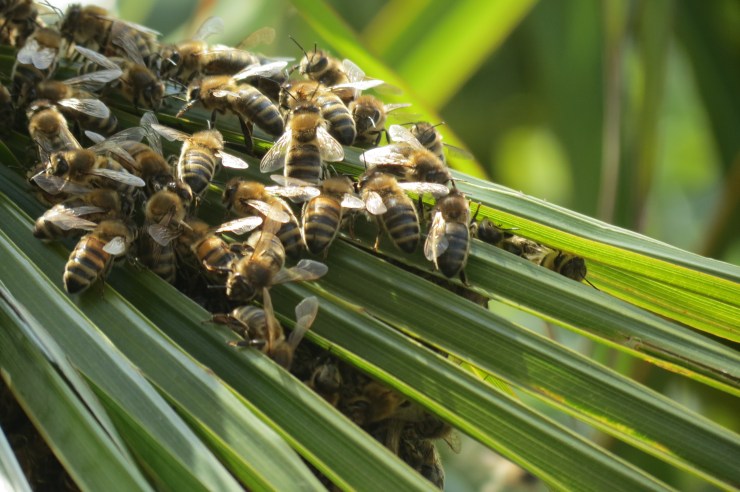
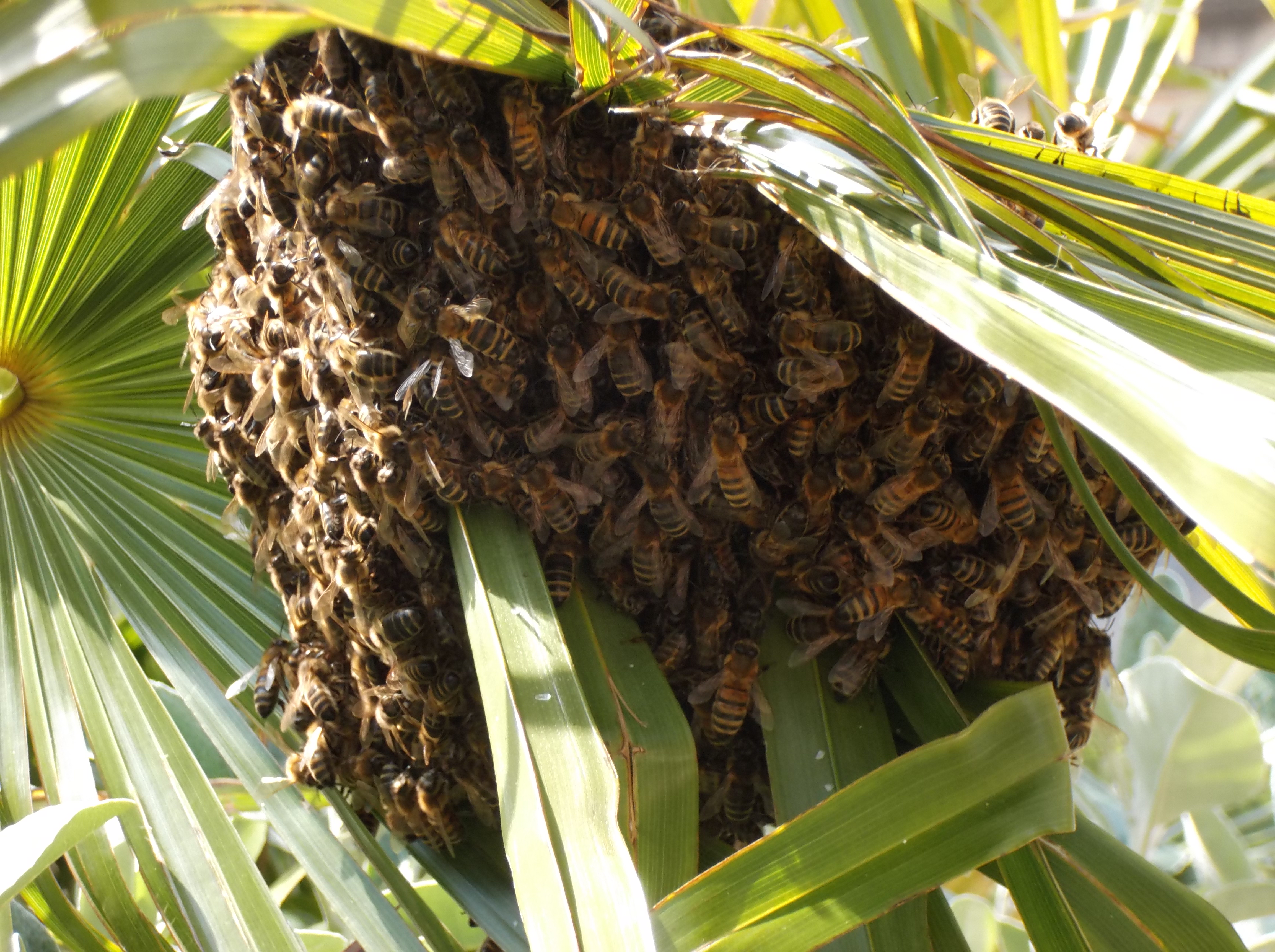
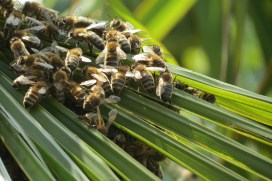
The swarm of bees gathered on a palm leaf

Last week I was sitting at my desk in the education office when Zoë Simmons from our Life Collections popped her head round the door and calmly announced, “The bees are swarming”. I must admit that I had a brief vision of angry bees chasing visitors through the Museum, or swirling cartoon-like across the lawn! But the swarm was actually a large throbbing bundle of fairly calm honey bees clustered on one of the plants outside. But why did hundreds of bees suddenly decide to leave their cosy hive and break out into the unknown?

Zoë, who’s been involved in caring for the beehive for several years explains what happened:

After a difficult beginning to the year, the observation beehive was left without a queen bee in residence. This may sound disastrous, but bees are both resourceful and well organised, and the worker bees left in the hive immediately started to feed up a number of the youngest larvae on royal jelly, to create themselves a new queen. There are three large queen cells to be spotted in the hive at the moment and we believe that one of the young queens must have emerged on the morning of the swarm. The first thing she would have done is assess the hive; it appears that it wasn’t to her majesty’s liking, as the next thing she then did was leave, taking about half of the workers bees (mostly the older ones) with her.

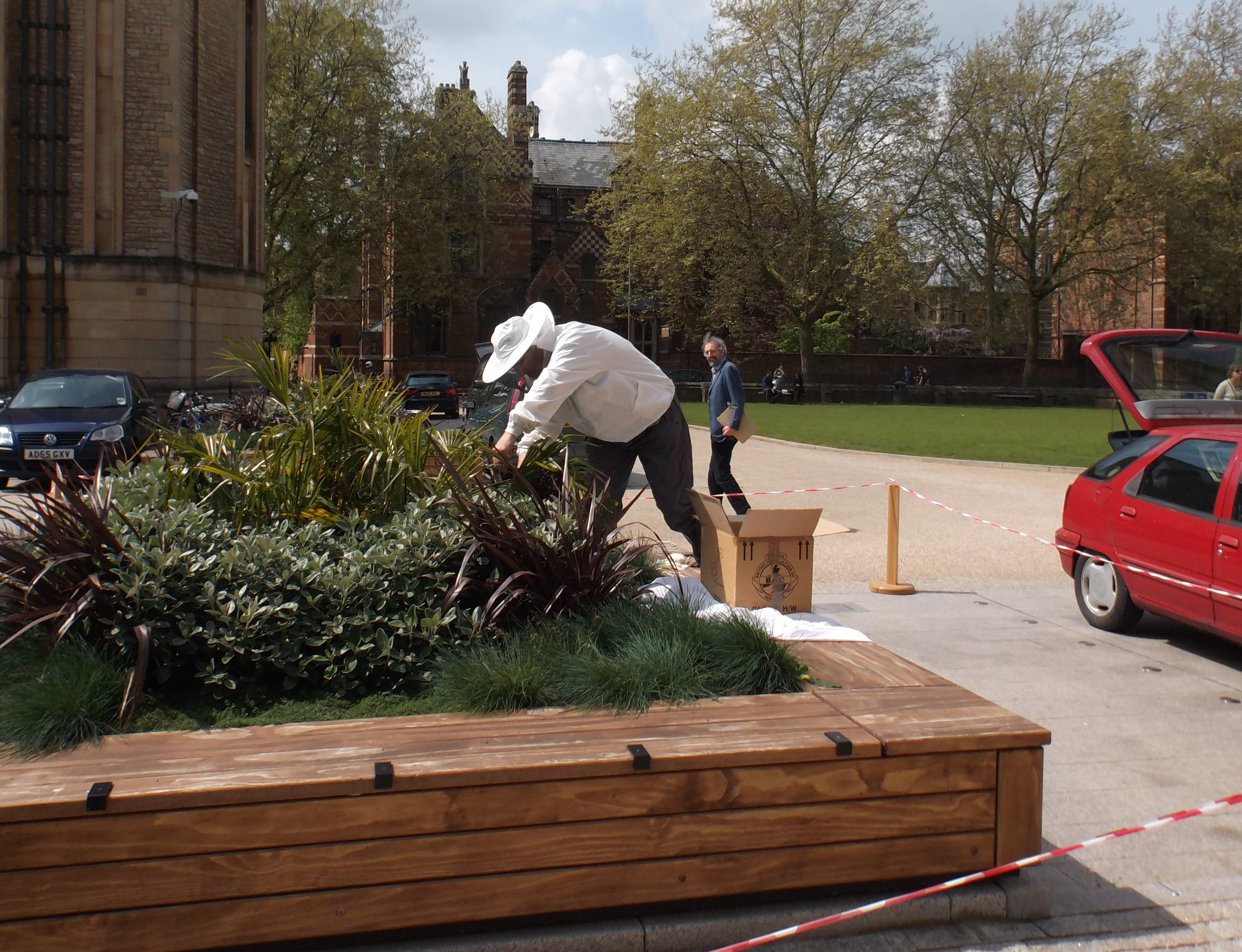
The bee-keeper gathering up the swarm

The area around the swarm was fenced off, but it attracted a lot of attention as people passed by on their way in and out of the Museum. Zoë Simmons and the Life collections team decided the swarm needed a new home:

Staff at the Museum were able to get in touch with a local bee-keeper, who rushed to the Museum to collect the swarm up. The bees have now been gathered up and taken to live in a custom built hive somewhere on the edge of Port Meadow, where we hope that they will thrive and bee happy.

Rachel Parle, Interpretation and Education Officer

Get on your soapbox


Mary Kingsley (l) and Mary Anning (r) prepare for their appearance in Soapbox City
Mary Kingsley and Mary Anning prepare for their appearance in Soapbox City

As April draws to a close, Oxford prepares for the traditional May Morning celebrations. Alongside the choir singing on Magdalen Tower, the reckless students leaping from the bridge and morris dancing in the medieval streets, you will find staff from Oxford University Museums joining in with the revelries.

An early-morning dung beetle will be taking to the soapbox

The Museums have taken charge of a one hour slot, from 8-9am, with staff from the Museum of the History of Science, Pitt Rivers Museum and, of course, the Museum of Natural History taking to the stage during the hour. If you’re willing to get up bright and early, you’ll be able to see a giant dung beetle arguing the value of his species, a T rex in a rap battle with a dodo, and two dignified ladies visiting from the past to remind everyone just how significant they really were.

Ellena Smith, ASPIRE Assistant across the Museums, is co-ordinating the Museums’ slot. She says;

Soapbox City is a fantastic opportunity to share knowledge and insight from Oxford University Museum staff in a fun and exciting way, and a great chance for the Oxford University Museums to reach out to a new audience.

Here’s the full timetable for the Museums’ shift:

08:00 Shooting Holes in Pitt Rivers Myths, Helen Adams (Pitt Rivers Museum)

08:05 Music in the Museum, Kelly Smith (HLF Trainee)

08:10 Conservation Station, Bethany Palumbo (Museum of Natural History)

08:15 Cockroaches: Pets or Pests, Darren Mann (Museum of Natural History)

08:20 Why the World needs Dung Beetles, Chris Jarvis (Museum of Natural History)

08:25 Natural History Stand-up, David Legg (Museum of Natural History)

08:30 T rex Vs the Dodo Rap Battle, Steven Williams (Museum of Natural History)

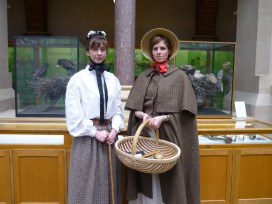
08:35 A Tale of Two Marys, Caroline Cheeseman and Rachel Parle (Museum of Natural History and Joint Museums Volunteer Service)

08:40 Why older people are radical, Helen Fountain (Museum of Oxford)

08:45 Geek is Good, Scott Billings (Museum of the History of Science)

08:50 When History Goes Wrong, Stephen Johnston (Museum of the History of Science)

08:55 You think you are smart?! Silke Ackermann (Museum of the History of Science)

If you’re up early for the festivities (or still awake from the night before!), do join us on Broad Street for a little May Morning museum madness.

Rachel Parle, Interpretation and Education Officer


Lego dodo

DSC_0217

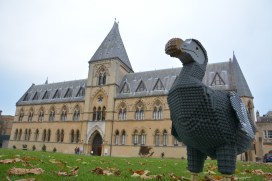
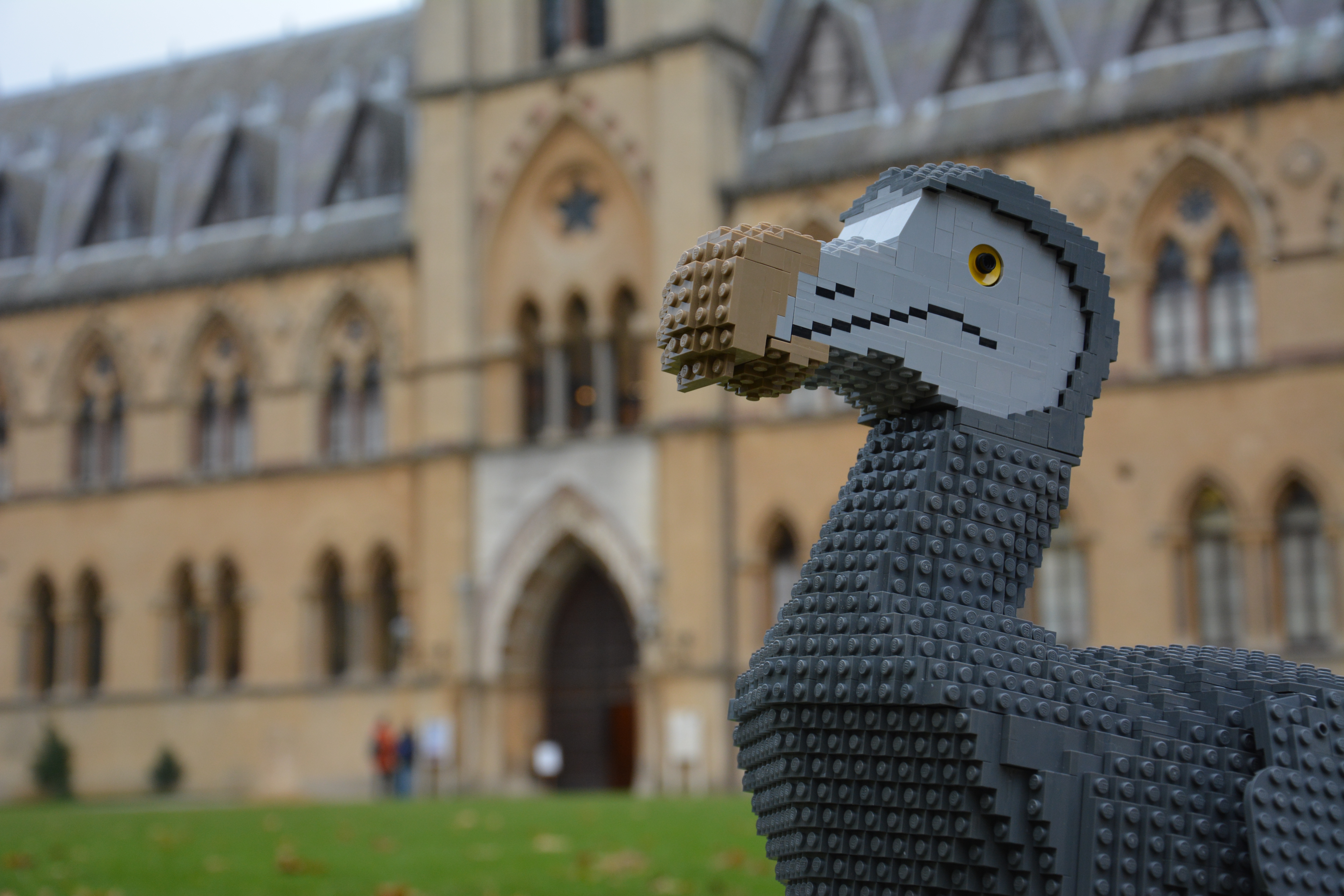
Back in late 2013, I was outside the Museum when I spotted this fantastic Lego dodo standing proudly on the lawn. After speaking to his keepers, I discovered that he was to become part of an exhibition at Milestones Museum in Basingstoke, and this was his publicity shoot. It’s fitting that the Lego dodo came to visit the home of the famous Oxford Dodo; we have the most complete remains of a single dodo anywhere in the world!

The Lost World Zoo dodo on the Museum lawn

Milestones is a living history museum, which is part of the Hampshire Museums service, and has fascinating Victorian streets you can wander and an Edwardian pub you can relax in. The latest addition to the Museum is Lost World Zoo, an exhibition of lifesize Lego models of extinct creatures. You can see giant dragonflies, come face to face with a woolly mammoth and even meet a whole flock of our favourite birds… dodos!

The dodo visits famous Oxford landmarks

They’re also running a variety of exciting family activities, including Lego figurine making. But if you can’t make it to one of those sessions, you could use this great short video to make your own mini dodo.

This weekend is your last chance to walk among these Lego creatures, as the exhibition closes on Sunday 27th April. So get down to Milestones before the dodos disappear again!

Rachel Parle, Interpretation and Education Officer

A fly-ing visit

FliesThe Museum lawn has been buzzing for the last few days. Mostly it’s families enjoying a picnic in the warm sunshine before coming into the Museum for our Easter holiday activities, but there have also been a few insects adding to the hum. Darren Mann, Head of Life Collections explains;

In autumn and spring you may notice large swarms of flies on walls, fenceposts and especially on cars. Most often these aggregations are of the autumn house fly (Musca autumnalis), a beautiful fly which sadly can also be a pest.

The fly occurs across the temperate latitudes of Europe, northern Africa, and central Asia, but was introduced to North America perhaps through military transport or domestic commerce, in the 1940s.

Musca autumnalis
Musca autumnalis


Although Darren says they are one of his favourite flies, he does admit that the autumn house fly has some rather unappealing habits;

They overwinter as unmated adults and emerge in spring, often clustering in large swarms to sun themselves. The breeding seasons begins in spring and after mating females disperse into the surrounding environment to find suitable dung in which to lay their eggs. The yellow maggots (larvae) live exclusively in the dung of cattle, and help the process of nutrient recycling.

Unlike many flies, there is strong sexual dimorphism; the males are marked with orange on their abdomen, while the females tend to be all grey.

Musca autumnalis gather in the sunshine on a Museum sign
The flies enjoying a sun-baked Museum sign

While you’re soaking up the warmth and feeling energised for the summer ahead, remember that these little flies will be doing the same!

Rachel Parle, Interpretation and Education Officer

A Sad Tail

IMG_5790crop

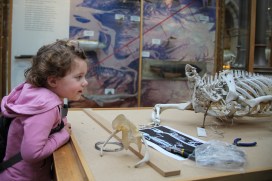
Last week we celebrated the return of our beloved Nile crocodile skeleton. It’s been out on loan to the Oxford University Zoology Department during our closure year, but is now back in position in the Museum gallery for all to see.

Nicola working on the crocodile
Nicola working on the crocodile in the Museum

To mark the occasion, the conservation team decided to give the crocodile some much needed care. Originally this piece was displayed on carpet tiles, which can be potentially harmful to the specimen as they deteriorate… as well as looking pretty ugly! My first step was to remove these from the base of the specimen. I was then able to assess the skeleton for priority areas.

The crocodile's foot showing signs of damage from corroded wire
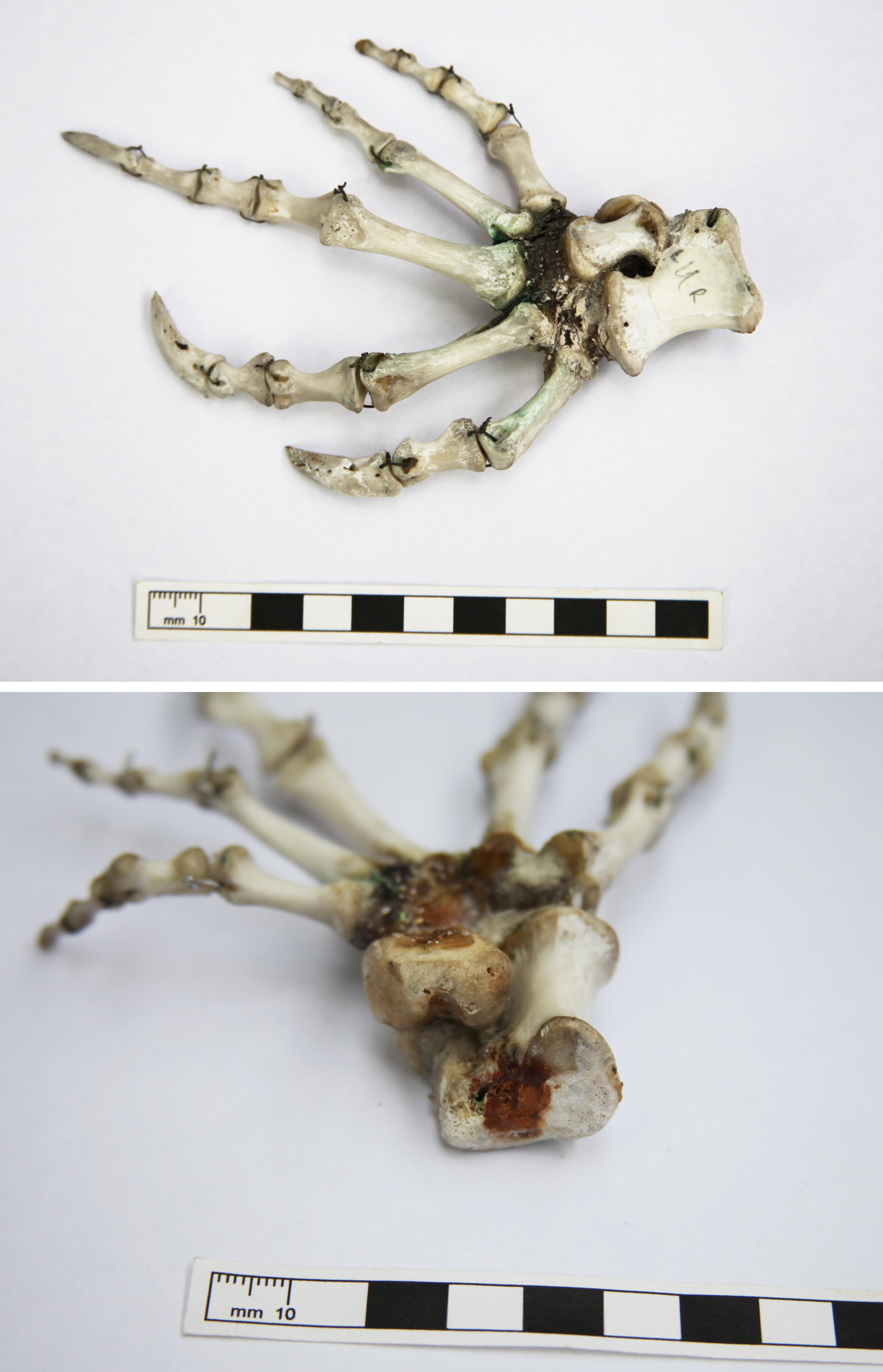
The crocodile’s foot showing signs of damage from corroded wire

Originally the specimen was articulated (held together) using a combination of iron and copper wire. This skeleton is over 150 years old and, during its time on display, these wires have corroded and stained the bone; this was particularly prominent in areas of existing cartilage, such as around its ribs. So I removed the old wire and replaced it with stainless steel, which has a longer life span.

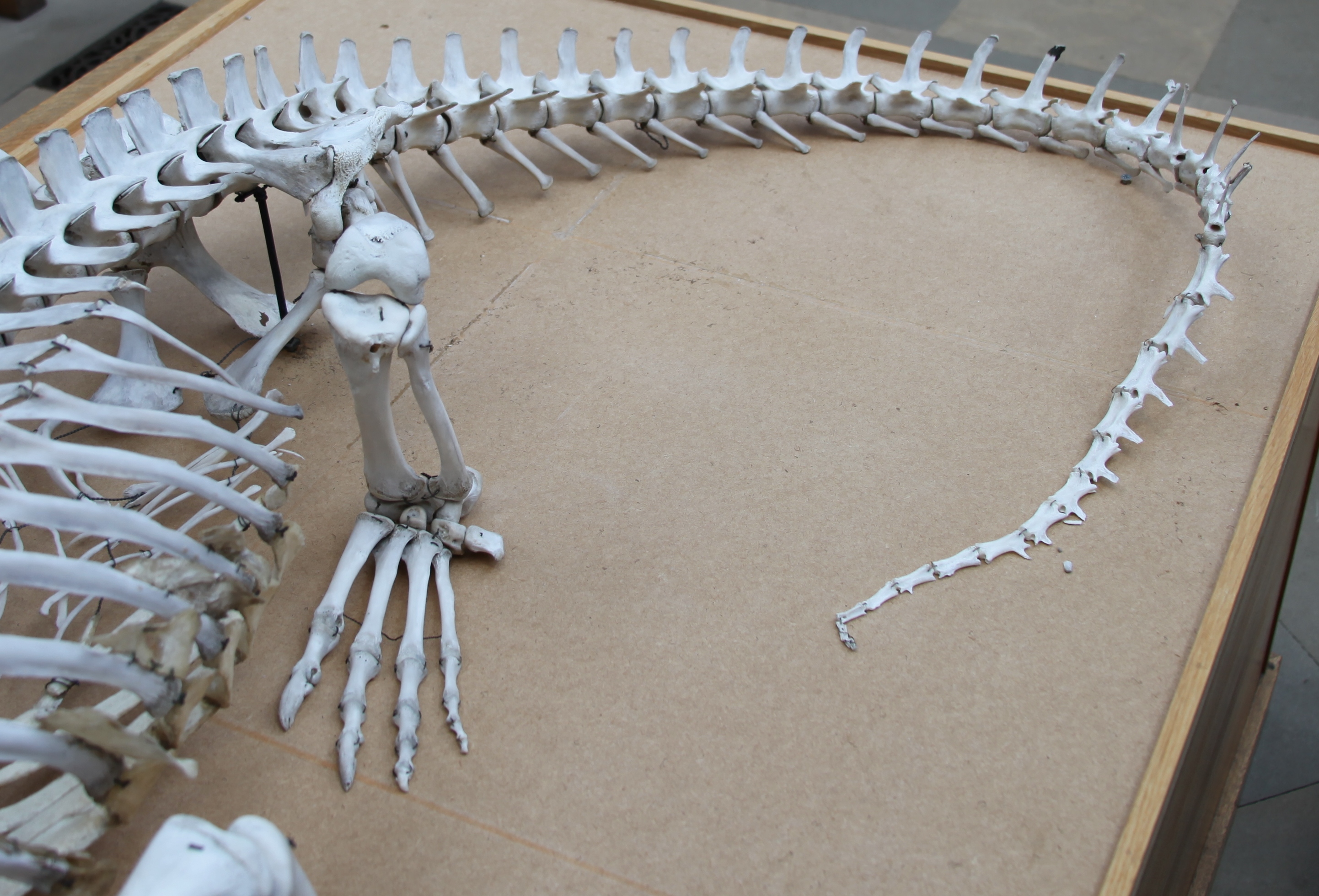
The existing articulation had also failed in some areas; this was most obvious on the tail, which had lost its natural curve and gained a limp collapse – lovingly referred to by visitors as a ‘sad tail’. A ‘happier tail’ was obtained by threading a stainless steel wire through the vertebral column, meaning no new holes would need to be drilled.

The crocodile's tail before Nicola worked her magic
The crocodile’s tail before Nicola worked her magic

The alignment of the rear of the skull and the atlas and axis bones at the top of the spine were not correct. To treat this, I removed the skull, allowing access for wire replacement. The skull was returned to its original supporting armature, now with conservation grade cushioning to relieve any unnecessary pressure on the bone. I guided the skull into its new position and fastened it in place.

The crocodile skeleton complete with 'happier tail'
The crocodile skeleton complete with ‘happier tail’

IMG_5785Once complete, I coated the base of the specimen with sand (a more natural environment for a crocodile than carpet!) and called in some strong helpers to replace the heavy glass lid.

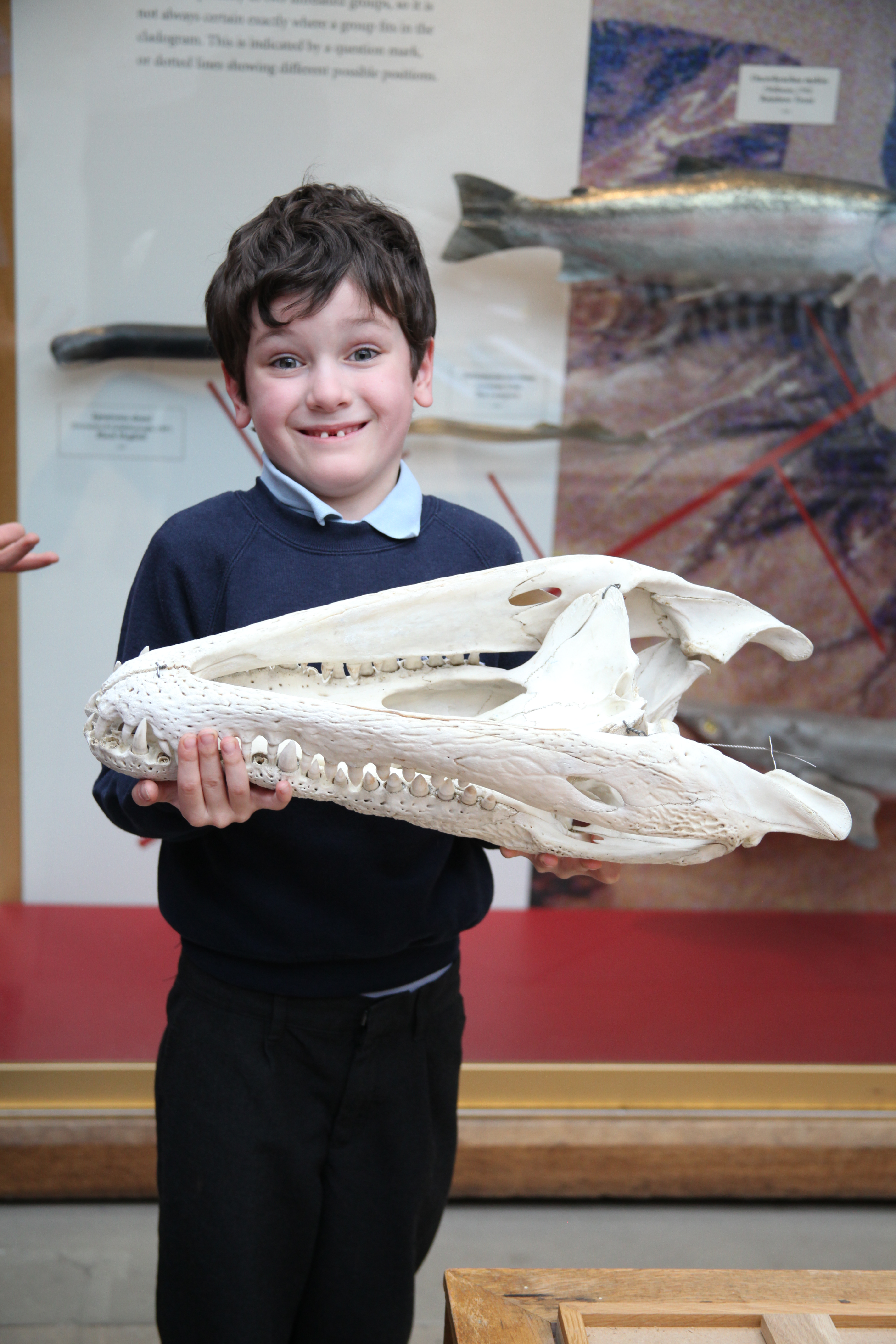
This project was particularly exciting to work on as it offered an opportunity to discuss the work of the conservation department with the passing museum visitors. I was able to make a few school trips a little more exciting with the phrase “Would you like to hold a croc skull?”.

Nicola Crompton, Conservation Intern