A Sad Tail

IMG_5790crop

Last week we celebrated the return of our beloved Nile crocodile skeleton. It’s been out on loan to the Oxford University Zoology Department during our closure year, but is now back in position in the Museum gallery for all to see.

Nicola working on the crocodile
Nicola working on the crocodile in the Museum

To mark the occasion, the conservation team decided to give the crocodile some much needed care. Originally this piece was displayed on carpet tiles, which can be potentially harmful to the specimen as they deteriorate… as well as looking pretty ugly! My first step was to remove these from the base of the specimen. I was then able to assess the skeleton for priority areas.
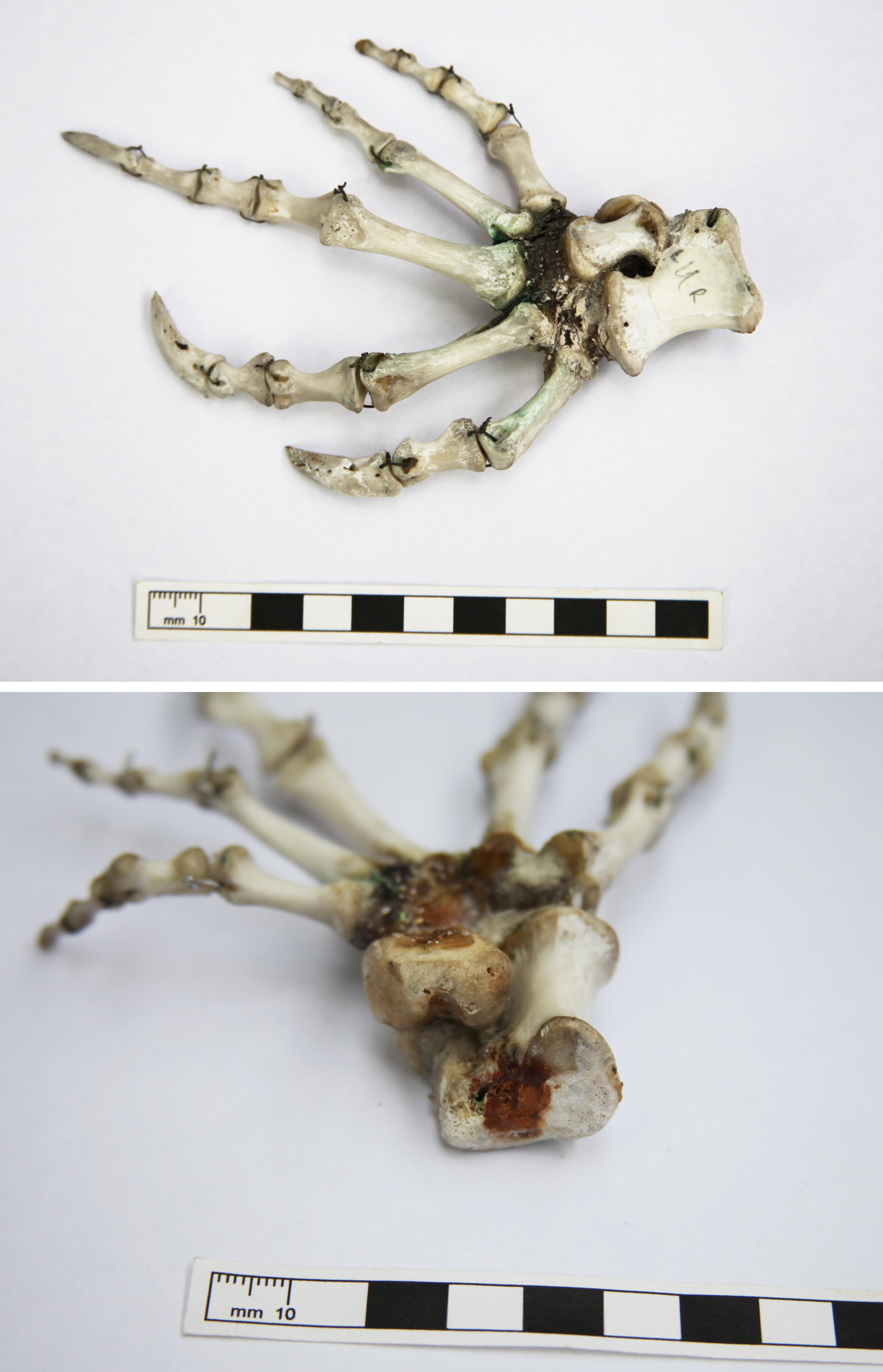
The crocodile's foot showing signs of damage from corroded wire
The crocodile’s foot showing signs of damage from corroded wire

Originally the specimen was articulated (held together) using a combination of iron and copper wire. This skeleton is over 150 years old and, during its time on display, these wires have corroded and stained the bone; this was particularly prominent in areas of existing cartilage, such as around its ribs. So I removed the old wire and replaced it with stainless steel, which has a longer life span.

The existing articulation had also failed in some areas; this was most obvious on the tail, which had lost its natural curve and gained a limp collapse – lovingly referred to by visitors as a ‘sad tail’. A ‘happier tail’ was obtained by threading a stainless steel wire through the vertebral column, meaning no new holes would need to be drilled.
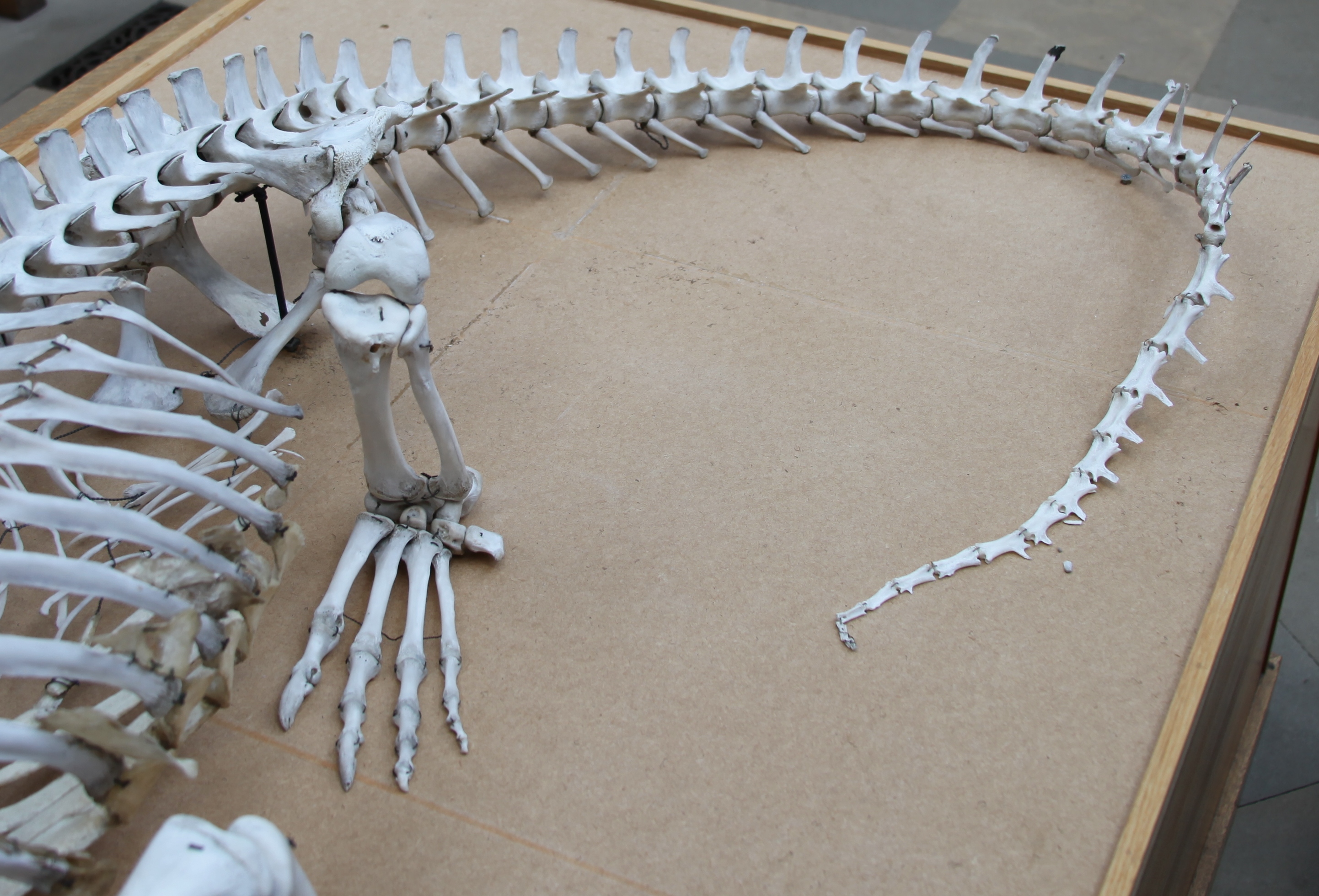
The crocodile's tail before Nicola worked her magic
The crocodile’s tail before Nicola worked her magic

The alignment of the rear of the skull and the atlas and axis bones at the top of the spine were not correct. To treat this, I removed the skull, allowing access for wire replacement. The skull was returned to its original supporting armature, now with conservation grade cushioning to relieve any unnecessary pressure on the bone. I guided the skull into its new position and fastened it in place.

The crocodile skeleton complete with 'happier tail'
The crocodile skeleton complete with ‘happier tail’

IMG_5785Once complete, I coated the base of the specimen with sand (a more natural environment for a crocodile than carpet!) and called in some strong helpers to replace the heavy glass lid.

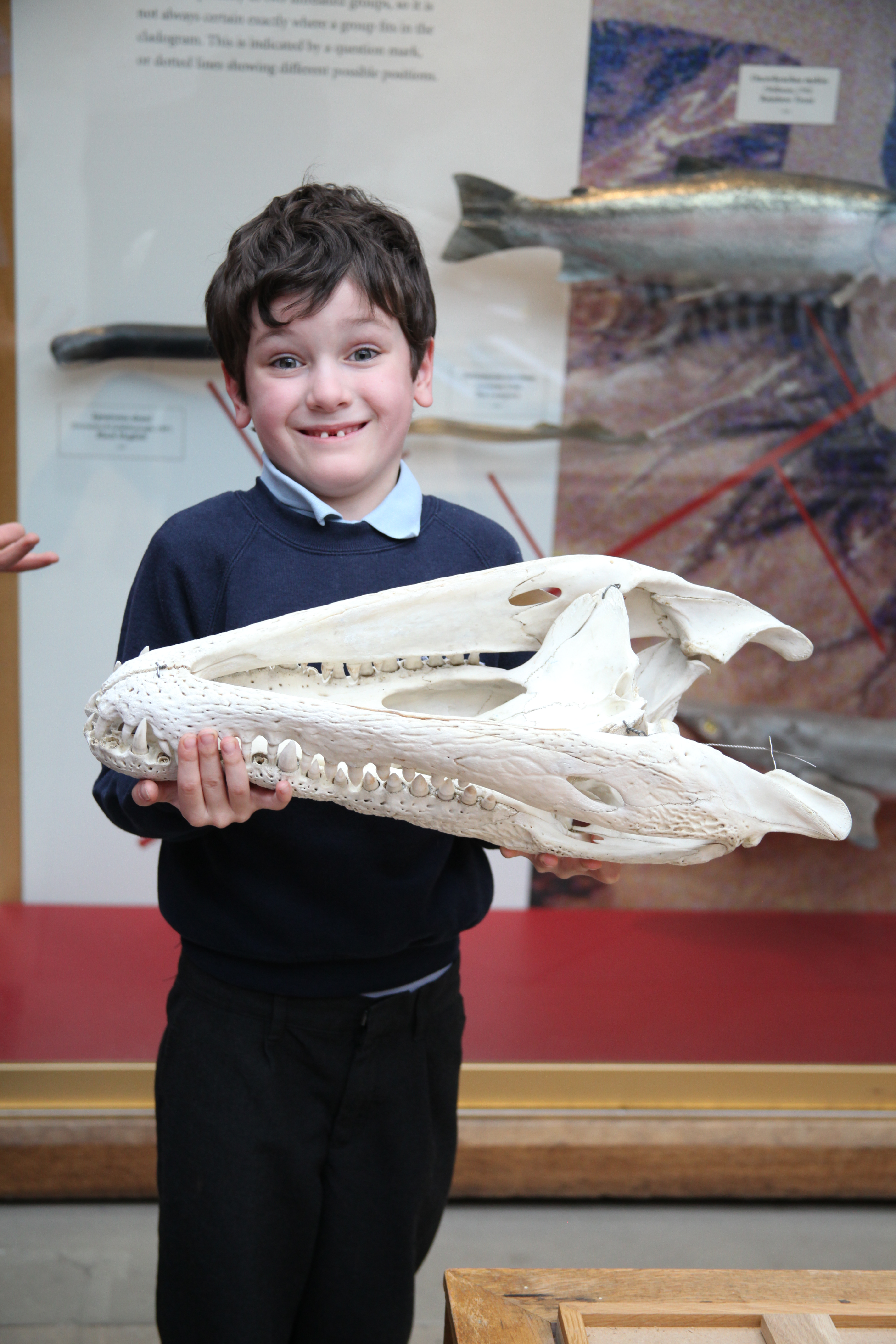
This project was particularly exciting to work on as it offered an opportunity to discuss the work of the conservation department with the passing museum visitors. I was able to make a few school trips a little more exciting with the phrase “Would you like to hold a croc skull?”.

Nicola Crompton, Conservation Intern

Oh the ‘Capy-drama’

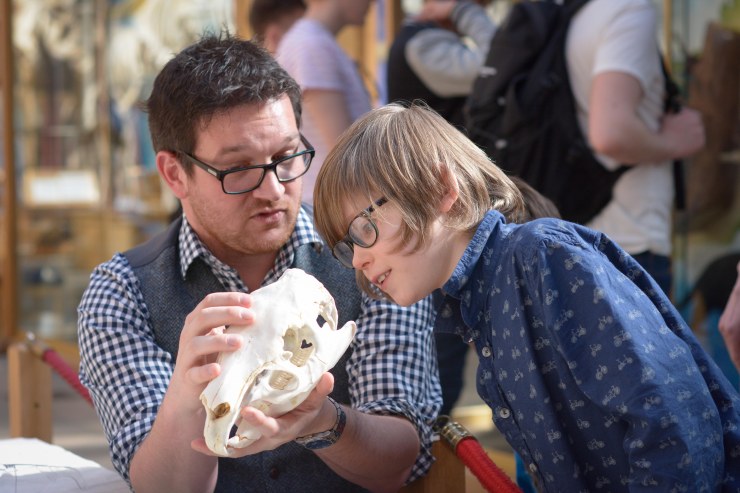
Here’s a little taster of the Capybara Construction event that we held in the Museum last Sunday. Evolutionary biologist and presenter of BBC4’s Secrets of Bones, Ben Garrod, joined our Life Collections conservator Bethany Palumbo and conservation intern Nicola Crompton to attempt the live reconstruction of a capybara skeleton.

This event was part of the week-long Reactions festival – an exploration of science and the arts at the University of Oxford Museums.

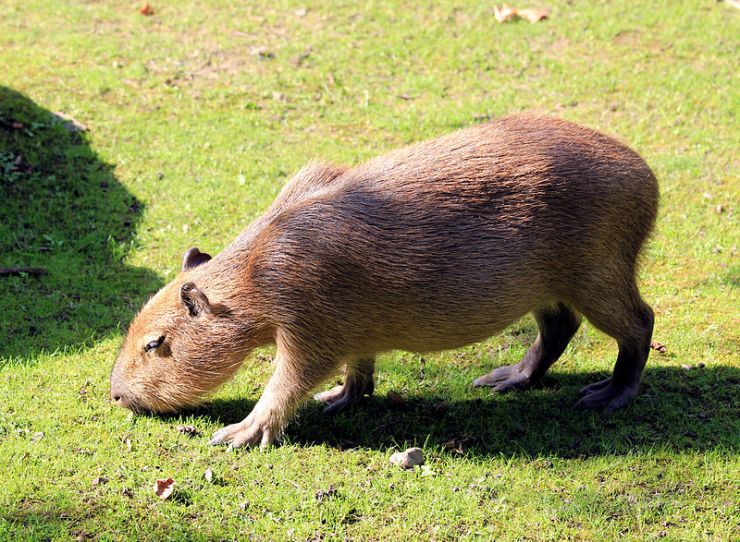
Just in case you don't know what a capybara is - here's one. It's the world's largest rodent and lives in South America.
Just in case you don’t know what a capybara is – here’s one. It’s the world’s largest rodent and lives in South America.

We should confess that Ben and Beth did not manage to completely recreate the skeleton, but they had plenty of interesting conversations with visitors about bones, anatomy, capybaras and conservation, so a very successful day nonetheless. Thanks again to Ben for coming along.

Examining the skull and explaining the capybara jaw movements.

Sounding

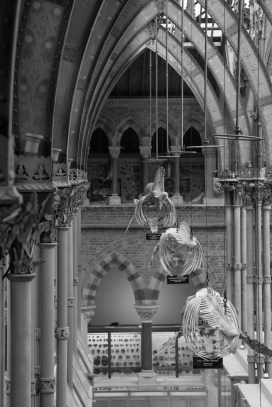
Last summer Robert Rapoport, film maker and DPhil student at the Ruskin School of Art, recorded some footage of the whale conservation project that took place in the Museum during the closure. Here’s Robert’s finished film for your enjoyment. The film is also showing next to the Welcome Desk at the front of the Museum, so check it out if you’re visiting.

And if you haven’t seen it already, you can read all about the whale conservation project on the Once in a Whale blog.

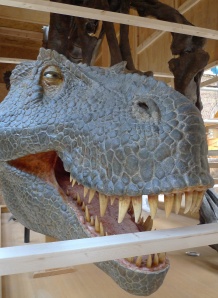
Rex in a box

Credit: Nicola Fielding

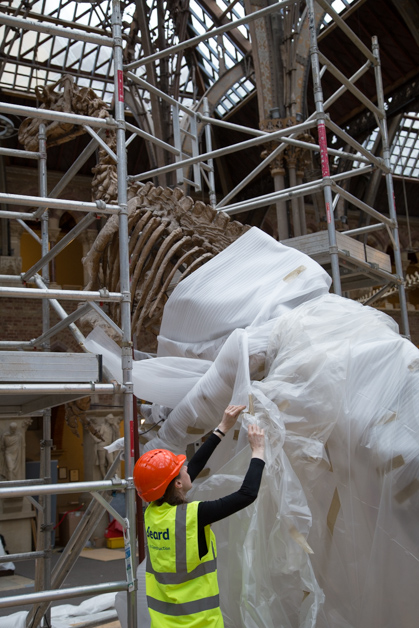
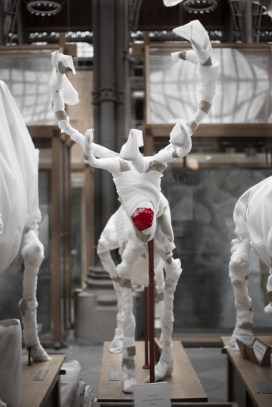
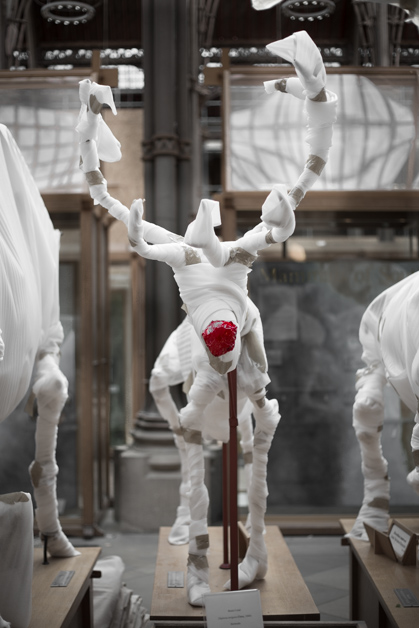
We couldn’t just tease you with last week’s shot of the Iguanodon being unwrapped. The sight of our enormous dinosaurs being liberated from the foam, tape and chip board which has encased them for the past year is too good not to share.

Credit: Mike Peckett

Each time I look out into the Museum court, another specimen has been revealed. The elephants are back, the camel is looking great and the giraffe is next on the list. But the biggest impact over the last couple of weeks has to be the large dinosaurs regaining dominance in the centre of the Museum.

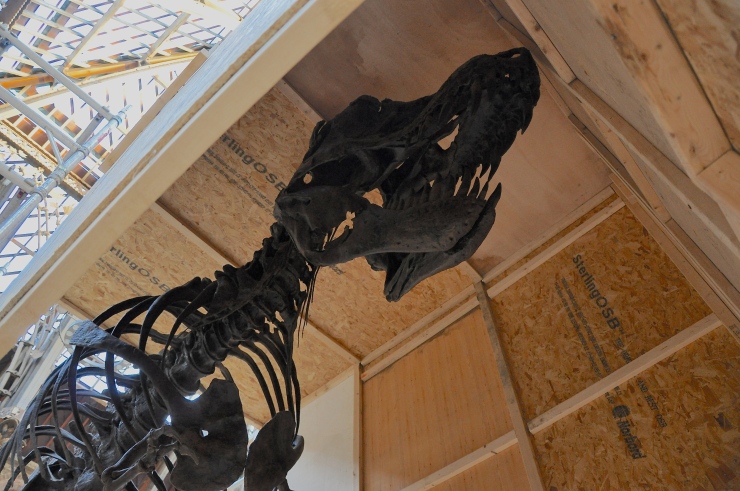
The T rex and Iguanodon skeletons are far too huge to move… and wouldn’t even get out of the front door! So they had their own bespoke wooden boxes built for them, which protected them from damage and dust during the roof restoration project.

But with just 3 weeks until our re-opening, the boxes are down and the foam wrapping has been discarded. Here are a few of my favourite shots of the return of the dinosaurs.

T rex being revealed Credit: Nicola Fielding
T rex being revealed
Credit: Nicola Fielding
The Iguanodon’s tail escapes its box
Credit: Scott Billings

Our dinosaurs are ready and waiting for the visitors to return on Saturday 15th February. We all hope to see you then!

Rachel Parle, Interpretation and Education Officer

The One Show

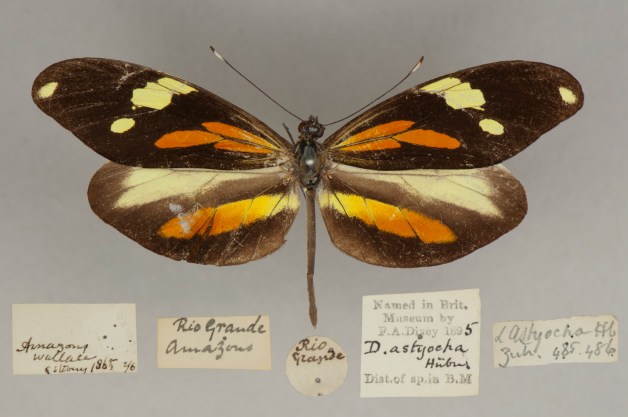
Amazon Dismorphia Wallace

Last week, members of our conservation team were presented with a wonderful opportunity to get out of the ‘Whale Tank’ and make their way to London to escort some very special specimens to the BBC.

The precious cargo consisted of newly-discovered Alfred Russel Wallace butterfly specimens that were uncovered in the Museum’s Life Collection by 17-year-old Athena Martin, a Nuffield Research Placements work experience student. This story featured on Thursday night’s edition of The One Show, where presenter Mike Dilger spoke about Athena’s project with the Museum and was able to show, on national television, the fruit of her hard work.

Papilio
Papilio ulysses. Examples collected by Wallace are marked with a red dot.

Two cases of butterflies were used on the programme and contained specimens collected by Wallace during his exploration of the Malay Archipelago. The show focused in particular on Papilio ulysses, and it was a joy to witness Mike Dilger’s excitement at discovering Wallace’s handwritten collection labels.

Our specimens, which were shown alongside some wonderful footage of CT scans of a developing chrysalis, made for excellent viewing for anyone with an interest in Lepidoptera.

If you missed it the first time around please do have a look on the BBC iPlayer. The butterfly feature begins at about 15’40”.

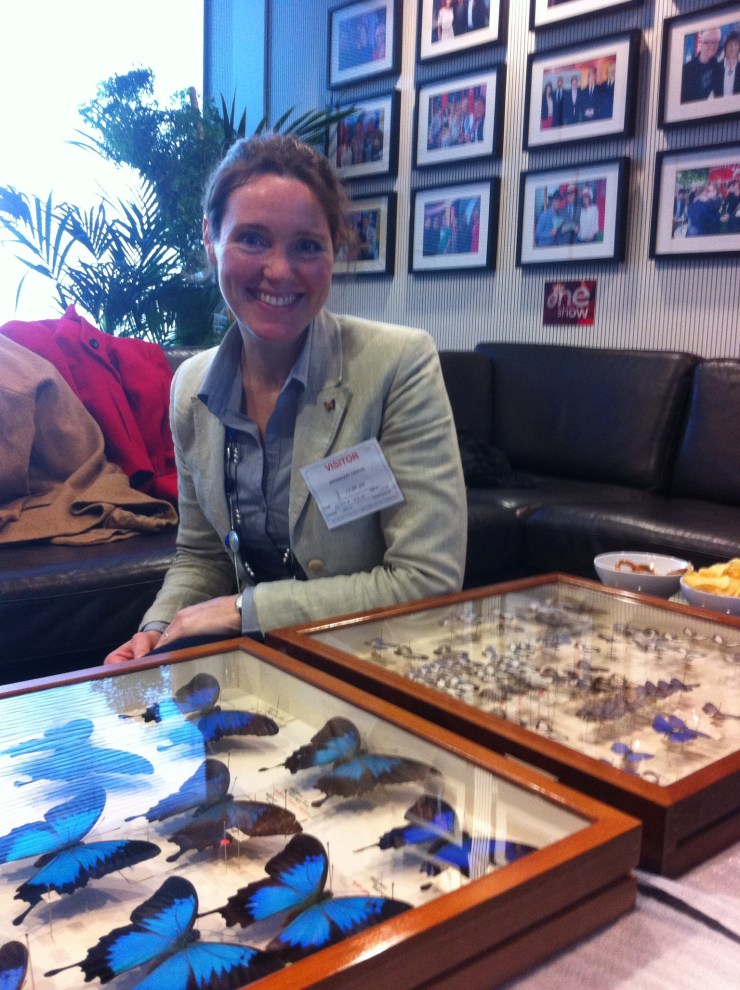
Gemma Aboe with the drawers of Wallace specimens.

We are very grateful for coverage on The One Show as it was an excellent opportunity to demonstrate, outside the Museum environment, the significance of natural history specimens, as well as highlight the important work of our conservators. It was also a thrill to be on set and watch the live show, so thanks a lot to the BBC for asking us along.

Nicola Crompton, Conservation intern
Gemma Aboe, Assistant conservator