

Natural Histories

14 May – 29 September at the Museum of the History of Science
One of the things we’ve been working hard on recently (darkened, not dormant remember) is a temporary exhibition we are putting together with the Museum of the History of Science, just up the road in Broad Street. Taking over the MHS’s lovely special exhibition gallery is a neat way of getting some great specimens out and visible to the public while we’re closed. But there’s a bit more to it than that, as it also ties in with some nice history of the museums in Oxford.
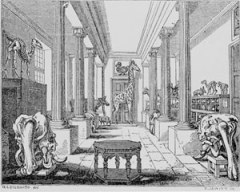
The first public museum to open in Britain – and quite possibly the world – was the Ashmolean Museum, established in 1683 by Elias Ashmole in the building in Broad Street that is now the Museum of the History of Science. Although the current Ashmolean (in Beaumont Street) focuses on art and archaeology, the ‘Old’ Ashmolean’s collections were of both man-made objects and natural specimens.
They remained there – and grew – until the mid-19th century when our Museum was built in Parks Road. At this point, in 1860, the natural history specimens came here, where many of them remain. So the Natural Histories exhibition at the MHS represents a return of natural history to its original Oxford home in the building on Broad Street. There was even once a giraffe in the entrance gallery as you can see above.
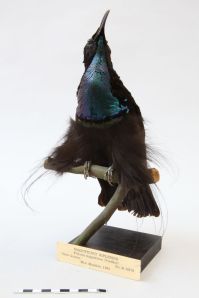
But back to the exhibition. Natural Histories takes a look at some of the history of natural history itself. This is a big subject to tackle, so we’ve picked out just a few themes and stories – some important ideas and big name scientists, as well as some lesser-known but nonetheless significant naturalists. The displays will show specimens and ideas from throughout the centuries, right up to the present day.
There will be creatures collected by Charles Darwin and Alfred Russel Wallace, Darwin’s contemporary and co-originator of the theory of evolution through natural selection. We have got some examples of the oldest rocks on Earth; extinct plants and animals; and some of the very latest techniques being used in the Museum to reveal exquisitely preserved fossils.
There’s a lot of material to prepare and we’ve been mocking up shelf layouts and making sure everything is going to fit, as you can see in the picture below.

And since this is the Museum of Natural History there will of course be some things you can touch. We’re also building in a special thread running throughout the exhibition just for families and children, which I think might well be narrated by our friend the Dodo.
We hope you’ll all come and see the exhibition and let us know what you think, either here or on Twitter. And if you can’t make it, there will also be a dedicated Natural Histories website – more on that and our programme of events and activities to follow.
One way or another, we’ll hopefully see you there…
Scott Billings, Communications coordinator

 You’ve read about it in the


