A Seed of Doubt

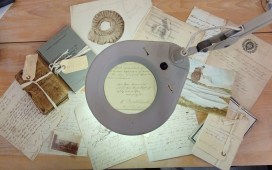
In February 2023, the Museum was lucky enough to acquire an important historical archive – a collection of notes, correspondence, artworks, photographs and family documents belonging to geologists William and Mary Buckland. But before the archive can be enjoyed by visitors and researchers, it must first be cared for, ensuring its preservation for generations to come. Thanks to generous funders, the Museum was able to hire a Project Paper Conservator, Anna Espanol Costa. Considering the Museum had not had a paper conservator since the mid-1990s, Anna was incredibly resourceful with her use of tools and materials, utilising everything from makeup sponges and soft brushes to tweezers and dental picks. In this blog post, we share insights from the eight months she spent assessing, cleaning and repairing some of the most at-risk and important material in the archive, as well as some unexpected surprises she found along the way…


Paper can be used to store information for decades, if not centuries, but it is still vulnerable to frequent handling and poor environmental storage conditions. When the Museum acquired the Buckland archive it was around two hundred years old and, unsurprisingly, many of its items needed care and restoration. Over the years, the papers had been housed in the standard file folders and boxes you would use for office documents, rather than an important historical archive. Many of the folders were overcrowded and had been tied together with string. Some manuscripts had been damaged due to too many items being stored in the same folder, and there were places where the string had cut into the larger pieces of paper causing tears. The most fragile and vulnerable items showed signs of chemical and physical damage, including iron-gall ink corrosion; chemicals in the ink had started to eat through the paper, causing cracks and loss of ink, and consequently text, in some areas.
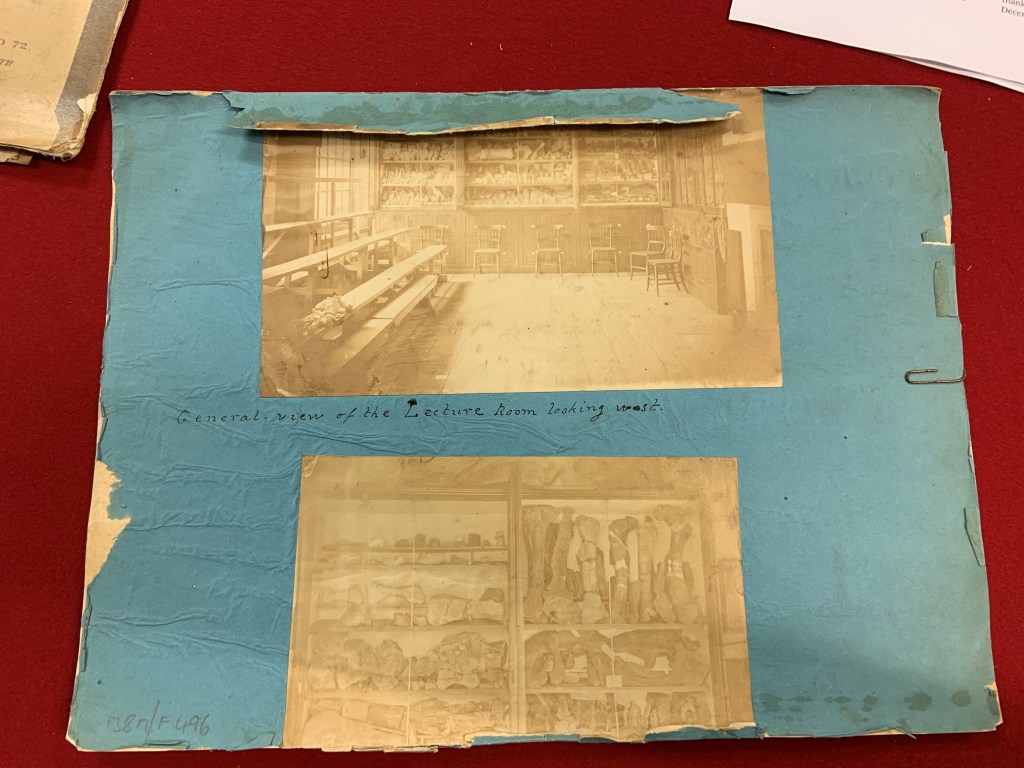
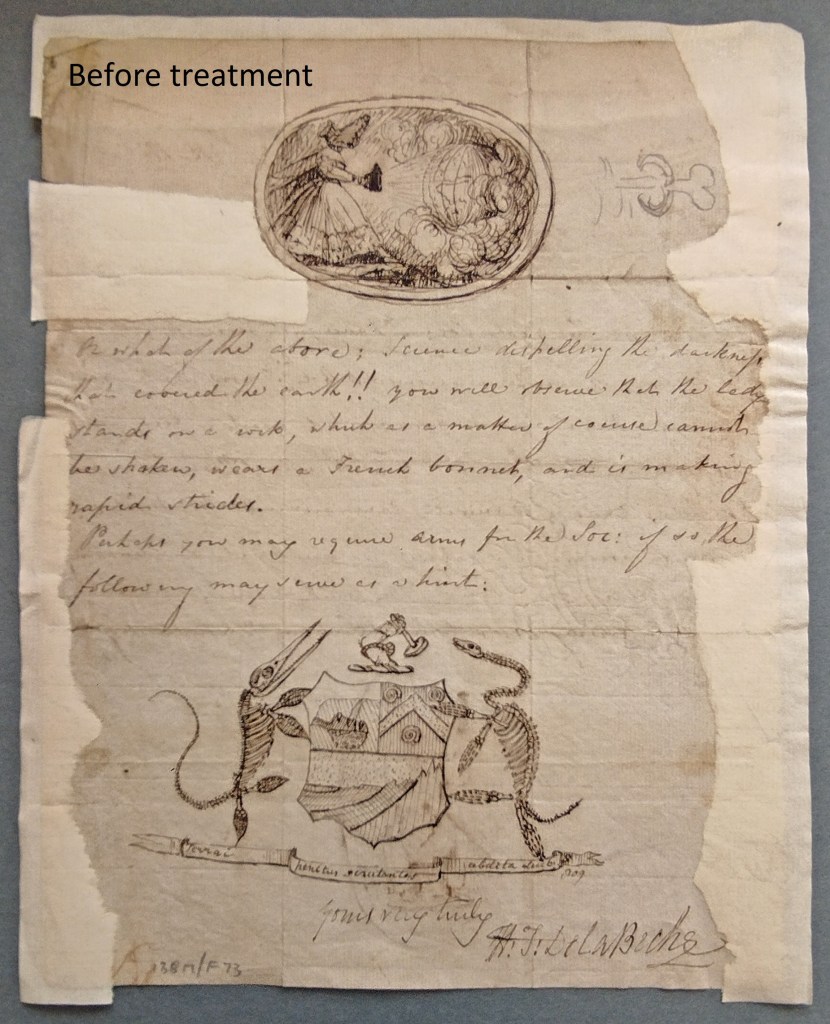
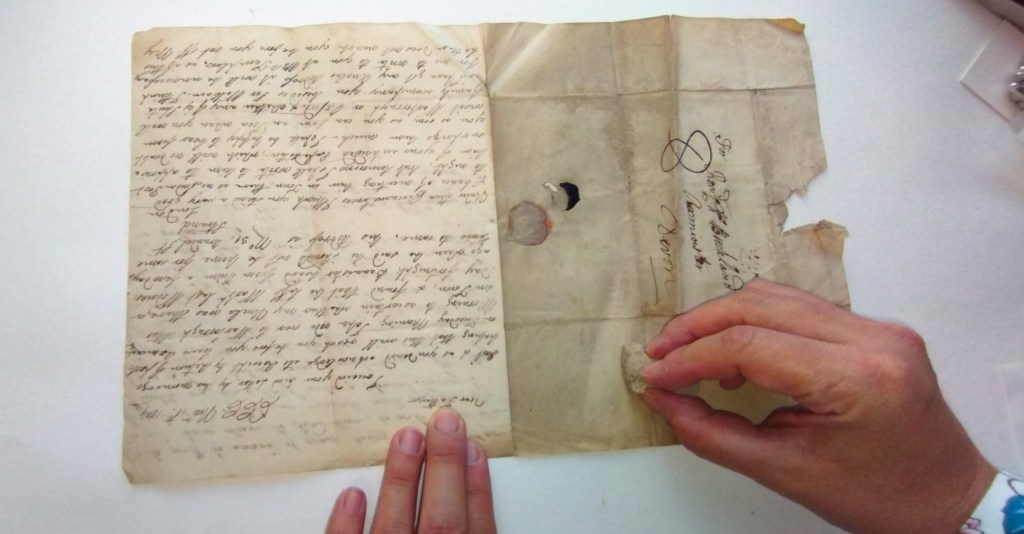
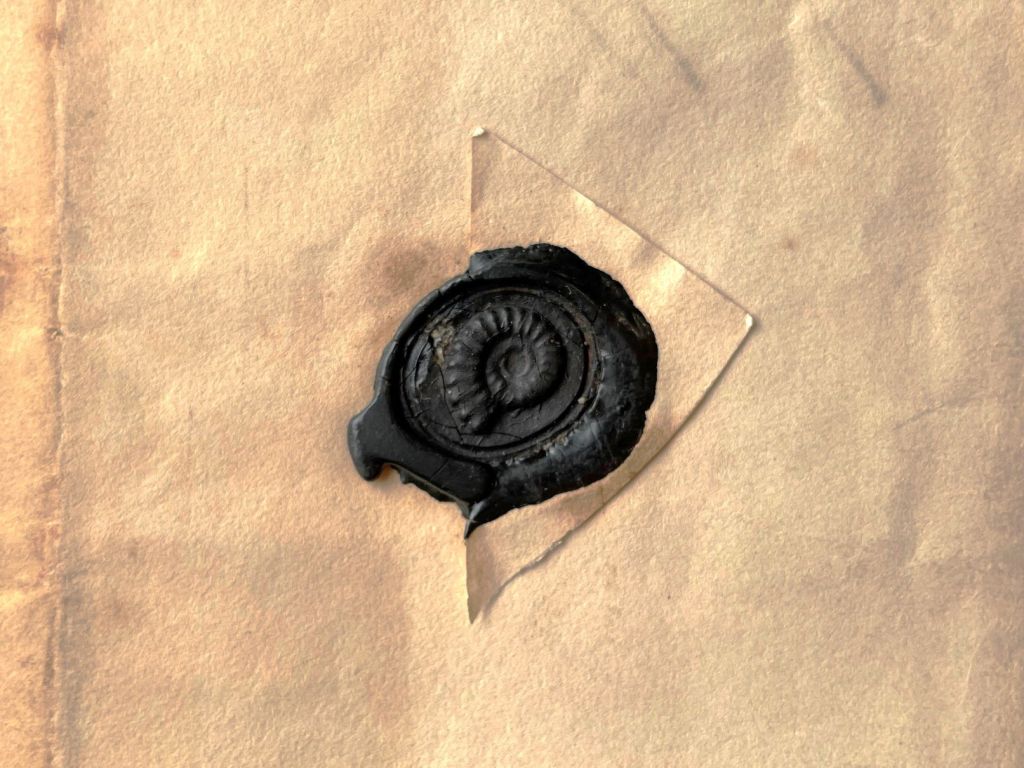
Past efforts had been made to restore the documents, but sometimes these had disfigured the original manuscripts: “in-fills” had been made with unsuitable paper, and backing sheets had been added in bright colours like blue or green. The archive was also being held together with unstable and rusty paper clips, and many of the original wax seals had cracks. It would have been a great shame to lose any of the seals, which feature beautiful examples of natural history icons, like ammonites and cephalopods.

PRESERVING HISTORY

The objective of my work was to stabilise the Buckland archive to ensure its long-term preservation and restore the appearance of the collection so it could be safely handled, digitised and exhibited in future.

One of the most important principles behind conservation is doing the ‘least amount to do the most good’. Conservation aims to slow down the ageing and deterioration process by using treatments that will not damage or disfigure the integrity of the original document. Conservation may be preventative — for instance, moving documents to a new box that creates the right ‘microclimate’ for their preservation. It may also be interventive — e.g. repairing with non-acidic and reversible materials that can be easily removed at any time, and that also can stand the test of time.

During my time at the Museum, I have been able to conserve a number of the most at-risk and important pieces of archival material. In some cases, this involved a light clean with a soft brush and re-housing of the most overcrowded items. In other cases, I performed more interventive and invasive conservation treatments including mechanical surface cleaning with smoke sponges, relaxing folds with paperweights or steam, stabilising iron-gall inks with gelatin to prevent further corrosion, mending tears with different grades of Japanese papers and tissues, and cleaning and consolidating cracks in the wax seals on the letters to prevent further loss. I also tackled some of the previous ‘repairs’ by eliminating old animal glue which had left the manuscripts shiny in places, carefully removing the unsuitable paper, and adding supports where necessary, thus leaving no traces of the bright blue backing paper.
INTERESTING AND UNEXPECTED STOWAWAYS

As well as undertaking conservation repairs, I also documented the condition of the items; photographing the manuscripts before and after conservation treatments to ensure the Museum, or any other future conservators, have a record of my work. Whilst undertaking conservation treatments, I found some interesting and unexpected stowaways in the archive. What looked to be small holes in one of the pages of a letter ended up being recognised by one of the Museum’s entomologists as spider frass (poop). A moth had also decided to call the papers home at some point in the last two hundred years as I came across a small cocoon that was now long dead, desiccated (dry) and dusty. The most unusual find, however, was a small black dot that I initially thought was an insect. However, employing the help of a microscope and one of the Musuem’s entomologists, we realised that it was actually a seed! What kind of seed, and how or when that seed came to reside in the Buckland archive, we don’t know, but it shows the archive had a life and story of its own long before it came to rest here in the Museum.

A JOB WELL DONE

Overall, I was pleased with the amount of work I was able to accomplish at the Museum. I managed to conserve a significant amount of the archive and was fortunate enough to work with, and learn from, a range of museum staff, including palaeontologists, geologists, zoologists, entomologists and the Life and Earth collections conservators. It has been a privilege to share and exchange knowledge with my colleagues and work collaboratively on the preservation of an important archive. I look forward to hearing about some of the research findings it produces, and to see it shared with the public in future exhibitions and displays.
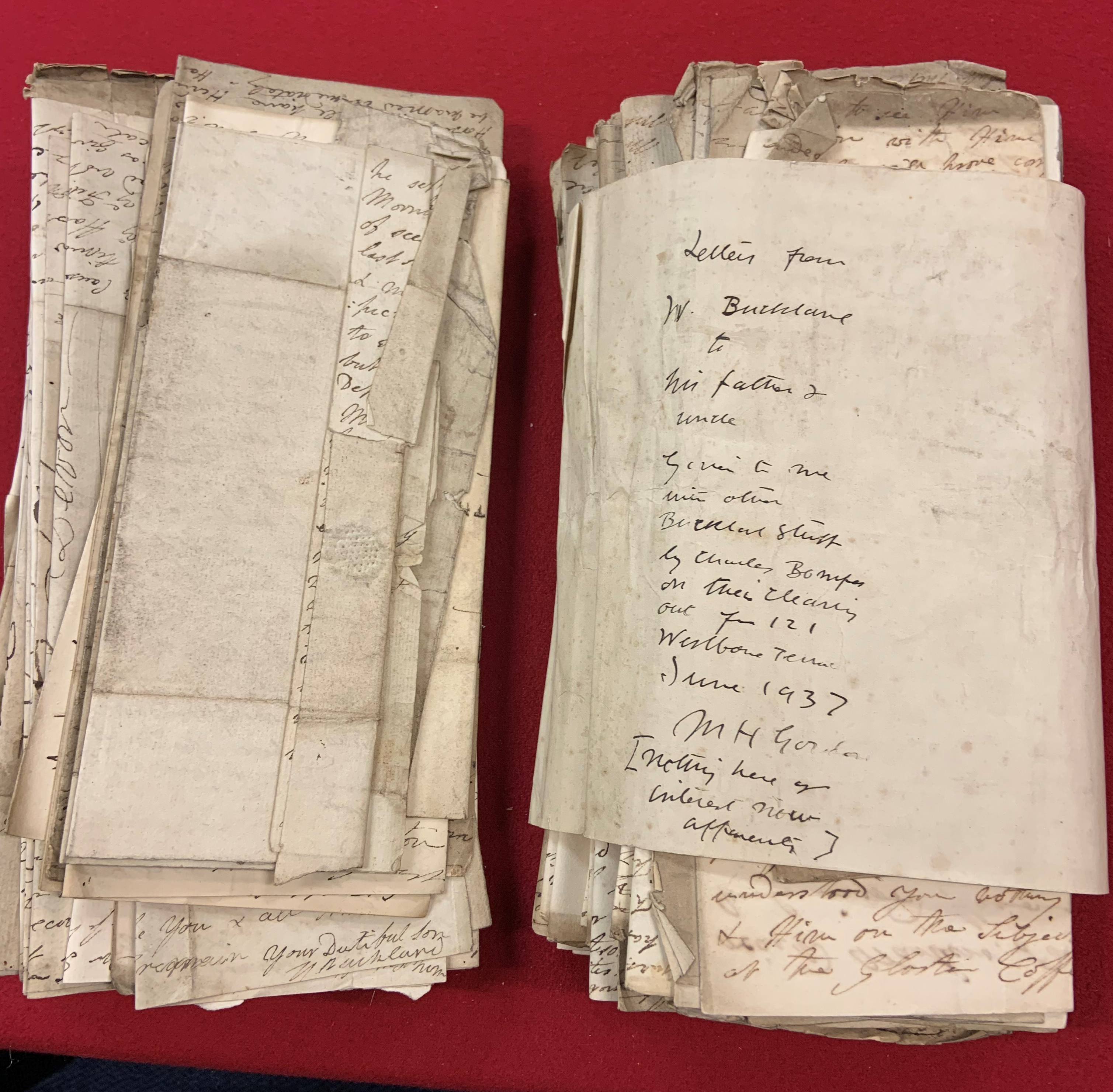
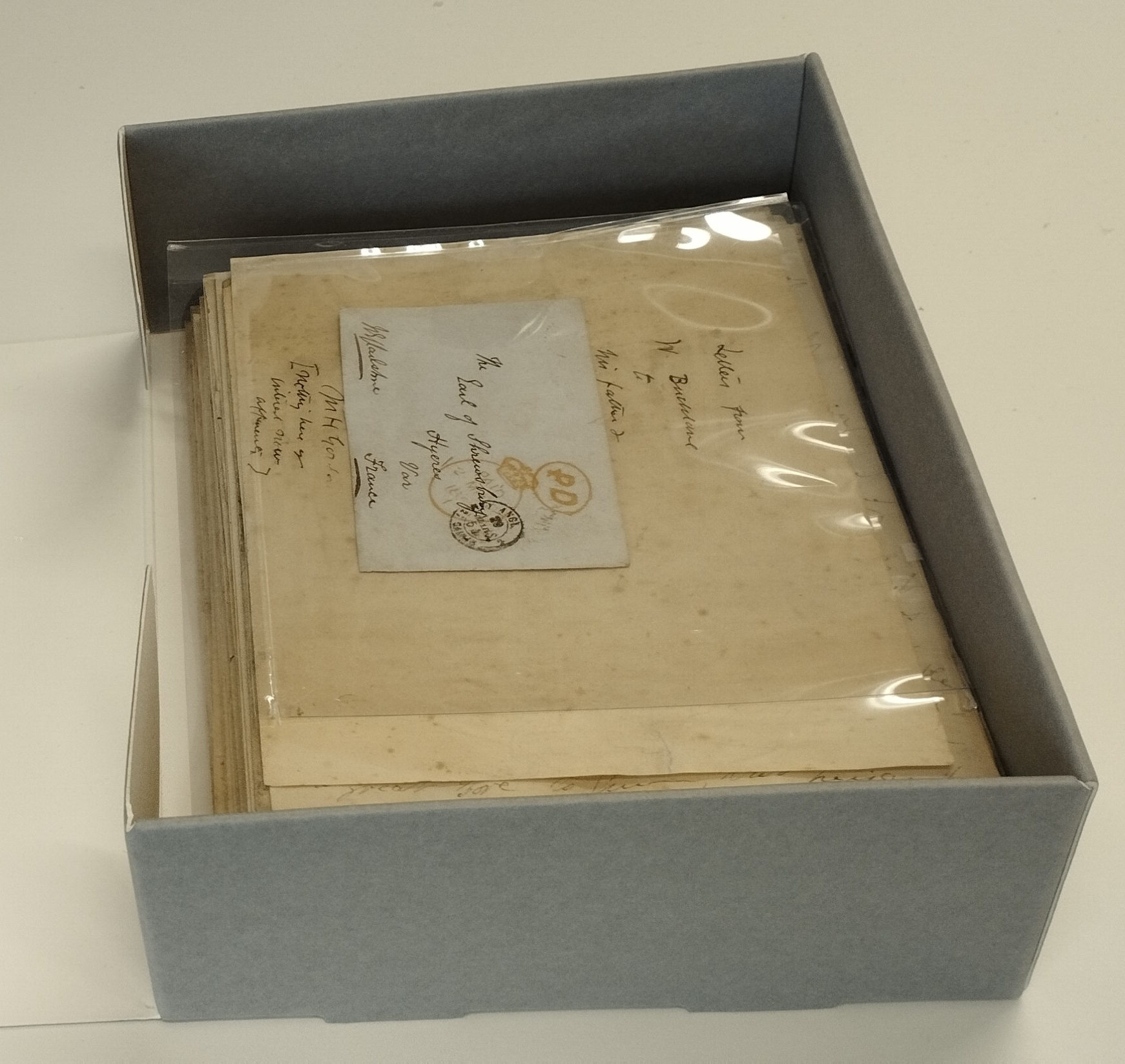
Thank you to the National Manuscripts Conservation Trust and Helen Roll Charity for funding Anna’s work. Items from the Buckland archive will feature in the Museum’s upcoming exhibition ‘Breaking Ground’ opening 18th October 2024.

Re-Collections: Jane Willis Kirkaldy

By Evie Granat, Project Officer Trainee with the Freshwater Habitats Trust and Museum volunteer


The Museum is lucky enough to house several specimens presented by Jane Willis Kirkaldy (1867/9 – 1932). They serve as a reminder of a passionate and dedicated tutor, and of a key figure behind the development of women’s education at Oxford University.


Jane Willis Kirkaldy was born somewhere between 1867 and 1869, and spent her youth in London with her parents and five siblings. After completing her secondary education at Wimbledon High School, Kirkaldy gained entry to Somerville College (Oxford) on an exhibition scholarship in 1887. She finished her degree in 1891, becoming one of the first women to achieve a First Class Hons in Natural Sciences (Zoology). However, since the University didn’t award women degrees in the nineteenth century, it wasn’t until 1920 that Kirkaldy received her MA.

Upon completing her undergraduate studies, Kirkaldy worked for a short period as a private tutor in Castle Howard before returning to Oxford in 1894. Whilst researching at the University, she produced two papers for the Quarterly Journal of Microscopical Science, including an article entitled “On the Head Kidney of Myxine”. This study of the renal systems of hagfish was written with the aid of experimental work carried out by renowned zoologist Walter Weldon at his UCL laboratory. She also studied lancelets under the Oxford Linacre Professor of Zoology, publishing “A Revision of the Genera and Species of Branchiostomdae” in 1895.

Kirkaldy’s achievements are especially noteworthy given how few women studied Natural Sciences at Oxford during the nineteenth century. In addition to her contributions to the scientific field, she also helped advance women’s education at Oxford University. In 1894, The Association of the Education of Women named Kirkaldy a tutor to female students in the School of Natural Sciences. The following year she ceased all research to concentrate fully on teaching, co-authoring ‘Text Book of Zoology’ with Miss E.C. Pollard in 1896, and Introduction to the Study of Biology with I. M. Drummond in 1907. She eventually became a tutor or lecturer at all of Oxford’s Women’s Societies, and a Director of Studies at all five of the women’s colleges. Amongst the many female scientists that came under her care was the Nobel Prize-winning chemist Dorothy Crowfoot Hodgkin.

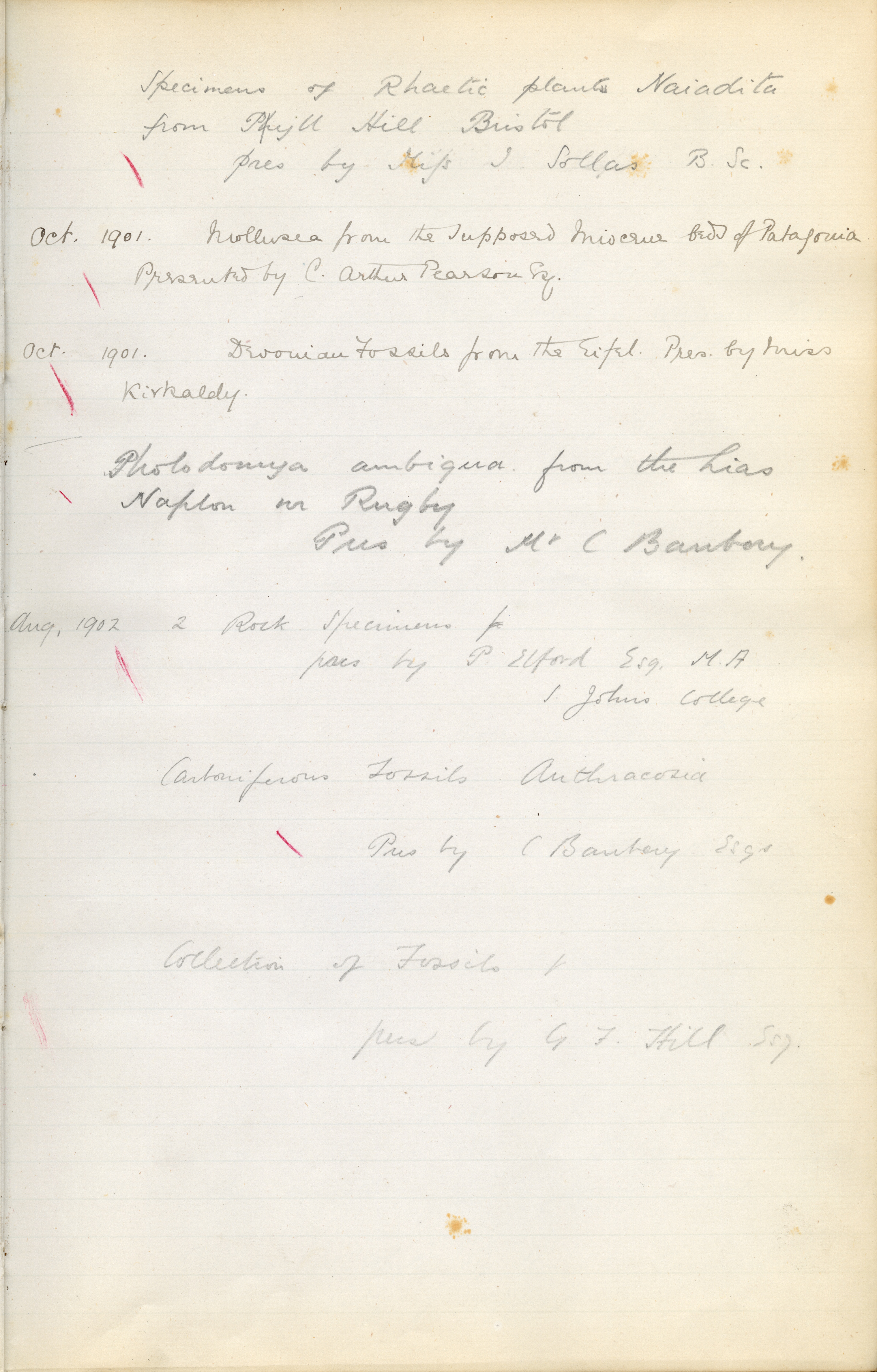
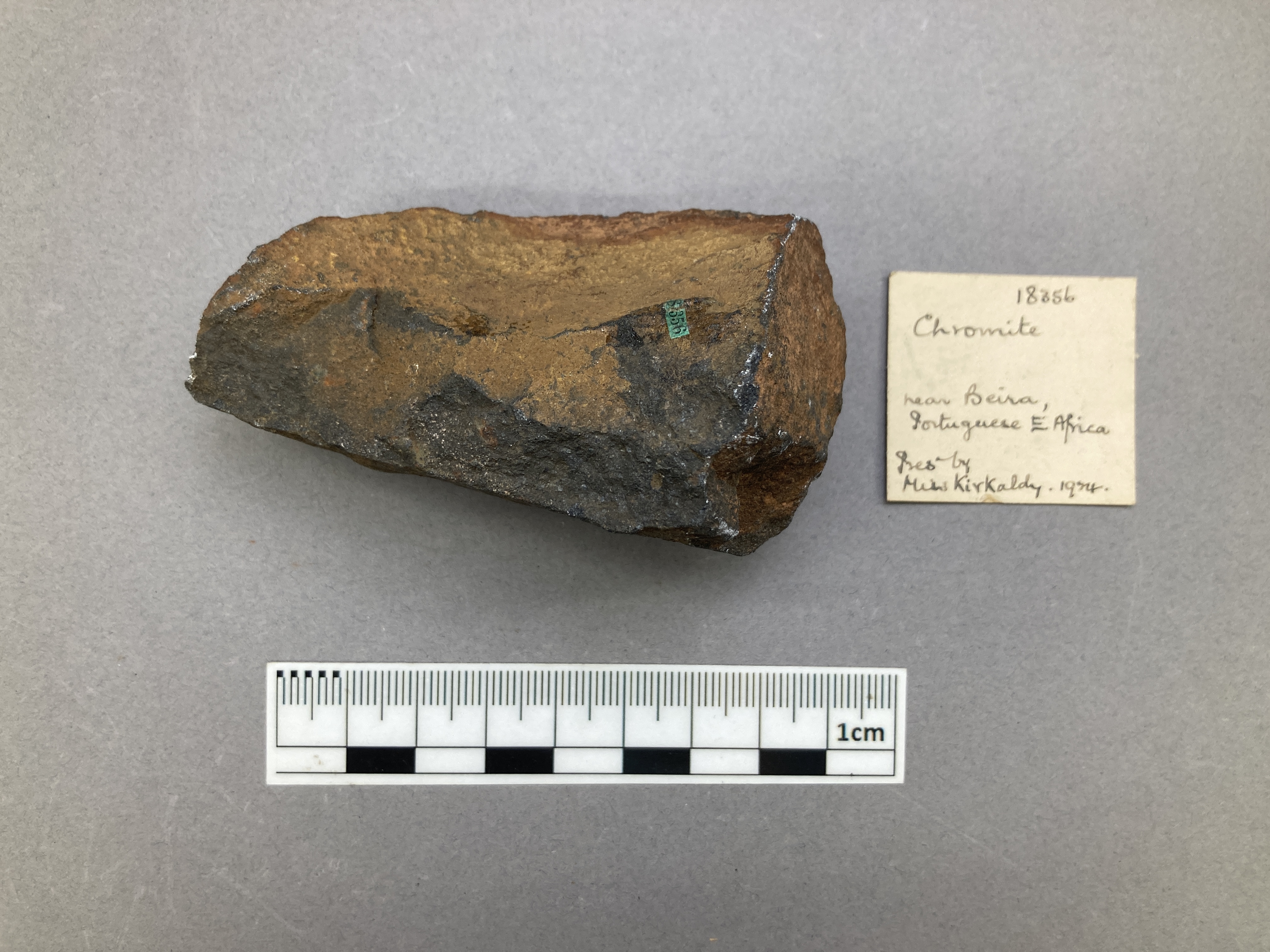
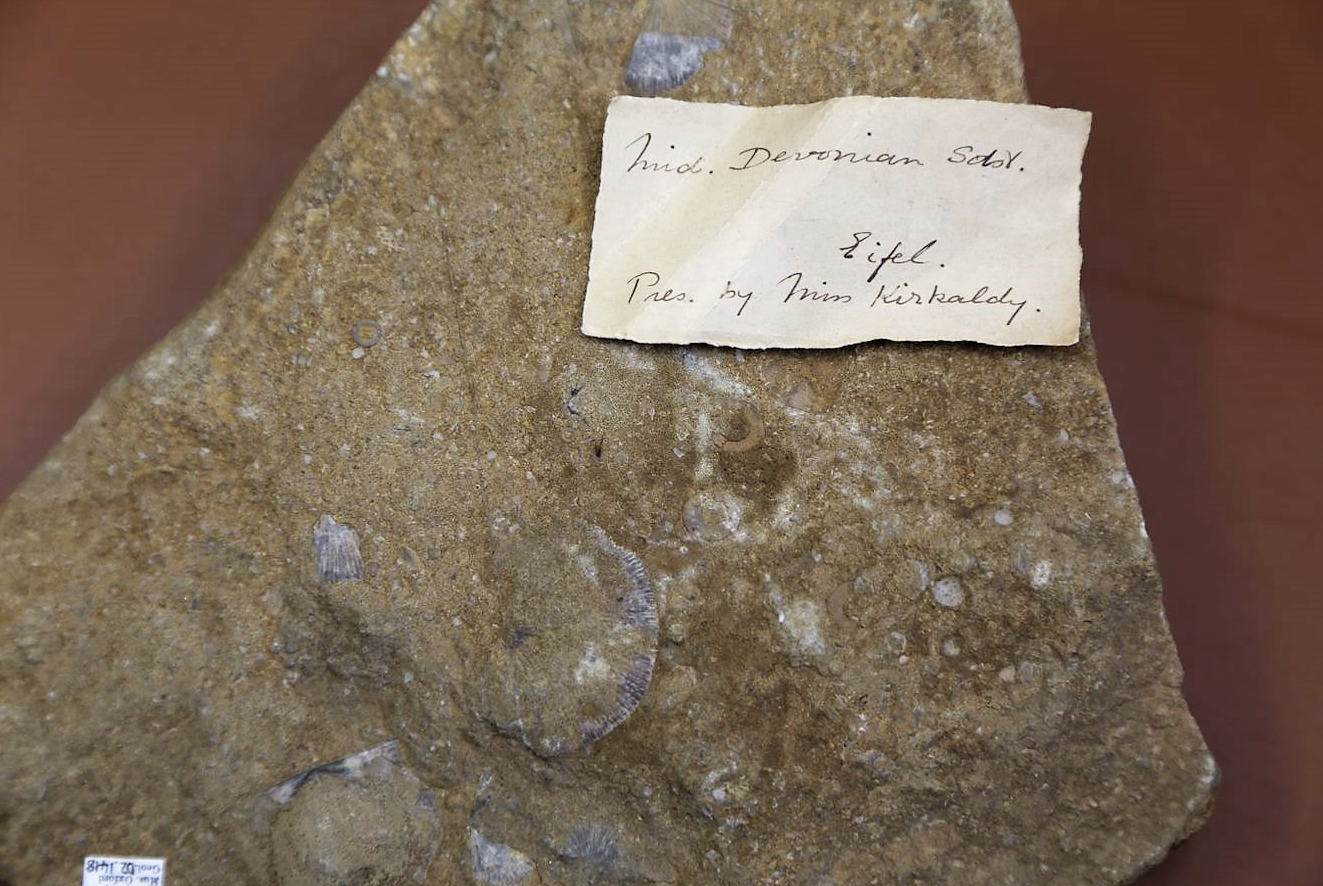
Left: Page from one of our donations books listing Jane Willis Kirkaldy as the donor of a series of Middle Devonian fossils (from the Eifel) to the Museum in October 1901. Right: Chromite from East Africa, also donated to the Museum by Kirkaldy.

Beyond the Department of Natural Sciences, Kirkaldy was an important figure at Oxford — she served as a member of the Council of St. Hugh’s College for 14 years, and was made an honorary fellow of Somerville College in 1929. At the Museum of Natural History, she presented beetles from New Guinea (1890), Devonian Fossils from the Eiffel (1901), and Chromite from near Beira, Mozambique (1924).

Kirkaldy retired from the University in 1930 due to ill health, before passing away in a London care home in 1932. Oxford University subsequently dedicated the junior and senior ‘Jane Willis Kirkakdy Prizes’ in her memory, which still exist to this day.


References

https://www.firstwomenatoxford.ox.ac.uk/article/principals-and-tutors

https://archive.org/details/internationalwom00hain/page/160/mode/2up

https://www.ias.ac.in/article/fulltext/reso/022/06/0517-0524

http://wimbledonhighschool.daisy.websds.net/Filename.ashx?tableName=ta_publications&columnName=filename&recordId=72

http://wimbledonhighschool.daisy.websds.net/Filename.ashx?tableName=ta_publications&columnName=filename&recordId=71

https://archive.org/details/internationalwom00hain/page/160/mode/2up

Dorothy Crowfoot Hodgkin: Patterns, Proteins and Peace: A Life in Science, by Georgina Ferry

Quarterly Journal of Microscopical Science

Iconotypes: A Compendium of Butterflies and Moths

By Danielle Czerkaszyn and Kate Diston

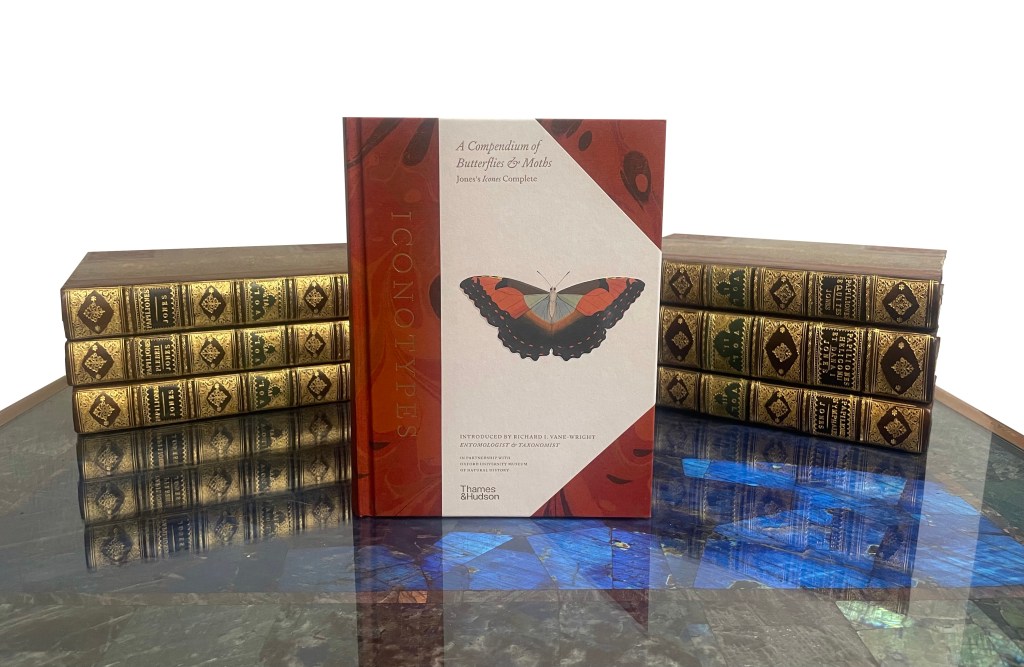
Today, the Museum is celebrating the publication of Iconotypes: A Compendium of Butterflies and Moths based on William Jones’ unpublished, six volume manuscript. Danielle Czerkaszyn, Librarian and Archivist, tells us more about the importance of Jones’ work…

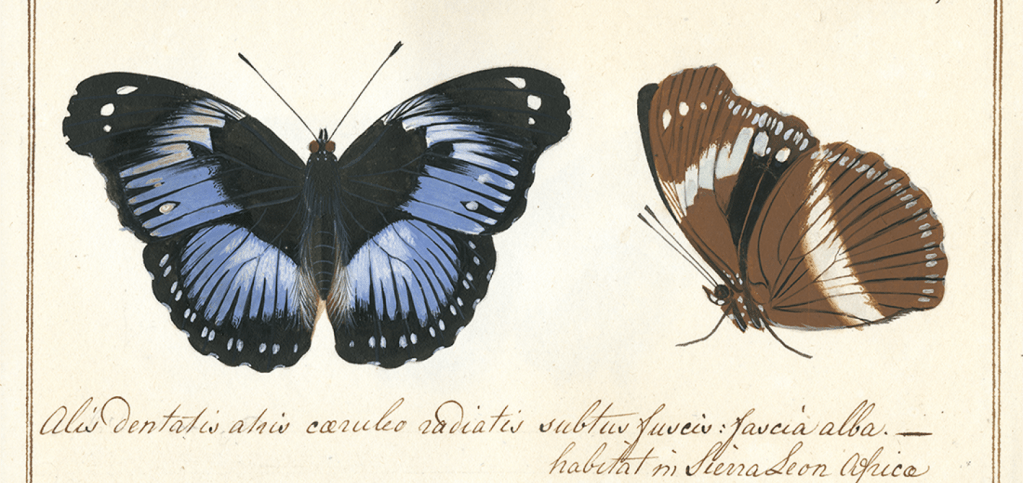
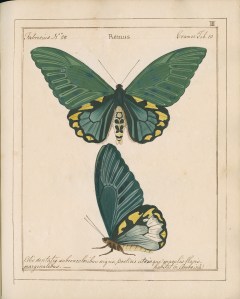
Since the 1920s the Museum has had in its care an original, unpublished manuscript containing 1,292 beautifully detailed and colourful paintings of butterflies and moths. Known as Jones’ Icones, this one-of-a-kind work was created in the late 18th century by retired London wine merchant, natural historian and Lepidopterist, William Jones (1745-1818).

In six volumes Icones depicts over 760 butterflies and moths from the collections of some of the most eminent naturalists in London at that time, including entomologist Dru Drury, explorer Sir Joseph Banks, the founder of the Linnean Society, Sir James E. Smith, and Jones’s own collection. A labour of love, Jones spent 30 years of his life – from 1780-1810 – using the finest materials to ensure Icones was both accurate and beautiful.  

In addition to being a stunning work of art, Jones’ Icones is an extraordinarily important document in the history of entomology and insect collecting in Britain. At the time Jones was making these paintings, the British Empire was rapidly expanding. This was an exciting time to be an entomologist, and species from as far away as Africa, India and Australia were being described for the first time. Over such a long period of time, some of the butterfly specimens illustrated by Jones have been destroyed, lost or divided among private collectors, so Jones’s work represents a singular historical document of these early collections. 

Jones’ Icones was even consulted by a student of Linnaeus, Johann Christian Fabricius – the man credited as the first to describe over 10,000 insects. Fabricius named 231 new species from the images in the Icones, citing Jones’ work in his publication Entomologica Systematica in 1791. The images from which new species are described are known as iconotypes. As the six volumes hold 231 iconotypes, Icones constitutes part of the foundations of butterfly taxonomy and systematics making it one of the most scientifically important items in the Museum’s archive. 

Icones also provides early documentation of global butterfly fauna in a pre-industrial world which carries important messages for today’s conservation biologists. Studies show that global insect abundance has declined by as much as 45% in half a century and several of species illustrated in the manuscript are now in decline or locally extinct.

In spite of Jones Icones huge importance to the history of entomology in Britain, the manuscript was not made available beyond the reading room of the Museum’s archive until recently. Several attempts to publish Icones for a wider audience failed or were abandoned. However, as a part of a 2013-14 National Heritage Lottery Fund project, Flying Icons, all 6 volumes were digitised and keen amateurs and specialist entomologists were invited to identify all the species represented in Jones’s Icones

Expanding on this momentum, Oxford University Museum of Natural History’s newest publication, Iconotypes: A compendium of butterflies and moths, publishes Jones’s seminal work for the very first time. This enhanced facsimile is accompanied by expert commentary, contextual essays and annotated maps with modern taxonomic names and historical references clarified. Moreover, with over 1,600 colour illustrations, Iconotypes is visually stunning. This book represents an exciting step in the long history of trying to make William Jones’s masterpiece more accessible and we could not be more excited to share it with you all.

A golden sphere sitting on a stone balcony between stone columns and carvings

Solving a celestial mystery: the Sun, Earth and Moon model

By Danielle Czerkaszyn, Librarian and Archivist

We like to think we know a lot about our collections, but with millions of items to care for some inevitably remain mysterious, with little record of their history. Luckily, every now and then someone gets in touch with a story about an object or specimen we know very little about. We were delighted when this happened recently for one of the most overlooked items on display: a delicate scale model of the Sun, Earth and Moon.

The model is a long-standing feature of the upper gallery: an astronomical moment hidden amongst the zoological and the geological. Yet we knew very little about it. Who made it, when was it installed, and what was its intention?

Meet the maker: Ted Bowen (1898-1980)

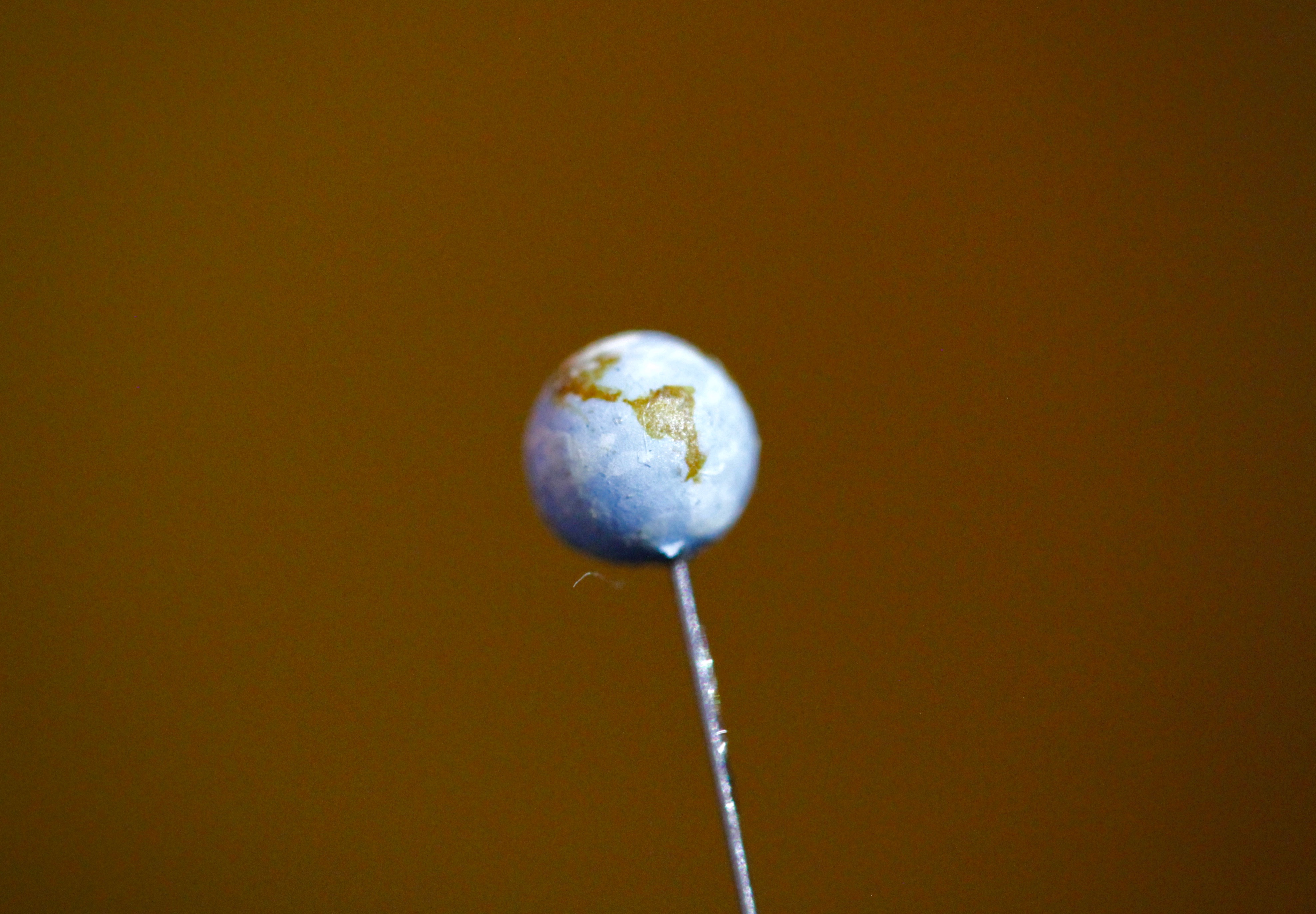
The Earth and Moon at a scale of 1:4,000,000,000 are tiny spherical models.
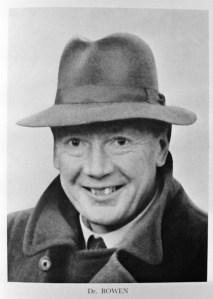
Edmund ‘Ted’ John Bowen. Image courtesy of Dr Will Bowen.

Thanks to a chance remark by Dr Will Bowen we can reveal that the model was created by his grandfather, Edmund ‘Ted’ John Bowen, lifelong fellow in Chemistry at University College. Ted Bowen was passionate about communicating science effectively, and the model was intended as a simple yet powerful representation of the true scale of our Solar System.

Born in Worcester in 1898, Ted Bowen won the Brackenbury Scholarship in 1915 to the University of Oxford, where he studied chemistry in the Balliol/Trinity labs. It was here that, from necessity, he started to create his own scientific apparatus and models, all made from whatever was to hand.

In 1935, Bowen was elected a Fellow of the Royal Society for his research into fluorescence and in 1963 was awarded the society’s Davy Medal in recognition of his distinguished work explaining photochemical reactions. While Bowen devoted his working life to the field of chemistry, he had many other scientific interests, especially palaeontology, but also our planetary system.

Creation of the Sun, Earth, Moon model

The Earth model is no larger than a pea, but still beautifully detailed.

Although we don’t know for sure, it is likely that the model was made between 1965 and 1971, and donated while Bowen was a member (and later chairman) of the Committee for the Scientific Collections in the University Museum, as the Museum was then known.

The distance across the Museum’s main court, around 37 metres, represents the distance between the Earth and the Sun – one Astronomical Unit, or 150 million kilometres. This makes the model scale to roughly 1:4,000,000,000!

The Sun itself is the size of a small beach ball, while the Earth and the Moon become tiny objects: the Earth the size of a small pea, and the Moon little more than a dot. Yet Bowen’s attention to detail is striking: the Earth is decorated with continents and even the miniscule Moon has texture to its surface.

If you haven’t seen it before, be sure to look out for the model on the upper gallery of the Museum: the Earth and Moon are on one side, where the Museum Café is currently located, and the Sun glistens on the far side, nestled in our temporary exhibition gallery.

Many thanks to Dr Will Bowen for his reminiscences, which have illuminated an object that was hidden in plain sight.

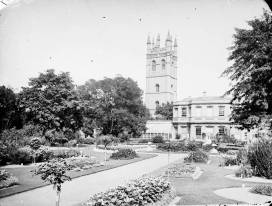
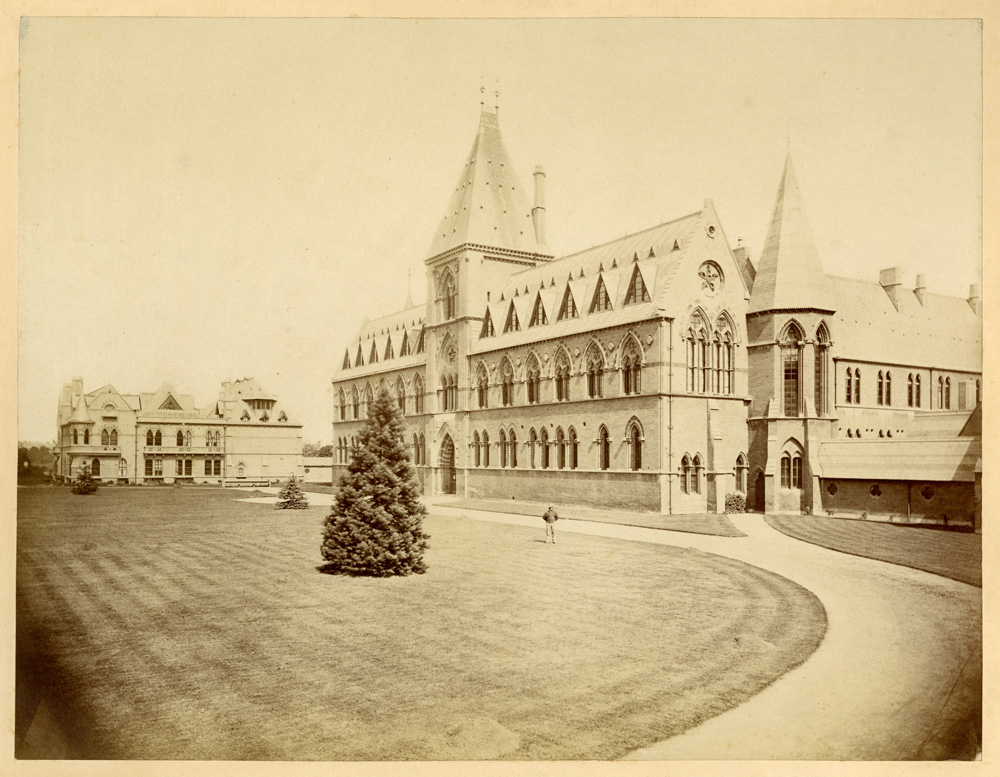
Black and white photograph of borders, paths, and trees with spired tower in background

Celebrating 400 years of botany at Oxford University

By Danielle Czerkaszyn, Librarian and Archivist

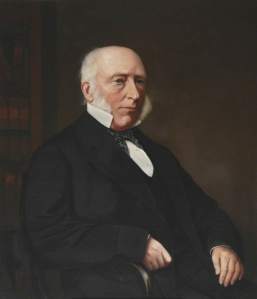
John Phillips, Professor of Geology (1856-1874)

As a natural history museum, we are perhaps slightly unusual: aside from some fossilised plants, there are no botanic specimens in our collections. The reason for this is that when the Museum opened its doors in June 1860, Oxford Botanic Garden had already been around for a considerable 239 years, and it was considered unnecessary to move it.

Today, the Botanic Garden celebrates 400 years since its founding as the Oxford Physic Garden on 25 July 1621. To mark this anniversary we’ve explored our archive to highlight some connections between the Museum and Botanic Garden, in a relationship that continues to this day.

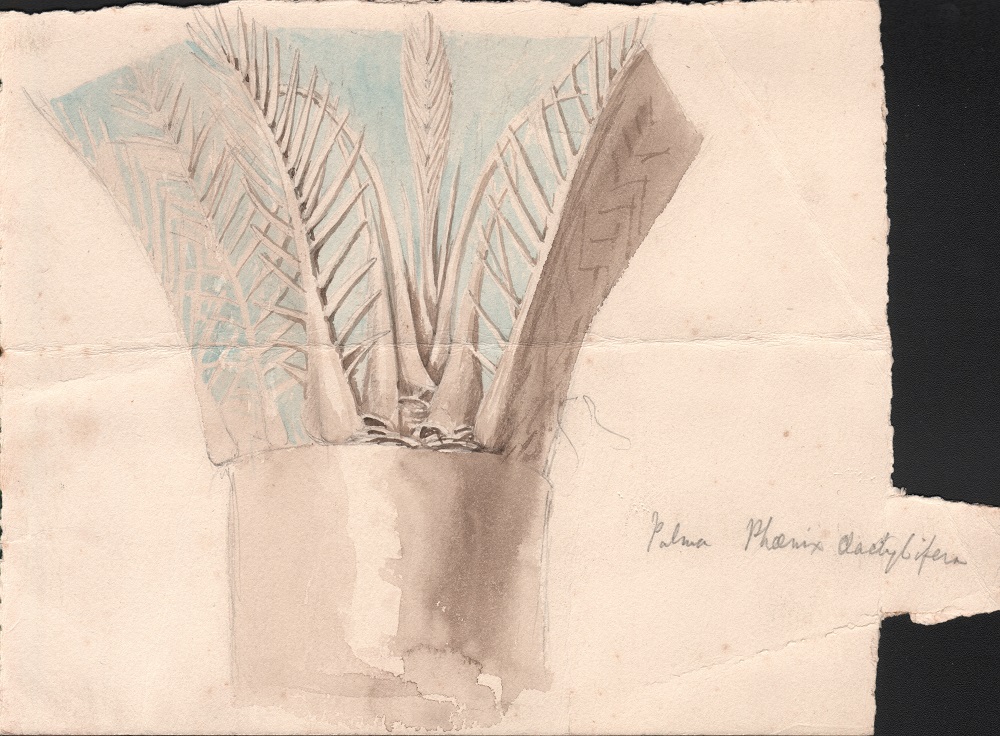
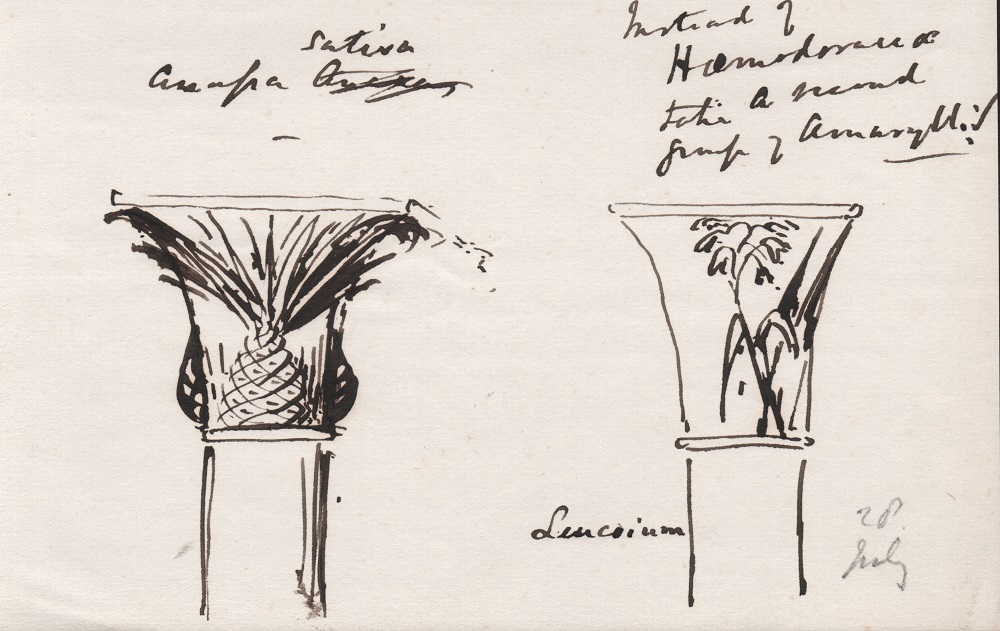
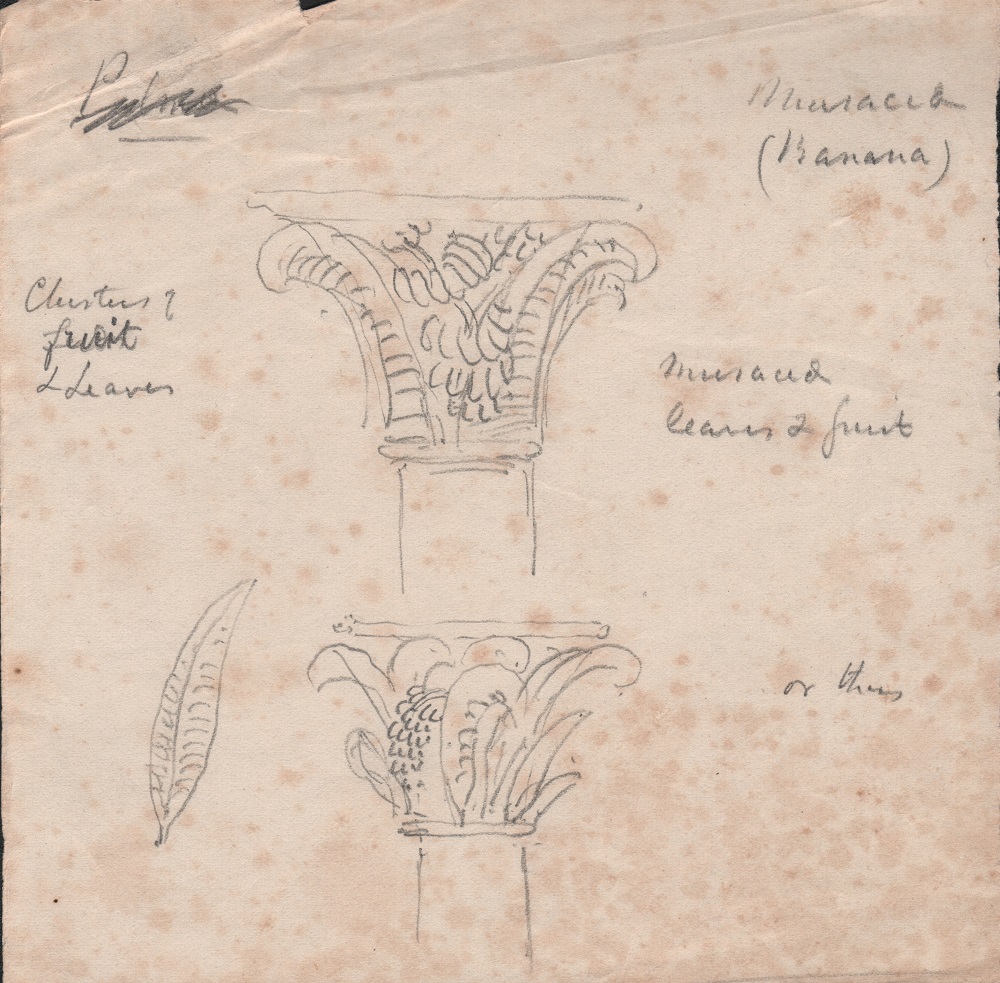
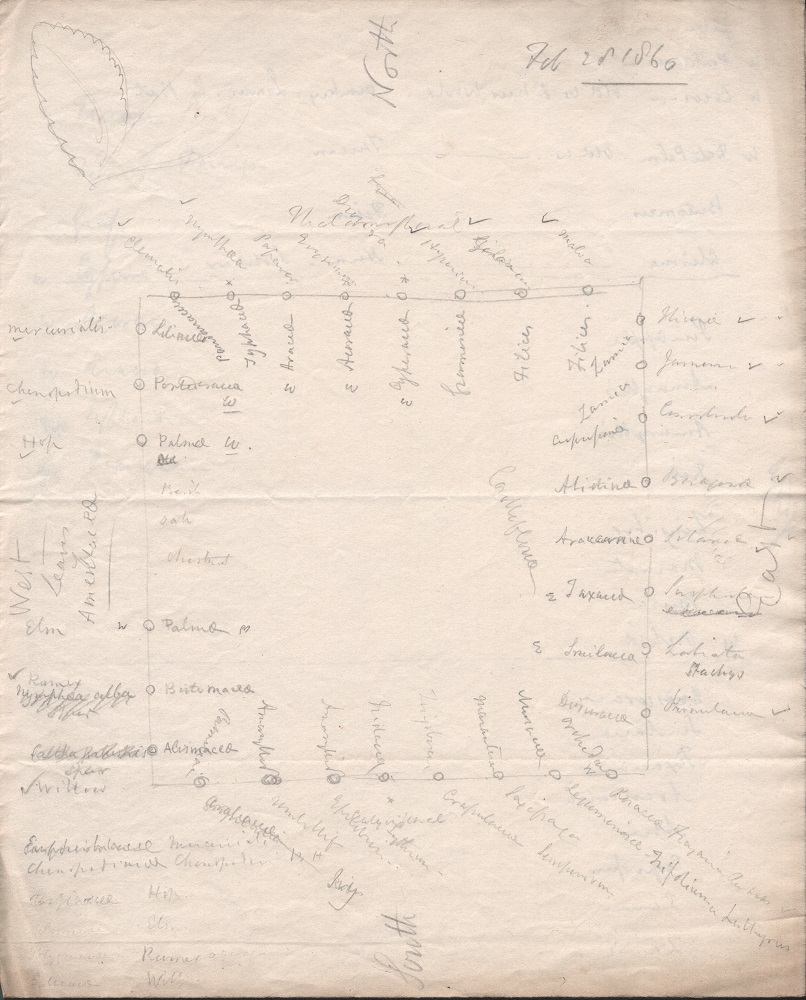
With its Pre-Raphaelite influence, the design of the Museum was conceived as an object lesson in art; both beautiful and instructive, it should teach students and visitors alike about the natural world. One of the most noticeable decorative teaching tools are the columns, capitals and corbels that surround the main court of the museum. Following Pre-Raphaelite principles, these were designed by Professor of Geology and the first Keeper of the Museum, John Phillips, who sketched most of the designs and outlined the order they would go in.

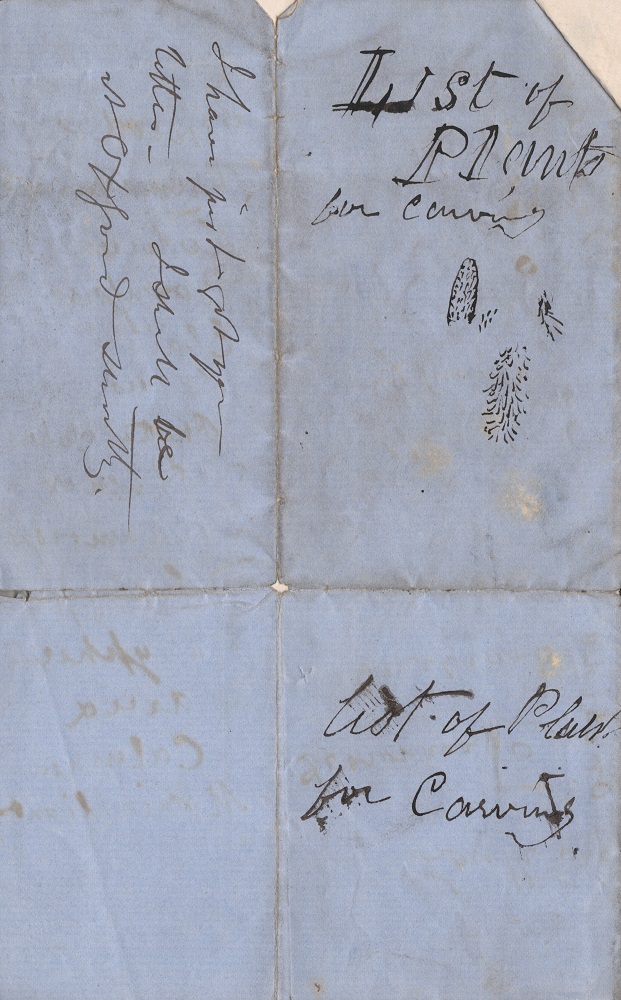
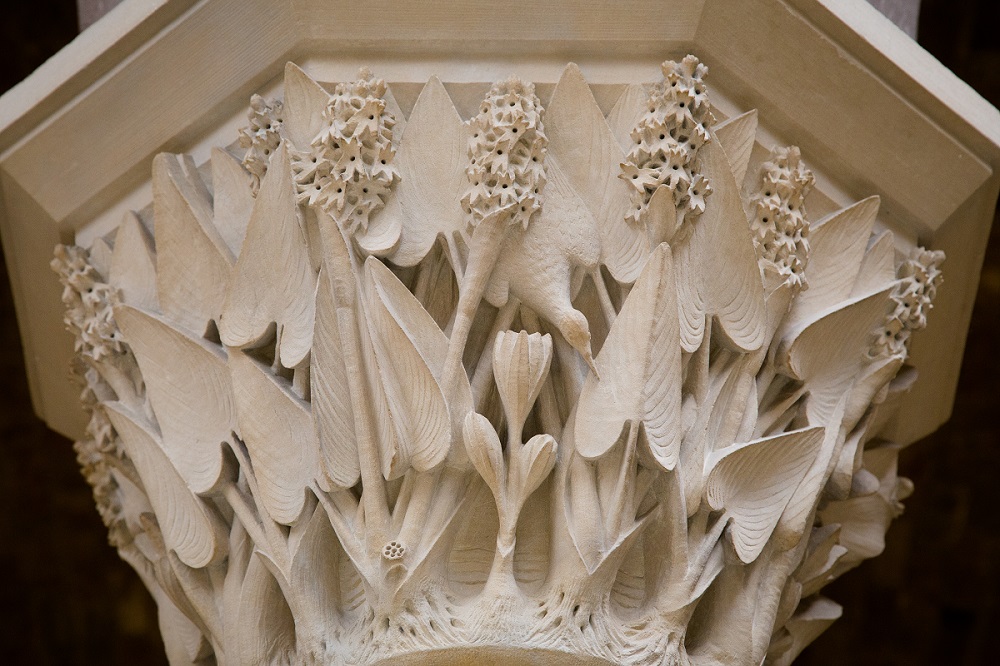
The plans called for 126 columns, 64 piers and 192 capitals and corbels. Each column was made from a different decorative stone from around Britain and Ireland, topped with a carved capital and flanked by a pair of corbels carved into plants representing the different botanical orders. As it was decided early in the design process for the Museum that the Oxford Botanic Garden would not move from the High Street, these carved plants were meant to ‘satisfy the botanist.’ Each column was supposed to be labelled with the name of the stone, its source, and the botanical name of the plant, but unfortunately only the geological inscriptions were completed.

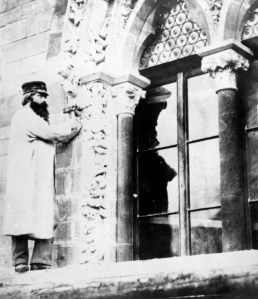
James O’Shea carving the Cat window found on the front façade of the Museum, c. 1860

The carvings were created by ‘Nature’s own Pre-Raphaelites’ the O’Shea brothers, James and John, and their nephew, Edward Whelan. Working in collaboration with Charles Daubeny, Professor of Botany and head of the Oxford Botanic Garden, Phillips supplied the O’Sheas with specimens of the plants he had chosen, and so the carvings were made from life. Each capital is different and unique based on the plants they were representing. Some are simple and elegant while others are more intricate and hide small birds, animals and insects.

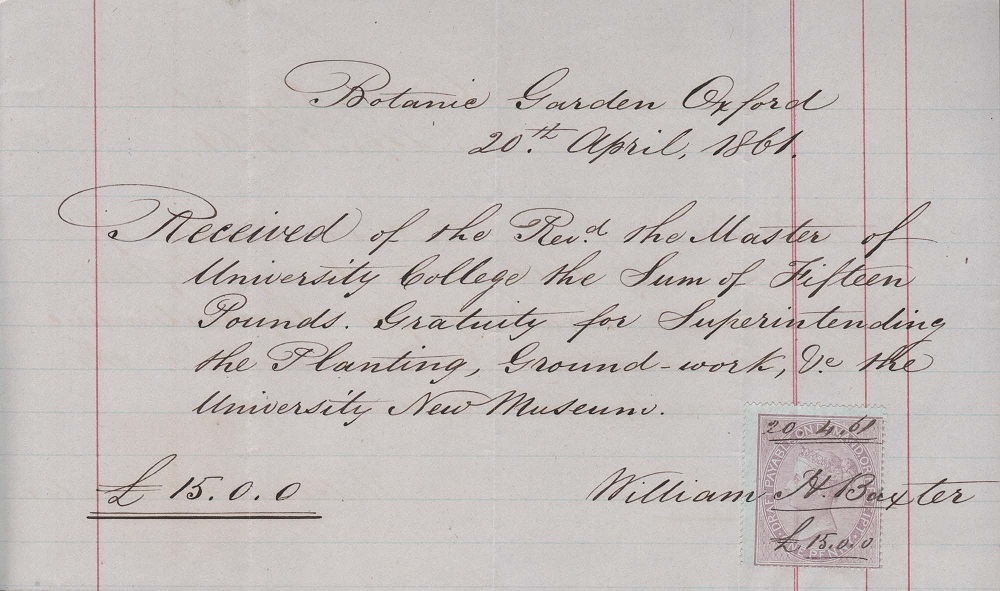
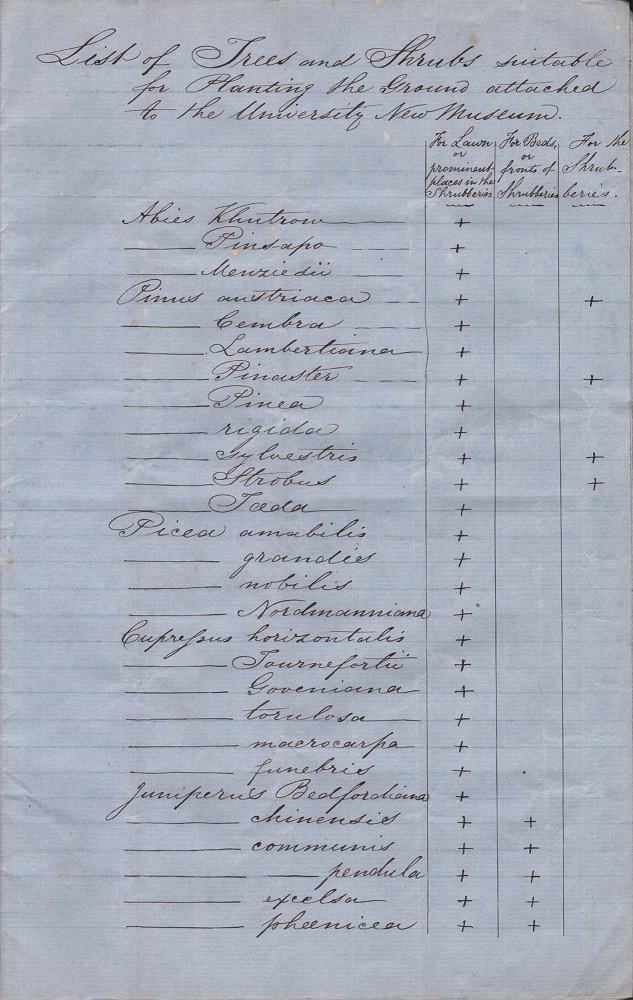
Phillips also worked with another curator at the Botanic Garden, William H. Baxter, who advised on suitable trees and shrubs to adorn the grounds surrounding the Museum. Over the years, as landscaping has changed and additional science buildings have been added around the Museum, only one of the trees chosen by Phillips and Baxter has survived. It is the imposing Giant Sequoia on the front lawn, which was planted in the early 1860s and is believed to be one of the oldest specimens in the United Kingdom.

Our connection to Oxford Botanic Garden continues to the present day. As the Museum embarks on the first major redisplay of its permanent exhibits in almost 20 years, staff are collaborating with the Garden to reference plants for displays showing the immense, interconnected variety of the natural world.

We are very pleased to be strengthening the Museum’s long relationship with the Botanic Garden, and would like to take this opportunity to wish everyone there a very happy 400th birthday!

Oxford Botanic Garden today
Top image: Oxford Botanic Garden in 1880

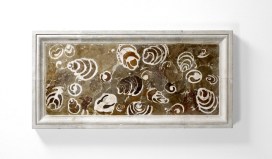
Marble-effect frame inlaid with a marble-effect stone showing the outline of numerous cross-section gastropod shells

The Continuing Importance of Corsi’s Legacy

Four Crowns is a studio based in Oxford which is dedicated to keeping the craft of scagliola alive. But what exactly is scagliola, and how does it relate to the Museum’s collections? Freddie Seddon, a University of Oxford Micro-Internship Programme participant at Four Crowns, tells more about this fascinating process…

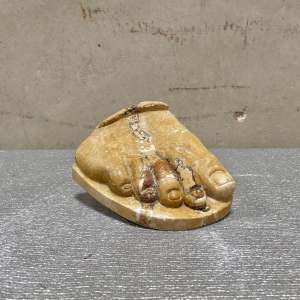
Sculpture of the front half of a foot in brown/yellow marble effect, showing cracks and damage to some of the toes
Foot, Four Crowns, 2020
145mm

Scagliola is the technique of imitating the beautiful patterning and colours of marble. With roots in the ancient world, scagliola saw a revival from the 17th century, when European artists and architects returned from their Grand Tours of the continent wishing to replicate the marbles of Classical and Renaissance Europe.

Several techniques can be used to reproduce the appearance of marble in plaster, with the addition of other natural pigments and larger chips of coloured plaster. The artist must try to replicate the conditions under which particular marbles form: compressions, twists and layers applied to the plaster to give the image of breccia, veins, and even fossils.

The Museum has a large collection of decorative stones, including the Faustino Corsi collection, acquired in 1827. The Corsi collection holds 1,000 samples of ancient and modern decorative stones, including polished marbles, granites, serpentines, and jaspers. Faustino Corsi (1771–1846) built the collection in the early 19th century, first by gathering material used in ancient times across the Roman Empire, and later adding decorative stone from contemporary quarries, mainly in Italy, but also Russia, Afghanistan, Madagascar and Canada.

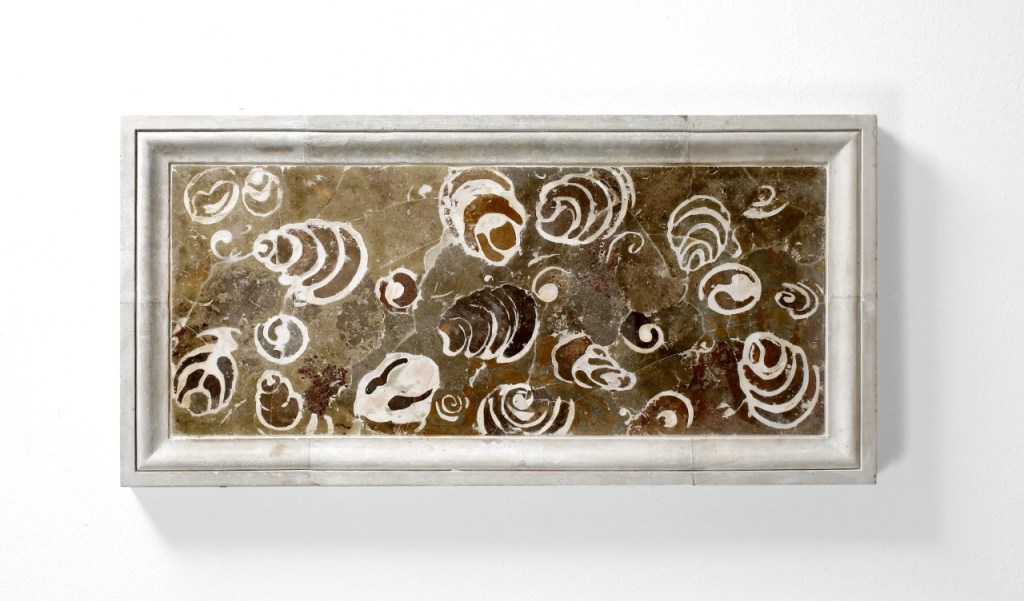
Marble-effect frame inlaid with a marble-effect stone showing the outline of numerous cross-section gastropod shells
Lumachellone, Four Crowns, 2018 990x485x60mm

The Corsi collection is valuable tool when it comes to scagliola. Images and marble descriptions from the Corsi database help determine the processes a certain scagliola sample should undergo and the natural colours that these would produce. To accurately depict marble, an artist might need to create upwards of twenty colours and clarity levels – even then, only high-quality, natural pigments will produce natural results. The piece is polished to obtain a shine like that possible on natural marbles, and cross-checked against Corsi’s samples one final time to guarantee a faithful replication of the stone.

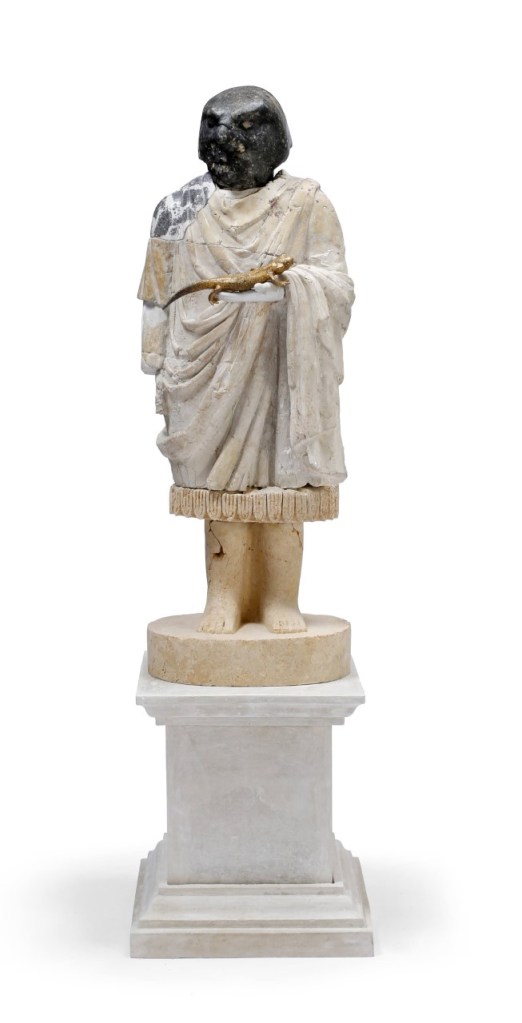
Statue of a robed figure standing on a plinth and holding a golden lizard-like reptile in one hand
Codazzi, Four Crowns, 2017
270x200x760mm

In this way, the selection of which stone to imitate is a creative challenge in itself for the artist. Each item in the Corsi collection offers different aesthetic and cultural experiences. Lumachellone antico, for example, is limestone with large fossilized gastropods, admired in classical Rome for its richness and complexity. The collection contains only one example of this stone, composed of samples from two different locations, which the Four Crowns artist has been able to faithfully replicate. As this marble type has never been available on any commercial scale or markets, it is up to the emerging generation of scagliola craftsmen to painstakingly reproduce this ancient stone.

The most ambitious and impactful presentations of scagliola can even mirror a combination of marbles. The Four Crowns’ Codazzi emulates four different stone types: the head is bigio antico, the drapery is giallo antico, and the legs and feet replicate a limestone common in Sumerian sculpture, with a shoulder inlay of bianco e nero.

Through the art of scagliola, and the unique reference resource of the Corsi Collection, rare, beautiful or lost marbles are able to be recreated time and again.

Freddie Seddon is a second year student, reading Ancient and Modern History (BA) at Wadham College, Oxford.