Dodo Roadshow: Dunham Massey

Dunham Massey 850px

To mark our selection as a Finalist in the Art Fund Prize for Museum of the Year 2015 we’re embarking on a unique and ambitious tour of the country – the Dodo Roadshow.

Beginning at Land’s End on 8 June and concluding in John O’Groats one week later, the famous Oxford Dodo will visit more than 20 museums and galleries along the way. 

Dunham Massey: The Stamford Hospital

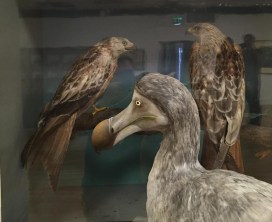
As fellow finalists in the Art Fund Museum of the Year 2015, it was great to meet the Oxford Dodo when it called by on Thursday.
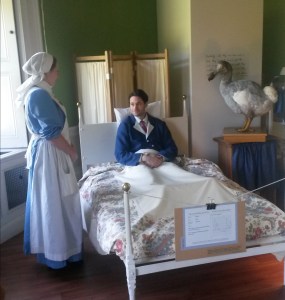
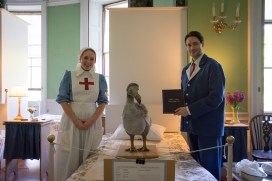
Dunham Massey1Here the Dodo is in the ward of the Stamford Hospital at Dunham Massey Hall, Altrincham. The hall became an auxiliary hospital during the First World War and 282 soldiers were treated here. To mark the centenary of the First World War the clock has been turned back and hospital rooms recreated. Actors playing soldiers, nurses and a variety of other characters perform scenes in the hospital rooms whilst visitors walk through the ward, recreation room, nurses’ station and operating theatre. You can look at letters, photographs and medical notes, listen to recordings that recount a brain operation and experience the house as the hospital that it became for two years.

Dunham Massey has a large archive and collection and the recreation is based on photographs, letters, scrapbooks, oral history recordings, original artefacts such as beds, bedside tables, screens and bedding, and a remarkable log that records of all of the soldiers treated in the hospital. A great deal of research into the archive and the people connected with the hospital was done by Dunham’s volunteer team.

Dunham Massey was given to the National Trust in 1976 after the death of Roger Grey, 10th Earl of Stamford. He was away from Dunham for most of the First World War and served as Aide-de-Camp to General Lloyd. His mother, Penelope, Countess of Stamford, was the hospital’s commandant and his younger sister Lady Jane was a VAD (Voluntary Aid Detachment) nurse. Letters to the family from nurses and soldiers, and correspondence between the family members reveals an insight into life in the house during the war.

The whole Dunham team is delighted to have been shortlisted for the Art Fund Prize for Museum of the Year 2015. The Stamford Hospital will be open until 11 November this year (open Saturday – Wednesday) then the team will be changing the house to tell a new story based on another fascinating chapter in Dunham’s history.

Good luck on your travels, Dodo!

Stickers small - Dodo Roadshow_crop

Dodo Roadshow: Tullie House

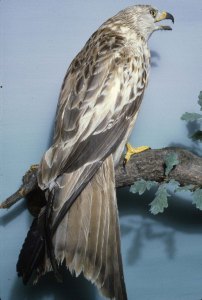
Red Kite

To mark our selection as a Finalist in the Art Fund Prize for Museum of the Year 2015 we’re embarking on a unique and ambitious tour of the country – the Dodo Roadshow.

Beginning at Land’s End on 8 June and concluding in John O’Groats one week later, the famous Oxford Dodo will visit more than 20 museums and galleries along the way. At each stop the Dodo will ‘interview’ one of the venue’s star objects.

Tullie House: Portinscale Red Kite

Red Kite Portinscale 1840So, tell me about yourself – who are you and where do you come from?
I’m the Portinscale Red Kite and I’m Cumbrian, born and bred. I live in Tullie House Museum and Art Gallery in Carlisle.

What is it that makes you so special?
I was one of the very last native red kites in Cumbria. We suffered intense persecution from humans in the 1800s and were driven to extinction in the county and then England. I am the oldest mounted bird specimen in the Museum here in Carlisle.

Who looks after you in this place?
I’m looked after by the Curator of Natural Sciences. Information about me and other biological specimens, as well as other historical and modern records of Cumbrian wildlife, are looked after by the Cumbria Biodiversity Data Centre. This is the Local Environmental Records Centre for Cumbria, which is based here at the museum and managed by Teresa Frost.

Do you remember life before the museum?
I can remember in the late 1800s the Rev. H. A. Macpherson visiting me whilst researching his book, A Vertebrate Fauna of Lakeland. He wrote “Mr. Sawyer of Threlkeld showed me a fine kite, which he bought for £2 at a sale. This bird had been shot by John Pearson at Portinscale near Keswick, in 1840, and is perhaps the last of the indigenous race of Kites that inhabited the Lake District from prehistoric times.” I can’t remember exactly when I moved to the Museum, but Macpherson campaigned for natural history to be a part of the then new Carlisle Museum and encouraged people to give their collections here.

What does the future hold for you?
I’ll be kept safely here in the Museum and be a reminder of how persecution can drive birds of prey to local extinction; sadly something which is not completely in the past. But the future for Red Kites in Cumbria is looking much brighter these days. Thanks to historic records like mine showing where Kites used to live, 90 birds were released in the Lake District between 2010 and 2012 as part of a nationwide reintroduction programme. Last summer we had wonderful news – 3 chicks hatched from a nest in Grizedale. This was the first confirmed breeding of Red Kites in Cumbria for around 200 years.

Stickers small - Dodo Roadshow_crop

Dodo Roadshow: Dove Cottage

Dove Cottage 850px
To mark our selection as a Finalist in the Art Fund Prize for Museum of the Year 2015 we’re embarking on a unique and ambitious tour of the country – the Dodo Roadshow.

Beginning at Land’s End on 8 June and concluding in John O’Groats one week later, the famous Oxford Dodo will visit more than 20 museums and galleries along the way. At each stop the Dodo will ‘interview’ one of the venue’s star objects.

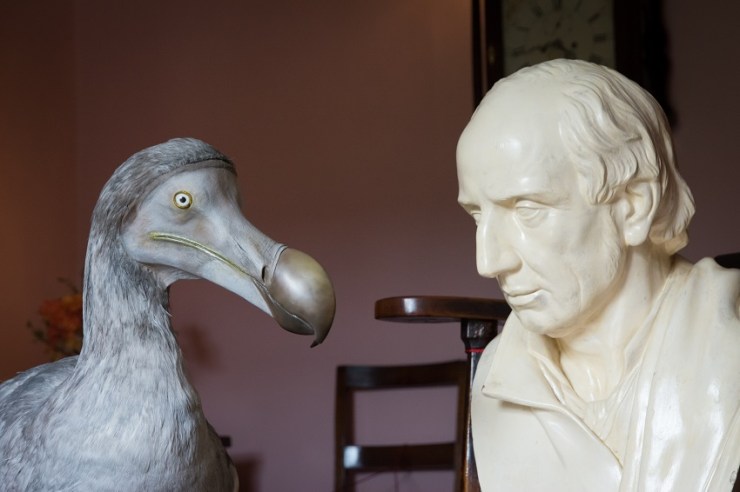
Dove Cottage: William Wordsworth

So, tell me about yourself – who are you and where do you come from?
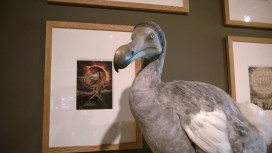
My name is William Wordsworth and I’m one of England’s most famous poets. I was born in the Lake District not far from here and this is my home in Grasmere, called Dove Cottage, where I lived with my sister, Dorothy, my wife, Mary, and our three children from 1799 to 1808. I once wrote that the garden at Dove Cottage was  “the loveliest spot than man hath ever found”; I think you could say the same about the whole of the Grasmere valley.

What is it that makes you so special?
My poetry is considered revolutionary because I chose to write about the lives of ordinary people and the challenges facing society using beautiful words from everyday conversation. Previously, poets used overly formal and complicated language which was too fancy for the average man. In the stories in my poems, I wanted to show that “men who do not wear fine cloaths can feel deeply” and show that they care about the world around them.

Who looks after you in this place?
I am looked after by lots of people and I am regularly dusted! I live in the museum, and almost all my manuscripts and published books are also kept safe here in a special library. My house, Dove Cottage, is well-loved too. Every day the staff at The Wordsworth Trust show many visitors around my house and there you can see items of my furniture, including the couch which features in my poem ‘I Wandered Lonely as a Cloud’. Each year the staff also spend a month between January and February delicately cleaning, mending and conserving all the items in the cottage.

Do you remember life before the museum?
My house is almost exactly the same. It has the same dark stone floors and wooden panels, and the furniture is mine too. Dove Cottage used to be an inn called the Dove & Olive Bough before I moved here and it still has open coal fires lit through most of the year. The garden which I once described as a “little domestic slip of mountain” has plants like my sister Dorothy grew, including flowers and vegetables. Before the large houses opposite Dove Cottage were built, you were able to see the lake from the first floor of the cottage.

What does the future hold for you?
When I was a younger man, I toured Europe, including a visit to France just after the Revolution and before the war with Britain began;  I was deeply affected by these conflicts. Issues like this and other themes that I have written about, such as the changes threatening society and the environment, and what it means to be alive in the world – are the same today as they were two hundred years ago. Through my writing I am able to provide a connection for people to the emotions they feel and to the natural world around them, encouraging a richer life.  I hope that in the future more people learn about my life and read my works so that it brings them a closer understanding of these important things.

Stickers small - Dodo Roadshow_crop

Dodo Roadshow: The Whitworth

IMG_0062
To mark our selection as a Finalist in the Art Fund Prize for Museum of the Year 2015 we’re embarking on a unique and ambitious tour of the country – the Dodo Roadshow.

Beginning at Land’s End on 8 June and concluding in John O’Groats one week later, the famous Oxford Dodo will visit more than 20 museums and galleries along the way. At each stop the Dodo will ‘interview’ one of the venue’s star objects.

The Whitworth: The Ancient of Days

So, tell me about yourself – who are you and where do you come from?

I’m The Ancient of Days, a watercolour at the Whitworth in Manchester. I was made by the great artist, poet and visionary William Blake in 1827.

What is it that makes you so special?

I was the last work of art that Blake made before he died. When he finished painting me he said, “There, that will do! I cannot mend it.” I also recently featured in a new work of art by the acclaimed artist, Cornelia Parker. With the help of the University of Manchester Nobel physicist Kostya Novoselov, she made a firework display called “Blakean Abstract” which was a pyrotechnical portrait of me.

Who looks after you in this place?

A lot of people. Curators show me to visitors in exhibitions and special viewings; conservators make me look my best; Visitor Assistants point me out to the public and keep me safe; and Learning staff show me to schoolchildren.

Do you remember life before the museum?

Yes, I was owned by the man who founded The Guardian newspaper, John Edward Taylor. He gave me to the gallery in 1892.

What does the future hold for you?

I travel internationally quite a lot as people all over the world want to see me, so more of that I expect, but I always enjoy coming home, back to the Whitworth.

Stickers small - Dodo Roadshow_crop

Dodo Roadshow: Yorkshire Sculpture Park

James Turrell, Deer Shelter Skyspace, 2006. An Art Fund Commission. Courtesy the artist. Photo Jonty Wilde To mark our selection as a Finalist in the Art Fund Prize for Museum of the Year 2015 we’re embarking on a unique and ambitious tour of the country – the Dodo Roadshow.

Beginning at Land’s End on 8 June and concluding in John O’Groats one week later, the famous Oxford Dodo will visit more than 20 museums and galleries along the way. At each stop the Dodo will ‘interview’ one of the venue’s star objects.

Yorkshire Sculpture Park: Skyspace

So, tell me about yourself – who are you and where do you come from?
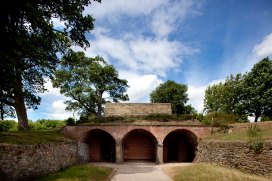
I am the Deer Shelter Skyspace in the grounds of Yorkshire Sculpture Park. I was created by American artist James Turrell within the 18th century Grade II listed building, the Deer Shelter, in 2006. I am a large chamber within the existing Deer Shelter structure with an aperture in my roof open to the elements. This opening creates a frame for the sky to be viewed through. Loving the Yorkshire landscape, the artist first proposed this idea in 1993 but it was only following a commission by the Art Fund that I was made possible.

What is it that makes you so special?

Created specifically for Yorkshire Sculpture Park, I do not alter the landscape but I create a tranquil environment for visitors to contemplate and enjoy the changing light of the Yorkshire sky. Turrell is known for manipulating light and is interested in how viewers perceive the light in different ways. Here, light is used as a medium for bringing the sky closer to viewers and to fill the space around them. The quality of light and feeling within me change with the seasons and weather so every visit can be a different experience.

Who looks after you in this place?

The Curatorial team, front of house staff and a team of Sculpture Technicians take care of me. I am pretty low maintenance but sometimes a little help is needed as I am always open to the elements.

Do you remember life before the museum?

For me, there was no life before YSP. James Turrell has created other skyspaces across the world, each one unique and specific to their location. I was designed and made just the way I am and permanent here at YSP.

What does the future hold for you?

I will continue to be a place for contemplation in the changing landscape here and I hope visitors will continue to enjoy stopping by Skyspace.

Stickers small - Dodo Roadshow_crop

Dodo Roadshow: Stoke Museums

To mark our selection as a Finalist in the Art Fund Prize for Museum of the Year 2015 we’re embarking on a unique and ambitious tour of the country – the Dodo Roadshow.

Beginning at Land’s End on 8 June and concluding in John O’Groats one week later, the famous Oxford Dodo will visit more than 20 museums and galleries along the way. At each stop the Dodo will ‘interview’ one of the venue’s star objects.

Potteries Museum & Art Gallery: Ozzy

  So, tell me about yourself – who are you and where do you come from?
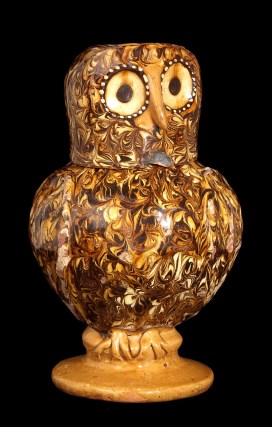
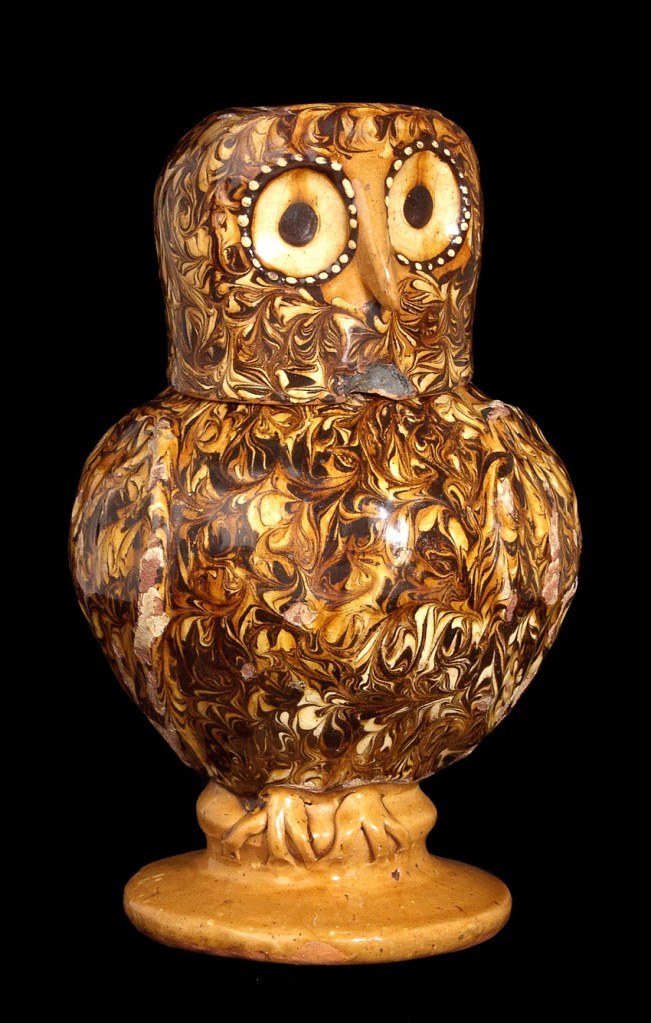
Whooo am I? I’m Ozzy, the Potteries Museum & Art Gallery’s famous slipware owl. I was made in Staffordshire around in the late 17th century, about 350 years ago – just as you were becoming extinct. Unfortunately I can’t tell you who made me – it was so long ago that I’ve forgotten and sadly he didn’t leave his signature or maker’s mark on me so no one knows now. I might look like an owl but I’ll let you into a secret – I’m actually a jug. Look round the back and you’ll see my handle. My head lifts off – but very carefully if you please – and then it becomes the cup for you to drink out of. Mind you, it’s been a long time since anyone had a drink out of me!

What is it that makes you so special?
I’m one of only a very few owl jugs made of slip-decorated earthenware to survive from the 17th century. I’m made of local red clay and my surface has been decorated by swirling together three colours of clay to give the effect of feathers. I was then glazed and fired. It took a really experienced and skilled workman to make me and I was expensive when I was made – that’s why I’ve survived. I wasn’t used every day like common pieces of pottery. I was cherished and only used for special occasions. For most of my life I’ve been on display – as I am today.

Who looks after you in this place?
So many people look after me. The curators put me on display and wrote a nice little label to tell everyone about me. The security staff patrol the galleries and make sure I’m safe and the cleaning staff make sure any finger marks are cleaned off my case every day. And of course my public visit me. They come from all over the world – I’m a celebrity you know.

Do you remember life before the museum?
Well, it’s been a long life and some of it’s a bit vague now, but I’ll never forget how I came back to Stoke in 1990. I’d been living on a mantelpiece a long way from here for quite a while when my owner put me in a box a carried me off to the Antiques Roadshow. It was all dark until a charming gentleman called Henry Sandon lifted me out. He was so excited to see me that everyone crowded around and suddenly I was being filmed for TV! The next thing I knew was that I was in a London auction house. I was a bit worried as I didn’t know where I would end up, but this museum bought me (with help from the V&A Purchase Grant Fund, The Art Fund and The Friends of the Potteries Museums) and I’ve been here ever since.

What does the future hold for you?
Life as a celebrity is very busy. Mr Sandon comes regularly to see me – he always says I’m his favourite find from the Antiques Roadshow. Lots of other TV companies have filmed me and I’ve been on the radio too. I’m the best-known piece of pottery in the Museum – and they’ve got over 40,000 pieces so it’s quite a responsibility. I have my own case at the start of the ceramics gallery and when the curators do tours they always start with me so I get to see lots and lots of visitors. People always want to hear about my life and about the pottery industry here and how I came back to Stoke. Some of them take me home as well – I’m a postcard in the shop.

I wish I could remember who made me – he’d be so pleased to think of how my career’s turned out…


Stickers small - Dodo Roadshow_crop