Lightning strikes!

I’ve just been getting our fulgurites out of their drawer for their second outing to London. ‘What’s that?’ I hear you ask. Well, the clue’s in the name, for ‘fulgur’ is Latin for lightning. Fulgurites form when lightning strikes the ground; and if the ground happens to be made of sand, the intense heat of the lightning melts the grains of sand to form a tube of natural glass. The longest known fulgurite is nearly five metres long, but they are always very fragile things.
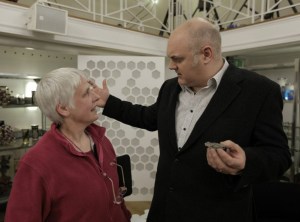
So why is a fulgurite going to London? We get all sorts of requests to see specimens, from researchers, amateur enthusiasts, students and artists, and even people who are just curious. Our collections are there to be used and enjoyed after all. But in this particular case the producers of the BBC4 programme Science Club were making a pilot for their new series and were looking for a fulgurite to star in the show.
I took two different fulgurites to the recordings, both found in the early 19th century. One is a piece labelled as coming from Drigg in Cumberland. This was a famous discovery; even Charles Darwin knew about them, for he wrote that the fulgurites he discovered in South America were very like those of Drigg in appearance. The second was found in Westphalia, Germany, and it shows a glassy trace of the lightning’s path as it passed through the sand.

For this pilot programme Science Club was investigating natural disasters. Presenter Dara Ó Briain was joined by expert demonstrator Professor Mark Miodownik who had quite a shocking experience with a lightning machine! We were also shown why it is dangerous to stand under a tree during a thunder storm, and we heard about the lucky escapes some people have when struck by lightning.
Fulgurites are rather rare and special, and as the pictures show, both presenters enjoyed a chance to get a close look at these natural curiosities.
The pilot programme was successful, and one of our new Education trainees, Liz Danner, will be taking the fulgurites back for the final filming of Science Club this week. If you would like to see them too, they will feature in our next ‘Presenting…‘ display soon. Follow the blog and we’ll let you know when
Watch out for more Science Club on BBC4 – it’s fascinating and fun.
Monica Price, Assistant curator, Mineral Collections

 The Education team had a fantastic sunny day out on Saturday at




 You’ve read about it in the


 Because Oxfordshire is a brilliant place to look for fossils, we took along some fascinating local fossils for visitors to see and touch. Here’s Carolyn from Geology showing these volunteers some gems from the collection, including a

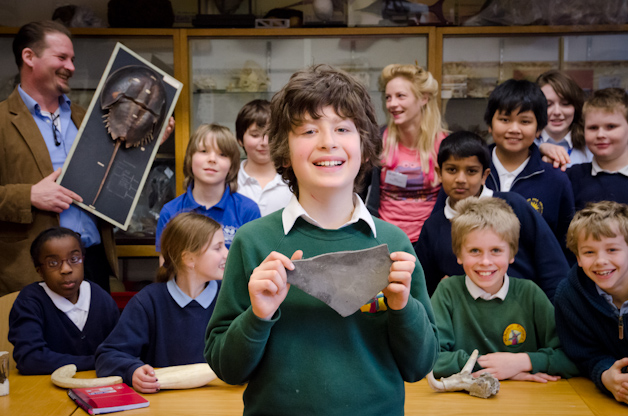

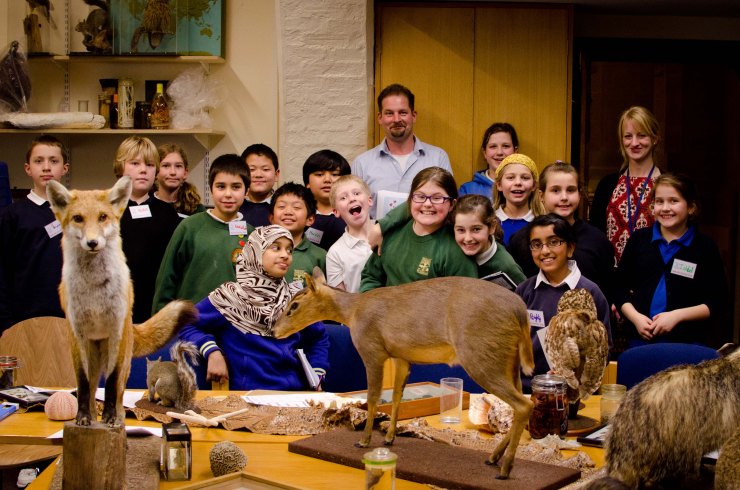 As the name of this blog suggests, much of the Museum may lie in darkened storage but there is still plenty of activity going on. One such burst of life occurs each week when our Natural History After School Club meets to spend an hour learning about the natural world through the Museum’s collections.