So long, 2015…

IMG_6901-Edit

As you can tell from the adornment of our Red Deer, Christmas is upon us, so it’s nearly time to bid farewell to another year. It’s been another remarkable twelve months here at the Museum so here’s a little round up a few highlights from 2015…

As winter gave forth to spring
News emerged of a heartwarming thing
The Art Fund whispered in our ear
We were nominees for Museum of the Year!

Although eventual winners we were not
It mattered really not one jot
For in celebration we embarked
On the Dodo Roadshow – a tremendous lark

Back in April we’re pleased to say
Another award came our way
Goes to Town gave creatures free reign
And grabbed a gong for Marketing Campaign

But we weren’t always on the road
In our exhibitions many stories were told
Of evolution, geology and sensory powers
Science and research passed the visitors’ hours

Our doors were open without interruption
While out on the lawn was a volcanic eruption
University scientists had plenty to say
On a really Super Science Saturday

So to our schools, and families, and adults and more
Thank you, cheers, and thank you some more

Here’s our programme for January to April. See you in 2016…
Super Science Saturday

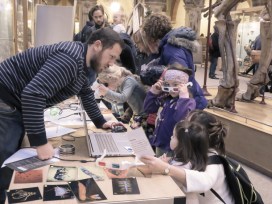
On Saturday 28 November we held the first of our new Super Science Saturdays events – a mini science fair for all the family.

The first event was Earth-themed, and featured many stalls about geology, geography and the natural environment – everything from fossils to earthworms!

Visitors got the chance to chat to University of Oxford scientists, meet people from wildlife organisations, and get their hands on specimens from the Museum collection.

Super Science Saturdays is a souped-up version of our regular Science Saturdays events, where scientists from the University help visitors investigate natural history specimens.

Many thanks to the University’s Department of Earth Sciences, the School of Geography and the Environment, and also to the Berks, Bucks & Oxon Wildlife Trust, and the Oxford University Museums and Collections Volunteers for making the event a success.

Partridge in a laboratory

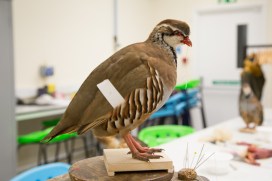
IMG_6669

We recently ran a second series of taxidermy workshops here at the Museum, run under the expert guidance of professional taxidermist Derek Frampton. Once again they proved very popular with participants, so we asked one of those budding taxidermists, Kit Collins, to give us a short write-up of the day…

As a child I was always fascinated by nature, finding adders, baby hares, grass snakes, slow worms, and watching dolphins, buzzards, and Red Kites, when they were much rarer. I even once skinned a mouse that had been caught in our mouse trap.

I have always wanted to try taxidermy and I now work at an auctioneers where I regularly see all sorts of taxidermy – skins, horns, and skulls, including a hippopotamus skull. So I was keen to know more about the process. This was the first taxidermy course I’ve seen so I jumped at the chance to try something new and learn from an expert taxidermist.

IMG_6677
Derek Frampton puts some finishing touches to his partridge

During the workshop we were taken through each step of the process, first watching Derek demonstrating on his bird then copying these steps on our own Red-Legged Partridges.

Kit and partridge
Kit and his finished specimen regard one another

We could see the finished article that had been made in the previous day’s workshop, sitting watching us on a nearby windowsill. Unfortunately, our specimens looked nothing at all like this at the start and as the morning went by it looked less and less likely that our piece of wet skin and feathers with a few bones attached would end up looking anything like a real bird again…

However, with the help of a blow dryer the feathers regained their soft, striking plumage. We then spent the afternoon piecing the bird back together using a kind of packing straw to recreate the shape of the body, and wire, clay, false eyes, and car body filler to do the rest.

We each ended up with a beautiful bird to take home, as well as the memories of a fun and unusual day out (and anatomy lesson) at the Museum. I would love to do it again.

Kit Collins

Starry night

rotunda
Image: Philip Hadland

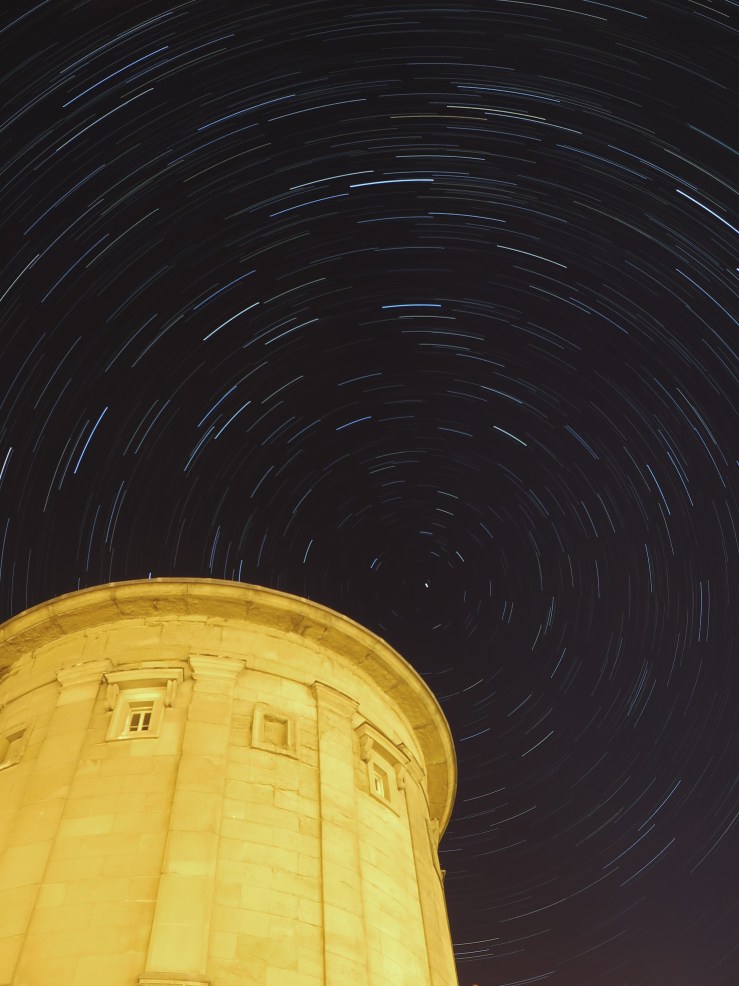
This dazzling photograph has just been awarded third prize in the Geological Society’s 100 Great Geosites Photo Competition and will feature as the December image in their 2016 calendar. It shows a building close to our hearts, the Rotunda Museum in Scarborough. In fact, the photo was taken by a member of our Earth Collections team, Phil Hadland at the Yorkshire Fossil Festival back in September.

On day 2, after a busy day sharing collections and knowledge with the festival-goers, the cloudless skies revealed a dark starry night. So Phil ventured out to do bit of photography, envisaging a beautiful trail of stars apparently rotating above the Rotunda. Conditions could not have been much better.

Using the Google Sky Map app he found Polaris (also known as the North Star), the star which sailors once used to navigate at night. He carefully positioned his camera and tripod for a 45 minute exposure to capture both the Rotunda and the stars. The image that resulted is spectacular. Phil explains;

Of course it is the rotation of our planet that causes the effect of star trails, but it shows that we are constantly on the move on a tiny speck within the universe, which we call Earth.

The timing of the success is ideal. This year marks the 200th anniversary of the publication of William Smith’s Geological Map, which we are celebrating with our current exhibition Handwritten in Stone. Smith also went on to conceive and design the The Rotunda Museum as the ideal place to display fossils and interpret geology.

Credit: Philip Hadland

Phil is understandably proud of the attention that his photograph has received:

I’m thrilled to be among the winners and it is a great feeling when the effort (which is usually required to take great photos) pays off. It’s also nice to know that so many people will get to see and appreciate the photo over Christmas 2016.

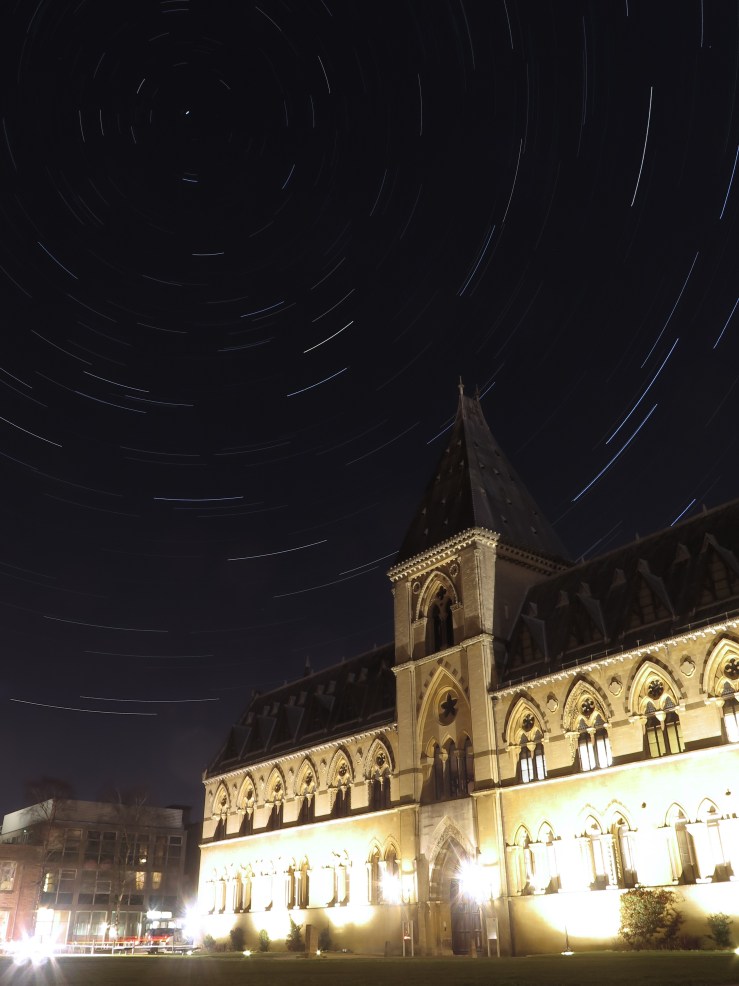
This isn’t the only long exposure image that Phil has created; here you can see a photo of this very museum treated in a similar way. Perhaps a testament to the long-lasting importance of natural history.

Rachel Parle, Interpretation and Education Officer

Mandy on a mission

Mandy featured

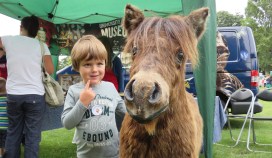
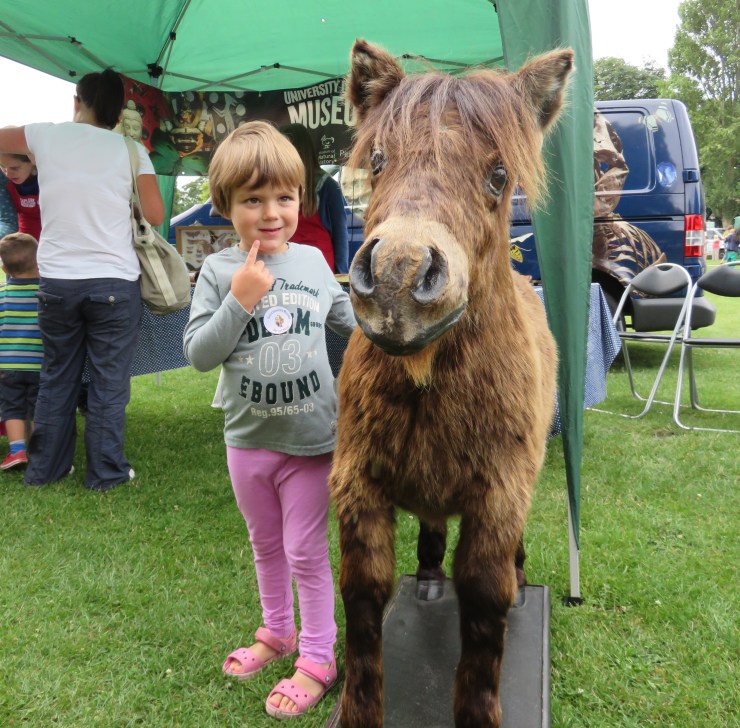
Regular visitors to the Museum will have noticed a certain Shetland Pony hasn’t been seen for a while. After living in Knaresborough Zoo during the 1980s, Mandy went on to spend over 10 years on display as touchable taxidermy – admired, adored and stroked until she could take no more. With the arrival of our new Sensing Evolution displays, it was time for a revamp and Mandy has gone into retirement. But, as our Community Outreach Officers explain, she’s now embarked on a brand new adventure…

**

Mandy hasn’t disappeared! Instead of being in the Museum of Natural History, she now comes out to community family events with Oxford University Museums’ outreach team. This summer she has been all around Oxfordshire at Playdays, organised with Oxfordshire Play Association, and also with us at community festivals such as the Cowley Road Carnival and the Leys Festival. These brilliant indoor and outdoor activities are completely free for everyone to attend.

IMG_1189
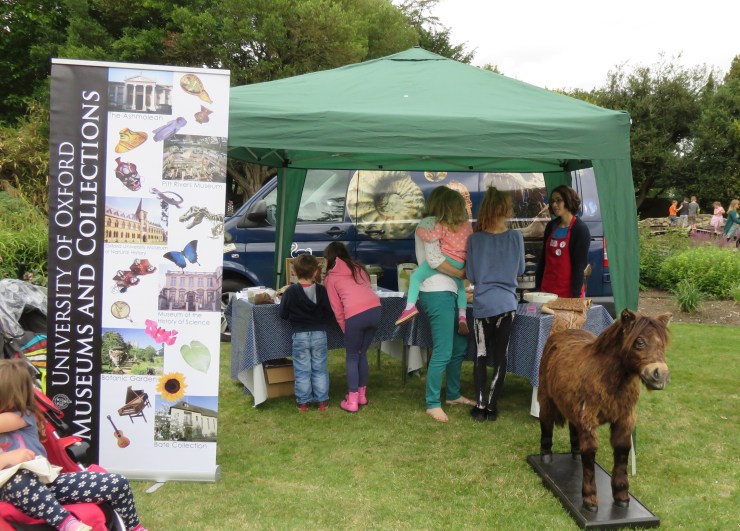
Mandy takes pride of place at an Oxfordshire Playday

Oxfordshire Playdays offer children the support, space and resources to develop play and explore other activities available in Oxfordshire. The carnivals celebrate the places, spaces and communities in which we live, offering people an opportunity to be part of their local community.

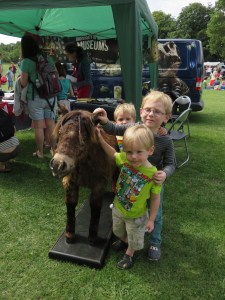
Some of Mandy's admirers come to say hello
Some of Mandy’s admirers come to say hello

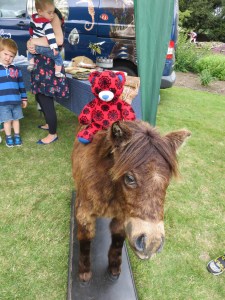
At these events Mandy has pride of place in front of the museums’ outreach gazebo, so everyone can see her. The outreach team represent all the Oxford University Museums and Collections, giving people a flavour of what they can find. So, along with an elephant’s tooth, Megalosaurus footprint and Madagascan Hissing Cockroaches, Mandy comes with us to represent the Museum of Natural History. Once people give Mandy a stroke, they often come and hold a Cockroach or talk to the Outreach Officers about the other objects.

Teddy takes a ride
Teddy takes a ride

When parents, children (and dogs!) see Mandy, they are delighted. A lot recognise her from the Museum of Natural History, but others are just drawn to her soft, cuddly fur. Lots of children stroke her, pretend to feed her and put their teddies on her to give them a ride. Often we hear:

It’s the horse from the museum! Is she alive? How did she die? Where did she live?

So Mandy has not been forgotten. Instead she’s roaming Oxfordshire, bringing smiles to lots of children’s faces and has become a very valued member of Oxford University Museums’ outreach team!

Nicola Bird and Susan Griffiths, Community Outreach Officers

Adam and the Edmontosaurus

Edmontosaurus re-instate 011
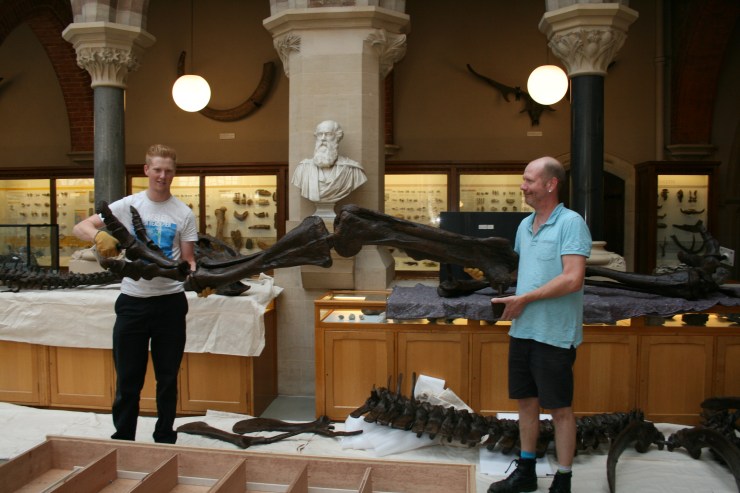
Adam (left) and Pete carrying a hind leg, presided over by the statue of Henry John Stephen Smith, Keeper of the Museum 1874 -1883

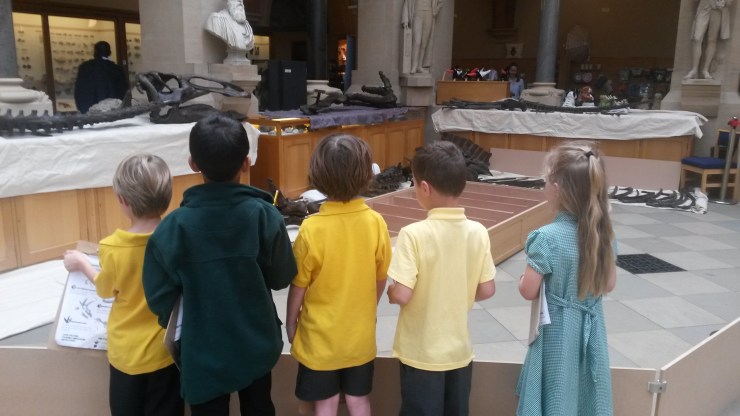
Fossil Fridays don’t get much bigger than this. This morning a team from the Museum have started the process of reinstating our large Edmontosaurus cast. The 49 pieces that make up the skeleton were brought back into the Museum after going out on the road, and now sit ready and waiting in the middle of the Museum.

For many of the team, lugging dinosaurs around is an everyday challenge, but one member of staff is very new to this sort of thing. Meet Adam Fisk, our new apprentice who joined the Museum only 2 weeks ago. Working alongside his supervisor Pete Johnson, he’s already helped with all sorts of tasks around the building, such as removing old display panels and fixing lights, but this one has to be a new experience.

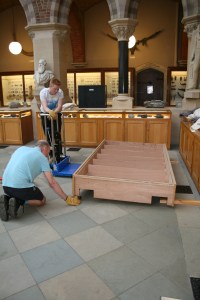
Returning the Edmontosaurus base to the museum court with supervisor Pete Johnson
Returning the Edmontosaurus base to the Museum court with supervisor Pete Johnson

Adam is fresh into the Museum following his GCSEs this summer and he says it all feels like a dramatic change of scene;

Only 8 weeks ago I was sitting in a classroom – now look at me stride!

The Edmontosaurus was dismantled back in June and went to the Cheltenham Science Festival with Professor Phil Manning of Manchester University. It was displayed in the ‘Dinozone’ exhibition, which received 14,000 visitors over 6 days.

The Edmontosaurus bones attract attention from a visiting primary school.

The cast is made up of 15 sections (plus 34 ribs) which bolt together. First to go on are the back legs and pelvis, then the spine and the skull, followed by the upper limbs. Lastly, the 34 ribs can be carefully slotted into place. The giant puzzle of fitting it altogether will begin on Monday.

Here’s how Pete describes Adam’s Edmontosaurus experience:

One small step for A-dam, one giant leap for apprentice-kind!

Rachel Parle, Interpretation and Education Officer