‘A thoroughly unhousewifely skill’

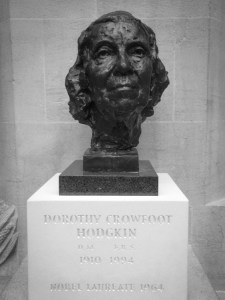
HodgkinBust etc 009

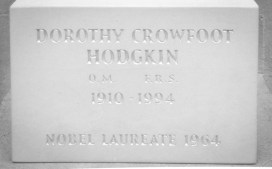
For International Women’s Day, the Museum of Natural History celebrates the life and career of Dorothy Hodgkin, one of its most eminent researchers. Hodgkin was awarded the Nobel Prize for Chemistry in 1964, and is still the only UK woman to have been awarded one of the science Nobels.

When the Museum of Natural History was designed in the 1850s, the building was intended not just to house a museum but also the burgeoning science departments of the University. The lettering above the doors facing the court continues to record these early affiliations: ‘Department of Medicine’, ‘Professor of Experimental Philosophy’, and so on.
Dorothy_Hodgkin_Nobel
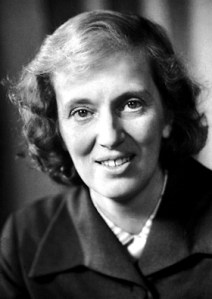
Dorothy Mary Hodgkin (1910–1994) Image: Nobel Prize

As individual departments grew they moved into their own buildings across the science campus. One of the last research groups left in the Museum was the Department of Mineralogy & Crystallography, which, from the 1930s onwards, was the research home of the outstanding X-ray crystallographer Dorothy Hodgkin (1910-1994), winner of the Nobel Prize for Chemistry in 1964.

The Daily Mail famously celebrated her success with the headline ‘Oxford housewife wins Nobel’, but The Observer was no more enlightened, commenting that Hodgkin was ‘an affable looking housewife’ who had been awarded the Nobel Prize for ‘a thoroughly unhousewifely skill’.  That socially disruptive ability was an unparalleled proficiency with X-ray analysis, particularly in the elucidation of the structure of biological molecules.

Hodgkin undertook her first degree at Oxford from 1928 to 1932, initially combining chemistry and archaeology but later focusing on the emerging technique of X-ray crystallography. Her undergraduate research project was carried out using this technique in a Museum laboratory within what is now the Huxley Room, the scene of the 1860 Great Debate on evolution between Bishop Wilberforce and T. H. Huxley. She then journeyed across to Cambridge for her PhD before returning to Oxford in 1934 and resuming her association with the Museum.
Model_of_the_Structure_of_Penicillin,_by_Dorothy_Hodgkin,_Oxford,_c.1945
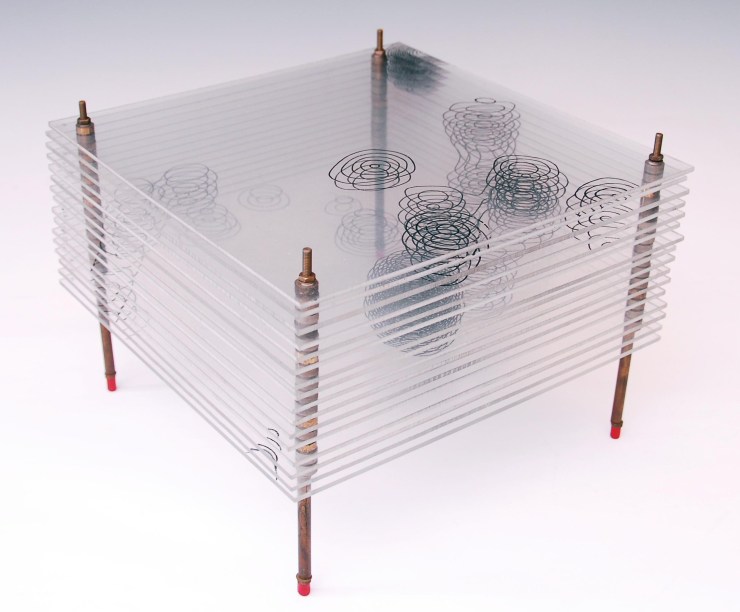
Model of the Structure of Penicillin, by Dorothy Hodgkin, Oxford, c.1945, in the Museum of the History of Science

Back in Oxford, Hodgkin started fundraising for X-ray apparatus to explore the molecular structure of biologically interesting molecules. One of the first to attract her attention was insulin, the structure of which took over 30 years to resolve – a project timescale unlikely to appeal to modern research funders. Other molecules proved more tractable, including the newly discovered penicillin, which Hodgkin began to work on during the Second World War, and vitamin B12.  It was for the determination of these structures that she was awarded the Nobel Prize.

Dorothy Hodgkin’s new X-ray laboratory was set up in a semi-basement room in the north-west corner of the Museum.  The room is now a vertebrate store but was once also the research home of Prince Fumihito of Japan, when he was based in the Museum for his ichthyological research (and It is still the only room in the Museum with bulletproof windows).

Initially, Hodgkin’s only office space consisted of a table in this room and a small mezzanine gallery above, which housed her microscopes for specimen preparation. Once prepared, she then had to descend a steep, rail-less ladder holding the delicate sample to the X-ray equipment below. Later, Hodgkin had a desk in the ‘calculating room’ (now housing the public engagement team) where three researchers and all of their students sat and undertook by hand the complex mathematics necessary after each analysis to determine the crystal structures of organic molecules.

Paul Smith – Director

If you would like to learn more about Dorothy Hodgkin and her work, then read Georgina Ferry’s excellent biography ‘Dorothy Hodgkin: A Life’ which has just been re-issued as an e-book and new, print-on-demand paperback by Bloomsbury Reader.

 This year’s Dorothy Hodgkin Memorial Lecture will be held in the Museum at 5 pm on Thursday 12 March, and is open to all. The lecture will be given by Dr Petra Fromme (Arizona State University) who is an international authority on the structure of membrane proteins.

Ray of sunshine

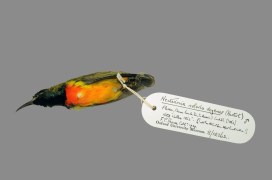
nectarina_solaris Working on the Lepidoptera Project in the Entomology department keeps me very busy during the day, but I rarely get to see other parts of the Life Collections. So it was a real treat when my boss Darren said I could look at the specimens in the bird skin store. While carefully going through the drawers, I found this spectacular little bird from the family Nectariniidae. The species is Cinnyris solaris, which is also has the evocative name of Flame-Breasted Sun Bird. This particular specimen was an amazing surprise, because of the label data. It states:

Flores (lesser Sunda Islands, Indonesia) [?1862] Noted “Wallace 1862”[?Collected or obtained  from Alfred Russell Wallace?] F.P. Pascoe Coll. 1909

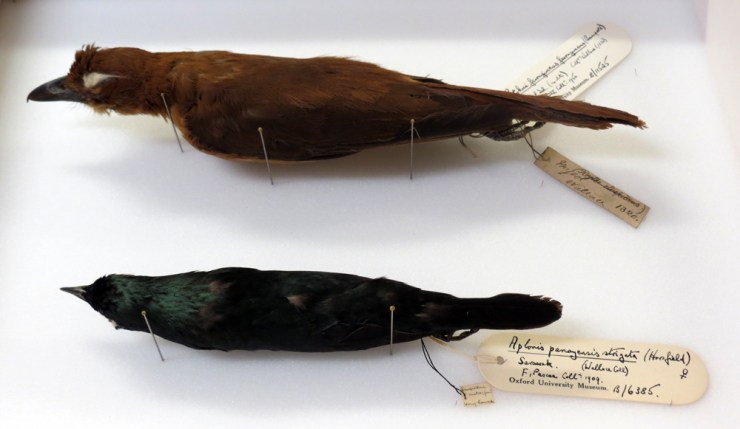
A bird that was probably collected by Alfred Russel Wallace! I checked the excel spreadsheet that listed all of the birds in the museum collected by the famous 19th century naturalist and got my second surprise- it wasn’t on the list! Five other Wallace birds were listed (including the two shown here) but the Sun Bird wasn’t there.

WALLACEBIRDS
Two of the other Wallace birds in the Museum’s collection

I decided to do some research on the specimen, and here is what I found out: The specimen was donated to the museum in 1909 by the English entomologist Francis Polkinghorne Pascoe, who acquired a lot of material from Wallace over the years. In Wallace’s paper A List of Birds inhabiting the Islands of Timor, Flores and Lombok the bird is mentioned as Nectarina solaris (it was later placed in the genus Cinnyris.) The bird would have been in Wallace’s possession when Pascoe acquired it.

Wallace, A.R. (1863) A list of Birds inhabiting the Islands of Timor, Flores and Lombok with Descriptions of the New Species pg. 486

However, the bird was also more likely to have been collected by Wallace’s assistant Charles Allen rather than Wallace himself, as Wallace never set foot on Flores. Wallace did not think much of Charles Allen as an assistant, as detailed in this letter to Wallace’s mother on 30th September 1854:

If it were not for the expense I would send Charles home; I think I could not have chanced upon a more utterly…careless boy.

nectarina_solaris_versoIn 1893, the major portion of the collection was donated to the British Museum in London via a relative, Miss Pascoe, but she donated the remainder to the Hope Department here at the Museum in 1909. Alfred Russel Wallace himself was said to have suggested this. These items were mostly insects, but also included this beautiful Flame-Breasted Sun Bird. Today the Flame-Breasted Sun Bird is a scarce species due to its limited island range, but is not considered threatened. I feel privileged to have chanced across such an amazing specimen in the bird stores. Gina Allnatt, Curatorial assistant (Lepidoptera) ** Letter used by Gina for research can be seen at Wallace Letters Online

Presenting… Darwin’s Insects

IMG_4273

A new year, a nice new display case. You may already be familiar with the Presenting… series that we’ve been running since March 2013; it started as a way to showcase treasures from the Museum’s collection during our closure year. Something changing and engaging to see as you passed through our darkened museum into the Pitt Rivers. Since re-opening early in 2014, we’ve celebrated significant natural history anniversaries, shared some of the staff’s favourite objects and put on joint displays with other departments in Oxford University. Now, for 2015, Presenting…  is getting a make-over.

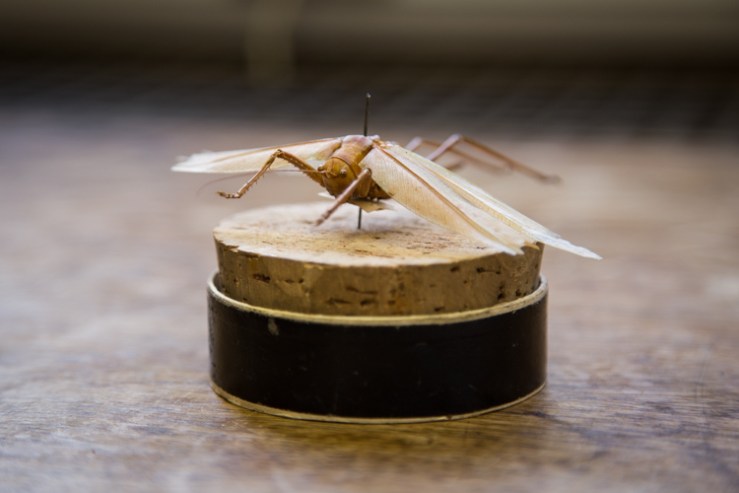
Bush cricket, family Tettigoniidae
IMG_4268
Amoret from Life collections installs a letter from Darwin to Hope

Today we’ve installed a brand new Presenting…  display, in a posh new case. With humidity control and UV protection, this standard-leading unit gives us the opportunity to showcase some of the really special and fragile specimens from the collections. We’re launching tomorrow with a display of insects collected by none other than Charles Darwin.

As well as showing off some specimens collected by the great man in Australia and Tasmania, Darwin’s Insects will tell the story of his close friendship with Frederick William Hope (1797–1862), founder of the Hope Department of Entomology in this Museum. Hope was one of the most eminent entomologists of his time and when Darwin collected insects he often turned to Hope to help identify them.

Preparing specimens in the Life collections

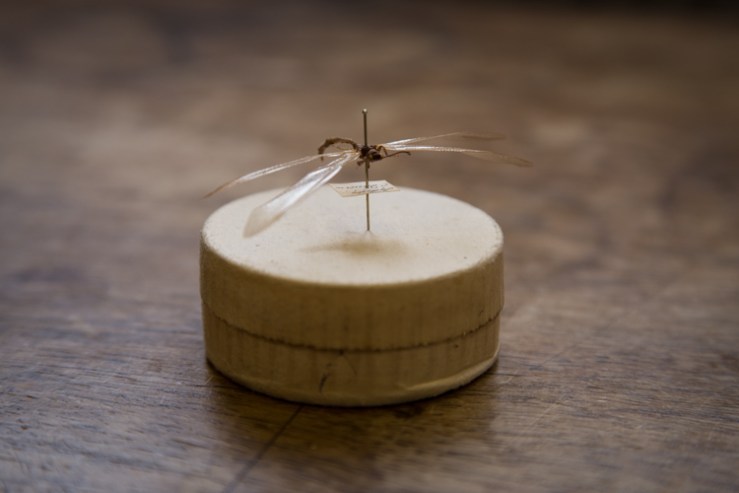
Darwin’s journey on HMS Beagle began in 1831 and towards the end of the trip he travelled around parts of Australia and Tasmania observing and collecting many species, including the insects you can see on display. They’re displayed in pill boxes similar to the type Darwin would have used to collect the specimens originally, and you can see Darwin’s handwriting on the tiny labels.

Ant lion, family Myrmeleontidae

Alongside the pinned insects, you can see one of Darwin’s letters to Hope, sent in 1837. He mentions insects that he collected between January and April 1836, which include the specimens on display. He is asking for Hope’s assistance, because so many of these insects are unknown to science. Hope was always keen to help identify new species and in another correspondence, from 1834, he promised to give Darwin “all assistance in my power” with this task.

The insects and letter will be on display from tomorrow (10 January) until 8 March. Pop in and take a look!

Rachel Parle, Interpretation and Education Officer

On the wing

Jones 2

Since the 1920s the Museum has had in its care an original, unpublished manuscript containing over 1,500 beautifully detailed and colourful paintings of butterflies and moths. Known as Jones’ Icones, this one-of-a-kind work was created in the late 18th century by amateur Lepidopterist and retired London wine merchant, William Jones.

The paintings depict over 760 butterflies and moths from the collections of some of the most eminent naturalists in London at that time, including the founder of the Linnean Society, Sir James E. Smith and entomologist Dru Drury, as well as Jones’s own specimens.

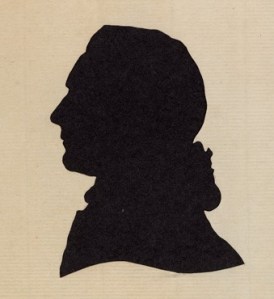
A silhouette of William Jones

In addition to being a beautiful work of art, Jones’ Icones is also an extraordinarily important document in the history of entomology and insect collecting in Britain. At the time Jones was making these paintings, many of the specimens he was depicting were being brought to Europe and described for the first time, most notably from Australia and the Oceanic region. Jones meticulously recorded these specimens through his paintings, and his work remains the only record of many of these important collections, a large number long-since destroyed, lost, or divided among private collectors.

The Icones was also consulted by a student of Linnaeus, Johann Christian Fabricius – the man credited as the first to describe over 10,000 insects. It is believed that Fabricius named over 200 species from the images in the Icones, citing Jones’ work in his publication Entomologica Systematica in 1791.

Large Copper from Jones Collection at the Museum
Large Copper butterflies (Lycaena dispar) from Jones Collection at the Museum

In spite of this manuscript’s huge importance to the history of entomology in Britain, it has never been made available beyond the reading room of the Museum’s archive. So now, after almost a century of failed or abandoned attempts, Jones’ Icones is available for all to see!

A plate from the Jones' Icones
A plate from the Jones’ Icones

As part of an HLF funded project, Flying Icons, which has been running since April 2013, all six volumes of Jones’s Icones have been digitised and made available online. A website at www.jonesicones.com has also been developed in order to promote this amazing manuscript and the related collection here at the Museum.

This website also serves another very important function: to solicit help from keen amateurs and experts worldwide to help identify all the species represented in Jones’ Icones. Identification is the first step in tracking down extant specimens of some of Jones’ paintings. It may even change our understanding of the history of the science of entomology. Can you help? If you think so, request an account and we’ll set you to task!

If you’d like to read more about Jones’ Icones – and see some large scale prints – then head to the current exhibition in the cafe area of the Museum.

Kate Santry – Head of Archives and Library

Jones

At home in Yorkshire

P1000251In rush hour traffic, carrying a precious cargo, the Museum’s Director, Professor Paul Smith and Head of Archival Collections, Kate Santry, headed north. They took the William Smith archive on tour to the Yorkshire Fossil Festival, in lovely Scarborough. Hosted by the Scarborough Museums Trust, in partnership with the Paleontological Association, the Yorkshire Fossil Festival had a wide array of exhibitors, lectures and events all celebrating fossils over the course of three days.
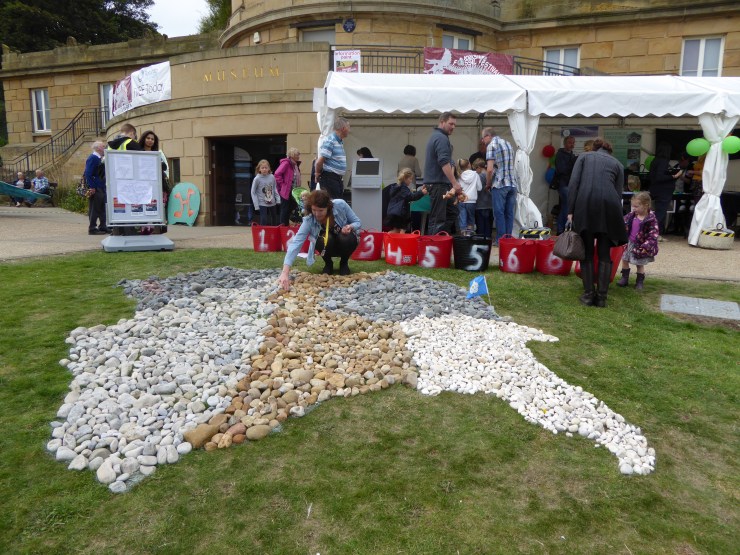
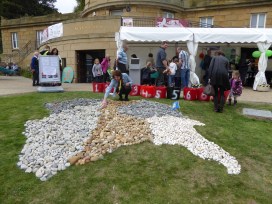
Festival-goers constructing a geological map of Yorkshire using stones. Smith would have been proud!

Despite some chilly and cloudy weather the festival saw a great turn-out. On Friday 12th September, a number of local primary and secondary schools made a visit, participating in activities that gave hands-on experience in understanding more about fossils. The school groups who visited our stall had the opportunity to act out a play exploring how fossils are made with our Director, Paul Smith, as the narrator!

P1000259
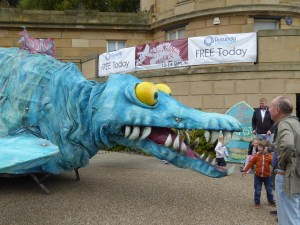
Horace the travelling Pliosaur cinema

The crowds visiting the festival over Saturday and Sunday got a rare look at original material from the William Smith archive and were asked to help us transcribe the collection, which has recently been digitised and catalogued. Although he is ‘the father of English geology’, William Smith is not a universally known figure in the history of science. But it was a very different matter with the Scarborough crowd.

William Smith
William Smith, ‘Father of English geology’ and Scarborough resident

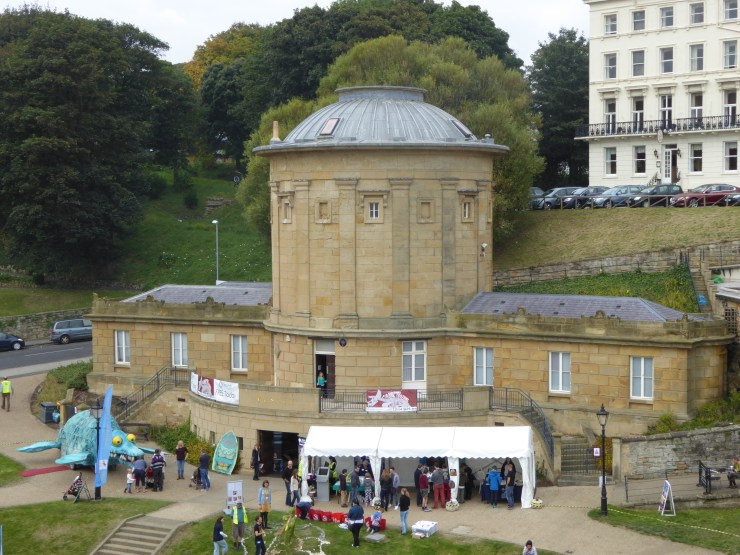
Born here in Oxfordshire, Smith lived in Scarborough at the time he died in 1839 and was an active and important figure in the town. In addition to being an early member of the Philosophical Society, he was also consulted to solve the town’s water supply issues, select stone for the bridge between the town and its newly discovered spa, and most notably in helping to design the Rotunda Museum that was our base for the three days.

The biggest hit at our table over the weekend was the Geological Map of Yorkshire, published by Smith and Cary in 1820 as part of his County Map series. While approximately 400 people spent time looking closely at, and talking with us about this important map, its popularity was followed closely by a copy of Smith’s wine merchant’s bill from Scarborough dated 1839. It certainly appears that Smith was a fan of gin and marsala…