#Dungisfun

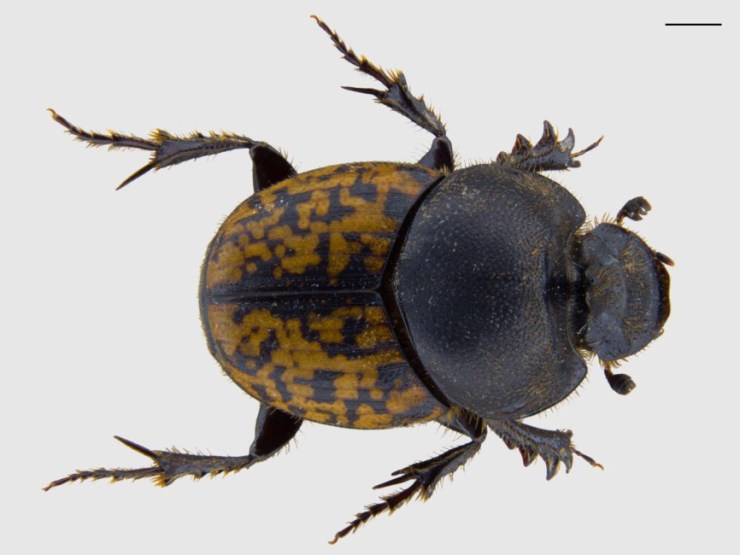
Onthophagus nuchicornis male

Dung doesn’t always get a lot of attention, but his week a new project, known as DUMP, has been all over the news. The project team are here to try and convince you that dung really is fun.

**

How often do you think about dung? Possibly not at all, yet without Dung Beetles we would literally be up to our necks in it.

There’s no doubt, Dung Beetles are an important group of insects, particularly for the agricultural environment. Recent research estimated that dung beetles save the UK cattle industry £367 million per year (Beynon et al. 2015). They provide all sorts of ecosytem services, including their famous ‘dung removal’ and others you may not be aware of. For instance, they reduce gastrointestinal parasites of livestock, nuisance flies, and play a key role in improving soil condition through aeration and nutrient recycling.
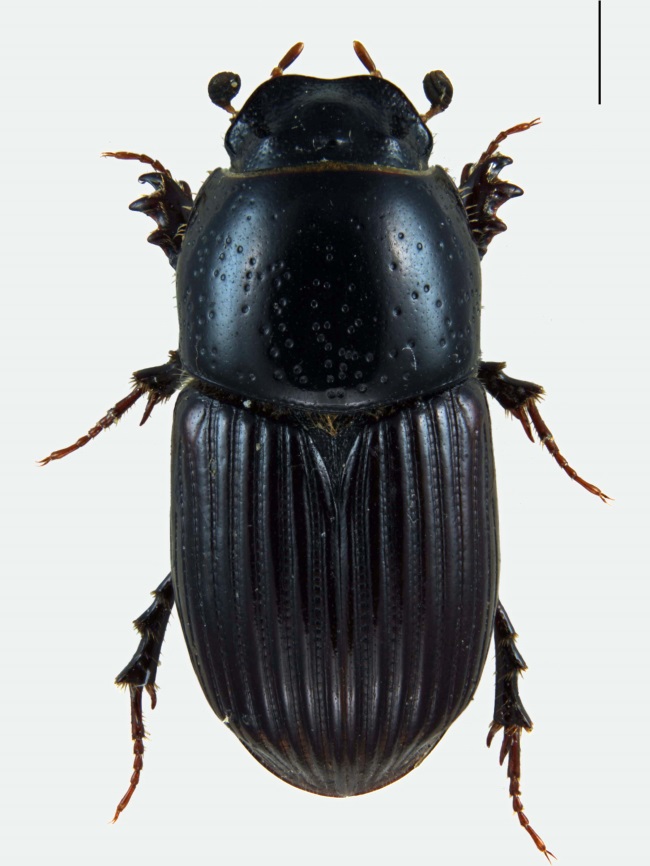
Aphodius subterraneus
Aphodius subterraneus – possibly extinct in the UK

In the UK there are 100 species of Scarabaeoidea, which includes the Dung Beetles, Chafer and Stag Beetles. Over half of these are dependent on dung. As part of the on-going Species Status Assessment Project with Natural England in collaboration with Buglife , a review of the scarce and threatened Dung Beetles and Chafers is currently in progress (S.A. Lane & D.J. Mann, in prep.). The preliminary results indicate an alarming decline in our Dung Beetle fauna.

Just over 25% of UK Dung Beetles are ‘Nationally Rare’ and four species may even have become extinct in the past 50 years. This project also highlighted the lack of modern records for many of the rare species and that many areas of the UK are severely under recorded.

All this prompted us (Darren J. Mann, Steve Lane, Sally-Ann Spence & Ceri Watkins) to go out and look for beetles and to re-survey sites where rare species were previously known. DUMP was born.

The Dung Beetle UK Mapping Project (DUMP) aims to record Dung Beetles across the UK, provide distributional records and gather information on habitat requirements and ecology. The DUMP team will also engage with landowners, farmers and the general public on the benefits and value of dung beetles.
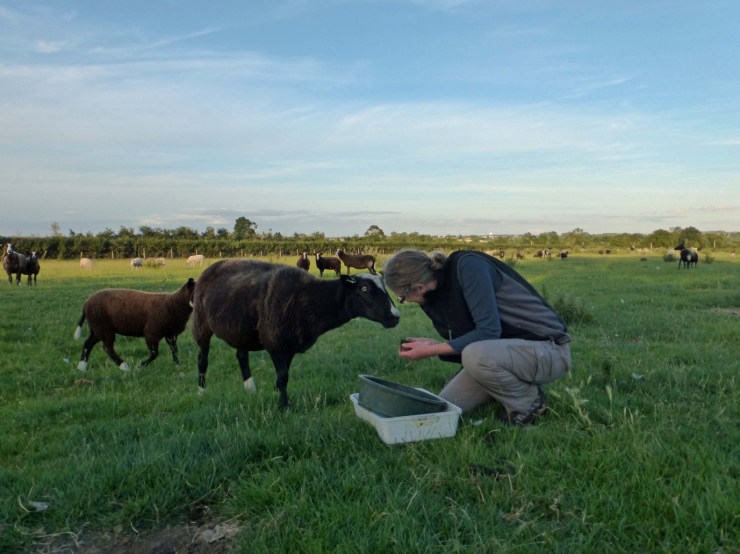
Ceri Watkins making new friends during DUMP fieldwork
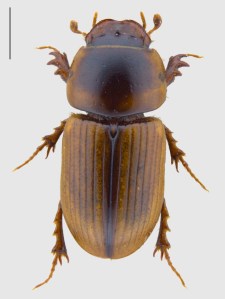
Aphodius lividus
Aphodius lividus

Over the past few years the team has travelled across the country from the Orkneys to the Channel Islands sampling across a range of habitats. A targeted survey for Onthophagus nuchicornis discovered healthy populations in North Devon and South Wales, but highlighted the dramatic decline of this species in its previous strongholds in Norfolk and Suffolk.

We also made some positive new discoveries including finding the rare Aphodius lividus and Aphodius sordidus on the Norfolk–Suffolk border, and Aphodius porcus at a new site in South Wales.

The DUMP project is in its early stages and comprised of a small team of volunteers. In the near future we hope to provide further information, distributions maps, online recording, and advice for management plans to help conserve our dung-inhabiting fauna. You can help out on social media too – tell the world why Dung Beetles matter and why #dungisfun!

Ceri Watkins, TCV Natural Talent Trainee
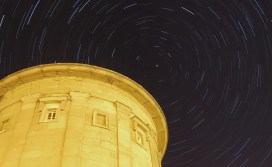
Starry night

rotunda
Image: Philip Hadland

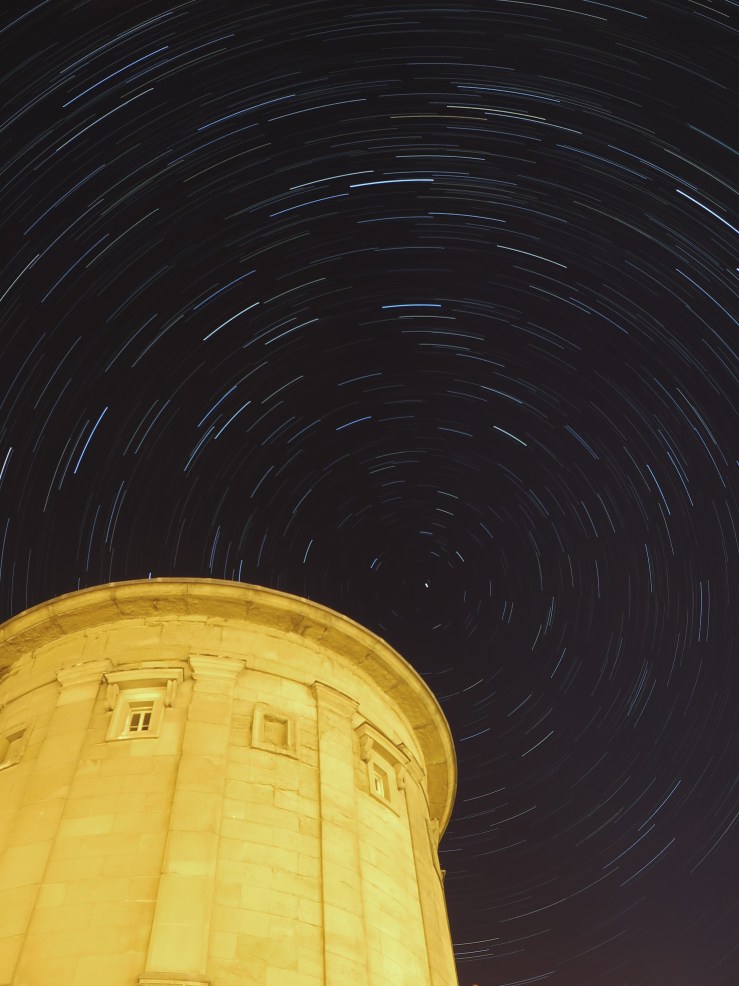
This dazzling photograph has just been awarded third prize in the Geological Society’s 100 Great Geosites Photo Competition and will feature as the December image in their 2016 calendar. It shows a building close to our hearts, the Rotunda Museum in Scarborough. In fact, the photo was taken by a member of our Earth Collections team, Phil Hadland at the Yorkshire Fossil Festival back in September.

On day 2, after a busy day sharing collections and knowledge with the festival-goers, the cloudless skies revealed a dark starry night. So Phil ventured out to do bit of photography, envisaging a beautiful trail of stars apparently rotating above the Rotunda. Conditions could not have been much better.

Using the Google Sky Map app he found Polaris (also known as the North Star), the star which sailors once used to navigate at night. He carefully positioned his camera and tripod for a 45 minute exposure to capture both the Rotunda and the stars. The image that resulted is spectacular. Phil explains;

Of course it is the rotation of our planet that causes the effect of star trails, but it shows that we are constantly on the move on a tiny speck within the universe, which we call Earth.

The timing of the success is ideal. This year marks the 200th anniversary of the publication of William Smith’s Geological Map, which we are celebrating with our current exhibition Handwritten in Stone. Smith also went on to conceive and design the The Rotunda Museum as the ideal place to display fossils and interpret geology.

Credit: Philip Hadland

Phil is understandably proud of the attention that his photograph has received:

I’m thrilled to be among the winners and it is a great feeling when the effort (which is usually required to take great photos) pays off. It’s also nice to know that so many people will get to see and appreciate the photo over Christmas 2016.

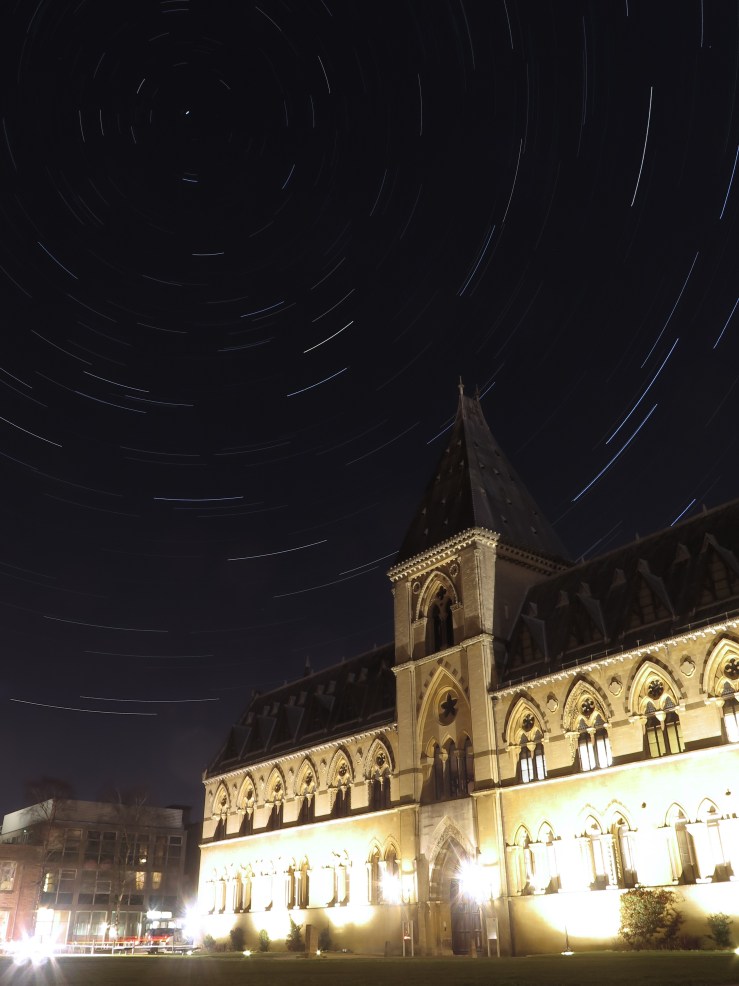
This isn’t the only long exposure image that Phil has created; here you can see a photo of this very museum treated in a similar way. Perhaps a testament to the long-lasting importance of natural history.

Rachel Parle, Interpretation and Education Officer

Friday night is museum night!

IMG_0580

‘Museums and music’ has a nice ring to it, and that’s just what BBC Radio 2 will be offering this evening. This special broadcast of Friday Night is Music Night will feature a concert celebrating the six nominees for this year’s Museum of the Year.

Recorded last week at the Mermaid Theatre in London, the finalists each presented two objects they had chosen from their collection. The short talks were then brilliantly accompanied by The BBC Concert Orchestra, playing pieces inspired by these unique objects.

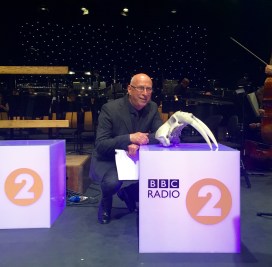
Radio 2 presenter Ken Bruce with the Tradescant Walrus

Walking on stage to the theme from Jurassic Park, our director, Professor Paul Smith, presented two real treasures: a Tsetse Fly sent back from the Zambesi by Dr Livingstone and an impressively-tusked walrus skull. The skull belonged to the Tradescants, so is part of the oldest collections in the Museum. It’s also believed to have inspired Lewis Carroll to write ‘The Walrus and the Carpenter’.

The Friday Night event was a great opportunity to present to the broad Radio 2 listenership two of our most iconic specimens, which tell extraordinary stories.
The Walrus specimen links the foundation of the collection in the late 1590s to the Beatles in 1967, via Lewis Carroll and Walt Disney, whereas the Tsetse Fly collected by David Livingstone tells stories of the European exploration of Africa, but also of disease control in humans and farm livestock.

– Professor Paul Smith, Museum director

Other objects presented to the audience included one of the clay poppies from the Tower of Londons ‘Blood Swept Lands and Seas of Red’ and a tambourine signed by soldiers of the First World War who convalesced at the Georgian country house, Dunham Massey.

So get your radio tuned in this evening at 8 o’clock. Hear the stories behind these surprising objects and the music that will bring them to life.

Rachel Parle, Interpretation and Education Officer

Prehistoric parasites

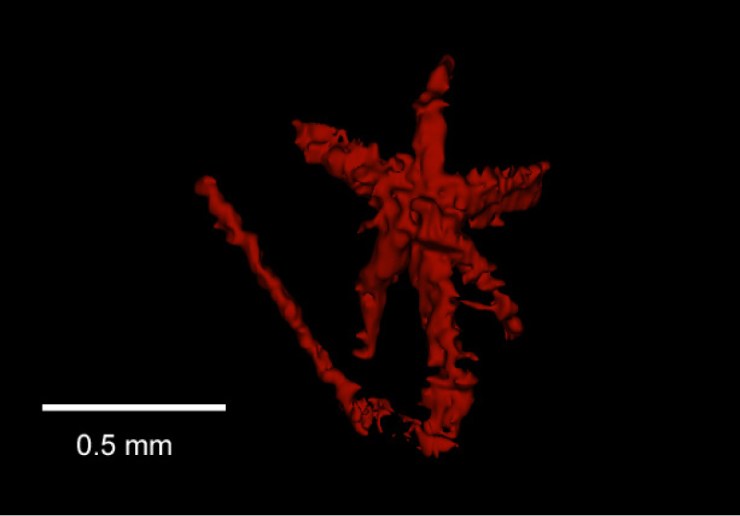
Digital reconstruction of fossil pentastomid, Invavita piratica

Our understanding of very early life is constantly developing. Carolyn Lewis, research technician in the Museum’s Earth collections, describes a recent discovery.

**

Invavita piratica is a new species of fossil parasite, recently discovered at the Museum in a 425 million year old rock from Herefordshire. This tiny creature, which belongs to an unusual group of parasitic arthropods called pentastomids, is particularly exciting because it was found attached to its host, an ostracod crustacean. A paper published last week in the journal Current Biology by Professor Derek Siveter, Senior Research Fellow at the Museum, and his co-researchers describes how this discovery sheds new light on the evolution of pentastomids.

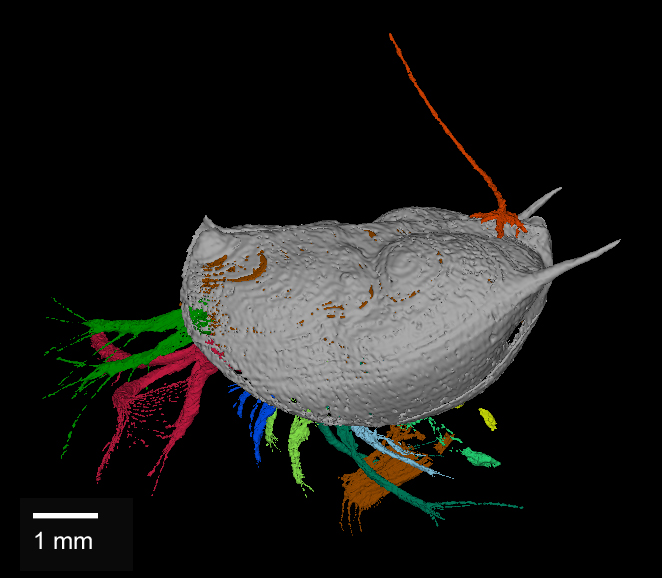
Digital reconstruction of the ostracod Nymphatelina gravida with 2 overlapping specimens of the pentastomid Invavita piratica (artificially coloured orange) attached externally to the shell of the ostracod.

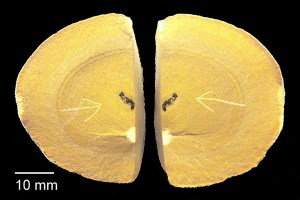
The pentastomid Invavita piratica is the latest new species from the Silurian Herefordshire Lagerstätte, a deposit of exceptionally well preserved marine invertebrate fossils ranging from less than a millimetre up to a few centimetres in length. We investigate the fine structure of the Herefordshire fossils by a process of serial grinding and photography followed by painstaking editing and 3D digital reconstruction of the specimens as ‘virtual’ fossils.

Nodule split and ready for investigation

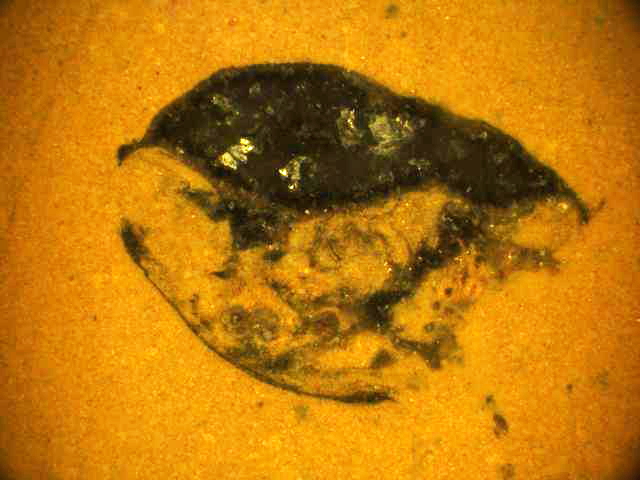
The many arthropods so far described from the Herefordshire Lagerstätte include four new species of ostracod, tiny bivalved crustaceans that are widespread in the oceans of today. The Herefordshire ostracod fossils are preserved in exquisite detail including limbs, spines, eyes and in one species, Nymphatelina gravida, eggs.

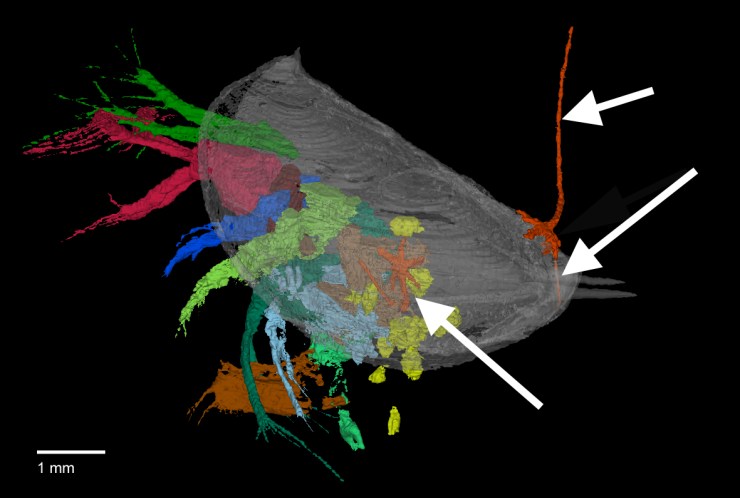
It was while editing a specimen of Nymphatelina gravida, that we spotted three puzzling star-shaped objects: an overlapping pair attached externally to the shell and one inside the body of the ostracod. On further investigation these were identified as adult pentastomids, each with an elongated snout, two pairs of outstretched limbs and a long slender trunk, together forming the star-shape. The eggs of Nymphatelina gravida may have provided a source of nutrition for the internal parasite.

The ostracod Nymphatelina gravida before digital reconstruction

Fossil pentastomids are incredibly rare: Invavita piratica is the first adult fossil pentastomid to be discovered and the fossil pentastomid to be found attached to its host.  Apart from our Silurian specimens, just a few isolated juvenile pentastomid fossils are known from even older Upper Cambrian and Ordovician rocks.

Digital reconstruction Nymphatelina gravida (with shell rendered semi-transparent).  The arrows indicate the 3 specimens of the parasite Invavita piratica (artificially coloured orange) – 2 external overlapping specimens attached to the shell and 1 internal parasite near the eggs (yellow) of the ostracod.

Our discovery of a marine ostracod as the host of Invavita piratica shows that the parasitic lifestyle of pentastomids first evolved in the sea with invertebrates as early hosts. Pentastomids like Invavita piratica may have been transferred to marine vertebrates when their ostracod hosts were eaten by fish or conodonts. The timing of the terrestrialisation of pentastomids is unknown but it may have been in parallel with the subsequent vertebrate invasion of the land.

Living pentastomid species almost exclusively infest the respiratory tract of land-dwelling vertebrates, particularly reptiles but also birds and mammals. Because all known fossil pentastomids lived long before land vertebrates evolved, the identity of these early hosts were something of a puzzle.

Carolyn Lewis – Research Technician


Shooting with Martin Parr

PAM2015011G00487

As you may have seen, the Museum was recently shortlisted as a finalist in this year’s Art Fund Prize for Museum of the Year – very exciting news for us. To add to the honour we hosted renowned Magnum Photos photographer Martin Parr, who spent a good few hours photographing the Museum, in the court and behind the scenes, as part of the Museum of the Year campaign.

The photograph above was captured by Martin during one of our primary school sessions on dinosaurs: the children have their mitts on a fossilised dinosaur egg – just one of the real specimens used during the session.

Martin Parr photographing some Darwin specimens in our collections

Having a Magnum photographer visit the Museum for a photoshoot isn’t something that happens every day, so it was a real privilege to take Martin Parr around the building and watch the types of things that caught his eye.

I am a keen photographer myself, with an interest in the history of photography as a technical process and as an art form, so it was especially exciting to not only meet Martin and watch him work, but also to photograph the process myself too. You can see a few of those shots here.

Martin Parr scrutinising our vertebrate spirit collections

Photo competition

Now it’s your chance. We’re inviting you to take photographs of the Museum and submit them to the Museum of the Year Photo Competition, with a chance to win a photography holiday in Berlin, photo gear and other prizes. Martin Parr will shortlist six photos, one for each of the six finalist museums, and the ultimate winner will be selected by a public vote.

So get snapping – with a posh camera or your phone; it doesn’t matter. Then either upload your pictures via the Art Fund website, or tweet or Instagram them using the #motyphoto hashtag and don’t forget to tag us in @morethanadodo.

Good luck!

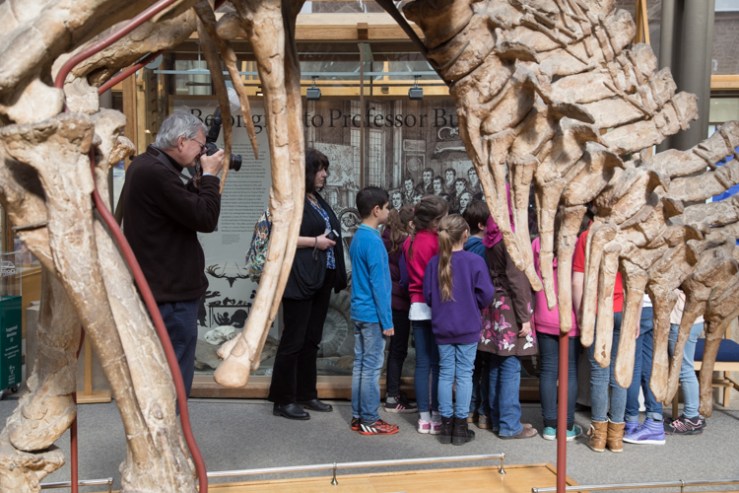
Martin Parr photographing a primary school group for Art Fund Prize for Museum of the Year
Martin Parr, an Iguanodon and young visitors

Scott Billings – Public engagement officer


One for the mantelpiece

Museum_Heritage_Awards_2015_MNH small

If you live in Oxford or have been reading our blog for a while you may remember a project we created called Goes to Town: twelve specimens escaped from the Museum, set themselves up in locations around Oxford city and provided a treasure-hunt style trail around town. They then returned in time for our reopening party in 2014.

It was a fun project with many elements so we are very pleased indeed to say that it picked up the winning trophy in last night’s Museum + Heritage Awards show, in the marketing campaign category. Here’s the first video we made to promote Goes to Town: