From worms to stars

A Spotlight Specimens special for Oxford Festival of Nature

by Imran Rahman, Research Fellow

Starfish are among the most distinctive animals found along the seashore today. Together with other well-known forms such as sea urchins, sea cucumbers and brittle stars, they belong to a major group called the echinoderms, which is characterized by a unique type of symmetry — called fivefold symmetry. This means they can be divided into five roughly equal parts.

IMG_9013

In contrast, the closest living relatives of echinoderms are worm-like animals that have bilateral or mirror-plane symmetry, where they are divisible into mirror-image halves. It’s widely-thought that the common ancestor shared by echinoderms and other animals also had bilateral symmetry. Because they are so different to all other living animals, deciphering the evolutionary history of echinoderms, and their path from worms to stars, has proven a major challenge for scientists.
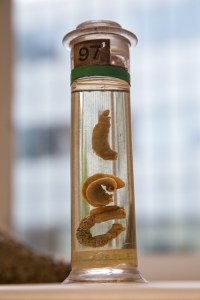
IMG_9006
The closest living relatives of echinoderms are worm-like animals like these acorn worms Balanoglossus sp.) from Naples

Fortunately, fossils can shed light on echinoderm evolution. Echinoderms have an excellent fossil record because they possess a hard, mineralized skeleton, which greatly enhances their chances of being preserved as fossils compared to soft-bodied organisms. The first fossil echinoderms are over half a billion years old, and include extinct groups that show both bilateral and five-fold symmetry.

In addition, fossils are known that exhibit three-fold symmetry, as well as others that lack a clear plane of symmetry – they are asymmetrical. These fossils document the earliest history of echinoderms, and so could help us to better understand their evolution.

The fivefold symmetry of the starfish
The fivefold symmetry of the starfish (Randasia granulata from Madagascar)

Based on our understanding of living animals, and using modern methods for reconstructing the relationships of different species, it’s possible to infer that the early fossil echinoderms with bilateral symmetry belong at the base of the echinoderm evolutionary tree.

Print

The next branches in the tree lead to the asymmetrical fossil groups, and these are followed by those forms that show three-fold symmetry. Lastly, we see the diversification of forms with fivefold symmetry, including species belonging to the groups that still exist today, such as the starfish.

Using the fossil record, we can therefore see a clear picture of how echinoderms evolved from worm-like organisms into star-shaped creatures.

OFoN_logo_green block_small


Nature’s Waste Management Team

A Spotlight Specimens special for Oxford Festival of Nature

By Darren Mann, Head of Life Collections

One cow can produce over nine tonnes of dung per year. With a population of about 3.4 million cows in the UK alone, that’s a heck of a lot of dung deposited on our grasslands. Just imagine how much dung is produced every year if we include the output of horses, sheep, pigs, and all the wild animals out there.

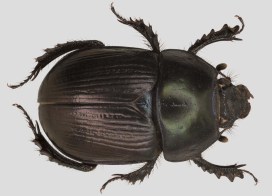
Dor Beetle – Geotrupes mutator

All of this dung is broken down by a multitude of invertebrates, including flies, worms, and beetles, as well as bacteria, fungi, and weathering. One of the key groups involved in the removal and degradation process is the aptly named ‘dung beetles’.

In the UK there are 61 species of dung beetle, though sadly just over half of these are now in decline and some have already become regionally extinct. UK dung beetles vary in size from just 3 mm to over 25 mm and occur wherever dung is found, though some prefer sandy soils and others like to live in woodlands.

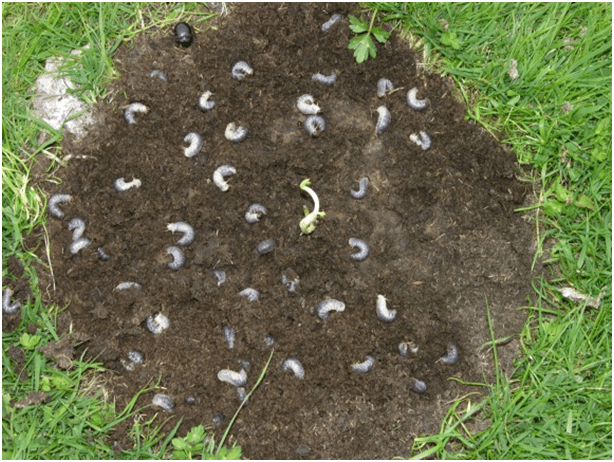
Larvae in dung pile
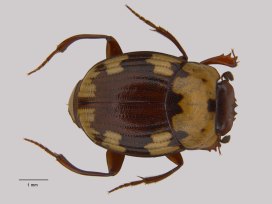
Dung beetle larvae (Aphodius fossor)

As adults, dung beetles feed on the liquid part of dung. The larvae of most of our species live inside the dung pile and are called the dwellers. These munch their way through the solid matter of the dung pile, gradually breaking it down over a few months. Other species such as Geotrupes mutator, pictured above, excavate a tunnel and bury the dung below ground. These tunnellers construct a brood chamber in which their young develop.

Aphodius fossor
Aphodius fossor

Through their actions, dung beetles perform a number of valuable ecosystem services. The most obvious is dung removal and degradation which leads to improved soil health by nutrient cycling and soil movement. By burying the dung they reduce the amount of available breeding habitat for pest flies and livestock parasites too.

All of these important services have been estimated to save the UK cattle industry £367 million per year. The value of dung beetles doesn’t end there as they also provide an important source of food for farmland mammals and birds. So next time you see a pile of dung in a field, just think of all the hard working beetles within…

Staff and associates of the Museum also run the Dung beetle UK Mapping Project – affectionately abbreviated to DUMP!

OFoN_logo_green block_small

Secretarial work

After Treatment 2

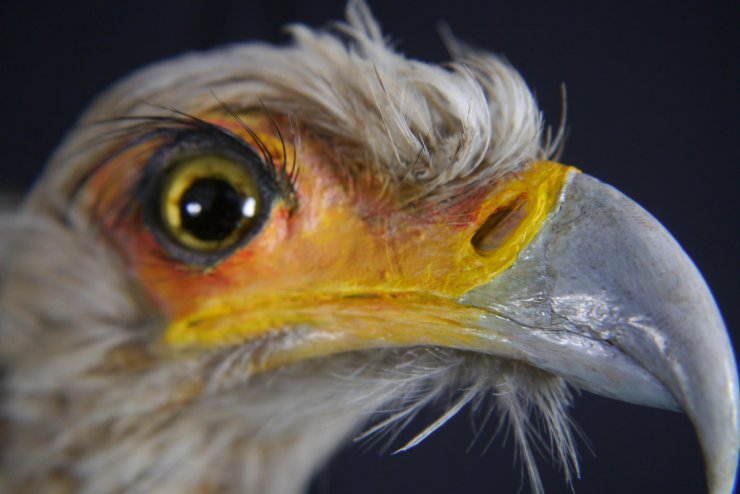
Our striking Secretary Bird stands at over 1 metre tall and should be one of the most impressive specimens in the Museum, but it hasn’t been looking its best for a while. This African bird of prey was looking rather sorry for itself, with scruffy feathers and moth damage. Conservation intern Ruth Murgatroyd stepped in to bring it back to its former glory.

**

Wrapped and ready for the freezer

The first step for any specimen undergoing conservation treatment is a 72 hour spell in the freezer at -30⁰C. This kills off any inhabiting webbing clothes moths, which can be very destructive to taxidermy specimens. Getting ready for the freezer required some creative packaging to protect the characteristic quill shaped plumage and tail feathers, before wrapping in plastic.

The feathers would need a good groom, which is a lot easier once they’re clean. I used dry methods first, including a brush dust with a vacuum cleaner and the very effective use of cosmetic sponges. The feathers were further cleaned with a gentle non ionic detergent in water and rinsed with a water/ethanol mix. I used a paint brush to dab the solution onto each feather individually.

Ruth cleaning tail feathers

When the feathers were clean and dry they were groomed to realign the filaments of the feathers, known as barbules. Parts of the bird’s tail and right wing were missing, so as this is a display specimen, we decided it was appropriate to recreate these areas to more accurately represent what the bird looks like in the wild. Any additions had to be easily identifiable and reversible. Goose feathers were sourced and colour-matched with Orasol dyes. They are now held in place by adjacent feathers and give a much more natural appearance.

Before treatment, with missing wing and tail feathers

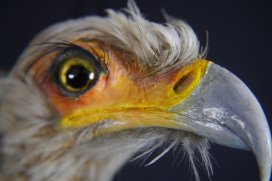
The face of the Secretary Bird had been previously painted but this was quite faded in colour compared to the buoyant oranges and yellows of the animal in the wild. We decided to reflect this with a touch up. The new layer was painted in with acrylics, but a base layer of water soluble adhesive now protects the original paint, so layers of paint could be taken back at any time.

The finishing touch to the conservation of a taxidermy specimen is often to make sure the eyes are clean and gleaming. Saliva on a swab is really effective for this.

The Secretary Bird was then ready to go back in its newly-polished case. This had also been lined with UV film to protect the specimen from light damage. Just before it went back on display, the bird made an appearance at the Museum’s daily ‘Spotlight Specimens’ session where it met visitors keen to hear about its recent conservation.

Secretary Bird  back on display
Secretary Bird back on display

Pop in to the Museum to see the finished Secretary Bird on display and standing tall .

Ruth Murgatroyd, Conservation Intern

TLC (turtle loving care)

Turtle post-treatment

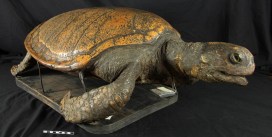
The Green Turtle (Chelonia mydas) above has been receiving some much-needed TLC from Abby Duckor, our first conservation intern from UCL’s MSc in Conservation for Archaeology and Museums. Here Abby explains what she’s been up to…

During my time at the Museum I have been lucky enough to spend a fair amount of time working on this taxidermy turtle. There was plenty to do: the specimen was covered in a dark layer of dust; there was a large tear in the neck, perhaps from a knock; and the taxidermy was generally overstuffed, noticeably on the stomach plate which had become completely detached, revealing the inner filling material.

The turtle shell (carapace) in the middle of treatment. The carapace was cleaned with detergent and de-ionized water. Toothbrushes were used to scrub the hard shell and to help remove any ingrained dirt.
Most of the filling was wheat with a small grain size, dating it to pre-1950, according to Dr Stephen Harris: after 1950 wheat grains were cultivated to be fatter and the stalks shorter. The wheat and other plant materials in the filling suggest an English location for the taxidermy.

The specimen itself is labelled as part of Rev. Buckland’s collection, dating it to the early 1800s, if not earlier. William Buckland, an important early geologist and palaeontologist, was quite a character. During his life he amassed a large collection of living and mounted animals. He claimed to have eaten his way through the animal kingdom, and you have to wonder if he ever tasted this fellow… Green Turtles were a popular food for sailors and locals, reducing their population size. Today they are listed as endangered.

Abby working on the turtle in the conservation lab.
Conservation treatment of this specimen involved cleaning the shell with detergent and deionized water, revealing a colourful shell underneath. You may have noticed that this Green Turtle is not actually green. In fact, the Green Turtle is named after the colour of its fat, not the colour of the skin. Ours had been painted a dark greenish-brown colour, because they lose their skin colour after they die, but I removed the top layer of paint to better reveal the yellow scales on the turtle’s head, tail and limbs.

The final touch was the replacement of the stomach plate, or plastron, which is now held in position with epoxy putty wedges attached to the metal stakes that hold up the specimen. Cleaned, and with everything in its right place, our Green Turtle is now in much better shape, as you can see in the photo at the start of the article.


Delving into dung

25

Each summer we host a variety of interns, working both in the collections and with the public. Oxford University student Maria Dance has now come to the end of her placement and reflects on the delights of dung beetles and what they can teach us about ecosystems.

**

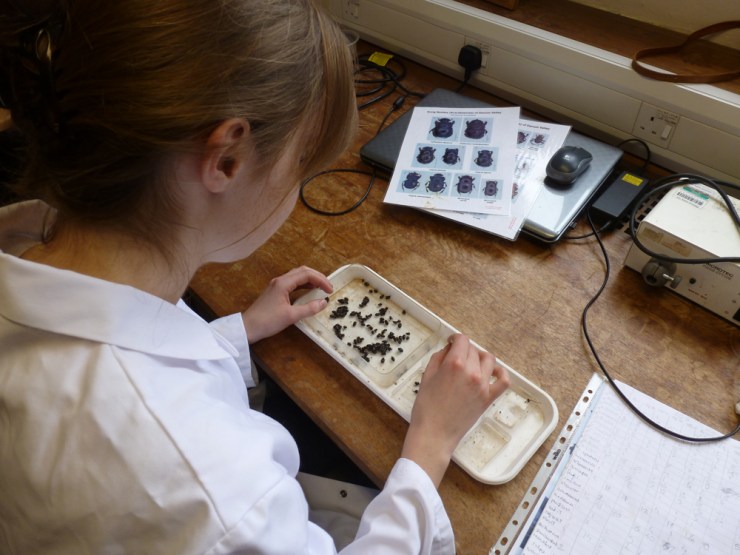
Over the past six weeks I have been working in the Hope Entomological collections, home to an estimated 5 million insect specimens. Coming fresh from my second year studying biology at Oxford University, I have been working on a project to sample-sort and identify dung beetles from the SAFE project in Sabah, Malaysian Borneo.

A very short introduction to dung beetles
From the order Coleoptera, sub-family Scarabaeinae, most true dung beetles feed exclusively on dung. Some roll dung away from the main pile and bury it for food or as a brood site, some tunnel below the dung  and bury it that way, and others are “dwellers” and simply live in it. All are essential groups for ecosystem functioning and provide indispensable services from which humans benefit; dung beetles recycle nutrients, rework soils, and act as secondary seed dispersers.

Maria sorting through a dung beetle sample

Dung beetle research at Oxford

Researchers at Oxford are studying the link between dung beetle biodiversity and ecosystem functioning to predict the true environmental consequences of human-driven habitat loss and fragmentation in the tropics. So I have been identifying beetles to calculate diversity, which is then compared across sites with very different human disturbance levels. Dung beetle diversity and community composition are good proxies for ecosystem functions as we know the roles that different groups of dung beetles play.

More than an intern

P1110406
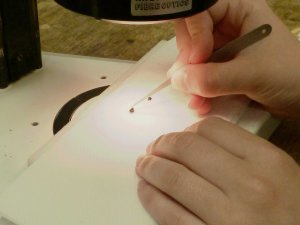
Working on tiny dung beetle specimens

The starting point is for me is material collected from (human) dung-baited pitfall traps, which I search through and extract all dung beetles from; it’s a smelly, tricky job that needs a sharp eye as some beetles can be as small as 2mm in length!

Next comes the hard part: identification. Darren Mann, Head of Life Collections at the Museum and dung beetle taxonomist extraordinaire has guided me through the process. It was particularly difficult to identify the Bornean species due to the lack of good primary literature. A microscope is essential, as many characters used to identify species are not visible with the naked eye.

P1040924
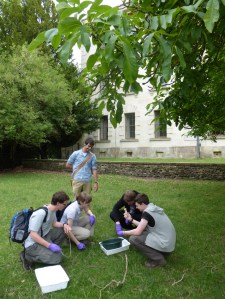
Students sampling for dung beetles at Magdalen College deer park

As my internship draws to a close, I have identified 6851beetle specimens to 56 species. I have also carried out some initial analyses: comparing diversity between habitats, and between data from 2015 and 2011.  I want to find out whether differences over time are more significant than differences between habitats.

In my last week I was fortunate enough help run a “Spotlight Specimens” session about silk worms and their fascinating, human-dependent existence. In the sessions, experts from the Museum collections show intriguing objects and specimens that are not usually on display. Visitors were able to interact with live silk worms and see them cocoon-building, while we answered questions.

In September I travel to Borneo for a field course, where I hope to put my newly-learnt identification skills to practice. Over the past six weeks I have become more enthused by taxonomy, tropical rainforest ecology but, most importantly of all, dung beetles!

Maria Dance, Intern in Life Collections

The legend of the Layardi Whale

After - seperate proper right

The Museum gains a new buzz over the summer as we’re joined by a host of interns. Many are students who require a placement as part of their university degree. Ruth Murgatroyd, who is in her first year of the MSc Conservation Practice programme at Cardiff University, is spending her summer putting a variety of conservation skills into practice in our Life Collections.

During our 2013 year of closure, five large whale skeletons received extensive conservation treatment, which was described and documented on the Once in a Whale blog. Here, Ruth explains that there is more to be done conserving other whale specimens in our collection, and describes the careful work that it takes to bring them back to their best.

**

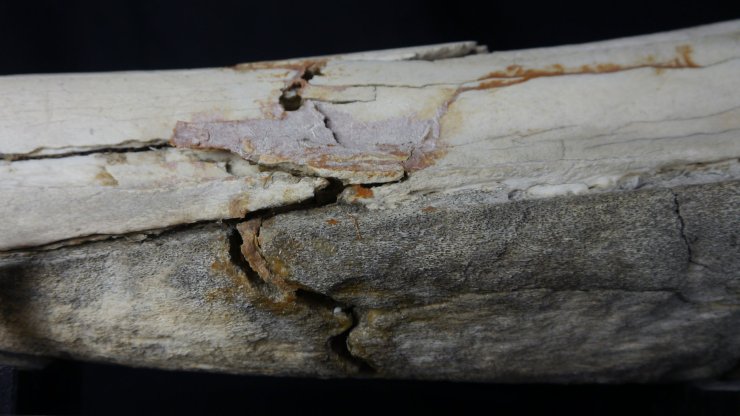
One of the specimens I’ve been working on in the lab is the skull of a Layard’s Beaked Whale (Mesoplodon layardi). As with many historic specimens, past repairs had become damaged or discoloured. The porous bone that allows whales to be buoyant under water had darkened and acquired staining and tide marks. It needed some attention.

Before PL Break
The brown material is animal glue, used in a previous conservation

It’s important to research specimens, to gain a full picture of the animal and its origin. This one turned out to have a particularly interesting story. I knew that the whale’s skull entered the collection in 1874, coming from Cape Point, South Africa, and attributed to J. Mackellar. Over tea time conversations with a colleague in the Museum it came to light that it might be the same whale mentioned by Henry Moseley (1844-1891), a naturalist on board the HMS Challenger voyage. In Moseley’s Notes by a Naturalist he mentions finding a Layardi cranium on a beach “near Mr Mckellar’s” in Cape Point in 1874. He described how it had its beak pushed into the sand and was being used as a target for rifle practice.

Cleaning with the rubber smoke sponge

After assessing the condition and taking pre-treatment photographs, I decided that the main objectives of the conservation were to remove past unsympathetic repairs; consolidate the bone around a break; clean the staining; and provide padding to the wooden support.

Cleaning needed different techniques depending on the location and the problem. Brush dusting with a vacuum cleaner and dry cleaning with a rubber smoke sponge was the first stage, followed by more specific treatments for ingrained stains. They were treated with poultices, which slowly release water into the pores of the bone and draw out soluble impurities as they evaporate.

I removed the brown adhesive using water on a swab. A pungent smell was given off that tells me the last conservator had used animal glue. I replaced this with an easily reversible acrylic resin.

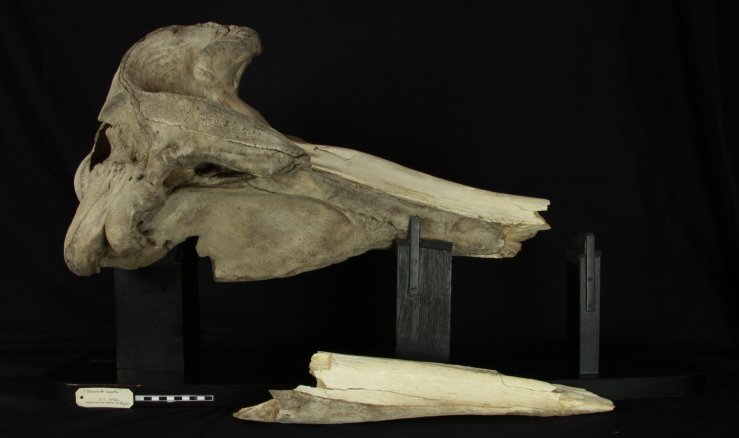
The beak had been severely damaged (perhaps from the rifle practice!?), but its weight poses a conservation problem. An adhesive strong enough to support the weight of the repair is likely to be stronger than the bone and any stresses on the repair may result in further damage to the bone rather than to the adhesive. As the whale is going back into store for now, we decided that the two fragments will be left separate. The two fragments can be seen here in the wooden support.

After PR
Both fragments together in a wooden support

Although we can’t be sure that this is the Challenger whale specimen, the possibility certainly added an extra level of intrigue to this fascinating project.

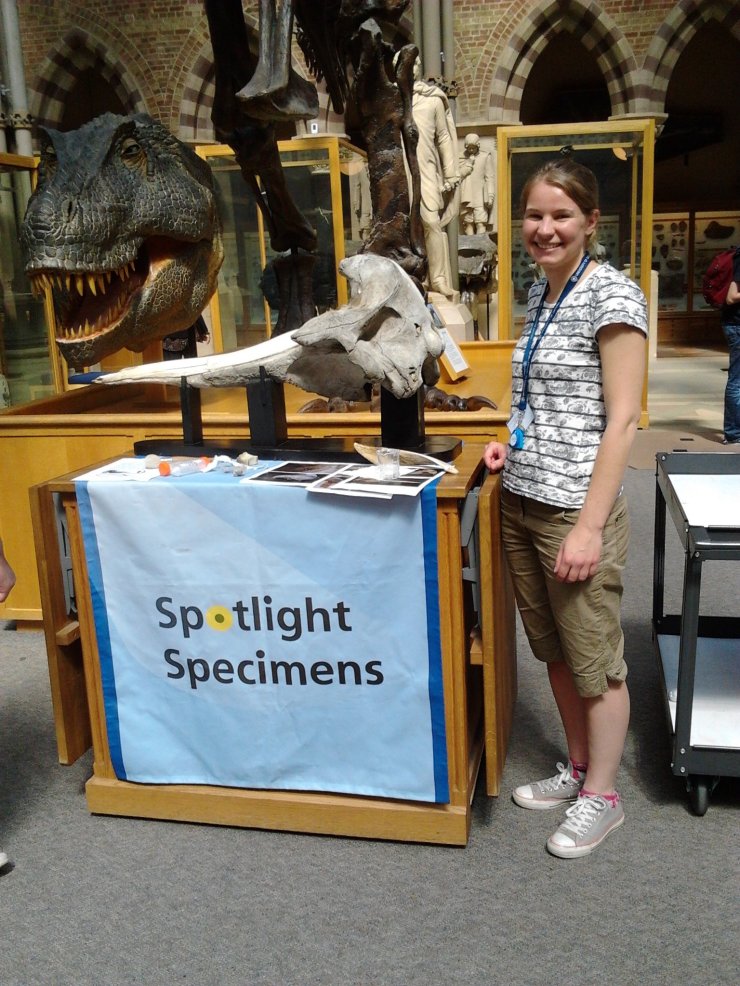
Ruth presenting the whale to visitors as part of our Spotlight Specimens strand
Ruth presents the whale conservation work to visitors as part of our Spotlight Specimens strand

Ruth Murgatroyd, Intern, Life Collections