Seeing prehistoric life in 3D

3d trilobite

On 22nd August, Eliza Howlett and I joined in the London press launch of ‘GB3D Type Fossils’, an exciting project to make images and information about some of our most important fossils freely available online. It is a major collaboration between the Museum of Natural History at Oxford, the National Museum of Wales, the Sedgwick Museum in Cambridge, and the British Geological Survey, and is funded by Jisc, a charity that champions the use of digital technologies in UK education and research.

Type fossils are the specimens used to define each species of plant or animal. They are the ‘heritage specimens’ of the geological world, and need to be preserved carefully for future generations of scientists. The GB3D Type Fossil project is a rather clever way to let researchers, collectors and enthusiasts see our type specimens up close, wherever they are in the world, without any risk of damage to the specimens.

Some of the fossils have been scanned using a 3D laser-scanner. Their images can be enlarged up, rotated and viewed online using free software such as Meshlab. They can also be printed out on a 3D printer, and the one running at the press launch generated a lot of interest! Other fossils were photographed as ‘3D anaglyphs’ so that if you wear cyan-red 3D specs, the fossils appear in three dimensions. The remainder can be seen in really good conventional photographs that show lots of detail. There’s plenty of information about the fossils too, for example how old they are and where they are from.

3D ElizaAbove you can see a 3D anaglyph (stereoscopic) photo of the type specimen of Barrandia bianularis, a trilobite that lived around 464 to 467 million years ago. It appears on the website in 3D when viewed using cyan-red viewing glasses. Have a look here.

Eliza is our Manager of Earth Collections, and has been managing the project to scan and document around 2,000 British type fossils in the Oxford collection. Her work is nearly complete, and the Oxford fossils will ‘go live’ on the website http://www.3d-fossils.ac.uk/ over the next couple of months.  Have fun exploring it!

Monica Price, Head of Earth Collections

The Flame-Shouldered Blister Beetle – re-discovered at last!

Image

One of Britain’s rarest beetles is the secretive, endangered Flame-shouldered Blister Beetle Sitaris muralis – belonging to the family Meloidae (oil and blister beetles). This attractive 8-14 mm long beetle was last found in Oxfordshire up until 1969, but then it was rediscovered in Brockenhurst, Hampshire in 2010 (the last New Forest record before that was in 1947) on a brick wall over 100 years old. However, they are seldom seen outside the nest burrows of the Hairy-footed Flower Bee Anthophora plumipes in old mortar [the entry / exit point looks rather like bullet holes].

Image

It is not clear why this parasitic beetle is so rare as the host is widespread throughout Britain and common in the south in spring; the larvae feed on the bee’s brood.

Paul and Helen Brock have found the beetle each year since 2010 mainly in August, mostly dead with at least one apparently evicted from the nest (the latest finds though, on 20-21 August 2013 were alive). Others may be trodden on by passers by, as these clumsy insects fall to the pavement in a busy village site. The slightly brighter males have much longer antennae than females; both sexes have strange-shaped wings designed to enter a bees nest.

Image

The bright orange is presumed to be a warning. In addition to sporting warning colours, during perceived danger such as attack by a possible predator, males curl up in defence, remaining in the position for up to a minute.

Image

This elusive insect could turn up almost anywhere, but is most likely in southern England on a brick wall- so keep an eye out next time you are out and about!

Our thanks to Paul and Helen Brock for supplying the content and photographs for this post.

Our new-look blog

Westwood paussidae

The Hope Entomological Collections blog has landed! All of the content of the blog has now been transferred over to the WordPress platform- we just have some final tweaks to make. The toughest decision is going to be over the image that we use for the background. So many insects, not enough time.

We’ll be trialling a number of different pictures over the next week or so, so remember to check back regularly and let us know which one you like best by leaving a comment on this post.

Today’ss background picture (also above) is of a historic collection drawer from the J.O. Westwood Paussidae collection. Westwood was the first curator of the Hope Entomological Collections.

The old version of the blog will be left on-line. If you are looking for it, it can be found here

Featured photo – Crystals within crystals

Crystals within crystals

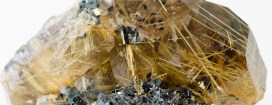
We have been doing a spot of mineral photography today, as part of an imaging project being undertaken by Dara Lohnes, a Leicester Museum Studies student who will be based with us for the next eight weeks. This is one of her shots – beautiful isn’t it?

It shows crystals within crystals – sprays of golden brown rutile crystals (titanium dioxide) inside colourless crystals of quartz (silicon dioxide). The metallic silver  is a mineral called hematite (iron oxide). The specimen comes from Ibitiara, Bahia, Brazil and was purchased by the Museum in 2007.

A puzzle of maps

William Smith

Over the past six months the Museum Archive has been working on project to catalogue and digitise the William Smith collection. Often referred to as the ‘Father of English Geology’, William Smith was a land surveyor and mining expert in the early 19th century. He developed the techniques of geological mapping that are still used today.

William Smith
William Smith

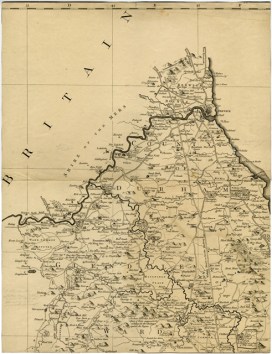
The Museum’s collection came from Smith’s nephew, John Phillips, a geologist and first keeper of the Museum. It contains Smith’s notes, diaries and correspondence, as well as a large selection of geological maps. While digitisation projects are always complex, Smith’s maps have presented some challenging problems, including the fact that a number of them have been cut up into small pieces!

Recently, work-experience students Matthew and Alex (hiding under his hat in the photograph) helped to sort out Smith’s maps of Yorkshire and Northumberland, which were stored as a large number of rectangular pieces. Both were likely cut up by Smith himself, or his nephew John, to use in the field.

Matthew and Alex were quick to catch on to the best technique for sorting a map- do the outside pieces first, just like a puzzle!

Large and detailed maps were necessary for the type of surveying and geological work undertaken by the two men in the early 19th century, but such documents were unwieldy to carry in their original format. Folding the map was also not a good idea, as the folds would wear quickly and tear, making it impossible to read along the tear lines.

Instead, maps would be cut into a number of small pieces and mounted to linen. This allowed the map to be folded to a nice portable size without wearing any section of the map. It looks as though Smith and Phillips never got around to mounting these.

Once the map was sorted into its original order, the students scanned it with the help of our collections assistant and digitisation expert Sarah Joomun. Even after some quick work we can see that the techniques used to recreate the map as a single piece were quite successful.

All of Smith’s maps and a large number of his notes and documents will be available online early next year, with the launch of the Archives’ new online catalogue. This work is being completed thanks to the generous funding received for this project by Arts Council England.

Kate Santry, Head of Archival Collections

Volunteering at the OUMNH

 A word from one of our volunteers:

“Hi! My name is Helen, and I am a student at Derby University. I am starting an MRes (Master of Research) degree in Forensic Science in the new academic year, and I am working towards a future career in Forensic Entomology.

In July this year, I undertook two weeks of volunteering in the entomology department of the OUMNH. I was really excited to see another side of entomology, and to be able to get some more practical experience in the field. I have been interested in museum work for some time, so I was pleased to find that I really enjoyed the owrk that the team do.

When I arrived, I was given a tour of hte department and then given a drawer full of mixed specimens to sort to order level.

entomology, orders, insects, soritng, volunteering, OUMNH
Drawer of insect orders to be sorted (there are some trick specimens in here)

It was really good practice for being able to trecognise the different orders, and I enjoyed looking at all the different specimens.

Later, I got some extra practice at recognising orders when I sorted some specimens collected in Bolivia.

In my first week, I attended an IPM (Intergrated Pest Management) conference, which helped me learn about the problems with pests in museums, and the methods which are avaliable to help prevent important collections from ebing eaten by hungry critters.

I also got to develop my skills in identifying insects using keys, and I had a go at point mounting some specimens – a technique used to moutn very small insects for identification and display purposes.

insect, entomology, pointing, mounting, volunteering, practice
My first attempt at pointing insects

In my second week of volunteering, I was able to practice the new skills I had learned in my first week as well as gaining some nrw ones. I had a go at direct pinning some specimens and added some new labels to part of the collection which had belonged to W.J. Burchell. I also uised the auto-montage to create some amazingly detailed photographs.

auto-montage, photography, diptera, entomology, volunteering, OUMNH, composite
An auto-montage photograph of Calliphora vicinia.

I would really recommend volunteering to anyone with an interest in entomology – it’s such a wonderful experience to be able to see what goes on beind the secenes in a museum, as well as having the chance to see such a huge variety of insects in the collections I would love to go back and do some more volunteering at the museum in the future.”

The department would like to thank Helen for all her hard work and the for the contributions she made during her two weeks with us.