What’s on the van? – What a gem!

_00816-Corundum--001

This week’s What’s on the van? comes from Monica Price, Assistant Curator of the Museum’s Mineralogical Collections.

What is that fine large blue gemstone on the van? Did you guess it was a sapphire? You were absolutely right; it is after all, the most famous of all blue gemstones. But did you know that sapphire is not always blue? It can be yellow, green, purple, pink, even colourless!

Sapphire is the name given to nearly all the coloured gem varieties of corundum, a mineral composed of aluminium oxide. Corundum is one of the hardest of all minerals and is used in industry as an abrasive. It is found in various aluminium-rich igneous and metamorphic rocks and it is so hard that it resists breakdown when the rocks undergo erosion by rivers and streams. Instead it accumulates in river gravels, which can be mined for gem quality crystals.

Most corundum is rather drab, not very exciting at all. Only the best coloured and least flawed crystals are suitable for cutting as gemstones. The colour in blue sapphire is due to a tiny amount of titanium and iron. When corundum contains a tiny amount of chromium instead, it is a beautiful shade of red, and it has a name of its own – ruby. Ruby and sapphire are simply different coloured varieties of exactly the same mineral!

What's on the van?

What’s on the van- Rhino tooth

Rhino tooth

This week’s What’s on the van? comes from Malgosia Nowak-Kemp, Collections Manager in the Museum’s Zoological Collections.

White rhinoThis huge molar tooth belonged to a wide-lipped or white rhinoceros living in Africa. This species, whose scientific name is Ceratotherium simium, is one of the five species of rhinos that are still alive today in Asia and Africa.

The tooth was brought back to England by William Burchell, a naturalist and explorer of South Africa and Brazil. Burchell was born in Fulham, London, and left England in 1805 to seek his fortune in St. Helena. He worked there as a botanist and a teacher, but in 1810 decided to travel in South Africa, from Cape Town into the inhospitable plains of the Karoo. In preparation for the expedition, he designed a travelling wagon, which was to serve as a place to sleep, eat and keep all the specimens he collected during his travels.  The wagon was pulled by 8 oxen and was followed by a flock of sheep to provide fresh meat in case hunting proved unsuccessful. During his 5 year journey Burchell collected many mammals, insects and minerals, including this rhinoceros tooth. When he returned to England Burchell offered most of his collection to the Natural History Museum in London and then spent some time describing all the unknown species in scientific papers. In 1817 he described the wide-lipped rhinoceros, Ceratotherium simium and this tooth is the “type” specimen, which means the first specimen to be described and written about as a new species. Sadly, Burchell committed suicide in 1863, and his sister offered the remaining items in his collection to Oxford University.

What's on the van?

What’s on the van? – Oldest pinned insect in the world

_Fig_4_Bath-white

This week’s What’s on the van? comes from Darren Mann, assistant curator of the Museum’s Hope Entomological Collection.

Most butterfly enthusiasts would easily recognise this as the Bath White (Pontia daplidice), however, when this particular specimen was captured it was known as “Vernon’s Half Mourner”, after the first recognised capture by William Vernon in Cambridge during May, 1702. In fact it is this very specimen that Vernon caught and as such it is regarded as the oldest pinned insect in the world, and certainly one of the iconic treasures of the Museum. bath white party-cakeIn 2002 we marked its tricentenary with a birthday celebration, including of course, a butterfly-shaped cake!

The Bath White is not a native species in the UK, naturally occurring mostly in the Mediterranean region, but like many white butterflies, it migrates North in spring. Very occasionally it reaches our shore as a vagrant, and while in 1945 over 700 butterflies were seen, since 1952 less than 25 individuals have been recorded. Unfortunately even if they managed to reach the UK in enough numbers to breed, British winters would most likely wipe them out.

Like most of the white butterflies, the caterpillar of this butterfly eats cruciferous plants, though it’s very unlikely to eat your cabbages, as it prefers wild species such as hedge mustard and the various mignonettes.

Find out more about butterflies here:

http://butterfly-conservation.org/

http://www.ukbutterflies.co.uk/species.php?species=daplidice

What's on the van?

What’s on the van? – Common cockle

_P1040457_shellsThis week’s What’s on the van? comes from Sammy De Grave, assistant curator of the Museum’s Zoological Collection.

The Common Cockle, or Cerastroderma edule to give it its scientific name, is a widely distributed marine bivalve (shellfish), distributed from Norway southwards to West Africa, including the Mediterranean. It is one of the most abundant species in tidal flats and estuaries and supports extensive fisheries across its distribution. Aside from human consumption, the species is also very important in the marine food chain, with significant numbers of shore birds feeding on them, as well as fish and crustaceans. Due to the high demand as food, the species is now cultured in various countries.

Cockle shell ridges imprinted into clay pottery adorn a distinctive type of Neolithic pottery, associated with maritime cultures which colonised the peri-Mediterranean around 6,000-5,500 BC, highlighting an early use of the shell (probably after cooking and eating them).

It is not known who took the photo on the van, nor what shells in our collection they actually used. Indeed, whether these particular shells are still in our collection is not known. Just one of the daily mysteries in a museum!

What's on the van?

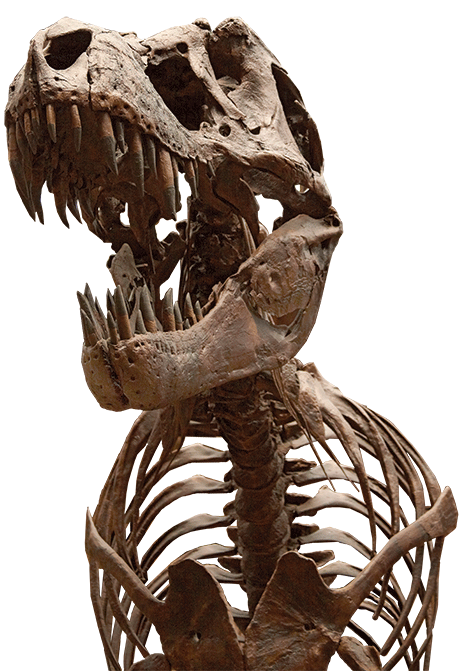
What’s on the van? – Stan’s on the van!

L-OUMNH-13_CUT-OUT

This week’s What’s on the van? is co-written by Andre Ashington, of the Museum’s geological collections, and year 10 work experience student Helen Tyzack.

Stan is a male Tyrannosaurus rex , from the late Cretaceous of South Dakota, U.S.A. He measures 12 metres in length, and is approximately 4 metres high at the hips. He is estimated to have weighed approximately 7 tonnes.

Tyrannosaurus rex is famous, or should that be infamous, for its relatively short arms, which are often viewed as being of no use, but recent research suggests that this was not the case. Two popular theories are that the arms may have aided male tyrannosaurs during mating. Alternatively, they could have been used to lever the dinosaur into an upright position after sleep. Sadly, neither of these suggestions has been proven, but we can be sure that he could definitely have beaten you in an arm wrestle!

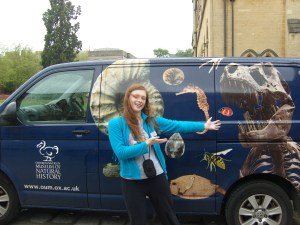
Helen with Stan… on the van

Stan would originally have hatched out of an egg and been cared for by his parents, in a similar way to some modern carnivores, until old enough to fend for himself. He would have hunted many herbivorous dinosaurs such as Pachycephalosaurus, Triceratops and Edmontosaurus, who shared his environment. He would also have preyed upon the smaller carnivorous dinosaur, Struthiomimus. Stan still enjoys the company of the fossil remains of these dinosaurs, which are also on display in the Museum.

During his life Stan acquired many injuries. These included several broken ribs, a broken neck, injuries to his cheeks and a bite wound on the back of his skull. Many of these were probably inflicted by other tyrannosaurs. However, Stan was obviously a tough customer and all of these injuries appear to have healed.

Stan clearly lived a very colourful life, which came to an end on a sandbank, near a stream and not far from the sea. He may well have died of old age.

What's on the van?

What’s on the van – Golden-ringed Dragonfly

L-dragonfly_CLONED

This week’s What’s on the van? comes from Zoë Simmons, from the Museum’s Hope Entomological Collections.

The Golden-ringed dragonfly (Cordulegaster boltonii) is one of the largest UK species of an order of carnivorous insects called Odonata. It is easily identified by its striking black and yellow stripes.

This dragonfly lays its eggs in shallow, running water; acid bogs and seepages are a particularly good habitat for this species. The larvae then take between two and five years to mature. The adults are strong fliers and can take down fairly large prey on the wing such as bumblebees or butterflies.

This is the only species of the Cordulegaster genus to be found in the UK. The family to which they belong have the common name of ‘Spiketails’ because of the large ovipositors, or egg-laying organ, possessed by the females.

As with all British species of Odonata, the Golden-ringed dragonfly is under threat from habitat loss and degradation. The shallow runs and seepages of bog areas which are one of the favoured habitats of this species are threatened by a number of things including peat cutting practices, drainage programs that create pasture for grazing animals, invasive tree species, rut making vehicles such as mountain bikes, and excessive levels of trampling by cattle, horses and people.

Many of these ecological problems – and more – occur in other kinds of habitats too and as such there is little refuge for our native Odonata species. However, there have been initiatives in recent years to protect dragon and damselfly habitat areas. More information can be found on the British Dragonfly Society website.

What's on the van?