

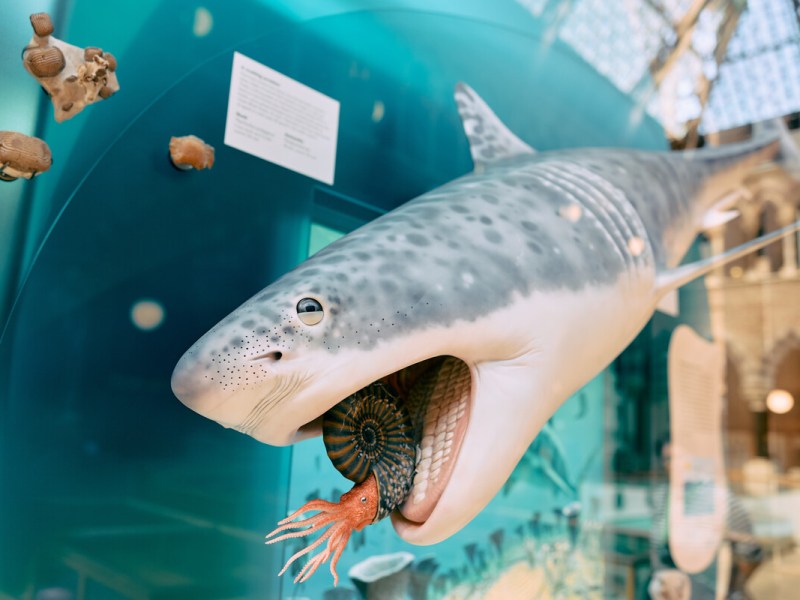
A shark’s tale
Following the completion of our Life, As We Know It redisplay project earlier this year, we are taking a look at some of the exceptionally skilled people who helped to bring it all together. In this article, model maker Jeremy Hunt and our Vertebrate Palaeontology Collections Manager Emma Nicholls take a deep dive into what…

From Fossil To Flesh: Reconstructing a Phascolotherium
Taxidermist Alexandra Rose Cherrett tells about how she turned two squirrels into a reconstruction of a Jurassic mammal

A Botanical Journey In Time
I remember the exact moment I saw the message from the Museum of Natural History. I had just returned home from a trip, switched my phone back on after the flight, and there it was – waiting for me to jump into the unknown. It came at a time when my personal life was shifting…
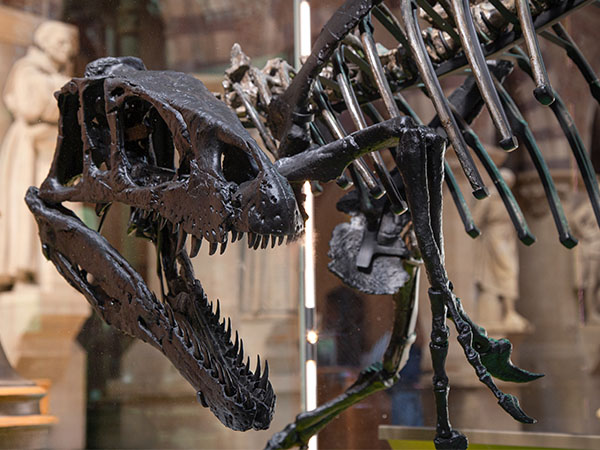
Presenting ‘Life, As We Know It’
What a ride! It’s been about seven years in the making, but we have just put the finishing touches to our major redisplay project – Life, as we know it – which fully opened last week. If you haven’t been to the Museum in a while, now is a great time to come.

‘Deadly Six’ deinstall
Bethany Milne from the Museum’s Visitor Experience team has spent some time working alongside the Exhibitions team to deinstall a temporary art exhibition. She has reflected on the day – what she enjoyed and what she learnt along the way.

Oxford team’s fieldwork revealing how complex life first evolved on Earth
By Ross Anderson In Summer 2024, a team of palaeontologists and geologists from the University of Oxford, along with colleagues from Dartmouth College, the University of Washington, and Williams College in the USA, undertook an expedition to the Little Dal Group in the Mackenzie Mountains, Northwest Territories, Canada. Our purpose was to uncover some of…

Amber Time Capsules and the Synchrotron’s X-Ray Vision
Imagine a drop of ancient resin. Inside is an insect, trapped for 53 million years, so well preserved it looks like it might twitch back into life. These amber fossils offer us a breathtaking glimpse into long vanished ecosystems. But there’s a catch: the most revealing details, like delicate mouthparts or microscopic genitalia, are sealed…

Back to the Jurassic Highway
Excavations at Oxfordshire’s ‘dinosaur highway’ continued this summer to uncover Europe’s longest sauropod dinosaur trackway. Following the success of the excavation last summer, which featured on BBC Two’s Digging For Britain, a new area of Dewars Farm quarry near Bicester has been uncovered. Teams from the Universities of Oxford, Birmingham and Liverpool John Moores joined…
Something went wrong. Please refresh the page and/or try again.

