A rare beetles turns 21

by Darren Mann, Head of Life Collections

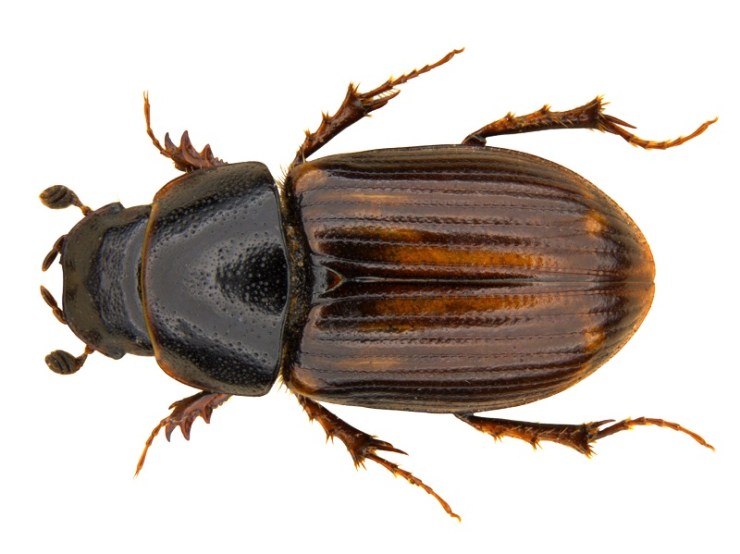
Many years ago, when re-identifying dung beetles in the collections of the British Entomological and Natural History Society, I found a specimen that I didn’t immediately recognise. So I borrowed it, and after a few hours of checking the European literature back in Oxford, I realised that I’d found a beetle that had not been recorded anywhere in Britain before.
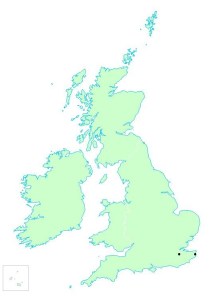
The small black circles show the locations of known records for Melinopterus punctatosulcatus.

The dung beetle in question was Melinopterus punctatosulcatus, a species widely distributed across Europe but until this discovery unknown in Britain, despite its presence in the BENHS collection. This is because it had been misidentified as a different species: the beetle superficially looks like two closely-related species, and so had been overlooked by beetle collectors for over a hundred years.

Since that initial specimen, I have scoured numerous UK museum collections and to date have found a total of just 20 specimens, distributed across the World Museum in Liverpool, the National Museum Wales in Cardiff, and here in the Museum of Natural History in Oxford. All these specimens are from Deal, Kent and were caught between 1891 and 1910.

The last known record is of a single specimen from Ryarsh, Kent collected in 1938, which just happens to be the first specimen I found some 20 years ago in the BENHS collection.

The male genitalia of Melinopterus punctatosulcatus. The appearance of the genitalia is one of the best ways of identifying one species of beetle from another.

But this week, the 21st known specimen was discovered in our collections by Mary-Emma, a placement student who is with us from the University of Reading. She uncovered the beetle during the re-curation and identification of a collection made by A. J. Chitty. Thankfully the specimen was a male, so we were able to confirm the identification using the genitalia – one of the best ways of determining a species.

It seems that Mr Chitty had a knack for finding this particular species of dung beetle, since 14 of all the known specimens were caught by him at Deal. It’s just a shame that he didn’t realise his amazing discovery at the time.
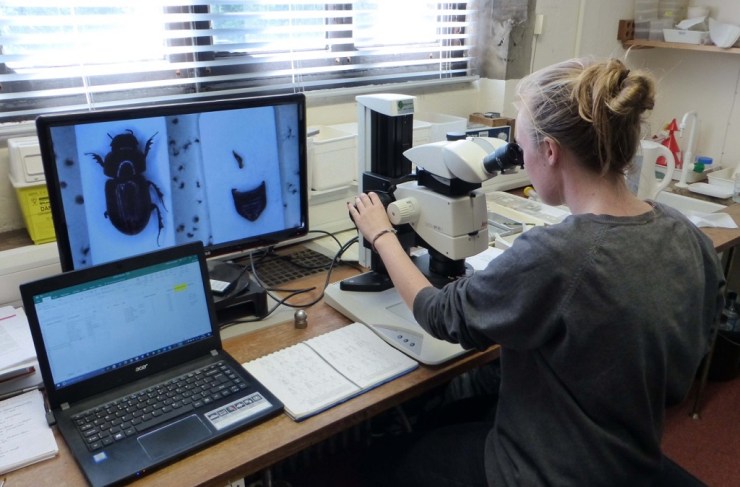
Mary-Emma identifies Melinopterus punctatosulcatus by examining the dissected genitalia, visible on the right hand side of the monitor screen.

In the recent Conservation Status Review of dung beetles, Melinopterus punctatosulcatus was designated as Regionally Extinct in the UK because there have been no known sightings since that one in 1938. So this species possibly went extinct in Britain before we even realised that it was here. And were it not for museum collections we may never have known it once lived in Britain at all.

Going, going… not gone?

by Darren Mann, head of Life Collections

Extinct or not extinct; that is a question raised by a report into the status of the beetles of Great Britain, published last year by Natural England. It may sound easy to determine whether a species is extinct or not, but tiny insects can be very hard to spot, despite the best efforts of many people.

The results of the report were alarming: using the International Union for Conservation of Nature criteria, just over half of our dung beetles are in decline, five have gone regionally extinct, and a further four were classified as Critically Endangered (Possibly Extinct) in Great Britain.

Prompted by this assessment, targeted surveys were made at known historic sites for some of our rarest and possibly extinct species. Over the past two years we have already made some exceptional discoveries, including new sites and new county records for several rare dung beetles.


My favourite finds from recent field exploits are the discovery of two new populations in Gloucestershire for the Critically Endangered Aphodius quadrimaculatus, and the rediscovery of Heptaulacus testudinarius in the New Forest, Hampshire after 35 years with no records. But sadly we have failed to find four of our target species at their last known sites.

Finally, after ten years of repeated site visits, we did finally find one of our rarest species, the Ainsdale dung beetle Amoecius brevis. This small beetle, just 3.5-4.5 mm long, was first found in Britain in 1859. It’s restricted to the Ainsdale and Birkdale sand dunes of Lancashire, where there were several records from the early 20th century, one record in 1962, and four records from the 1990s.

A specimen of Amoecius brevis from the Museum, collected in 1903

The last known record was of a single specimen caught in 1996. The lack of recordings for the past 20 years, despite a large number of surveys, led us to proclaim it Critically Endangered and ‘Possibly Extinct’ in the Natural England report.

Unlike many of our other dung beetles, which prefer fresh dung, Amoecius brevis breeds in older dung of large herbivores, such as cattle and horses, and rather unusually, in the UK it is also found breeding in rabbit latrines.

So it was in pursuit of rabbit latrines that we spent five days walking up and down sand dunes, covering an area of about 5km2. We then used a fine mesh sieve and tray to search through the dung and sand beneath. When our first beetle appeared it took a few minutes for the euphoria to fade, and then to our delight a further three were found in the next handful of sand and rabbit dung, along with a few more a little way down the coast.

In one sense, proclaiming a small, inconspicuous and evidently hard to find beetle as ‘Possibly Extinct’ is premature, but without that designation who would bother to go and look? Would wildlife conservationists give it any attention?

Since the Natural England Status Review was published, surveys have been commissioned for four rare dung beetles; in the case of the Ainsdale dung beetle at least, this has proven very successful.

I hope that the rediscovery of this very rare beetle will highlight the importance of invertebrate conservation as a whole. In the meantime, our data will feed in to conservation management plans for the Ainsdale site, safegaurding this little beetle’s future.


Brain washing

pro-cam

Our next exhibition – Brain Diaries: Modern Neuroscience in Action – opens on 10 March and in preparation we have indulged in a little bit of brain-washing… This article contains an image of a preserved human brain.

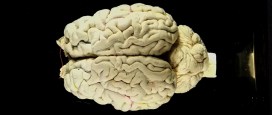
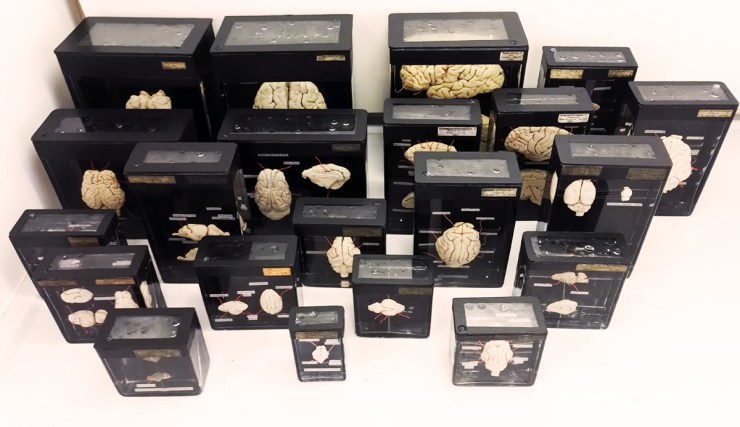
One of the first displays visitors will encounter is a ‘wall’ of 23 fluid-preserved mammal brains – from a Short-nosed Bandicoot to cow. The style of jar, with its black bitumen and paint backing, tells us that these were once used for display so it is exciting to put them in the public galleries again. Museum conservator, Jacqueline Chapman-Gray, runs us through the meticulous process she undertook to ensure these brains will look their best for their return to the limelight.

pro-cam
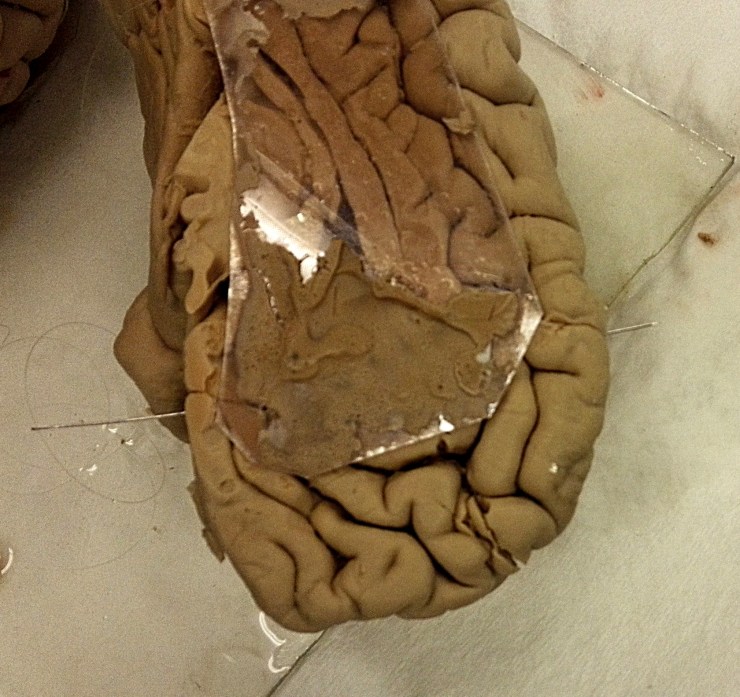
Cow brain before conservation treatment
A number of the brains had become dehydrated over time as the level of fluid – alcohol – had dropped. These needed to go through a rehydration programme to ensure their long-term preservation. This is more complex than simply adding more fluid to the jar. Instead the alcohol level needs to be increased gradually to avoid damaging the tissues.

dav
Brains soaking in alcohol
Others had started to detach from their glass mounts, or anatomy labels that marked each of the different areas or sections of the brain had come loose. These were carefully remounted using specialist conservation-grade materials and a steady hand! Three brains had become completely detached and were repaired using a polyester monofilament thread, otherwise known as fishing line.

dav
Repairing a human brain with a beading needle

dav
Labels found detached at the bottom of the jar
For the smallest of the brains a normal sewing needle was enough to pass through the tissues but for the larger two either a flexible 10cm beading needle or large 25cm mattress needle was needed. The original threading points were reused wherever possible though in one case this proved to be too difficult, as the tissue was soft and susceptible to breaking. With precision and patience I was able to gently stitch them back into place on the backing plate so they look as good as new.

All of the jars were given a thorough clean to ensure that seals were tight fitting and that the contents were shown off to their best. They were then filled with fluid to 4/5ths from the rim and the brains gently placed back inside.

Lids were sealed with clear silicone and each jar was topped up with a syringe through a small hole in the lid that is there for this very purpose – once full, this hole is also sealed.

Lastly, after the seals had dried, for the final finishing flourish black paint was reapplied to the backs and tops of the jars to provide a contrasting backdrop.

pro-cam
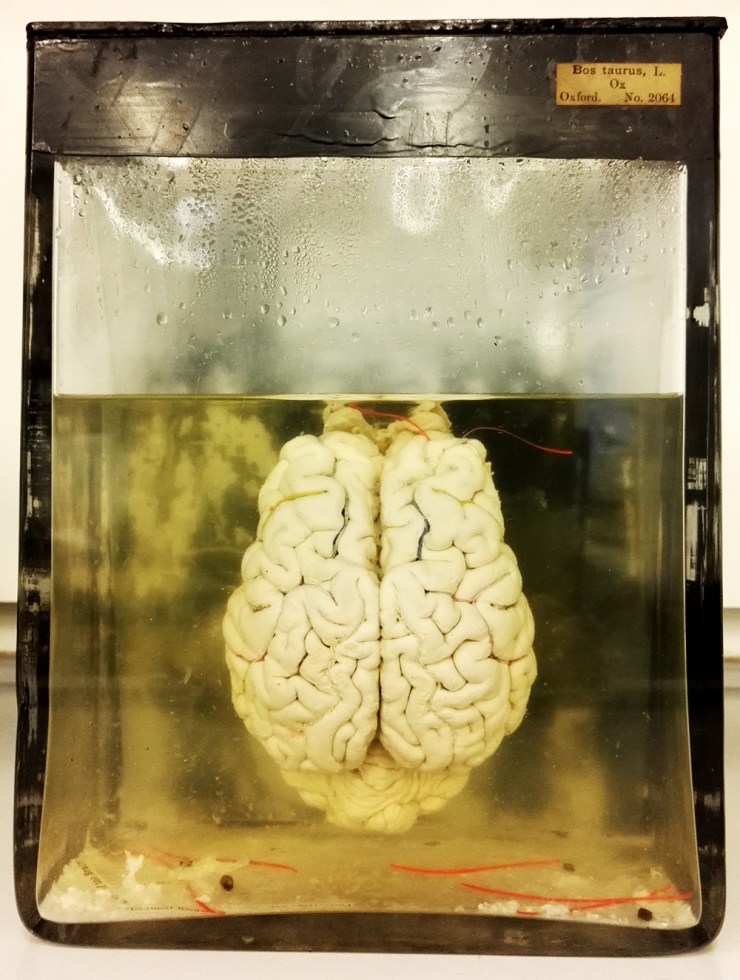
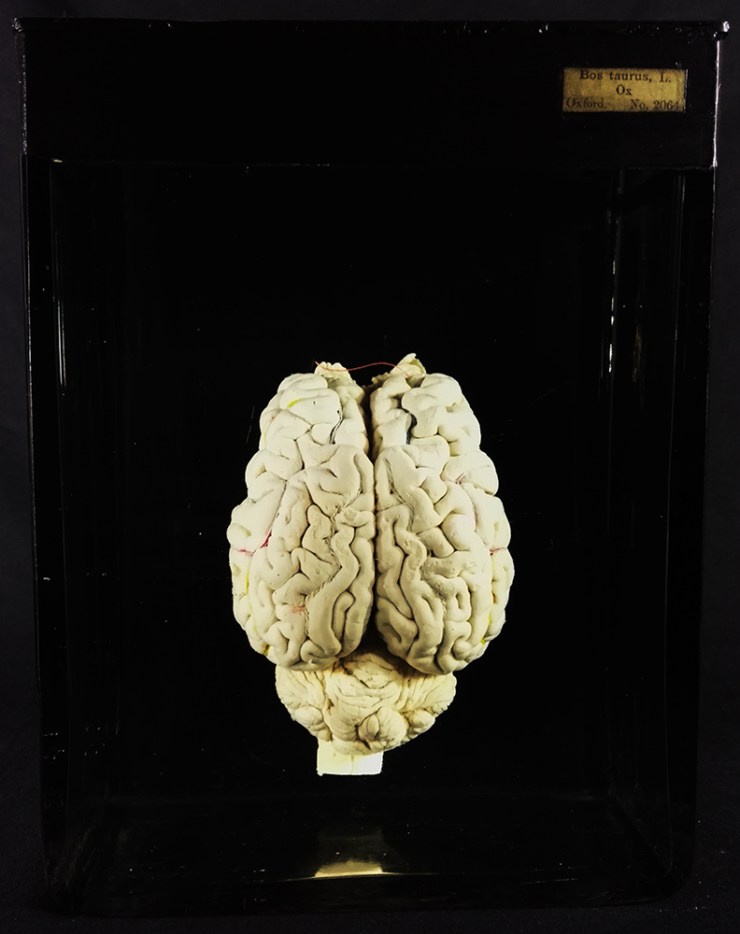
Ta-dah… the cow brain after conservation treatment
Brain Diaries opens on Friday 10 March and runs until Monday 1 January 2018. Take a look at the website to find out more about the exhibition and accompanying programme of events at braindiaries.org

Why the world needs Dung Beetles

To celebrate National Insect Week 2016 we thought we would introduce you to the custodians of the Hope Entomology Collection here at the Museum. Our insect collection is made up of a whopping 6 million specimens, so our resident entomologists definitely have their work cut out. However, they have taken a little time out to tell us all about their specialisms and why their favourite insects are the best.

Darren Mann – Head of Life Collections

Darren out in the field collecting Dung Beetles

Dung beetles have been my passion since my late teens. I started with British species and then gradually broadened my interests to encompass the world fauna. But why dung beetles?

Well, they are beautiful insects, exhibiting an array of shapes and colours; they have been around since the dinosaurs, and have interesting biologies and behaviours, from nest-building and parental care, to stargazing. As a group, dung beetles are also very important in the ecosystem, removing dung and recycling nutrients.

Not only that, but dung removal and relocation offers additional ‘ecosystem services’ of fly control, livestock parasite suppression, plant growth enhancement, improved soil structure, reduction of greenhouse gas emissions, seed dispersal, and pollination. Inevitably, they are a source of food for other animals too.

Darren takes a closer look at a collected specimen

Dung beetles are found in all regions of the world, and consist of three main groups: the dor or earth-boring beetles (Family Geotrupidae) of around 600 species; the ‘lesser’ dung beetles (Family Scarabaeidae, subfamily Aphodiinae) of around 3,500 species; and the ‘true’ dung beetles (Family Scarabaeidae, Subfamily Scarabaeinae) of around 6,000 species.

With just over 10,000 species in total you’d think we have found all the dung beetles out there, but not so: it’s estimated that 40 per cent of species new to science are still to be discovered. In the UK we have just 60 species and over half of these are in decline due to agricultural intensification, pollution, use of veterinary drugs, and changes in livestock farming practises. The Dung Beetle Mapping UK Project (DUMP) aims to highlight the importance of this group and promote research and conservation in this area.

Despite their name, not all dung beetles eat dung, with some species preferring fallen fruit, fungi, or even dead animals. The South American roller (Deltochilum valgum) is an avid predator of millipedes and another South American species (Zonocopris gibbicollis) feeds on snail mucus!

So with their high diversity, fascinating ecology, and great economic benefit, perhaps the question really should be ‘why not study dung beetles?’.