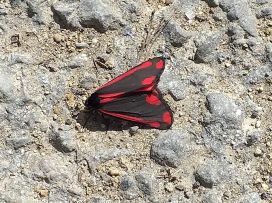
Cinnabar moth on the road

Why did the insect cross the road?

I don’t know about the rest of you, but I love a good joke, or even the odd bad joke. I am now on the lookout for new insect jokes. This is where you come in. We want to hear your insect jokes, both ones that you have heard and ones that you have created yourselves. Here are a few ideas and examples to get you started and in the zone:

Traditional Jokes

There are some jokes that have been around for a while. Most people know the original form, and enjoy making up new variations of those same jokes. Here are some insect versions of popular traditional jokes:

Examples of Traditional Jokes (Knock Knock! Who’s there? Abby! Abby who? A bee just stung me; Why did the insect cross the road? To get away from the pesti-side; Doctor Doctor. I keep seeing an insect buzzing about my head! Don’t worry! It’s just a bug that’s going around.)

Puns

Many jokes rely on puns, some clever, some less so. A pun is a play-on-words, and makes use of different possible meanings of the same, or similar, words. To illustrate this I will tell you about some of my insect puns:

They are un-bee-lieveable. I hope they are not fly-ing over your head. Some people find them annoying. Do they bug you?

As you can see you can drop them into general conversation, they can be incorporated into a story or they can form the punchline of your joke:

Joke with a pun as the punchline (What is a grasshopper’s favourite sport? Cricket)

Another word for pun is paronomasia, though this term is a little too pun-usual for my taste.

One liners

A one liner is a joke that is made up of just one line or sometimes even just one sentence. You have to listen closely, or you may miss the punchline. You may not even realise that the person is telling a joke until they have finished:

I saw a fantastic film about a really large insect. It was XL ant!

No doubt you can tell better insect jokes than the ones above. Please share them with us in the comments below.
Insect super powers: dodging death

Being near the bottom of the food chain isn’t ideal.  Insects have many different predators including lots from the insect world itself and that’s before you’ve even started to take account of all the birds, fish, reptiles, amphibians and mammals that consider insects an important part of their diet.  So how do insects dodge death and defend themselves against predators?  Read on to find out about some cunning techniques and surprising solutions!

Chemical Warfare

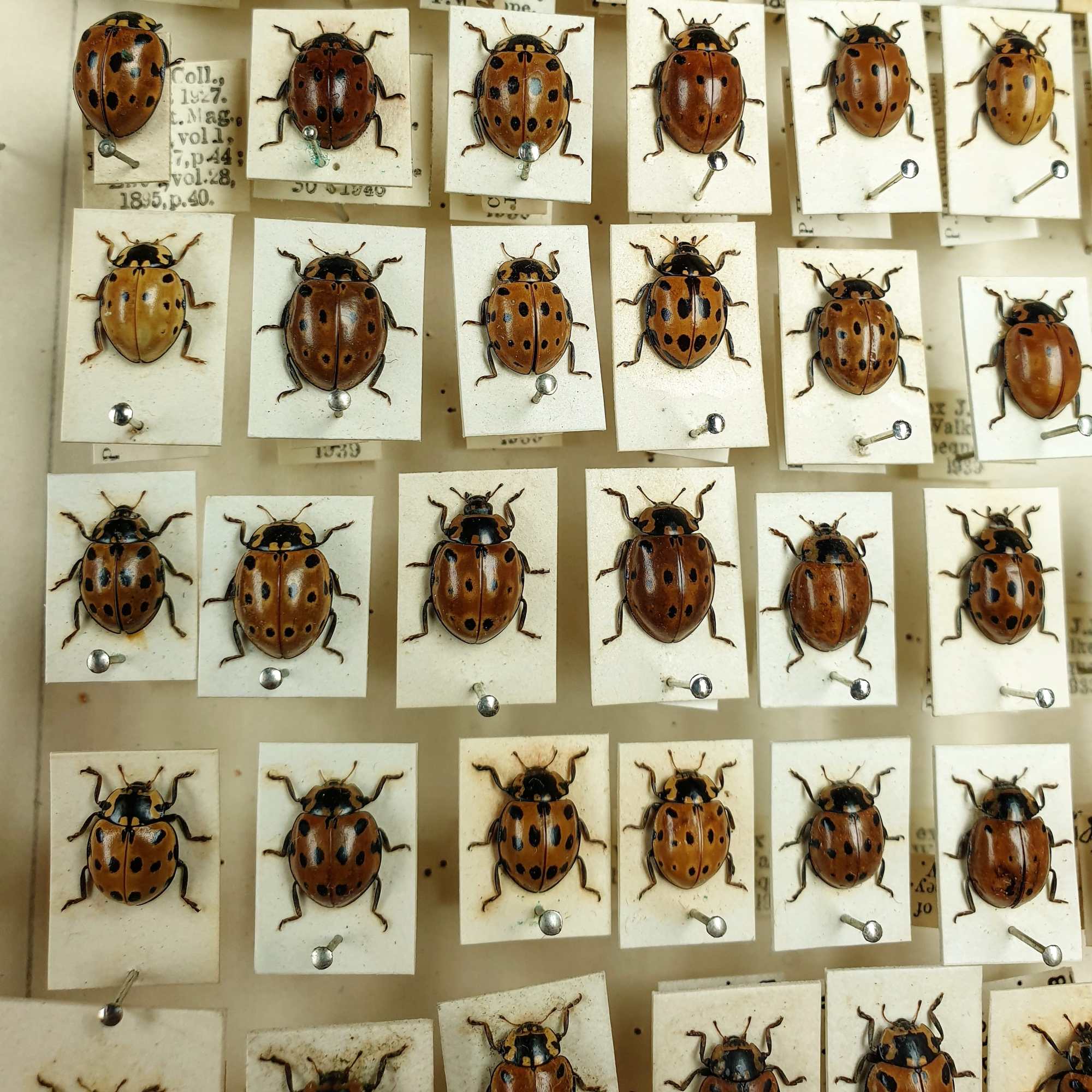
Did you know that some species of ladybird have clever, and some rather disgusting, ways of deterring predators?  Not only do many species display the bright warning colours of red or yellow combined with black, but some can exude a stinky yellow liquid through their knees when in danger.  This is called reflex bleeding because the liquid is made from their blood.  You may have noticed it if you have picked up a ladybird and seen yellow spots of liquid on your hand. 

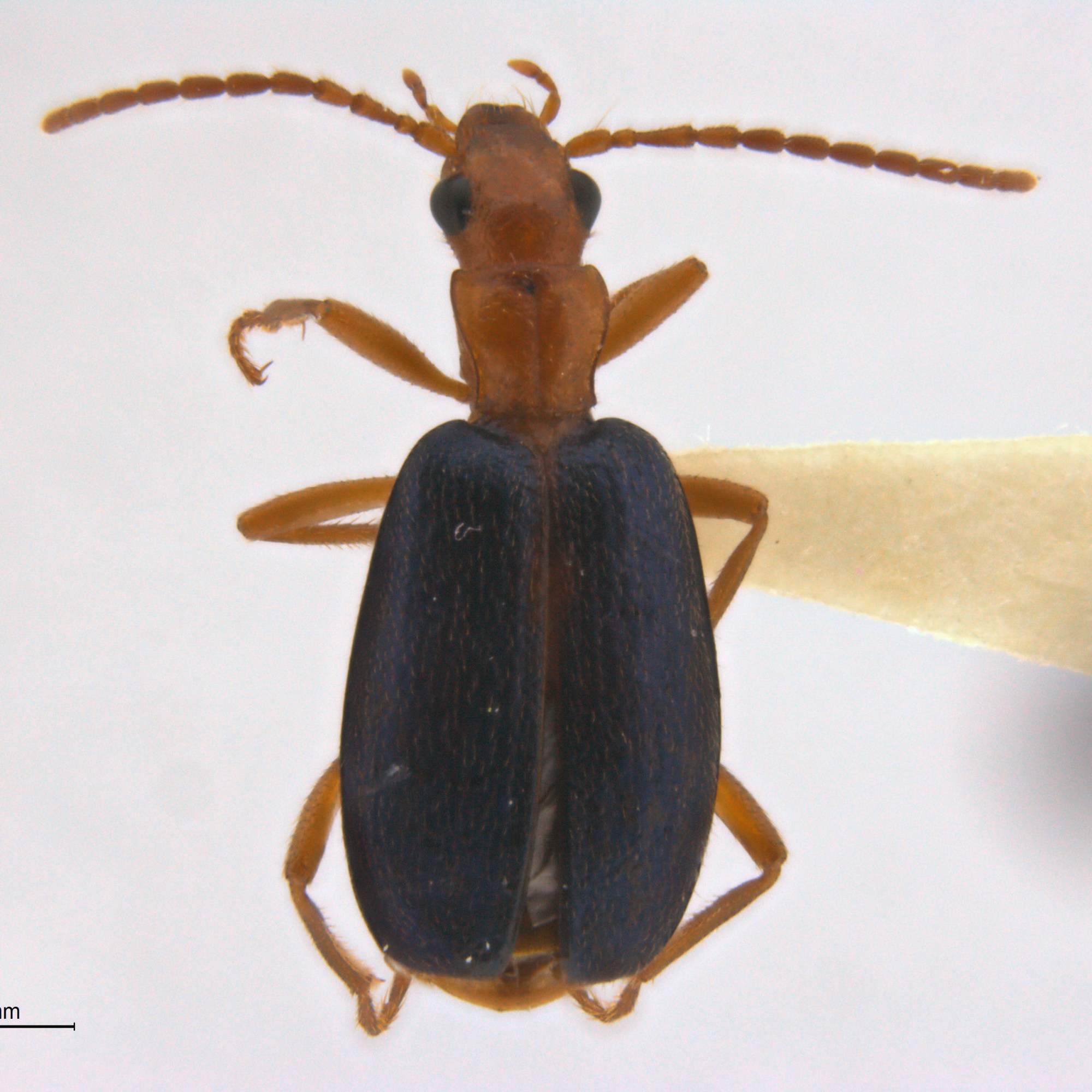
Other insects can squirt noxious fluids into the air when they feel threatened.  Wood Ants, for example, spray formic acid.  The incredible Bombardier Beetle (seen here on the right) can combine two different liquids stored in separate chambers in its abdomen to produce a boiling hot chemical that literally explodes from the beetle’s rear. I wouldn’t like to be on the receiving end of that!

Cloaks of Invisibility

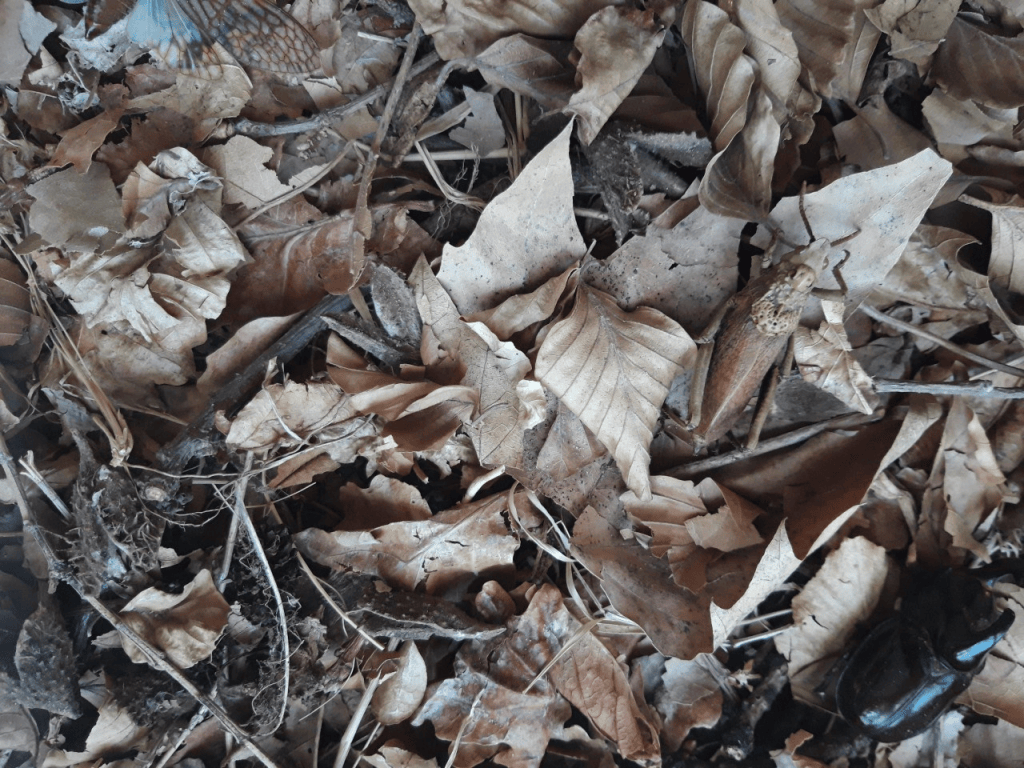
For many insects, protection from predators is all about not being seen.  There are some amazing masters of disguise whose camouflage is so good we have trouble spotting them.  For example, many moths are almost invisible when resting in their preferred habitat such as on the bark of trees.

How many insects can you spot?

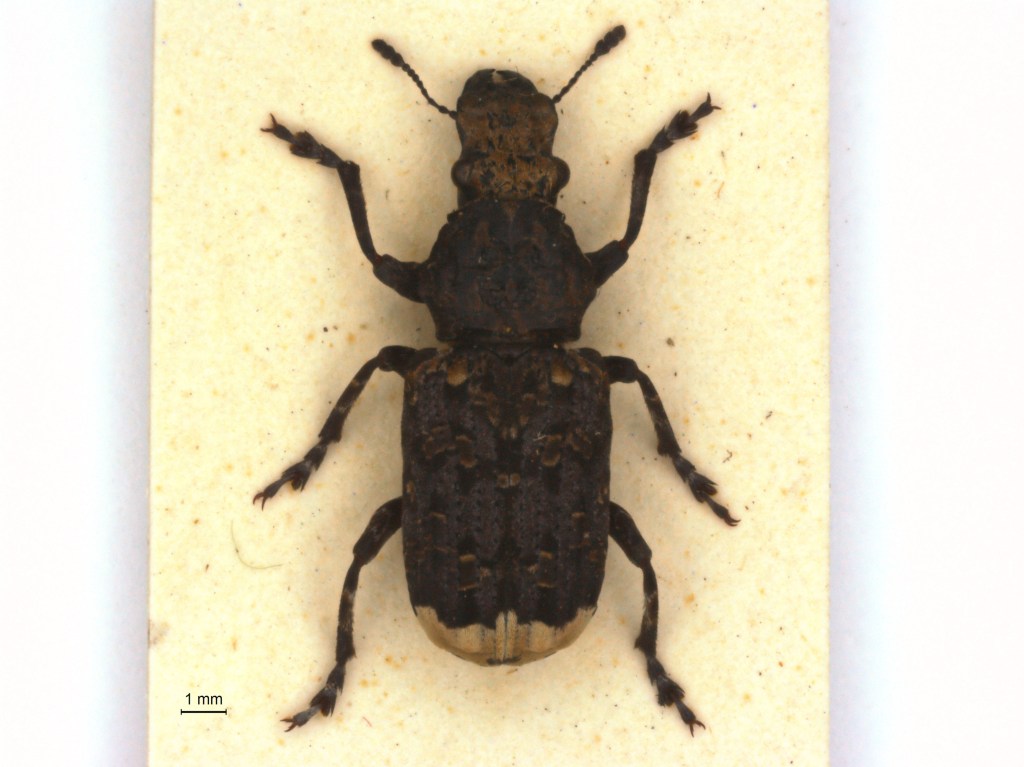
Another form of camouflage is to disguise yourself as an object of no importance, such as a twig.  When threatened, this beetle (Platyrhinous resinosis) rolls over, draws in its legs, lies very still and looks just like a bird poo!

Platyrhinous resinosis

Masters of Disguise

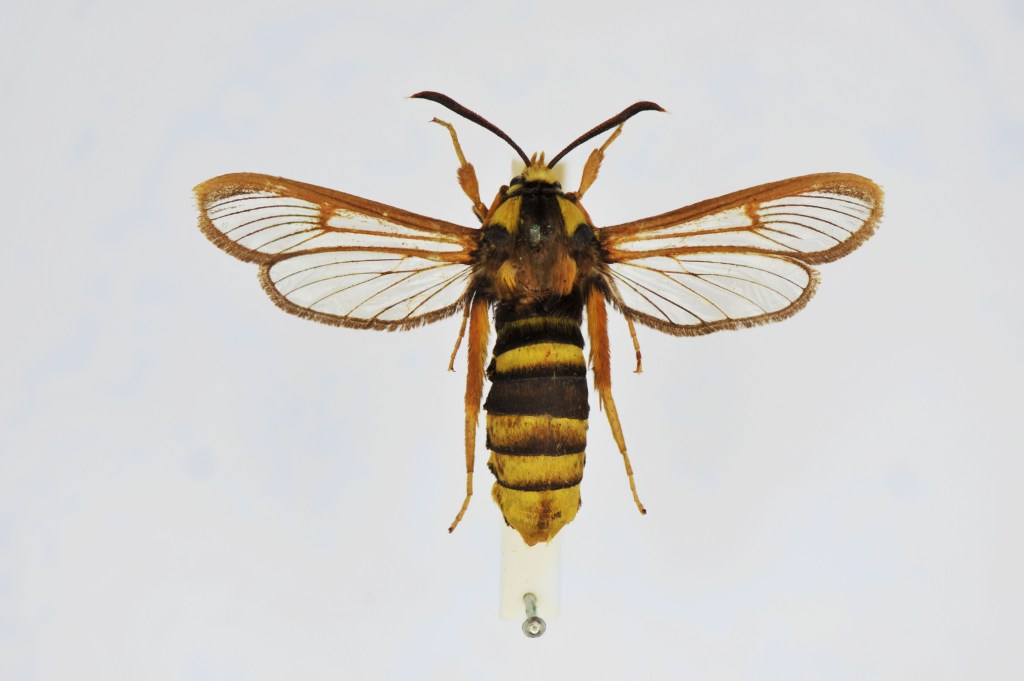
If you can’t blend in with your background, you could always be a master of mimicry and pretend to be something really scary! This Hornet Clearwing is not actually a hornet with a powerful sting. It’s a moth, but by mimicking the colours and form of the hornet it will manage to put off many a hungry bird!

Serious Weaponry

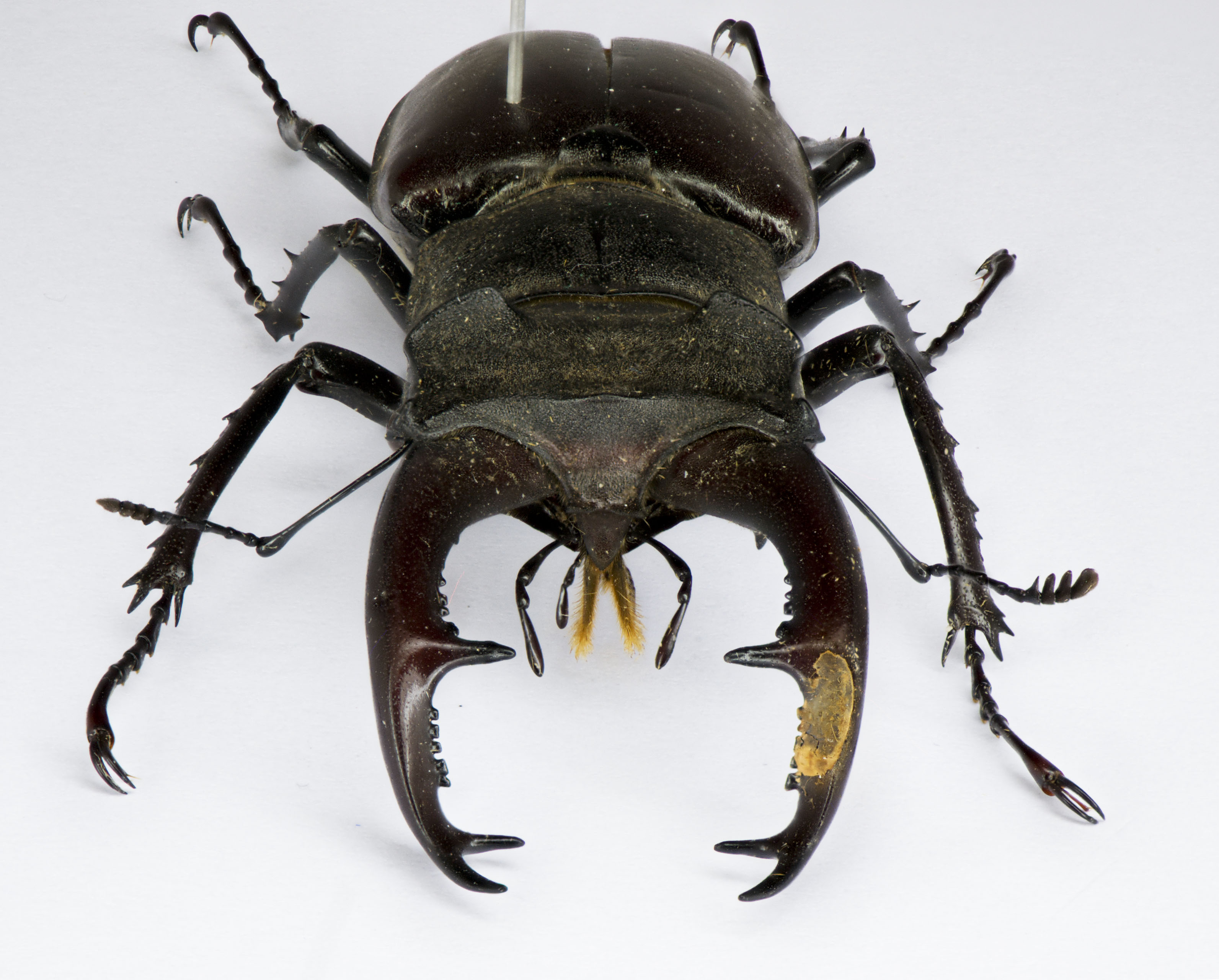
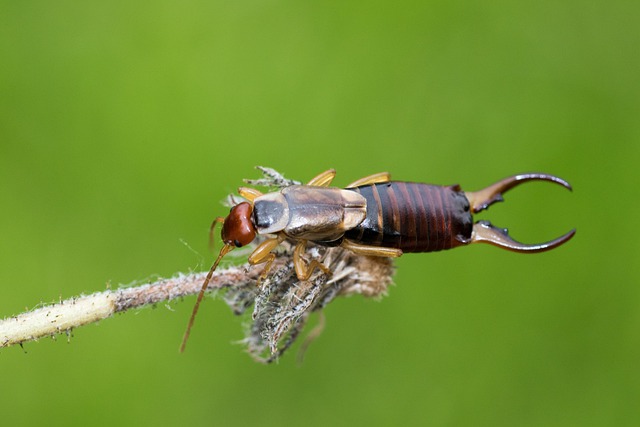
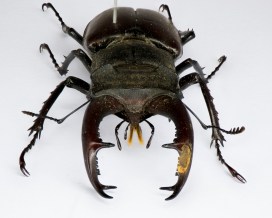
Some insects have formidable weapons that may serve to fend off rivals, help catch prey and deter predators.  Look at the ferocious jaws of the Stag Beetle or the sharp pincers, or forceps, at the rear end of the earwig.  They might make you think twice before tackling these guys! In fact, the jaws of the Stag Beetle are all show!  They are actually quite weak and may even prevent Stag Beetles from feeding in their adult form. The fact that they exist at all just shows how effective they are at warding off predators.

Let us know if you have a favourite story about how insects dodge death and survive in a world full of predators.

The Dark Edged Bee-Fly

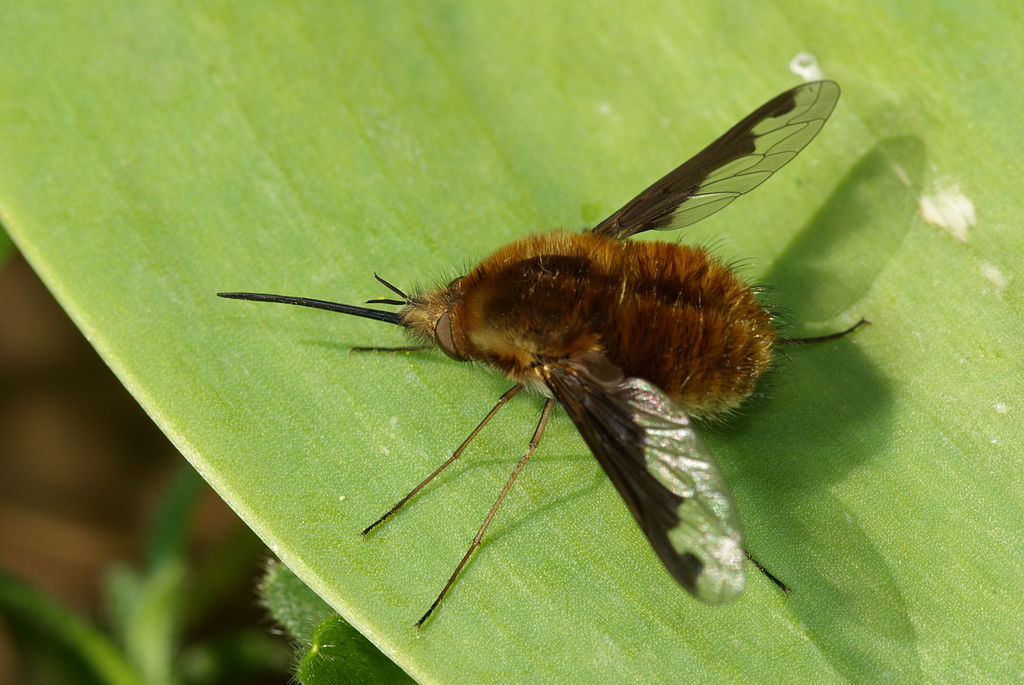
The Dark edged bee-fly, Bombylius major, is one of the most conspicuous insects to emerge in early spring because of it’s large size and ability to hover in mid air. It is the most common species of Bee-fly in the UK and can be seen in woodland, heathlands, grasslands and gardens from February to June. It has several other common names known as the ‘dark bordered beefly’ or ‘large beefly’. They get these names from their large size and from the dark wavy leading edge of their wings.

Dark edged bee-fly, Bobylius major. Image credit – Flickr / Jean-Marie Hamon, CC BY-SA 3.0

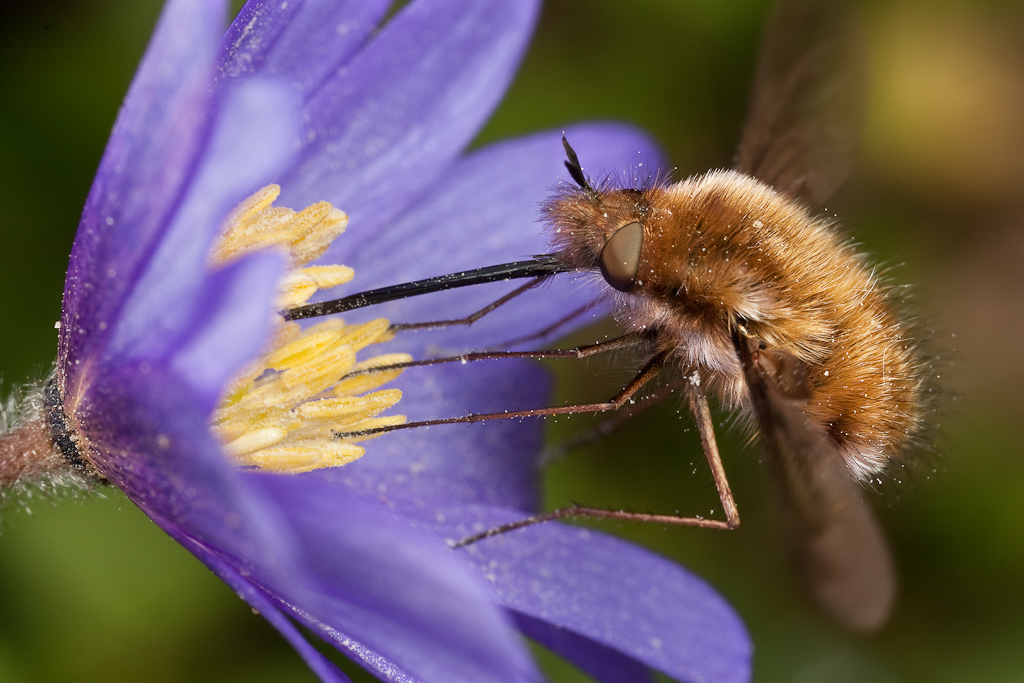
So, is it a bee or a fly? The single pair of wings tells us that this is a fly. A bee would have two pairs of wings. Why would a fly evolve to look like a bee? We think this is to trick predators into thinking it is more dangerous than it is. It certainly works with humans: many people think that the beefly has a large ‘sting’ at the front. In fact, this is just part the fly’s mouth and is quite harmless. The proboscis is adapted to drink the nectar from a wide variety of early-flowering plants. These include primrose, bugle, blackthorn, and cherry blossom. Because they transfer pollen from flower to flower, they are important pollinators in the spring.

Bee-fly feeding on nectar. You can see pollen grains on its legs and body. Image credit – Flickr / Robert Ault, CC BY-SA 2.0

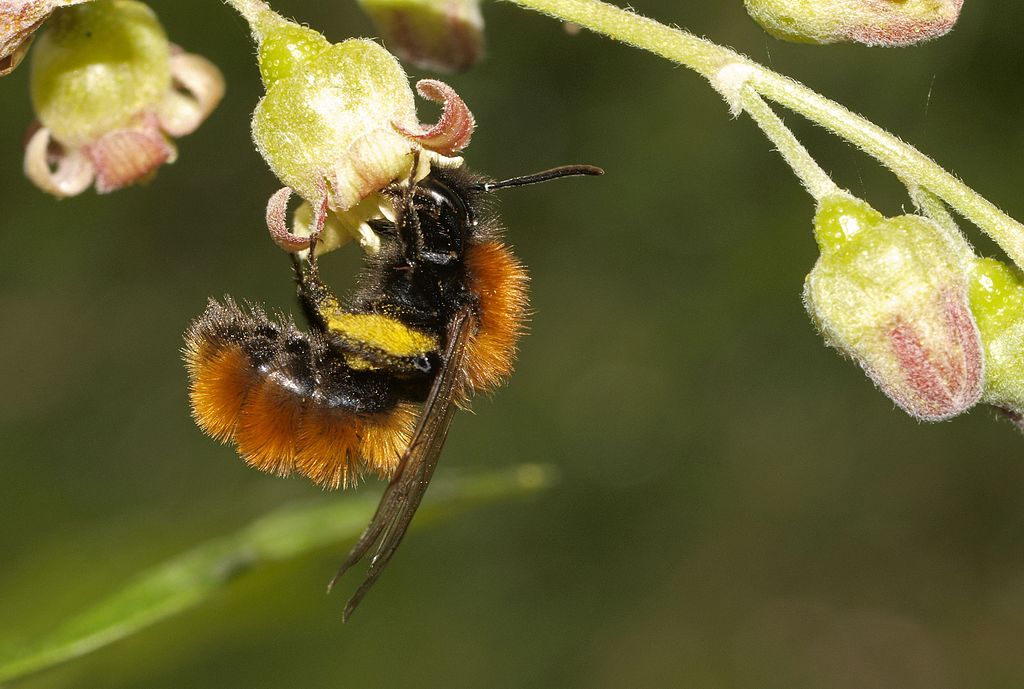
Bee-flies may be harmless to humans but their life cycle is a bit grisly! Females lay their eggs in the underground nests of solitary mining bee nests such as Clarke’s Mining Bee (Andrena clarkella), the Early mining bee (Andrena haemarrohoa), and the Tawny mining bee (Andrena fulva). They collect sand or dust at the end of their abdomens. This sticks to their eggs, making them heavier. It may also help camouflage them. They then flick their eggs into the nest burrows of the bees. Once the eggs hatch, the bee-fly larvae crawl further down the burrows and wait for the bee larvae to grow until they are near full size. The bee-fly larvae then begin to feed on the mining bee larvae, drinking their body fluids and gradually eating them alive. When they have finished feeding, the bee-fly larvae then pupate and overwinter inside the burrow. The next generation of adult bee-flies then emerges from the burrows the following spring.

The Twany mining bee, Andrena fulva. Bee-fly larvae feed on its larvae. Image credit – Flickr / Line Sabroe, CC BY 2.0

You might think that means that bee-flies are bad for other bee species, but this is relationship evolved a long time ago and is part of the complex interaction between living things that exists in all ecosystems. Bee flies do feed on individual mining bees, but there is no evidence that they are harmful to bee populations.

If you spot a bee-fly this spring or summer, you can add your sighting to the national database by completing a simple online form on the Bee-fly Watch website. Why not let us know too? You could even take a picture or draw a picture. Who will spot the first bee-fly of 2021?

Arctic Pollinator Watch

Become an arctic pollination investigator without even putting your coat on! Scientists investing pollinating insects in the arctic need your help. By spotting pollinators in images taken by remote cameras, you can help teach a computer system how to identify these insects which are vital to arctic ecosystems.

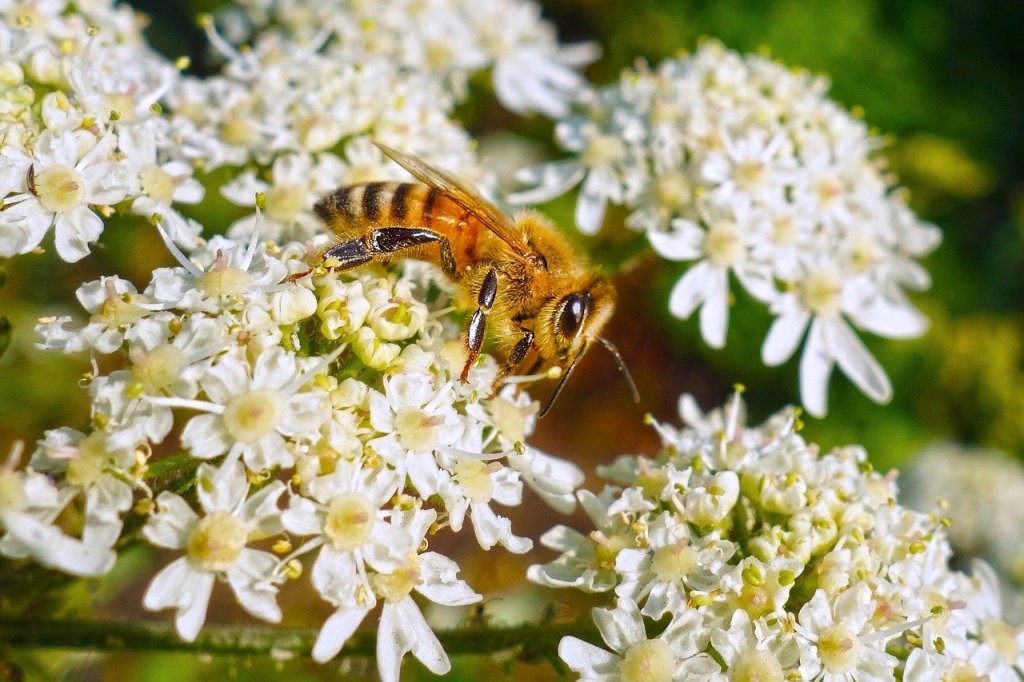
Bees, butterflies, beetles and many other insects are pollinators. Image credit – Image by Mabel Amber from Pixabay

Insects are important pollinators all over the world, including the arctic region around the North Pole. By moving pollen from flower to flower, insects enable new seeds and fruits to form. These seeds will grow to become the next generation of plants. Without pollinators, many species of plant would die out because there would be no young plants to replace the old ones.

The Department of Bioscience at Aarhus University in Denmark have set up time-lapse cameras at various arctic locations. For the past three years, these cameras have gathered thousands of pictures of flowers. It would take an enormously long time for humans to locate and identify pollinators in these pictures, so the researchers now want to train a computer to do it. A computer has already identified pictures that include flowers (although it may not always get tis right). The researchers need your help spotting any pollinators that may have visited the flowers in these pictures.

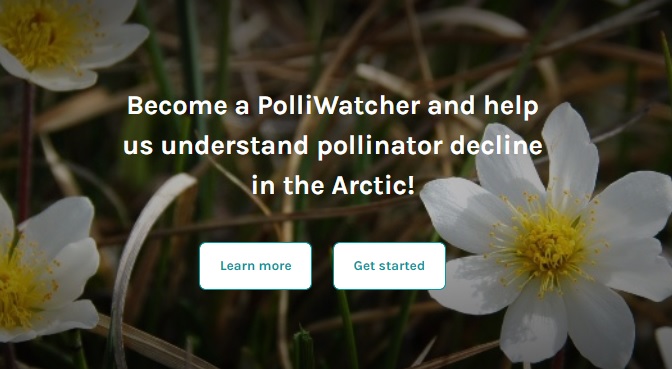
Become a ‘polliwatcher’ on the Pollinator watch website

You can join the project by visiting the Pollinator Watch pages of the Zooniverse website. You can then click ‘Learn more’ to read more about the project and the researchers, or ‘Get started’ to start hunting for pollinators. There is a short tutorial to help you learn how to spot the insects, and then you can hunt through as many pictures as you like.

You don’t need to register with the site to take part but if you want to, make sure that an adult gives permission. Signing in means you can keep up to date with the project and you will get credited if you find something special!

Don’t forget to let us know how you get on by sending us a message on the Contact Us page.