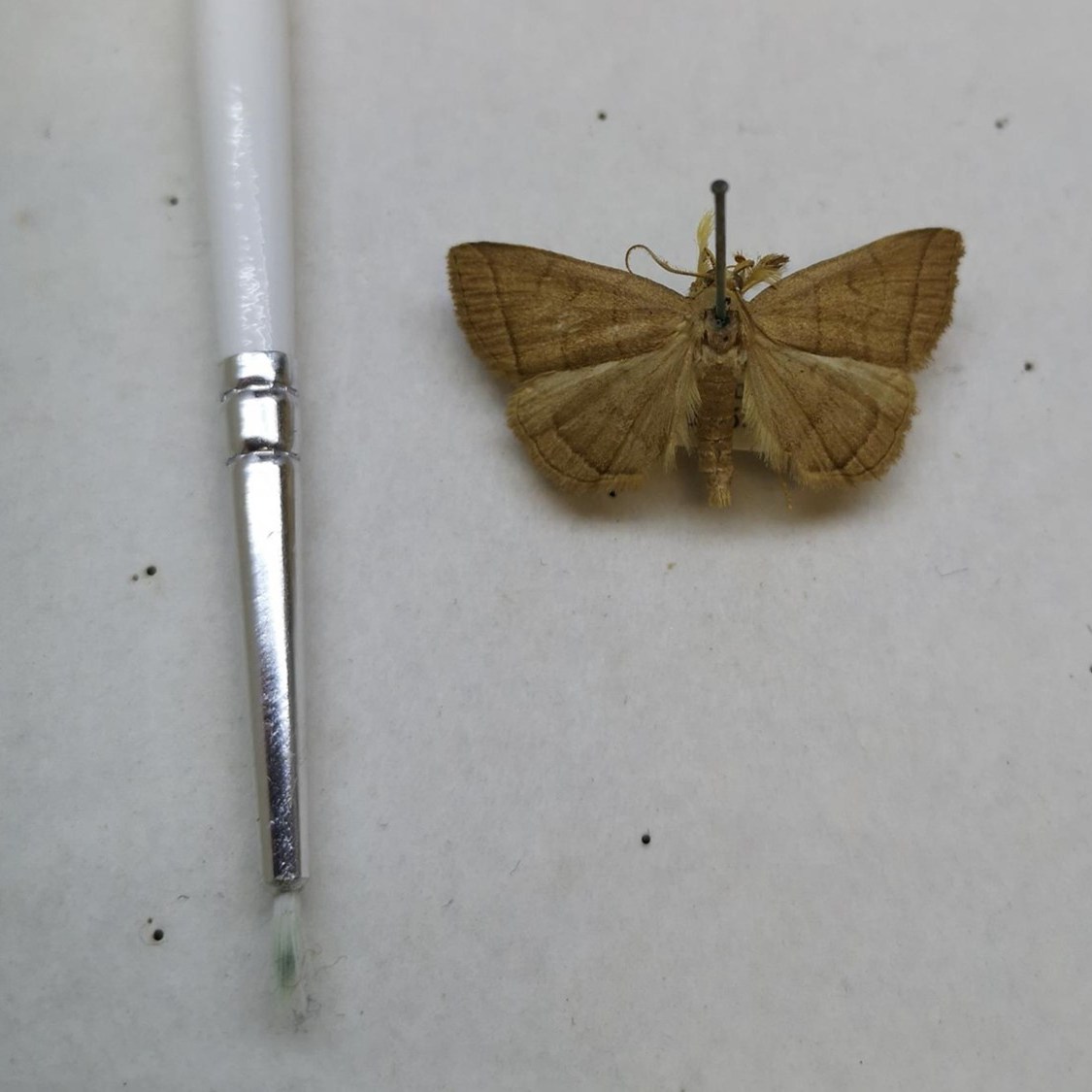
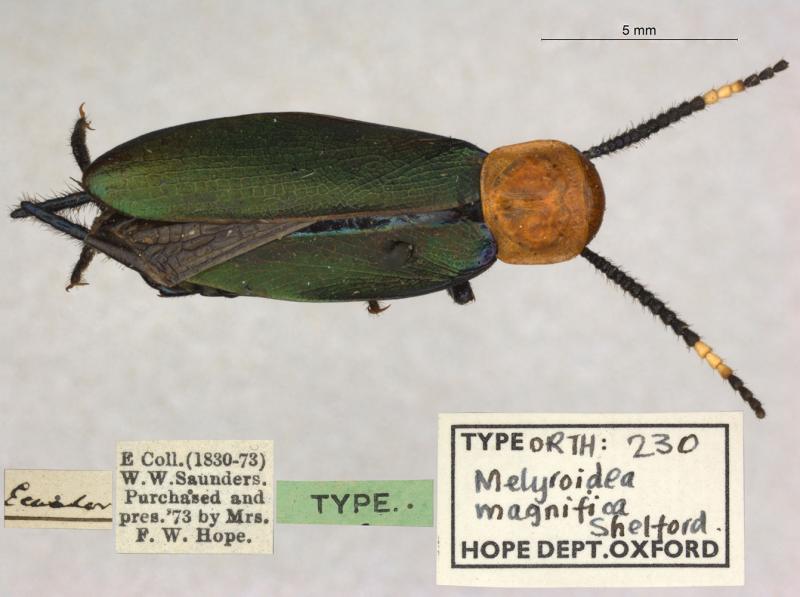
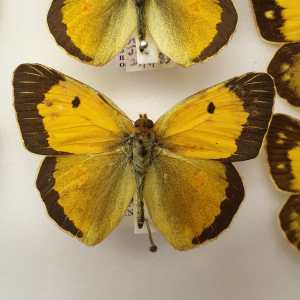
The HOPE British insect collection includes specimens from the early 19th century to the present day. This means that some are very old and delicate. Of course, all of the insects are very delicate and easily damaged. Just think about the width of the legs or antennae of some of the insects you have seen in your garden! Not much more than a hair’s breadth! It isn’t surprising then that some of the specimens are showing their age and some are damaged.
In this post, learn how Tom Greenway, Junior HOPE Collections Assistant, repairs the damage and what happens to the bits that can’t be stuck back on!
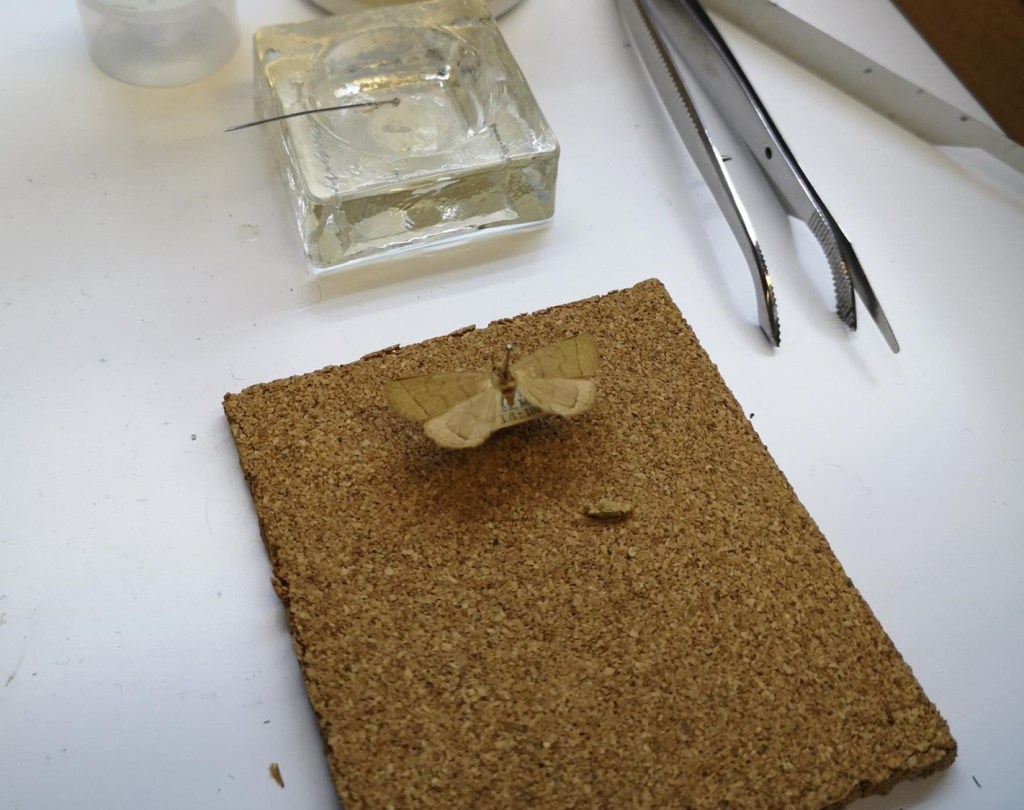
“It’s always sad to see a damaged specimen but with a little bit of patience, and a mix of PVA glue and distilled water, we can make repairs to get them looking like new again!”
Tom Greenway, Junior HOPE Collections Assistant
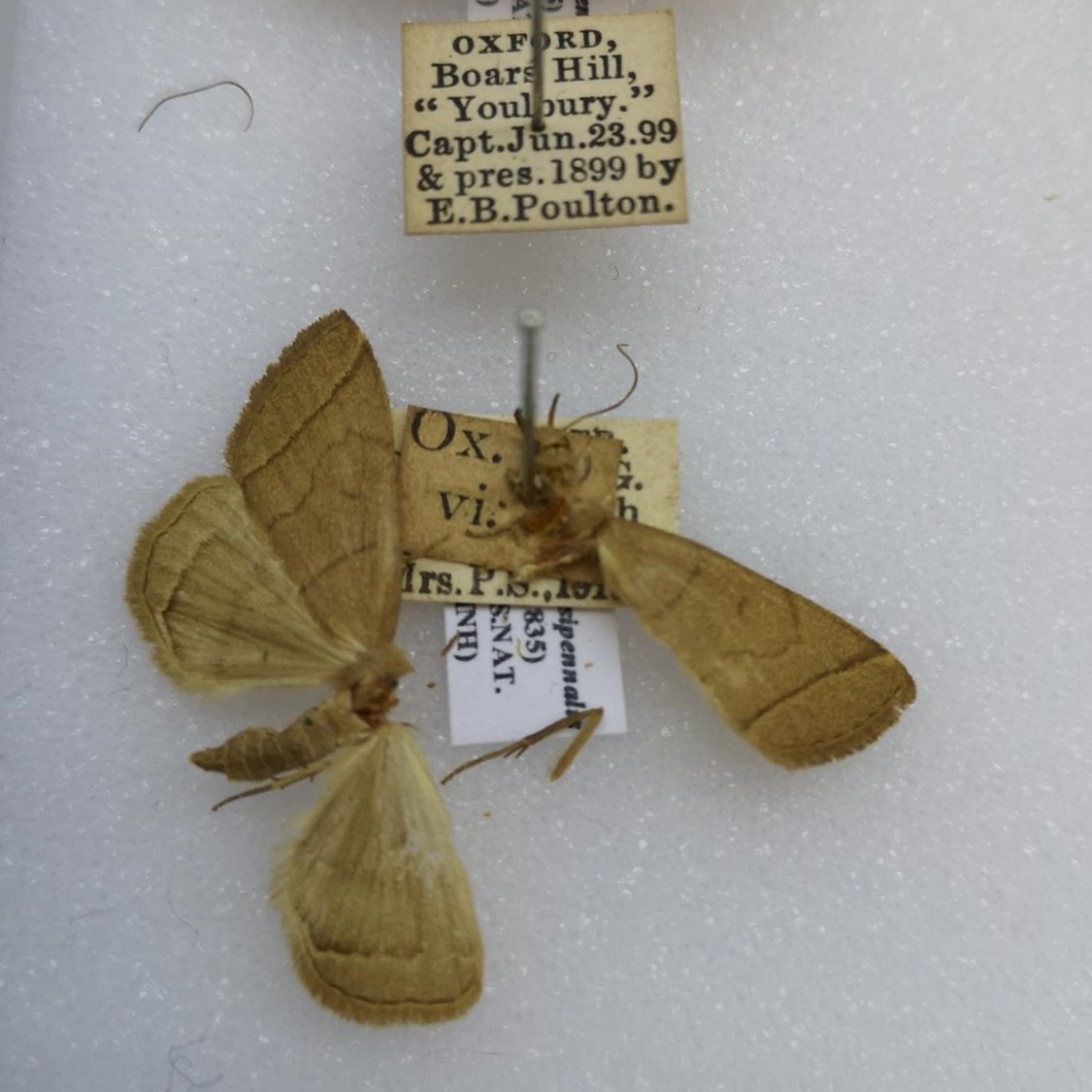
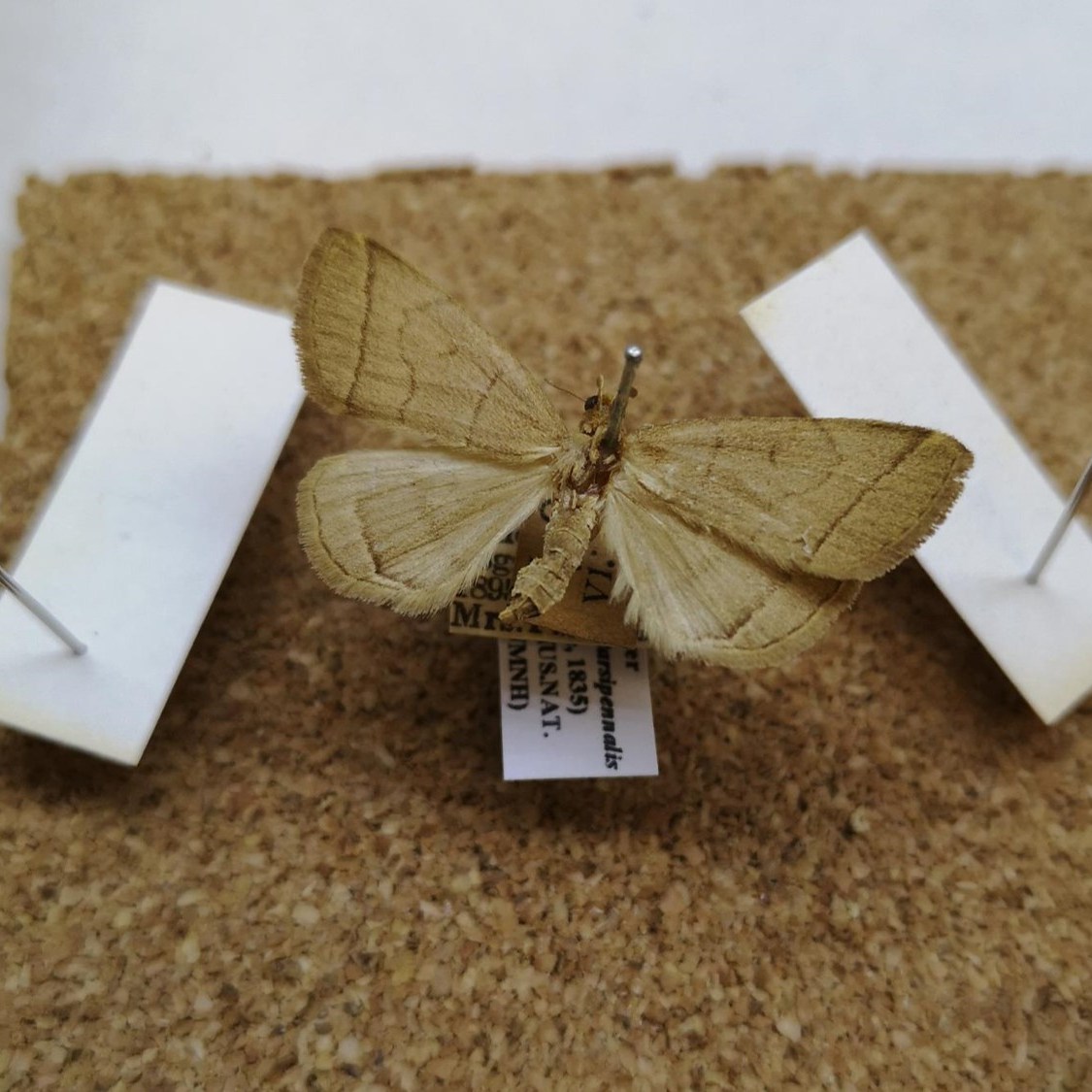
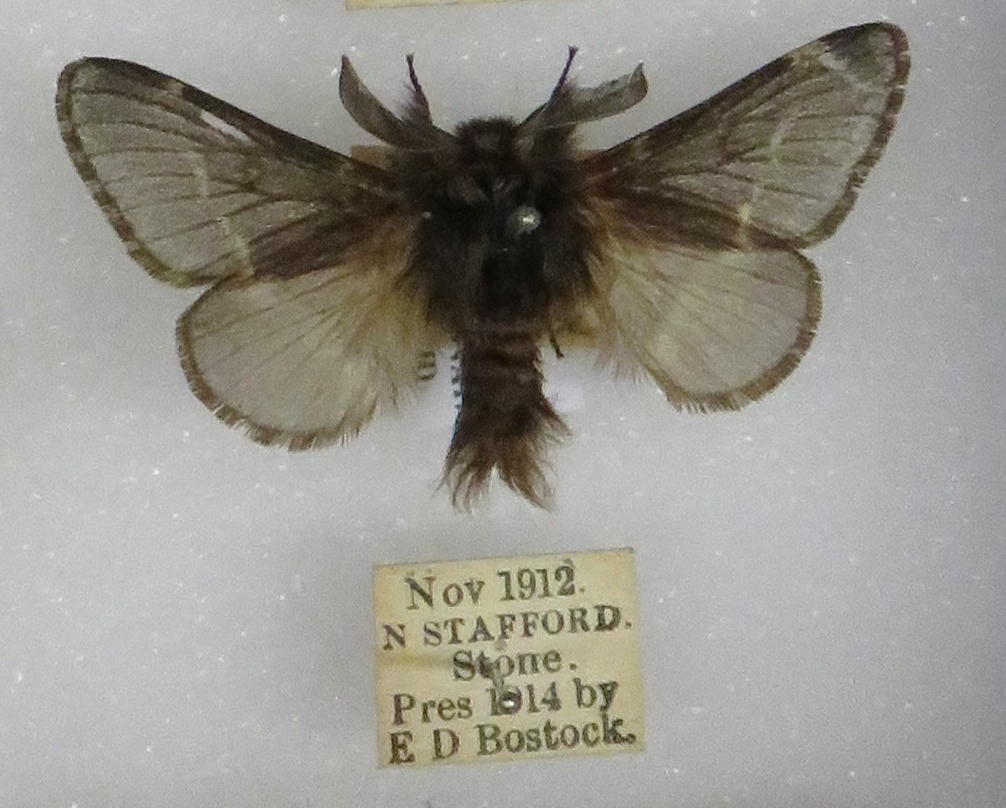
It isn’t unusual for the abdomen to fall off, as you can see here! Watch this video to see how we repair specimens.
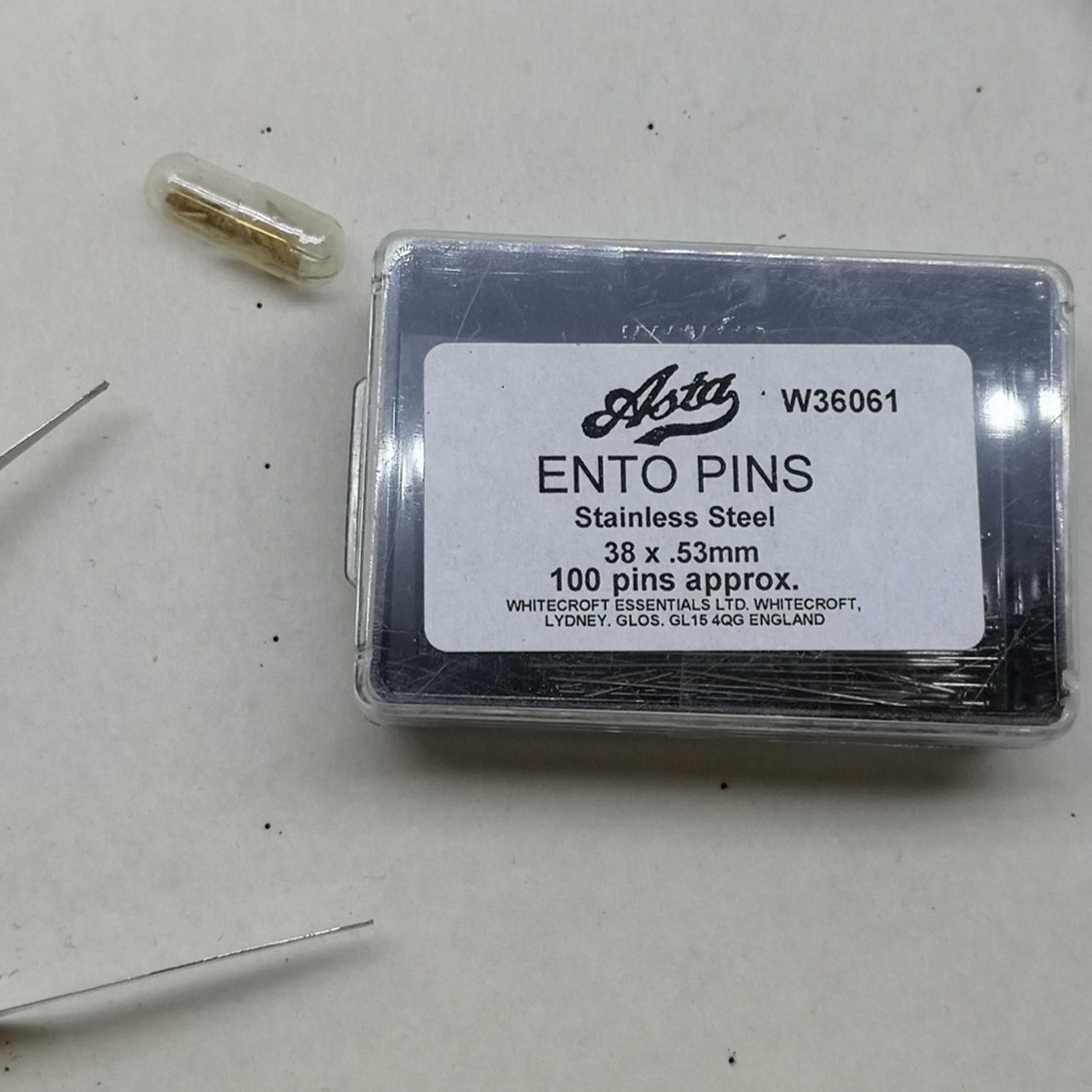
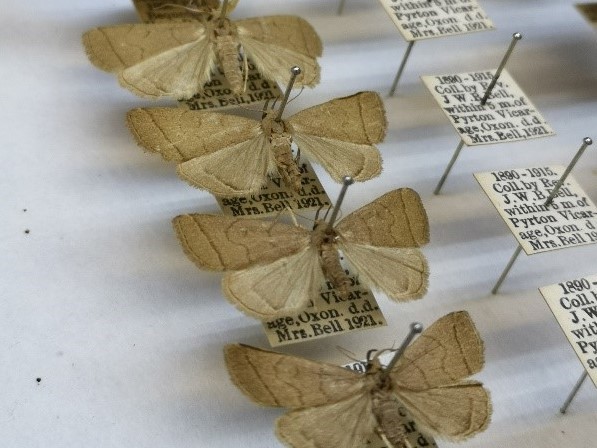
Sometimes specimens will build up verdigris; a bluish-green crust made by a chemical reaction between the old pin, the insect and oxygen. We use a small brush to lightly remove it. Pins sometimes become rusty or damaged need to be replaced. For that job we use special stainless steel entomology pins.
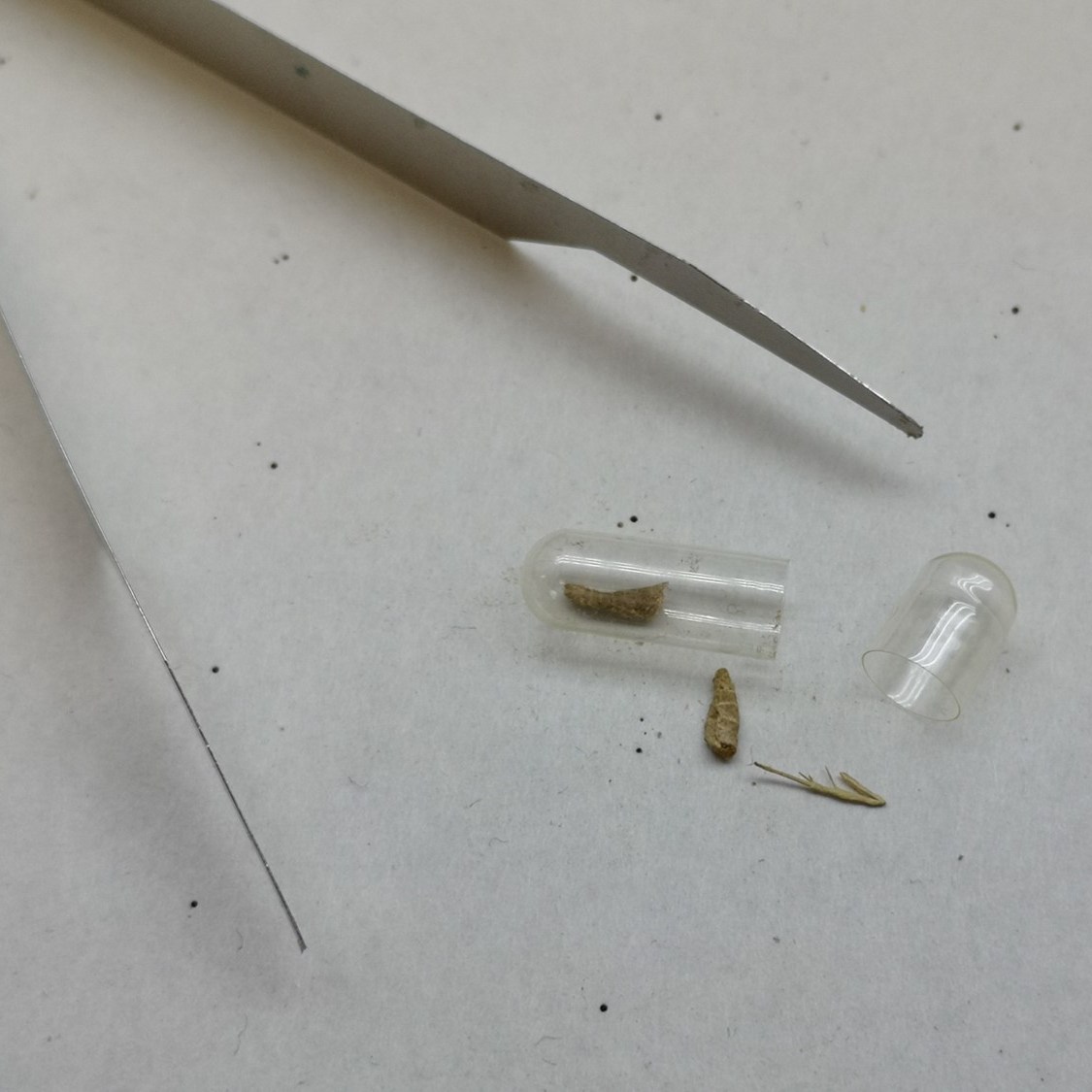
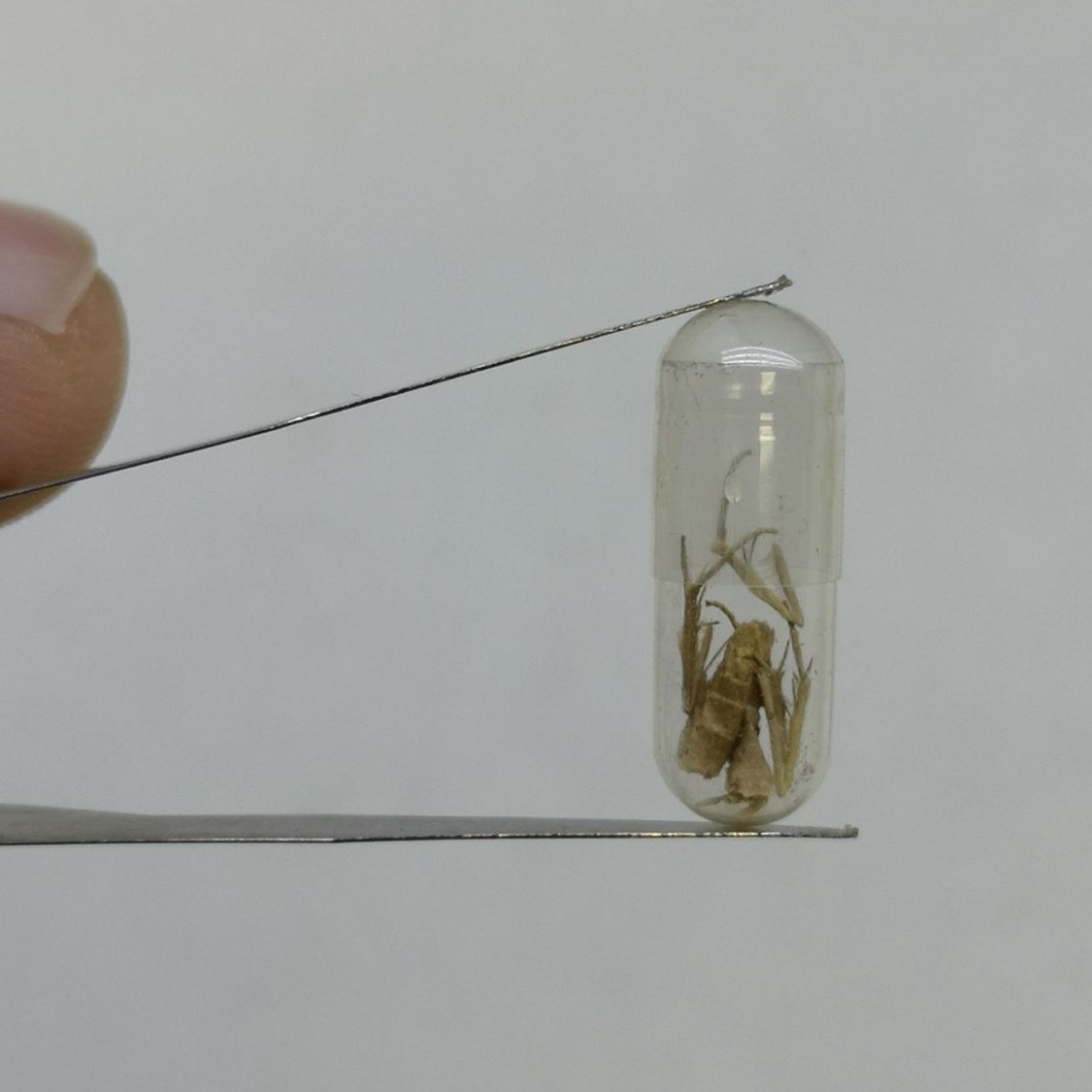
Any parts that may have fallen off, but can’t be assigned to a particular specimen, are collected and stored in a gelatin capsule. This can be useful for any researchers looking to analyse DNA. The capsule gets pinned at the end of the specimen drawer so that it is kept with the correct species.
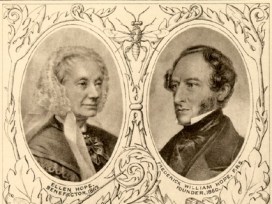
We step back in time to meet the two people who founded the original ‘bug and butterfly’ collection, Ellen Meredith and Frederick William Hope.
Frederick and Ellen were both born near the start of the 1800s. The two young people had a number of shared interests including collecting engravings and learning about nature. What fascinated them the most was entomology – the study of insects. This was to lead to a shared lifetime of learning about them.
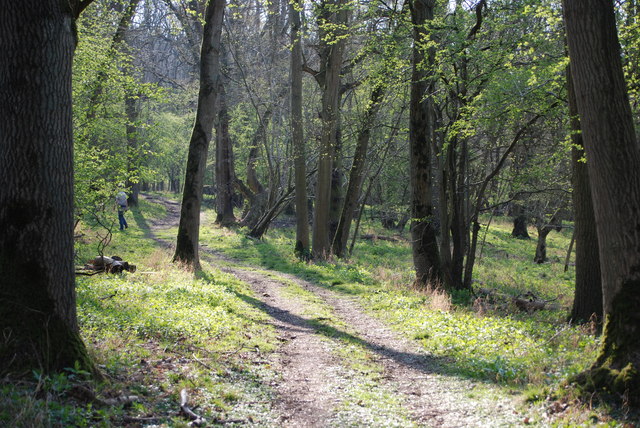
Wytham Woods – a great place to look for insects. Image credit – Alan Wood / Wytham Great Wood CC BY-SA 2.0
Frederick had become fascinated by wildlife as a student at Christ Church College, Oxford. He had spent a lot of his spare time collecting insects at Shotover Wood, Port Meadow and Wytham Woods. These are still all good places to look for insects today. Ellen had not studied for a degree because at that time women were not allowed to go to university! She didn’t let that get in the way of pursuing her interest. She became as equally knowledgeable as Frederick, and was elected as the first female Fellow of the Royal Entomological Society in 1835.
“A life as the wife of a politician would have been a very dull one indeed.”
In 1833, Ellen had turned down a proposal of marriage from Benjamin Disraeli (who would later become Prime Minister) because “a life as the wife of a politician would have been a very dull one indeed”. Two years later she married Frederick and they set up home together at 37 Upper Seymour Street, Marylebone, in London.
With two avid insect collectors living in the same house, their home rapidly became a small museum! Frederick and Ellen opened their collection to the public on certain days, and it soon became a popular meeting place for entomologists and others interested in natural history. Many famous naturalists became regular visitors, including Charles Darwin.
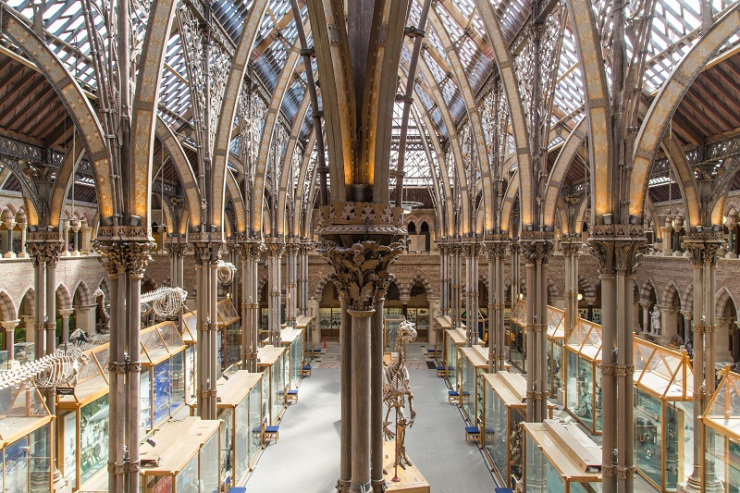
The Museum of Natural History became the new home of the Hope Collection
As their collection expanded, they realised that it would eventually outgrow their home. They also wanted to find a way for more people to see and learn about the insects they had collected. In 1849 they offered their entire collection, known fondly as the ‘bug and butterfly’ collection to the University of Oxford. When the Museum of Natural History opened in 1860, it provided a home for the Hope collection, and we have been looking after it ever since.
Sadly, Frederick died in 1862 but Ellen continued to support the Museum as they had done together. She up a £10,000 trust fund to provide for the Keeper of the collection of engravings, the Hope Professor of Zoology, and for the curators of the insect collection, so they could look after and continue to add to it.
Ellen Hope continued to contribute to the collection after Frederick’s death.
Ellen remained actively involved in the Hope collection, donating both money and new insect specimens. Shortly before she died, in 1879, she wrote a stern letter to the university authorities opposing their plan to merge the position of Hope Professor with another job and reminding them that this would break the agreement they had made. She wanted to make sure that the Hope collection would be given the attention it deserved.
The Museum of Natural History will soon install a new Ellen Hope Gallery in the space next to the room that held the original collection. The gallery will look at habitat loss, changes in biodiversity, and the value of museum collections in understanding these changes and their impacts. The insects Ellen and Frederick collected all those years ago, and generations of scientists have added to, will now help us understand how to look after the natural world today and in the future.
If you live in or near Oxford and would like to look for insects in some of the same places Ellen and Frederick did, you could visit these places:
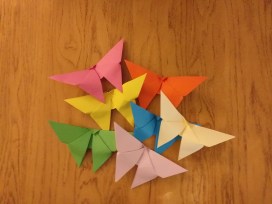
Have a go at making an origami butterfly. Origami is the art of folding paper into shapes and decorations, that originated in Japan. All you need to make this origami butterfly is a square piece of paper and a spare few minutes:
Here are written instructions for making the origami butterfly, in addition to the video:
Take a square piece of paper. Fold it diagonally, press along the fold, and unfold. Repeat the other way.
Turn the piece of paper over. Fold the bottom edge to the top edge, press along the fold, and unfold. Fold the left edge to the right edge, press along the fold, and unfold.
Fold the left edge to the right edge, allowing the other edges to fold inward along the creases. This will form a triangle shape.
Fold the top layer from both bottom corners of the triangle towards the top corner, but each slightly to either side of that top corner. Press along the creases.
Fold the bottom layer from the top of the triangle towards the bottom flat edge, so that it overlaps a little, and fold it over. Press carefully along the crease, as the bottom “wings” will be drawn up.
Press along the middle crease to help keep the fold over in place.
We would love to see pictures of your creations, please do share them with us.
Insects have some really cool super powers and surviving extreme temperatures is one of them! Have you ever wondered how insects manage to survive in the cold winter months?
In the Summer, insects are all around us but in Winter they seem to disappear. Where do they go and how do they survive the extremes of winter? Unlike us, insects can’t put on a coat, hat and gloves or turn up the central heating! With such a small body size, they could easily freeze as the temperature drops but they have some pretty cool ways of making sure their species continues to the next generation.
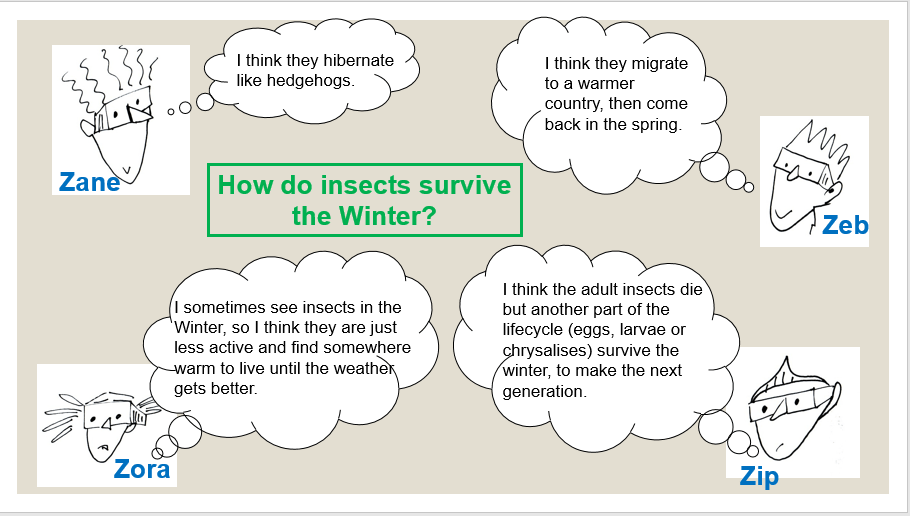
Take a look at these ideas. Who you think is right? Do you have a different idea?
Zane, Zeb, Zora and Zip are all right!
Strategy 1: Diapause
This is similar to mammalian hibernation where adults survive the winter in a state of torpor or dormancy. Insects find suitable places to spend the winter such as holes in dead wood, under leaf litter or inside sheds and other buildings. They then become inactive, their heart rate slows right down and some insects even produce anti-freeze chemicals to stop them from freezing.
Here are some insect species that undergo diapause:
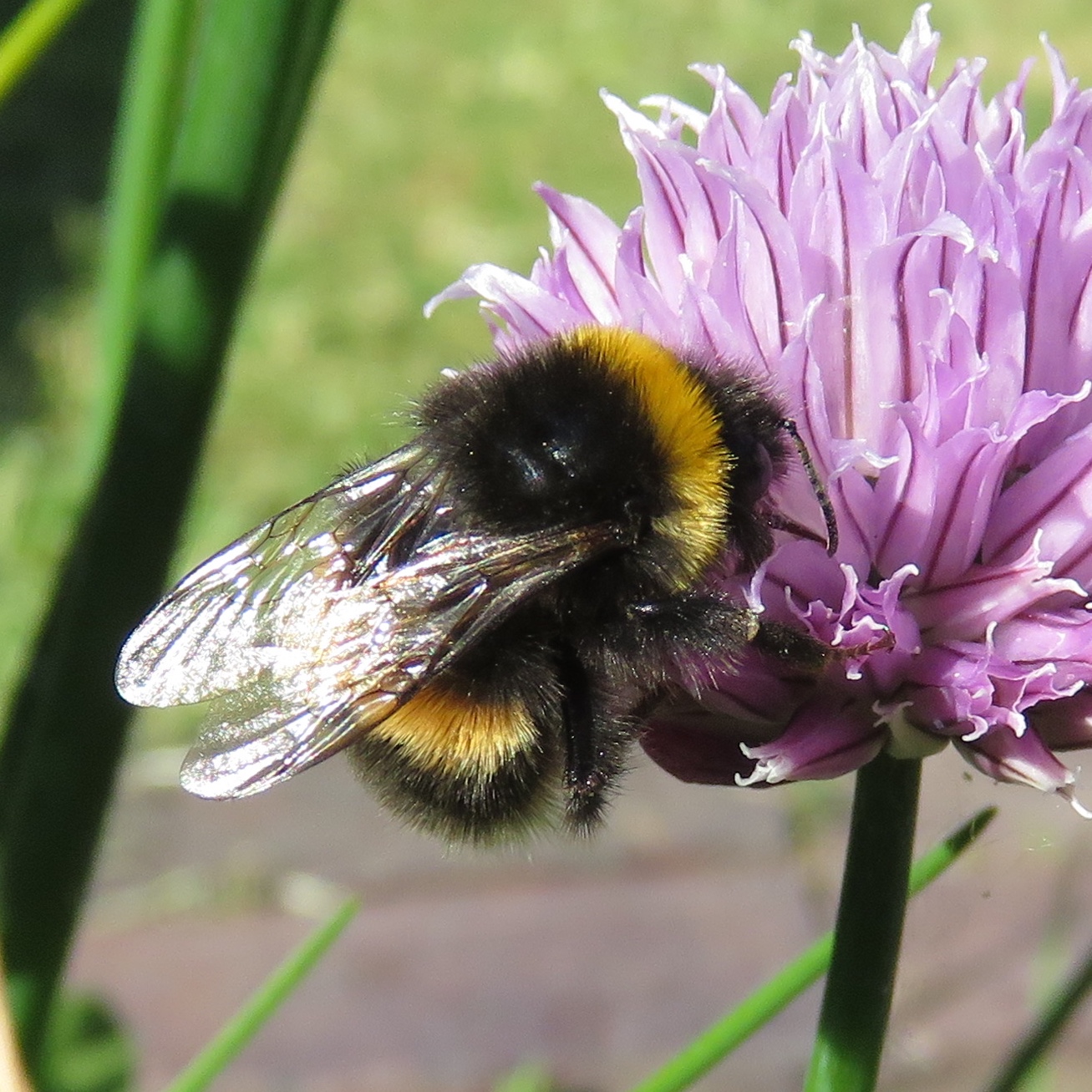
During the Winter, only the queen bumblebee survives and amazingly all the other bumblebees die. The queen spends the winter in an underground burrow already carrying the eggs that will be the next generation.
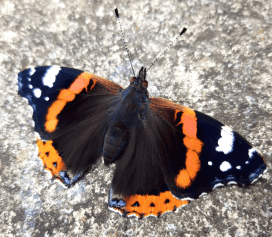
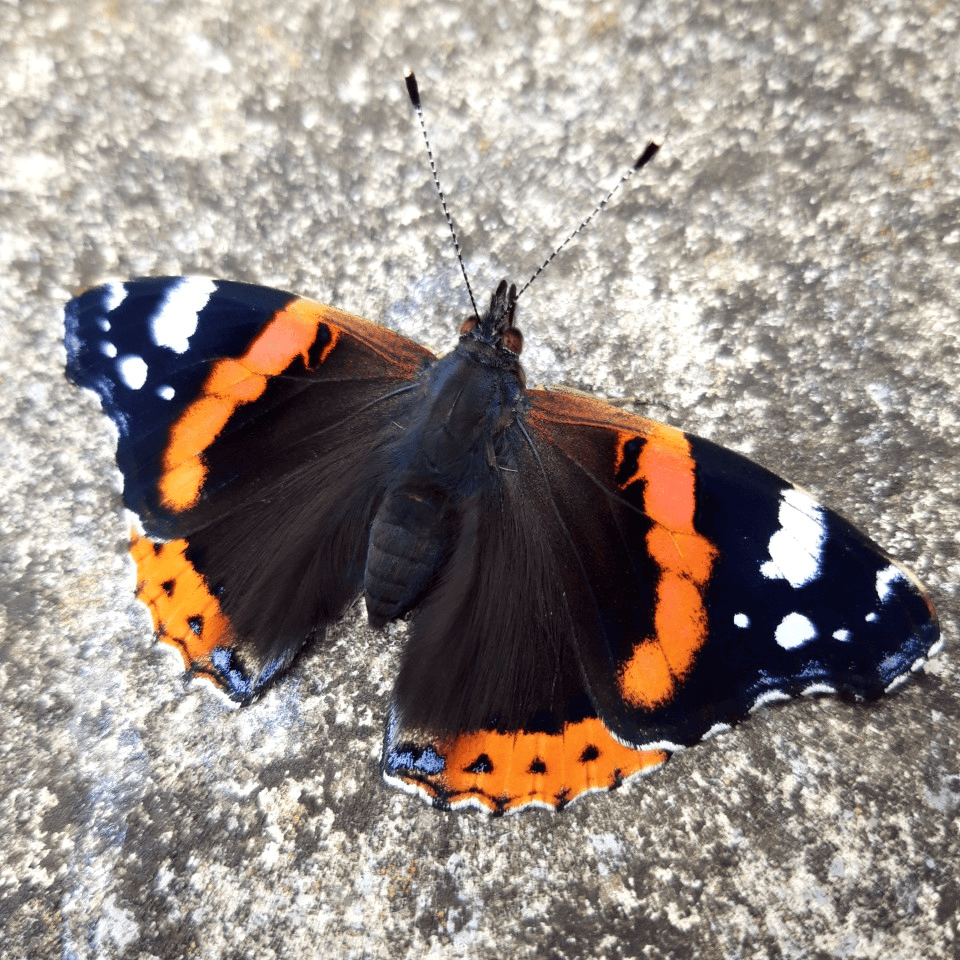
Butterflies such as Peacocks, Brimstones and Red Admirals shelter in garden sheds during diapause. Sometimes you can find them inside houses – do not disturb!
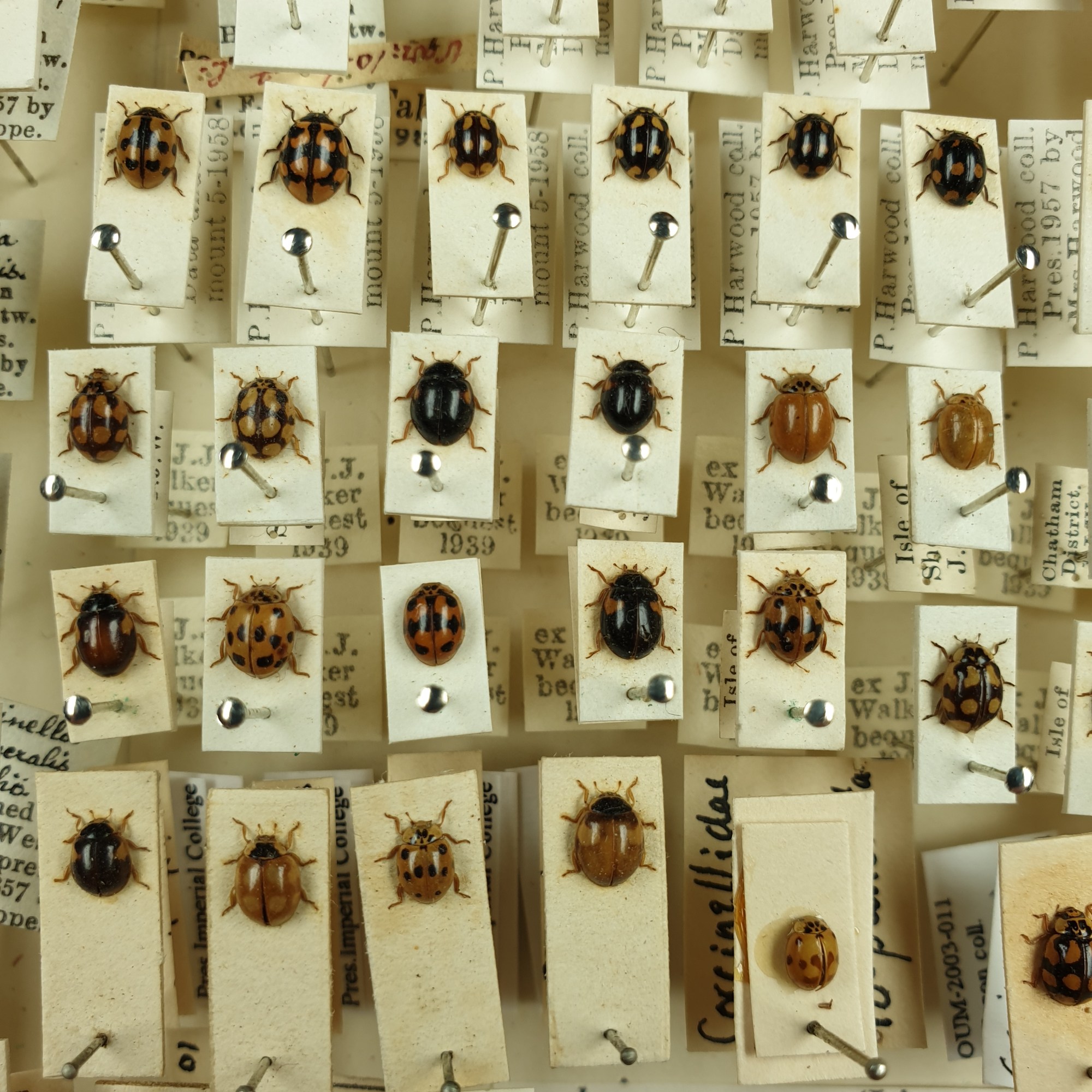
Ladybirds huddle together in groups, for example, under bark of trees.
Strategy 2: Seasonal Lifecycles
The adult form of many insect species will not survive the winter but one of the other stages of their lifecycle (either the eggs, larvae or chrysalises) will survive by keeping warm in places such as leaf litter, under bark or in long grass waiting to be activated by the warmth of the sun in the spring.
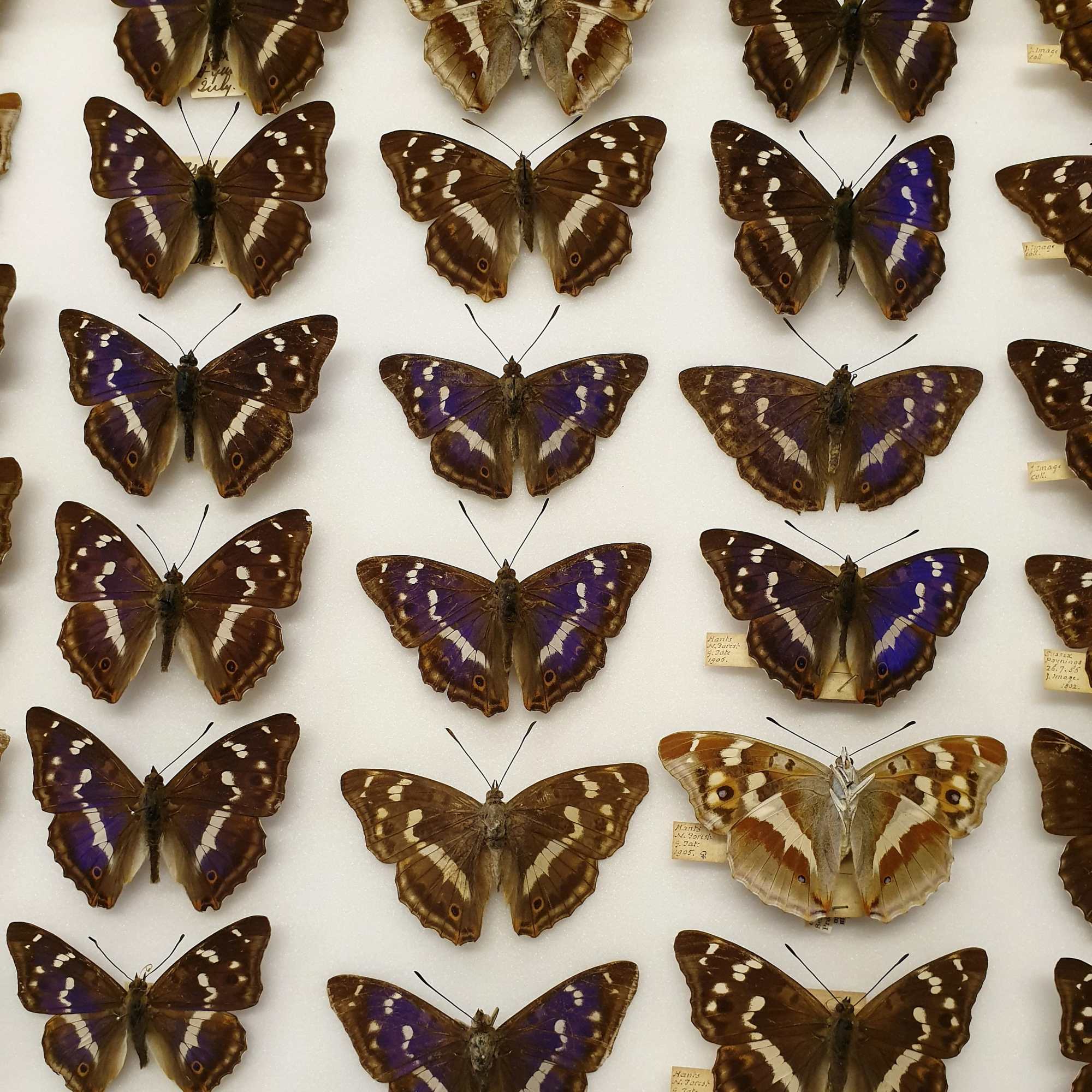
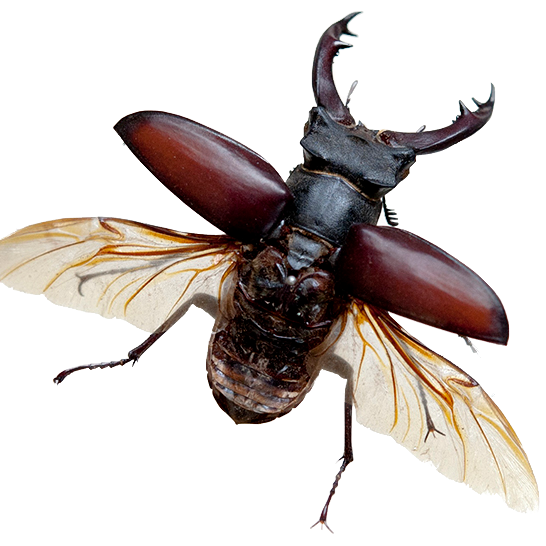
The larval stage of the Stag Beetle and the Purple Emperor butterfly survive the winter, but the adults die.
Strategy 3: Migration
A few British insects such as the Painted Lady and Clouded Yellow butterflies migrate to Africa for the Winter. Individual Painted Ladies have been recorded making journeys of nearly 2,500 miles. Unlike birds, the same individuals do not make the return journey the following year – that journey is made by a new generation.
Strategy 4: Remain Active
Lots of insects do, in fact, remain active in the winter. It is just harder to find them because they are keeping warm under leaf litter, amongst long grass or, in the case of aquatic insects, under water. Most insects who do this are just feeding and waiting for the Spring when they can find a mate and reproduce but some species, such as Winter Moths and December Moths, reproduce during the winter months.
We would love to see your photos or hear about insects you have seen this Winter. What can you find in your garden or local outside spaces? Be careful not to disturb them too much! You can tell us about it using the form on our Contact Us page, or email us at hopelearning@oum.ox.ac.uk.
A big part of the HOPE for the Future project is re-curating more than one million British insects.
Tom Greenway, Junior HOPE Collections Assistant, explains how he and the team are making sure the insects that make up the unique HOPE collection will be preserved for future generations.
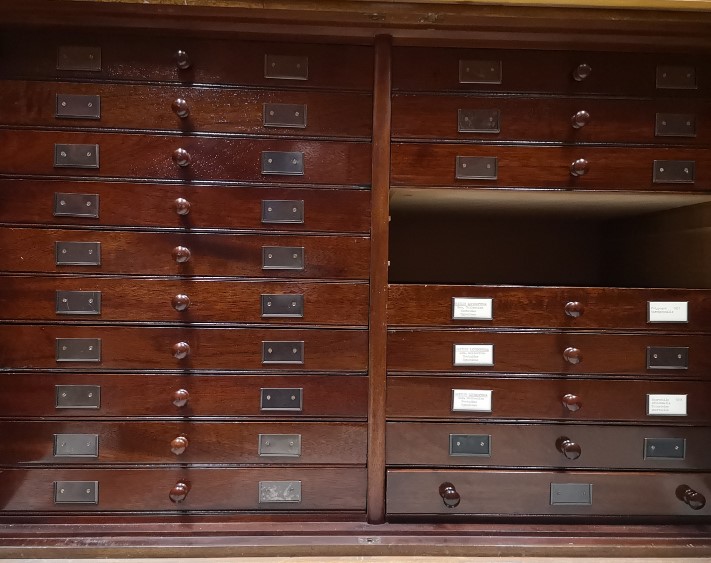
Moving a million insects is a big job! The insects are currently kept in wooden trays inside cabinets in the Westwood Room, upstairs at the museum. We have to move every single insect specimen into new up-to-date storage to preserve the collection for the future. At the moment, we are moving the insects in cabinet 75 which contains members of the order Coleoptera (beetles). There are 151 cabinets in total, each with 20 drawers of insects so although we have already moved around 253,000 insects, there is still a long way to go!
Two of the old drawers done… only another 3,000 to go!
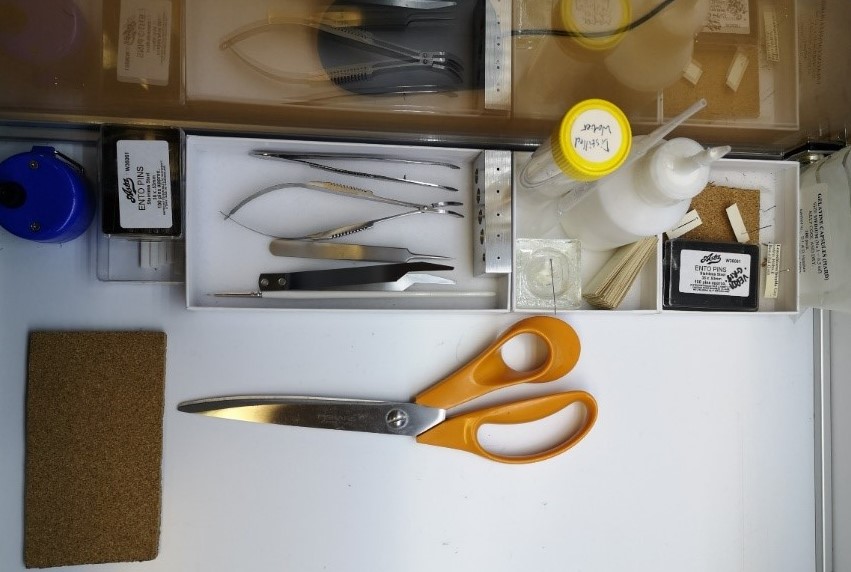
These are some of the tools of the trade!
Tweezers
Forceps
Scissors
Entomology pins
Glue
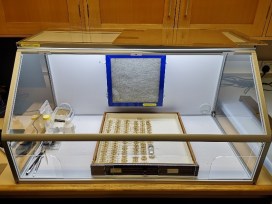
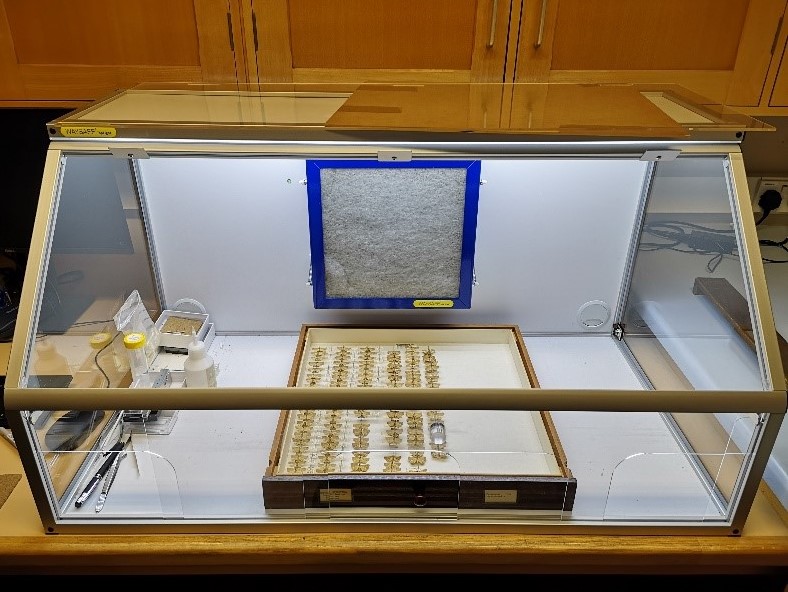
When working on a drawer, we put it inside a fume cabinet like this one to protect us from a chemical called naphthalene. This was used in the past to help stop specimens being damaged by pests, such as moths, which see the collection as a huge banquet!
A fume cabinet provides protecton from napthalene
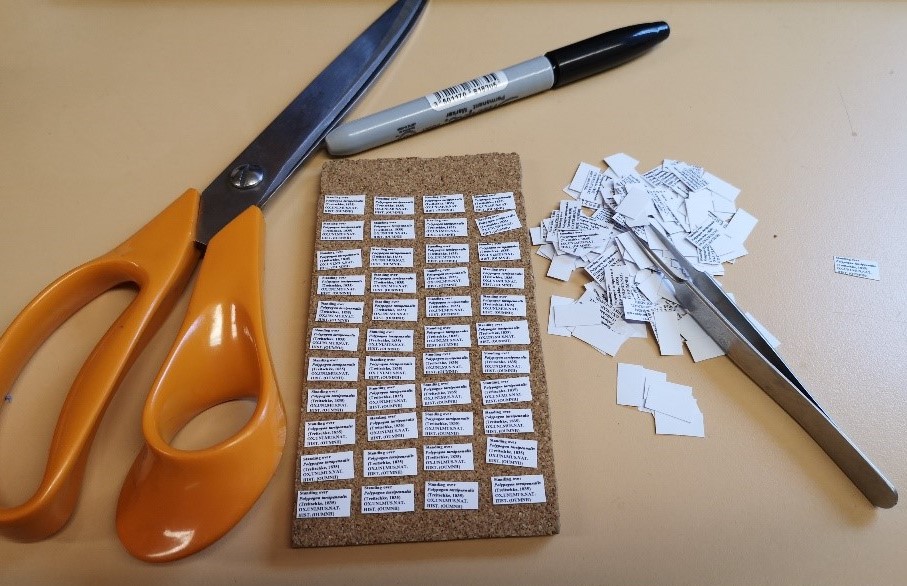
Each specimen we move needs a new label containing vital information about the specimen:
binominal name (Genus / species);
the name of the person who discovered the species;
the year it was first classified; and
a location code.
Watch this video to see how Tom moves the insects
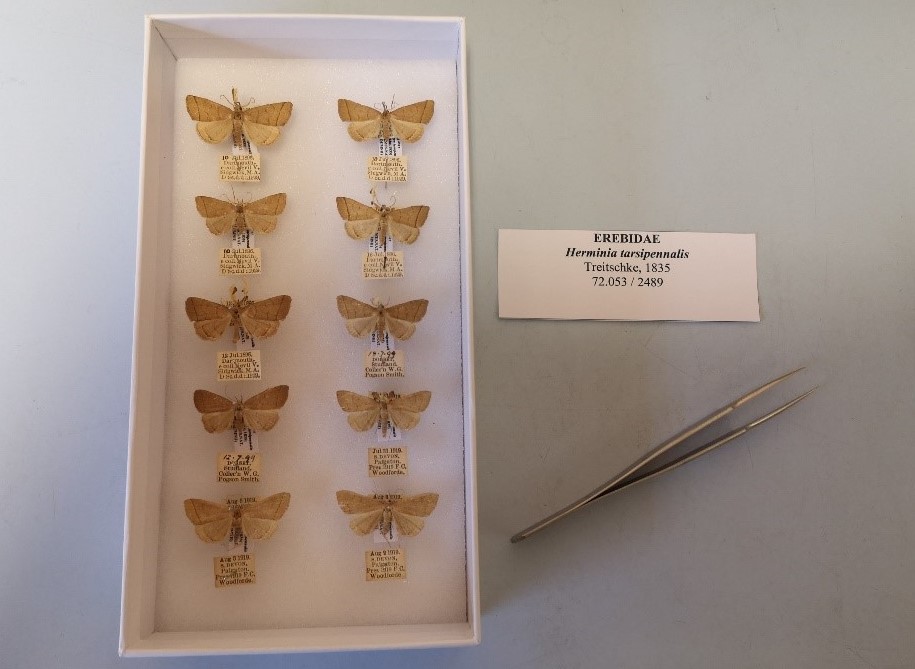
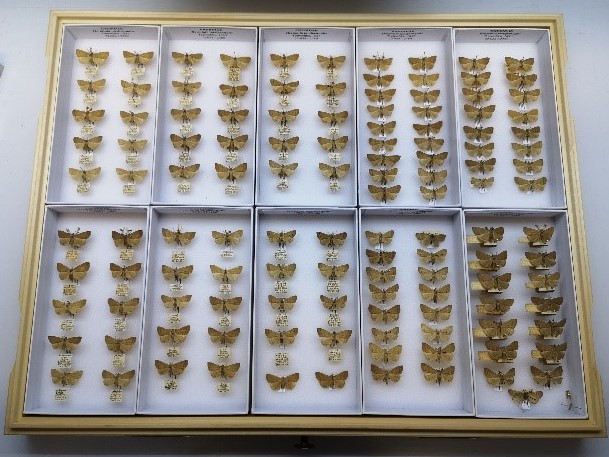
Once a tray is full, we add a data label containing the specimens’ information, along with a checklist number, which in this case relates to the current checklist of classified Lepidoptera (the order that includes butterflies and moths).
A finished tray
We then add each finished tray to one of the new pest-proof drawers. The completed drawers are then ready to go to their new storage space where it will be accessible for teaching and research.
Meet Tom Greenway, Junior HOPE Collections Assistant.
Tom plays a crucial role in the HOPE for the Future project. He is one of a team of five who are carefully preserving our amazing British insect collection for future generations.
“The coolest thing about my job is getting to see
all the weird and wonderful specimens we have in the collection!”
Tom hasn’t always worked in museums. He studied music production and performance at college and then worked in a record store for 13 years where he organised events with acts such as Mcfly and We are Scientists (do you think the names of these acts were trying to tell you him something about his future?!). After leaving the record store, Tom had lots of different jobs including touring with a band in Europe, playing festivals and recording albums!
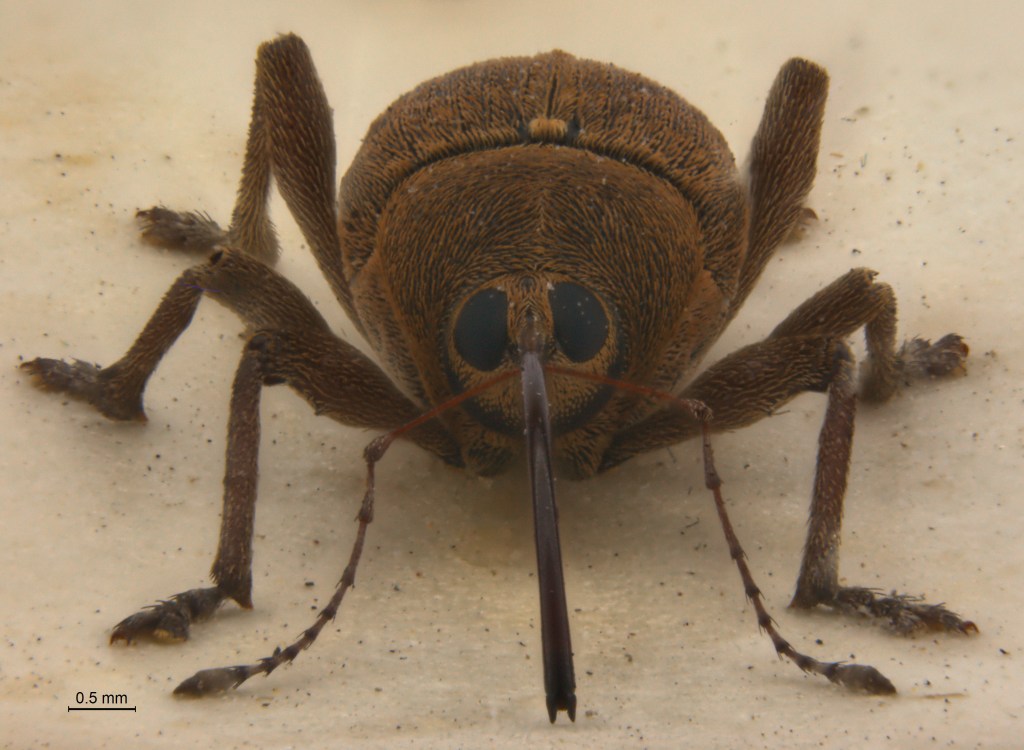
Weevil, Weevil Rock You!
Tom saw an advert for an apprenticeship on the HOPE project and thought this would be a great chance to work in a museum. He didn’t have a background in science or nature but has always loved museums and is passionate about environmental issues. He sees his work as an important contribution in helping us and future generations understand the effects of human actions on our planet, including climate change, habitat loss and industrial agriculture. Tom has recently been promoted from Apprentice to Junior HOPE Collections Assistant in recognition of his excellent work on the project.
“I think the most surprising thing is learning about the classification of organisms that shows evolutionary relationships between species that you would not expect to be related. I’ve also enjoyed learning about the history of entomology and the history of the classification of insect species.”