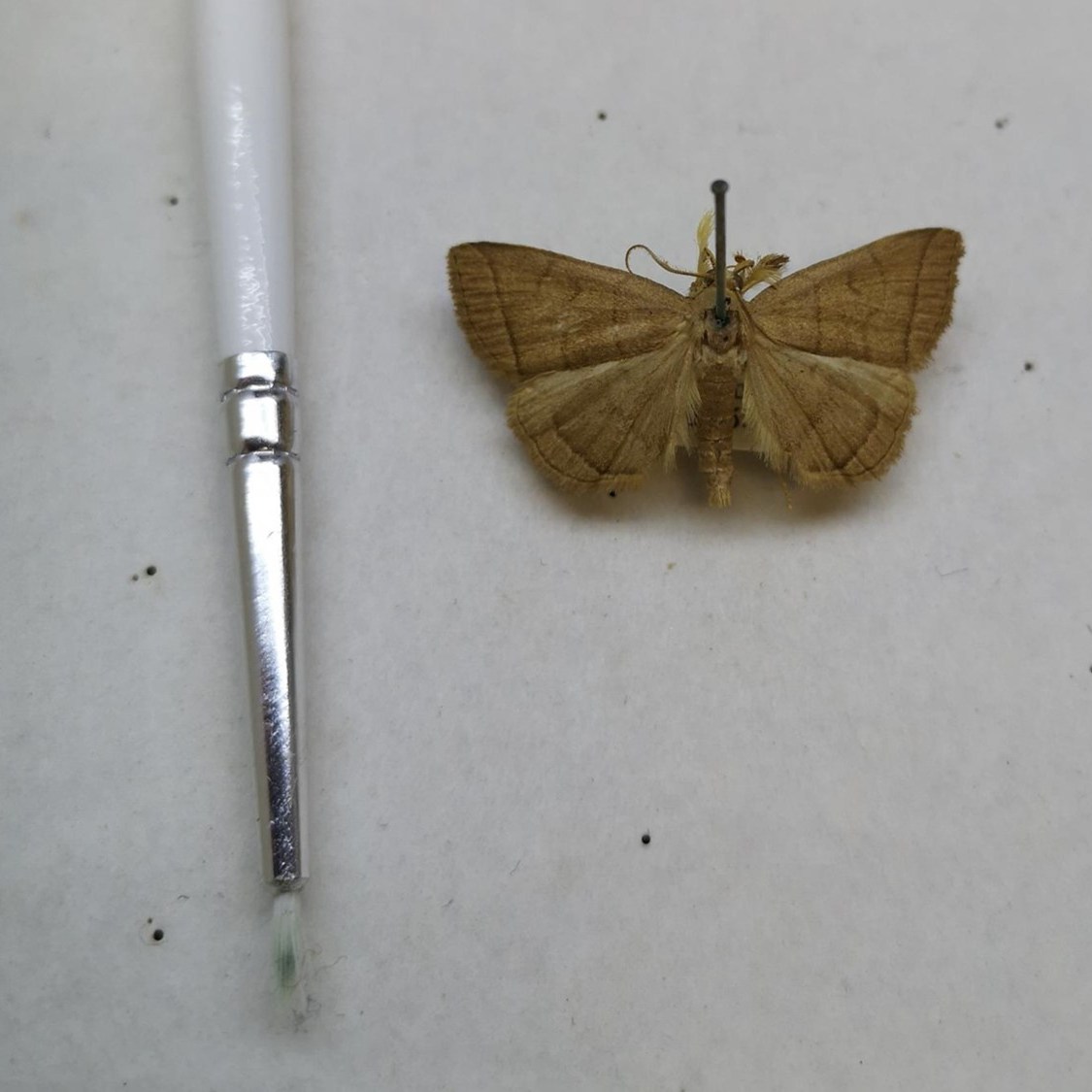
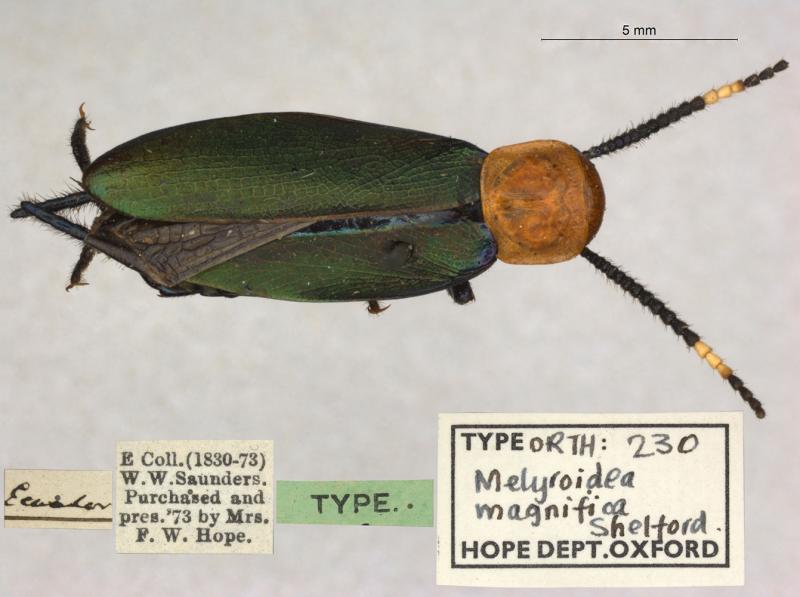
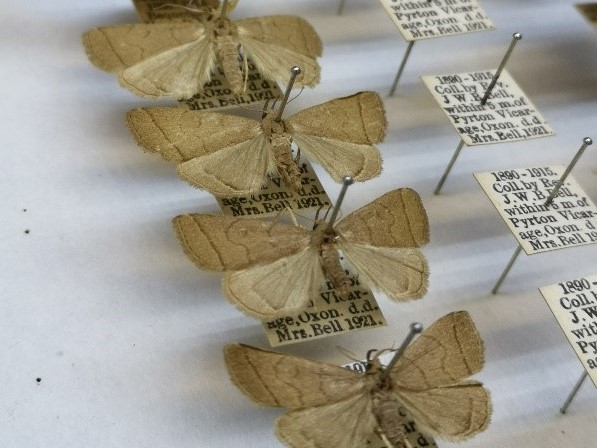
The HOPE British insect collection includes specimens from the early 19th century to the present day. This means that some are very old and delicate. Of course, all of the insects are very delicate and easily damaged. Just think about the width of the legs or antennae of some of the insects you have seen in your garden! Not much more than a hair’s breadth! It isn’t surprising then that some of the specimens are showing their age and some are damaged.
In this post, learn how Tom Greenway, Junior HOPE Collections Assistant, repairs the damage and what happens to the bits that can’t be stuck back on!
“It’s always sad to see a damaged specimen but with a little bit of patience, and a mix of PVA glue and distilled water, we can make repairs to get them looking like new again!”
Tom Greenway, Junior HOPE Collections Assistant
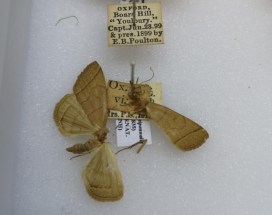
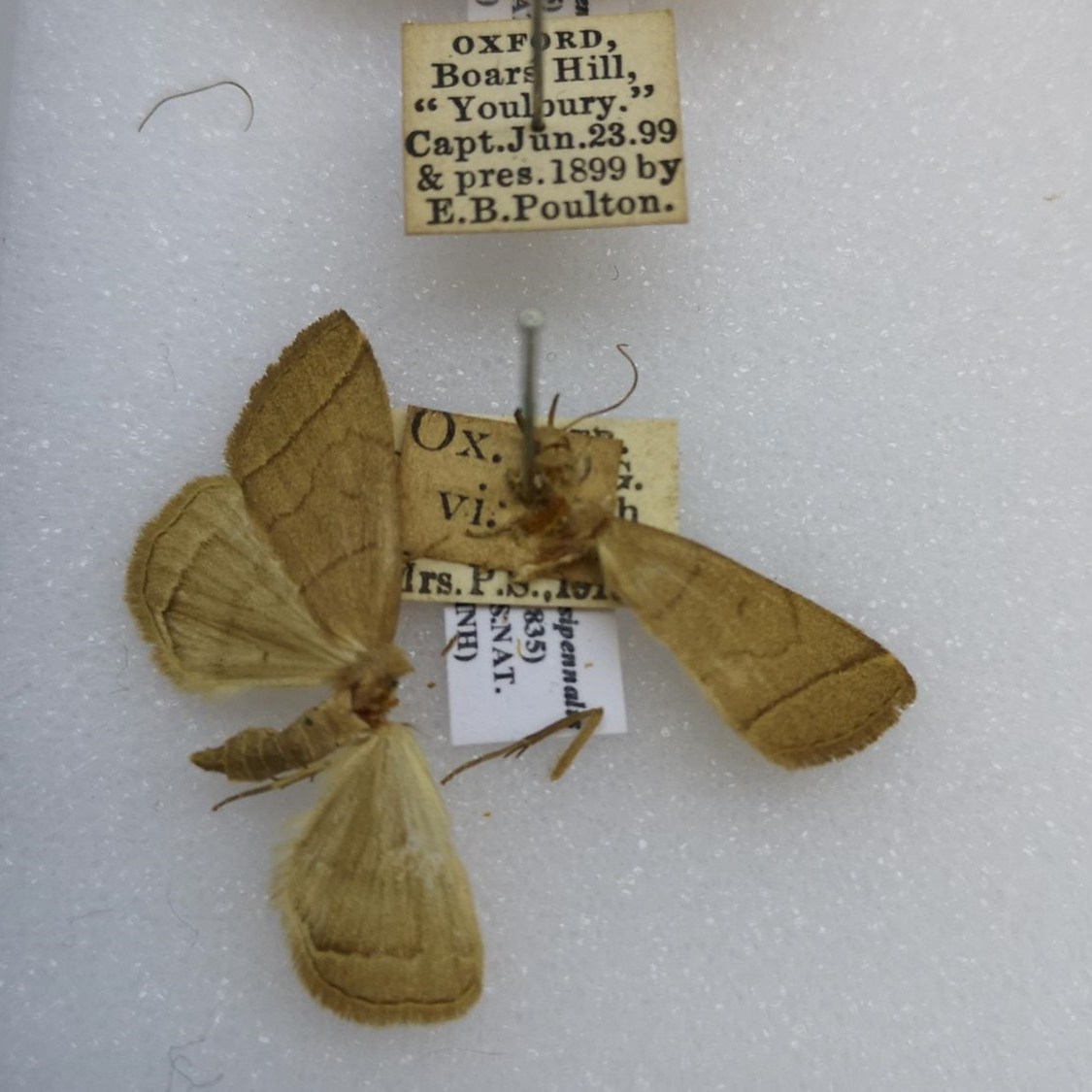
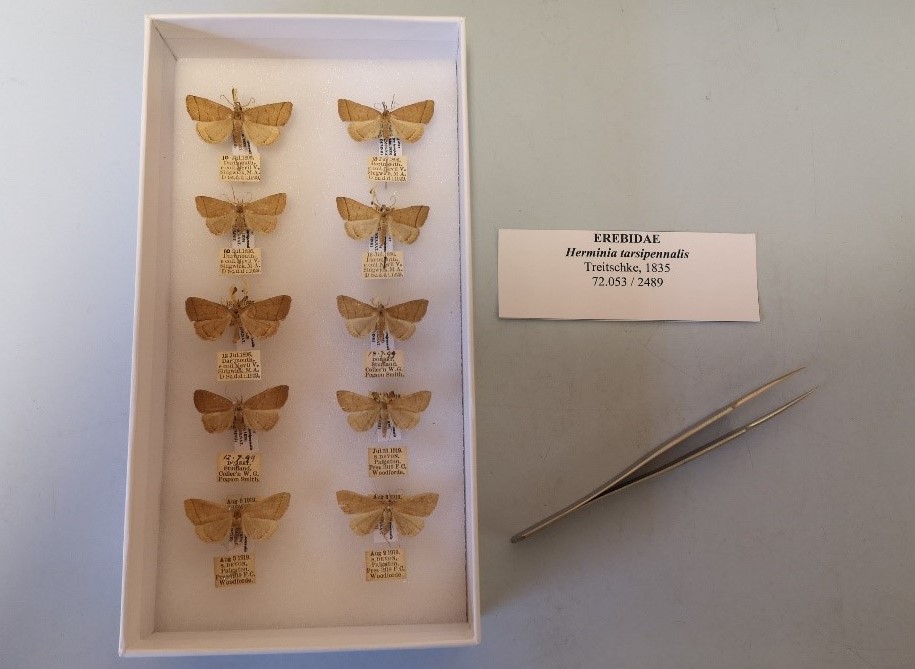
It isn’t unusual for the abdomen to fall off, as you can see here! Watch this video to see how we repair specimens.
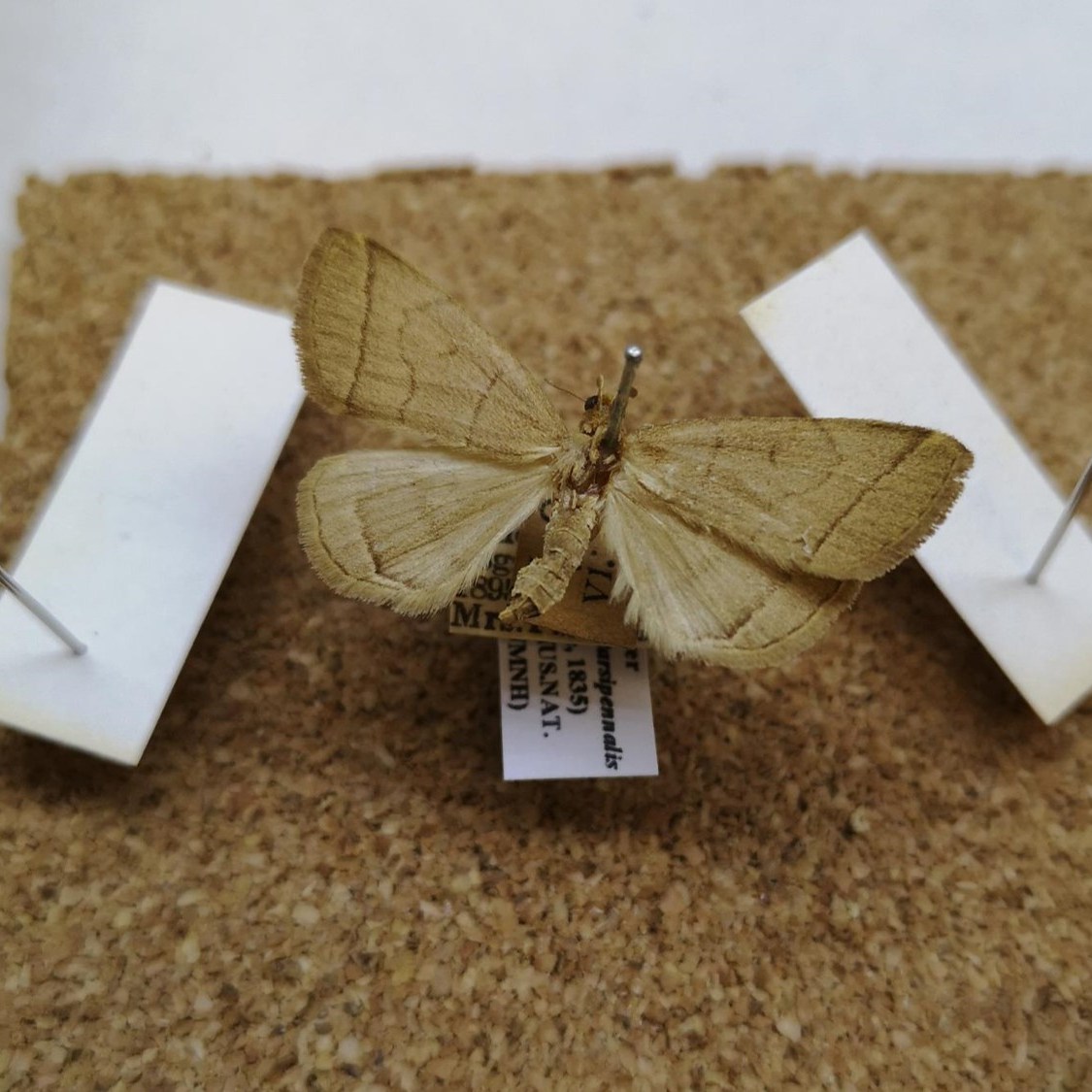
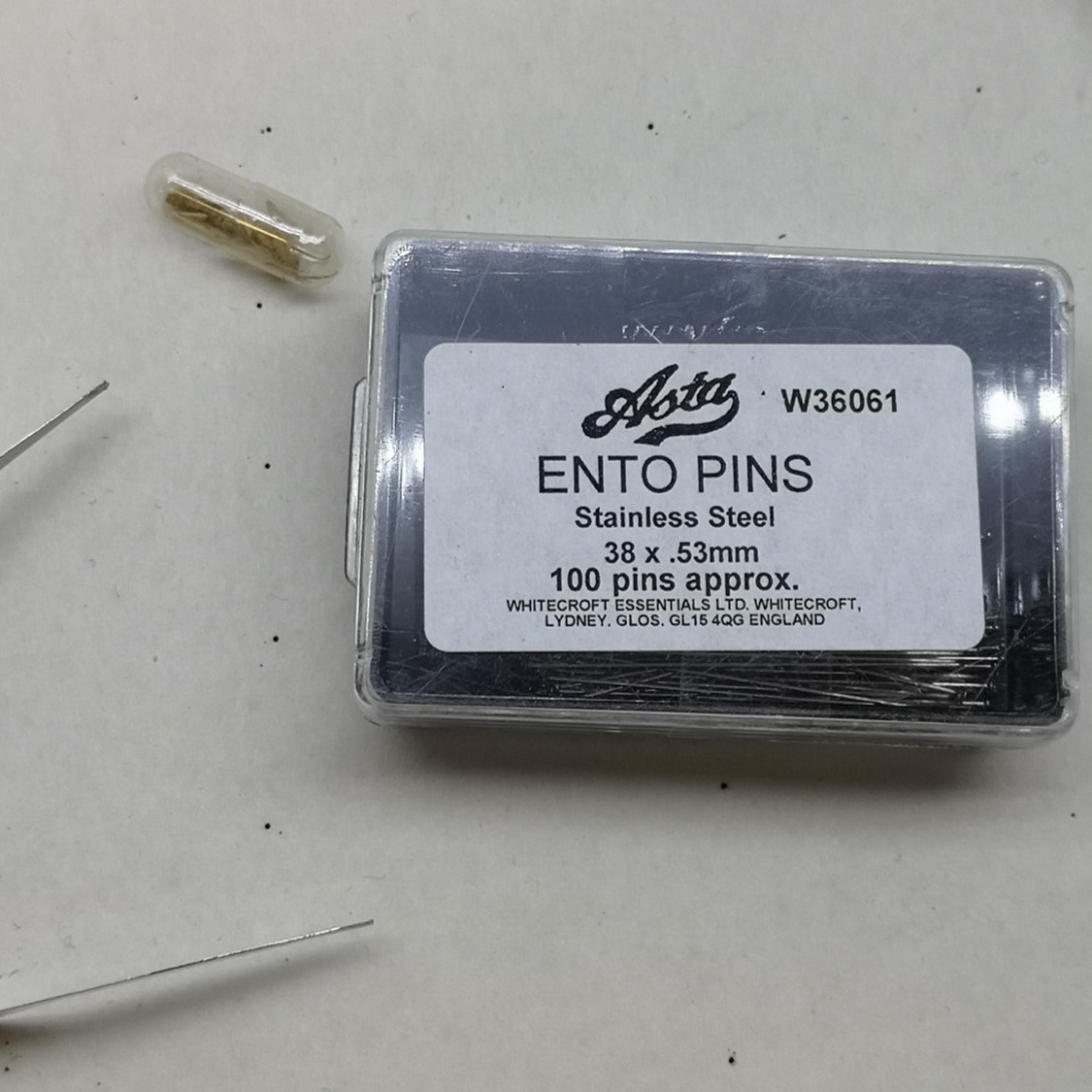
Sometimes specimens will build up verdigris; a bluish-green crust made by a chemical reaction between the old pin, the insect and oxygen. We use a small brush to lightly remove it. Pins sometimes become rusty or damaged need to be replaced. For that job we use special stainless steel entomology pins.
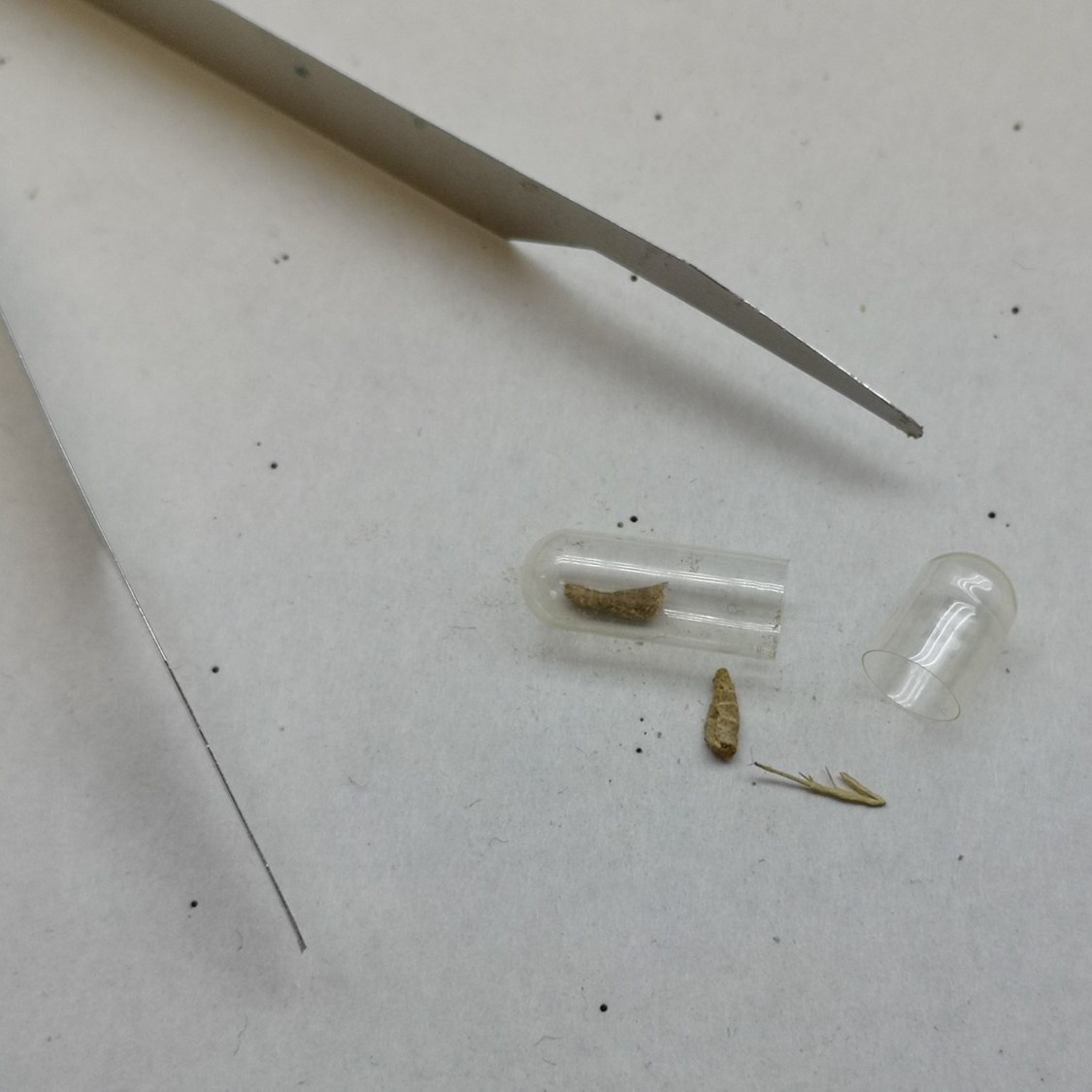
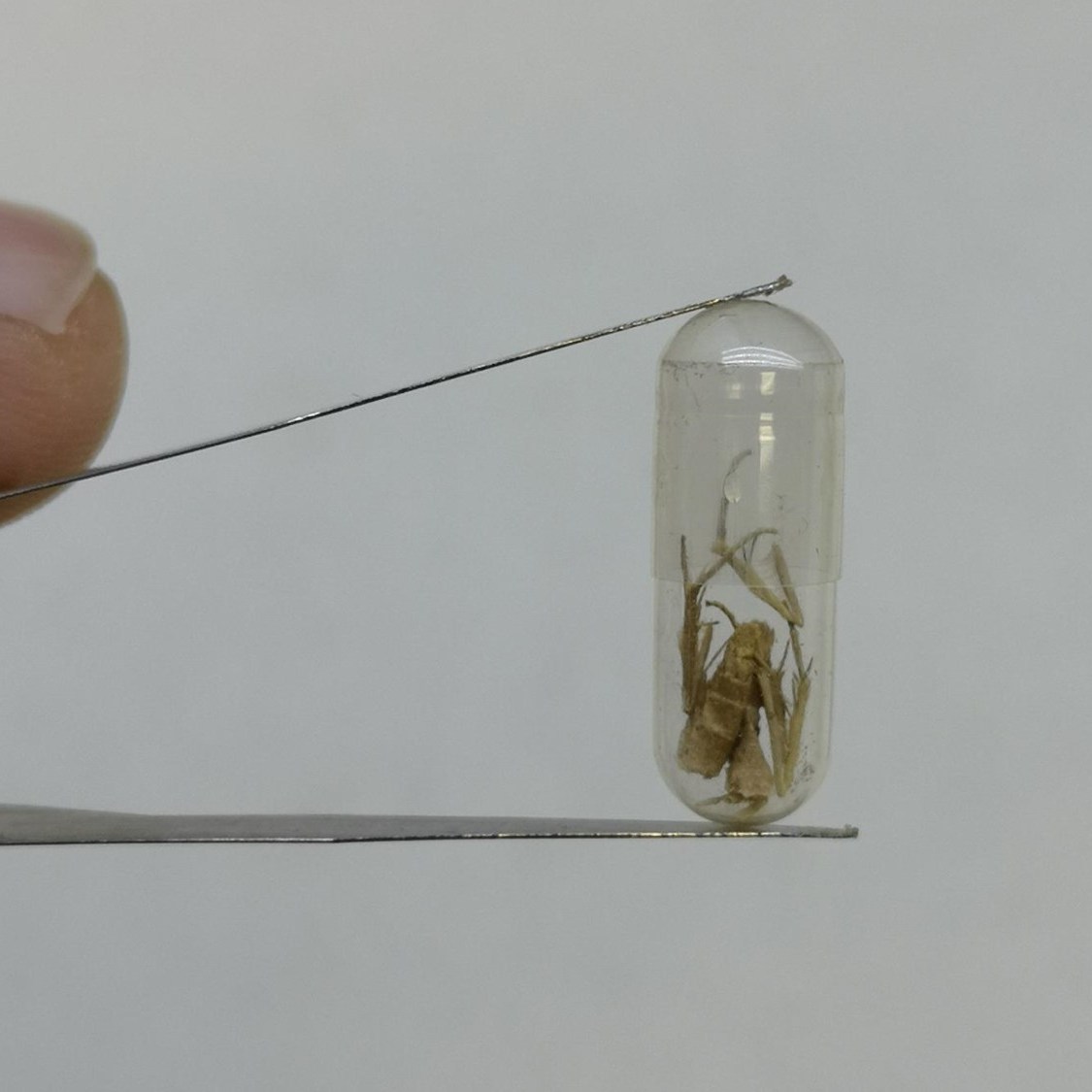
Any parts that may have fallen off, but can’t be assigned to a particular specimen, are collected and stored in a gelatin capsule. This can be useful for any researchers looking to analyse DNA. The capsule gets pinned at the end of the specimen drawer so that it is kept with the correct species.
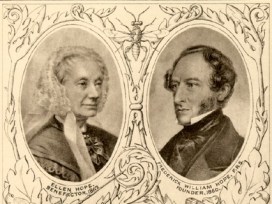
We step back in time to meet the two people who founded the original ‘bug and butterfly’ collection, Ellen Meredith and Frederick William Hope.
Frederick and Ellen were both born near the start of the 1800s. The two young people had a number of shared interests including collecting engravings and learning about nature. What fascinated them the most was entomology – the study of insects. This was to lead to a shared lifetime of learning about them.
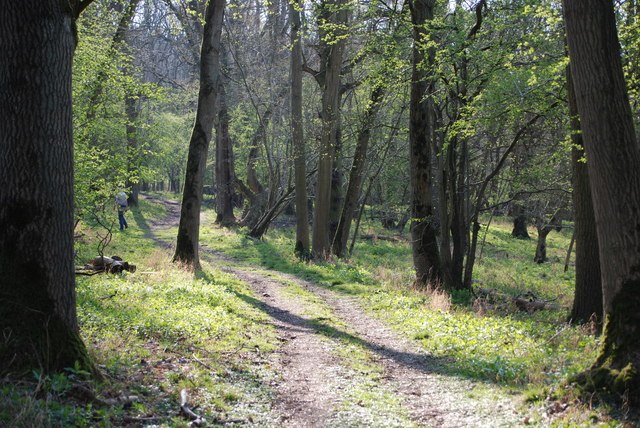
Wytham Woods – a great place to look for insects. Image credit – Alan Wood / Wytham Great Wood CC BY-SA 2.0
Frederick had become fascinated by wildlife as a student at Christ Church College, Oxford. He had spent a lot of his spare time collecting insects at Shotover Wood, Port Meadow and Wytham Woods. These are still all good places to look for insects today. Ellen had not studied for a degree because at that time women were not allowed to go to university! She didn’t let that get in the way of pursuing her interest. She became as equally knowledgeable as Frederick, and was elected as the first female Fellow of the Royal Entomological Society in 1835.
“A life as the wife of a politician would have been a very dull one indeed.”
In 1833, Ellen had turned down a proposal of marriage from Benjamin Disraeli (who would later become Prime Minister) because “a life as the wife of a politician would have been a very dull one indeed”. Two years later she married Frederick and they set up home together at 37 Upper Seymour Street, Marylebone, in London.
With two avid insect collectors living in the same house, their home rapidly became a small museum! Frederick and Ellen opened their collection to the public on certain days, and it soon became a popular meeting place for entomologists and others interested in natural history. Many famous naturalists became regular visitors, including Charles Darwin.
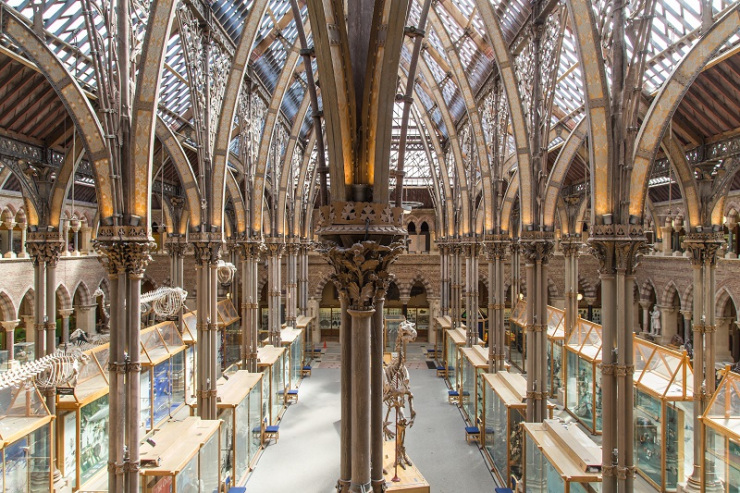
The Museum of Natural History became the new home of the Hope Collection
As their collection expanded, they realised that it would eventually outgrow their home. They also wanted to find a way for more people to see and learn about the insects they had collected. In 1849 they offered their entire collection, known fondly as the ‘bug and butterfly’ collection to the University of Oxford. When the Museum of Natural History opened in 1860, it provided a home for the Hope collection, and we have been looking after it ever since.
Sadly, Frederick died in 1862 but Ellen continued to support the Museum as they had done together. She up a £10,000 trust fund to provide for the Keeper of the collection of engravings, the Hope Professor of Zoology, and for the curators of the insect collection, so they could look after and continue to add to it.
Ellen Hope continued to contribute to the collection after Frederick’s death.
Ellen remained actively involved in the Hope collection, donating both money and new insect specimens. Shortly before she died, in 1879, she wrote a stern letter to the university authorities opposing their plan to merge the position of Hope Professor with another job and reminding them that this would break the agreement they had made. She wanted to make sure that the Hope collection would be given the attention it deserved.
The Museum of Natural History will soon install a new Ellen Hope Gallery in the space next to the room that held the original collection. The gallery will look at habitat loss, changes in biodiversity, and the value of museum collections in understanding these changes and their impacts. The insects Ellen and Frederick collected all those years ago, and generations of scientists have added to, will now help us understand how to look after the natural world today and in the future.
If you live in or near Oxford and would like to look for insects in some of the same places Ellen and Frederick did, you could visit these places:
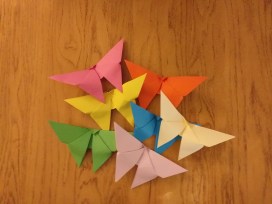
Have a go at making an origami butterfly. Origami is the art of folding paper into shapes and decorations, that originated in Japan. All you need to make this origami butterfly is a square piece of paper and a spare few minutes:
Here are written instructions for making the origami butterfly, in addition to the video:
Take a square piece of paper. Fold it diagonally, press along the fold, and unfold. Repeat the other way.
Turn the piece of paper over. Fold the bottom edge to the top edge, press along the fold, and unfold. Fold the left edge to the right edge, press along the fold, and unfold.
Fold the left edge to the right edge, allowing the other edges to fold inward along the creases. This will form a triangle shape.
Fold the top layer from both bottom corners of the triangle towards the top corner, but each slightly to either side of that top corner. Press along the creases.
Fold the bottom layer from the top of the triangle towards the bottom flat edge, so that it overlaps a little, and fold it over. Press carefully along the crease, as the bottom “wings” will be drawn up.
Press along the middle crease to help keep the fold over in place.
We would love to see pictures of your creations, please do share them with us.
We have an ambitious project underway at the Museum, to preserve a unique and scientifically important collection of over one million British insects. It’s called HOPE for the Future, after the Hope Entomological Collections, and we are keen to shout about how these specimens can help us understand biodiversity, habitats and ecologies.
The learning team behind the project are today launching a new blog for young people interested in entomology. Intriguingly, it’s called Crunchy on the Outside, but please don’t confuse this with the similar, but fundamentally different, mid-’90s advertising campaign for the Dime bar.
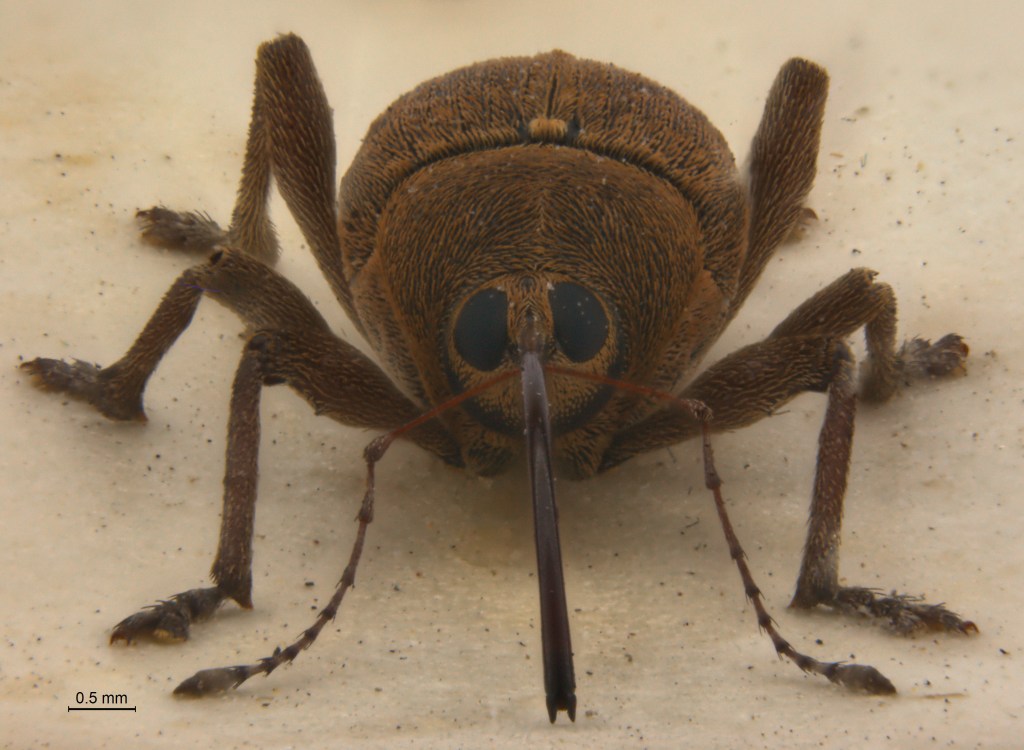
One of many weird and wonderful specimens from our collection, the Acorn Weevil (Curculio glandium).
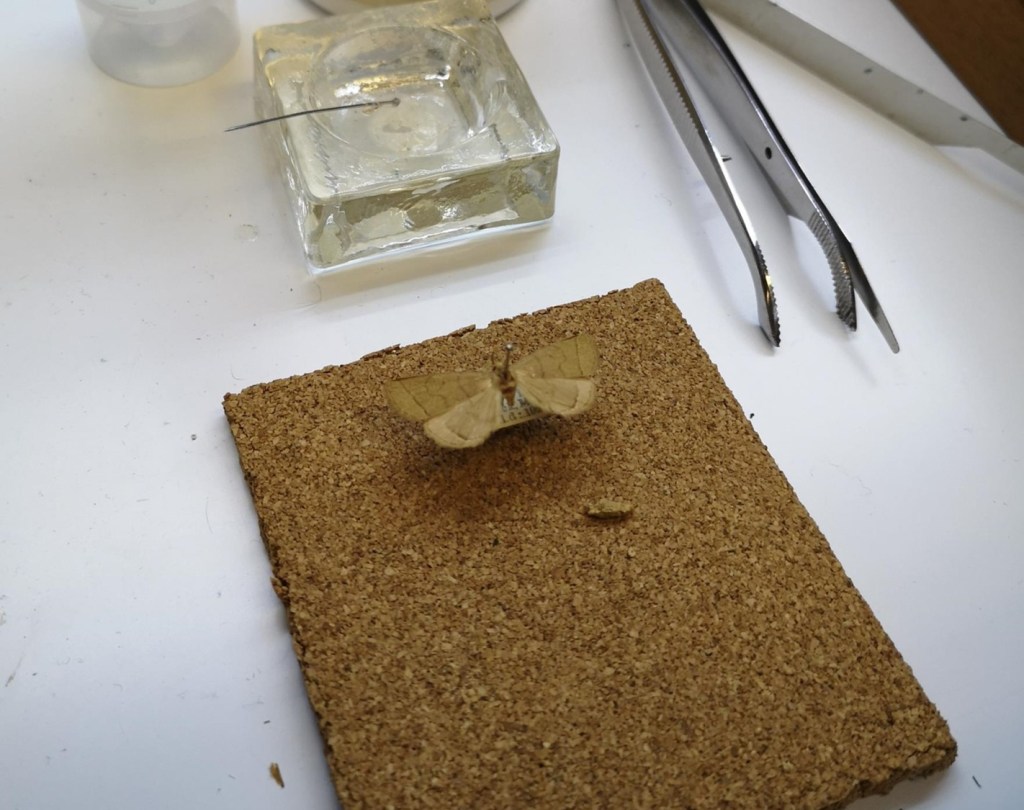
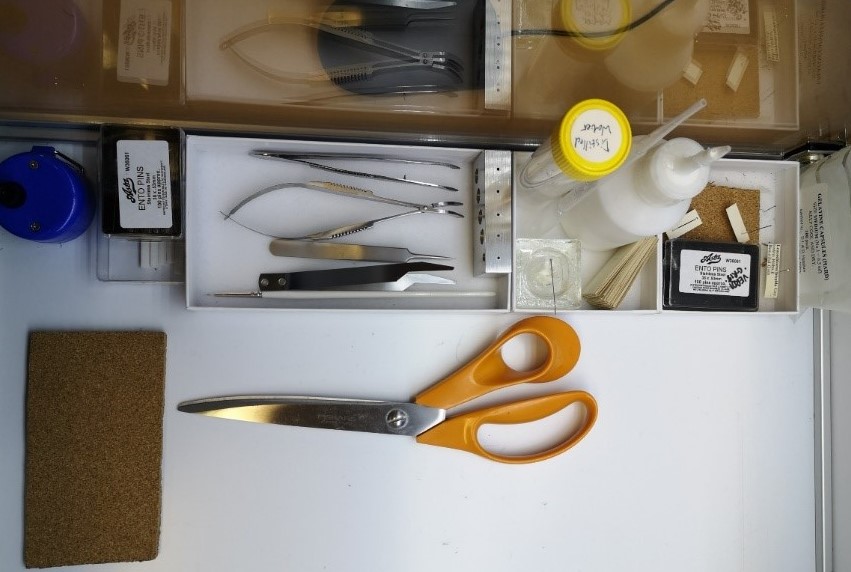
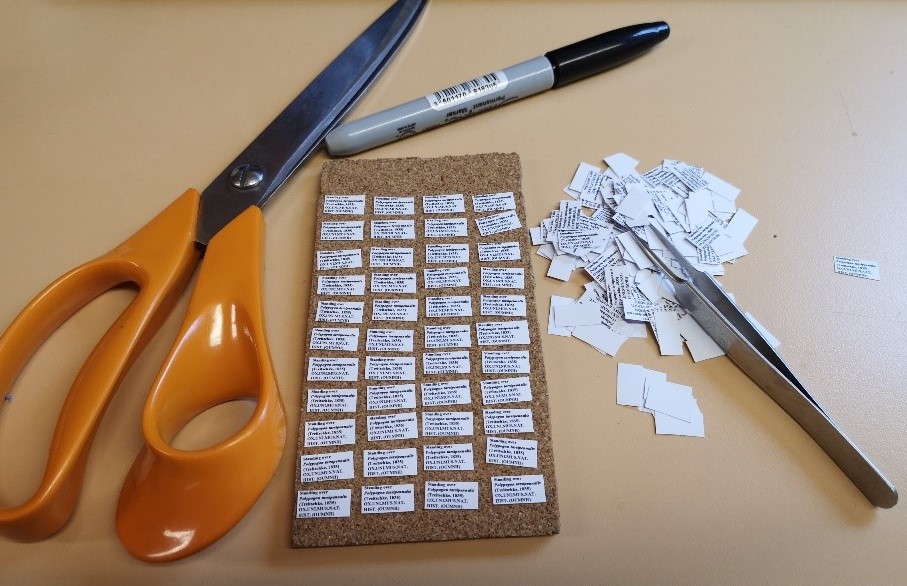
Here is a peek at some of the tools of the trade, used to move and mend specimens like this moth.
Crunchy will be crammed full of interesting insect info, fun things to make and do, a peek behind the scenes at the Museum, and news from people, past and present, who work in the field of entomology. The odd bad joke may also worm its way in (What do butterflies sleep on? Cater-pillows).
The blog will also be a platform for young people to have their say, about the topics covered on Crunchy itself, as well as on the activity of the Museum. It will give them first dibs on access to related events too. You can check it out, follow, and share at crunchyontheoutside.com.
A big part of the HOPE for the Future project is re-curating more than one million British insects.
Tom Greenway, Junior HOPE Collections Assistant, explains how he and the team are making sure the insects that make up the unique HOPE collection will be preserved for future generations.
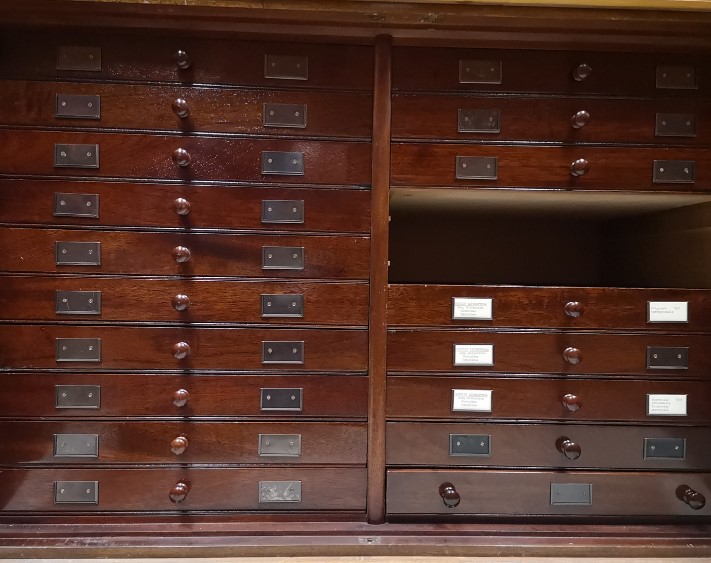
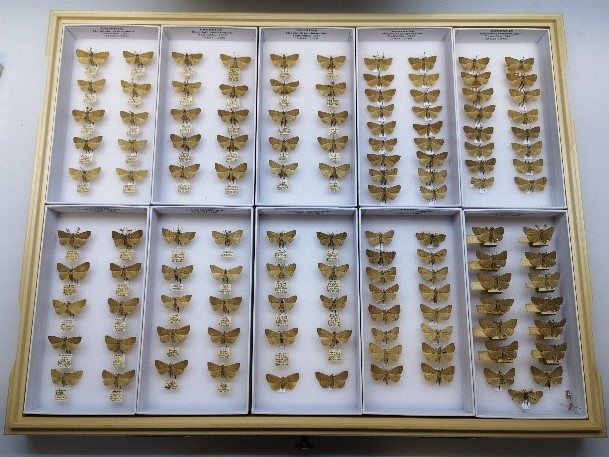
Moving a million insects is a big job! The insects are currently kept in wooden trays inside cabinets in the Westwood Room, upstairs at the museum. We have to move every single insect specimen into new up-to-date storage to preserve the collection for the future. At the moment, we are moving the insects in cabinet 75 which contains members of the order Coleoptera (beetles). There are 151 cabinets in total, each with 20 drawers of insects so although we have already moved around 253,000 insects, there is still a long way to go!
Two of the old drawers done… only another 3,000 to go!
These are some of the tools of the trade!
Tweezers
Forceps
Scissors
Entomology pins
Glue
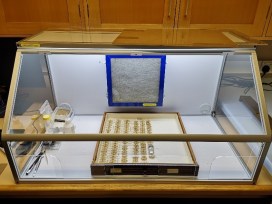
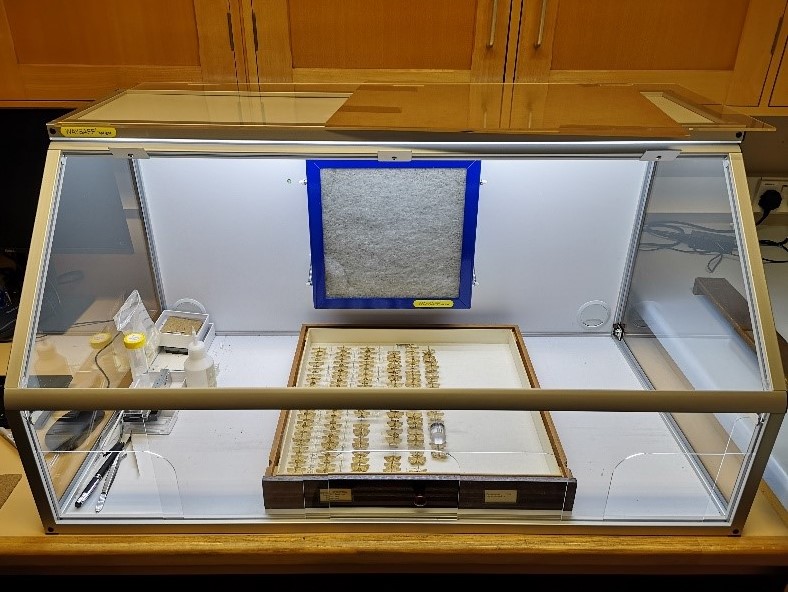
When working on a drawer, we put it inside a fume cabinet like this one to protect us from a chemical called naphthalene. This was used in the past to help stop specimens being damaged by pests, such as moths, which see the collection as a huge banquet!
A fume cabinet provides protecton from napthalene
Each specimen we move needs a new label containing vital information about the specimen:
binominal name (Genus / species);
the name of the person who discovered the species;
the year it was first classified; and
a location code.
Watch this video to see how Tom moves the insects
Once a tray is full, we add a data label containing the specimens’ information, along with a checklist number, which in this case relates to the current checklist of classified Lepidoptera (the order that includes butterflies and moths).
A finished tray
We then add each finished tray to one of the new pest-proof drawers. The completed drawers are then ready to go to their new storage space where it will be accessible for teaching and research.
This article is taken from European research magazine Horizon as part of our partnership to share natural environment science stories with readers of More than a Dodo.
Armed with sensitive antennae and wide-angled compound eyes, bees have a sophisticated set of senses to help them search out pollen and nectar as they buzz from flower to flower.
But new research is revealing that bumblebees may employ another hidden sense that lets them detect when a flower was last visited by another insect.
Professor Daniel Robert, an expert in animal behaviour and senses at the University of Bristol, UK, has discovered that bumblebees have the ability to sense weak electrostatic fields that form as they fly close to a flower.
‘A bee has a capacity, even without landing, to know whether a flower has been visited in the past minutes or seconds, by measuring the electric field surrounding the flower,’ Prof. Robert explained.
The discovery is one of the first examples of electroreception in air. This sense has long been known in fish such as sharks and rays, which can detect the weak electrical fields produced by other fish in the water. Water-dwelling mammals such as platypus and dolphins have also been found to use electric fields to help them hunt for prey.
But rather than hunting for fish, bees appear to use their ability to sense electrical fields to help them find flowers that are likely to be rich in pollen and nectar.
Charge Bees develop an electrostatic charge because as they fly they lose electrons due to the air rubbing against their bodies, leading to a small positive electric charge. The effect is a bit like rubbing a party balloon against your hair or jumper, except the charge the bees accumulate is around 10,000 times weaker.
Flowers, by comparison, are connected to the ground, a rich source of electrons, and they tend to be negatively charged.
These electrostatic charges are thought to help bees collect pollen more easily. Negatively charged pollen sticks to the positively charged bee because opposite charges attract. Once the pollen sticks to the bee, it too becomes more positively charged during flight, making it more likely to stick to the negatively charged female part of a flower, known as a stigma.
Bees develop a positive electric charge as they fly, which helps them to collect pollen from negatively charged flowers. Image credit – Pxfuel.com/DMCA
But Prof. Robert and his colleagues wondered whether there could be more to this interaction. When they put an electrode in a flower, they detected a current flowing through the plant whenever a bumblebee approached in the air. Their study revealed that the oppositely charged flower and bee generate an electrostatic field between them that exerts a tiny attractive force.
To study whether the bees are aware of this electrostatic field, they then offered bumblebees discs with or without sugar rewards. Those with sugar also had 30 volts of electricity flowing through them to create an electrical field. They showed that the bees could sense electrical field and learn that it was associated with a reward. Without the charge, bees were no longer able to correctly identify the sugary disc.
Research by another group published shortly after Prof. Robert’s own work also showed that honey bees are also able to detect an electrical field. But exactly how the insects were able to do this remained a mystery, leading Prof. Robert to set up the ElectroBee project.
Very few animals have the capacity to read the stars and use it to find, north, south, east or west.
Professor Eric Warrant, Lund University, Sweden
Hairs
He has discovered that fine hairs on the bees’ bodies move in the presence of weak electrical fields. Each of these hairs has nerves at its base that are so sensitive they can detect tiny movements – as little as seven nanometres – caused by the electrical field.
Prof. Robert believes that when a bee visits a flower, it may cancel out some of the negative charge and so reduce the electrostatic field that forms when bees approach. This change in the strength of the electrostatic field could allow other bees flying past to work out whether a flower is worth visiting before they land, helping to save time and energy.
Other signals, such as changes in the colour and smell of flowers, happen in minutes or hours, while switches in electric potential occurs within seconds.
Prof. Robert and his team are now testing their theory that the electric field helps bees know which flowers to visit by counting visits by bumblebees to flowers in a meadow this summer and measuring electric fields around the flowers.
Their findings could help scientists better understand the relationship between plants and pollinating insects, which may prove crucial for improving the production of many vital fruit crops that rely upon bees for pollination.
Prof. Robert is also investigating whether bumblebees use their electrostatic charge to communicate to their nest sisters about the best places to fly for pollen.
But while bumblebees use their extraordinary sensory power to find food just a few kilometres from their nests, another insect is using another hidden sense to make far longer journeys.
The Bogong moth can travel more than 1,000km to hibernate in caves during the Australian summer. Image credit – Lucinda Gibson & Ken Walker, Museum Victoria/Wikimedia, licenced under CC BY-SA 3.0
In Australia, Bogong moths (Agrotis infusa) flitter steadily from various parts of the country and make their way towards the Snowy Mountains in the southeast. They fly for many days or even weeks to reach the high alpine valleys of the highest mountain range in the country, sometimes travelling over 1,000km. Once there, the insects hibernate in caves typically above 1,800m for the Australian summer, before making the return journey.
The only other insect known to migrate so far is the monarch butterfly in North America. But while the monarch butterfly relies in part on the sun’s position for navigation, the moths fly by night. Professor Eric Warrant, a zoologist at Lund University in Sweden, has been fascinated with how these insects, just a couple of centimetres in length, managed such a feat ever since he was a student in Canberra, Australia.
Moth mystery He suspected that the moths might use the Earth’s magnetic field to find their way, so his team tethered moths to a stalk that allowed them to fly and turn in any direction before surrounding them with magnetic coils to manipulate Earth’s magnetic field.
‘It is a little like how we would go hiking,’ said Prof. Warrant, who is trying to unravel how the moths sense the Earth’s magnetic fields in his project MagneticMoth. ‘We’d take a reading from a compass, then look for something to walk towards in that direction, a tree or mountain peak.’
His research has already shown that the moths check their internal compass every two or three minutes and continue to make for a visual cue ahead. But what are the insects able to see at night?
Further research revealed something remarkable. When Prof. Warrant downloaded an open source planetarium programme called Stellarium and projected the Australian night sky above the moths, he discovered they were using the stars.
‘Very few animals have the capacity to read the stars and use it to find, north, south, east or west,’ said Prof. Warrant. ‘We (humans) learnt how to do it. Some birds do it.’
But insect eyes of bogongs mean they don’t simply follow one guiding star. Rather they are sensitive to panoramic scenes.
‘In the southern hemisphere, the Milky Way is much more distinct than it is here in the northern hemisphere,’ said Prof. Warrant. ‘It really is a stripe of pale light in which there are interspersed very bright stars.’ He believes that the moths are at least in part guided to their cool alpine caves by the light of the Milky Way.
Prof. Warrant believes that Bogong moths naviagte in part by using the Milky Way as a guide. Image credit – Dave Young/Flickr, licenced under CC BY 2.0
The discovery could also lead to the development of new types of navigation for our own species too. GPS, for example, relies upon a constellation of satellites that are vulnerable to disruption. Prof. Warrant believes studying an insect capable of flying 1,000km to a cave using a brain the size of a rice grain, could help us find alternatives too.
‘Animals seem to solve complex problems with little material and low amounts of energy,’ Prof Warrant said.
The research in this article was funded by the EU. If you liked this article, please consider sharing it on social media.
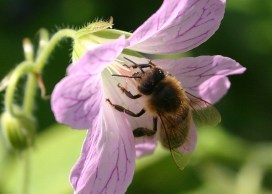
Top image: Fine hairs on bees’ bodies can sense tiny changes in electrostatic fields, enabling them to sense whether another bee has visited a flower before them. Image credit – Unsplash/George Hiles, licenced under Unsplash licence