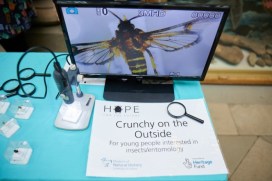
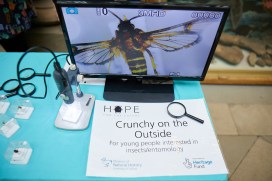
Crunchy on the outside

Our blog for and by young entomologists


Blog post by Rodger Caseby – HOPE for the Future Learning Officer


By the end of 2022, the Museum’s HOPE project will have rehoused and documented over one million British insects, restored our historic Westwood Room to create a new multi-purpose public space, and designed and delivered a wide-reaching learning and community programme.

The Crunchy on the outside blog is an exciting part of this community programme, aimed at 10–14 year-olds. For and by young entomologists, we’re not actually asking anyone to sink their teeth into a crispy exoskeleton! Instead, we are keen for young people to get involved in the HOPE project and the fascinating six-legged world of insects.

We publish posts each Monday at crunchyontheoutside.com in a cycle of four themes:

Natural World posts highlight amazing insects, like this recent piece on the red-tailed bumblebee, or this one on the red-legged shield bug written by young contributor Noah.

Red-legged shield bug
Six Legs of Summer School 2021

People posts featured entomologists and others with an interest in insects. These might be about members of the HOPE team at the Museum, like Collections Manager Amo Spooner, or those working elsewhere, such as Professor Karim Vahed, who studies bush crickets at the University of Derby.

Make & Do posts focus on creativity. They range from this cartooning tutorial from Chris Jarvis to things you can make at home, like this pitfall trap to catch ground-dwelling insects.

Museum posts take a look behind the scenes and also showcase what’s happening here at the museum, such as this post Events 4U in ’22 for the New Year, or our summer school in August.

The blog also features a gallery of insect photography and art created by young people which is continually expanding.

The Crunchy blog is very much by young people as well as for them. We are keen to receive items about insects, or connected to them, and have already published several articles. If you are a young person who is interested in contributing, you can get in touch via the Contact Us page on the blog or by emailing hopelearning@oum.ox.ac.uk. We would also love submissions of insect pictures for inclusion in our gallery!

And if there is a young person in your life who is crazy about creepy crawlies, or interested in science and nature in general, why not get them to take a look at the Crunchy blog? It could be the start of a wonderful journey into natural history.

Sneak peak: Enjoy this excerpt from a Crunchy on the outside blog post by Ben about Raising Moths!

“One morning we found that a lot of the caterpillars were wandering around, banging their heads on the bottom of the tank. They were also turning a darker green which (after a bit of research) we found out meant they needed to bury and become a chrysalis. We put a deep layer of soil into the tank and within minutes they had disappeared. We tucked them up in the shed for winter and waited. After months of hibernation, they started emerging this spring with crumpled wings, looking very like dead leaves.”

Thanks to National Lottery players for their generous support of the HOPE project through the National Lottery Heritage Fund.
Cartooning with Chris: Adding perspective and colour

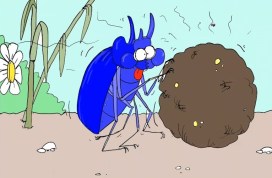
Previously, Chris Jarvis showed us how to draw a mighty Minotaur Beetle (Typhaeus typhoeus) complete with its own ball of dung! In this video Chris returns to add some finishing touches to this picture. He shows us how to convey the size of the beetle, and how to use colour to great effect.

We’d love to see any pictures you draw of insects, whether it is an ant, bee, caterpillar or your very own Minotaur beetle. Share with us at hopelearning@oum.ox.ac.uk.

Events 4U in ’22!

Happy New Year!  We hope 2022 is full of exciting times and awesome insect discoveries. We are SO excited because this year, we are inviting you to join us for FREE Crunchy on the Outside events here at the museum. Come and take part in some fabulous activities specially designed for young people, aged 10 – 14, interested in natural history and insects in particular. Keep an eye on this blog for news of forthcoming events.

Read on to find out more about the first event happening in February half term and how to book!

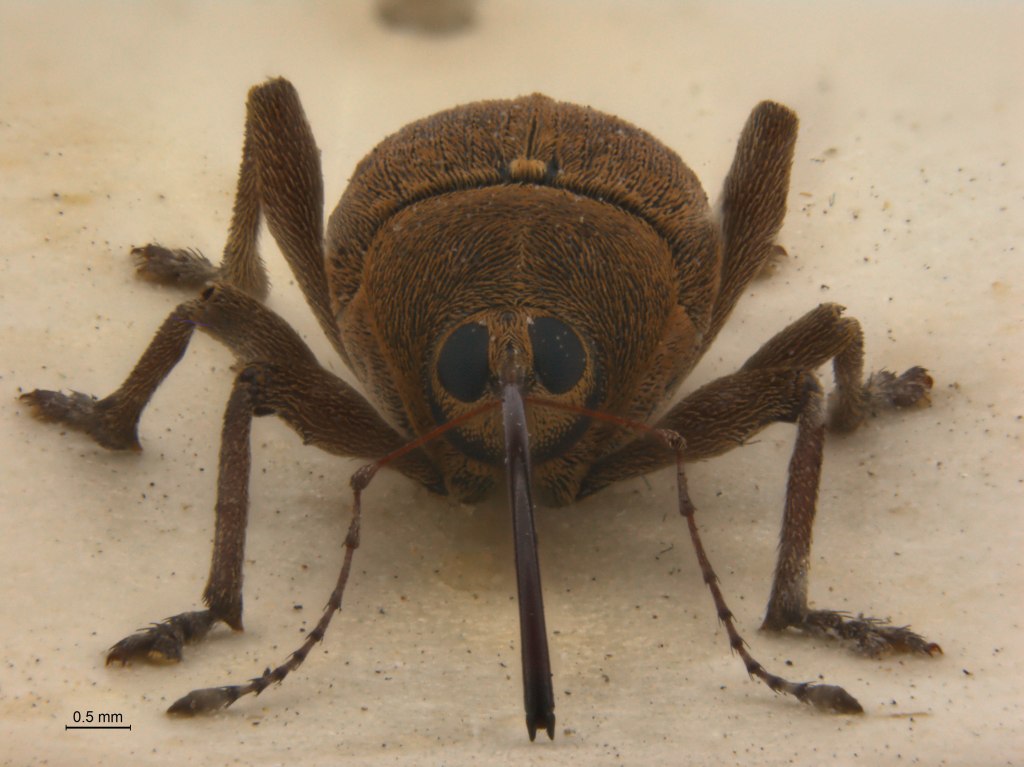
Acorn Weevil – Curculio glandium

Insects under the Lens – Wednesday 23rd February 2022, 1 – 3pm

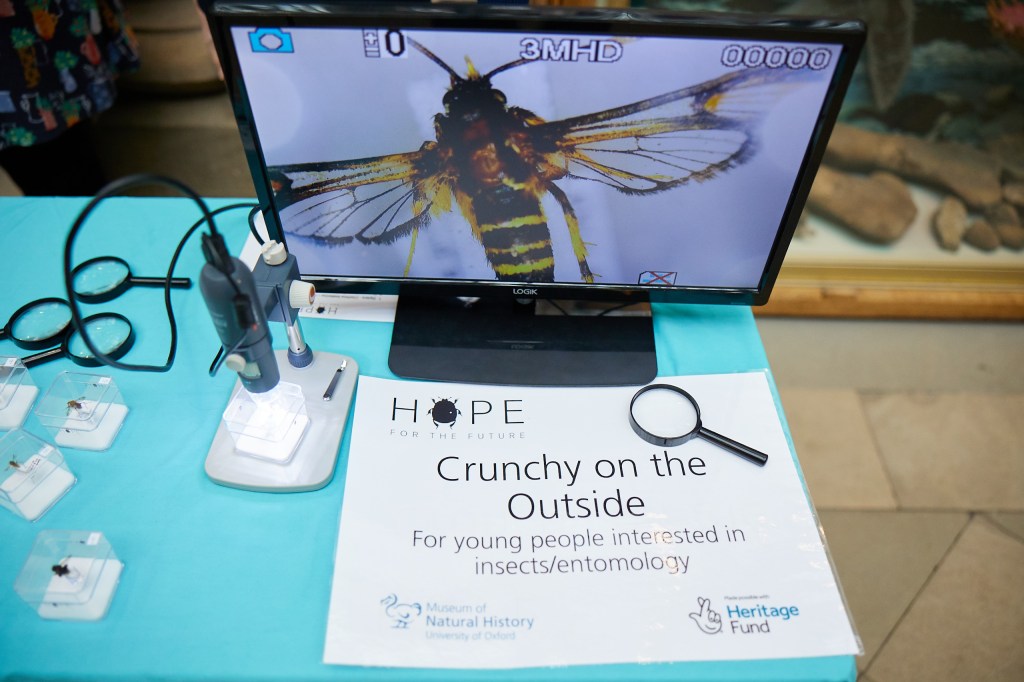
Intrigued by insects? Join us to take a closer look at some of the museum’s 5 million insect specimens under a variety of different lenses. We will be using microscopes and digital photography to reveal beautiful details of insect anatomy not visible to the naked eye.  This workshop promises to unlock some of the secrets of the insect world and develop your powers of observation!

Six-belted Clearwing Moth under the microscope

FREE workshop – Insects under the Lens 

Wednesday 23rd February 2022 , 1pm to 3pm

Museum of Natural History, Parks Road, Oxford, OX1 3PW

10 to 14 year olds

To book – email: hopelearning@oum.ox.ac.uk

Louis Lofthouse

Louis is a Collections Assistant, for the HOPE for the Future Project, at Oxford University’s Museum of Natural History. Here he is telling us about his role and how he first became interested in insects.

Louis mentions that through his job he gets to see rare and extinct insects that you normally might not get the chance to see. Can you tell us about any rare or extinct insects that you know about? Let us know in the comments below, or through the contact us page.

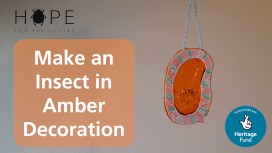
Make an Insect in Amber Decoration

Insects that have been trapped in amber (fossilised plant resin) can be preserved in amazing, stunning and beautiful detail. This short video shows you how to make a fossilised insect themed decoration that can be hung on your Christmas tree for the festive period, or can be displayed around you home all year round.

I have included the written instructions in case you find them helpful.

You will need:

  • A glue stick
  • Scissors
  • A Pencil
  • Card (e.g. cereal box)
  • Paper String/wool
  • Orange cellophane sweet wrapper(s)
  • Coloured pencils/pens/glitter

Instructions

  1. Take two pieces of card that are roughly the same size. Put them together with the plain sides facing out.
  2. On one side draw a frame, at least 1cm thick. It can be any shape you choose.
  3. Carefully cut out the frame, including the middle.
  4. Check that your cellophane wrapper will cover both frames. If not, use two.
  5. Use the glue stick to attached the cellophane to the patterned side of the frames.
  6. Trim the cellophane around the frames.
  7. Take a small piece of paper that will fit inside the frames and draw an insect on one side. Trim the excess paper around the insect and then draw a similar insect on the other side.
  8. Use the glue stick to attach the frames together with the insect in the middle, and with the wool/string forming a loop that you can use to hang your decoration.
  9. Decorate your frame using coloured pencils, pens, glitter or anything else that you choose.

We would love to see your amber decorations. Also, can any of you spot the key feature of an insect that I forgot to draw to my insect picture in the video? Let us know in the comments, or by the Contact us page.

To find out more about Insects in Amber look out for a post early next year.

Super Science Saturday – 27th November

People & Planet

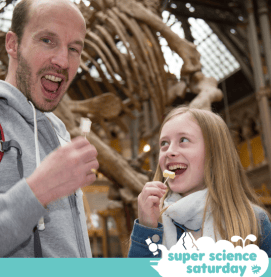
Come along to the museum for this fun family Science Fair, Saturday 27th November, 12-4pm.

Meet scientists and community organisations to learn more about current environmental research and projects.

Find out what scientists get up to and how they research the effects of our lifestyle choices on the planet and the things that live on it. Learn more about community larders and environmental projects that are working on creating a healthier planet. You can even try eating insects and decide if you think that’s the way forward to keep our planet healthy.

No need to book – just come along.

Find out more on our website.

How to get to the museum.