Wasp Faces: Power Struggles and Royal Drama


By Kristian Suszczenia, Intern


The second you step into the Museum of Natural History you will notice a remarkable thing about nature: its diversity. Instantly, you see huge whale bones, a distant elephant skull, birds, fish, dinosaurs, and a mounted kaleidoscope of colourful insects. This variation is what many of us love most about biology.

But diversity occurs at a much finer scale than the magnitudes of difference that exist between species. Often there is ‘Individual Variation’ — differences that occur within species. Person to person, specimen to specimen, each organism is unique, just like us humans!

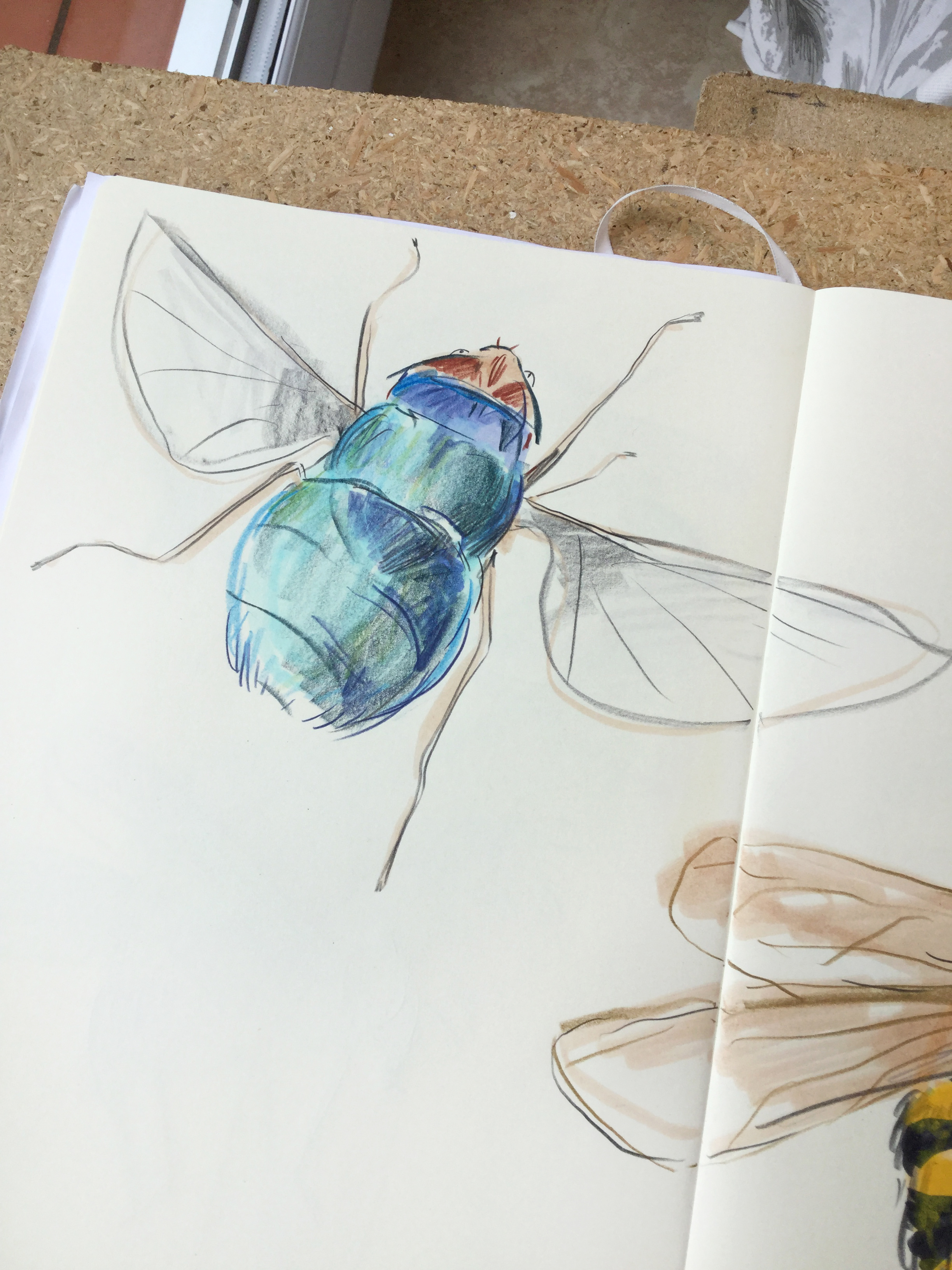
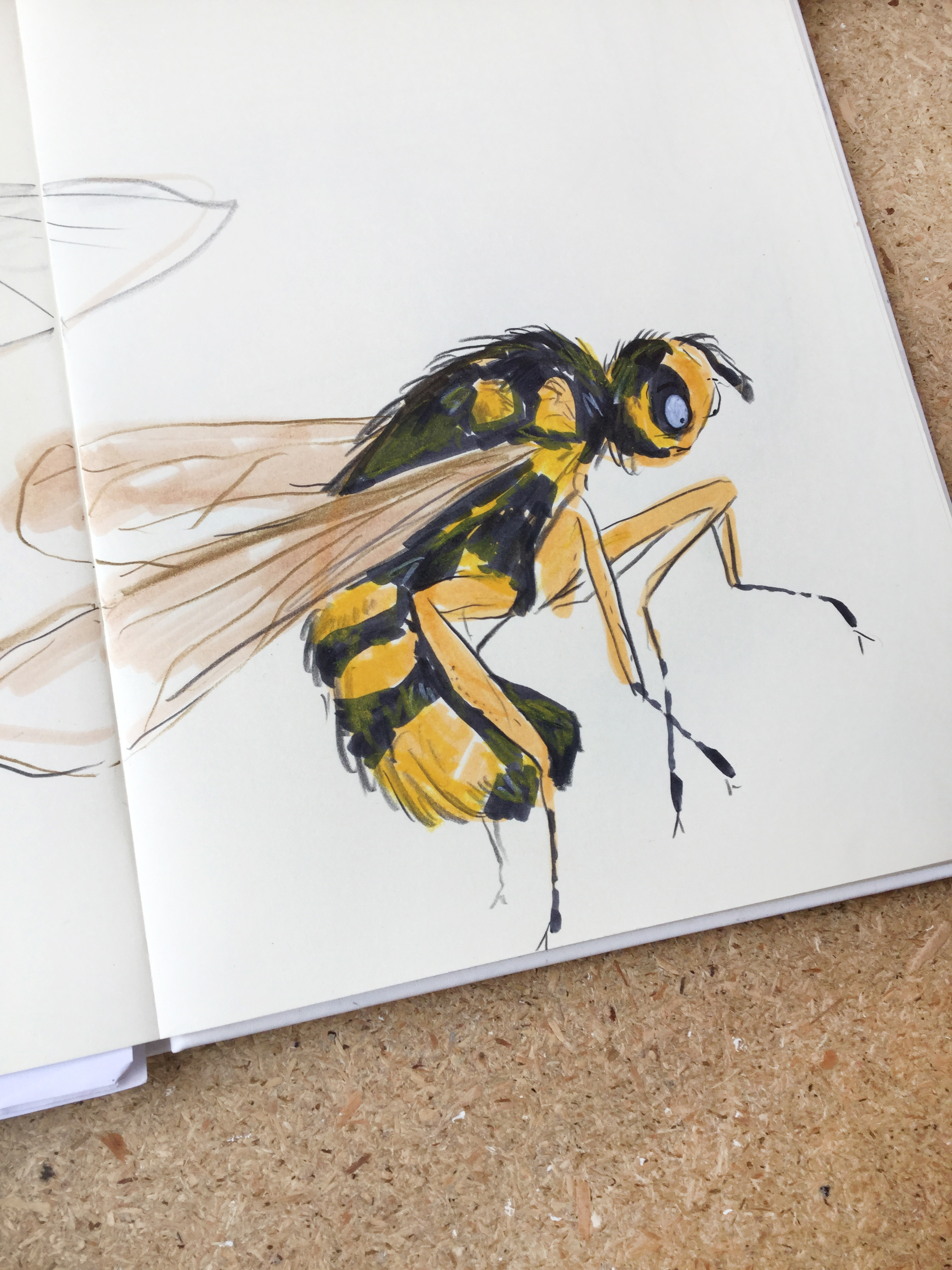
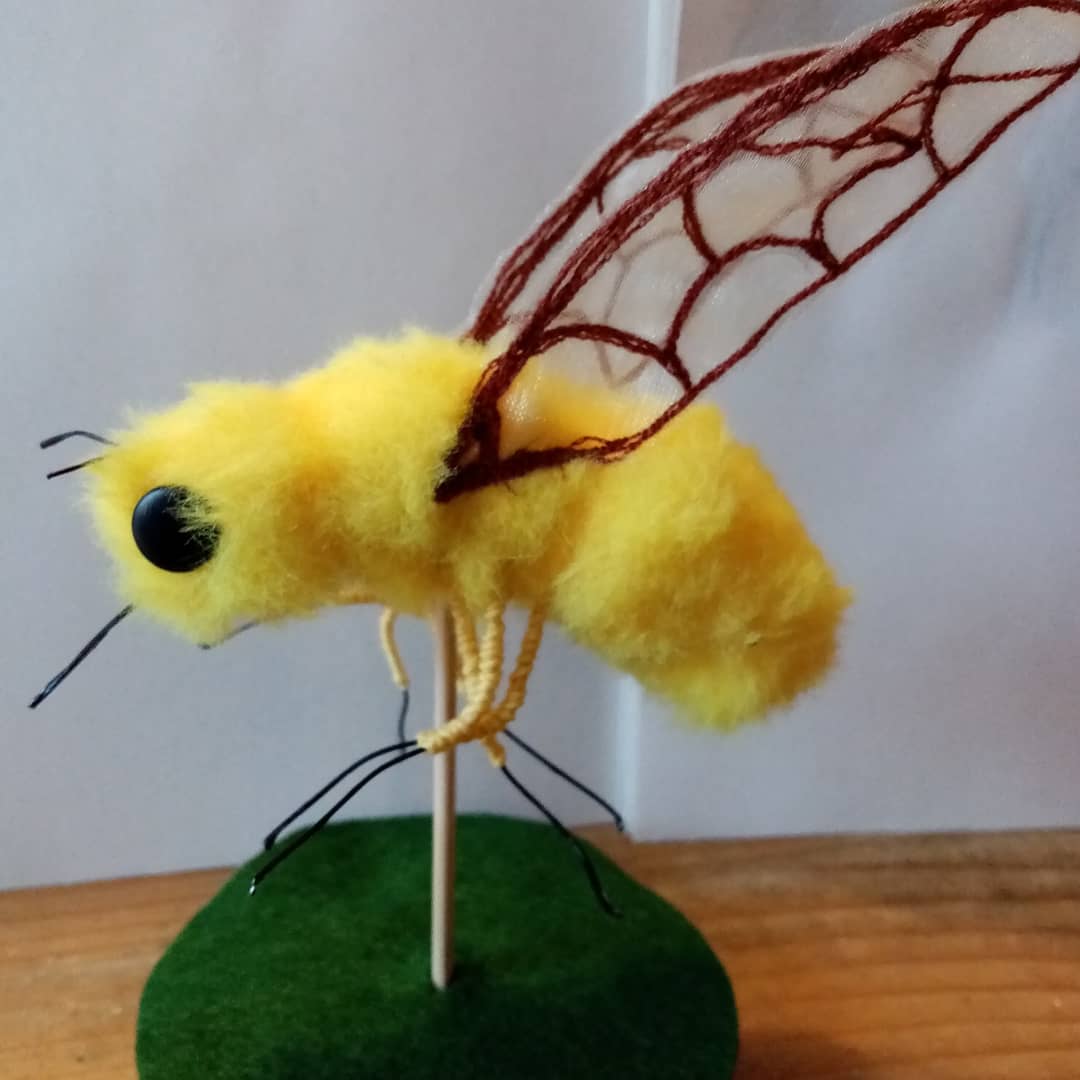
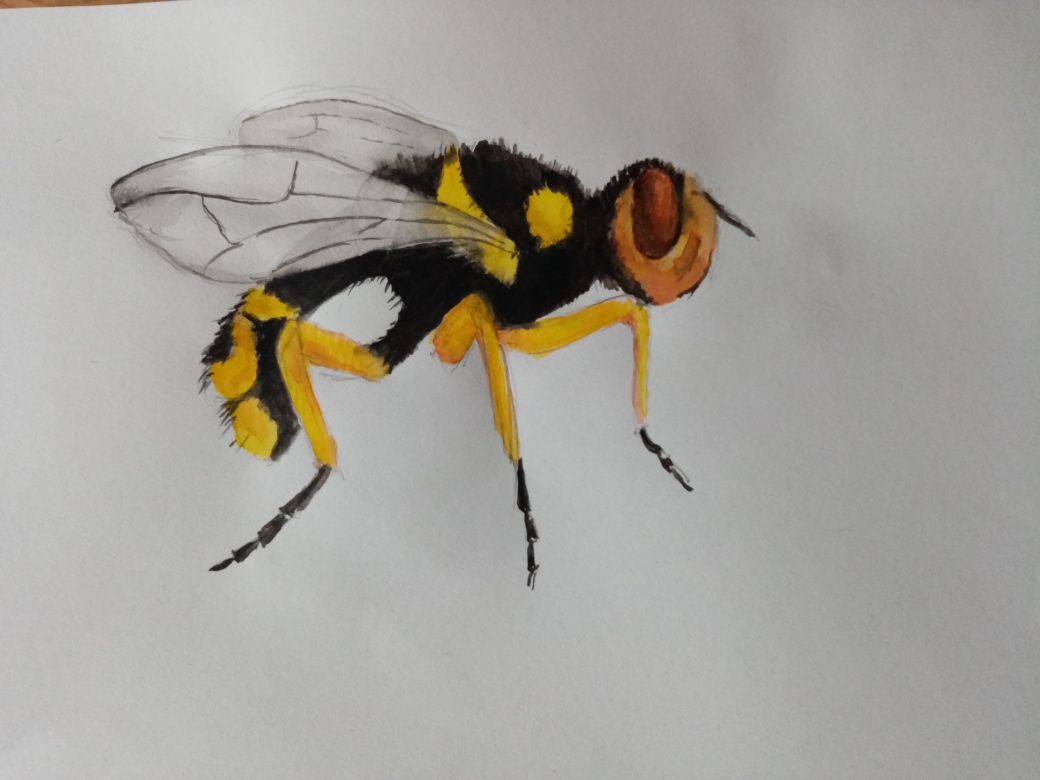
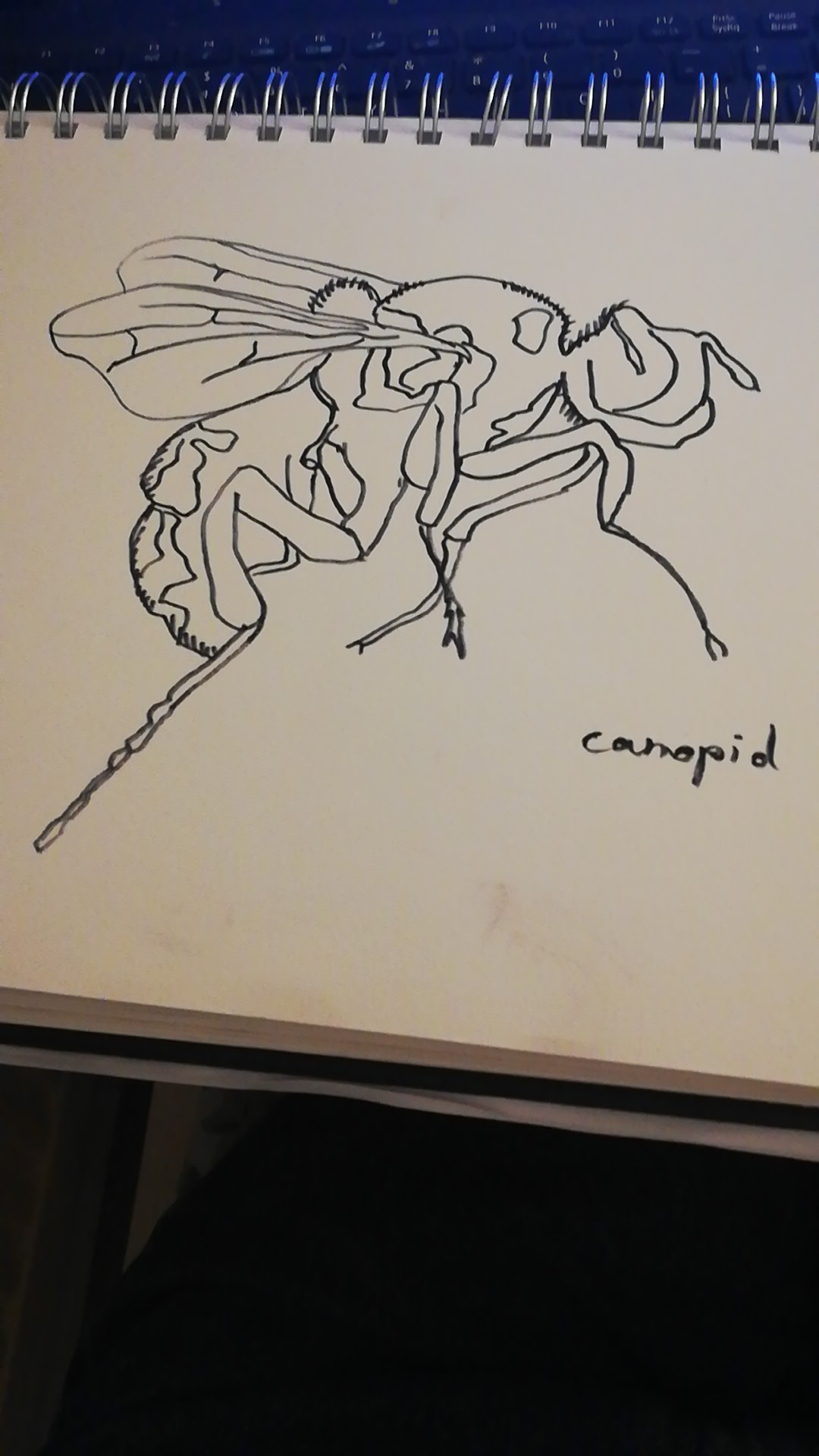
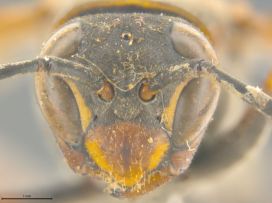
Buried under the 5 million other insects of the HOPE collection is a drawer that houses a species of the genus Polistes, a social paper wasp collected from Brazil. A close look at their faces reveals staggering individual variation. Before getting confirmation from specialists, the Museum staff found it hard to believe that these four faces could even belong to the same species. The question is, why are they so different? Is there an evolutionary benefit to all these wasps having their own style of eyeliner?

Variation in the faces of paper wasps

It is well-known that individual variation can give certain members of a species an edge over others, especially when it comes to dating! From guppies to fruit flies, females often prefer mates that stand out with unique colours and patterns, perhaps because they are simply more noticeable.

Yet dating is not a sufficient explanation for our fashionable paper wasps. They get a very different benefit from their unique looks — not so much standing out, but being memorable. For them, a memorable identity is a way to remember who goes where in a critical pecking order.

Thanks to a lot of elegant work by Polistes specialists, we understand that bespoke face markings tend to evolve in species that have multiple queens in a linear hierarchy. A Polistes queen can start a hive alone but often benefits from forming a group of queens that can all cooperate together in a single hive. In order to cooperate, the queens must decide on a dominance hierarchy amongst themselves. To do this they take part in brutal one-on-one battles as they assess each other’s prowess.

After they establish an initial order, each wasp will constantly test the adjacent ranks (their closest match) with darts and lunges as they try to climb the ladder for extra reward and simultaneously defend their place. Four punishes Three for transgressions and plots against Five’s downfall. It’s a royal reality show.

This part-insect, part-spartan society is certainly fascinating, but what does it have to do with the wasps’ faces?

In order for queens to defend their rank from their adjacent competitors, they need to know exactly who’s who. Unique faces are more recognisable and more memorable. Being able to recognise and recall every individual wasp allows queens to track their rivals based on their faces and avoid a lot of violent misidentification. Imagine if a queen were to look forgettable; every other queen in the hive would see her as a potential challenge to their power. She wouldn’t last long. But having a memorable face allows individuals to avoid unnecessary scraps and make for a more efficient hive overall.

After learning the story of the wasps, it seems plausible that humans may have evolved our fantastically recognisable faces for societal advantages too — perhaps to avoid getting mistaken for an enemy, perhaps so we can trade favours, or maybe just to avoid general confusion. It would certainly make life difficult if all your co-workers had the exact same face. Remembering names is hard enough already!

Four Museum staff willing to volunteer their faces!
A GUT FULL OF SAND

UNEARTHING THE PECULIAR EATING HABITS OF A TRIASSIC MAYFLY SPECIES


During the summer months, the beaches of Mallorca offer an irresistible draw for tourists and palaeontologists alike. Visitors to the small Spanish island find themselves lured by its glittering seas, captivating coastline, and tasty white sands…

…well, tasty for some, at least!

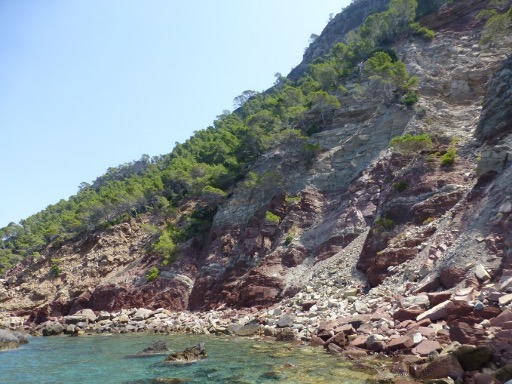
Coastal cliffs near Estellencs (Mallorca, Spain). Palaeontologists working here discovered fossils of Triassic mayfly nymphs with unusual gut contents. (photo: Balearic Museum of Natural Sciences)

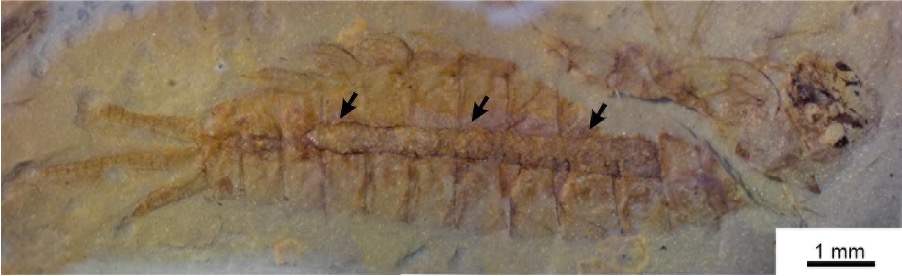
Following recent fossil excavations near the the coastal town of Estellencs in southwest Mallorca, palaeontologists have discovered evidence of a species of mayfly with a pretty peculiar diet. The mayflies in question lived 240 million years ago in bodies of water associated with ancient floodplains. Some of the juvenile mayflies (nymphs) were so well-fossilised that it has been possible to study the contents of their guts. A research team, led by Dr Enrique Peñalver, and featuring OUMNH’s own Dr Ricardo Pérez-de la Fuente, discovered that the mayflies’ digestive tracts contained a mixture of detritus (the decomposed remains of other organisms) and particles of a type of rock known as claystone. The most likely explanation for this strange food-pairing? It seems that the nymphs actually survived by eating muddy sediments that had settled to the bottom of the swampy-waters they lived in – yum!

If you’ve ever tried eating a sandwich on the beach, you’ll be familiar with the feeling of sand in your teeth. The sharp crunch of mineral sediment is worth the sacrifice for the delicious, digestible portion of your sandwich – the bread and fillings. Animal digestive systems are unable to extract energy from inorganic mineral matter, like sand. Instead, we rely on organic material for nutrition, i.e. matter derived from plants and other animals. It seems that the Triassic mayfly nymphs found in Mallorca would have munched through large quantities of sediment; digesting the organic detritus it contained, and excreting the inorganic remainder.

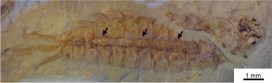
One of the numerous Early Triassic mayfly nymphs from Mallorca preserved with gut contents. These inclusions result from the original sediment the nymphs fed on (cololite, labelled here with arrows). Image adapted from Peñalver et al. (2023).

Sediment-based diets are extremely rare among living insect species. A handful of modern mayfly species have been observed to munch on the muddy sediment that surrounds the openings of their tunnels, but this is a very rare occurrence. Sediment is a pretty challenging food source, and it’s hard to say why insects may have relied more heavily on it in the ancient past. It is possible that the mayflies found in Mallorca adopted their diet as a result of the Permian mass extinction, which killed off more than 80% of all the species on Earth, ‘just’ five million years prior. With fewer choices of organic material available to eat, perhaps the mayflies were left without a better choice? Or maybe they were simply exploiting new environmental niches that opened up in the aftermath of this catastrophic event?

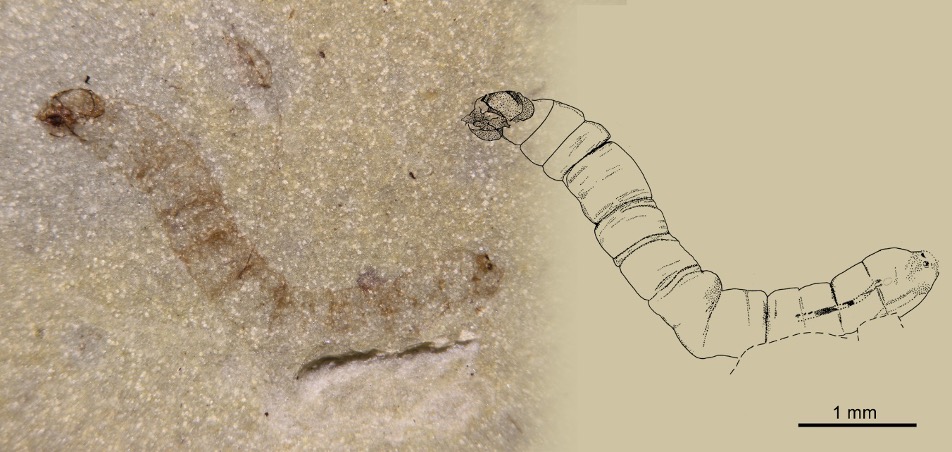
One of the reasons why it is so difficult to theorise about the evolution of species following the Permian mass extinction is the dearth of fossil evidence dating from the period. Luckily, the coastal cliffs of Mallorca can offer us a rare, exciting glimpse into some of the ecosystems that existed ~247 million years ago. The research team behind the Mallorcan mayfly discovery have also used fossils from the same site to describe the world’s oldest-known dipteran (a group of insects including flies, mosquitoes, gnats, and midges), naming the species Protoanisolarva juarezi. These flies would have lived on land, in back swamp areas, rather than in the water. However, much like the Triassic mayfly nymphs, they would have fed on detritus, and played a key role as recyclers of organic matter in these ancient ecosystems.

The larva of the oldest-known gnat, 247 million years old, was found near Estellencs in Mallorca. (Image: CN-IGME CSIC).

It is by paying attention to tiny insect fossils like these that we might hope to find answers to one of the biggest questions in palaeontology: how did life rebuild in the aftermath of our planet’s worst mass extinction? And what might this teach us about ecosystem responses to future mass extinction events?


By Ella McKelvey, Web Content and Communications Officer

Buckland Papers Appeal


By Danielle Czerkaszyn, Librarian and Archivist


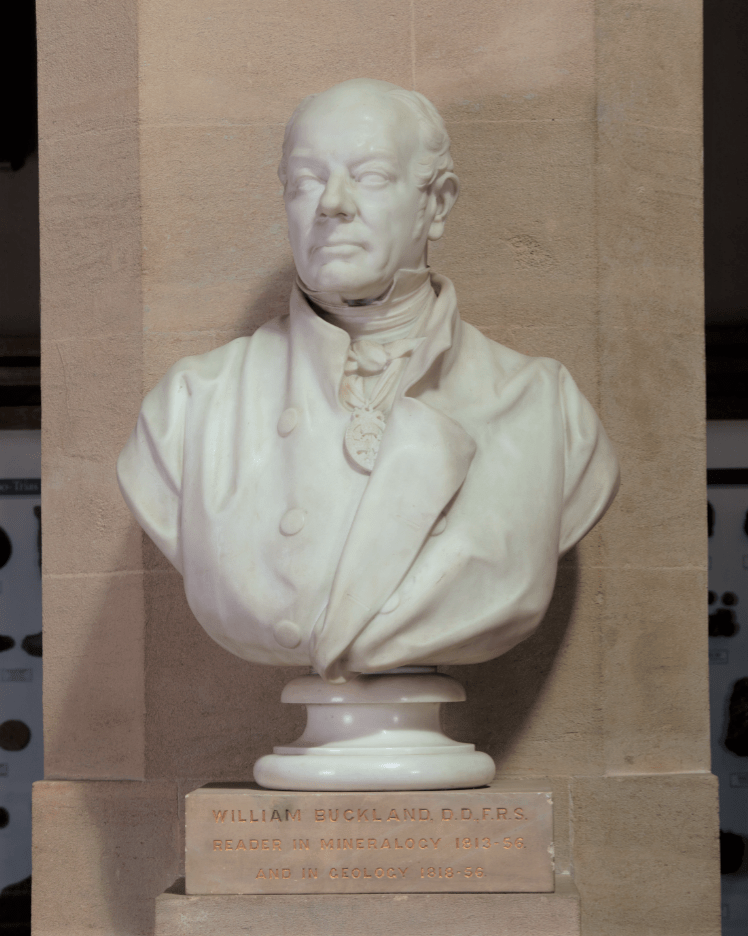
The Museum is currently leading a major fundraising campaign to purchase, catalogue, conserve, and digitise an important collection of archive material related to the geologist William Buckland (1784-1856).

Buckland was an English theologian and one of the greatest geologists of his day, becoming Oxford University’s first Reader in Geology in 1818. When he died in 1856, papers related to his teaching and research, as well as around 4000 specimens, were given to the University. These were later transferred to the Museum when it opened in 1860, and the Buckland collection remains one of the greatest research resources in our collections.

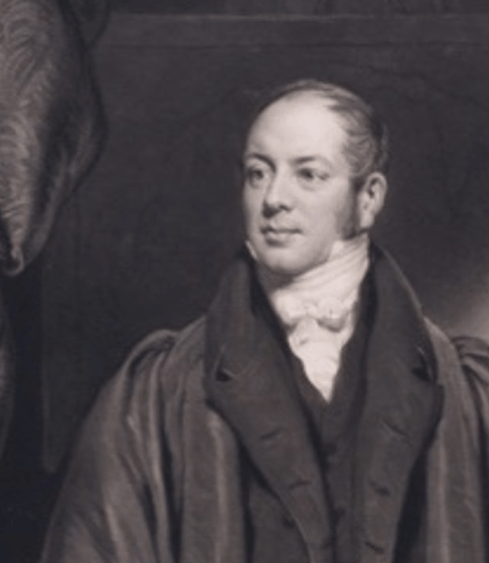
Left: A bust of William Buckland in the Museum of Natural History. Right: A portrait of the young Buckland.

The Museum has recently been offered a unique opportunity to acquire another extremely important collection of archive material related to Buckland. Passed by descent to the current owners, this archive consists of just over 1000 items of correspondence, geological notes, works of art, and other family papers — including a substantial number of items relating to his wife Mary (née Morland) and their eldest son, the naturalist and author Francis (Frank) Buckland.

This ‘new’ material fits beautifully with the existing Buckland archive here, providing missing pieces of the jigsaw and helping to paint a more comprehensive picture of this extraordinary geological pioneer, and the work he did together with Mary. It also offers greater insight into the scientific thinking and institutions of early 19th-century England, and the scientific contributions made by other ‘invisible technicians’ such as quarrymen, collectors, preparators, and replicators, giving us a more accurate, balanced, and inclusive picture of natural history at the time.

The campaign is aiming to raise £557,000 to acquire, conserve, rehouse, and digitise the Buckland archive. We have been fortunate to secure funding from a range of funders towards our goal, and we are now within £75,000 of this target.

The Museum is the obvious home for the ‘new’ archive, given Buckland’s close connection to Oxford University, and our holdings of his specimens and archive. With your help, we will reunite these two archive collections in one place and ensure researchers and the public can utilise these scientifically, historically, and culturally important resources for years to come.

Learn more about the Buckland Papers Appeal

Donate to the Buckland Papers Appeal

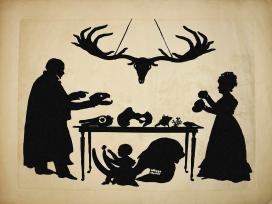
Header image: Silhouette of William Buckland and Mary Buckland

The astounding story of the fake butterfly specimen Papilio ecclipsis – would you be fooled?

For April Fool’s Day, our Senior Collections Manager Darren Mann recounts the story of an elegantly fake butterfly – Papilio ecclipsis – asking whether it was a piece of scientific fraudulence or practical joke that went awry.

James Petiver, a 17th-century London apothecary, was renowned for having one of the largest natural history collections in the world. Petiver (1665-1718) published some of the first books on British insects and created common names for some of our butterflies.

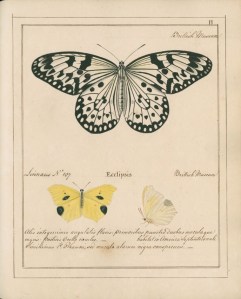
Volume 3, Plate II of Jones Icones – the two lower images are of Papilio ecclipsis

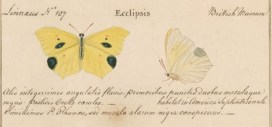
On plate 10 of his Gazophylacium naturae et artis — an illustrated catalogue of British insects (1702) he figured a unique butterfly that “exactly resembles our English Brimstone Butterfly were it not for those black Spots, and apparent blue Moons in the lower wings”. It was given to him by his late friend and butterfly collector William Charlton (1642-1702). This butterfly was later named Papilio ecclipsis by the father of taxonomy himself, Carl Linnaeus, in his 1763 work Centuria Insectorum Rariorum, and it became known as the Charlton Brimstone or the blue-eyed brimstone.

Petiver’s collection was purchased by Sir Hans Sloane (1660–1753), who later donated his entire ‘cabinet of curiosity’ to the nation, becoming the foundation for the Natural History Museum, London, originally part of the British Museum. It was here that wine merchant and naturalist William Jones (1745-1818) examined and later figured Petiver’s specimen in his Icones, an unpublished masterpiece of some 1,500 watercolour images of butterflies.

Jones’ Icones, held in the Museum’s archive, is the subject of numerous articles and is still examined by butterfly specialists the world over. Many of the specimens figured by Jones are no longer in existence, being ravished by pests or lost over time, so all that remains of these butterflies are the painted images within.

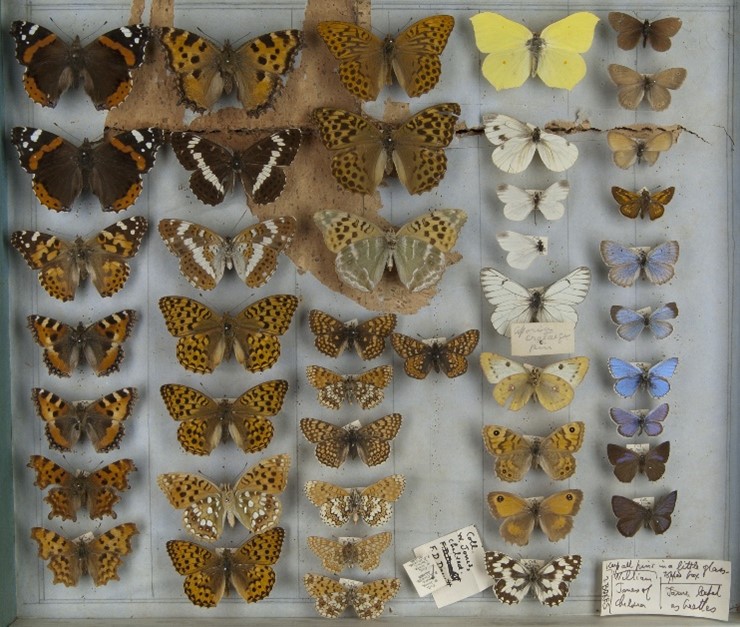
A drawer of British butterflies from the cabinet of William Jones. The Common Brimstone butterfly is the fourth from the right on the top row

When visiting London, Danish entomologist Johann Christian Fabricius (1745-1808) studied the paintings that Jones made and described over 200 species of butterfly new to science. Fabricius also visited the British Museum where he examined Petiver’s specimen of ecclipsis. In Entomologia systematica (1793) Fabricius revealed the enigmatic ecclipsis to be no more than a painted and “artificially spotted” specimen of the Common Brimstone (Gonepteryx rhamni). So, the dark spots and blue eyes were merely artistic licence, but whose?

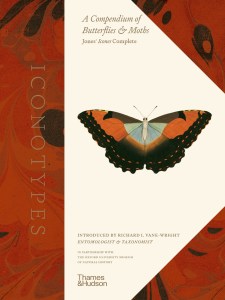
Iconotypes, published by Thames & Hudson, will be available from October 2021

Petiver’s specimen, seen by both Jones and Fabricus in the British Museum in the late 18th century, had mysteriously disappeared by the following century. It is said that when Dr. Gray (1748-1806), Keeper of National Curiosities at the Museum, heard of the deception he became so enraged that he “indignantly stamped the specimen to pieces.”

It is still unclear whether this was an example of scientific fraud by Charlton, or if it was intended as a practical joke that went awry.

There remain two specimens of ecclipsis in the collection of the Linnean Society. Although it is uncertain who created these, it is believed that these replicas were made by none other than our very own William Jones, as he was one of the few who had the artistic skills to undertake such work. The forthcoming publication of Iconotypes, showing Jones’ Icones in all its splendour, will hopefully demonstrate how he had both the knowledge and the skill to recreate these fascinating fakes.

Links and References
Salmon, M., Marren, P., Harley, B. (2001) The Aurelian legacy: British butterflies and their collectors. University of California Press.
The Linnean Society https://www.linnean.org/
Vane-Wright, R. I. (2010) William Jones of Chelsea (1745–1818), and the need for a digital online ‘Icones’. Antenna. 34(1), 16–21
Artwork by @CatherineRRye

Drawn to Nature

By Chris Jarvis, Education Officer

With lockdown and the long winter nights shuffling the nation’s emotions like a ham-fisted magician with a damp deck of cards, we have no doubt all suffered from a case of the winter blues at some point recently. While the Museum and its inspiring specimens have been closed to visitors we have tried out some new approaches to bring you the solace and creative inspiration that nature can provide.

events manager Laura is seen leaning over a lighting set-up that is shedding light on a table with specimens.
Events manager Laura hard at work on a lighting set-up for a Drawn to Nature live stream.

Drawn to Nature is a new series of online events designed to lift people’s spirits with a combined art and science activity. Originally planned as a wellbeing event to take place in the Museum, the online version was created in response to the last lockdown. We start each session with a short talk by a member of the Museum’s collections or research team, who share their passion for a selection of favourite specimens. The talk is followed by a chance for viewers to explore their creative sides by drawing the specimens, while learning more by about them through some Q&A.

It’s not an art lesson as such, but more a chance for people to find inspiration from some of the jewels of the natural world held in our collections. We hope it helps people to relax, find inspiration, immerse themselves in a creative activity, and learn a little natural history at the same time.

Click the gallery images to zoom and see credit information.

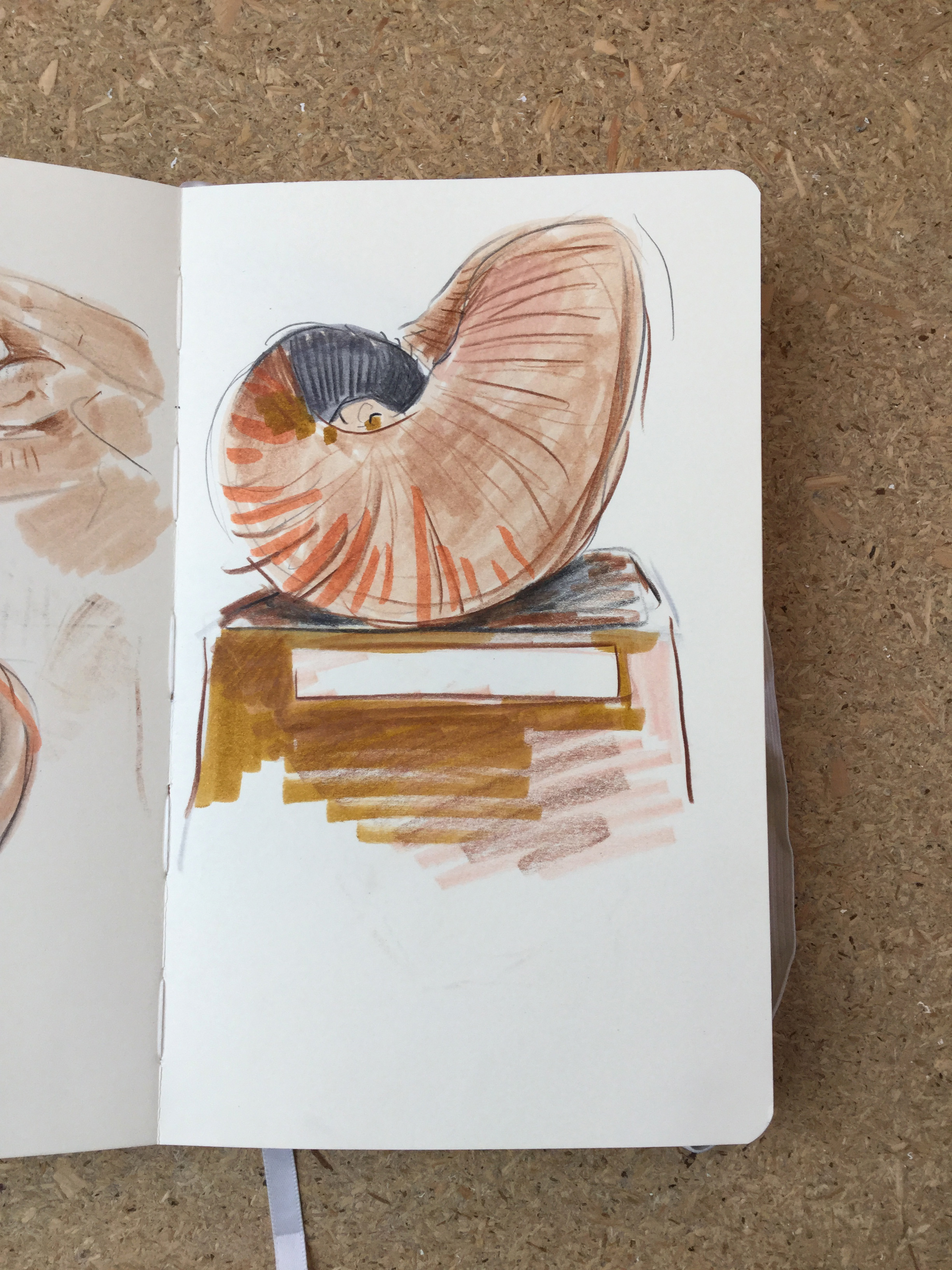
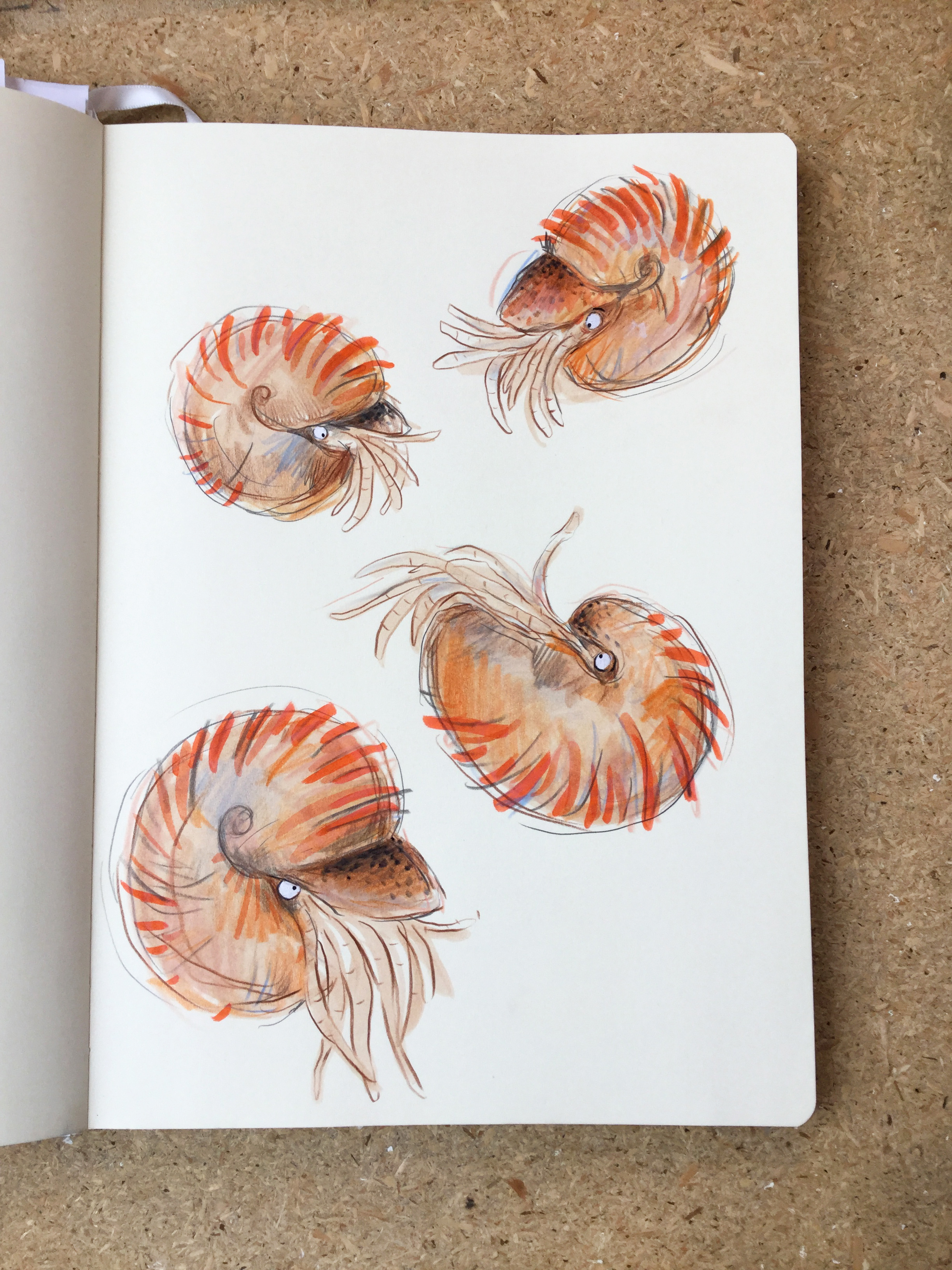
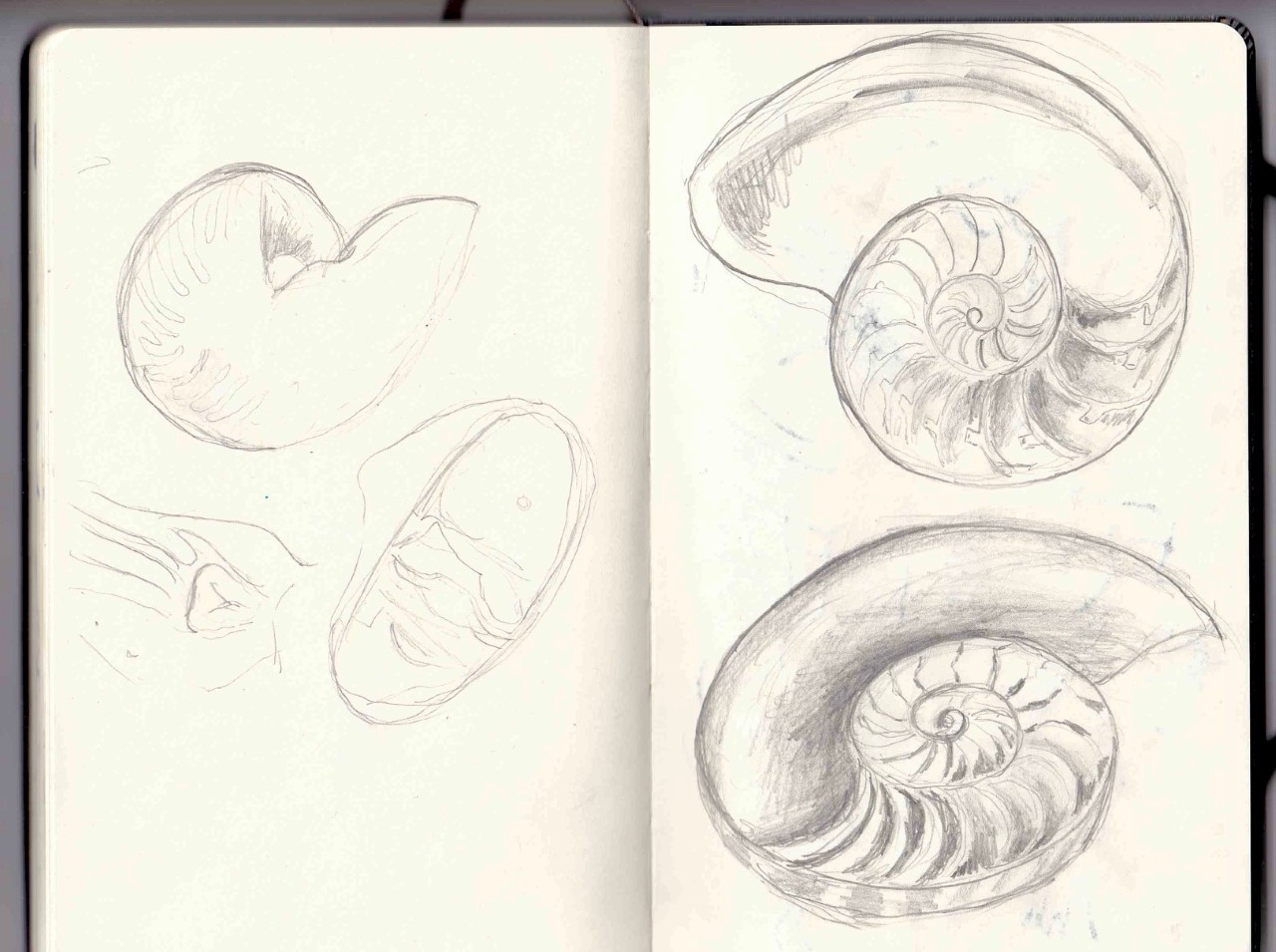
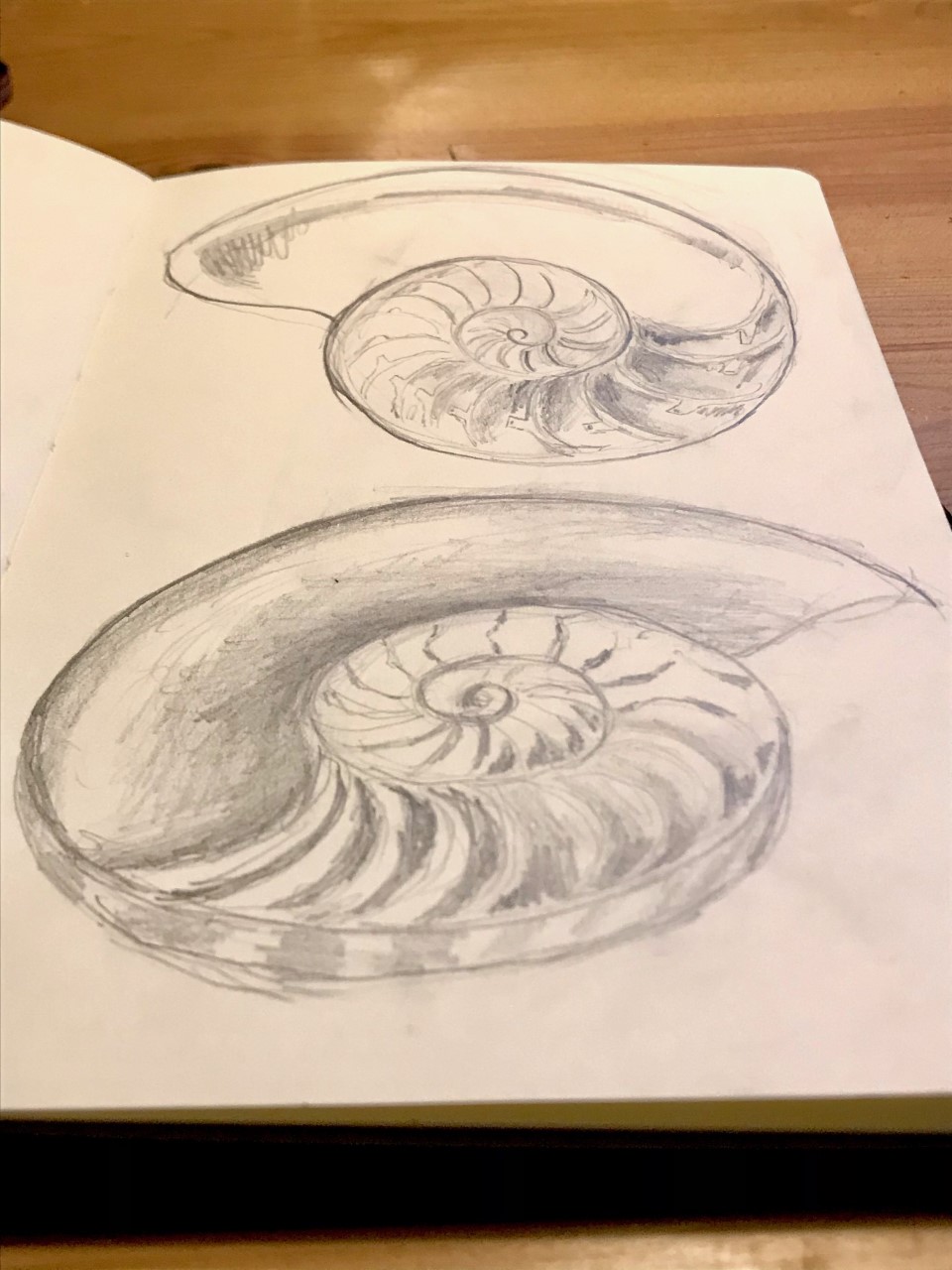
Our first session came from Life Collections manager Mark Carnall, who talked us through the natural history of Nautiloids, the fascinating shelled molluscs that are related to other cephalopods such as squid and octopus. Lit and arranged beautifully by our Events Manager Laura Ashby, their intricate chambered shells and 100 tentacles proved a challenging subject, but one that resulted in an array of wonderful artworks in a variety of styles and media shared on social media.

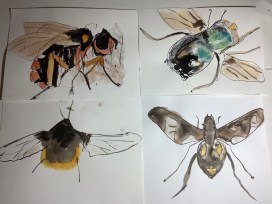
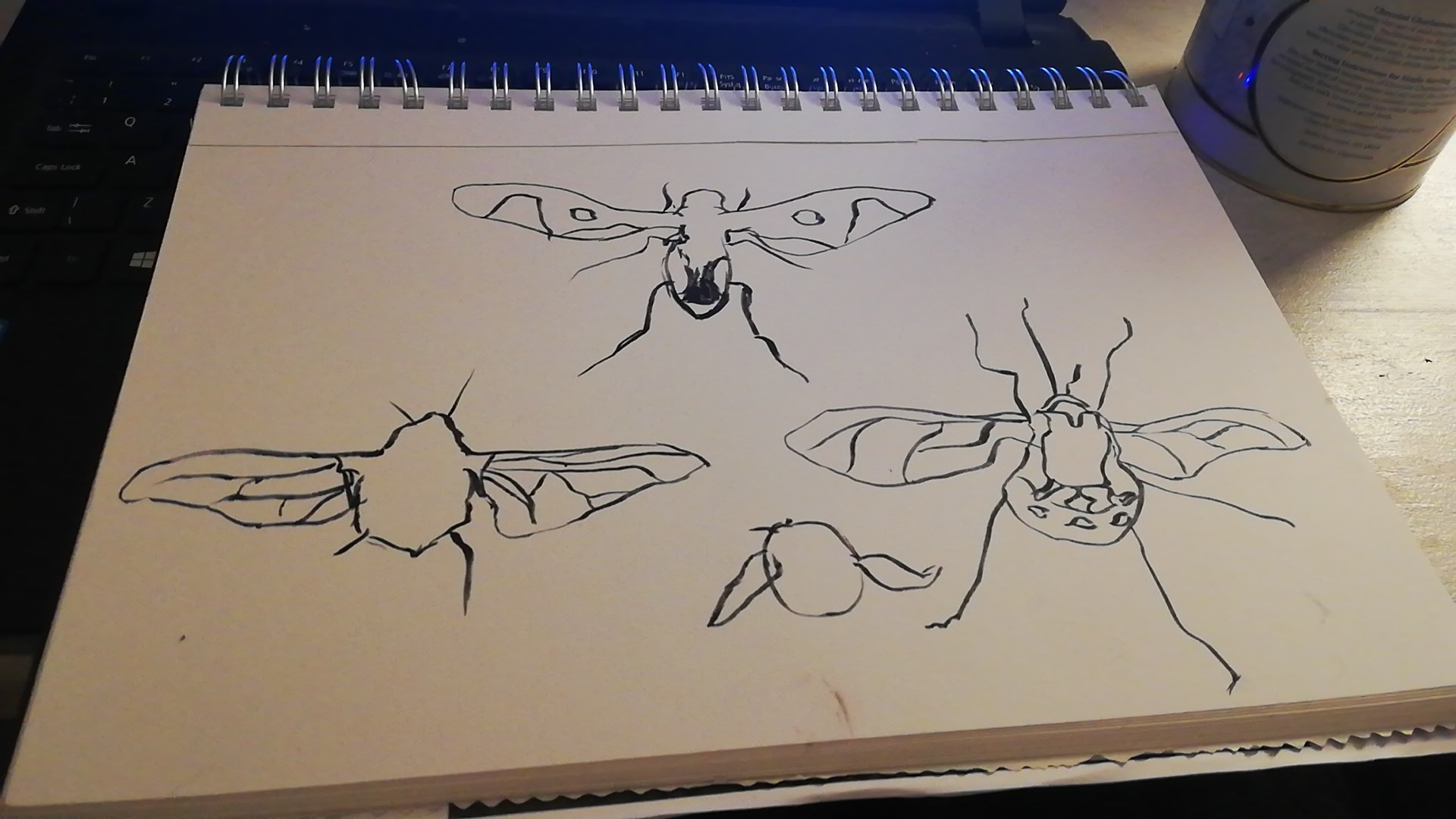
Following Mark’s talk, we explored some of the wonderful specimens from our entomology collections with our expert speaker Zoe Simmons, Head of Life Collections. Zoe picked out some of the most beautiful flies from our five million-plus insects. Using microscopes, specialist lighting, and careful placement, the specimens were a real hit and again followed by some inspired artworks posted online by attendees from across the world (‘best night of lockdown yet!’ enthused one attendee).

Click the gallery images to zoom and see credit information.

And there’s more to come. Tomorrow evening (Wednesday 10 March), Earth Collections Manager Dr Hilary Ketchum introduces the strange-looking carnivorous marine reptiles of the Jurassic – the plesiosaurs. We hope to bring you yet more of the inspirational well-being the natural world has to offer.

You can watch the Drawn to Nature streams online in the playlist on our YouTube channel:

To sign up for our next event, visit www.oumnh.ox.ac.uk/events

Top image: Artwork by @CatherineRRye

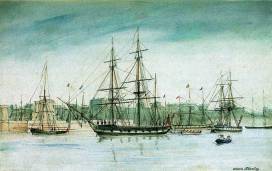
Image of the HMS Beagle

Darwin’s dockdown reading list

By Danielle Czerkaszyn, Senior Archives and Library Assistant 

Yes, lockdown 3 is long but imagine being stuck on a boat for years on end with no TV, no internet and definitely no Netflix. Luckily, when Charles Darwin set sail on the HMS Beagle in 1831 he had access to a library of over 400 books on the ship. For Darwin Day, 12th February, we explored some of what Darwin read to help him pass the time…

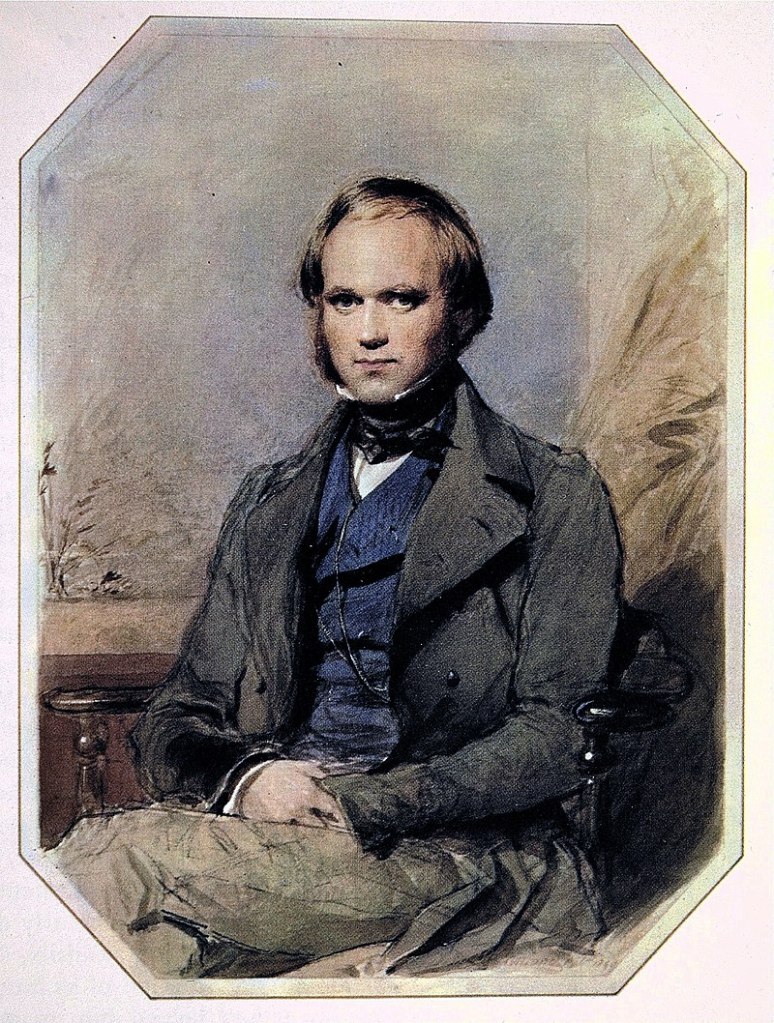
Image of Young Darwin
Young Darwin by George Richmond, Public domain, via Wikimedia Commons

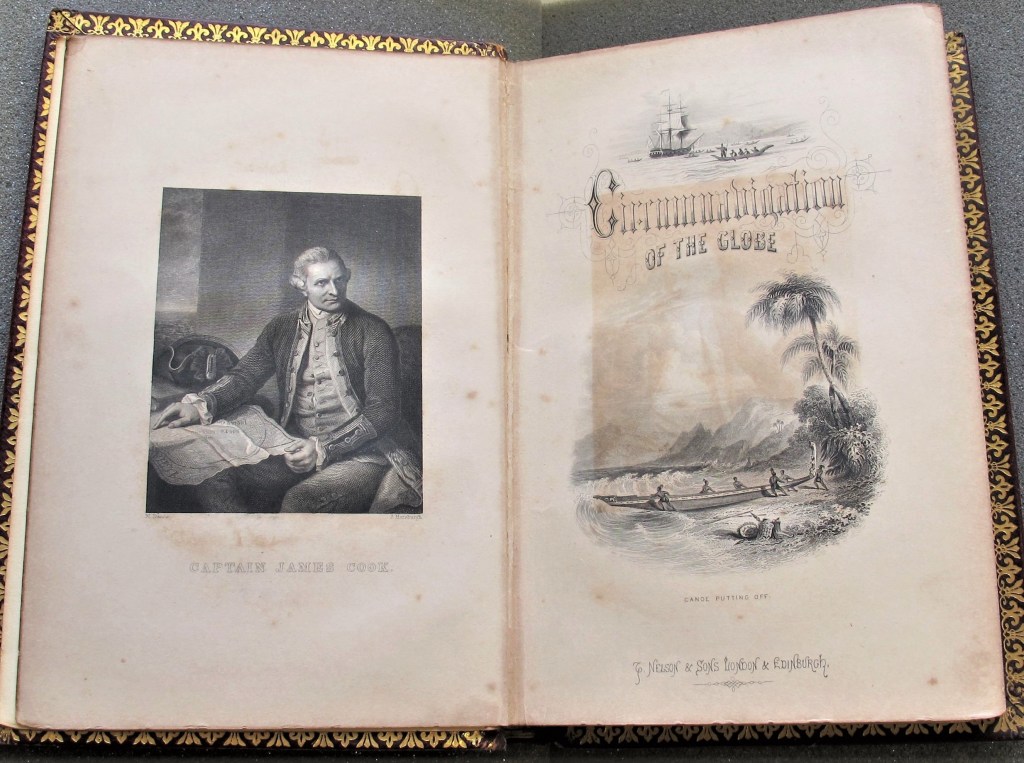
As Darwin was following in the footsteps of earlier voyage naturalists, the Beagle library was well stocked with an excellent collection of books chronicling classic expeditions, such as James Cook’s three voyages to the Pacific Ocean (although this book is a later account of Cook’s voyages). Not only did reading about these earlier voyages inspire Darwin to undertake his own, but these accounts gave him insight into life at sea as well as fascinating details of some of the faraway places he was expecting to visit.

James Cook’s voyages

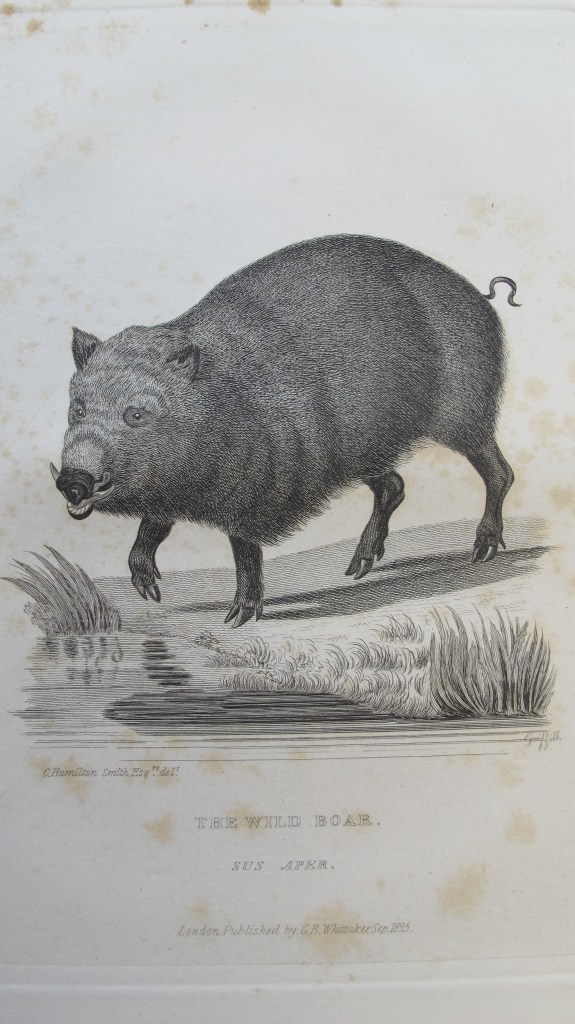
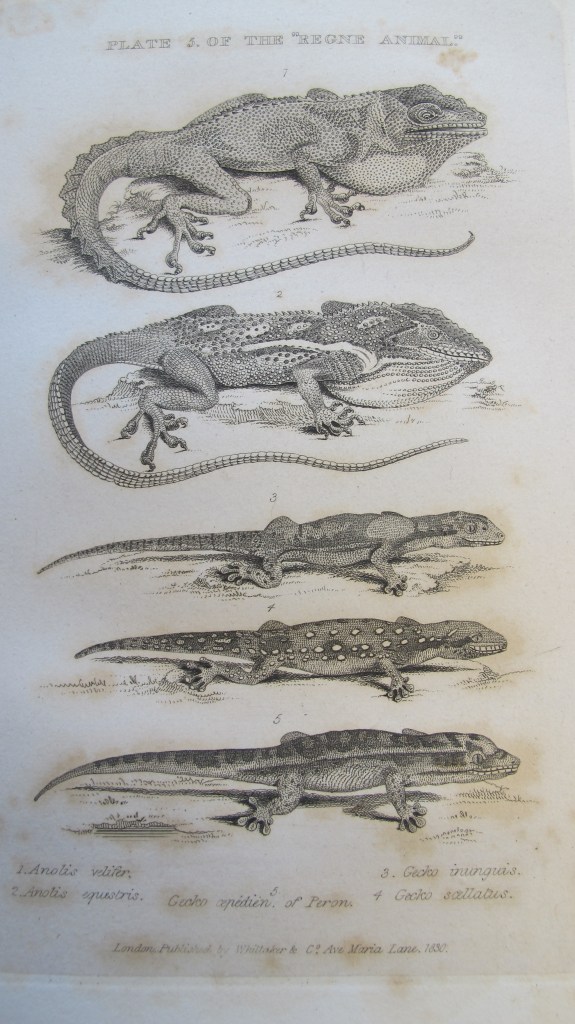
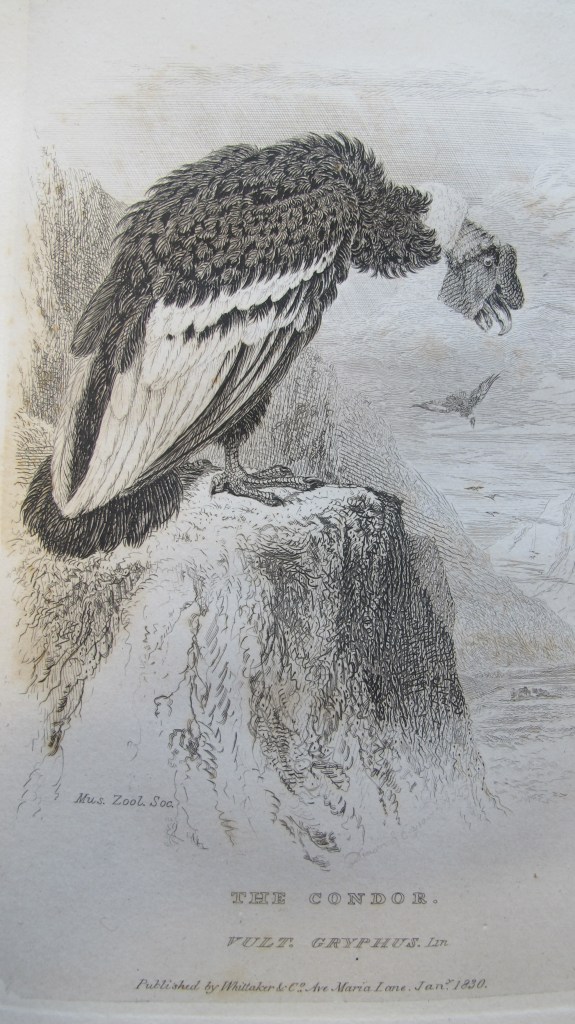
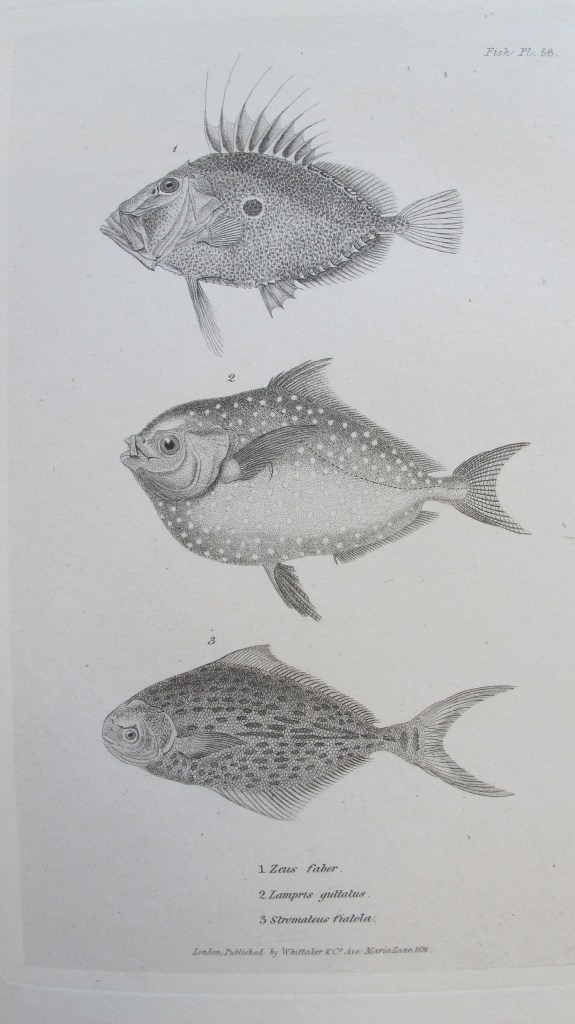
Many of the Beagle library books were beautifully illustrated with woodcuts or engravings of animals. Georges Cuvier’s, The animal kingdom arranged in conformity with its organization… (1827-35) had several volumes full of spectacular images covering mammals, birds, fish, reptiles, fossils, molluscs, crustaceans, arachnids and insects. While Darwin may not have had all 16 volumes with him on the Beagle, as some were published while his voyage was in progress, the numerous volumes Darwin did have access to would have provided a wealth of information and detailed illustrations to aid in species identification.

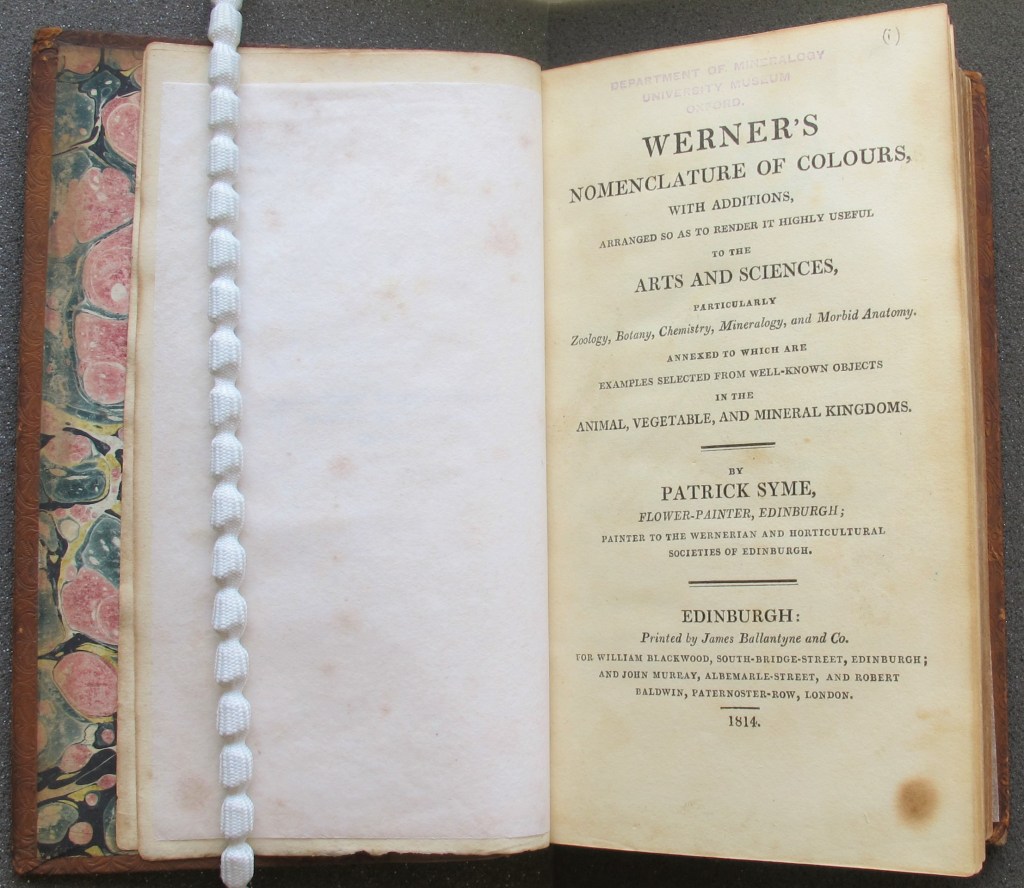
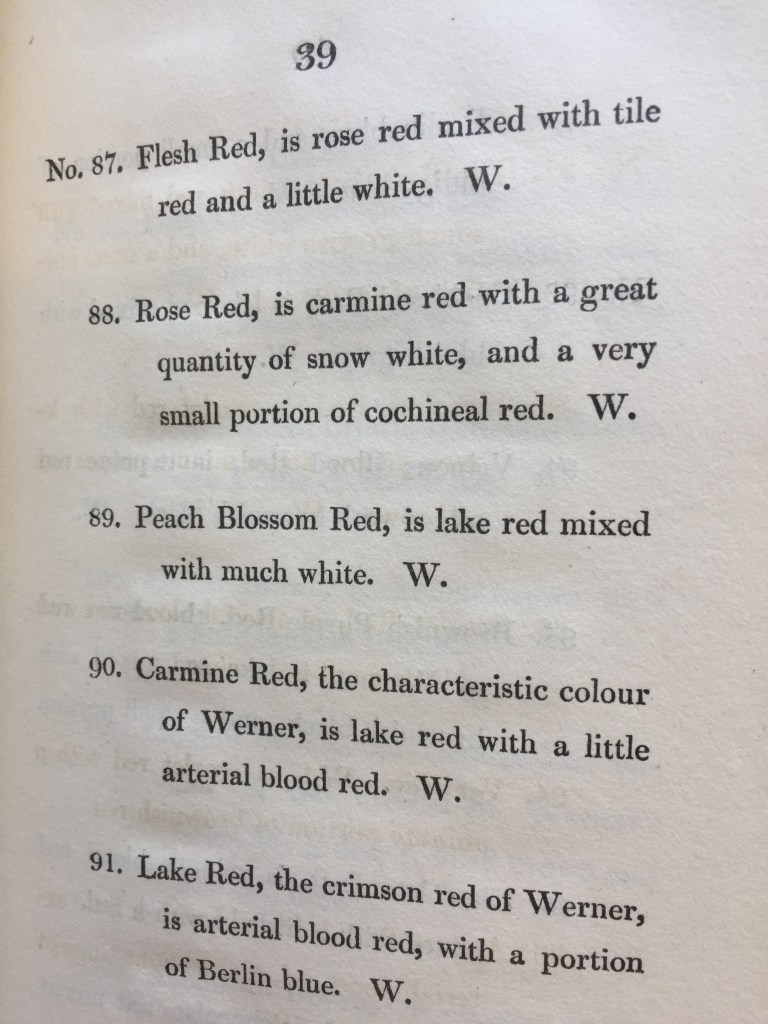
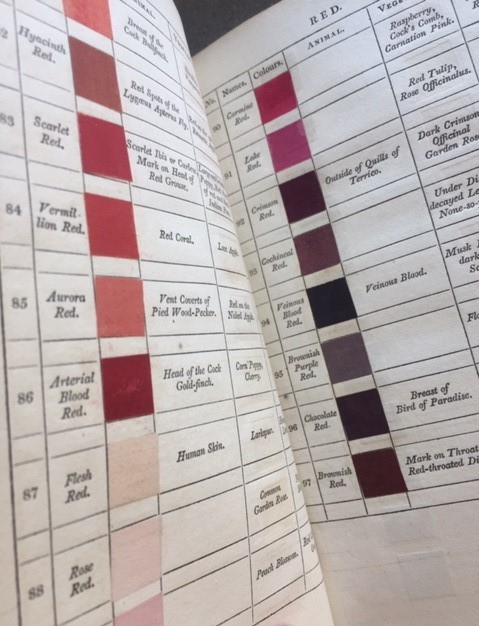
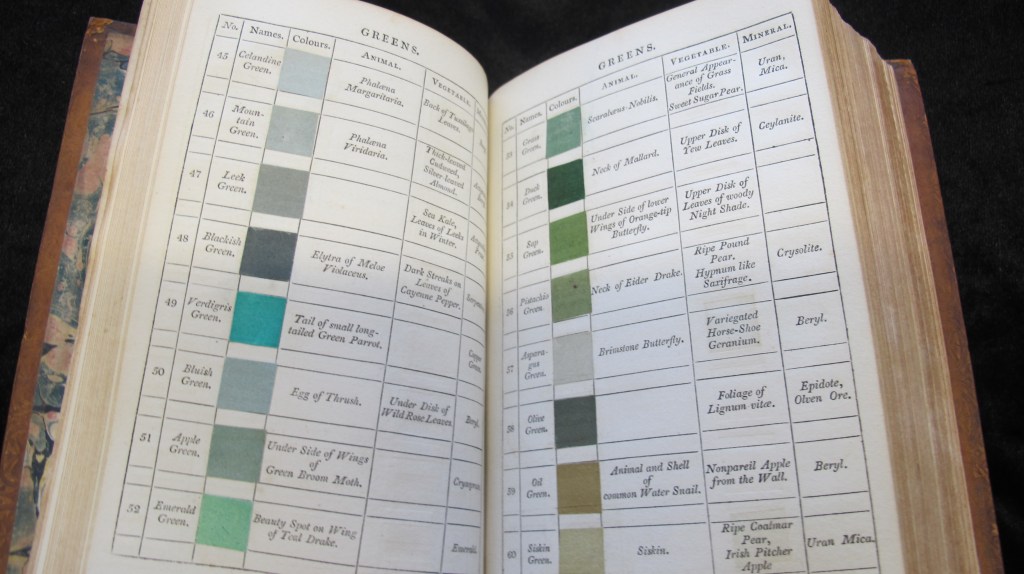
Using the vivid descriptions and chart in Patrick Syme’s Werner’s Nomenclature of Colours (1814) Darwin was able to identify the colours of the natural world and accurately record the colours of the plants and animals he encountered on his voyage. This beautiful pocket-sized taxonomic guide provided a uniform standard for colours that other naturalists would have understood and was an indispensable tool for Darwin in his scientific observations.

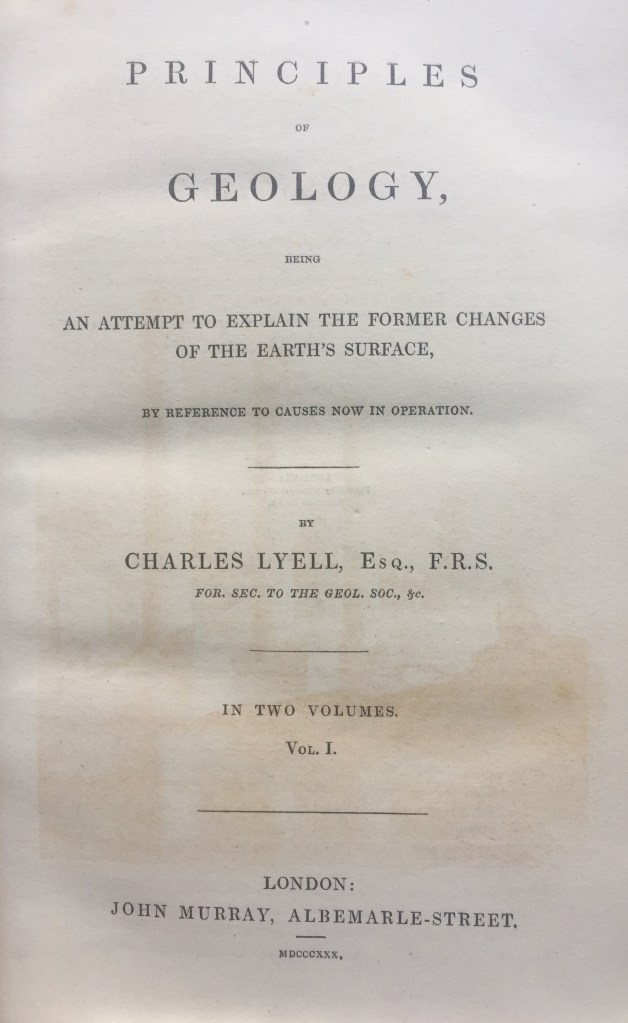
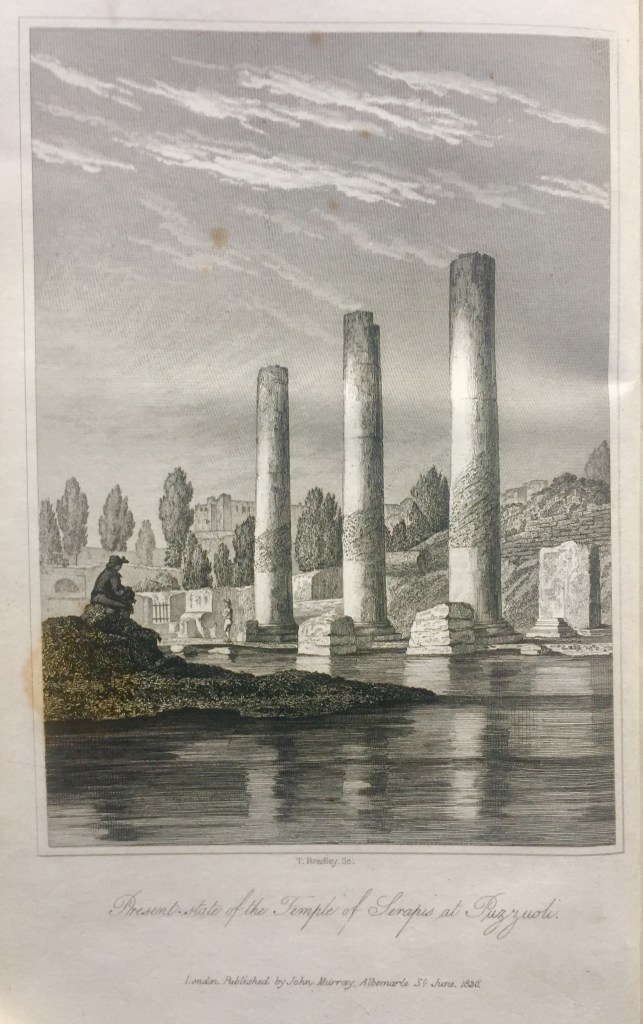
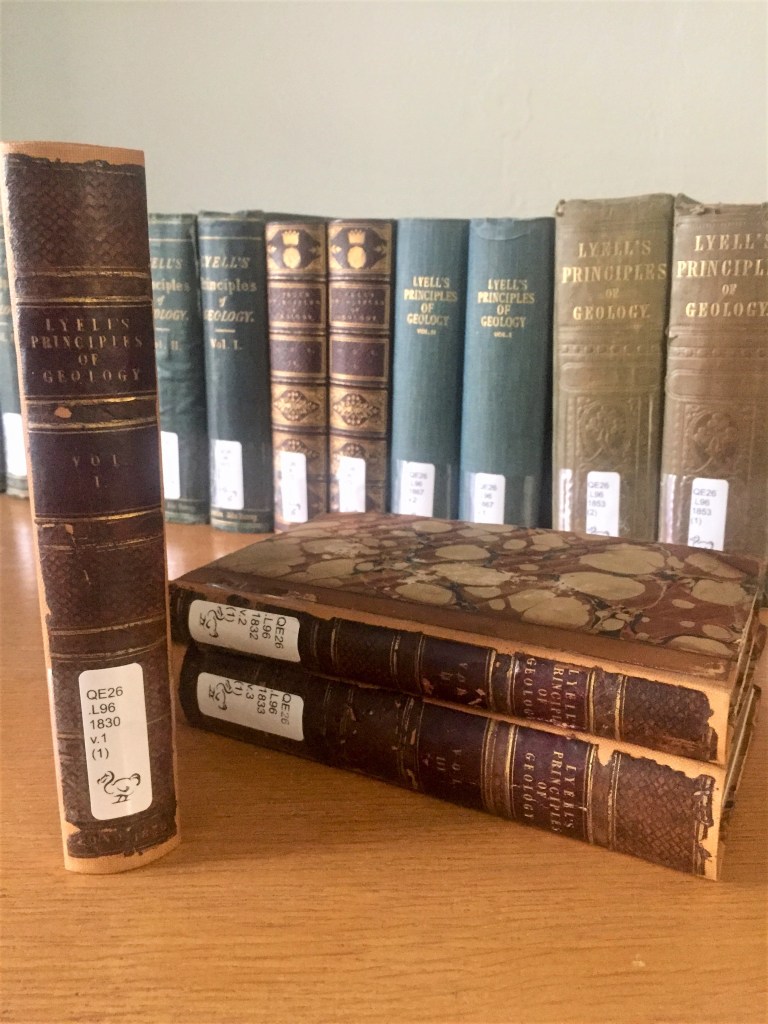
The most important book for Darwin was Charles Lyell’s Principles of Geology (1830-33). Darwin was gifted the first volume of the first edition by the Captain of the Beagle, Robert Fitzroy, as a welcoming present for joining the voyage. Darwin received the second and third volumes while in South America. In Principles, Lyell argued the earth is extremely old and the processes that changed the earth in the past are still at work today. Inspired by Lyell’s ‘uniformitarian’ proposal, this theory allowed for the longer time span Darwin believed necessary for evolution to occur.

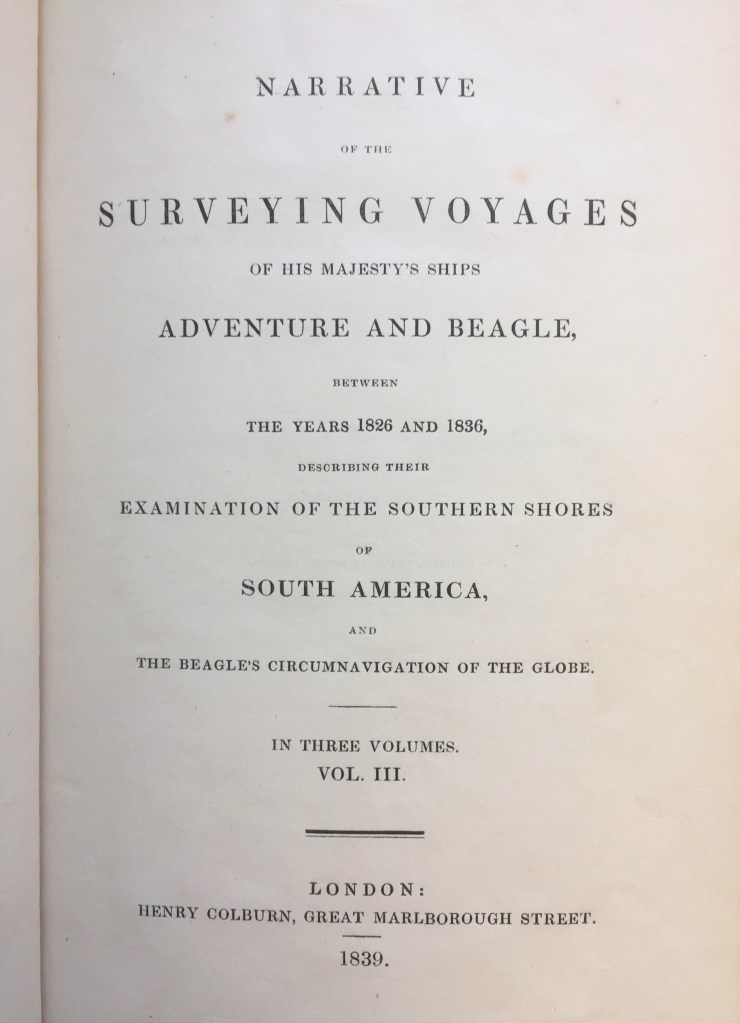
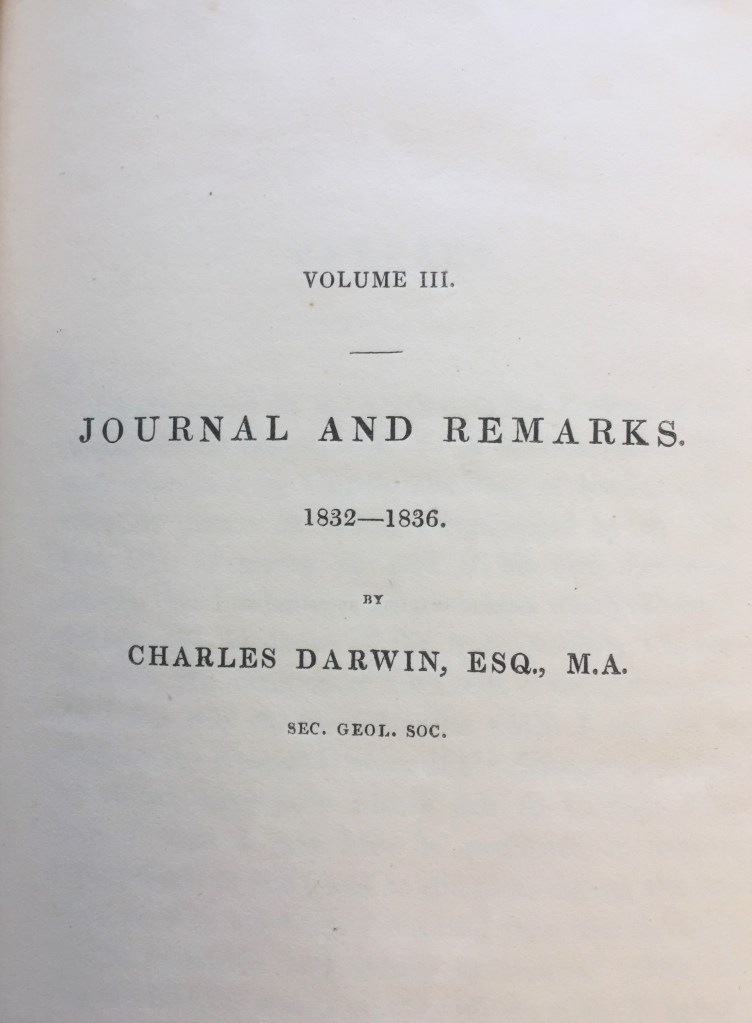
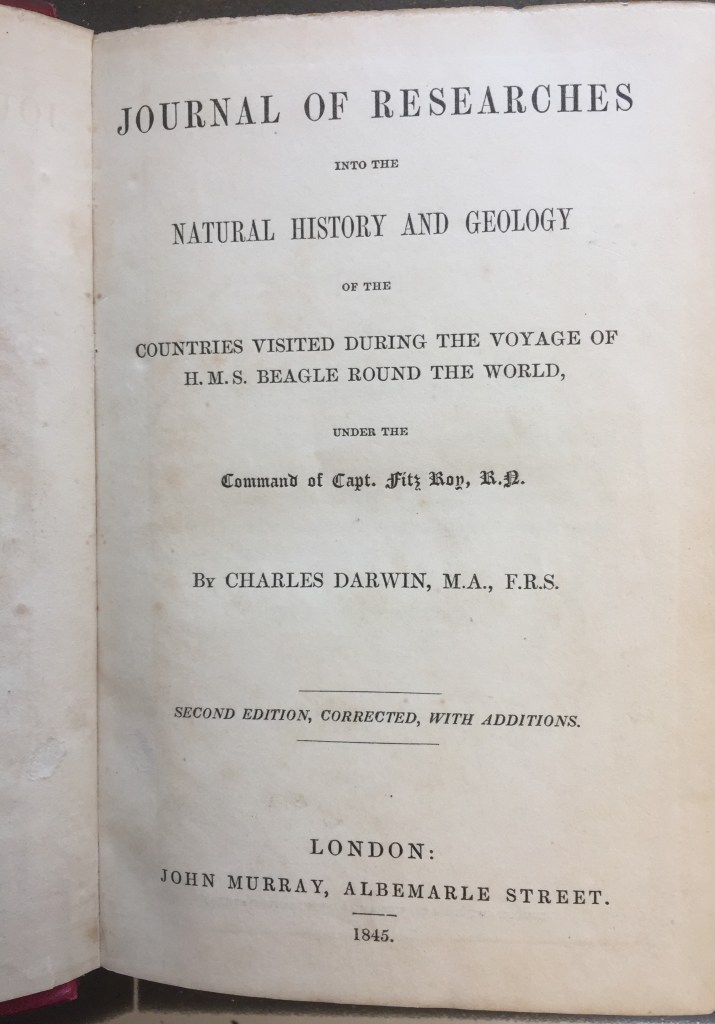
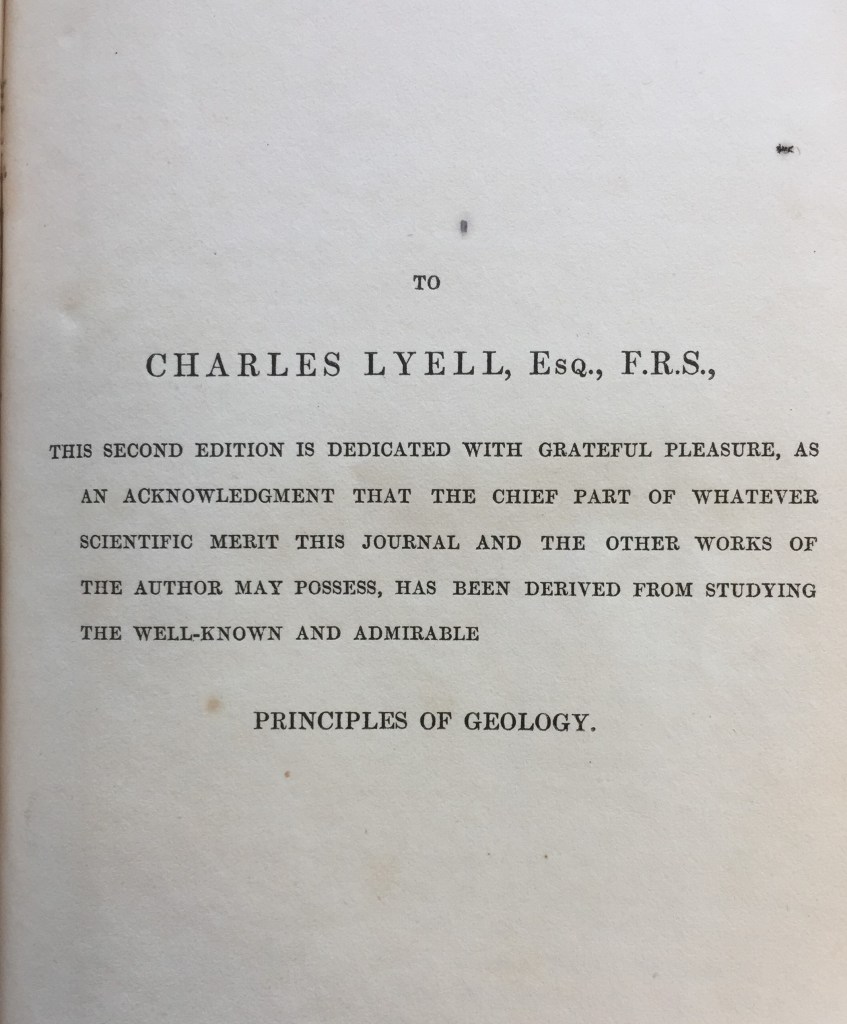
Reading other books of exploration encouraged Darwin to chronicle his own voyage. His bestseller was published in 1839 as Darwin’s Journal of Researches. A revised 2nd edition was published in 1845 with a dedication to Charles Lyell and his “admirable Principles of Geology.”

To learn more about what Charles Darwin read on board the Beagle: http://darwin-online.org.uk/BeagleLibrary/Beagle_Library_Introduction.htm.