Crunchy Christmas Quiz 2022

This year, our Christmas quiz features 12 questions about the Crunchy on the Outside blog, one for each month of the past year. Don’t worry if you have only just started reading the blog because we’ve included a link to each of the articles. It’s just a bit of fun; we’ll post the answers in the New Year.

January: What is the scientific name of the red-tailed bumblebee found by Lincoln Kwong?

In February, researcher Ricardo Pérez-de la Fuente told us about a substance that can preserve insects for millions of years. What is it?

Who did Kate interview for this post in March? They told us about their favourite insect, the Bee-fly.

In April, which Crunchy on the Outside event did we run at the Museum?

Which visiting researcher shared her fascination with fig wasps in this blog post from May ?

Which useful piece of collecting equipment did we show you how to make in June?

In July, Head of Life Collections Zoë Simmons showed us some Pleasing Fungus Beetles. What do they do if you annoy them?

Which type of beetle did Susie show us how to make from Origami in August?

In September, we wrote about a solitary bee that nests in burrows and loves to feed on ivy flowers. What is it called?

Where could you meet us among the trees for an autumn event in October?

In November, which type of insect did we ask you to help scientists count?

Which festive plant, which is a food source for many insects, featured in this December blog post?
If you enjoyed that, you might like to have a go at our ‘Answer Smash’ quiz from last Christmas.

Have a very happy holiday and remember, the Museum is closed 24-26 December.
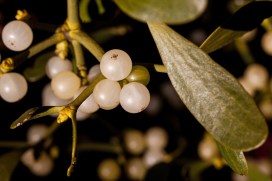
A Festive Tale: The Mistletoe Marble Moth

In this post, we’re taking a festive look at an insect that rely on Mistletoe. Humans may enjoy kissing under it, but for the Mistletoe Marble Moth, Celypha woodiana, it’s food for their caterpillars.

Munching on mistletoe – don’t try this at home!

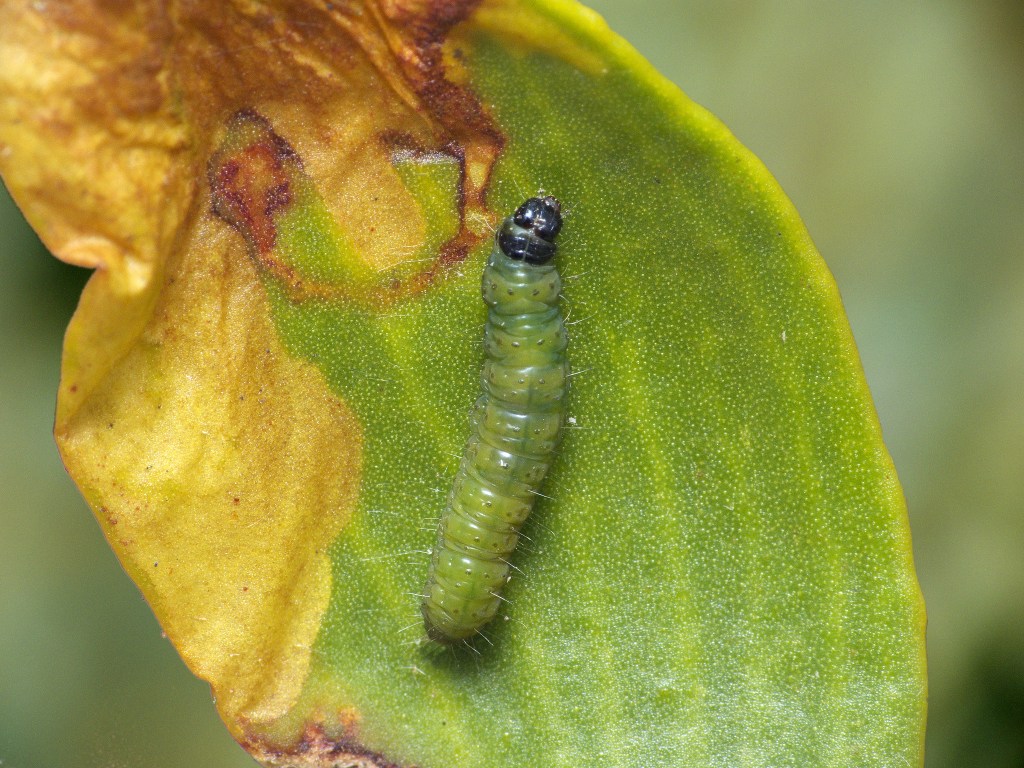
Larva of the Mistletoe Marble Moth, Celypha woodiana. Image: Patrick Clement CC BY 2.0

It would be a bad idea for us to try eating mistletoe because it’s poisonous to humans. For the Mistletoe Marble Moth, however, this is the food plant for their larvae. These overwinter snug inside mistletoe leaves. As the weather warms up the larvae become active and feed on them throughout the spring. In the picture above, you can see the trail the larva has left as it munched through the leaf.

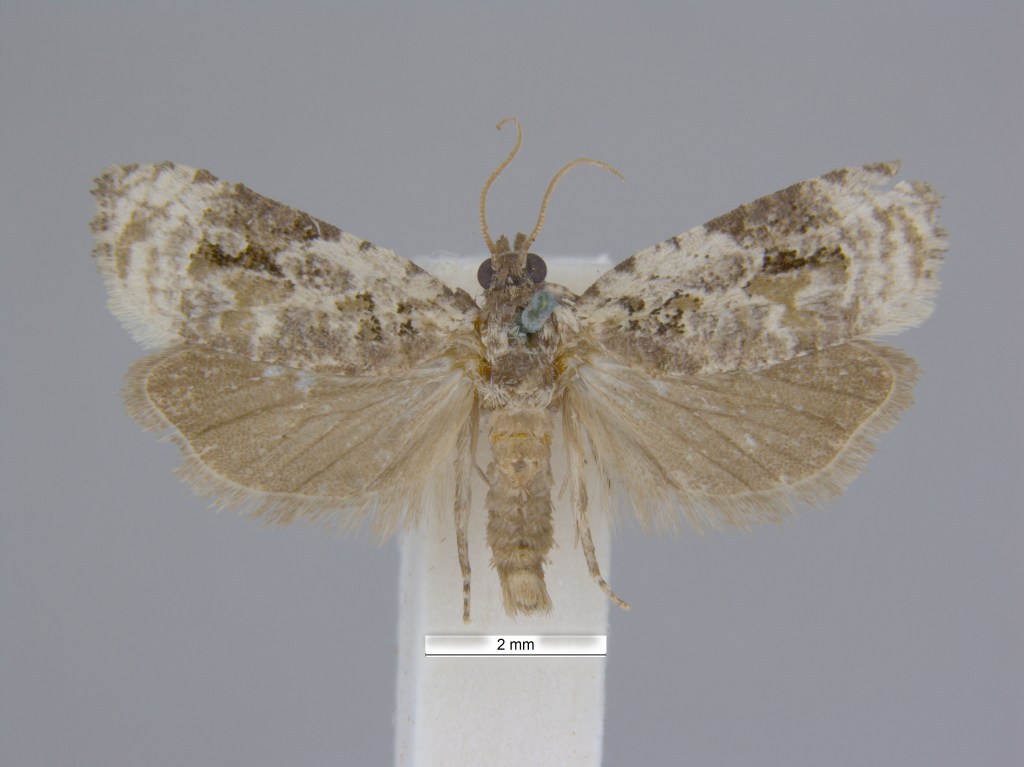
In early summer, when they have grown large enough, the larvae pupate. The adult moths then emerge and fly in and around woodland and orchards containing fruit trees like apple.

Mistletoe Marble Moth Celypha woodiana . Image: OUMNH

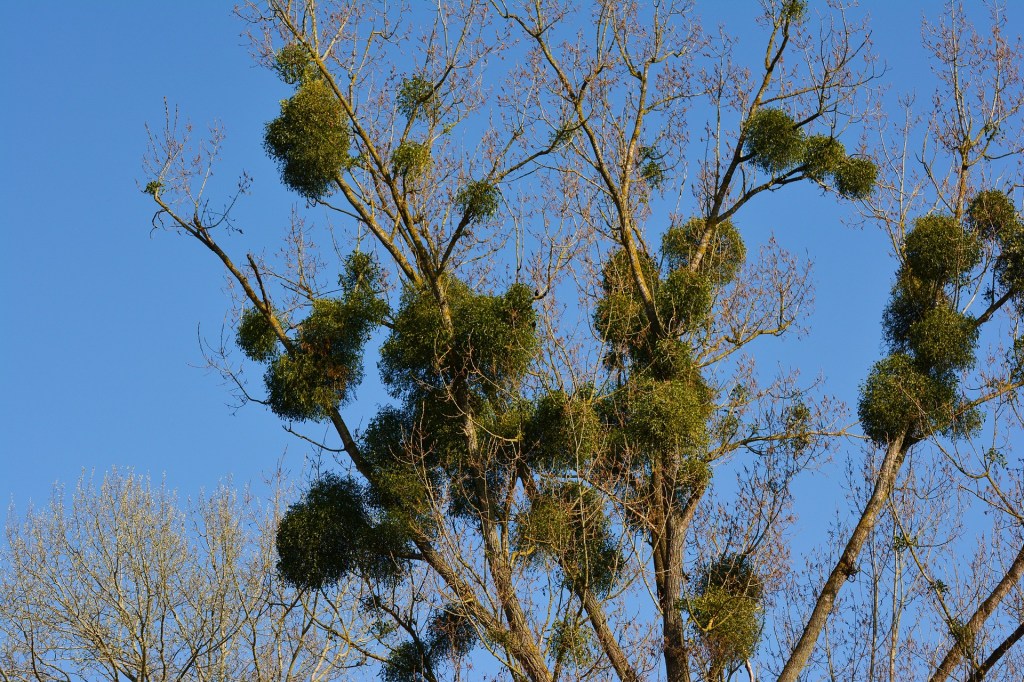
The apple trees are important because they are a host for the mistletoe plant. Mistletoe can’t grow in it’s own. It relies on other trees. The berries are very sticky and when birds eat them they clean their beaks on by rubbing them on the bark of trees, the seeds get stick in tiny crevices and begin to grow out of the tree. The mistletoe plant grows into a ball on the brach of the host tree.

Mistletoe growing on a host tree

Apples are one of the trees mistletoe prefers. Sadly apple trees are becoming more scarce in Britrain because there are fewer orchards. This means there is also less mistletoe and that means that the Mistletoe Marble moth is becoming rarer. It is a priority species in the UK Biodiversity Action Plan because scientists are worried that this species may become extinct in Britain.

Other insects on mistletoe

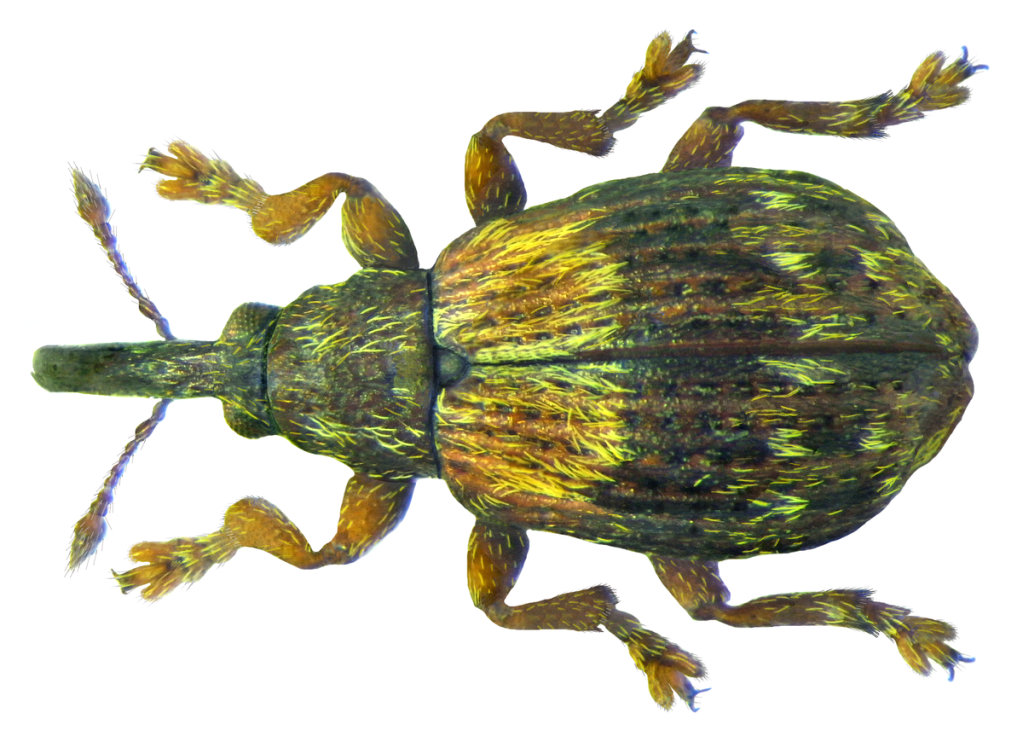
The Mistletoe Weevil, Ixapion variagatum Image U Schmidt CC BY-SA 2.0

This moth isn’t the only British insect that relies on mistletoe. The Mistletoe Weevil Ixapion variegatum feeds on the part of the stem behind buds and there are several bugs that feed on sap of the plant, and another that is a predator: so there can be a whole food chain on a sprig of mistletoe!

We won’t ask if you’re planning on kissing anyone under the mistletoe this year, but for those who like to bring it into the house, please remember that we also need to conserve it, and the many insects that rely on it, in the wild.

If you enjoyed reading about the Mistletoe Marble Moth, you may be interested in this article about the ways in which other insects survive the winter.

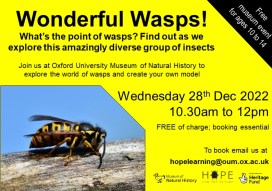
Wonderful Wasps! FULLY BOOKED

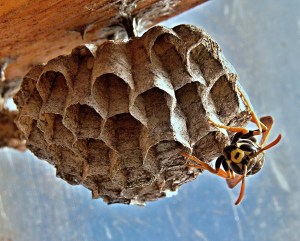
Many people are wary of wasps, they like interrupting our picnics, they can look a bit fierce, and some have a sting in the tail, but it’s well worth getting to know this amazingly diverse group of insects. Our next Crunchy on the outside event for young people interested in nature, and insects in particular, is Wonderful Wasps! It’s at the Museum on Wednesday 28 December, 10.30-12.00pm.

We’ll be finding out about some amazing wasp species, looking at the Museum collections to see the fantastic range of different wasps in the UK, and making our own wasp models.

It’s free but booking is essential. To book a place please email hopelearning@oum.ox.ac.uk

We hope your New Year resolution will be to look after our wonderful wasps!

Take a look at our article on fig wasps here: Fabulous Fig Wasps.

Buckland Papers Appeal


By Danielle Czerkaszyn, Librarian and Archivist


The Museum is currently leading a major fundraising campaign to purchase, catalogue, conserve, and digitise an important collection of archive material related to the geologist William Buckland (1784-1856).

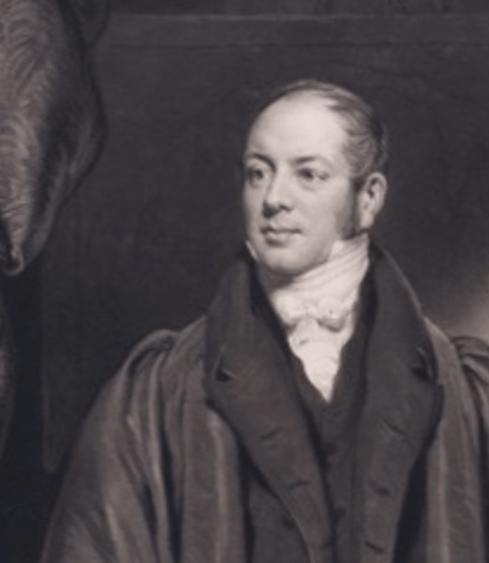
Buckland was an English theologian and one of the greatest geologists of his day, becoming Oxford University’s first Reader in Geology in 1818. When he died in 1856, papers related to his teaching and research, as well as around 4000 specimens, were given to the University. These were later transferred to the Museum when it opened in 1860, and the Buckland collection remains one of the greatest research resources in our collections.

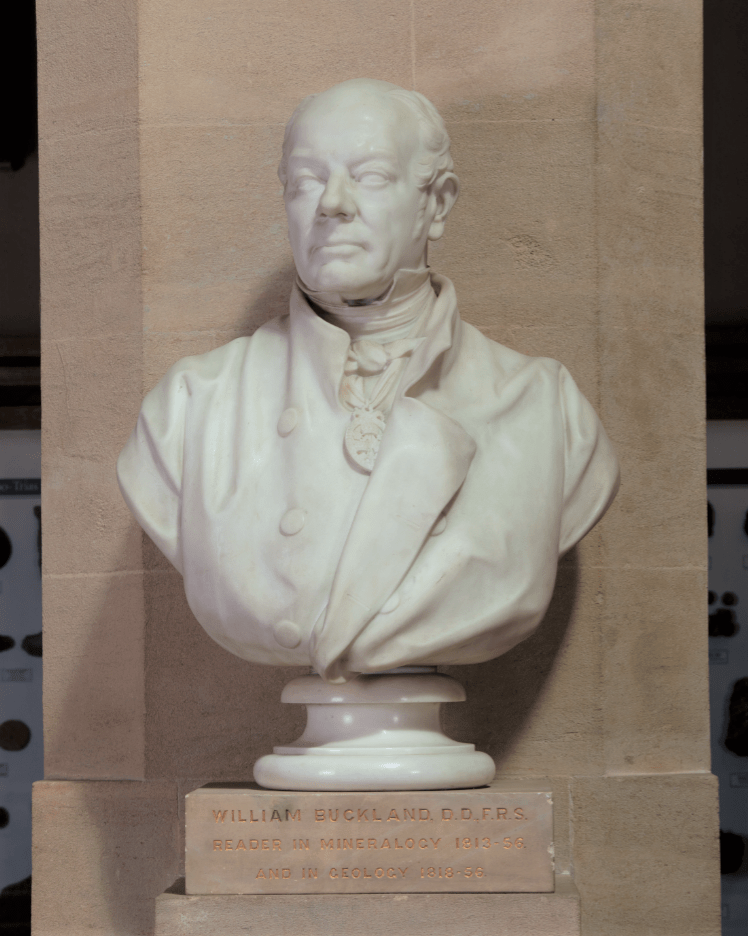
Left: A bust of William Buckland in the Museum of Natural History. Right: A portrait of the young Buckland.

The Museum has recently been offered a unique opportunity to acquire another extremely important collection of archive material related to Buckland. Passed by descent to the current owners, this archive consists of just over 1000 items of correspondence, geological notes, works of art, and other family papers — including a substantial number of items relating to his wife Mary (née Morland) and their eldest son, the naturalist and author Francis (Frank) Buckland.

This ‘new’ material fits beautifully with the existing Buckland archive here, providing missing pieces of the jigsaw and helping to paint a more comprehensive picture of this extraordinary geological pioneer, and the work he did together with Mary. It also offers greater insight into the scientific thinking and institutions of early 19th-century England, and the scientific contributions made by other ‘invisible technicians’ such as quarrymen, collectors, preparators, and replicators, giving us a more accurate, balanced, and inclusive picture of natural history at the time.

The campaign is aiming to raise £557,000 to acquire, conserve, rehouse, and digitise the Buckland archive. We have been fortunate to secure funding from a range of funders towards our goal, and we are now within £75,000 of this target.

The Museum is the obvious home for the ‘new’ archive, given Buckland’s close connection to Oxford University, and our holdings of his specimens and archive. With your help, we will reunite these two archive collections in one place and ensure researchers and the public can utilise these scientifically, historically, and culturally important resources for years to come.

Learn more about the Buckland Papers Appeal

Donate to the Buckland Papers Appeal

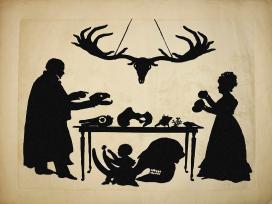
Header image: Silhouette of William Buckland and Mary Buckland

Are You a Fantastic Fly Finder?

Take part in this exciting ecology project and become a fabulous Fly Finder! Scientists are trying to understand how humans are changing mountain lakes. Insects that live near water are a crucial food source for birds, frogs, and bats. Climate change and predators introduced by humans may be affecting these important species. 

Scientists have caught insects in traps and need your help to count the different types. In this citizen-science project from Zooniverse, you will be shown a picture of some flies. The insects you’ll see were hatched in lakes high above sea level in California, where they feed and grow until they’re ready to emerge as flying adults. These adults are often eaten by animals like birds. This makes them a perfect ‘pipeline’, delivering nutrients and energy from the aquatic environment of the lake to the terrestrial environment surrounding it! Your effort on this project will help scientists understand what changes threaten this connection, and what we can expect in years to come.

Start by following this link to Fly Finder. Click on ‘Identify insects’ to start. You can click on ‘Learn more’ first if you want to find out more about the project.

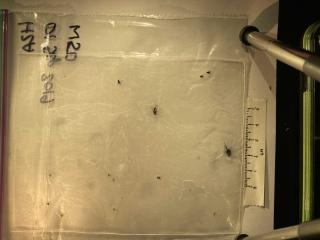
Sample of flies from Fly Finder

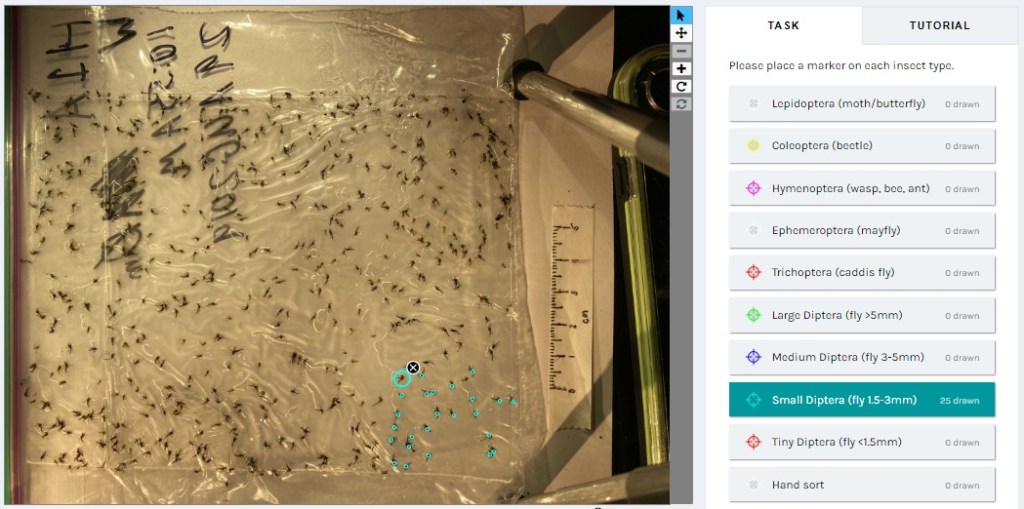
You will see an image of a sticky white card that has been used to catch flies. Looking at the image, you first have to decide what types of fly you can see. That might sound tricky, but there is an on-screen field guide to help you and most of the time you just need to decide whether it’s a ‘small fly’ or a ‘medium fly’. One you have decided, you just select the correct category from the list by clicking on it, then move your mouse (or your finger on a tablet) and click (or tap) on the fly. This will mark it for the researchers.

Screenshot from Fly Finder. This sample has a lot of flies!

Some of the images show several flies, others show quite a lot and a few will have none at all. You can do as few or as many pictures as you like. Lots of people doing a little each soon creates a lot of results for the scientists. This shows them which types of insect, and how many, are found in the different places where the traps were set.

If you enjoyed Fly finder, or your like the idea of taking part in other projects, why not have a look at our Make and Do page?

Pictures from our ‘Big Draw’ Event

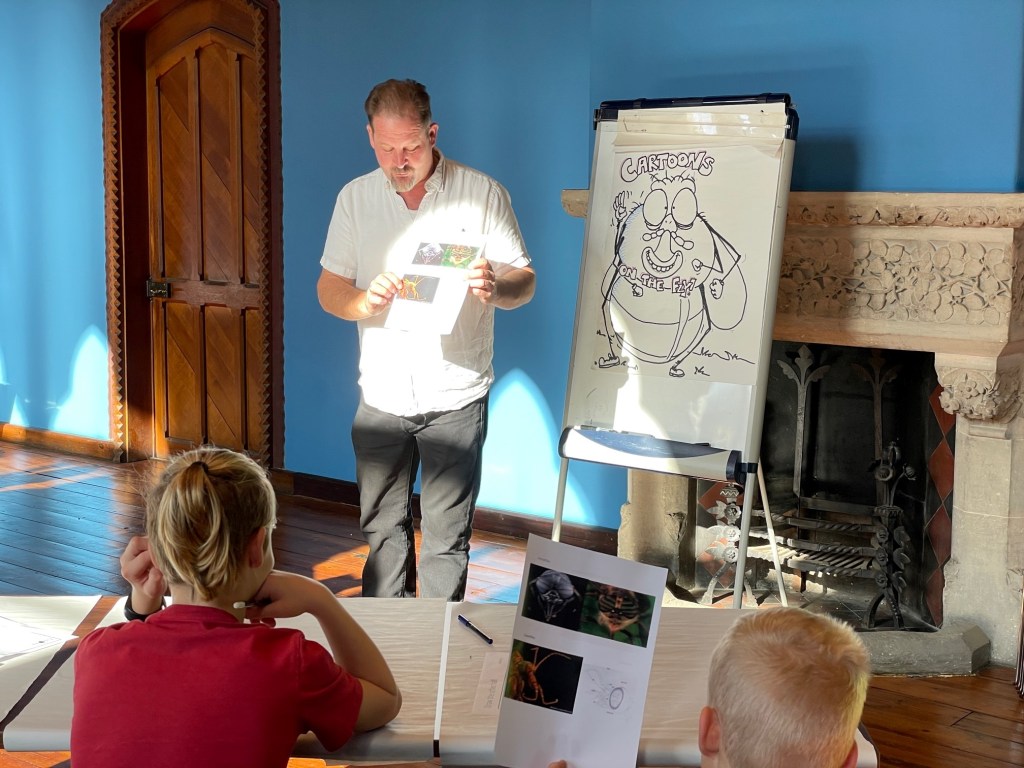
During the October half-term school break a group of aspiring young artists gathered in the Westwood Room for our latest Crunchy on the outside event. We have now put some images from the event on our Photo Gallery for you to enjoy.

During the event, we all had a go at cartooning with Chris (you can have a go too, with this minotaur beetle video), biological drawing with Rodger, and our own art using a range of media. Danielle and Matt also showed us some artistic treasures from the Museum archives.

If you attended, took a drawing home to finish and would like us to include it, please email it to hopelearning@oum.ox.ac.uk.

Of course we’re always interested in seeing artwork and photos of insects by any of our followers. send them in using the same address and we’ll add them to our gallery too!