


Happy Valentine’s Day!
February 14th is St Valentine’s Day, traditionally a day to celebrate love! To mark this special day, we thought it would be fun to look at love in the insect world. Of course, insects don’t go on dates but how do they go about securing a mate? There is a dazzling array of ways in which insects have evolved to attract a mate, as well as some bizarre mating behaviours; some rather romantic and some definitely not!
Tokens of Love!
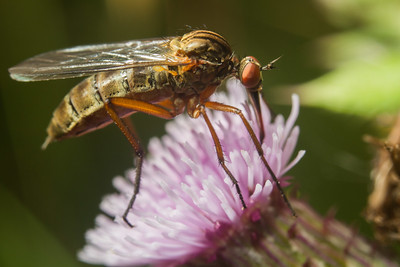
The Empididae family of flies, also known as dagger flies because of their piercing mouthparts, include some species where the male fly will tempt females into mating by offering them a so-called nuptial gift. This gift is not a lovely box of chocolates or a dozen red roses, but a juicy item of prey carefully wrapped in silk. The male gives this nuptial gift to the female who catches his eye. Females of some species have evolved special features to attract males, such as feathery scales on their legs or inflatable abdominal sacs. Entomologists have even discovered that there is a relationship between the size of the gift given and the time that the females will spend mating. So the bigger the gift, the more likely the mating is to be successful.
Off with his head!
Rather less romantic, is the alarming mating behaviour of the praying mantis. With more than 2,400 known species ranging from 1cm to 18cm in size, praying mantises (Order: Mantodea) are a diverse group of insects found in many different habitats. Most are found in warmer regions, particularly in tropical and subtropical climates, although they can also be found in some areas of Southern Europe.
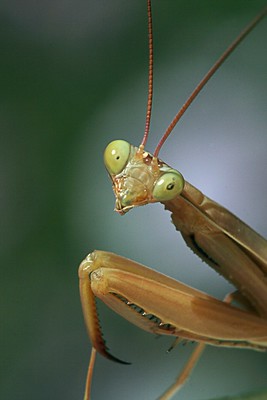
Highly-skilled hunters, praying mantises eat insects and other small invertebrates such as spiders, but larger species have also been known to eat mice, small amphibians, snakes, and even birds and bats! When it comes to mating, the male takes his life in his hands! Hungry females, who will soon need to lay eggs, need all the food they can get and if the male isn’t very careful, he can find himself turned into a meal as the female munches into his head whilst they mate. Read this article and watch this video if you dare!
Happy Valentine’s Day to you all! Do you know any other examples of bizarre or interesting insect behaviour that you would like to share? Let us know in the comments, or by using the Contact Us page


