Ubiquitous and Inconspicuous

THE INVISIBLE HISTORY OF THE MUSEUM’S GLASS DISPLAY CASES


Glass cases play an integral role in museums and galleries, but they are designed to be overlooked and ignored. In this blog post, Librarian and Archivist Danielle Czerkaszyn uses research collected by Helen Goulston (AHRC Collaborative Doctoral Partnership PhD Candidate) to uncover the invisible history of OUMNH’s glass display cases and considers how they have evolved alongside the museum during its 160-year history.


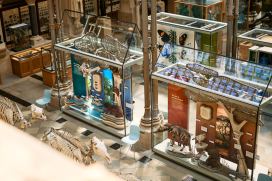
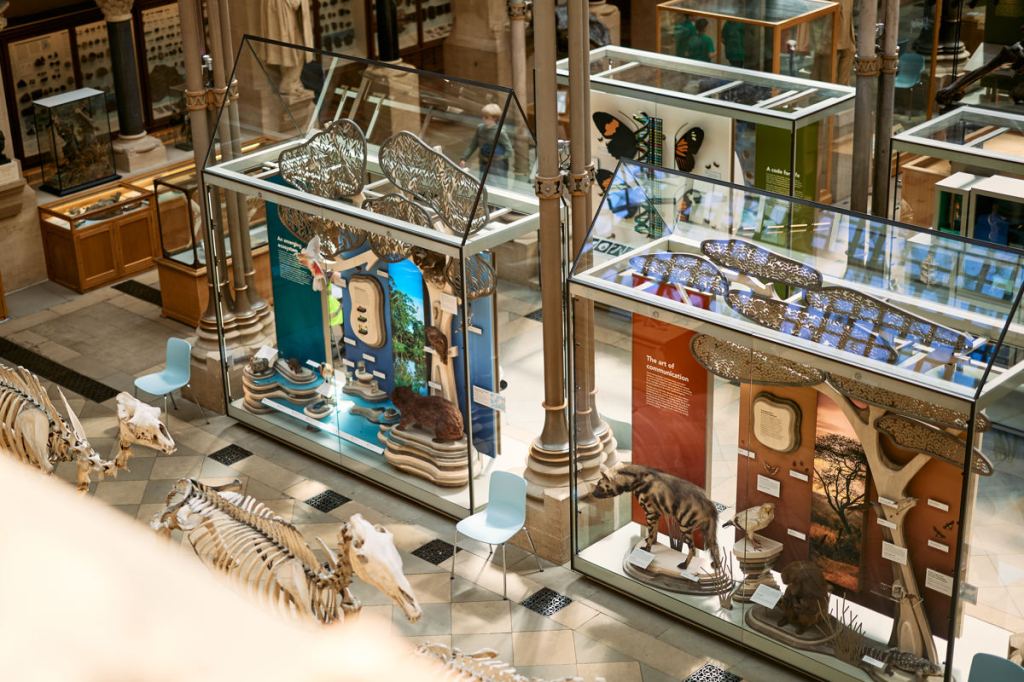
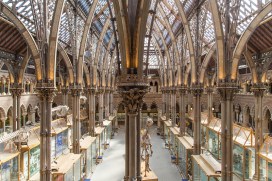
Since 2018, the Museum has been working to refresh its Main Court by installing new permanent displays. This morning, we placed the final specimen in our brand new “Open Oceans” display, concluding the latest phase of the redisplay project. The “Open Oceans” display is housed in one of eight new conservation-grade glass cases installed last year. While some visitors have welcomed the new cases, others have mourned the loss of the wooden cases or questioned why they needed to be replaced. Others have wondered why the tops of the new glass cases have roofs with different heights. To answer these questions, we need to dive into the museum archive…

A CASE HISTORY

When visitors arrived at the newly-opened museum in 1860 they would have been greeted by an empty central court, devoid of displays. While the fabric of the building was more or less complete, and preparation for the installation of displays had already begun, the university’s scientific and natural history collections had not yet been transferred to the building.

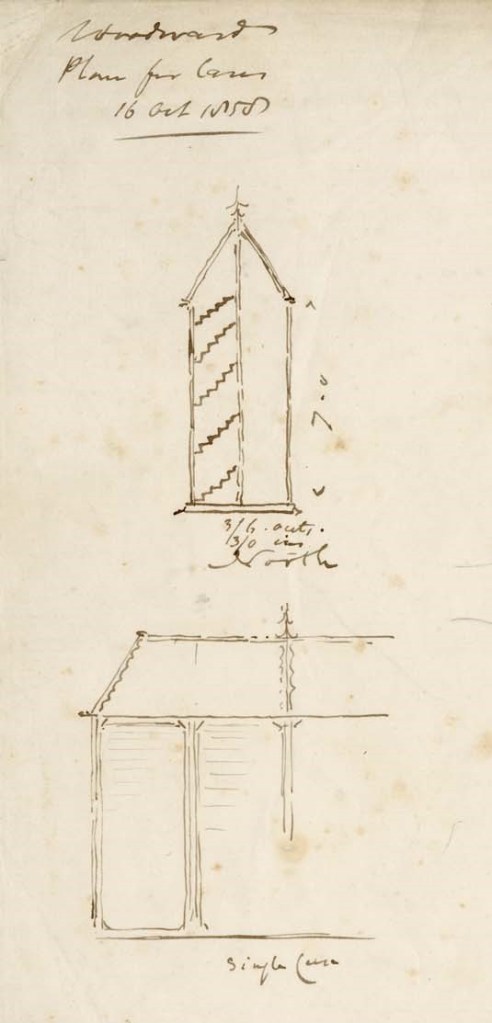
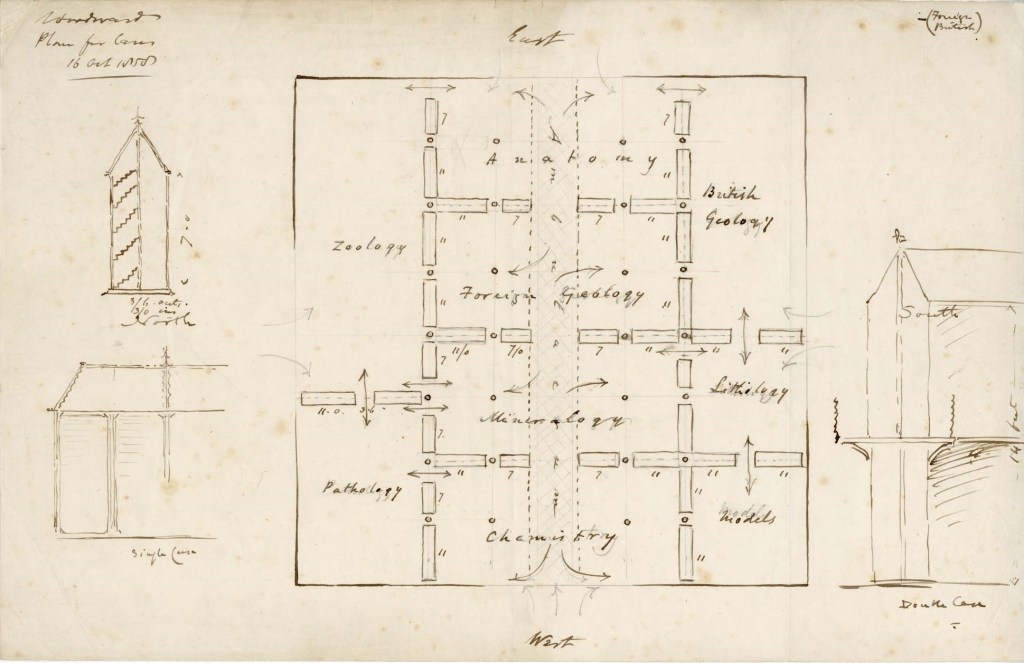
A sketch in the archive dated 16 October 1858 by architect Benjamin Woodward shows an early plan for the display cases to be arranged between the iron columns in the Main Court, allowing visitors to circulate among the exhibits, with display cases echoing the Gothic revival architecture. The right of the document shows grand double-height displays with a central balustrade that were never realised, but cases similar to those on the left would be ordered in January 1862.
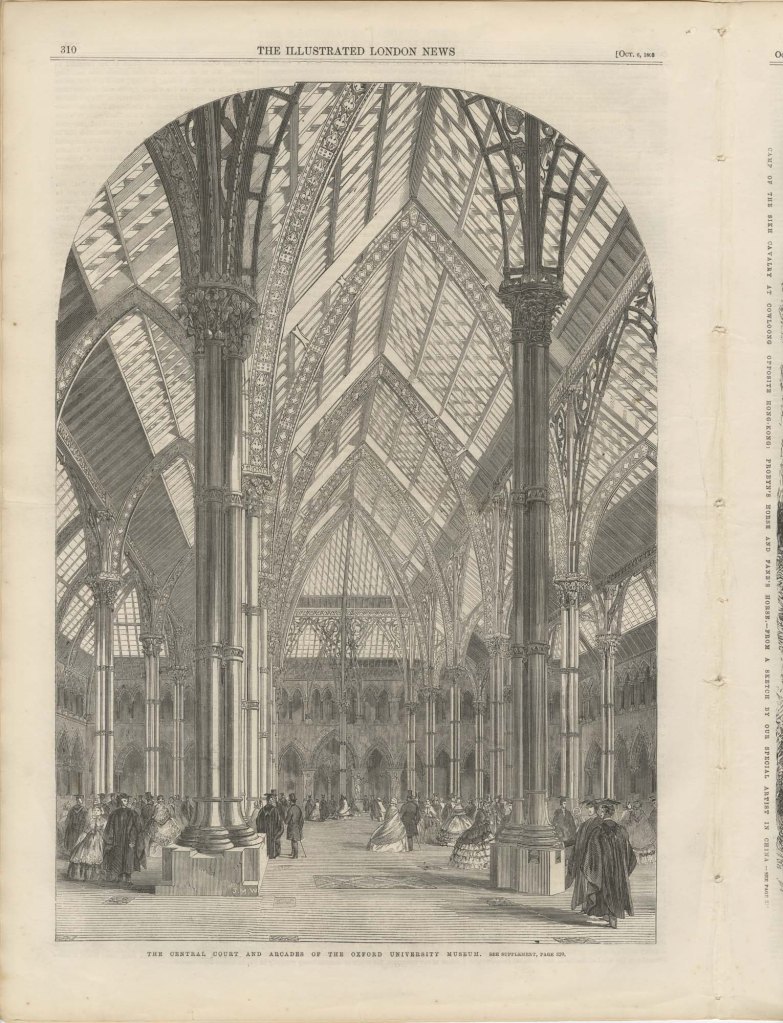
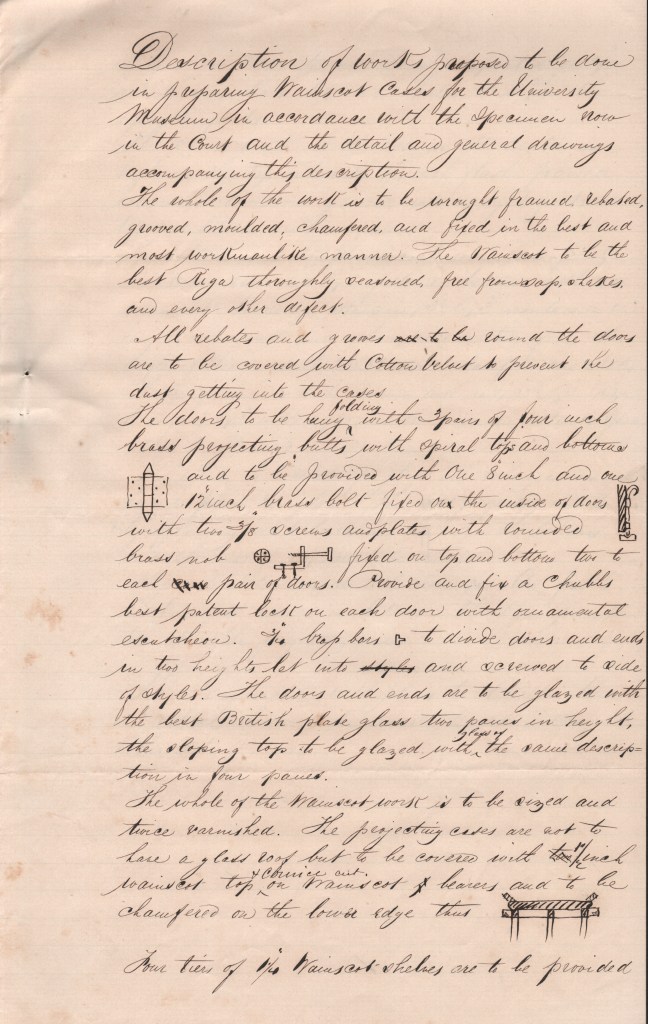
The 1862 tender document written by William Bramwell, Clerk of Works at the Museum, shows two types of upright display cases ordered for installation between the iron columns — some with pitched roofs and others with flat tops, which were considerably cheaper. Though the design of the cases resembles Woodward’s original sketches, the tender included detailed specifications that addressed the practicalities of displaying specimens, such as cotton velvet door linings to stop dust from getting in.

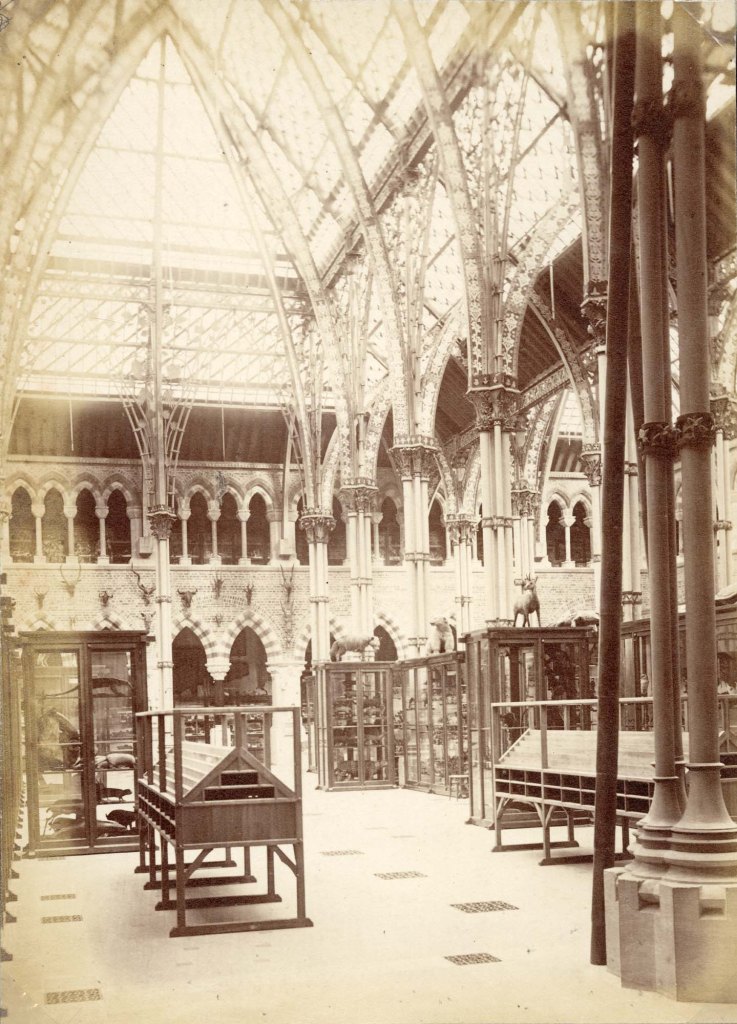
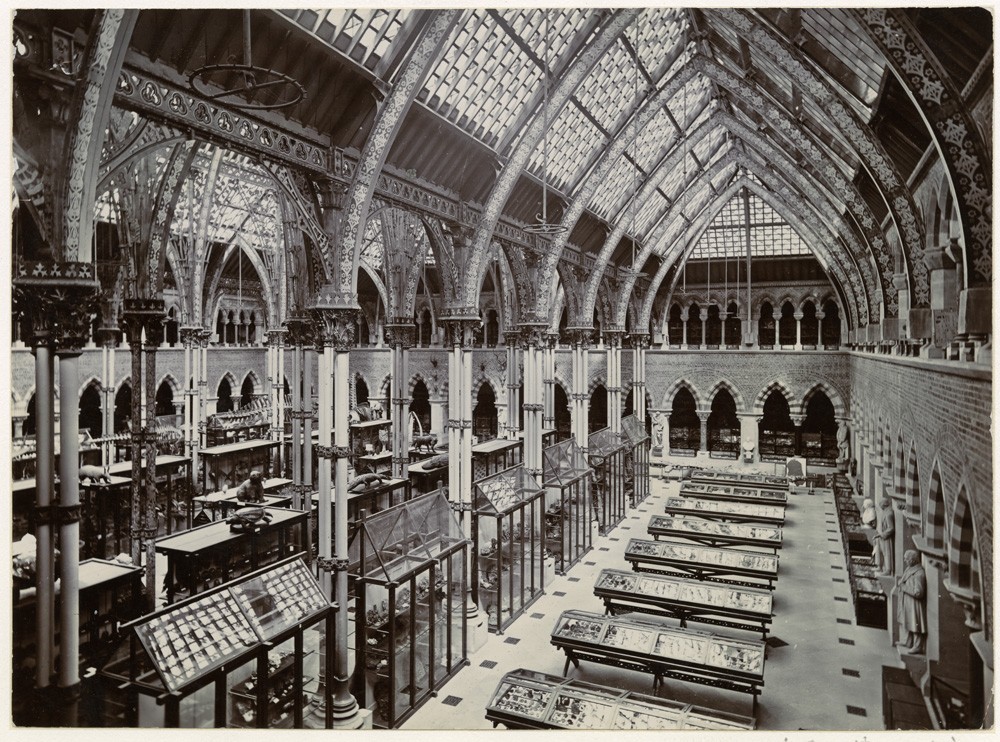
In addition to the upright centre court cases, ten table cases were ordered from the high-end London cabinet makers, Jackson and Graham, at a cost of £344.10. The same firm was also commissioned to fit the tall wall cases in the outer corridors. Plans and photographs from the archive show that the installation of these cases was piecemeal and it wasn’t until 1866 that all the display cases were fully in place.
WHY REPLACE THE CASES?

The wooden display cases that we have been replacing may look old, but few of the original cases from 1866 survive. While some of the old display cases were moved behind the scenes for preservation, others found homes in different museums or were disposed of when they were beyond repair. The most recent timber-framed cases in the Main Court are 20th-century replicas that have been heavily modified, particularly in the late 1960s-early 1970s, and again in the early 2000s when the clear acrylic roofs were added. Some of these modifications affected the stability of the cases, particularly when the doors were opened, making them unsafe for staff to access. Other modifications meant the cases were no longer dust or pest-proof, which poses a risk to specimens.
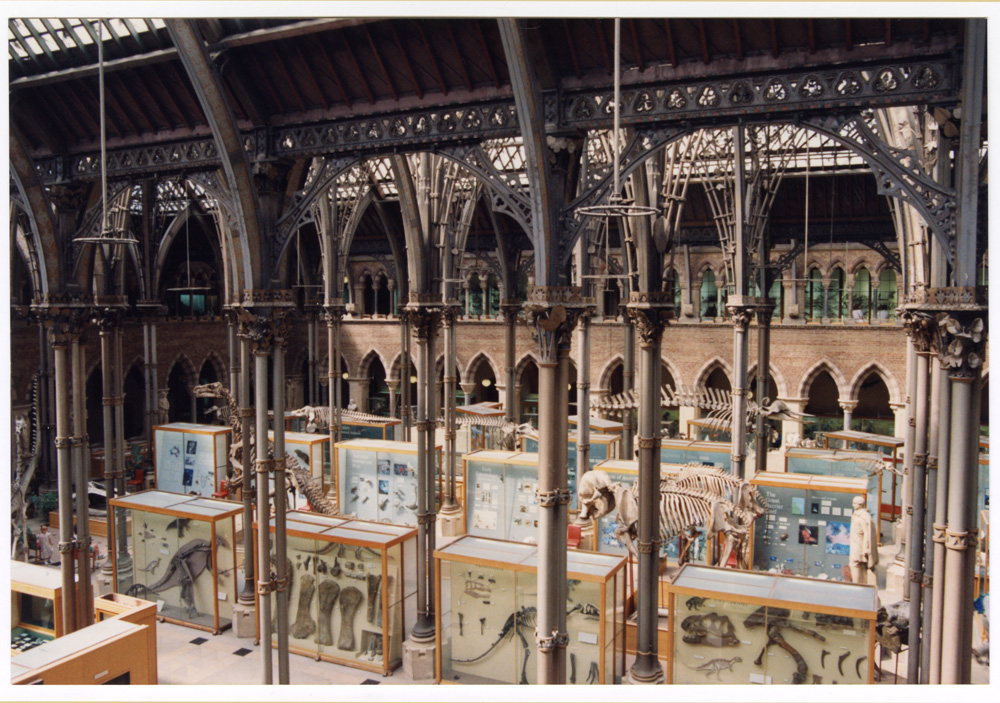
As these wooden display cases neared the end of their life, the museum and Oxford University Estates worked with Oxford City Council and Historic England to approve the replacement of the cases and ensure the redevelopment was historically sensitive to our Grade 1 listed Victorian building.

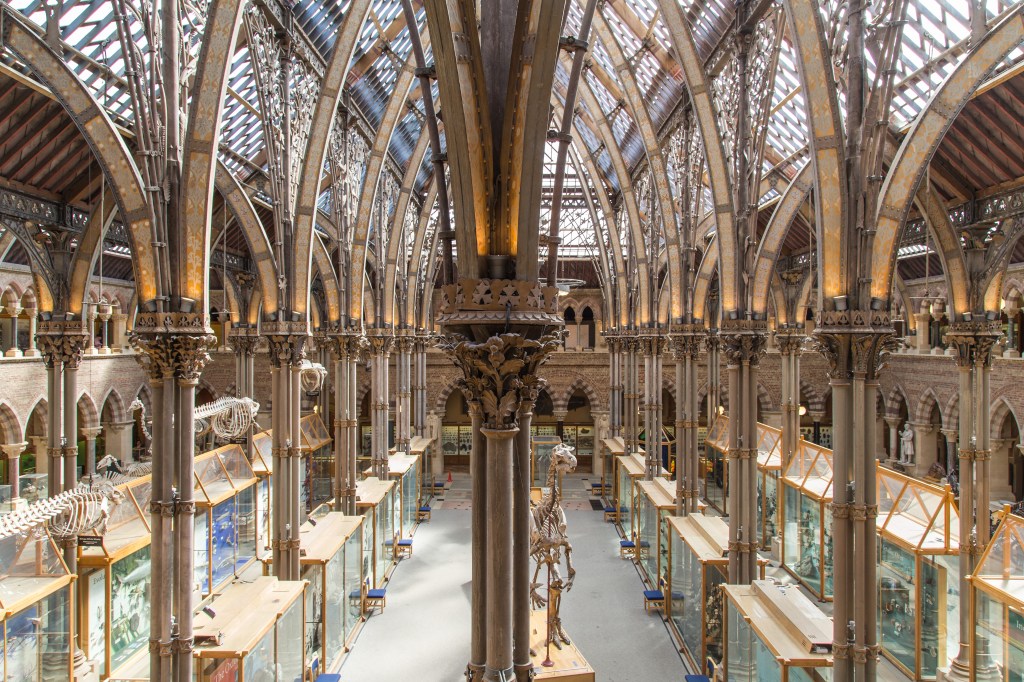
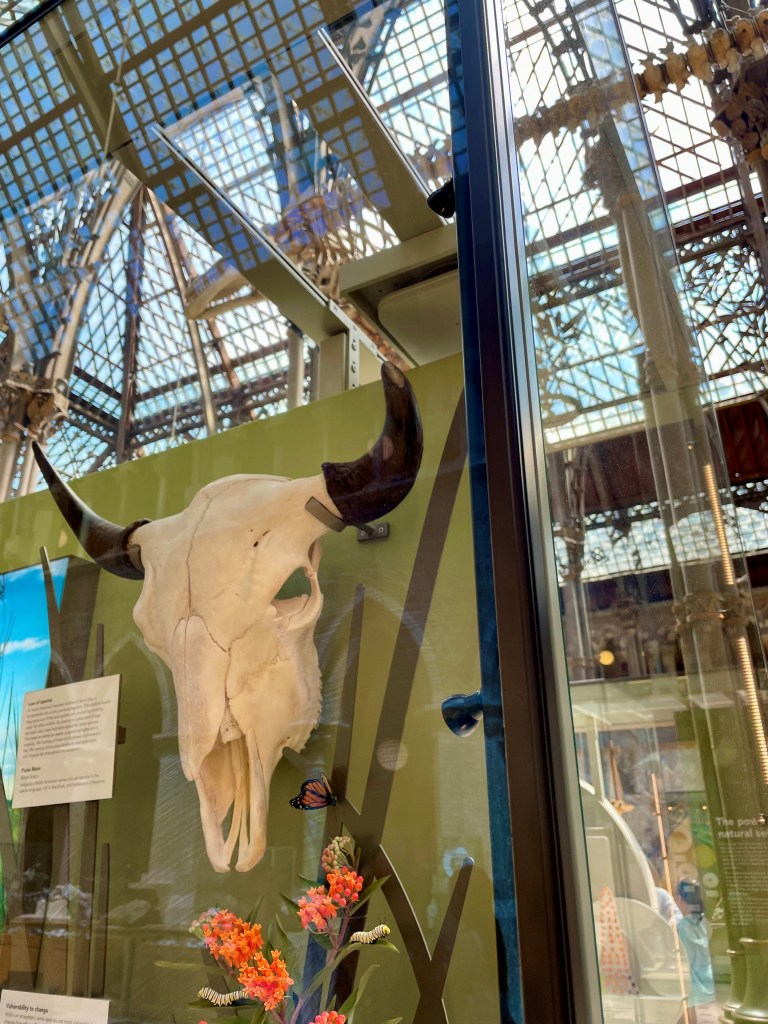
For this reason, the new cases retain the original 1866 arrangement and are built to the same dimensions. We have also returned to the original form, including outer aisle cases with alternating pitched and flat roofs. It was decided early on that the new cases would not be lined in wood because timber can be detrimental to the conservation of certain specimens. However, the design of the edges of the new cases sought to mirror the craftmanship of the 1866 cases by emulating the beading on the edges – albeit much more subtly, and in bronze rather than timber – complementing the colours of the ironwork in the museum roof.
A CASE FOR THE FUTURE

The new glass cases are built by museum showcase experts ClickNetherfield and provide a stable, pest-proof environment for our delicate and historically important specimens. Their design artfully captures the character of the museum building, while still focusing the visitor’s attention on their contents. It is hoped that the new displays will last for at least another two decades, and the cases even longer. During that time, millions of eyes will be cast over our displays, but the glass cases that protect them may barely even be noticed.

A stone statue of a bearded man, hands crossed at his front, shoulders draped in a cloak

Babylon: Natural Theology versus Scientific Naturalism

When the campaign to build the Museum was launched, science at Oxford was understood as natural theology. By the time the Museum opened in 1860, a new secular approach to science was on the rise.

In this last episode of the Temple of Science podcast series we see how the art and science of the Museum responded to the challenge posed by Charles Darwin’s theories of evolution and natural selection, and the scientific naturalism that they epitomised. 

You can watch the whole series here.
(https://www.youtube.com/playlist?list=PLxCYszldeUZGdD75meu90fvsH2Vjq54YE)

‘Chambers of the Ministering Priests’

The Museum was not originally simply a museum as we understand it today: It was an entire science faculty. In episode four of the Temple of Science podcast series we see how the museum’s overarching principle of design – that art should be used to teach science and to inspire generations of scientists – was put into practice in some of its less familiar but no less beautiful spaces. 

You can watch the whole series here.
(https://www.youtube.com/playlist?list=PLxCYszldeUZGdD75meu90fvsH2Vjq54YE)

The Sanctuary of the Temple of Science

The central court of the Museum was described by one founder as ‘the sanctuary of the Temple of Science’. In the third episode of the Temple of Science podcast series we see how every detail of this unique space was carefully planned and crafted to form a comprehensive model of natural science. 

You can watch the whole series here.
(https://www.youtube.com/playlist?list=PLxCYszldeUZGdD75meu90fvsH2Vjq54YE)

Black and white photo of a man carving the decorative archway of a window

‘God’s own Museum’

In the second episode of the Temple of Science podcast series we take a closer look at the decoration on the outside of the Museum building.

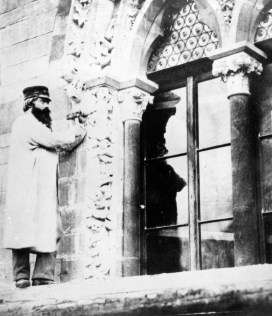
From the outset, Oxford University Museum wanted to teach the principles of natural history through art as well as science. The carvings around the windows of the façade, incorporating designs by John Ruskin and carved by the brilliant Irish stonemason and sculptor James O’Shea, revel in the vitality of nature, while the decorations round the main entrance remind us that, for the scientists in Victorian Oxford, natural history was the study of God’s creation.

You can watch the whole series here.
(https://www.youtube.com/playlist?list=PLxCYszldeUZGdD75meu90fvsH2Vjq54YE)

Ruskin 200 Art Competition

By Michelle Alcock, Front of House Deputy Manager

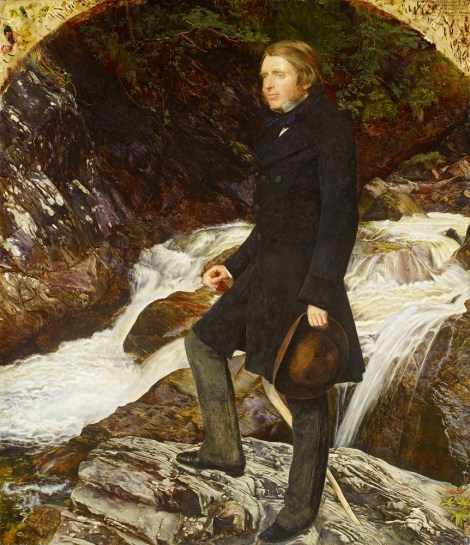
To celebrate the Museum of Natural History and the creativity it inspires, we have launched the Ruskin 200 Art Competition. It opened on Friday 8 February 2019 coinciding with the bicentenary of the birth of John Ruskin; an artist, social thinker, philanthropist and art critic of the 19th century. During the Victorian era, Ruskin’s views advocating for drawing from direct observation, both in his studies of Gothic architecture, and in his use of a detailed descriptive approach to depict nature in art, heavily influenced the design of the Museum.

WA2013.67 John Everett Millais, ‘John Ruskin’
Image © Ashmolean Museum, University of Oxford.

His encouragement led to artists, architects, craftsmen and scientists working together to design the Museum. As a result, they created the neo-Gothic building that stands today as a work of art and a vision of nature in its own right. The Museum’s architecture, decorative details, and collections have served as a source of inspiration for many since it opened in 1860.

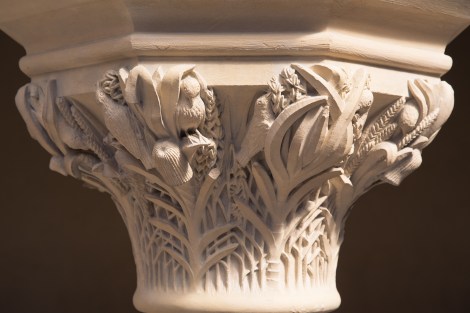
Details in the Museum’s architecture, such as this carved capital, were inspired by nature and today provide further inspiration for visiting artists

This year marks the perfect opportunity to showcase the artwork of our visitors. Personally, working on the Front of House team here, I see what an inspiration the building is to our visitors. Every day we spot people of all ages setting up stools, with pencil and sketchbook at the ready, drawing in the Museum. There is so much potential inspiration; beetles carved in stone, vibrant birds’ feathers, glittering gemstones and the intricate decorative ironwork of the building, to name a few.

It is always exciting to see so many of our visitors engaging with the Museum in a creative way, but we rarely see the finished product. I’ve always wanted to know what artwork is created from this point of inspiration. Is it the starting point of a vibrant painting, an intricate pastel drawing or a graphic mixed media collage? The list of possibilities is endless.

A visitor captures the Allosaurus skull on one of our Sensing Evolution tables

Whatever your choice of creative expression, we want to see your interpretation of the Museum and what inspired you, whether it’s the architecture or the collections on display. If you are an amateur or professional artist, and over the age of sixteen, we would like you to submit your artwork to the Ruskin 200 Art Competition.

The competition is open for four months. Do send us images of your final artwork before the closing date of 19 May 2019. Selected artworks from each of the four entry categories will go on display in the Museum during the busy summer holidays.

A visitor taking part in creative activities during our special drawing weekend

Throughout 2019, we’re also running a programme of drawing activities to celebrate Ruskin’s bicentenary. It began with the Ruskin Drawing Weekend on 9 and 10 February, which included lots of different activities to begin the creative process. Look out for our Ready, Steady, Draw! workshops for younger artists coming in May too.

The full competition guidelines, along with further information on the Ruskin-related events we’re running this year, can be found on our website.

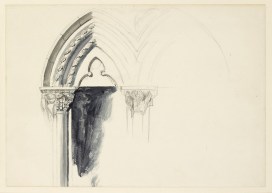
Top banner image: WA1931.47 John Ruskin, Design for a Window in the University Museum, Oxford. Image copyright Ashmolean Museum, University of Oxford