Friday night is museum night!

IMG_0580

‘Museums and music’ has a nice ring to it, and that’s just what BBC Radio 2 will be offering this evening. This special broadcast of Friday Night is Music Night will feature a concert celebrating the six nominees for this year’s Museum of the Year.

Recorded last week at the Mermaid Theatre in London, the finalists each presented two objects they had chosen from their collection. The short talks were then brilliantly accompanied by The BBC Concert Orchestra, playing pieces inspired by these unique objects.

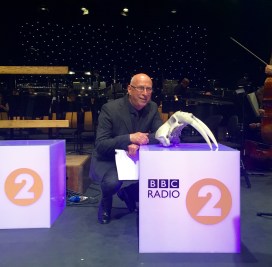
Radio 2 presenter Ken Bruce with the Tradescant Walrus

Walking on stage to the theme from Jurassic Park, our director, Professor Paul Smith, presented two real treasures: a Tsetse Fly sent back from the Zambesi by Dr Livingstone and an impressively-tusked walrus skull. The skull belonged to the Tradescants, so is part of the oldest collections in the Museum. It’s also believed to have inspired Lewis Carroll to write ‘The Walrus and the Carpenter’.

The Friday Night event was a great opportunity to present to the broad Radio 2 listenership two of our most iconic specimens, which tell extraordinary stories.
The Walrus specimen links the foundation of the collection in the late 1590s to the Beatles in 1967, via Lewis Carroll and Walt Disney, whereas the Tsetse Fly collected by David Livingstone tells stories of the European exploration of Africa, but also of disease control in humans and farm livestock.

– Professor Paul Smith, Museum director

Other objects presented to the audience included one of the clay poppies from the Tower of Londons ‘Blood Swept Lands and Seas of Red’ and a tambourine signed by soldiers of the First World War who convalesced at the Georgian country house, Dunham Massey.

So get your radio tuned in this evening at 8 o’clock. Hear the stories behind these surprising objects and the music that will bring them to life.

Rachel Parle, Interpretation and Education Officer

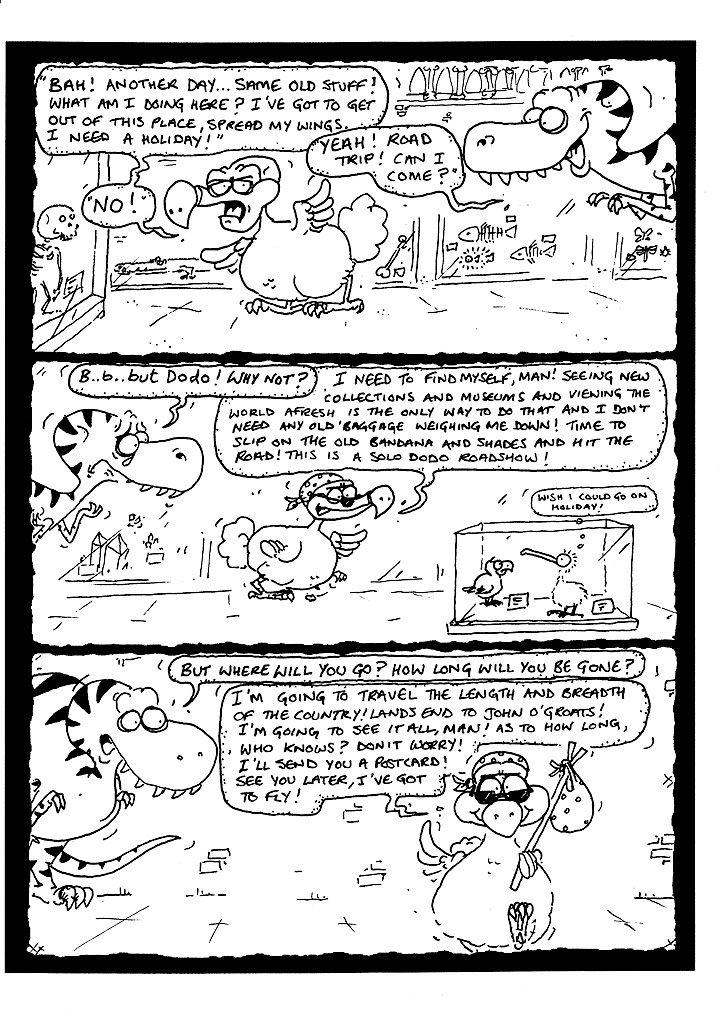
Dodo Roadshow – #ILoveMuseums

DodoNeedsYouWriting

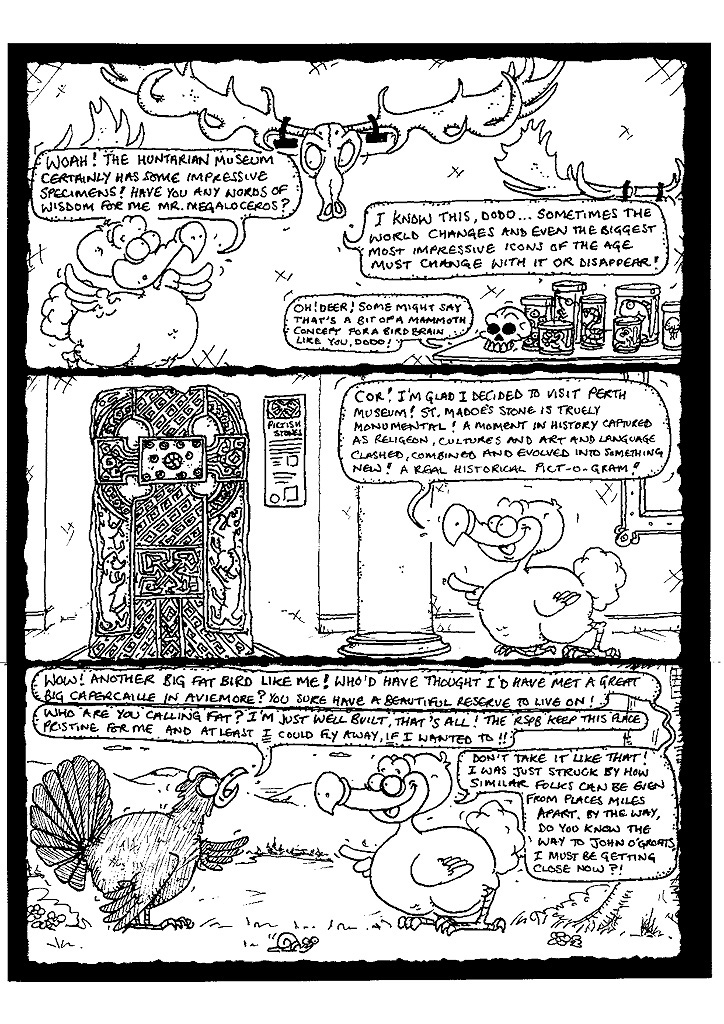
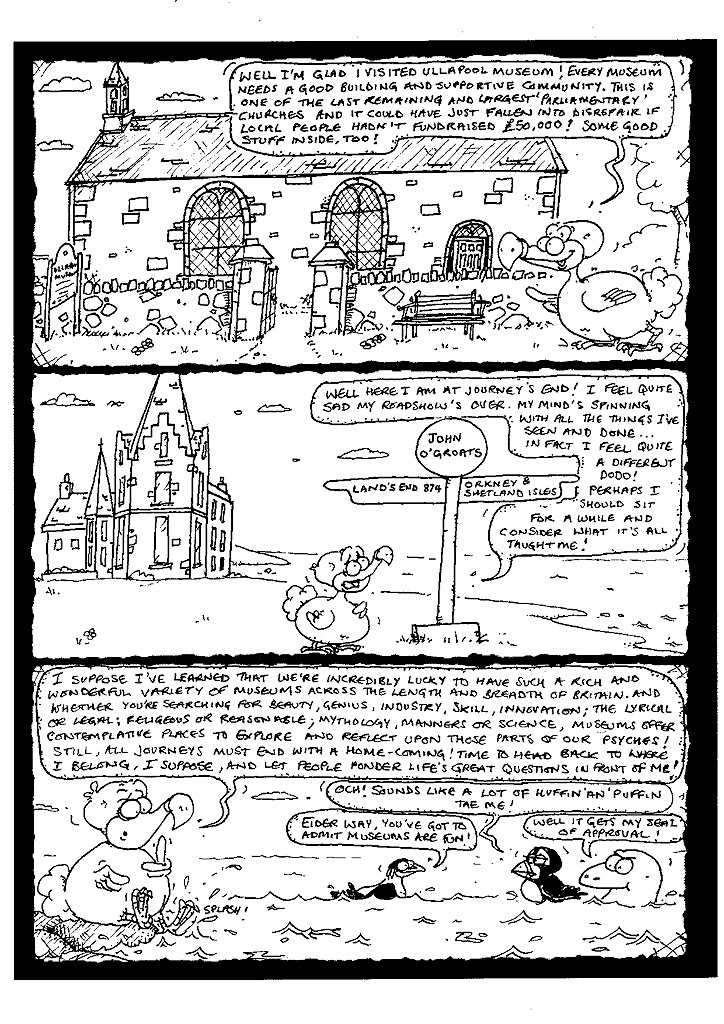
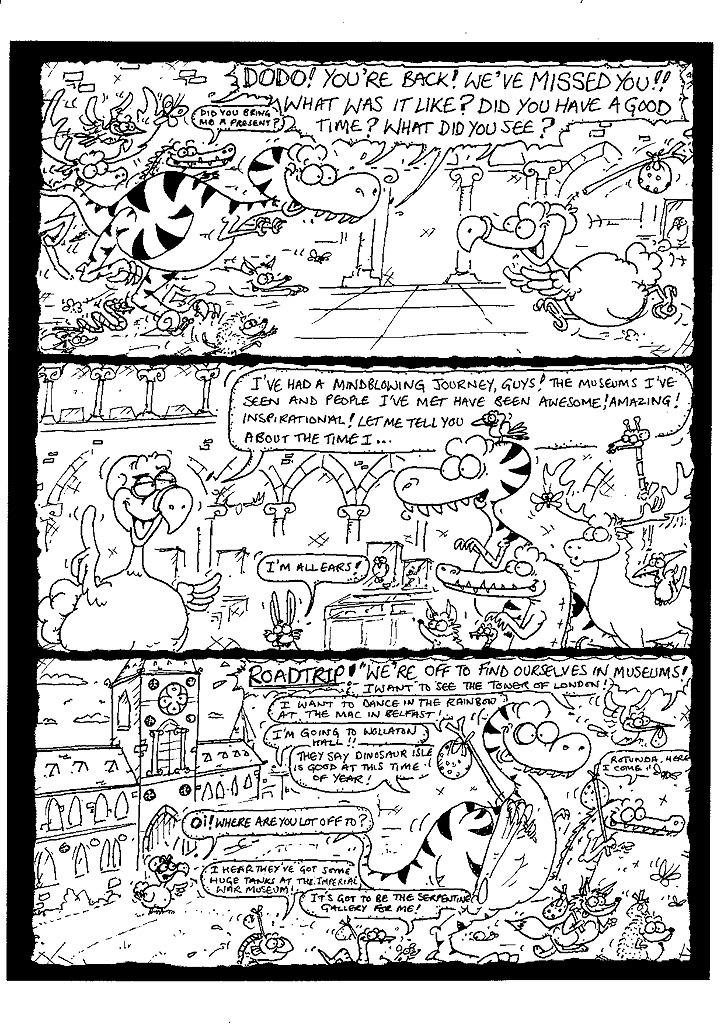
So, it’s been one hell of a trip man. In a bid to shake off the cobwebs and ‘find myself’ I set out on an epic Roadshow from Land’s End to John O’Groats. The Dodo Roadshow, no less: all mine, but also everyone else’s…

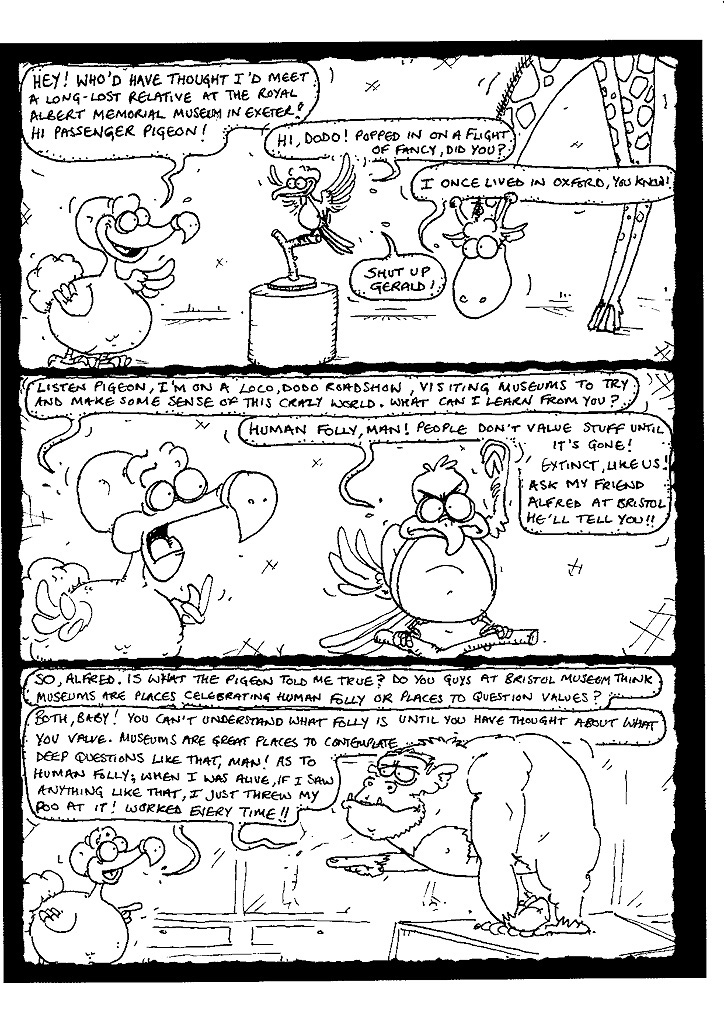
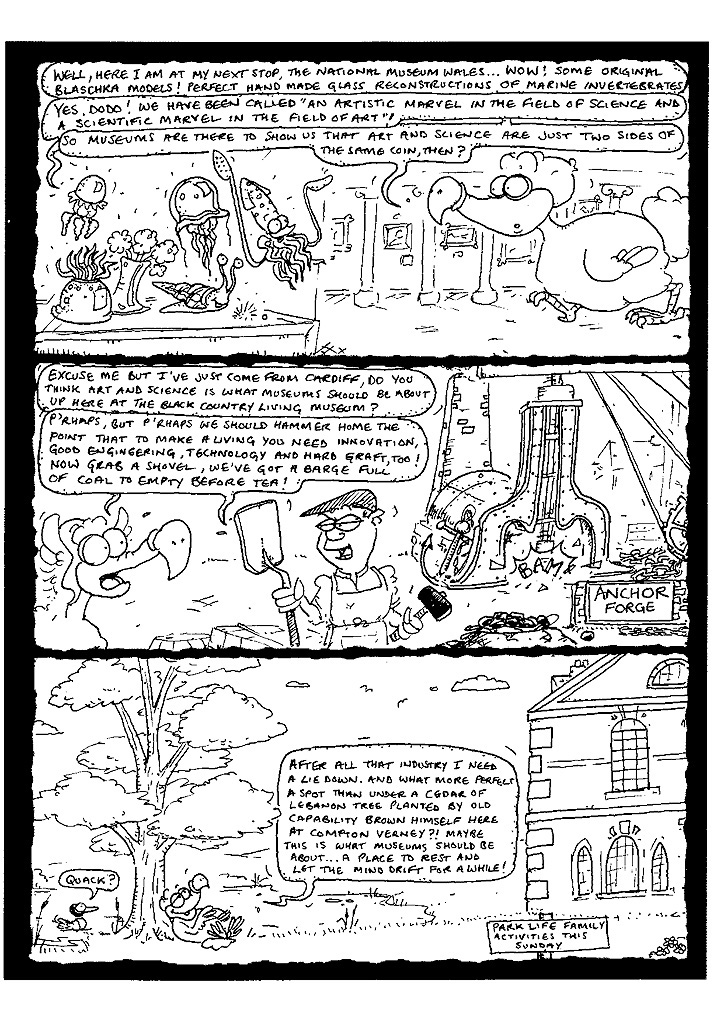
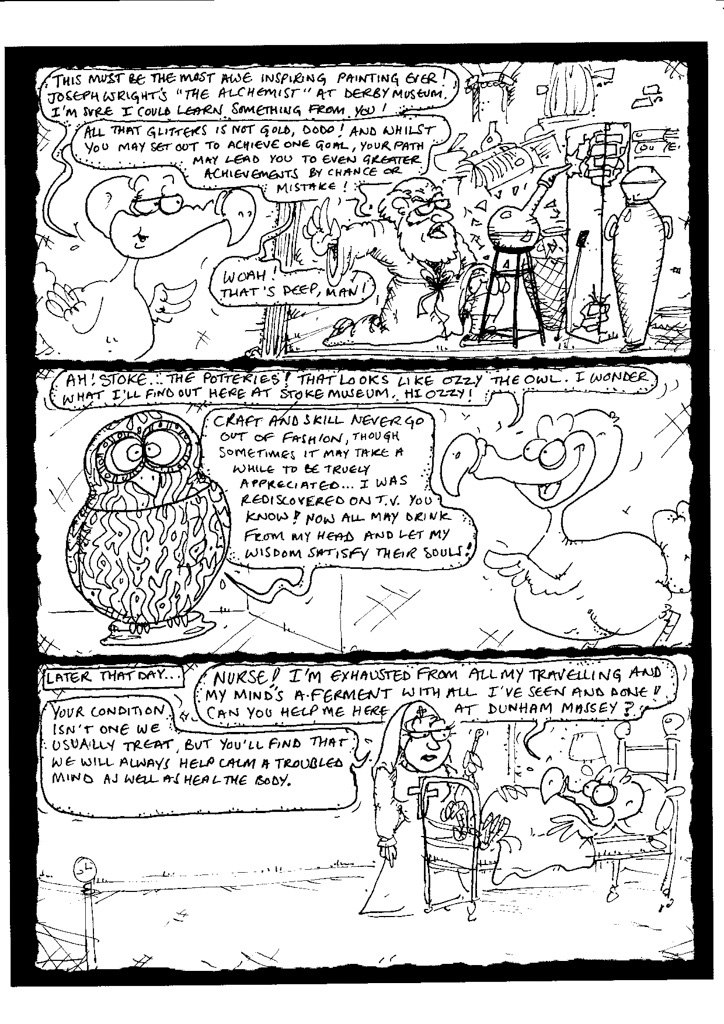
I found so much more than I could have bargained for: monuments to nature, relics of industrial might, extinctions recent and past, and a whole load of philosophical perspective. I am a changed Dodo.

ILoveMuseums_Logo_EPS_CMYK_Blue

And this is what I have learnt – museums are powerful, important and brilliant. They are full of wonder, learning, curiosity, surprising viewpoints and fun discoveries. To find out why, read my full story in the cartoons below (thanks to Chris Jarvis for capturing the essence).

And then I need your help. I need you to head on over to ilovemuseums.com and put your name to the campaign. I may be an old bird-brain, but I know that we should stand up for our museums – I’ve seen ’em man and they’re really something special. Squawk!

The Dodo.

Dodo Roadshow: Ullapool Museum

Ullapool Museum 1 x

To mark our selection as a Finalist in the Art Fund Prize for Museum of the Year 2015 we’re embarking on a unique and ambitious tour of the country – the Dodo Roadshow.

Beginning at Land’s End on 8 June and concluding in John O’Groats one week later, the famous Oxford Dodo will visit more than 20 museums and galleries along the way. At each stop the Dodo will ‘interview’ one of the venue’s star objects.

Ullapool Museum: Telford Parliamentary Church

UllapoolSo, tell me about yourself – who are you and where do you come from?
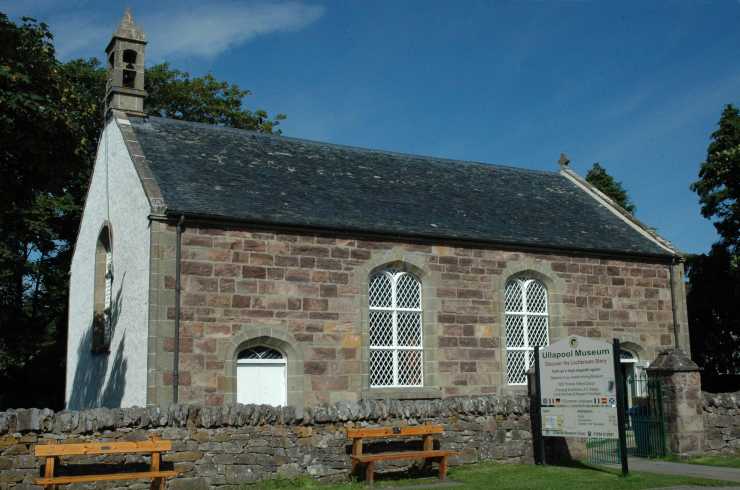
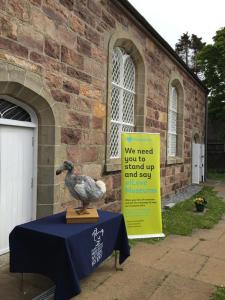
I am a very special building. I was built as a church here in Ullapool in 1829 and Thomas Telford, one of Britain’s most celebrated engineers, designed me. I was built as a Parliamentary Church, after the government of the day decided that more places of worship were needed in the thinly populated and scattered parishes of the highlands of Scotland.

What is it that makes you so special?
I am unique; although thirty-two Parliamentary Churches were built, I’m the only one still standing that remains true to Telford’s original design. I still have the original décor and fittings, and the only gallery still surviving. I have a very special role, as I am the building that also houses the museum’s collection and I provide a place for visitors to come and learn about the history of Lochbroom.

Who looks after you in this place?
I am looked after by a wonderful group of volunteers. Some of the team help to conserve me, and work to maintain my walls and all the special features inside. Other volunteers are involved in helping to fundraise to help keep my doors open to the public. Some of the team also work on interpreting my history and give tours to visitors.

Do you remember life before the museum?
My life before being a museum building was very different. As a church, I was used to being full of people congregating every Sunday and I was a busy hub for village life. The last service that was held here was a wedding in 1935. After that, my walls fell silent until 1995, when I became the Ullapool Museum. My doors are now open to visitors and my walls tell the stories and the histories of the people of Lochbroom.

What does the future hold for you?
Because I am a Grade A1 listed building, it costs a great deal to conserve me and to keep my doors open to visitors. My volunteer team spend a lot of time helping to raise money to care for me. Everyone hopes that I can continue to be here to help tell the stories of the people of Lochbroom for many years!

Stickers small - Dodo Roadshow_crop

Dodo Roadshow: RSPB Loch Garten

Richard Crossley
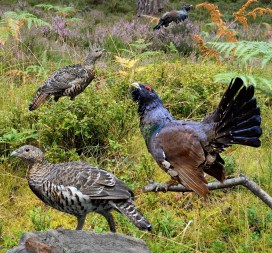
Capercaillie from the Crossley ID Guide Britain and Ireland – Creative Commons

To mark our selection as a Finalist in the Art Fund Prize for Museum of the Year 2015 we’re embarking on a unique and ambitious tour of the country – the Dodo Roadshow.

Beginning at Land’s End on 8 June and concluding in John O’Groats one week later, the famous Oxford Dodo will visit more than 20 museums and galleries along the way. At each stop the Dodo will ‘interview’ one of the venue’s star objects.

RSPB Loch Garten: Capercaillie

RSPB Loch Garten 850pxSo, tell me about yourself – who are you and where do you come from?
I am a capercaillie and my home is the magnificent National Nature Reserve, Abernethy Forest. I am very lucky to live here, as it is the largest remnant of the Caledonian pine forest, which is full of tasty blaeberry for me and my chicks to feed on. My name means ‘horse of the woods’ in Gaelic: some humans think that when I do my impressive display call it sounds like the hooves of horses on cobbles.

What is it that makes you so special?
I’m special for many reasons! Where do I start? I’m very rare here in Scotland. There are only around 1,000 of me left but back in the 1970s there were as many as 20,000 of capercaillies like me! I’m also very good at a special dance called lekking. I strut around, with my beautiful tail fanned up and I make a sequence of click and pop sounds, showing off to the ladies and trying to outdo the other male capercaillies at the lek. I’m very beautiful too, with a striking red eye marking, and glorious iridescent feathers on my front. I’m also the largest grouse in Scotland.

Who looks after you in this place?
Here at Abernethy Forest I’m looked after by the RSPB. They know how special my dance is and they know how upset I get if my lek is disturbed by curious humans who want to take a peek at my fancy moves. Therefore, they ask people to watch me lek at a safe distance, hidden from my view by a hide at a special event called Caper-Watch. The RSPB also know that I fly into deer fences which can kill me, so they make sure there are no deer fences here at Abernethy. Something else the RSPB is doing to look after me is making my home bigger and better, by expanding the forest and opening up the canopy in parts of the forest where it is too dense.

Do you remember life before RSPB Loch Garten?
I don’t remember but my ancestors tell me lots of stories about before Abernethy was a nature reserve. They tell me about how people used to shoot capercaillies!  And that there was less blaeberry around for them to eat.

What does the future hold for you?
The future looks uncertain for me; there aren’t many of us capercaillies left now…and we have gone extinct in Scotland before! But the RSPB is doing lots to help me here at Abernethy, and visitors too are helping by keeping their dogs on leads during the breeding season, coming to Caper-Watch to see me without disturbing me and joining as RSPB members. So hopefully things will get better for capercaillies.

Stickers small - Dodo Roadshow_crop

Dodo Roadshow: Perth Museum and Art Gallery

Perth Museum and Gallery

To mark our selection as a Finalist in the Art Fund Prize for Museum of the Year 2015 we’re embarking on a unique and ambitious tour of the country – the Dodo Roadshow.

Beginning at Land’s End on 8 June and concluding in John O’Groats one week later, the famous Oxford Dodo will visit more than 20 museums and galleries along the way. At each stop the Dodo will ‘interview’ one of the venue’s star objects.

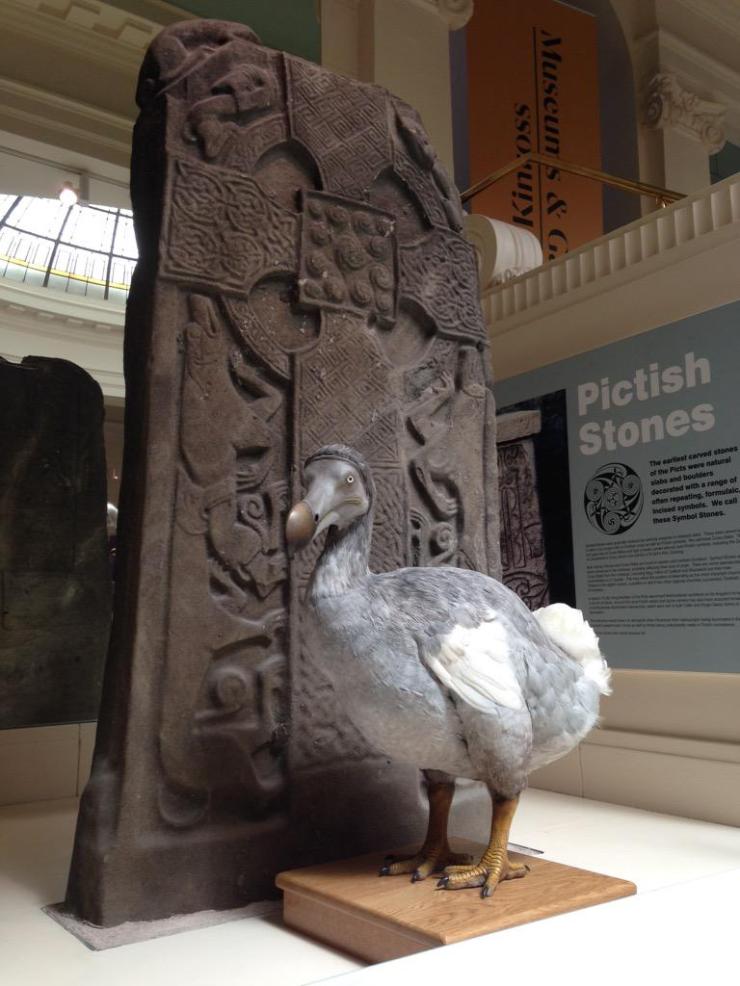
Perth Museum and Art Gallery: St Madoes Stone

So, tell me about yourself – who are you and where do you come from?
I am a Pictish cross slab in very good condition, considering my age. For centuries I took pride of place in the kirkyard of St Madoes Parish Church, six miles east of Perth in the Tay Valley.

What is it that makes you so special?
I am so special because my embellishments are of both Pictish and Celtic origin reflecting my place in the region, which was ‘the cradle of Scotland’. My front face shows a Celtic cross with interlace and knot work patterns similar to those seen in the Book of Kells or Lindisfarne gospels. Above the beautiful cross I have leaping lions and on each side the cross is guarded by Pictish hunting dogs. On my reverse side there are three cloaked and hooded Pictish horse riders above three of the enigmatic Pictish symbols known today as crescent and v rod, a double disc and a z rod. Don’t ask me what they mean, I knew once but I have now forgotten.

Who looks after you in this place?
In Perth Museum and Art Gallery I come under the curatorship of Mark Hall along with all the other archaeological objects in the museum. On a day to day basis my surroundings are preened and pimped by the wonderful front of house team who polish the large mirror which shows off my Pictish side to make sure I look my best in photographs, and they tell my story as a star object to the visitors to the museum.

Do you remember life before the museum?
Before I came to the museum I stood in the churchyard of St Madoes Church. After many centuries I fell over but remained in the same place. In the 19th century I was raised again and didn’t come to the museum until the 1990s when I was given pride of place in the entrance hall.

What does the future hold for you?
I cannot see far into the future but I know that my place is secure (literally) within the entrance hall. I’m too big and too popular to move easily but it could be that the display around me may change.

Stickers small - Dodo Roadshow_crop

Dodo Roadshow: The Hunterian

Hunterian

To mark our selection as a Finalist in the Art Fund Prize for Museum of the Year 2015 we’re embarking on a unique and ambitious tour of the country – the Dodo Roadshow.

Beginning at Land’s End on 8 June and concluding in John O’Groats one week later, the famous Oxford Dodo will visit more than 20 museums and galleries along the way. At each stop the Dodo will ‘interview’ one of the venue’s star objects.

The Hunterian: Giant Irish Deer

So, tell me about yourself – who are you and where do you come from?
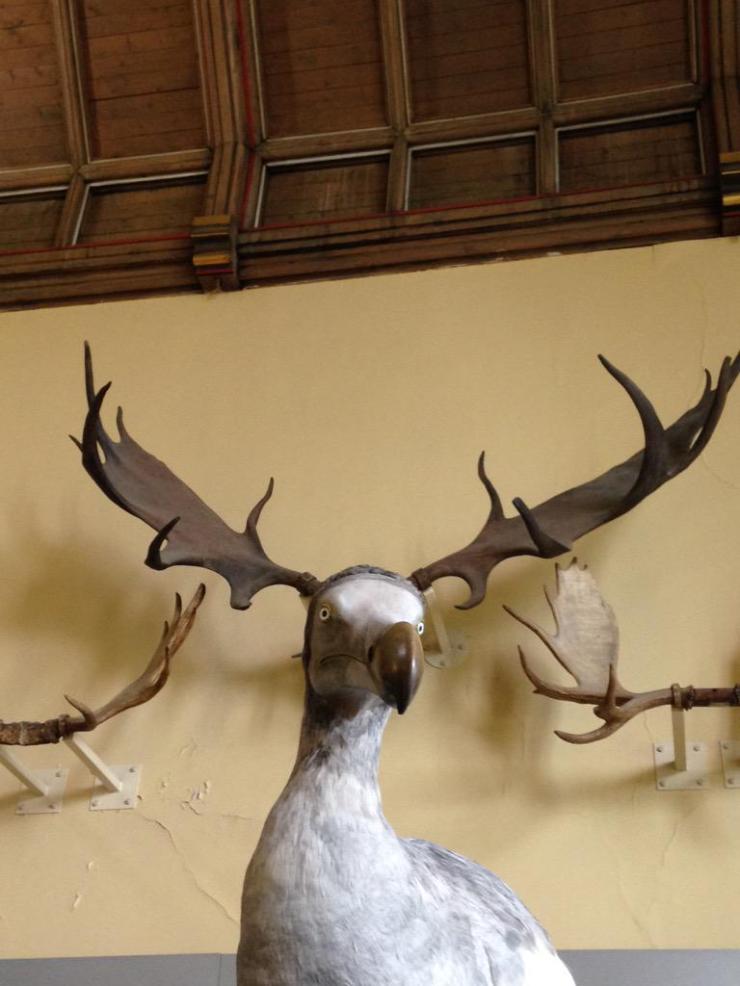
I am a giant Irish deer – they call me Megaloceros giganteus these days. I was found in a peat bog in Ireland, in Limerick I think, but I believe I had lots of relatives across Europe. I have been dead a long time! I was dug out of the bog more than 250 years ago.

What is it that makes you so special?
A Scottish doctor called William Hunter acquired me in the 18th century. He was interested in lots of things apart from medicine and he wanted to know more about moose or elk and me. He made a study of us all and even had the famous George Stubbs make a painting of the moose to help his study!

Who looks after you in this place?
I am looked after by two people – Neil Clark, the Curator of Palaeontology and Maggie Reilly the Curator of Zoology. That probably reflects the fact I have trotted between Zoology and Palaeontology displays over the years! I am a recent extinction after all (geologically speaking that is), though not as recent as you!

Do you remember life before the museum?
I don’t remember very long ago when I was alive, but like you I have been around a bit – after leaving Ireland, I lived in London for a while, then I was taken to Glasgow on a barge and then I was in the first Hunterian Museum down in the middle of Glasgow. Now, after a few years in the Zoology Museum, I am a big star in the main Hunterian Museum. I  have some friends with me now – the moose antlers. We sorted out the puzzle that William was interested in that I mentioned above.

What does the future hold for you?
I think I am probably going to still be on show to the public, though in the future there may be new Hunterian displays in a different building where even more people will be able to come and see me. I have been measured and studied in the past but as you say the scientists may have new things they want to learn so they know where to find me!


Stickers small - Dodo Roadshow_crop