Gemstones, fairy boats and the Orchid Mantis

This year the Museum is playing host to three poets in residence as part of our Visions of Nature year. The poets, John Barnie, Steven Matthews, and Kelley Swain, have been working alongside staff in our collections and out in the Museum itself to gain inspiration for their writing over the past six months. In the autumn, they will take part in a number of events and activities to present their work, and will be publishing a small anthology at the end of the year.

Here Kelley Swain reveals what has inspired her poems during one of her recent visits to the Museum.
IMG_9441
In May, I had the opportunity to meet with several curators who had previously introduced me to their collections. This time, with the orientation they’d provided, I had more specific questions:

Kelley2For Monica in Minerology, I wanted to know more about what people historically considered ‘sympathies’ of gemstones. She directed me to Nichols’ Faithfull Lapidary of 1652, the oldest book in English about the properties of gemstones. The Museum has a copy of the book on loan to the Bodleian, so I’m heading in the direction of that most famous library to get to see the book, perhaps on my next visit.

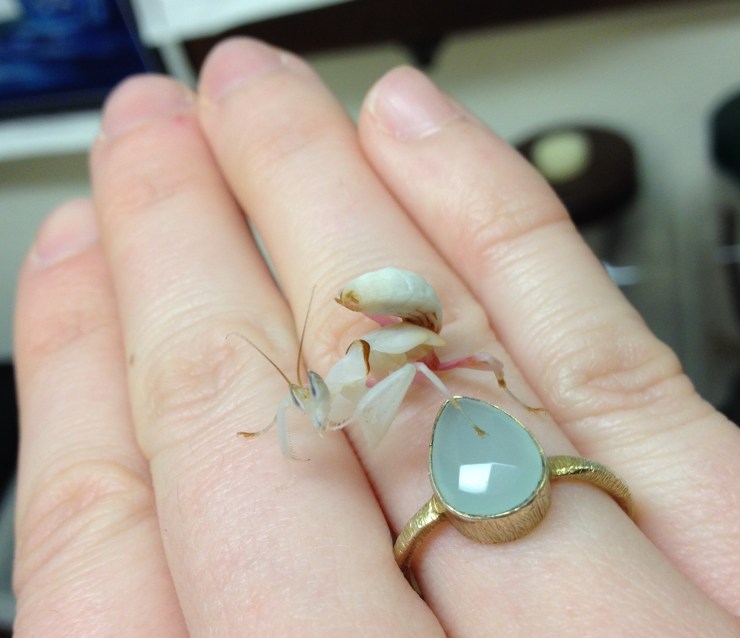
With Amo in Entomology, I was eager to pay another visit to the Orchid Mantis whom I’d named ‘Daphne’ on my last visit. In the interim, the Mantis had moulted to her final life stage – she has wings and is now fully adult, but we don’t know how long she’ll live. She might not be there when I next visit. (Amo said this is the reason she stopped naming the insects – she became too attached.)
IMG_8844
Daphne the Orchid Mantis in March 2016

It was especially wondrous to see that Daphne’s colouring had changed from that of a bright pink-and-white orchid blossom to something darker, that looks just like a dying orchid blossom – and she seemed much less alert than before – almost sleepy. I know a bit about cryptography and camouflage, but that the lifespan of the Orchid Mantis directly correlates with the lifespan of the orchid blossoms on which it hunts is more than I might have imagined. I’ve been working on a poem about Daphne, which, by the time of our poetry-residency anthology is published, is likely to be ‘in memoriam’.

IMG_9120Daphne2
Daphne the Orchid Mantis in May after moulting

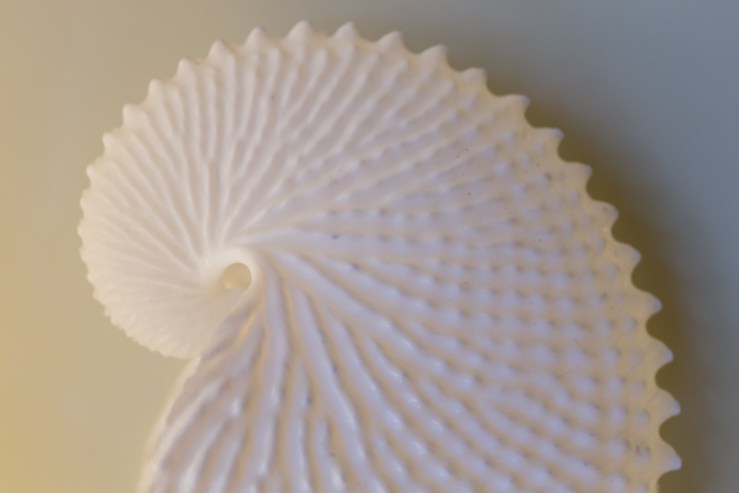
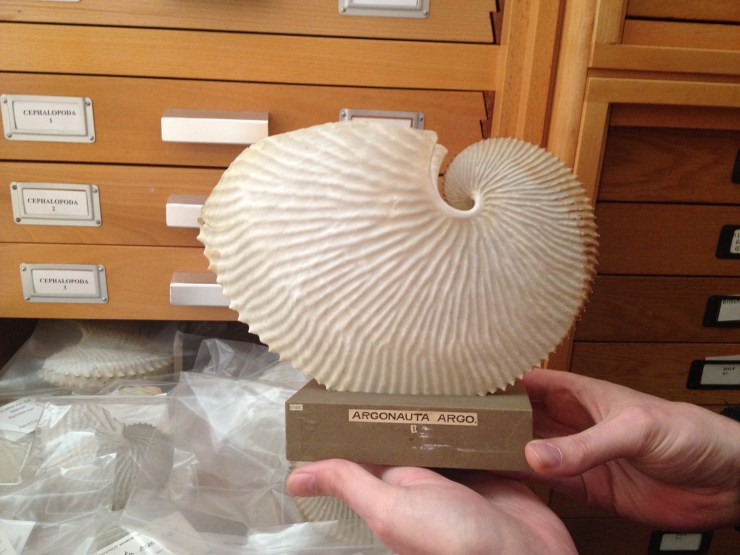
And thanks to Mark, Curator of Life Collections, I was able to finally see something that I’ve wanted to see for a very long time: not only one, but a large collection of fragile, mysterious Argonauta brood chambers. Cepalopods are a particular interest of mine, and while many people have collected marvellous ammonite fossils in Lyme Regis or admired the highly-polished specimen of a nautilus shell, Argonauta brood chambers are often mistaken for similar shells, when they are something rather different.

They are secreted by the female of the species (which is a type of octopus). Though this case is not attached to her body, she lives in it with her tentacles dangling out – she can spin it and turn it, but will never completely let go of it. This is the egg sac or brood chamber for her young: she lays her eggs in it, and when they hatch, they are in a safe, contained chamber in the sea. It’s likely that, as with many cephalopods, senescence sets in around the time the young are about to hatch – that is, the adults deteriorate and seem to have a kind of dementia, until they die and their bodies fall apart, just as the young hatch and need food.
IMG_9126
An Argonauta argo specimen from the Museum’s collections

The thing about the Argonauta that most intrigues me is that, though this papery shell is not attached to the female, she will die without it. Studies have revealed that other species of octopus, placed in cages, would squeeze out of the bars of the cage to reach food; the Argonaut, on the other hand, would not let go of its shell, remained in the cage, and died.

Argonauts can direct their buoyancy and swimming, but seem to drift with tides, and there are a few videos online of scuba divers happening upon them: they seem quite directionless and cumbersome. Despite this, to me they are, without doubt, one of the most beautiful, mysterious, and poignant creatures in the ocean, and it was a great gift to be able to see so many Argonauta cases in the Museum stores.

The Argonaut is often called the ‘paper nautilus,’ though their beautiful remnants were also called ‘fairy boats’. The best chapter I’ve read so far on these creatures is ‘Flight of the Argonauts’ by Helen Scales in her book Spirals in Time. I’m working on a poem about these marvellous creatures for the Museum residency.
Cockroaches on my mind

This year the Museum is playing host to three poets in residence as part of our Visions of Nature year. The poets, John Barnie, Steven Matthews, and Kelley Swain, have been working alongside staff in our collections and out in the Museum itself to gain inspiration for their writing over the past six months. In the autumn, they will take part in a number of events and activities to present their work, and will be publishing a small anthology at the end of the year.

Here John Barnie reveals what has inspired him during his residency as well his creative process.

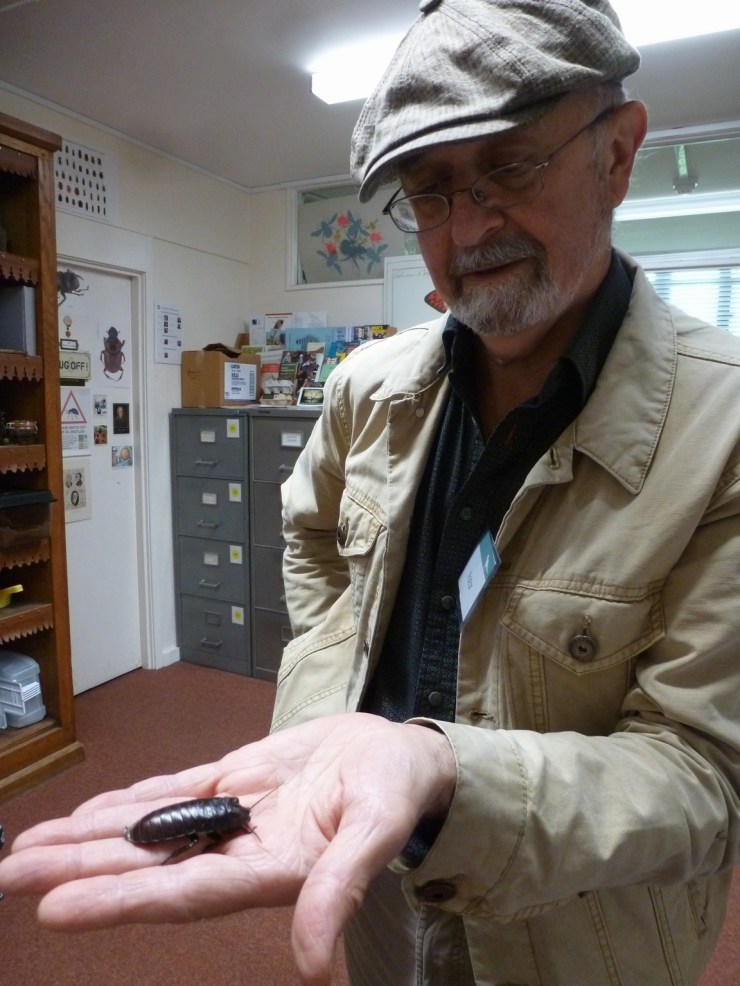
P1120467
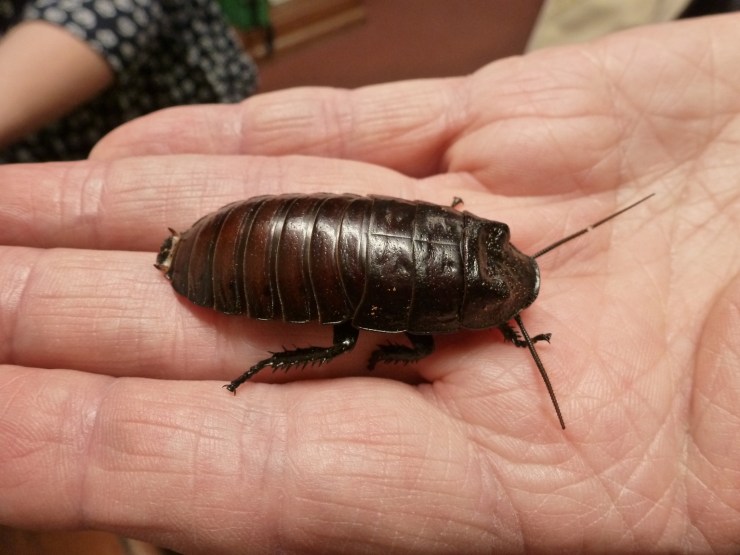
Madagascar hissing cockroach (Gromphadorhina portentosa)

Recently, Kelley Swain and I were allowed to handle live tropical cockroaches at the Museum. They were much larger than the ones I knew when I lived for a time in Memphis, Tennessee. Those lived in the kitchen inside the stove and behind the fridge, waiting to crawl out if you turned your back for a moment while chopping vegetables or meat. Pest control officers came a few times, spraying foul-smelling insecticide everywhere, but next day the cockroaches were back, seemingly unaffected by the poison.

The tropical cockroaches at the Museum were beautiful, their exoskeletons gleaming as their antennae whirred, trying to identify what the palm of my hand might be, and I could see why some people keep them as pets.

My experience of writing poetry is that you can’t decide consciously what the subject of a poem is going to be. A poem ‘emerges’, shaping itself in the mind. Usually it is written quite quickly. There may be a good deal of revision later, but at this first stage the process is almost automatic.

I was apprehensive, therefore, about having to write poems to order as a poet in residence at the Museum. I needn’t have worried, though. During my visits so far, subjects for poems have crowded in, one on another.

P1120466

Take cockroaches. Over the years I have read a number of books on the mass extinctions that have occurred during the past 650 million years and I’m aware that leading biologists and naturalists, Edward O. Wilson and David Attenborough among them, believe we are in the middle of one now, caused primarily by our own species. Mass extinctions create bottlenecks and it seems that it is a question of luck rather than ‘fitness’ that determines which species survive to radiate beyond.

This set me thinking about cockroaches, that seemingly indestructible group of insects I encountered in Memphis and now again at the Museum. I’d bet on them getting through the bottleneck to evolve and proliferate in a brave new world. As to humans, well that’s another matter.

These experiences and thoughts gradually fused into a poem, ‘Cockroaches on my Mind’, which I never could have thought up and which certainly would not have emerged without tropical cockroaches prickling my skin that day in the Museum.

Shared visions

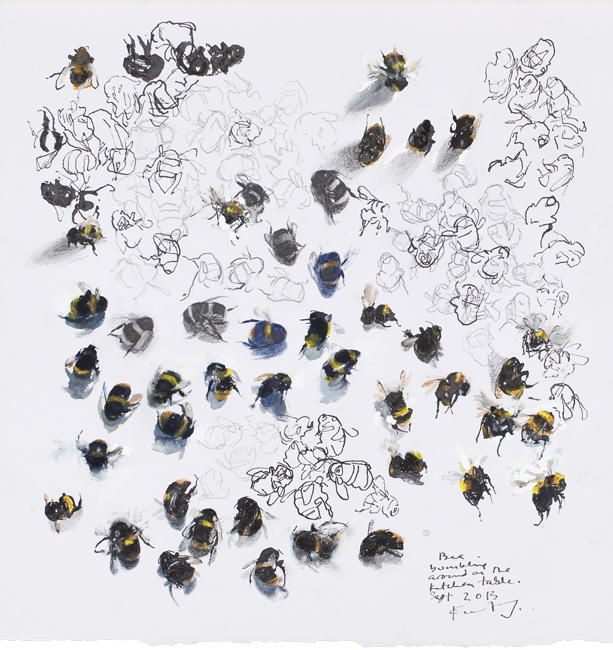
Bee 4

Visions of Nature logo_Single logoHave you created a ‘vision of nature’ that you could share with us? During 2016, the Museum has seen some wonderful work inspired by nature and the natural environment, as part of our Visions of Nature year. To take the idea further we’d like to showcase work by our visitors and online readers too.

Visions of Nature kicked off with Kurt Jackson’s Bees (and the odd wasp) in my Bonnet exhibition, a celebration of the diversity of bees through Jackson’s textured paintings, mixed media sculptures and beautiful ceramics. This was followed in May by Microsculpture, a showcase of photographer Levon Biss’ extraordinary portraits of insects from our collections.

And later this autumn our three poets in residence will round off the year with a poetic vision of nature, inspired by their time here.

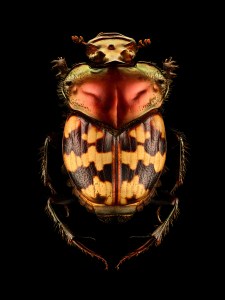
Microsculpture
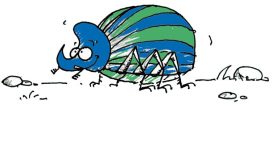
Splendid-necked Dung Beetle (Helictopleurus splendidicollis) from the Microsculpture exhibition by Levon Biss

The Museum’s court is often alive with visitors engaging artistically with the collections, sketchpad or camera in hand. The Visions of Nature year is the perfect opportunity to share your work with us. Whether it’s paintings, photographs, sculptures, drawings, or textiles, we would love to see what has inspired you, either in the Museum or out there in the natural world.

To show us your vision of nature, whether old or new, just Tweet or Instagram a photo of your work using #visionsofnature and tag @morethanadodo too so that we’ll definitely see it. Alternatively, you can email your photos to communications@oum.ox.ac.uk.

Then we’ll choose a rolling selection of submissions to exhibit throughout the rest of the year on the Visions of Nature website. If your image is selected we’ll get in touch to make sure you are happy for us to do this.

Get busy – we can’t wait to see  your work…

Why the world needs Dung Beetles

To celebrate National Insect Week 2016 we thought we would introduce you to the custodians of the Hope Entomology Collection here at the Museum. Our insect collection is made up of a whopping 6 million specimens, so our resident entomologists definitely have their work cut out. However, they have taken a little time out to tell us all about their specialisms and why their favourite insects are the best.

Darren Mann – Head of Life Collections

Darren out in the field collecting Dung Beetles

Dung beetles have been my passion since my late teens. I started with British species and then gradually broadened my interests to encompass the world fauna. But why dung beetles?

Well, they are beautiful insects, exhibiting an array of shapes and colours; they have been around since the dinosaurs, and have interesting biologies and behaviours, from nest-building and parental care, to stargazing. As a group, dung beetles are also very important in the ecosystem, removing dung and recycling nutrients.

Not only that, but dung removal and relocation offers additional ‘ecosystem services’ of fly control, livestock parasite suppression, plant growth enhancement, improved soil structure, reduction of greenhouse gas emissions, seed dispersal, and pollination. Inevitably, they are a source of food for other animals too.

Darren takes a closer look at a collected specimen

Dung beetles are found in all regions of the world, and consist of three main groups: the dor or earth-boring beetles (Family Geotrupidae) of around 600 species; the ‘lesser’ dung beetles (Family Scarabaeidae, subfamily Aphodiinae) of around 3,500 species; and the ‘true’ dung beetles (Family Scarabaeidae, Subfamily Scarabaeinae) of around 6,000 species.

With just over 10,000 species in total you’d think we have found all the dung beetles out there, but not so: it’s estimated that 40 per cent of species new to science are still to be discovered. In the UK we have just 60 species and over half of these are in decline due to agricultural intensification, pollution, use of veterinary drugs, and changes in livestock farming practises. The Dung Beetle Mapping UK Project (DUMP) aims to highlight the importance of this group and promote research and conservation in this area.

Despite their name, not all dung beetles eat dung, with some species preferring fallen fruit, fungi, or even dead animals. The South American roller (Deltochilum valgum) is an avid predator of millipedes and another South American species (Zonocopris gibbicollis) feeds on snail mucus!

So with their high diversity, fascinating ecology, and great economic benefit, perhaps the question really should be ‘why not study dung beetles?’.

Mustachioed Robber Flies

To celebrate National Insect Week 2016 we thought we would introduce you to the custodians of the Hope Entomology Collection here at the Museum. Our insect collection is made up of a whopping 6 million specimens, so our resident entomologists definitely have their work cut out. However, they have taken a little time out to tell us all about their specialisms and why their favourite insects are the best.

Zoë Simmons – Life Collections

Zoe

I have many favourites in the collections that I look after- insects demonstrate an immense diversity of form and behaviour. So much so in fact that I defy anyone that says that there is not one thing that they do not find interesting among the almost one million species described to date.

One of the groups that I often find myself returning to though is the Asilidae or Robber Flies. This is a group of predatory flies that feed on a wide range of insect species. Many species sport heavily bristled moustaches, which are thought to protect their faces as they feed but have the added bonus of making the on-trend hipster insect of the moment.

Mustachioed Robber Fly
A ‘moustachioed’ Hornet Robber Fly in the wild

As is common with predators they have exceedingly good eyesight and will sit, perched until they spot movement, at which point they will strike at the prey item in the air.

The legs are furnished with long spines that help hold the prey and the mouthparts have evolved into a hardened beak-like structure which can stab through even the tough exoskeleton of beetles. Entomologists who specialise in catching Asilids have to be wary as these flies are not afraid to use this to their advantage.

IMG_9298

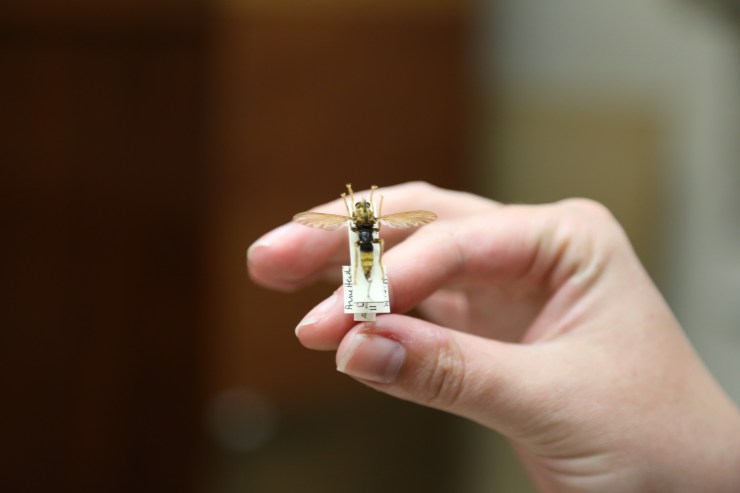
As it happens, the largest and most striking species of fly in Britain is the Hornet Robber Fly, or as it is more commonly known, Asilus crabroniformis. Superficially, its appearance closely resembles that of a hornet. Seen from a distance it is easy to see how the two species may be confused by the casual observer (pro-tip: look for the antennae. Hornets have long, obvious yellow-brown antennae whereas those of the Robber Fly are dark and small), so much so in fact that the species name for the Robber Fly crabroniformis, translates as ‘hornet-form’. This mimicry of a species that is able to sting affords the Robber Fly a level of protection. It does not have a sting itself but the bluff works well.

IMG_9311.JPG

Also of interest, and linked to the next post by Darren Mann, is the fact that this species is one of the top predators of dung beetles. The females require dung from a herbivore such as a horse or cow to lay their eggs in. As a consequence adults can often be found hanging out in fields near to piles of dung, hoping to meet the mustachioed mate(s) of their dreams, whilst snacking on dung beetles that fly in to start their own dung-related romance story. The presence of this Robber Fly species is often indicative of the quality of the dung and its associated beetle fauna, and as such should be greeted with warmth and a hearty ‘hurrah’ if spotted for it means that the habitat is healthy.