Coming out of the shell

Drawer of Lyell’s fossil gastropods

Just over a hundred years ago there was great excitement amongst the staff at Oxford University Museum when they acquired the Charles Lyell Collection of Tertiary molluscs. In his 1903 Annual Report the Professor of Geology, W.J. Sollas, described it as one of the most noteworthy events in the Geological Department that year.

The collection contains over 16,000 fossil specimens, mostly molluscs (bivalves, gastropods and scaphopods) but also shark teeth and other vertebrate remains.  Although some of the specimens are on display in the museum, few people were aware that we had the collection. It wasn’t until the 1990s that the collection was fully catalogued, and it has never been included in the Museum’s main collections databases.

Over the next 18 months we are planning to digitize the collection and create links to our archival material and Lyell’s publications. We want to make the collection accessible to a wider audience (i.e. you) through an image-rich online database including lots of contextual information.

At the same time, we will set up a new framework for digitizing palaeontological specimens using the KE EMu collections management system. This will pave the way for the migration of all our current palaeontology databases into KE EMu, joining records from the archives and other specimen collections. These records will all be available on our new Collections Online site.

IMG_6512_1Small
Books by Charles Lyell in the Museum Library

So who was Charles Lyell?

Charles Lyell (1797-1875) is best known for his book Principles of Geology, in which he popularised one of the key concepts of geology: “the present is the key to the past”. This book combined his own research in geology with ideas developed by the geologists around him, and provided a foundation for the modern study of the science. Lyell kept updating this book as new discoveries were made and his own ideas changed; in fact the last volume was published posthumously.

Lyell read Classics at Oxford, where he also attended the geological lectures of William Buckland. He was a trained lawyer but spent much of his time pursuing his interest in geology, and after 1827 took this up full time. Throughout his life Lyell travelled extensively in Europe and North America, observing geological phenomena, collecting specimens and lecturing to the general public. He was a close and influential friend of Charles Darwin, and Lyell’s Principles was one of the few geological books that Darwin took with him on his voyage on HMS Beagle.

On this blog we will be sharing what we discover in the course of this project: about the collection, the digitization process, and Lyell himself.
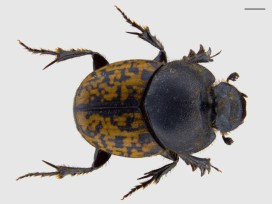
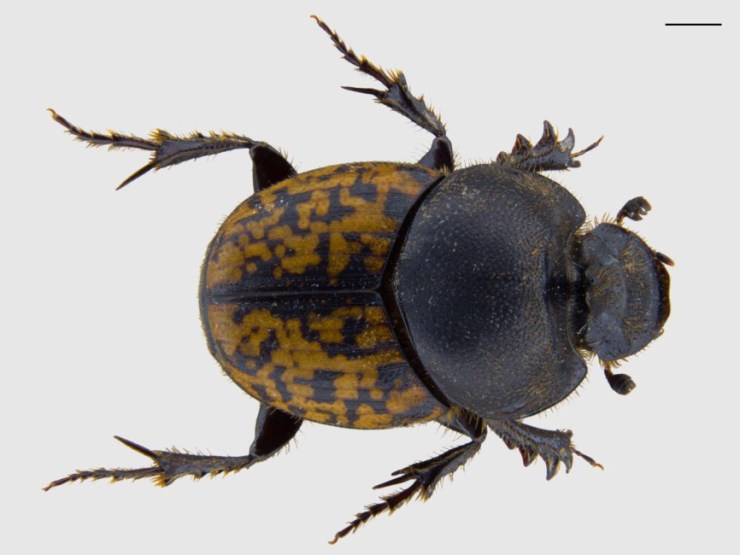
#Dungisfun

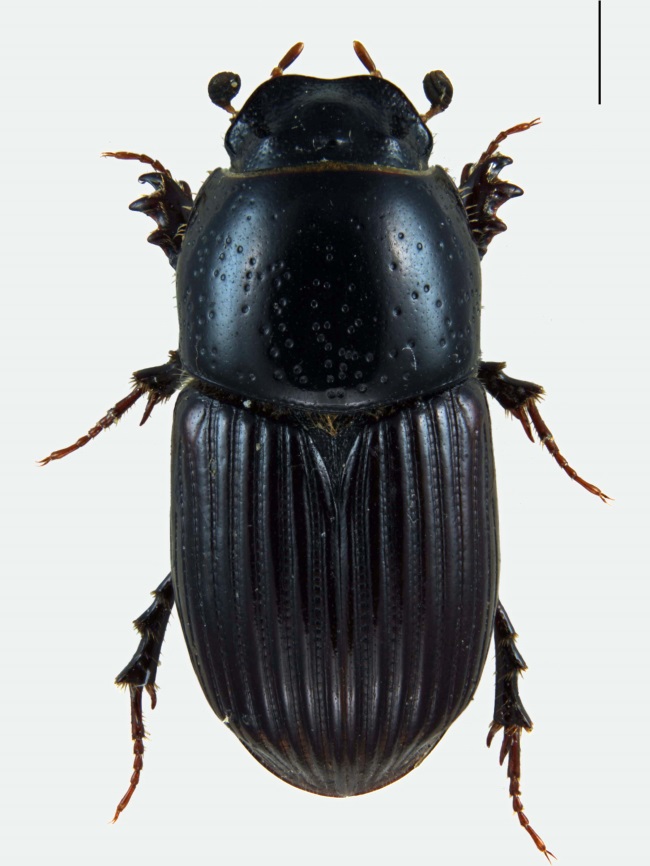
Onthophagus nuchicornis male

Dung doesn’t always get a lot of attention, but his week a new project, known as DUMP, has been all over the news. The project team are here to try and convince you that dung really is fun.

**

How often do you think about dung? Possibly not at all, yet without Dung Beetles we would literally be up to our necks in it.

There’s no doubt, Dung Beetles are an important group of insects, particularly for the agricultural environment. Recent research estimated that dung beetles save the UK cattle industry £367 million per year (Beynon et al. 2015). They provide all sorts of ecosytem services, including their famous ‘dung removal’ and others you may not be aware of. For instance, they reduce gastrointestinal parasites of livestock, nuisance flies, and play a key role in improving soil condition through aeration and nutrient recycling.

Aphodius subterraneus
Aphodius subterraneus – possibly extinct in the UK

In the UK there are 100 species of Scarabaeoidea, which includes the Dung Beetles, Chafer and Stag Beetles. Over half of these are dependent on dung. As part of the on-going Species Status Assessment Project with Natural England in collaboration with Buglife , a review of the scarce and threatened Dung Beetles and Chafers is currently in progress (S.A. Lane & D.J. Mann, in prep.). The preliminary results indicate an alarming decline in our Dung Beetle fauna.

Just over 25% of UK Dung Beetles are ‘Nationally Rare’ and four species may even have become extinct in the past 50 years. This project also highlighted the lack of modern records for many of the rare species and that many areas of the UK are severely under recorded.

All this prompted us (Darren J. Mann, Steve Lane, Sally-Ann Spence & Ceri Watkins) to go out and look for beetles and to re-survey sites where rare species were previously known. DUMP was born.

The Dung Beetle UK Mapping Project (DUMP) aims to record Dung Beetles across the UK, provide distributional records and gather information on habitat requirements and ecology. The DUMP team will also engage with landowners, farmers and the general public on the benefits and value of dung beetles.

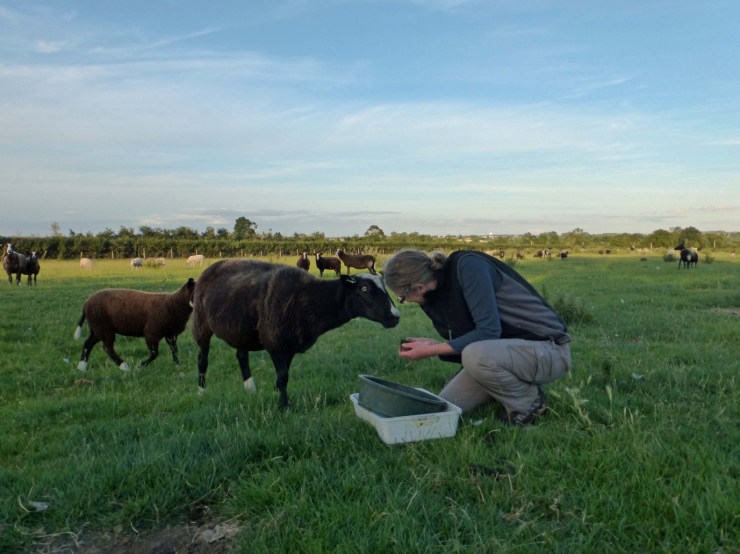
Ceri Watkins making new friends during DUMP fieldwork
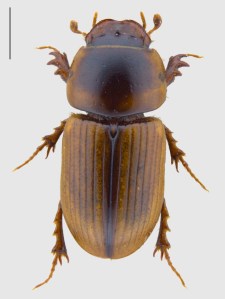
Aphodius lividus
Aphodius lividus

Over the past few years the team has travelled across the country from the Orkneys to the Channel Islands sampling across a range of habitats. A targeted survey for Onthophagus nuchicornis discovered healthy populations in North Devon and South Wales, but highlighted the dramatic decline of this species in its previous strongholds in Norfolk and Suffolk.

We also made some positive new discoveries including finding the rare Aphodius lividus and Aphodius sordidus on the Norfolk–Suffolk border, and Aphodius porcus at a new site in South Wales.

The DUMP project is in its early stages and comprised of a small team of volunteers. In the near future we hope to provide further information, distributions maps, online recording, and advice for management plans to help conserve our dung-inhabiting fauna. You can help out on social media too – tell the world why Dung Beetles matter and why #dungisfun!

Ceri Watkins, TCV Natural Talent Trainee

TLC (turtle loving care)

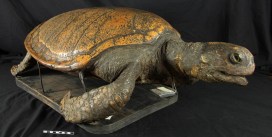
Turtle post-treatment

The Green Turtle (Chelonia mydas) above has been receiving some much-needed TLC from Abby Duckor, our first conservation intern from UCL’s MSc in Conservation for Archaeology and Museums. Here Abby explains what she’s been up to…

During my time at the Museum I have been lucky enough to spend a fair amount of time working on this taxidermy turtle. There was plenty to do: the specimen was covered in a dark layer of dust; there was a large tear in the neck, perhaps from a knock; and the taxidermy was generally overstuffed, noticeably on the stomach plate which had become completely detached, revealing the inner filling material.

The turtle shell (carapace) in the middle of treatment. The carapace was cleaned with detergent and de-ionized water. Toothbrushes were used to scrub the hard shell and to help remove any ingrained dirt.
Most of the filling was wheat with a small grain size, dating it to pre-1950, according to Dr Stephen Harris: after 1950 wheat grains were cultivated to be fatter and the stalks shorter. The wheat and other plant materials in the filling suggest an English location for the taxidermy.

The specimen itself is labelled as part of Rev. Buckland’s collection, dating it to the early 1800s, if not earlier. William Buckland, an important early geologist and palaeontologist, was quite a character. During his life he amassed a large collection of living and mounted animals. He claimed to have eaten his way through the animal kingdom, and you have to wonder if he ever tasted this fellow… Green Turtles were a popular food for sailors and locals, reducing their population size. Today they are listed as endangered.

Abby working on the turtle in the conservation lab.
Conservation treatment of this specimen involved cleaning the shell with detergent and deionized water, revealing a colourful shell underneath. You may have noticed that this Green Turtle is not actually green. In fact, the Green Turtle is named after the colour of its fat, not the colour of the skin. Ours had been painted a dark greenish-brown colour, because they lose their skin colour after they die, but I removed the top layer of paint to better reveal the yellow scales on the turtle’s head, tail and limbs.

The final touch was the replacement of the stomach plate, or plastron, which is now held in position with epoxy putty wedges attached to the metal stakes that hold up the specimen. Cleaned, and with everything in its right place, our Green Turtle is now in much better shape, as you can see in the photo at the start of the article.


Twice in a whale

natural-history-museum-oxfordsmall-41

By Mark Carnall, Life Collections

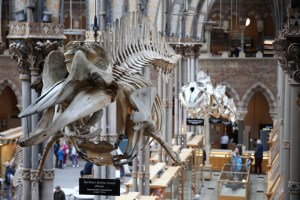
Followers of our Once in a Whale blog a while back may be aware of the huge task that faced our Life Collections conservator Bethany Palumbo and her team as they set out to clean, restore and repair the whale skeletons that hang from the Museum roof.

In my first week here, I received an enquiry about the history of these specimens, and digging through the archives I was pleased to find that they are not just ‘prop’ skeletons acquired for the purpose of display – they are important in the history of whale biology too. So this article is something of a postscript to the Once in a Whale project.

Surprisingly, it wasn’t until the mid-19th century that much was understood about the science of the largest animals to have lived on Earth. Some species were known from strandings; others from accounts – varying in reliability – from fishermen.

img_5415small-copyYet difficulties in preserving and transporting such large creatures (as well as the penchant for eating stranded whales at community festivals) meant that the biology and behaviour of whales was poorly-described and documented until fairly recently. So much so, that in early scientific literature just a few scientists are singled out as having actually seen the animals they were studying.
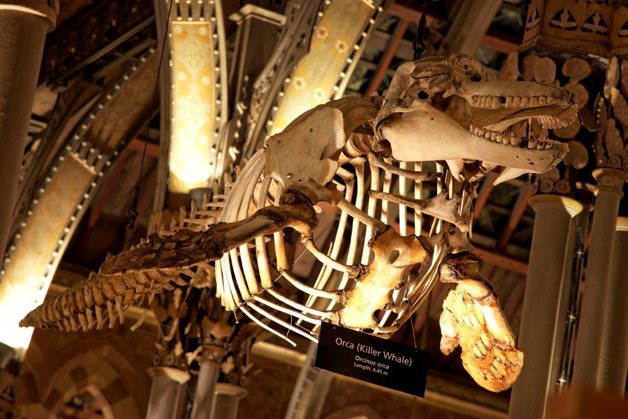
In the Museum there are five whale skeletons suspended from the roof, along with the skull of a Humpback Whale and the mandible of a Sperm Whale. Some of the earliest ‘whaleologists’ made the trip to Oxford to see these specimens in a race to formally describe new species or new aspects of whale biology.

In particular, two 19th-century anatomists competed to make new discoveries about whales. Dr John Edward Gray, keeper of zoology at the British Museum (Natural History), and Professor Daniel Frederick Eschricht, a Danish comparative anatomist, were so competitive that Gray made sniping comments in formal papers, questioning Eschricht’s observations.

John Edward Gray ‘destroying’ Eschricht’s observations. From Gray, J. E. 1864. On the Cetacea which have been observed in the seas surrounding the British islands.
John Edward Gray ‘destroying’ Eschricht’s observations. From Gray, J. E. 1864, On the Cetacea which have been observed in the seas surrounding the British islands

But perhaps this competition was more sporting than malicious: Gray did name the gray whale, Eschrichtius robustus, in Daniel Eschricht’s honour.

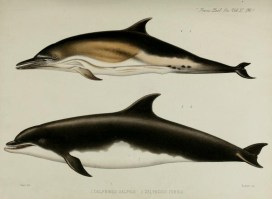
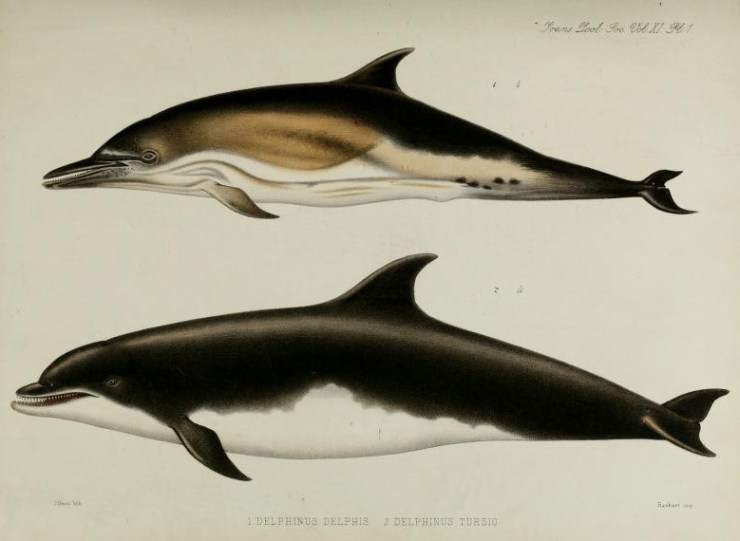
Eschricht actually presented the Museum with two of the specimens now on display: the Humpback Whale skull at the entrance and the suspended Minke Whale skeleton. Of the others, the Bottlenose Dolphin skeleton was caught near Holyhead in 1868 and was drawn by another notable natural historian, William Henry Flower, before being skeletonised for the Museum.

The Orca skeleton is from an individual killed in the Bristol Channel by fishermen in 1872, and the Beluga Whale was collected from Spitsbergen, Norway in 1881 and presented by Alfred Henge Cocks, who donated a range of mammal specimens to the University of Oxford.

The female Northern Bottle-nosed Whale skeleton has been harder to track down. It’s possibly a specimen shot in Weston Super-Mare in 1860 mentioned by Gray, but it isn’t clear. Lastly, there’s the large Sperm Whale mandible that greets visitors at the entrance. It doesn’t have much of a recorded history, but is allegedly one of the largest specimens in the UK according to a ‘researcher’ whom I’ve yet to track down.

William Flower’s drawing of the bottlenose dolphin (lower) the skeleton from this individual is on display in the museum Flower, W. H. (1880), I. On the External Characters of two Species of British Dolphins (Delphinus delphis, Linn., and Delphinus tursio, Fabr.). The Transactions of the Zoological Society of London, 11: 1–6. doi: 10.1111/j.1096-3642.1980.tb00343.xWilliam Flower’s drawing of the bottlenose dolphin (lower) the skeleton from this individual is on display in the museum Flower, W. H. (1880), I. On the External Characters of two Species of British Dolphins (Delphinus delphis, Linn., and Delphinus tursio, Fabr.). The Transactions of the Zoological Society of London, 11: 1–6. doi: 10.1111/j.1096-3642.1980.tb00343.x
William Flower’s drawing of the Bottle-nosed Dolphin (lower); the skeleton from this individual is on display in the Museum

The next time you are in the Museum, do look up: the skeletons there are not simply representing ‘whaleness’ but are also individual animals and important specimens in the early discovery and description of whale biology.

Talkin’ ’bout taxidermy

IMG_1691 (1)

Here at the Museum we have many bird, mammal, fish and reptile taxidermy specimens on display. There are a fair few that you can touch too, on our Sensing Evolution tables in particular. Outside museums, taxidermy has seen a wider surge in popularity in recent years, featuring in artistic practice and being offered as a practical skill through taxidermy courses. It has also been the subject of ethical questions and debates.

In the 19th century, taxidermy was seen as one of the ways of bringing strange creatures from the around world to museum visitors. They were collected at a time when the natural world was thought to be an infinite resource. Many early biologists would combine scientific expeditions with collecting trips, gathering material to be studied, described and displayed in public museums.

IMG_1639 (1)
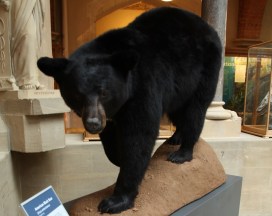
Unwrapping the American Black Bear

Today, it’s no longer possible to simply order an animal from a collector and expect to receive a crate containing a specimen prepared for display. There is a raft of national and international legislation designed to ensure that biological material is ethically, legally and safely collected and transported. It is also concerned with the impact on source communities, species conservation or ecosystems, and imposes checks on the transmission of disease or pests.

When Sensing Evolution opened here in May 2015 the museum obtained two larger pieces of taxidermy to greet visitors as they enter the building: a Red Deer purchased from a farm in Belgium, and an American Black Bear, which is a donation from the New Jersey Fish and Wildlife department in the USA.

Commissioning taxidermy is not straightforward and it’s important to know which permits are needed and whether you can legally qualify to receive them. There are many laws surrounding the import and use of animal parts that you need to be familiar with.

The Museum believes in the importance of wildlife conservation and we wanted to be sure that our taxidermy specimens are ethically obtained. Neither the Red Deer nor the American Black Bear were killed for the purpose of museum taxidermy, and both were sourced following a lot of research and communication with professional taxidermists and zoological societies.

IMG_1674 (1)
Team Bear and the bear itself, now installed in the court

The Red Deer skin was discarded from a farm where the specimen was raised for meat; the Black Bear was euthanized by the New Jersey Fish and Wildlife department as part of its standard control measures, although in this case rather than incinerating the carcass, the skin was removed, processed and donated to the Museum. We waited for many months for a suitable specimen to become available in this way.

The result is two touchable pelts which we hope visitors will find fascinating and beautiful, and which will contribute to our understanding of these incredible animals.

For more advice or information about taxidermy contact your local museum or the Guild of Taxidermists.

Layer upon layer

IMG_6299

Handwritten in Stone
9 October 2015 – 31 January 2016

Today sees the opening of our new special exhibition – Handwritten in Stone – celebrating the life and work of William Smith on the bicentenary of his publication of the first geological map of England and Wales.

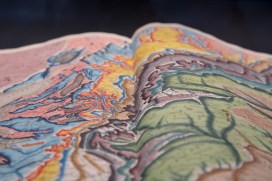
Dubbed ‘The Map that Changed the World’ in Simon Winchester’s book of that title, the beautifully hand-coloured map revealed a three-dimensional arrangement of rock layers, or strata, along with a fourth dimension – time.

This work earned Smith the moniker ‘the father of geology’, an accomplishment all the more impressive given that Smith achieved it single-handedly and with very little formal education.

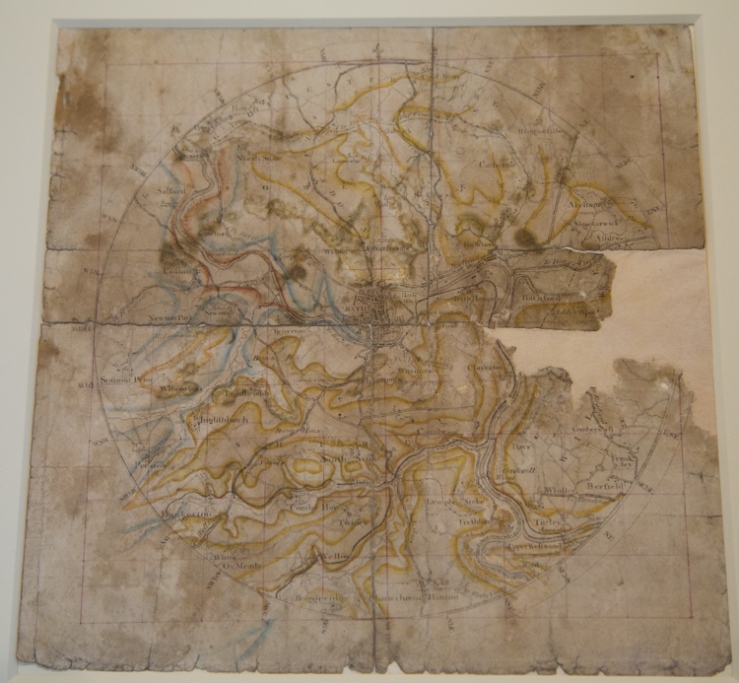
This 1799 map of Bath, on display in the exhibition, is the oldest geological map in the world

The Museum holds the largest archive of Smith material in the world. Alongside the famous 1815 map, shown at the top of the article, are personal papers, drawings, publications, maps and geological sections, most of which are being displayed for the first time. With these we have some fossil material from the collections: Smith realised that particular combinations of fossils were unique to different rock formations and could be used to date the strata.

Design work on the 'drawing board', created by Claire Venables at Giraffe Corner
Design work on the ‘drawing board’, created by Claire Venables at Giraffe Corner. Photo: Claire Venables

Handwritten in Stone, supported by the Heritage Lottery Fund, is the first show in our new special exhibition gallery on the upper east side of the building. Working out how to use the space was a learning process, and the final, elegant design is the work of local consultancy Giraffe Corner.

To bring the final exhibition together we collaborated with writer Rebecca Mileham, an installation team from the Ashmolean Museum, and more than 50 volunteers. Look out for more about the volunteers’ contributions on this blog soon.

Applying the graphics in the gallery
Applying the graphics in the gallery. Photo: Claire Venables

The 1815 map itself takes centre-stage in the exhibition, flanked on one side by the history of Smith’s work building up to its publication, and on the other by the legacy of his techniques, which are still used today.

To discover the full story of William ‘Strata’ Smith head over to the upper east side of the Museum before 31 January.

And don’t forget to look out for our What’s On programme which includes lots of William Smith and geology-focused events, including a public talk by author Simon Winchester on 13 October.

Scott Billings – Public engagement officer