Big up Christmas
Here’s a huge Merry Christmas from us – and Oxford University – to you. Thanks for reading More than a Dodo and see you in the New Year.
xx


Oxford University Museum of Natural History Blog

Here’s a huge Merry Christmas from us – and Oxford University – to you. Thanks for reading More than a Dodo and see you in the New Year.
xx
As a Museum research fellow, my work on arthropod palaeontology often takes me to exotic places to examine and collect fossils. I recently returned from a packed five-week trip to Australia and Argentina. During this time I managed to squeeze in two fieldwork trips, a museum visit to examine some collections, and an international conference.
It began in early September when I flew to Adelaide, Australia, to meet up with friends and colleagues at the South Australia Museum (SAM) for some fossil-collecting fieldwork. A group of eight of us piled into fully loaded trucks and started the drive to Cape Jervis, where we boarded the ferry to Kangaroo Island. On this beautiful island, there is a spectacular fossil site known as the Emu Bay Shale. The fossils here preserve 510 million year old Early Cambrian animals in incredible detail, including soft parts not normally found in fossils, such as eyes, gills, skin and guts.

Dr John Paterson, Dr Diego Garcia-Bellido and other researchers from the SAM have published numerous papers on the weird and wonderful animals from this site. I had already been fortunate enough to work with these guys on the anomalocaridids – very early marine animals – from the Emu Bay Shale a couple of years ago. After the fieldwork this time, we returned to Adelaide with a truckload of fossils to add to the SAM collections. I then spent two weeks working in the museum on previously collected specimens, and making research plans for the years to come as part of the ongoing collaborations between this Museum and the SAM.
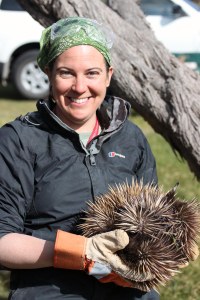
One of my favourite things about working in Australia is the chance for close encounters with the local wildlife, and this trip did not disappoint. During our time on Kangaroo Island, we saw many wallabies, Little Penguins, countless types of birds, and kangaroos of course. I even got to hold an echidna.
John, Diego and I then met up in Sydney airport for the long journey to Mendoza, Argentina where we joined nearly 900 colleagues for the 4th International Palaeontological Congress. This is one of the biggest conferences in our field, and takes place only every four years. We enjoyed a week of fantastic talks, including some given by the Museum’s researchers Dr David Legg and Prof Derek Siveter.
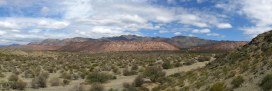
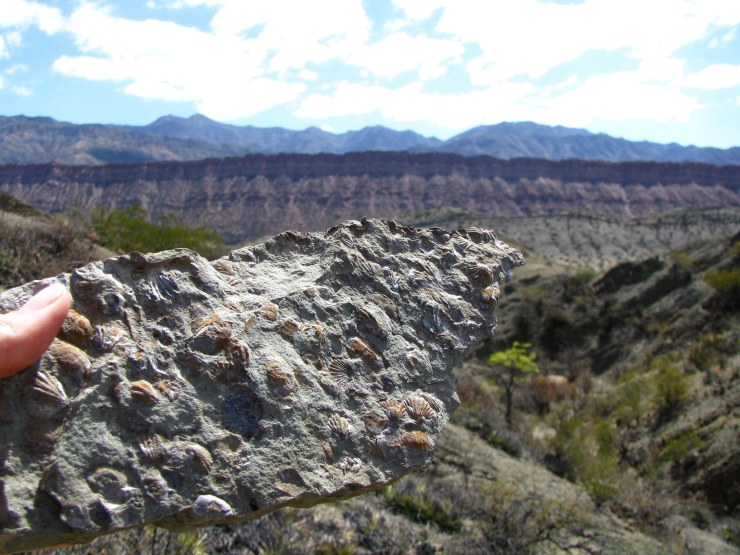
After the five-day conference, 30 of us headed out on a related field trip to the Argentinian Precordillera for a Palaeozoic marine journey to explore the wonderful rocks and fossils of western Argentina, near the border with Chile. We saw lots of lovely fossils, including trilobites, brachiopods, bivalves, corals and sponges. The terrain was so rugged at times that the field trip leaders had brought in the Argentine National Gendarmerie to transport us in army vehicles!

The scenery was spectacular, with impressive views over the Andes mountain range. After four marvelous field trip days, I then returned to Oxford, completing my journey around the world. The conversations and feedback from the conference and fieldtrip will help with my future research directions at the Museum. The fossil work in Australia provided important comparisons for the research I do here in Oxford on local collections, and will undoubtedly be the subject of future publications (and, of course, blog posts…).
Allie Daley, Museum Research Fellow

Since the 1920s the Museum has had in its care an original, unpublished manuscript containing over 1,500 beautifully detailed and colourful paintings of butterflies and moths. Known as Jones’ Icones, this one-of-a-kind work was created in the late 18th century by amateur Lepidopterist and retired London wine merchant, William Jones.
The paintings depict over 760 butterflies and moths from the collections of some of the most eminent naturalists in London at that time, including the founder of the Linnean Society, Sir James E. Smith and entomologist Dru Drury, as well as Jones’s own specimens.
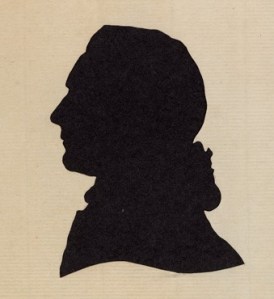
In addition to being a beautiful work of art, Jones’ Icones is also an extraordinarily important document in the history of entomology and insect collecting in Britain. At the time Jones was making these paintings, many of the specimens he was depicting were being brought to Europe and described for the first time, most notably from Australia and the Oceanic region. Jones meticulously recorded these specimens through his paintings, and his work remains the only record of many of these important collections, a large number long-since destroyed, lost, or divided among private collectors.
The Icones was also consulted by a student of Linnaeus, Johann Christian Fabricius – the man credited as the first to describe over 10,000 insects. It is believed that Fabricius named over 200 species from the images in the Icones, citing Jones’ work in his publication Entomologica Systematica in 1791.

In spite of this manuscript’s huge importance to the history of entomology in Britain, it has never been made available beyond the reading room of the Museum’s archive. So now, after almost a century of failed or abandoned attempts, Jones’ Icones is available for all to see!

As part of an HLF funded project, Flying Icons, which has been running since April 2013, all six volumes of Jones’s Icones have been digitised and made available online. A website at www.jonesicones.com has also been developed in order to promote this amazing manuscript and the related collection here at the Museum.
This website also serves another very important function: to solicit help from keen amateurs and experts worldwide to help identify all the species represented in Jones’ Icones. Identification is the first step in tracking down extant specimens of some of Jones’ paintings. It may even change our understanding of the history of the science of entomology. Can you help? If you think so, request an account and we’ll set you to task!
If you’d like to read more about Jones’ Icones – and see some large scale prints – then head to the current exhibition in the cafe area of the Museum.
Kate Santry – Head of Archives and Library

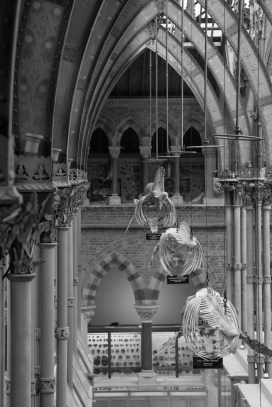
One of the most uplifting projects here over the past year or so (literally, as you’ll see) has been the conservation work on the five whale skeletons suspended in the court. The skeletons are beautiful, the process was intricate, and the whole thing was rigorously documented on our accompanying Once in a Whale blog.
The work inspired filmmaker Robert Rapoport to record some eerily captivating footage of our conservators at work, and the project itself was Highly Commended in the Museums + Heritage Awards.

At completion, the whales were raised once again into the vaulted space, but this time rearranged in size order and staggered in their distance from the ground. Each has its own spotlight, creating an impressive display, especially once darkness falls outside.
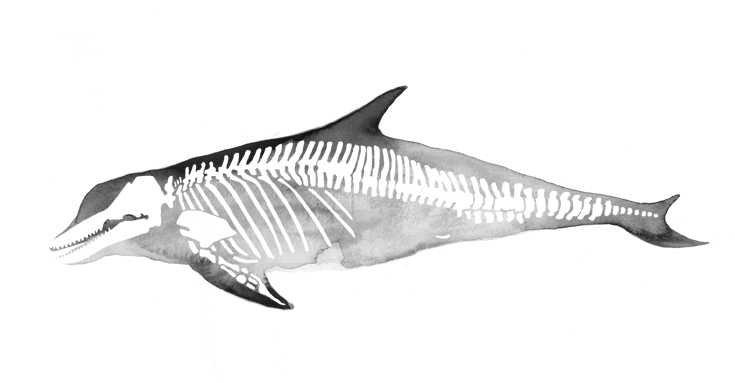
But there was a final element to the displays that has just been installed: information panels containing details about each of the species suspended above, along with drawings and paintings created for us by artists Nicola Fielding and Claire Duffy.
Claire’s paintings of the whales have been used in a scaled schematic of the display, each ‘fleshed out’ to give an impression of the whale in its full form; and Nicola’s accurate recreations of the skeletons are featured in a second panel which gives details of the conservation project itself.

Nicola is something of an old hand when it comes to making drawings for the Museum – her work is featured on lots of our family trails already. But the whale project seems to hold a special place in her heart:
I could write a short essay about how much being involved in the whale project meant to me. I’ve always been mesmerised by cetaceans and by the mythical status they can have. In a museum, hanging alongside dinosaur skeletons, they can seem like something we only know from pictures and imaginings. But cetaceans are of course still living, breathing and can be found in all corners of the worlds oceans. Even around the UK there are so many species to be found.
So I was really excited to be involved in a project that would allow the Museum to make the most of its incredible skeletons, and to make sure all the knowledge we do have about them is shared.

We hope the new information panels at each end of the whale aisle will encourage visitors to look up and perhaps share in Nicola’s wonder for these amazing creatures, many of which were almost hunted to extinction during the periods of intense industrial whaling.
Finally, if if you like the look of these paintings, there’s a last chance to see some of Claire Duffy’s other work in her Avifauna show at the Old Fire Station in Oxford, which runs until Saturday 8 November.
Scott Billings – Public engagement officer

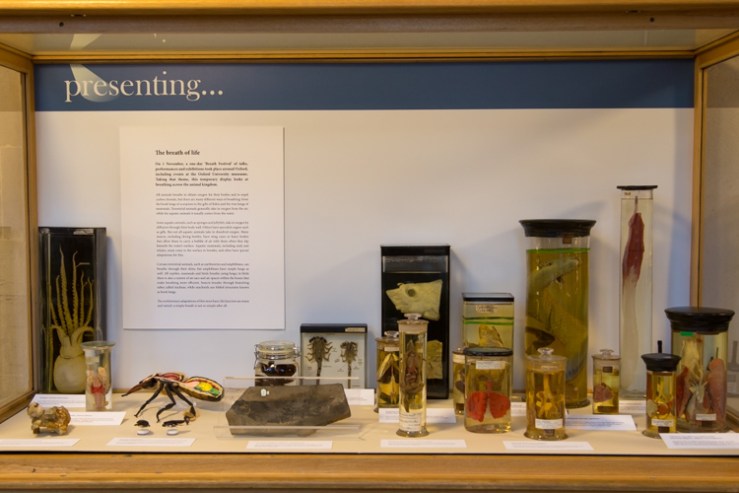
Tomorrow afternoon the Museum will host talks, tours and a dance performance as part of the Breath Festival, a unique series of events coordinated by the Oxford University Hospitals Artlink programme. To coincide with the festival we have put together a special display in our changing Presenting… case, all about breath and breathing across the animal kingdom.
There’s something of the Halloween macabre about the display too, with its pink-coloured lungs and eviscerated bodies suspended in spirit. Here’s a taster of the display, but to see the full selection head down to the Museum either for the Breath Festival tomorrow, Saturday 1 November, or at any time during the rest of the month.
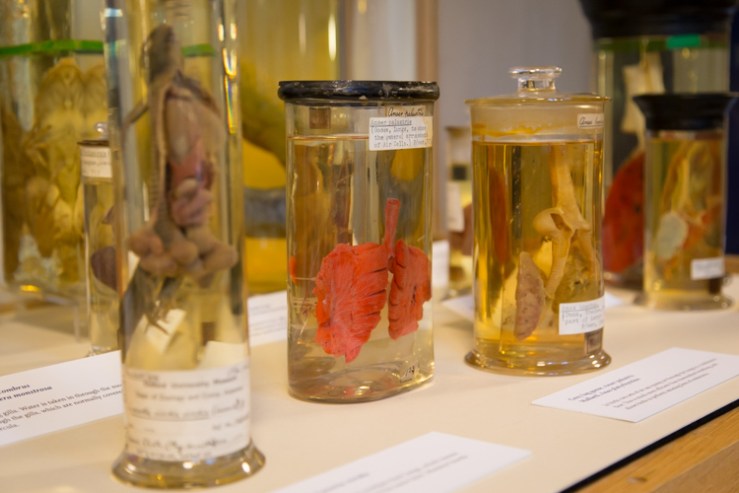
The breath of life
All animals breathe to obtain oxygen for their bodies and to expel carbon dioxide, but there are many different ways of breathing: from the book lungs of scorpions to the gills of fishes and the true lungs of mammals. Terrestrial animals generally take in oxygen from the air, while for aquatic animals it usually comes from the water.

Some aquatic animals, such as sponges and jellyfish, take in oxygen by diffusion through their body wall. Others have specialist organs such as gills. But not all aquatic animals take in dissolved oxygen. Many insects, including diving beetles, have wing cases or hairy bodies that allow them to carry a bubble of air with them when they dip beneath the water’s surface. Aquatic mammals, including seals and whales, must come to the surface to breathe, and often have special adaptations for this.
Certain terrestrial animals, such as earthworms and amphibians, can breathe through their skins, but amphibians have simple lungs as well. All reptiles, mammals and birds breathe using lungs; in birds there is also a system of air sacs and air spaces within the bones that make breathing more efficient. Insects breathe through branching tubes called tracheae, while arachnids use folded structures known as book lungs.
The evolutionary adaptations of this most basic life function are many and varied: a simple breath is not so simple after all.

Scott Billings – Public engagement officer
 There are many fascinating displays in the Museum, but there’s something special about meeting an expert and chatting to them about the collections they love. Every Monday to Thursday our Spotlight Specimens series gives you the chance to do exactly that.
Taking place under the T. rex in the Main Court at 2.30pm each day, staff from across the collections choose favourite specimens to share with the public. These experts will also be writing a series of Spotlight Specimens blog posts for those of you who can’t make it to the Museum to meet them in the flesh. In this, the first in the series, Gina Allnatt kicks us off with a Halloween special…
**
It’s October, month of falling leaves and trick-or-treating, so what better way to get into an autumnal mood than to talk about two moths with marvellously morbid names?
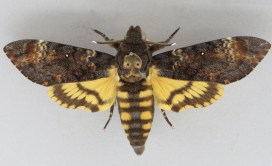
What do the Death’s Head Hawkmoth (Acherontia styx) and Black Witch moth (Ascalapha odorata) have in common? They are both associated with the film and novel Silence of the Lambs. The Death’s Head was used in the film, but the moth in the novel was originally the Black Witch. The moth was changed for the film for two reasons: The producers thought that a moth with a skull on its back would look more sinister, and also because it was almost impossible to get live specimens of the Black Witch moth for filming.

The author of Silence of the Lambs, Thomas Harris, may have chosen the Black Witch moth because of the many legends and myths that surround it. In Jamaica it is known as the “Duppy Bat.” In Central and South America it’s known as “Mariposa de la Muerte”, which translates as “Butterfly of the Dead” because there is a myth which claims the moth is a harbinger of death. A less sinister version of this myth suggests that if you find one of these moths in your home it means an ancestor or loved one who recently passed away is paying you a visit.
However, the subtlety of these myths would probably not translate so well on film, so Mr. Death’s Head Hawkmoth took centre stage. The vernacular name of this moth comes from the skull-like markings on its back. There are actually three species of Death’s Head Hawkmoth- A. atropos, A. styx and A. lachesis. Though the moth mentioned in the film is Acherontia styx, Acherontia atropos was actually used instead.
All Acherontia supplement their diet by raiding the hives of bees for honey. The moths achieve this by using their extremely thick cuticle, which makes them impervious to stings. But the moth also uses another tactic: it is able to emit an odour that is chemically identical to the worker bees’ scent. This fools the bees into thinking the moth is one of their own. They also emit squeaking noises while in the hive. Some scientists posit that the squeak is similar to the noise a queen honeybee emits when she wants the workers to freeze. No one has been able to observe this theory, however.
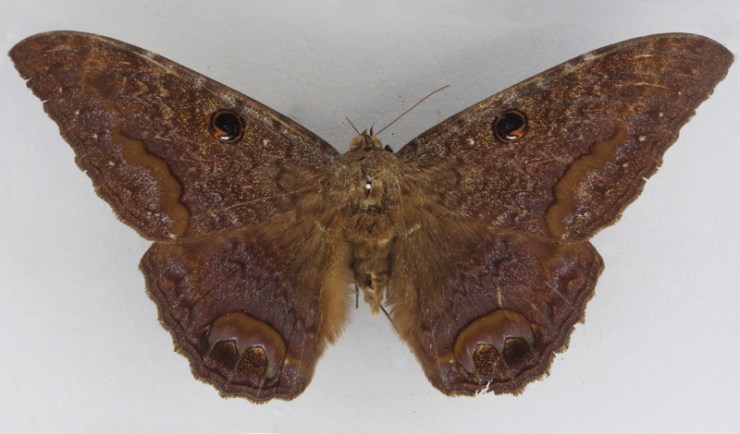
Despite all the myths and legends surrounding the Death’s Head Hawkmoth and Black Witch moth, both are large and harmless species. It is perhaps the fact that most moths are nocturnal which gives rise to so many legends and misinformation about them. It’s often the case that people will love butterflies but don’t like moths. Moths evolved before butterflies, and it is likely that the butterflies people hold dear evolved from day-flying moths (many day-flying moths exist today and are even more colourful than their butterfly counterparts!).
So remember this when you next see a moth (the original butterfly!) fluttering near a lamp as the sun slowly disappears.
Gina Allnatt, Curatorial assistant (Lepidoptera)
Gina will be talking about the Death’s Head Hawkmoth and Black Witch moth at 2.30pm on 28 and 31 October as part of our Spotlight Specimens series, running Monday to Thursday at 2.30pm.

