What’s on the van? – Sunset moth

_LEPI2006l

This week’s What’s on the van? comes from Katherine Child, of the Museum’s Hope Entomological Collections.

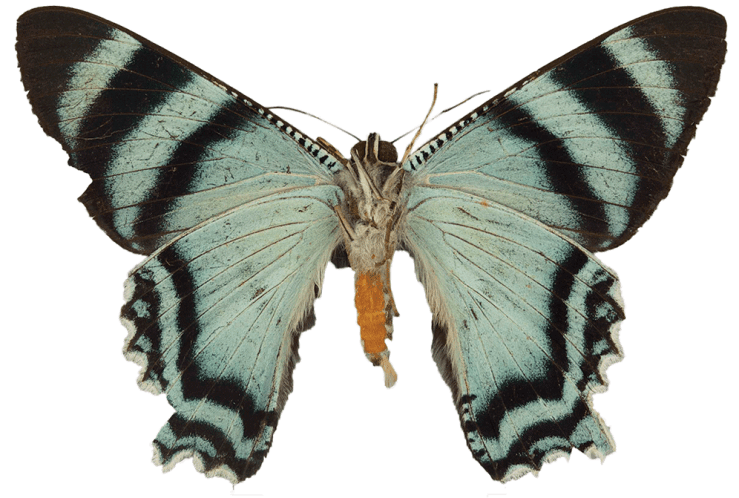
This striking image shows the underside of a large tropical moth belonging to the family Uraniidae. Its scientific name is Alcidia boops, but it’s also known as a sunset moth due to its striking, shimmery colours. Unlike most moths, this species is active during the day. As the light shifts on the insect’s wings you can see the iridescent scales which act as a warning to predators. These bright colours advertise the fact that the creature is toxic and would not be a tasty mouthful.

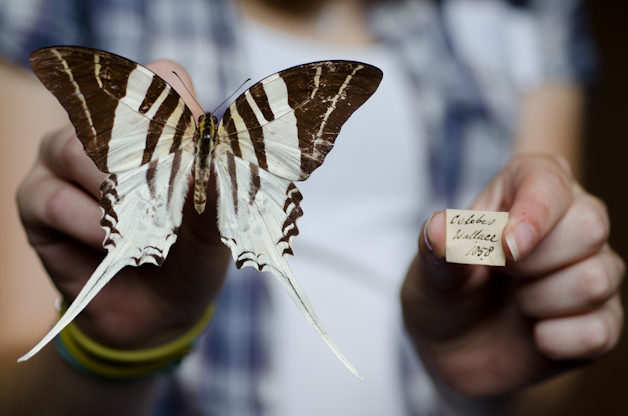
Underside and topside of the sunset moth. Photographed by Katherine.

– Underside and topside of the sunset moth. Photographed by Katherine.

Not only is the specimen pictured very beautiful, it is also extremely important. It’s one of almost 4000 butterflies and moths which form the museum’s Lepidoptera Type collection.  A type specimen is the designated individual from which an entire species is first described. This specimen will be referred back to by researchers, and other specimens are checked against it, time and time again. Happily for me, over the last few years it’s been my job to photograph this entire collection; this is one of my favourite specimens from it, and one of the moths which has stood out the most as I’ve worked my way through them all.

Many of the types in our collection are very old and inevitably some are a little the worse for wear. This particular female was collected from the Indonesian island, of Aru in 1857 by the famous naturalist Alfred Russell Wallace, and despite the fact that it’s over 150 years old it’s in extremely good condition – still a really impressive sight.

What's on the van?

What’s lurking in the attic?

DSC_8154

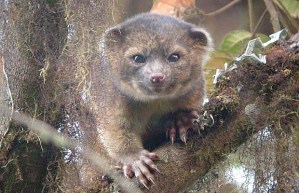
Last week saw the announcement of a new carnivore on the block, the rather adorable olinguito. This little South American mammal is the first carnivore to have been discovered for 35 years and demonstrates the importance of museum collections… in case we needed any convincing!

Olinguito

As you may have read, the olinguito was discovered by Dr Kristofer Helgen of the Smithsonian Institution after he saw some mysterious specimens preserved in the collections of the Field Museum in Chicago. After lots of careful study of the skins and skulls, Dr Helgen realised that these animals had gone unidentified for centuries. Since then he has successfully seen and photographed the cute creature in its Andean habitat. But, as highlighted by the Observer newspaper, if the museum’s collections had not been carefully maintained, we may never have known of the existence of this raccoon relative in the first place.

The UK’s natural history collections are currently facing a serious threat. With specialist curators becoming almost as rare as the olinguito itself, specimens across the country are at risk of rapid decay and damage. To discuss current difficulties and create some solutions, we’re holding a one day seminar here at the Museum of Natural History on 20th November. ‘Crap in the Attic?’, as it has been amusingly named, is intended to help professionals to maintain, use and explore their collections in a sustainable way.

If your institution has a natural history collection, and you’re based within a couple of hours’ travel from Oxford, why not join us? You never know, it might help you to uncover the next new species hidden in your attic!

Rachel Parle, Education Officer
The Art and Science of Taxidermy

Derek Frampton

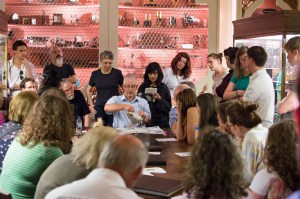
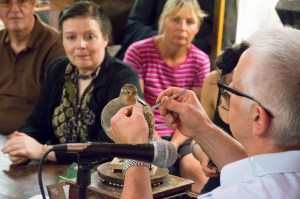
On Sunday 18 August we had the pleasure of welcoming professional freelance taxidermist Derek Frampton to the Museum of the History of Science, where our joint exhibition, Natural Histories, is being shown. As part of the exhibition’s public programme Derek delivered a very popular illustrated Table Talk on the Art and Science of Taxidermy.

An attentive audience

Derek has pretty much been a taxidermist his whole life, having started by collecting, dissecting and drawing animals as a boy. Since then he has done a lot of work for museums, including us and the Natural History Museum in London, where he helped prepare Guy, the Museum’s famous gorilla.

“I really liked drawing and painting animals and would collect things I found. Then I realised I could open them up and became fascinated by the way they worked inside – the mechanics of the muscles and skeleton,” Derek told visitors to the event.

Finishing touches
Finishing touches

“But after a while the specimens started to get smelly and I’d get into trouble with my mum. So I’d have to throw them away and find some new ones. Eventually somebody said to me that the technique for preserving the animals was called taxidermy. I bought a book on it and I have been doing it ever since.”

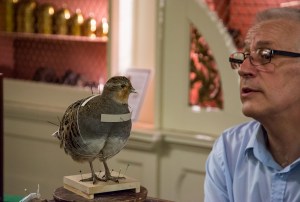
For the Table Talk, Derek brought along the skin of a female partridge which had been killed in a road traffic accident.

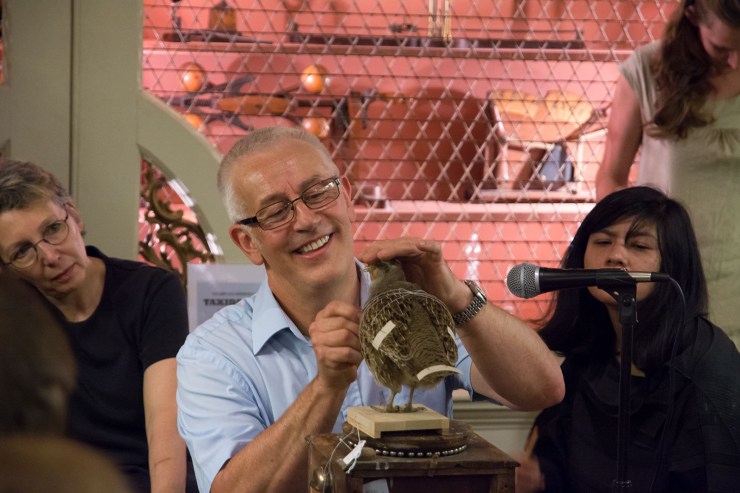
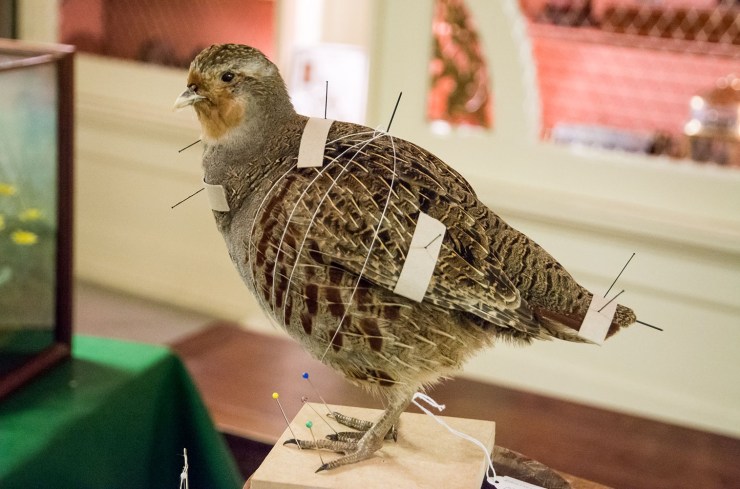
During the hour he went through the process of turning the prepared skin into a finished piece of taxidermy. Using a photograph of a live partridge as a reference, Derek padded the bird with tow, a natural fibre, and inserted florists’ rods to give it a natural shape and posture.

Derek Frampton and the partidge
Partridge and Derek Frampton

At the end of the process the bird was tied and pinned to allow the skin to fully dry and contract, after which the cotton bindings will be removed.

The presentation was a fascinating insight into the half-art, half-science of taxidermy and the perfect complement to the Collect, Preserve, Study display in the Natural Histories exhibition.

The Art and Sciene of Taxidermy

Our new-look blog

Westwood paussidae

The Hope Entomological Collections blog has landed! All of the content of the blog has now been transferred over to the WordPress platform- we just have some final tweaks to make. The toughest decision is going to be over the image that we use for the background. So many insects, not enough time.

We’ll be trialling a number of different pictures over the next week or so, so remember to check back regularly and let us know which one you like best by leaving a comment on this post.

Today’ss background picture (also above) is of a historic collection drawer from the J.O. Westwood Paussidae collection. Westwood was the first curator of the Hope Entomological Collections.

The old version of the blog will be left on-line. If you are looking for it, it can be found here

What’s on the van? – Granite

_granite_a98-5

This week’s What’s on the van? comes from Dr Dave Waters, Curator of Mineralogical Collections and Monica Price, Head of Earth Collections.

The rock that goes home for holidays
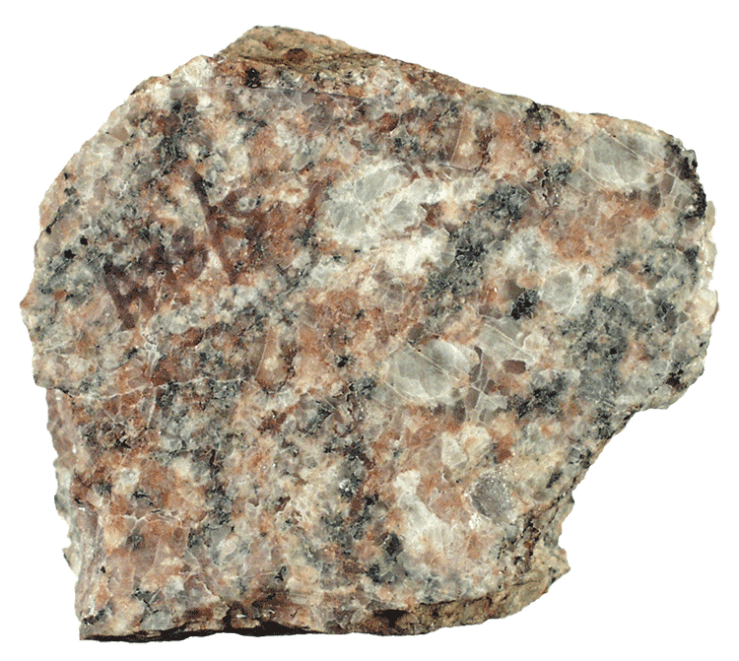
Every year, a group of Oxford undergraduates travel to north-west Scotland to unravel the fascinating geological history of the area by studying the local rocks and how they relate to each other. They stop at various places to explore the geology, including the ‘multicoloured  rock stop’, an exposure of rocks in a road-cut north of Loch Laxford. This is where our sample of granite was collected in 1998.

It is very old, part of a suite of ancient Precambrian rocks known as the ’Lewisian complex’, named after the Hebridean island of Lewis. It formed about 1.7 billion years ago when magma – hot molten rock – was intruded into an even older metamorphic rock called a gneiss. The magma cooled down, forming crystals of different minerals: pink potassium feldspar, white sodium feldspar, transparent grey quartz, and black grains of biotite mica and magnetite.

The students learn to identify the minerals by studying thin sections of the rock, just 0.03mm thick, under a petrological microscope. This allows them to examine the distinctive optical properties of each mineral under polarised light. The Oxford Earth Sciences Image Store shows you what they can see.

Each year, this piece of granite travels ‘home ‘ with the students on their fieldtrip, and helps to teach them about the different kinds of rock they will see in the field. It is part of the large collections of rocks, fossils and minerals in the University’s Earth Sciences Department and the Museum of Natural History that are available for students to study.

What's on the van?

Into the Wilderness

Wildnerness python

Ah, the rough-smooth joy of snakeskin. Who could resist a little stroke? Well, a few people definitely can it seems (ophidiophobics), but certainly not this young chap. Along with hundreds of other visitors, this family stopped by at the Oxford University Museums yurt at this year’s Wilderness Festival where we spent four great days showing off objects from the collections and indulging in a bit of festival craft.

Wilderness signThe weather was kind, and armed with a brilliant team of volunteers and festival-hardy staff we welcomed costumed, painted and be-masked revelers to our tent to learn about the museums and get up close to some great objects. Outside in the sunshine, people whiled away the day making Pitt Rivers Museum-inspired hats, Museum of the History of Science planispheres and our own peacock headdresses.

Peacock headdress
Peacock headdress

We had a really positive response to everyone who came along and joined in with the activities, and although I shouldn’t brag, this is a nice comment from one parent which I will share:

We had a really fantastic time at the Oxford University Museum area. They love making Napoelon style hats which kept them occupied for ages. They also really enjoyed looking at the bugs and inspecting the snake skin. The staff couldn’t have been more helpful – they had a great rapport with the kids and were a friendly team. Please come again next year!” – Mother and two daughters, aged 8 and 6.

As for Wilderness itself, things took a rather stranger and more adult turn after nightfall as the Bacchanalian Masked Ball got into full swing in a hitherto hidden vale amongst the lantern-lit trees. No record exists of that portion of the evening but suffice to say that visions were beheld and morning heads were a little sore.

Yurt
The camp
Family
Investigating the collections
Insect drawer
The pinned insect drawer
Rock python
The ever-popular rock python skin (so long it didn’t fit in the tent!)

Thanks to everyone who came to help out, and to everyone who visited on the day. And thanks to the Wilderness Festival team for setting us up with a lovely green yurt as our base-camp.

More next year, perhaps…

Scott Billings, Communications coordinator

Thanks to Chris Wood for the photos.