
Fossils have an air of timeless imperturbability, yet the fact they were preserved at all is one of the most remarkable things about them. The fossil record represents at most around one per cent of all the species that ever lived, and a tiny fraction of a per cent of all the individual organisms once living.
Having eluded the grasp of fate and survived millions of years unmolested by our planet’s tendency to recycle its surface layers, we don’t then expect fossils to vanish from our collections! Yet a significant number have done just that, and continue to do it, through no fault of curators and conservators.
Fossilisation takes many forms, typically by the replacement of hard tissues, like shell or bone, with mineral substances. Occasionally, soft, organic tissues are preserved, but only rarely does this happen with much fidelity (alas!). Yet the burial of soft tissues in sediments can act as the catalyst for mineral formation.
The most common mineral formed this way is called pyrite, or iron sulphide. In its crystalline form it’s known as “fool’s gold”, being weighty, shiny, brassy and… worthless. It is most often found in clays and shales, and frequently in-fills the shells of ancient creatures such as ammonites, forming perfect internal casts.
For the curator and conservator this can be a major problem because iron sulphide is unstable in a normal atmosphere. It reacts with oxygen and water vapour to form iron oxides, sulphates and sulphuric acid. The result can be a heap of white crystals where your fossil once was, plus acid burns to specimen labels. Some large specimens can produce so much sulphuric acid they eat through numerous drawers in a collection cabinet, leaving holes all the way to the floor!
 So work is underway at the Museum to re-evaluate our holdings of pyritic fossils. We are studying causes and effects, and hope to implement new treatments to better secure our collections, and perhaps help others do the same.
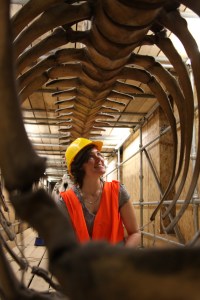
Of special concern are the large Mesozoic marine reptiles – extinct creatures like ichthyosaurs and plesiosaurs, and also crocodiles. Specimens from some Jurassic shales may have parts of the digestive tract preserved in pyrite. This may be because many ate a diet of spiky, indigestible prey such as belemnites, so it’s likely their gut had to be very tough to avoid perforation; this in turn was slow to decay and so acted as the nucleus for pyrite deposition.
A century and a half after these specimens came to the Museum, their pyritic midriffs sometimes show signs of decay. The example above is the long extinct early Jurassic marine crocodile Steneosaurus. This specimen comes from the Posidonia Shale “Lagerstätten” (an exceptionally preserved fossil deposit) of Holzmaden in Southern Germany. At 4m long, it’s a substantial crocodile, with a snout full of sharp teeth and bony armour plates studding its body.
In the picture at the top of this post you can see a dark mass tucked under the ribs. We are concerned about the yellow deposit coating here – a residue of sulphur and iron compounds resulting from pyrite decay. The good news is there is not much of it and very little damage apparent. But we need to know if the decay is recent and active, or if it dates from years ago and is now stable. If the decay is inactive, the best treatment is usually no treatment at all, aside from a little cleaning and stabilisation. If the decay is active, we will need to devise a treatment regime: no easy matter for so large and delicate a specimen.
These photographs will form part of a larger series of affected specimens, helping us to accurately monitor their condition. Conservation photographs will be produced as uniformly as possible to include scale and colour charts for comparison. This will provide invaluable data allowing us to study the processes of decay, and to link them to environmental data.
This all takes time, but as things develop, we’ll keep you posted.
Paul Jeffery, Assistant curator, Geological Collections




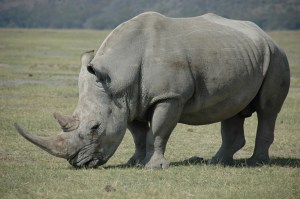 This huge molar tooth belonged to a wide-lipped or white rhinoceros living in Africa. This species, whose scientific name is Ceratotherium simium, is one of the five species of rhinos that are still alive today in Asia and Africa.

 In 2002 we marked its tricentenary with a birthday celebration, including of course, a butterfly-shaped cake!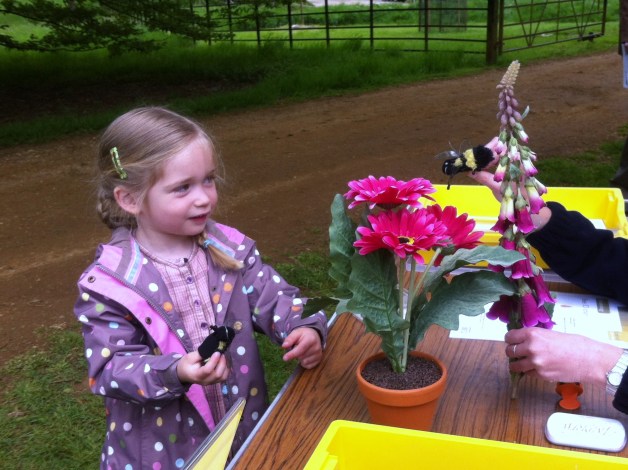
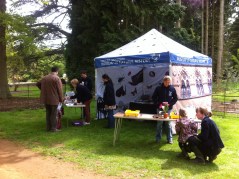
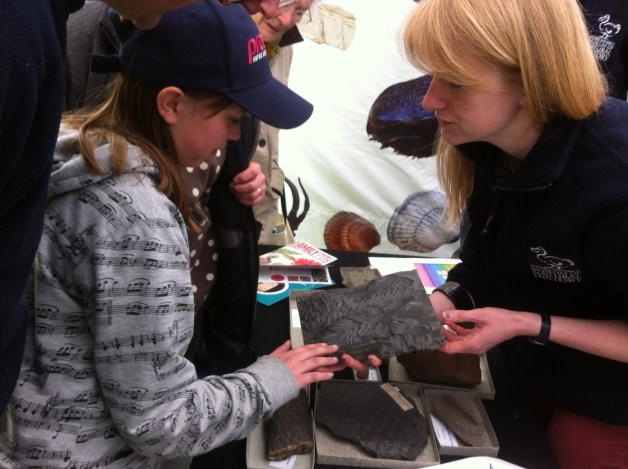
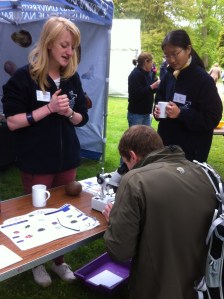 Also, our ‘Science Saturdays’ family activities came out of closure-hibernation. We took out our Entomology activity, which allowed visitors to see some bee specimens up close and discover how important they are for pollination. And the day saw the maiden voyage of our brand new activity ‘Plant Power’, designed especially for the day. Families identified some of the pressed specimens on display in the Museum, tried out a microscope and learned about the amazing properties plants have.
 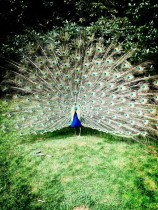 With a steady flow of people all day, Janet, Sarah, our intrepid volunteers and myself were kept busy with questions and interested visitors. Entertained every now and then with the occasional peacock display of course!
