In storage
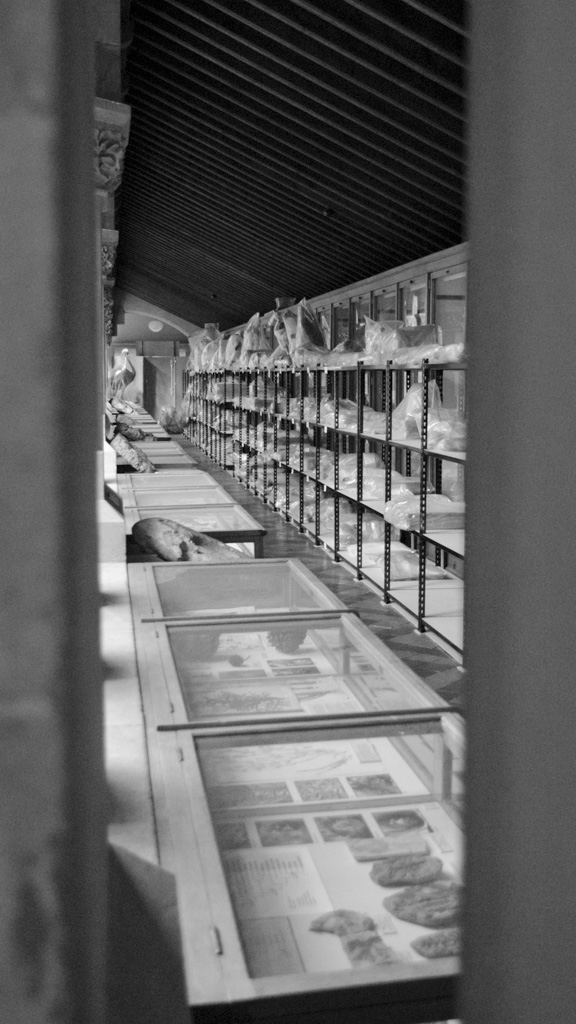
Another image of our bagged up specimens, in storage while the roof work takes place. At the very end there you might be able to spot a rhea.


Oxford University Museum of Natural History Blog
Another image of our bagged up specimens, in storage while the roof work takes place. At the very end there you might be able to spot a rhea.
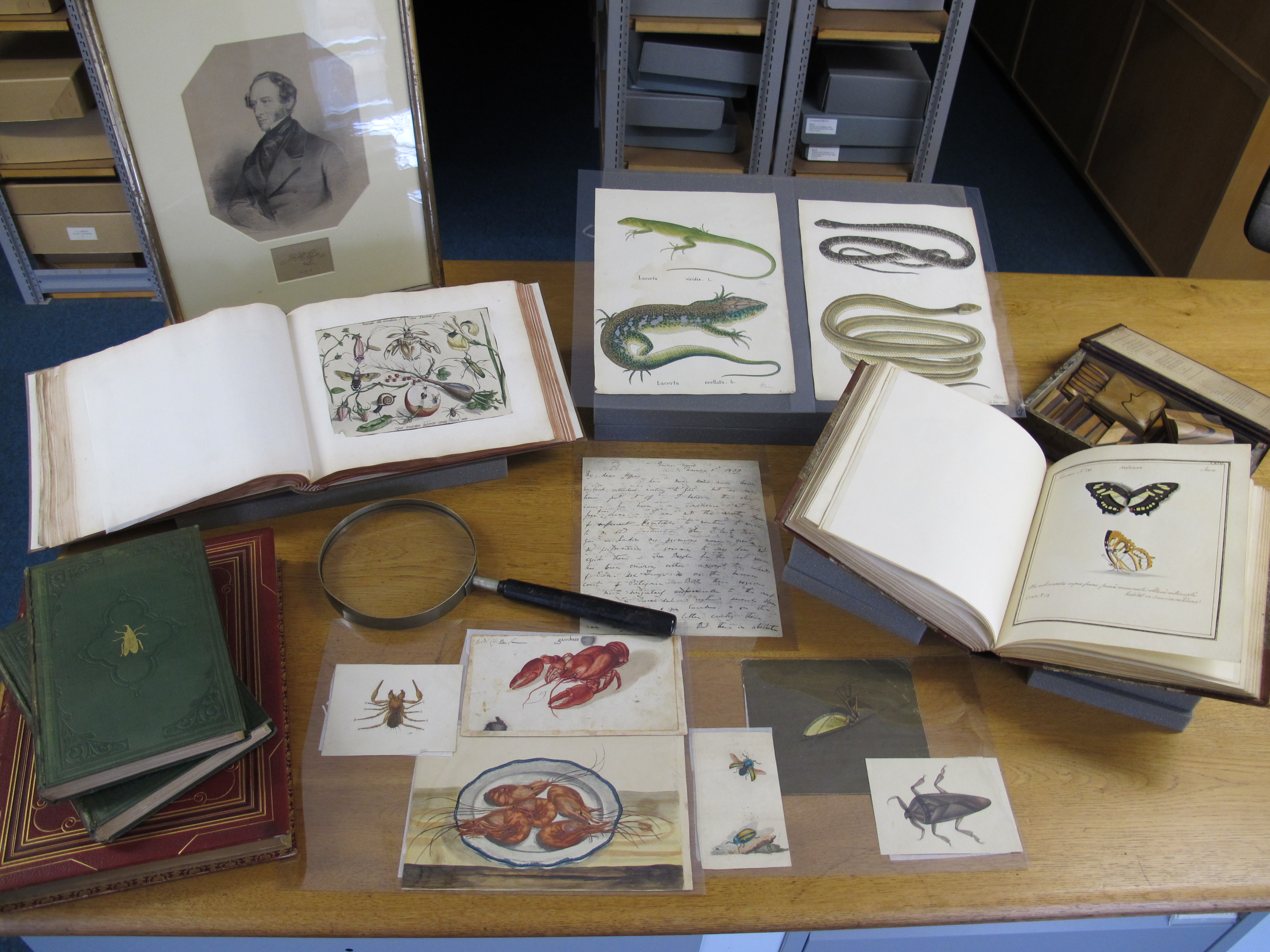
The Behind the Scenes Tours are now in full swing. Hosted here at the Museum on Tuesday afternoons, from 3-5 pm, they offer a unique look at what our collections staff get up to in their day-to-day work, as well as a rare opportunity to see items from our specimen and archive collections that are not normally on exhibit.
The first Treasures of the Archive tour took place last week and offered a beautiful display of some of the oldest and most important items in the archive collection. It included, among others, the original 18th century manuscript known as the Jones’ Icones, which features hundreds of exquisitely detailed butterfly paintings, a letter from Charles Darwin mentioning of his voyage on the Beagle, and William Smith’s personal copies of his Geological County Maps.
There will be two more opportunities to join this great tour, on 2 April and 21 May 2013; but with tours being offered by every department there are sure to be many more that will catch your fancy. There are even tea and biscuits at the end!
Tours can be booked through the University Online Shop and are only £5 per person. Coming up in the next few weeks, we have the first of the Entomology Highlights Tours, behind the scenes in Zoology, and a special themed tour centred around female fossil hunters Mary Anning and Elizabeth Philpot – all sure to be a great afternoon out. To see a complete listing visit our website.
If you have a group that is interested in any of our Behind the Scenes Tours, but you cannot make the advertised times, please contact info@oum.ox.ac.uk to discuss options for private tours.
Kate Santry, Head of Archival Collections
By Mike Ackland
Honorary Associate of the HEC
In September 2011, John Carr of Massachusetts, USA, posted photographs of an anthomyiid fly on the website diptera.info. This site has thousands of photos of flies, sent in by both diptera enthusiasts who are keen photographers, and experts who offer advice and possible identification.
I recognised the anthomyiid as a species of Eutrichota, which has over 50 species in the Nearctic Region. Positive identification to species however generally requires examination of a specimen under a microscope. John, who is a very good photographer and naturalist, later added to his posting some very clear close-ups of various parts of a male specimen he had caught, and offered to send the specimen to me. This proved to be Eutrichota affinis (Stein), a species widespread in America and which is associated with the groundhog Marmota monax L. and may be found in and around their burrows. The larvae are considered to be facultative commensals probably feeding in excrement and debris in the burrows.
A few other species of Eutrichota in North America have been associated with mammals including ground squirrels, Spermophilus tridecemlineatus (Mitchell), chipmunks, Tamias striatus (L.) and various species of gophers (Geomys spp.).
In Europe other species of Eutrichota have been found around the burrows of the Alpine Marmot Marmota marmota L. There are seven species of Eutrichota in Britain, though no life histories are known. See Pont & Ackland, 1995 for more details of the flies found in the Alps (full reference below). I first met Adrian Pont (another Hope Department Honorary Associate) in the mid 1950’s in Leigh Woods near Bristol, where we were both collecting insects. So we have both been studying flies for over 50 years.
Recently John Carr sent me two photographs of specimens of Eutrichota affinis on the head and nose of a groundhog. These were taken in Connecticut on 30th May 2009. The groundhog family was living in a culvert, and John reports that they later ate part of his sister’s garden!
My thanks to John for permission to use these excellent photos.
 |
| There’s a fly on my nose! |
 |
| Females of Eutrichota affinis (Stein)(Diptera: Anthomyiidae) on the head of the groundhog Marmota monax L. |
Reference
Pont, A.C. & Ackland, D.M. (1995). Fanniidae, Muscidae and Anthomyiidae associated with Burrows of the Alpine Marmot Marmota marmota Linnaeus in the upper Ötz Valley (Tyrol, Austria). Insecta, Diptera. Berichte des naturwissenschaftlich-medizinischen Vereins in Innsbruck, 82: 319-324.
A pdf version of the paper is avaliable HERE.

With the exhibits hidden behind scaffolding for the next year, it’s time to bring the Museum to you! So here’s how we’ll be getting around – our very own bespoke museum van.

The exterior has been beautifully decorated with some of the Museum’s most famous specimens for people to spot as we’re out and about. Bugs, animals, gemstones and, of course, our T rex, can be seen peering out of the paintwork.
Over the next few months, we’ll be getting the expert info on each of the specimens, with one object featured each week. That means you’ll be able to find out what makes these specimens so special.
Our Education team will be zooming off to small, rural schools that are often unable to visit the Museum. We’re providing workshops on skeletons, rocks and minerals and evolution. Bones, stones and specimens are wrapped and packed ready to get out onto the road. More about that later!

Collections staff will also be using the van to transport objects between locations. This will be especially important for a couple of special projects in the summer… watch this space for more information on that soon.
So, if you see us on a road near you, give us a wave! And check the blog each week to find out What’s on the Van.
Rachel Parle, Education Officer
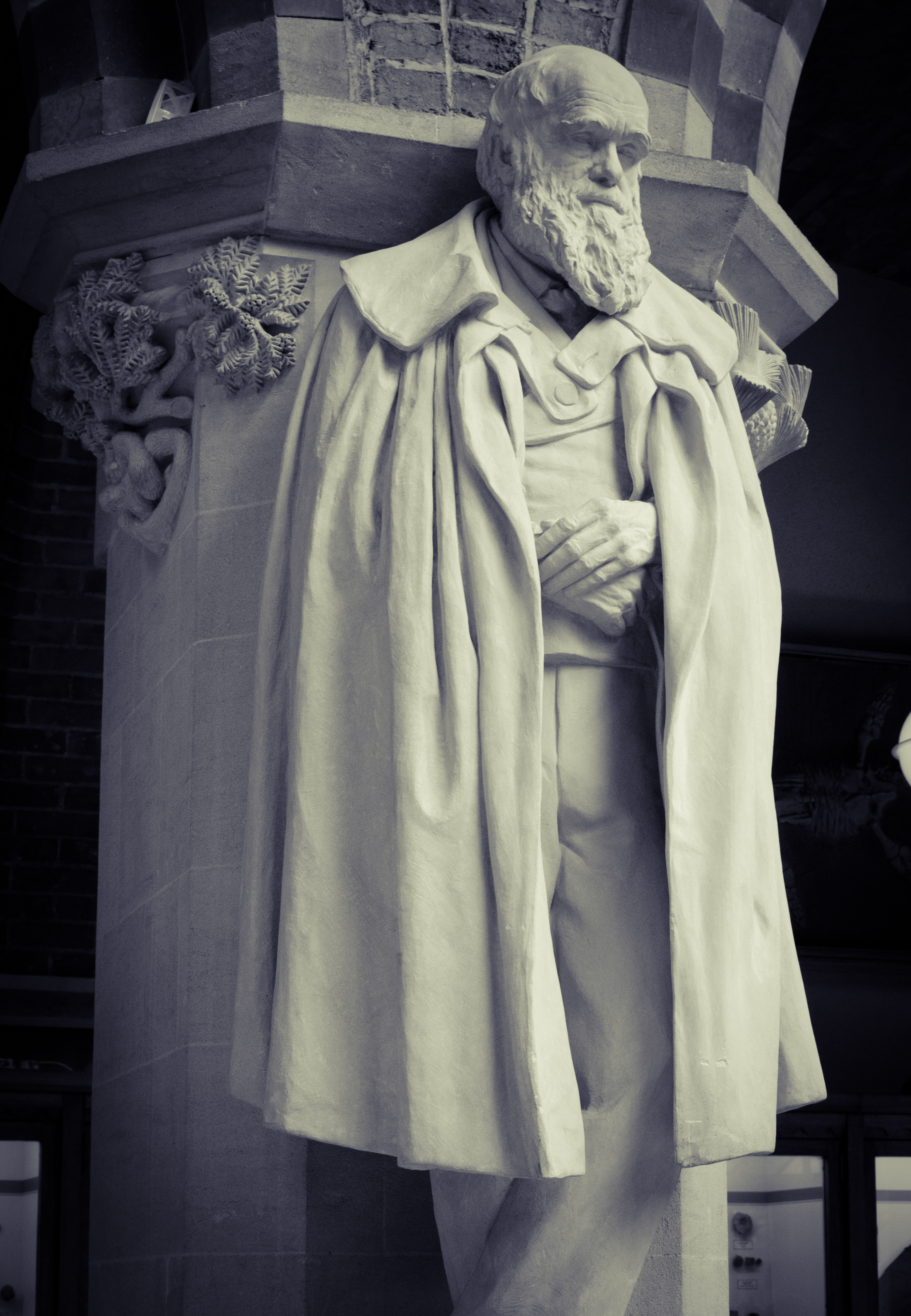
We couldn’t let International Darwin Day slip by without a quick post. It’s the day that marks what would have been Charles Darwin’s 204th birthday. Here at the Museum of Natural History, Charles Darwin is an ever-present, incredibly important figure – we even have a statue of him in the court. Of course, this is hidden amongst scaffolding at the moment, so there’s a little reminder above!
But Darwin isn’t the only person to celebrate his birthday on 12th February; it’s also the birthday of our Assistant Curator of Entomology, Darren Mann! Darren has been celebrating his birthday today by examining his favourite dung beetles. At school, his love of the natural world and their shared birthday even led to one of his teachers nicknaming him Darwin.
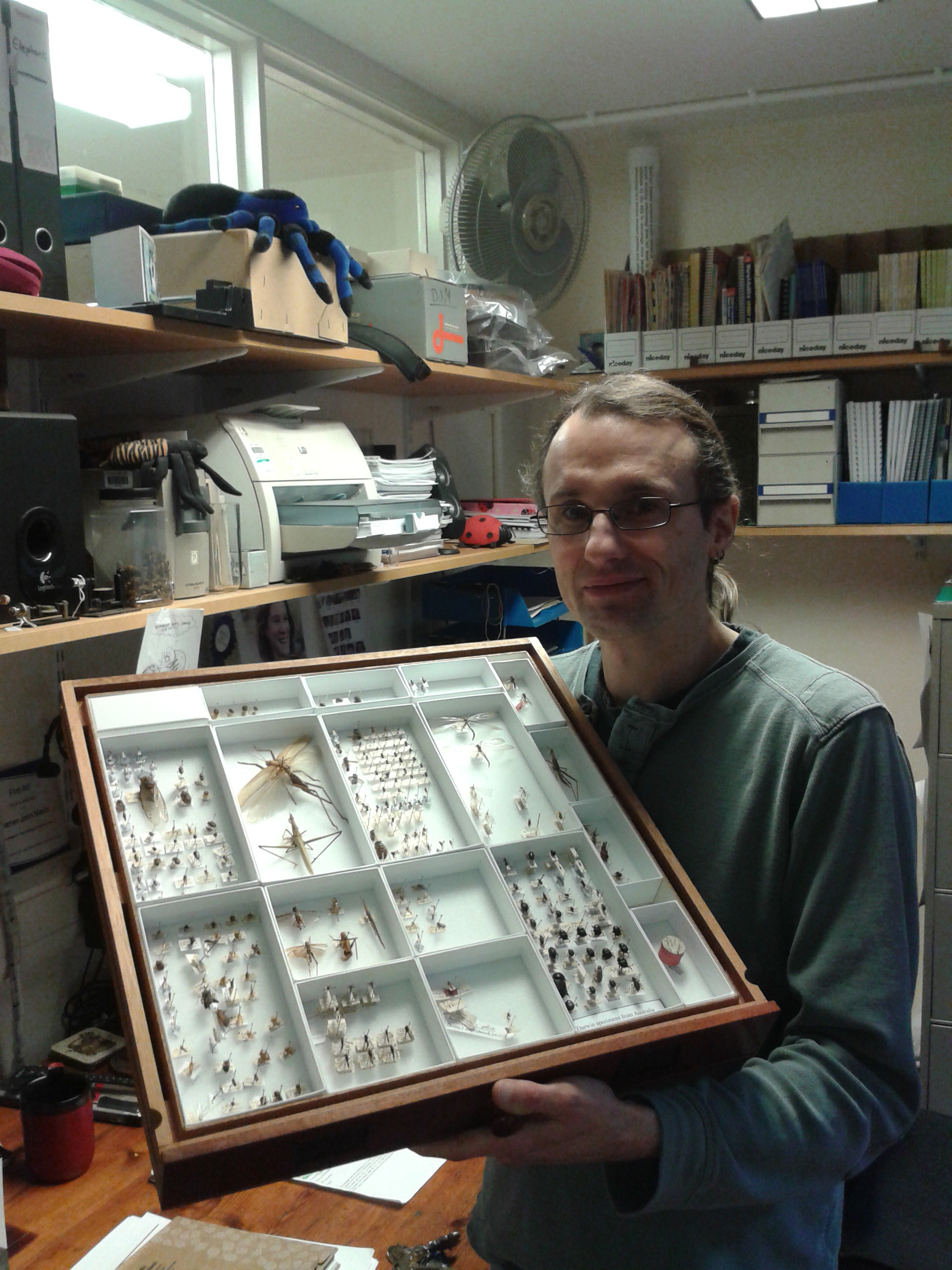
Here’s Darren with some of the Museum’s rare insect specimens that were collected by Charles Darwin himself on his travels in Australasia. To find out more about what goes on behind the scenes in Entomology, follow their excellent blog.
So, happy birthday Darren… and Darwin!
Rachel Parle, Education Officer
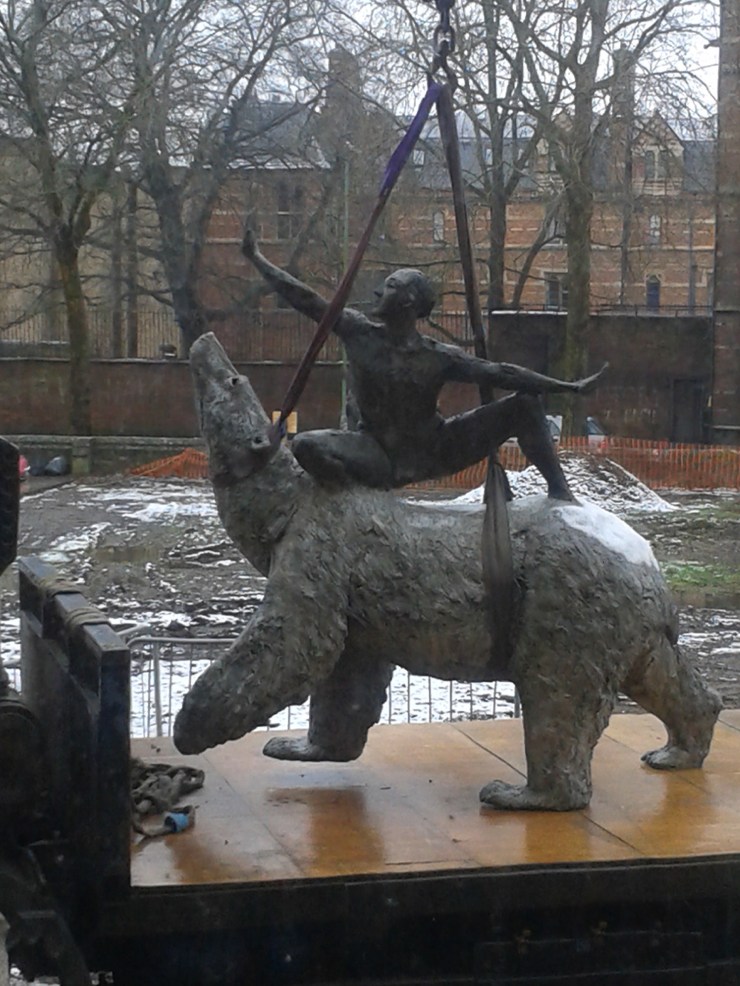
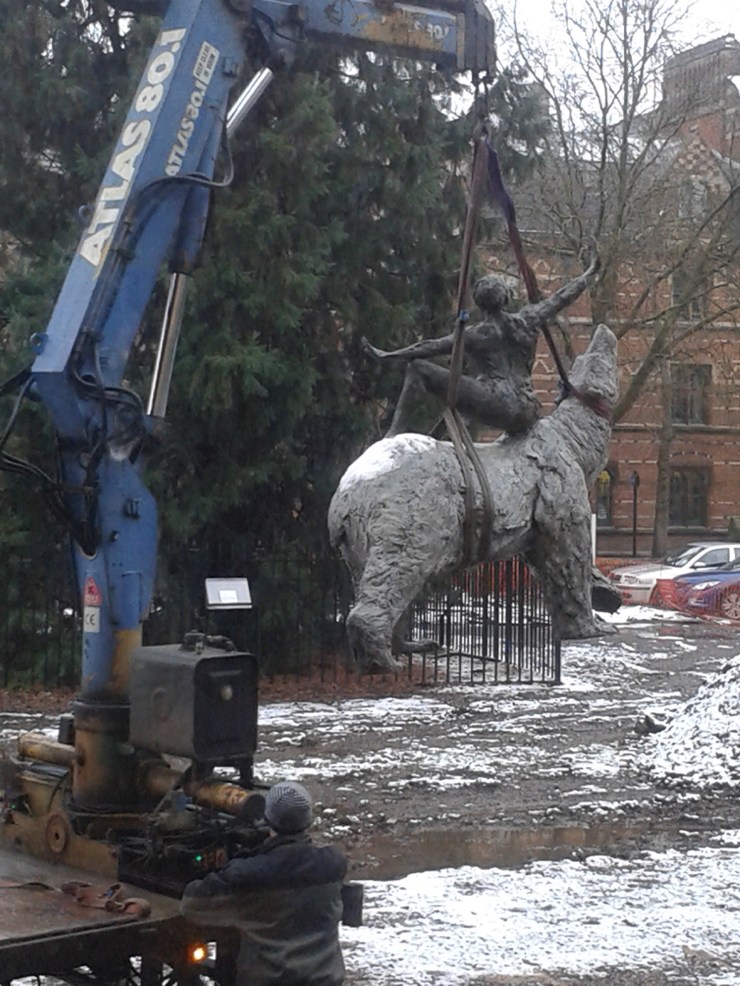
After almost a year posing beautifully on the Museum lawn, the Polar Dance sculpture by Tessa Campbell Fraser is leaving us. It was quite a sight to behold from my office window this morning – a flying, snowy polar bear!
Rachel Parle, Education Officer
 More Than A Dodo