Talkin’ ’bout taxidermy

IMG_1691 (1)

Here at the Museum we have many bird, mammal, fish and reptile taxidermy specimens on display. There are a fair few that you can touch too, on our Sensing Evolution tables in particular. Outside museums, taxidermy has seen a wider surge in popularity in recent years, featuring in artistic practice and being offered as a practical skill through taxidermy courses. It has also been the subject of ethical questions and debates.

In the 19th century, taxidermy was seen as one of the ways of bringing strange creatures from the around world to museum visitors. They were collected at a time when the natural world was thought to be an infinite resource. Many early biologists would combine scientific expeditions with collecting trips, gathering material to be studied, described and displayed in public museums.

IMG_1639 (1)
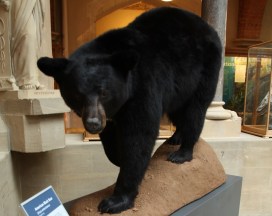
Unwrapping the American Black Bear

Today, it’s no longer possible to simply order an animal from a collector and expect to receive a crate containing a specimen prepared for display. There is a raft of national and international legislation designed to ensure that biological material is ethically, legally and safely collected and transported. It is also concerned with the impact on source communities, species conservation or ecosystems, and imposes checks on the transmission of disease or pests.

When Sensing Evolution opened here in May 2015 the museum obtained two larger pieces of taxidermy to greet visitors as they enter the building: a Red Deer purchased from a farm in Belgium, and an American Black Bear, which is a donation from the New Jersey Fish and Wildlife department in the USA.

Commissioning taxidermy is not straightforward and it’s important to know which permits are needed and whether you can legally qualify to receive them. There are many laws surrounding the import and use of animal parts that you need to be familiar with.

The Museum believes in the importance of wildlife conservation and we wanted to be sure that our taxidermy specimens are ethically obtained. Neither the Red Deer nor the American Black Bear were killed for the purpose of museum taxidermy, and both were sourced following a lot of research and communication with professional taxidermists and zoological societies.

IMG_1674 (1)
Team Bear and the bear itself, now installed in the court

The Red Deer skin was discarded from a farm where the specimen was raised for meat; the Black Bear was euthanized by the New Jersey Fish and Wildlife department as part of its standard control measures, although in this case rather than incinerating the carcass, the skin was removed, processed and donated to the Museum. We waited for many months for a suitable specimen to become available in this way.

The result is two touchable pelts which we hope visitors will find fascinating and beautiful, and which will contribute to our understanding of these incredible animals.

For more advice or information about taxidermy contact your local museum or the Guild of Taxidermists.
It’s offishal!

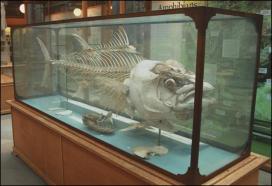
Tuna 1

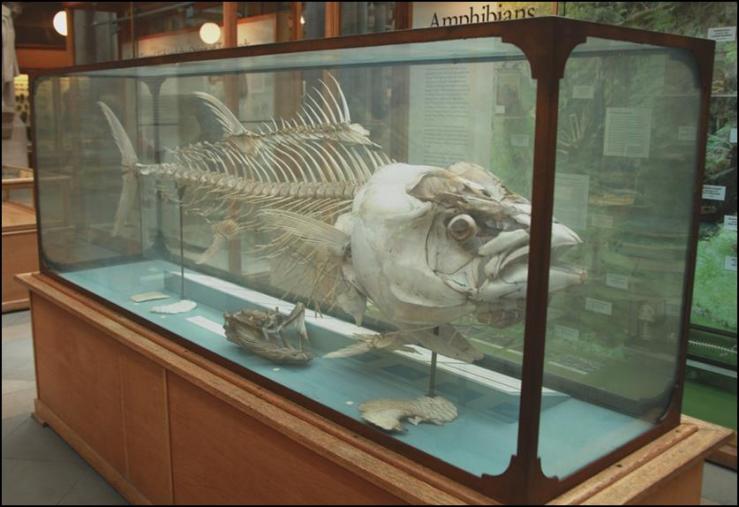
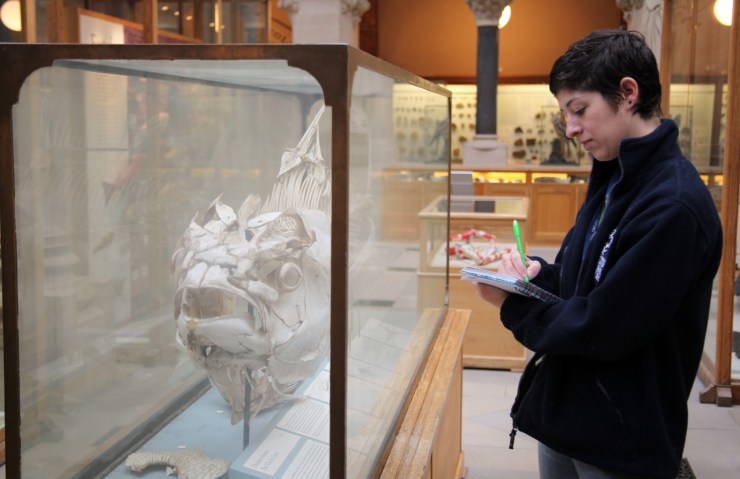
This skeleton has been on Bethany Palumbo’s conservation hit list for some time. As the Conservator for our Life Collections, she keeps a close eye on specimens that need a bit of TLC, or indeed a full make-over. Bethany and team have now been given the go-ahead to dedicate their attention to the Atlantic Bluefin tuna (Thunnus thynnus), located in the Museum court. The project will kick off on November 9th and should take around 4 weeks to complete.

This specimen has a long and interesting history. It’s been on display in the Museum since it opened in 1860, but records show that it was previously displayed in the Anatomy Museum at Christ Church College, Oxford. The fish was collected by Dr. Henry Acland, a leading figure in the establishment of the Museum. He obtained it through the Consul of Maderia in 1847 and its remarkable story was recorded in a historical review of the Museum Zoological collections (1976).

‘…the fish had been packed in salt and placed in an eight foot-long box addressed to ‘Dr Acland, Oxford’. During the voyage, the crew and passengers had become convinced that the box contained the corpse of a patient which in their superstitious minds was sufficient to account for the storm in the Bay of Biscay. The crew and passengers could not be convinced otherwise and Acland submitted to the opening of the ‘coffin’ by the ship’s carpenter, who unscrewed the lid before the assembled company, to reveal the tunny for all to see. It was eventually delivered to the Museum at Christ Church in perfect condition, the skeleton being later carefully articulated by Charles Robertson’.

Conservation intern Abby assesses the condition of the Bluefin Tuna in order to develop a plan for treatment.

Now classified as an endangered species, this Bluefin Tuna also has significant scientific, as well as historical importance. Our conservators will take this into account, ensuring that any treatment is carried out sensitively. To allow Museum visitors to watch conservation in action, the work will be carried out right in the Museum court. Bethany is looking forward to lots of conversations with the public about all things fishy!

Rachel Parle, Interpretation and Education Officer

The legend of the Layardi Whale

After - seperate proper right

The Museum gains a new buzz over the summer as we’re joined by a host of interns. Many are students who require a placement as part of their university degree. Ruth Murgatroyd, who is in her first year of the MSc Conservation Practice programme at Cardiff University, is spending her summer putting a variety of conservation skills into practice in our Life Collections.

During our 2013 year of closure, five large whale skeletons received extensive conservation treatment, which was described and documented on the Once in a Whale blog. Here, Ruth explains that there is more to be done conserving other whale specimens in our collection, and describes the careful work that it takes to bring them back to their best.

**

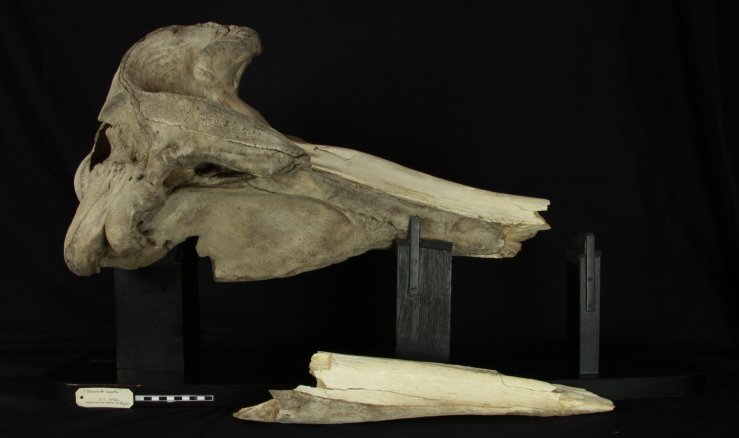
One of the specimens I’ve been working on in the lab is the skull of a Layard’s Beaked Whale (Mesoplodon layardi). As with many historic specimens, past repairs had become damaged or discoloured. The porous bone that allows whales to be buoyant under water had darkened and acquired staining and tide marks. It needed some attention.

Before PL Break
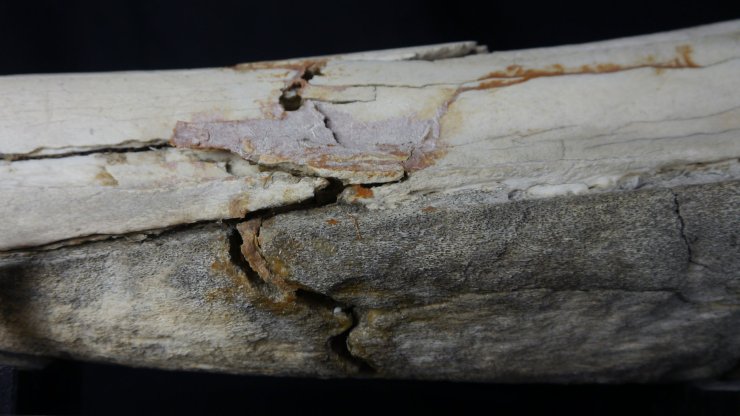
The brown material is animal glue, used in a previous conservation

It’s important to research specimens, to gain a full picture of the animal and its origin. This one turned out to have a particularly interesting story. I knew that the whale’s skull entered the collection in 1874, coming from Cape Point, South Africa, and attributed to J. Mackellar. Over tea time conversations with a colleague in the Museum it came to light that it might be the same whale mentioned by Henry Moseley (1844-1891), a naturalist on board the HMS Challenger voyage. In Moseley’s Notes by a Naturalist he mentions finding a Layardi cranium on a beach “near Mr Mckellar’s” in Cape Point in 1874. He described how it had its beak pushed into the sand and was being used as a target for rifle practice.

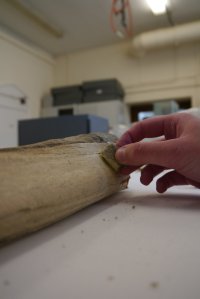
Cleaning with the rubber smoke sponge

After assessing the condition and taking pre-treatment photographs, I decided that the main objectives of the conservation were to remove past unsympathetic repairs; consolidate the bone around a break; clean the staining; and provide padding to the wooden support.

Cleaning needed different techniques depending on the location and the problem. Brush dusting with a vacuum cleaner and dry cleaning with a rubber smoke sponge was the first stage, followed by more specific treatments for ingrained stains. They were treated with poultices, which slowly release water into the pores of the bone and draw out soluble impurities as they evaporate.

I removed the brown adhesive using water on a swab. A pungent smell was given off that tells me the last conservator had used animal glue. I replaced this with an easily reversible acrylic resin.

The beak had been severely damaged (perhaps from the rifle practice!?), but its weight poses a conservation problem. An adhesive strong enough to support the weight of the repair is likely to be stronger than the bone and any stresses on the repair may result in further damage to the bone rather than to the adhesive. As the whale is going back into store for now, we decided that the two fragments will be left separate. The two fragments can be seen here in the wooden support.

After PR
Both fragments together in a wooden support

Although we can’t be sure that this is the Challenger whale specimen, the possibility certainly added an extra level of intrigue to this fascinating project.

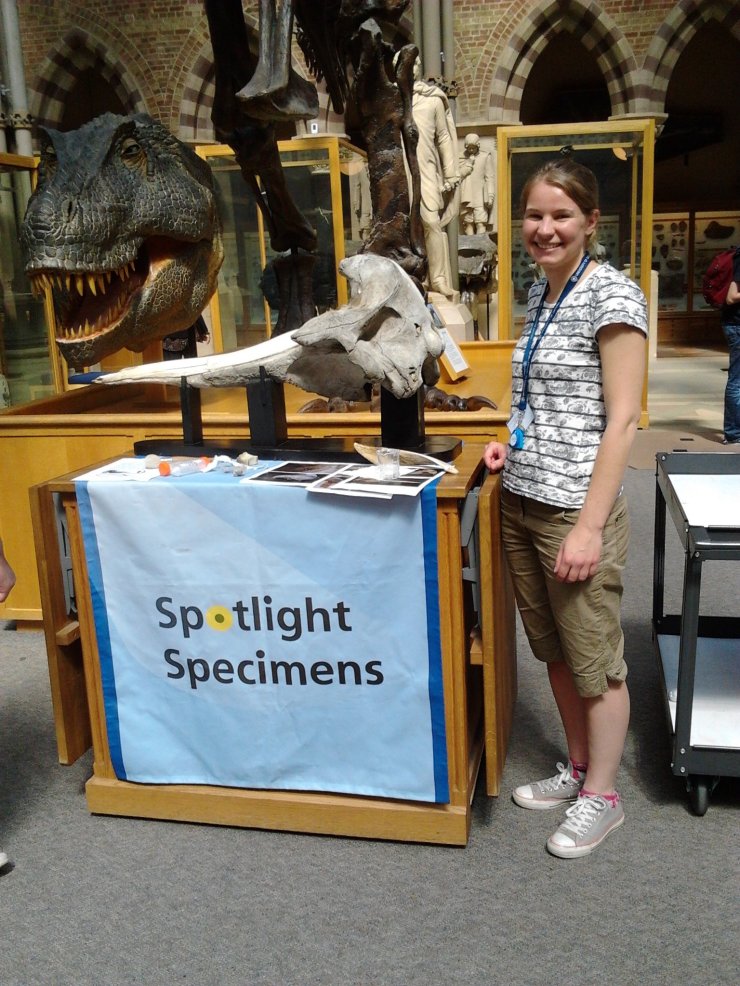
Ruth presenting the whale to visitors as part of our Spotlight Specimens strand
Ruth presents the whale conservation work to visitors as part of our Spotlight Specimens strand

Ruth Murgatroyd, Intern, Life Collections

Special deer-livery

Deer25

In just under a month we’ll be opening a brand new exhibition called ‘Sensing Evolution’. It will be a dramatic overhaul of our touchable displays, with many new touchable specimens for you to explore. Touchable taxidermy is always one of the most popular features in the Museum, but it’s been a real challenge sourcing some larger pieces for this new display.

Bethany Palumbo, our Conservator of Life Collections, has been busy researching far and wide to find the ideal specimens.

**

As well as the touchable tables that will form the major part of Sensing Evolution, we wanted an animal which would make a big impression when you arrive in the Museum. This specimen must also be obtained from an ethical source.

Mieke arrives at the Museum with the deer

Based on its availability and abundance, we decided to go for a farmed Red Deer, (Cervus elaphus) which is one of the largest deer species. The specimen, a male, was collected and prepared by taxidermist Mieke De Leeuw, from Taxidermieke in Belgium.

Work began with tanning the skin and preparing the armature. We had a few special requests. The first was that the specimen would able to fit into our walk-in freezer, should it require freezer treatment to eradicate insect pests, such as webbing clothes moth. Another request was that the specimen be reinforced as much as possible – strong enough to withstand potentially decades of affection and curiosity from museum visitors. Mieke was enthusiastic about the mount and the unusual challenges it presented.

Packing up ready for freezing
Packing up ready for freezing. All new arrivals are frozen to ensure pests aren’t brought into the Museum.

In order for it to fit into our freezer, it was necessary for the specimen to come apart into three pieces. For this Mieke devised a locking pin system, which would be completely invisible on the finished specimen. The beautiful antlers are also removable using a similar system.

Vulnerable areas of the deer were reinforced to withstand years of attention

She reinforced the specimen in weaker areas, such as the ears and the tendons of the legs, which were strengthened using metal rod. Once all the skin was glued into place, it was pinned down to keep it stable while it dried.

The deer is unpacked at the Museum
Walter puts finishing touches to the deer

Last week Mieke and her family drove from Peer, in Belgium, to deliver the specimen to us. They showed us how to assemble the beautiful specimen, before we took him all apart again for freezing.

IMG_9030

We thank the deer’s creators, Mieke and her husband Walter, for their hard work and skill in producing such a wonderful feature for the ‘Sensing Evolution’ display.

Bethany Palumbo, Conservator, Life Collections