Dodo Roadshow: National Museum Cardiff

To mark our selection as a Finalist in the Art Fund Prize for Museum of the Year 2015 we’re embarking on a unique and ambitious tour of the country – the Dodo Roadshow.

Beginning at Land’s End on 8 June and concluding in John O’Groats one week later, the famous Oxford Dodo will visit more than 20 museums and galleries along the way. At each stop the Dodo will ‘interview’ one of the venue’s star objects.

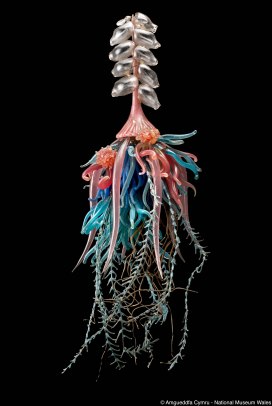
National Museum Cardiff: Blaschka glass models
Dodo and BlaschkaSo, tell me about yourself – who are you and where do you come from?
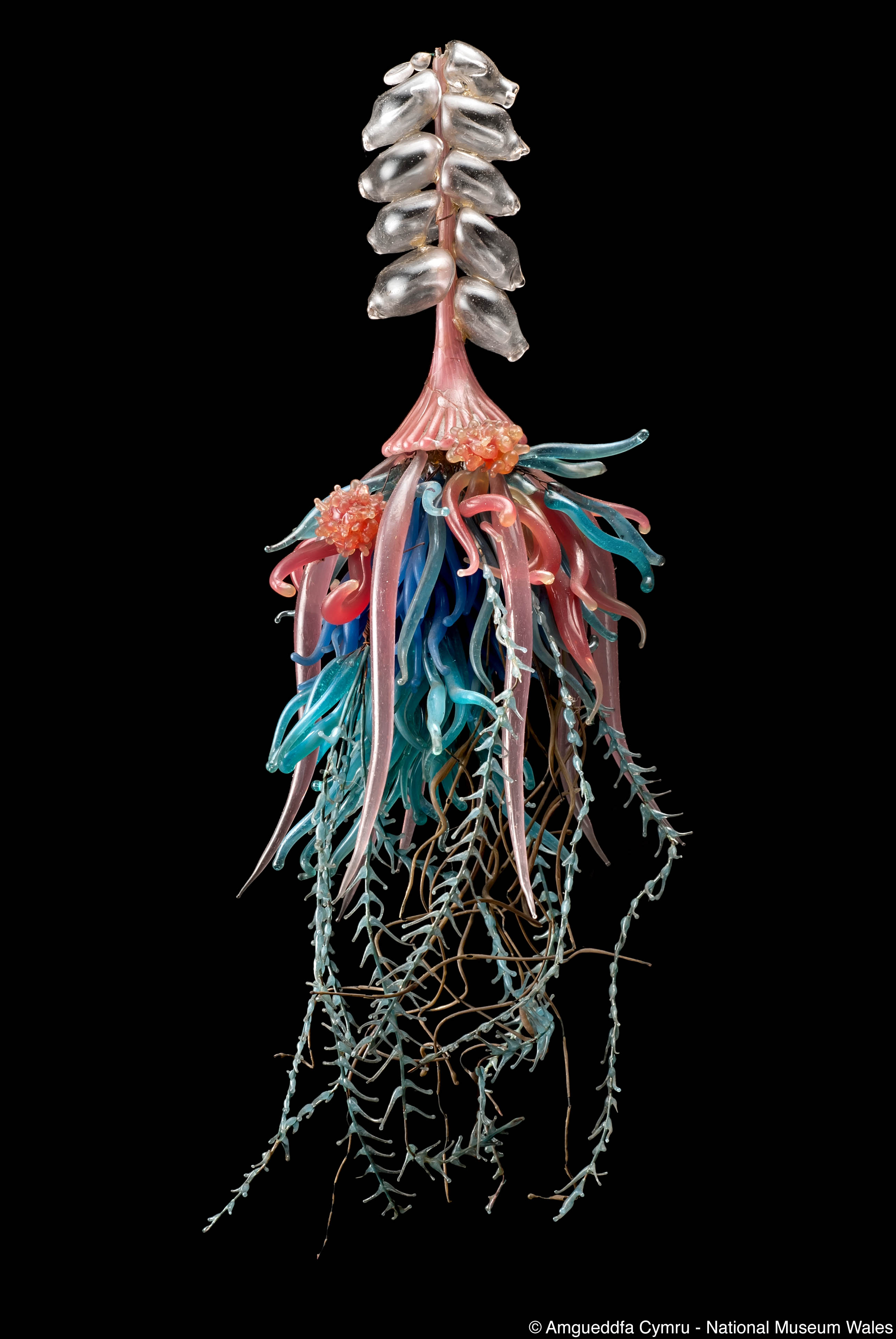
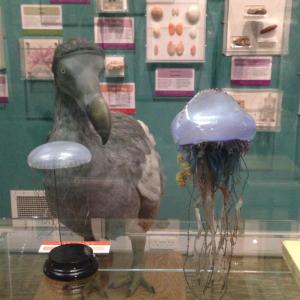
I’m a Blaschka glass model of a marine animal called Physophora hydrostatica – a jellyfish-like animal known as a siphonophore. I was originally made in the 1880’s by the Blaschkas for the Science Museum in London who donated me to Amgueddfa Cymru – National Museum Wales in 1927.

What is it that makes you so special?
I am made of glass! The Blaschkas were very skilled glass workers and had a great interest in natural history. Animals like me are difficult to preserve with lifelike shapes and colours. The Blaschkas came up with the idea of making models of such animals in glass so they could show people how we looked in real life. Today we are still greatly admire by artists and scientists alike for the special skills used to make us.

Who looks after you in this place?
The natural science conservators look after me and all the other glass models. Lots of people are fascinated by us so we are regularly going on journeys to be shown in other museums and galleries. This requires lots of careful handling by the conservators!

Do you remember life before the museum?
After being made I was carefully shipped all the way to Britain where I spent many years on display at the Science Museum before moving onwards to Wales.

What does the future hold for you?
At the moment I’m back in store after touring around for a couple of years with lots of other wonderful objects in an art exhibition called ‘Curiosity’. The conservators are currently starting to do a condition check on me and the other models to ensure we remain in good shape, and can continue to inspire people in the future!

However, whilst I may not currently be on display the museum does have a permanent display of some of the other Blaschka models in the natural history galleries, including my wonderful cousin the Portuguese man’o’war. Please visit!


Stickers small - Dodo Roadshow_crop

Dodo Roadshow: Plymouth City Museum

Lead image

To mark our selection as a Finalist in the Art Fund Prize for Museum of the Year 2015 we’re embarking on a unique and ambitious tour of the country – the Dodo Roadshow.

Beginning at Land’s End on 8 June and concluding in John O’Groats one week later, the famous Oxford Dodo will visit more than 20 museums and galleries along the way. At each stop the Dodo will ‘interview’ one of the venue’s star objects.

Plymouth was a special treat; the Museum is currently closed so the Dodo got to explore behind the scenes.

Plymouth City Museum and Art Gallery: Tub Gurnard

OLYMPUS DIGITAL CAMERASo, tell me about yourself – who are you and where do you come from?
I am a fish. Marine biologists call me Trigla lucerna. But that is a bit of a tongue twister, so you can call me a Tub Gurnard. Marine biologists give me that name so they know what they are looking at when they read about me in books and articles around the world. I was caught in a mackerel fishing net near Plymouth in October 1902 so I’m a pretty old fish – 113 years old in fact! I am a deformed fish, but I have lived a good life. For over 100 years I have been informing researchers about my distribution, as well as the rich ecosystem my species live in.

What is it that makes you so special?
My species can be found in a few spots along the south west and south east coasts of England, along with some spots around Wales and north eastern Scotland. What makes me special is that I am an example of what makes Plymouth the city it is today. Plymouth lies by the sea. This sea has helped to shape Plymouth. The city has a rich maritime history which includes famous characters like Drake and the Spanish Armada. It also has a large Dockyard and Naval Base and occupied a strategic position during World War II. This heritage and more is reflected in the rich collections at the City Museum and Art Gallery and the Plymouth and West Devon Record Office.

Who looks after you in this place?
At the minute I am in a store room with my other pickled friends. The Curator of Natural History, Jan Freedman, looks after me here. He is pretty good. He makes sure we are well taken care of, that we don’t get too warm and have enough fluids. He takes me out to teach University students about marine zoology who gaze through my curved jar and always seem excited to see me. In fact I get out quite a lot, to events in the museum and beyond. I like the reaction people have when they see us and the smiles it brings. I am in good, passionate, hands.

Do you remember life before the museum?
I arrived at the Museum and Art Gallery in 2000, as a donation along with 3,500 other creatures in jars. Before that I lived with the collections at the Marine Biological Association of the United Kingdom. I was swimming, like you do, and then used for scientific research. It felt good to be part of science: to help people understand marine ecosystems and the impact of humans on it.

What does the future hold for you?
There are exciting times ahead. We should be ‘online’ in a few years. Photos of me will be available for you to see no matter where you are in the world! The internet is an amazing place with so much potential. It was the stuff of sci-fi novels when I was growing up.

One of the most exciting things in the coming years is the History Centre project. Plymouth City Museum and Art Gallery, the Plymouth and West Devon Records Office, the South West Film and Television Archive and the South West Image Bank are working together (and with other partners such as Plymouth University), to create a brand new extension to the existing museum to house all our nationally and internationally important collections. Who knows, perhaps my 4000 or so friends and I will be sat comfortably on a glass shelf in a glass store room in the new building. It would be nice to watch you watching me every day.

Stickers small - Dodo Roadshow_crop

Dodo Roadshow: RAMM

RAMM passenger pigeon 850px

To mark our selection as a Finalist in the Art Fund Prize for Museum of the Year 2015 we’re embarking on a unique and ambitious tour of the country – the Dodo Roadshow.

Beginning at Land’s End on 8 June and concluding in John O’Groats one week later, the famous Oxford Dodo will visit more than 20 museums and galleries along the way. At each stop the Dodo will ‘interview’ one of the venue’s star objects.

RAMM: Passenger Pigeon

RAMM pigeon

So, tell me about yourself – who are you and where do you come from?
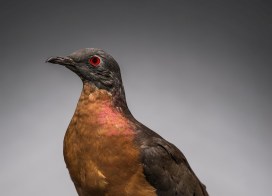
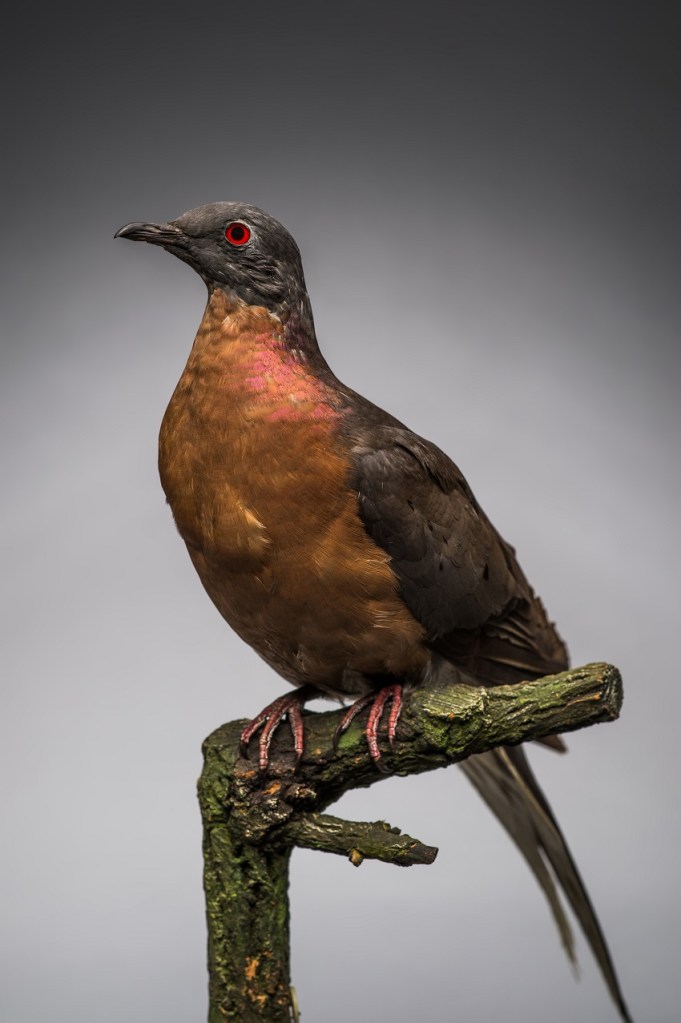
I am a passenger pigeon (Ectopistes migratorius) from North America. I have lived at RAMM since 1865 – that’s 150 years this year!

What is it that makes you so special?
When I was alive there were around 3 billion of my kind – passenger pigeons were possibly once the world’s most numerous bird. But in 1914 the last one, named Martha, died in Cincinnati Zoo. She had never lived in the wild. My species became extinct due to hunting with guns and nets and destruction of my habitat. So like you, I can now only be seen in museums.

Who looks after you in this place?
The Curator of Natural History is responsible for me, but a team of conservators cleaned and preened my feathers before I was put on permanent display so I look at my very best.

Do you remember life before the museum?
I was once part of an enormous flock of pigeons – we would migrate across America each summer and winter. But one year I was captured, brought back to England and found myself in the studios of Rowland Ward – a famous taxidermy company in London. I spent some time with a Mr William Tombs until he donated me to RAMM with 50 cases of other birds.

What does the future hold for you?
I will be spending the foreseeable future on display here in the Finders Keepers? gallery in the heart of RAMM.  I am in a case with other extinct and endangered animals – the ivory-billed woodpecker, California parakeet, huia and orang-utan – and the display explores ethical collecting and use of natural resources. Please come and visit me – there are no dodos here but see if you can find the picture of one in my case.

Oh, and I’m on the internet so future possibilities are endless! Leave comments for me on my webpage and learn about my fellow birds on RAMM’s online Collections Explorer.

Stickers small - Dodo Roadshow_crop

Dodo Roadshow: Bristol Museum

Alfred

To mark our selection as a Finalist in the Art Fund Prize for Museum of the Year 2015 we’re embarking on a unique and ambitious tour of the country – the Dodo Roadshow.

Beginning at Land’s End on 8 June and concluding in John O’Groats one week later, the famous Oxford Dodo will visit more than 20 museums and galleries along the way. At each stop the Dodo will ‘interview’ one of the venue’s star objects.

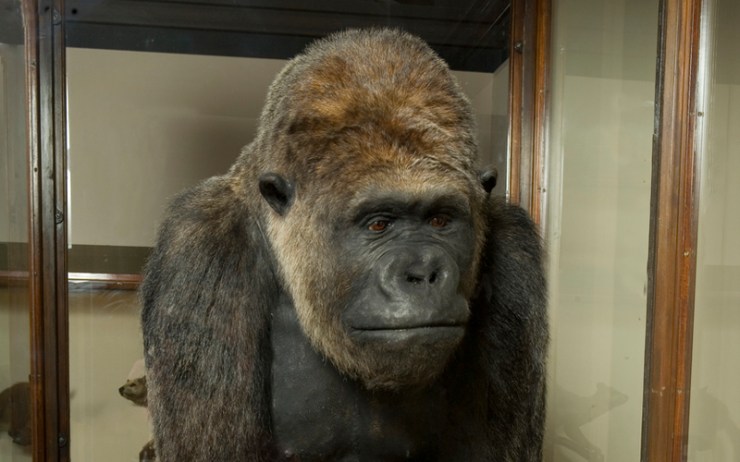
Bristol Museum & Art Gallery: Alfred the Gorilla

BristolSo, tell me about yourself – who are you and where do you come from?
My name is Alfred the Gorilla. I was the international celebrity ape of my day and I now keep an eye on the goings on at Bristol Museum & Art Gallery. I was born in the Congo and came to live at Bristol Zoo when I was three years old. I have been in Bristol ever since.

What is it that makes you so special?
Well apart from being terribly handsome…when I arrived in Bristol in 1930 I was one of only two gorillas living in zoos in Europe and was noted for my lively personality, my excellent choice of knitwear (Bristol was rather colder than I was used to) and my accurate snowball throwing. I was the star attraction at the Zoo and, during World War II, 20,000 postcards of me were sold in just one year!

I came to the Museum for my retirement in 1948. I’m still popular to this day, especially after I mysteriously disappeared for four days in 1956 – I escaped with some student friends and got up to all sorts of mischief before they safely returned me to the Museum, only needing my hair brushed. During my time at the Museum I’ve inspired film-makers, artists, writers, conservationists and scientists with my unique story, and continue to entertain the people of Bristol to this day.

Who looks after you in this place?
Rhian and Bonnie, my two curators keep an eye on me and all my animal friends at the Museum. They make sure I’m always looking my best – I’ve been in Bristol over 80 years but I don’t look a day over 20! Our lovely visitor assistants make sure my fans can easily find me in the Museum and of course the lovely people of Bristol look after me too, they support the Museum which, in turn, cares for me.

Do you remember life before the Museum?
Yes of course, I remember the Congolese lady who looked after me as a baby in the rainforest, my travels through Europe where I stayed in Holland, my heyday as a young famous gorilla at the Zoo and the terrible time during the World War II. I remember how the people of Bristol welcomed me into their city and I am reminded of their kindness every time someone comes to say hello at the Museum.

What does the future hold for you?
Well, I know I will be cared for here at the Museum for many more years to come and hope I can still inspire the people of Bristol for another 80 years at least. Despite my senior years,  I’m a thoroughly modern gorilla and regularly tweet @alfred_gorilla, so you can follow me to see what other adventures I have in store!

Stickers small - Dodo Roadshow_crop

Dodo Roadshow: Eden Project

Seed 850px

To mark our selection as a Finalist in the Art Fund Prize for Museum of the Year 2015 we’re embarking on a unique and ambitious tour of the country – the Dodo Roadshow.

Beginning at Land’s End on 8 June and concluding in John O’Groats one week later, the famous Oxford Dodo will visit more than 20 museums and galleries along the way. At each stop the Dodo will ‘interview’ one of the venue’s star objects.

Eden Project: Seed

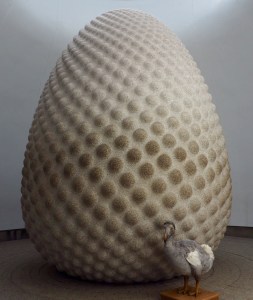
Here I am with Peter Randall-Page's Seed sculpture. Mmm, rather egg-like...
Here I am with Peter Randall-Page’s Seed sculpture. Mmm, rather egg-like…

So, tell me about yourself – who are you and where do you come from?
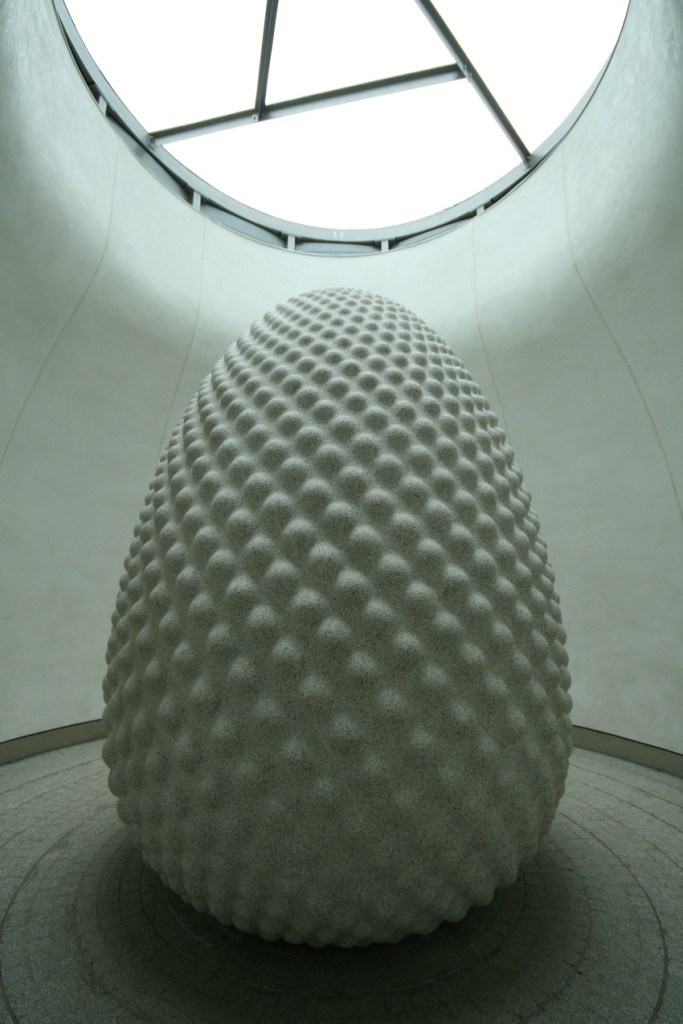
I am Seed, a 75 tonne sculpture by Peter Randall-Page, and I live in the Core Building at the Eden Project in Cornwall.

What is it that makes you so special?
I am based on Fibonacci mathematical principles and the golden ratio and my shape and form provide the blueprint of nature. It took the team two years to find a suitable rock from which to carve me, a day of nerves when I was blasted from my birthplace, two years to meticulously sculpt me, each dome being a different size, and several tricky days as I was taken to Eden and lowered into the building through the roof by a very, very, very large crane.

Who looks after you in this place?
I’m pretty house trained. The Eden Interpretation team look after me, the Narrator team tell stories about me and the Logistics team keep me clean and tidy.

Do you remember life before the museum?
Yes, I was a piece of the granite landscape of Cornwall before I was blasted from the Cornubian batholith as a 150 tonne lump before the carving commenced.

What does the future hold for you?
I’m here and like you I pay homage to nature. Luckily, as I am not alive, I cannot be made extinct but you have my every sympathy and hopefully I can help those who are alive to find their place in nature and appreciate its fragility and beauty.

Stickers small - Dodo Roadshow_crop

Dodo Roadshow: Royal Cornwall Museum

To mark our selection as a Finalist in the Art Fund Prize for Museum of the Year 2015 we’re embarking on a unique and ambitious tour of the country – the Dodo Roadshow.

Beginning at Land’s End on 8 June and concluding in John O’Groats one week later, the famous Oxford Dodo will visit more than 20 museums and galleries along the way. At each stop the Dodo will ‘interview’ one of the venue’s star objects.

Royal Cornwall Museum: a huge nugget of gold

Royal Cornwall Museum

So, tell me about yourself – who are you and where do you come from?
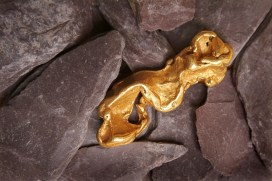
Well, I’m the largest nugget of gold ever found in Cornwall, and I can be seen at the Royal Cornwall Museum in Truro.

What is it that makes you so special?
Beauty, rarity … and of course my size. I weigh an impressive 60 grams; that’s about the same as a large hen’s egg. What would a Dodo’s egg have weighed I wonder…?

Who looks after you in this place?
I have a very dedicated support team who pander to my every need: housekeepers who make sure my home environment is just perfect, interpreters who help me tell my story, bouncers who help cushion me from my adoring fans and PAs who make sure I’m seen in all the right places…

Do you remember life before the museum?
Not a lot, my early life is a blur.  My first real memory is being ‘discovered’ in a Cornish river bed. That was in February, 1808 if my memory serves.  I caused a sensation in the press, with people desperate to own me. Nothing but the best for me though: I was acquired by Philip Rashleigh, that most discerning of Cornish mineral collectors.

What does the future hold for you?
My museum owners will be 200 years old in 2018, and as I’m one of their major stars there will be endless public appearances, photoshoots and press calls. If it all gets too much I might go on retreat for some quiet study, maybe even see my analyst.

Stickers small - Dodo Roadshow_crop