Dinosaurs amongst us

IMG_1510

Earlier this year we had the pleasure of hosting the BBC iWonder team and evolutionary biologist and presenter Ben Garrod for a filming session all about the evolution of birds. BBC iWonder is a growing series of short but rich guides to subjects as wide-ranging as salt in your diet, the World Cup, and the holocaust, each designed to pique people’s interest and curiosity.
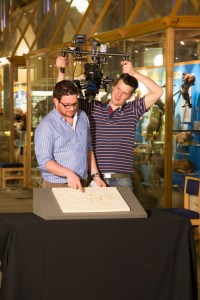
Ben Garrod filming with the Archaeopteryx cast

Ben’s guide is titled ‘Do Dinosaurs Still Live Among Us?’. This is a good question indeed and the answer is (sort of) ‘yes’. You can find out a lot more in the guide itself, which has just been launched here and features some lovely footage of the Museum and our cast of the famous Archaeopteryx fossil, the first found to show the traces of feathers on a dinosaur.

Needless to say we were very pleased when the iWonder team contacted us about their idea to look at the evolution of birds from dinosaurs using specimens in the Museum. The guide’s producer and director Ben Aviss explains how it came about:

We brainstorm ideas for new content for the guides and one of those was to look at dinosaurs, but what question might we ask? The idea of dinosaurs and birds sharing a common ancestry is something that not everyone may know about so we decided to look at that.

Ben Aviss had already seen the Museum on Ben Garrod’s BBC4 series Secrets of Bones and thought it looked great. “The more we chatted about the things we might want access to, the more we realised you offered everything we needed,” he adds.

Ben Garrod tracks along the Iguanodon tail.
Ben Garrod tracks along the Iguanodon tail

It was a third return to the Museum for Ben Garrod who, as well as filming sequences for Secrets of Bones, had also run our Capybara Construction special event earlier in the year. He explains the appeal of returning for the iWonder guide:

This iWonder guide represents a new and fun way to retell a key moment in evolutionary history – the transition from dinosaurs into modern birds and I’m pleased with the final result. It’s informative and interesting but more than that, it looks good and that is in no small part down to the setting in which we filmed.

I keep coming back again and again because I genuinely love the Museum. The collection is laid out in a way that gives the visitor lots of time and space to explore and the specimens themselves are great – I’m still finding new things every time I visit.

There are plans for further iWonder guides that go richer and deeper, with greater interactivity and content. Let’s hope the collections – and Ben’s enthusiasm – brings the team back to tell another story here soon.

Scott Billings – Communications officer
Viva Volunteers!

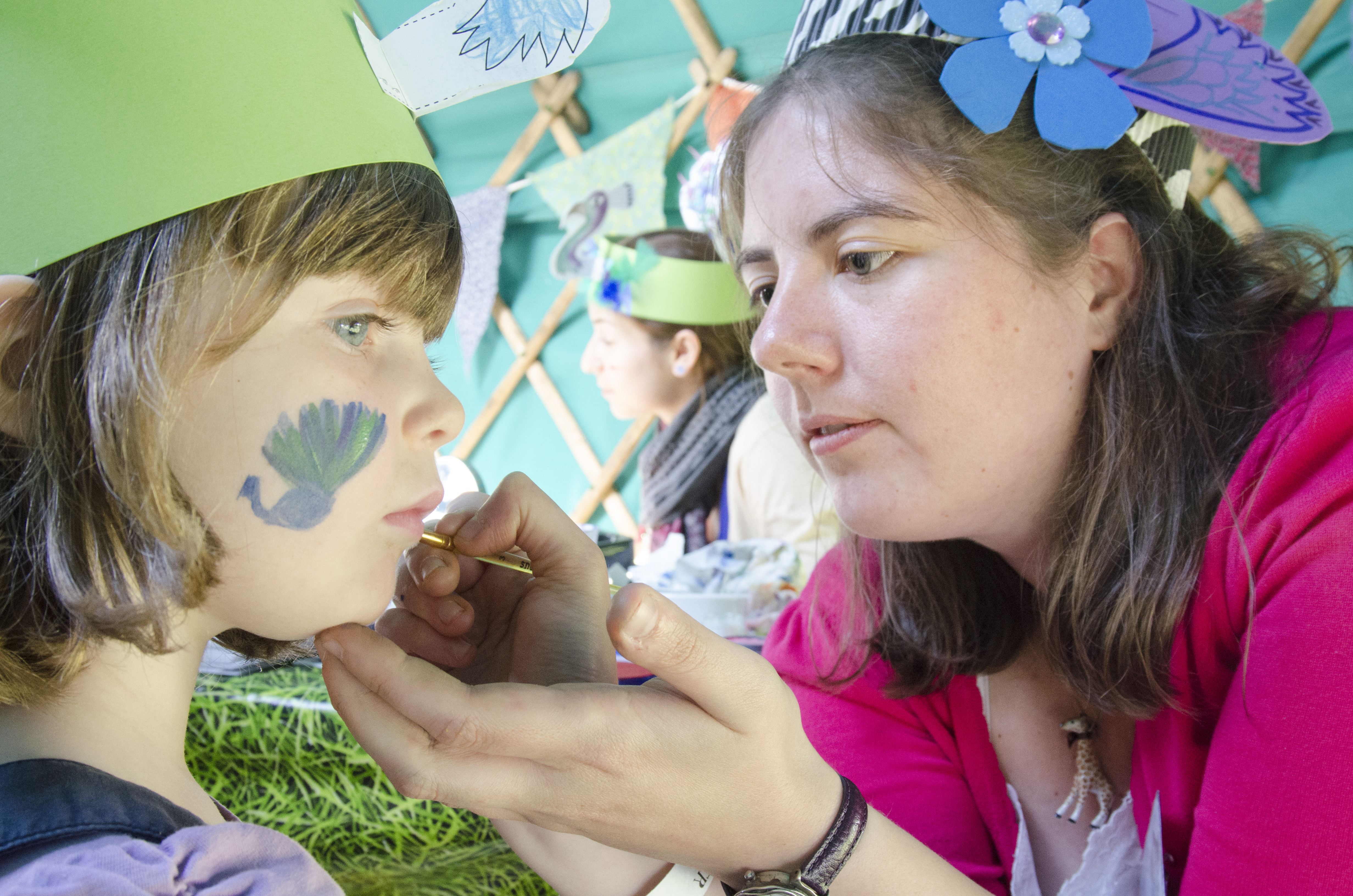
Alice facepaintingThey sort, they scan, they stick, they smile: who are they? Our team of brilliant Collections and Public Engagement Volunteers of course! This week has been the 30th anniversary of Volunteers’ Week, so we wanted to put the spotlight on them…

The majority of our volunteers help with public events, particularly those for our family audience. In 2014 alone, our awesome team of volunteers have given the Museum over 1500 hours of their time to help with public engagement events. This includes painting children’s faces, like the wonderful Alice Wilby (above), leading tours of the Museum’s architecture and running a pub quiz at one of our late night events. IMG_1322

On top of that, we have a team working away behind the scenes supporting our collections staff. Here’s just a sample of the projects they’ve been working on this week…

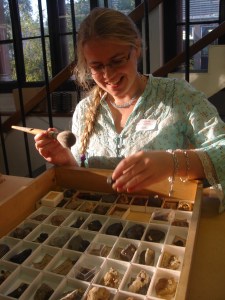
Laura Cotton in the Earth Collections.

– 5 volunteers identifying butterflies from painted images in our Archival Collections.
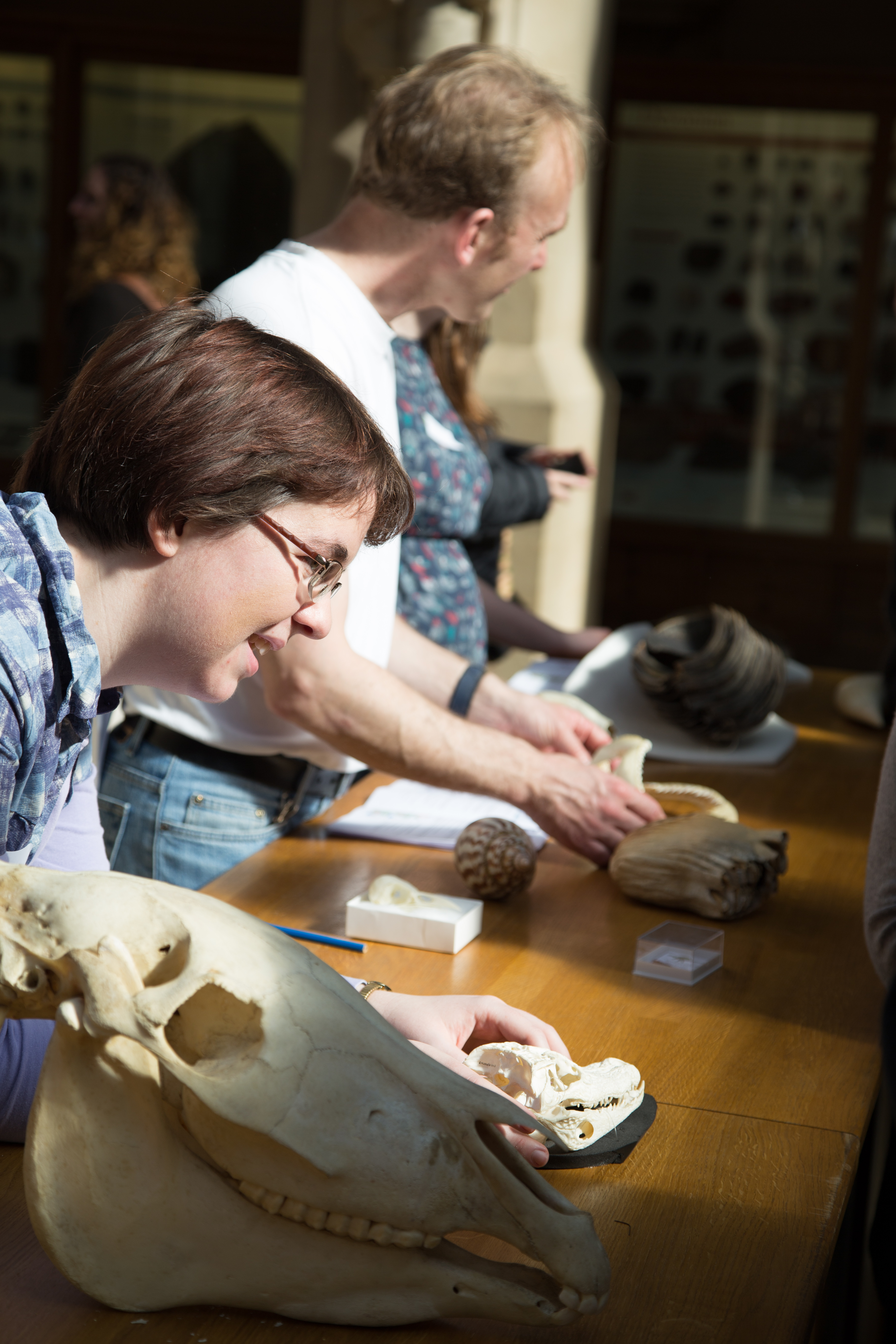
– 1 volunteer working in the Life Collections sorting and cataloguing bones.
– 4 volunteers tucked away in the Earth Collections cleaning ancient horse fossils or sorting Jurassic fish teeth.

Simone Dogherty is the Museum’s Education Assistant and co-ordinator of Science Saturdays – a weekly family event aimed at older children and led entirely by volunteer scientists. So why does she think volunteers are so valuable?

We’re very lucky here to have such a large quantity and high quality of volunteers. They help us with a huge range of activities and with the increase in visitor numbers that the Museum has been experiencing since re-opening in February, I just don’t know how we’d cope without them.
For Science Saturdays we use volunteers with a specific expertise. This gives children access to enthusiastic and inspiring individuals that they can look up to. And, in return, the volunteers gain valuable science communication skills.

Fancy joining our merry band of volunteers? Whether you’re into making masks or dusting off molluscs, we need you! You can simply sign up to help out on our Volunteers website.

But what’s in it for you? Aside from the glow of knowing you’ve simply helped us do more, you can develop your confidence when working with the public, learn a new skill or get up close with the treasures stashed away behind the scenes. But that’s forgetting the most important part – you’d be joining a fantastic team of people who, like you, think this museum is a pretty exciting place to be!

Rachel Parle, Interpretation and Education Officer

Quite an impact

Maggie and Sarah
Our lunar visitor with presenter, Maggie (l), and guest, Sarah (r)

We’ve had a visitor all the way from the Moon! Dr Sarah Russell from the Natural History Museum brought a slice of lunar meteorite with her when she came to be a guest on the BBC’s The Sky at Night television programme. A whole episode was filmed here in the Museum last week.

Meteorites are rocks from space that have fallen to Earth and, in fact, it was a meteorite hitting the Earth that created the Moon!

Chris holds a piece of the Chandakapur, Maggie holds a slice of the Gibeon meteorite
Chris holds a piece of the Chandakapur; Maggie holds a slice of the Gibeon meteorite

In the programme, presenters Dr Maggie Aderin-Pocock and Dr Chris Lintott will be showing some of the meteorites in our collection.

One of these arrived at Amalia Farm in Gibeon, Namibia, in 1836, and the other landed at Chandakapur, India, in 1838. Both had travelled from the asteroid belt, a band of planetary debris orbiting between Mars and Jupiter.

We now believe that the dinosaurs became extinct after a massive meteorite collided with the Earth. It brought with it a lot more of the element iridium than would naturally occur on Earth. You’ll be able to see our sample of the iridium-rich clay rock that formed at the bottom of the sea, hundreds of miles away from the giant impact crater.

Chris holds a piece of the special iridium-rich clay that gave scientists an important clue to the extinction of the dinosaurs
Filming behind the scenes in the Museum

This episode of The Sky at Night has a lot about impacts – not just meteorite landings. It will be screened on BBC4 at 10pm on Sunday 8 June, and repeated on Thursday 12 June at 7.30pm. Don’t miss it!

Monica Price, Head of Earth Collections

Get on your soapbox


Mary Kingsley (l) and Mary Anning (r) prepare for their appearance in Soapbox City
Mary Kingsley and Mary Anning prepare for their appearance in Soapbox City

As April draws to a close, Oxford prepares for the traditional May Morning celebrations. Alongside the choir singing on Magdalen Tower, the reckless students leaping from the bridge and morris dancing in the medieval streets, you will find staff from Oxford University Museums joining in with the revelries.

An early-morning dung beetle will be taking to the soapbox

The Museums have taken charge of a one hour slot, from 8-9am, with staff from the Museum of the History of Science, Pitt Rivers Museum and, of course, the Museum of Natural History taking to the stage during the hour. If you’re willing to get up bright and early, you’ll be able to see a giant dung beetle arguing the value of his species, a T rex in a rap battle with a dodo, and two dignified ladies visiting from the past to remind everyone just how significant they really were.

Ellena Smith, ASPIRE Assistant across the Museums, is co-ordinating the Museums’ slot. She says;

Soapbox City is a fantastic opportunity to share knowledge and insight from Oxford University Museum staff in a fun and exciting way, and a great chance for the Oxford University Museums to reach out to a new audience.

Here’s the full timetable for the Museums’ shift:

08:00 Shooting Holes in Pitt Rivers Myths, Helen Adams (Pitt Rivers Museum)

08:05 Music in the Museum, Kelly Smith (HLF Trainee)

08:10 Conservation Station, Bethany Palumbo (Museum of Natural History)

08:15 Cockroaches: Pets or Pests, Darren Mann (Museum of Natural History)

08:20 Why the World needs Dung Beetles, Chris Jarvis (Museum of Natural History)

08:25 Natural History Stand-up, David Legg (Museum of Natural History)

08:30 T rex Vs the Dodo Rap Battle, Steven Williams (Museum of Natural History)

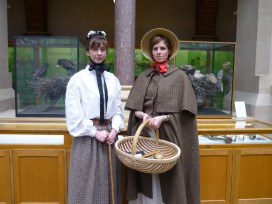
08:35 A Tale of Two Marys, Caroline Cheeseman and Rachel Parle (Museum of Natural History and Joint Museums Volunteer Service)

08:40 Why older people are radical, Helen Fountain (Museum of Oxford)

08:45 Geek is Good, Scott Billings (Museum of the History of Science)

08:50 When History Goes Wrong, Stephen Johnston (Museum of the History of Science)

08:55 You think you are smart?! Silke Ackermann (Museum of the History of Science)

If you’re up early for the festivities (or still awake from the night before!), do join us on Broad Street for a little May Morning museum madness.

Rachel Parle, Interpretation and Education Officer


He’s behind you…

Dino Zoo

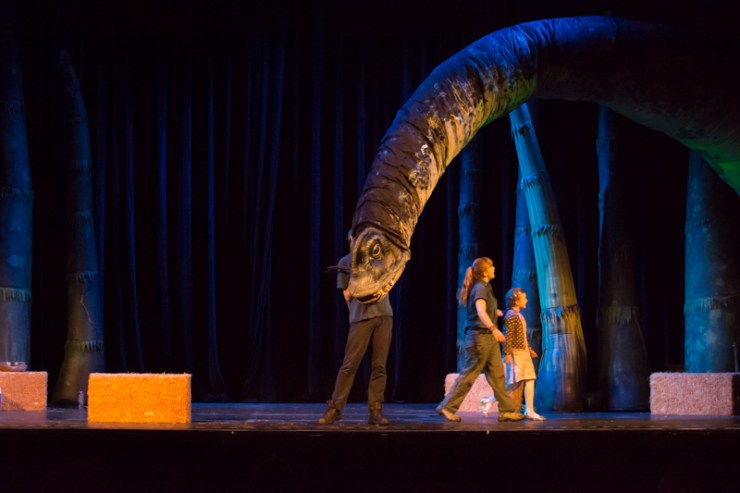
Last weekend the dinosaurs rumbled into town; a whole menagerie of them. Indeed, it was a veritable Dinosaur Zoo. They’d come a long way too – all the way from Australia – and so their names were not so familiar to us: the Australovenator, the Titanosuar (above), the Dryosaur, and the cutely-named Leaellynasaura, so-called after the discoverer’s daughter Leaellyn (Leaellyn’s lizard, see?).

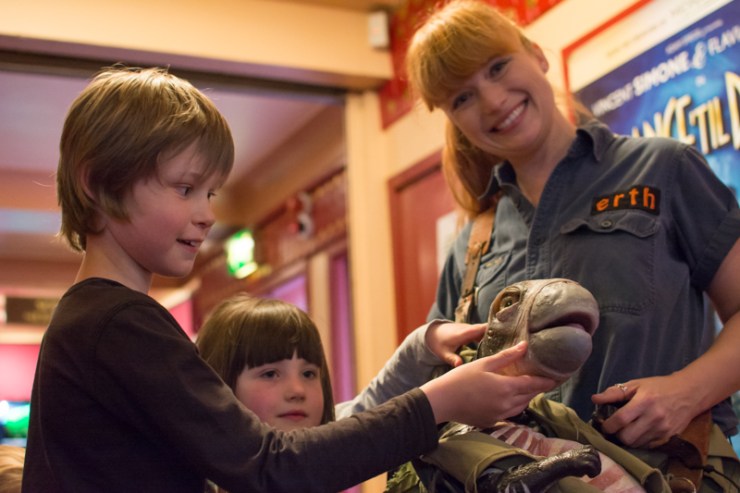
If you didn’t catch it, these creatures were all part of a show at Oxford’s New Theatre. There was a sneak preview of this in the Museum earlier in the year. Produced by Australian company Erth Visual and Physical, the Dinosaur Zoo Live production mixes the thrill of brilliant puppetry with facts and explanations about the adaptations, environments and possible behaviours of these long-lost Australian lizards.

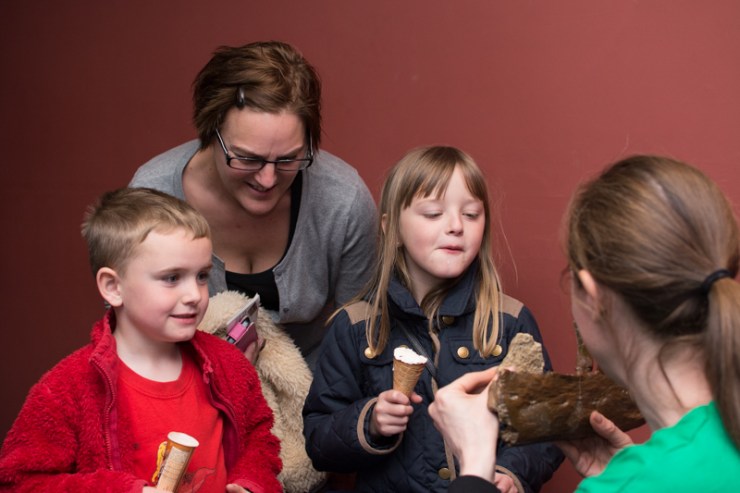
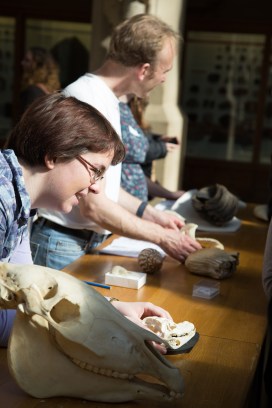
This wasn’t an opportunity to be missed, so we teamed up with the New Theatre and the show’s production team to bring some of our own fossil specimens to the event. With a handling table set up in the theatre’s bar area, families spent up to an hour before the show examining our selection of theropod and sauropod material, getting up close to teeth, eggs, jaws, and more.

We had the lower jaw and fossilised tooth from Oxfordshire’s very own Megalosaurus, famous for being the first dinosaur to be scientifically described, by William Buckland in 1824 (actually the term Dinosauria came later, coined by Richard Owen in 1842). As it was Easter we had some ancient eggs too, including the fossil of an egg laid, probably, by a sauropod dinosaur, cracks in the shell still clearly visible.

A family enjoy pre-show ice creams while learning about the Megalosaurus

To represent the the Cretaceous period, which is when the Australian beasts in the show were around, we brought the teeth and a hefty vertebra of an Iguanodon. Unlike the still-serrated Megalosaurus tooth fossil, the flat Iguanodon teeth show that this dinosaur was a herbivore. There’s a nice story, possibly apocryphal, that these teeth were actually spotted not by Gideon Mantell, the geologist who described Iguanodon in 1825, but by his wife Mary Ann as she waited in their carriage for her husband to visit a patient in Sussex.

Meeting the stars after the show with brilliant host Lindsay Chaplin
Meeting the stars after the show with brilliant host and zoo-keeper Lindsey Chaplin

We threw in a couple of tricksy things too. On the handling table there were two non-dinosaur specimens – could people work out which they were? In many cases, yes they could: if there’s one thing we learnt it’s that young kids know a heck of a lot about dinosaurs. The two red herrings were an ichthyosaur skull, because ichthyosaurs were marine reptiles rather than dinosaurs; and the fossil imprint of a leathery egg, probably laid by a prehistoric crocodile or turtle.

All in all, everyone had a great big dinosaur overdose. Still, better that than chocolate eggs.

Scott Billings, Communications coordinator

Museum expert uncovers ‘hopping’ dinosaur!

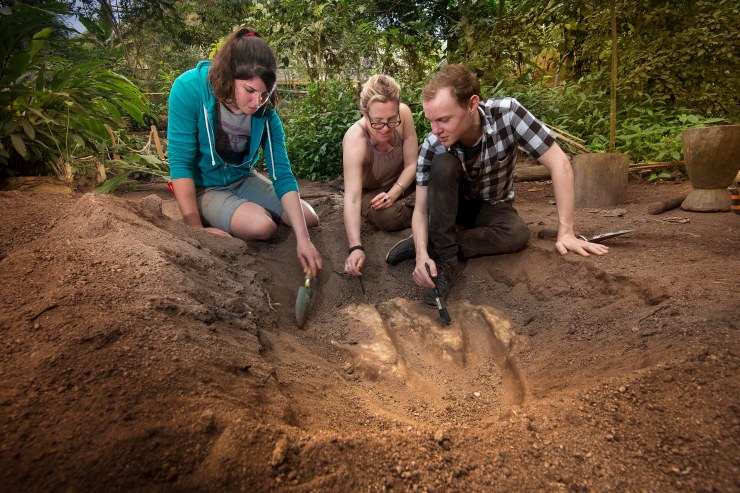
L-R Lucy Wenger (Skilled horticulturist), Dr Gabriella Gilkes (Eden Scientific Project Manager) and Dr David Legg (Museum Research Fellow) Credit: Emily Whitfield-Wicks
L-R Lucy Wenger (Skilled horticulturist), Dr Gabriella Gilkes (Eden Scientific Project Manager) and Dr David Legg (Museum Research Fellow)
Credit: Emily Whitfield-Wicks

This was our joint April Fool story with the Eden Project!

Experts from the Museum have been called in to help with an exceptional discovery, found lurking in a rainforest… in Cornwall!

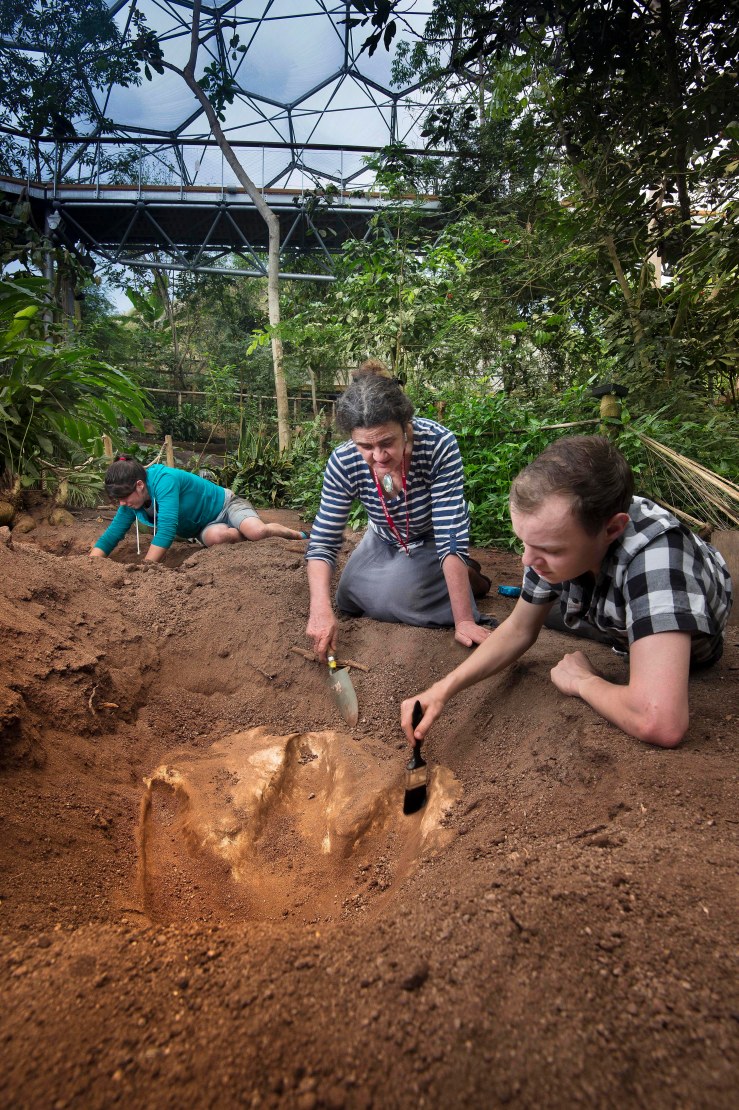
eden-logo horiz 2Staff at the Eden Project were installing a new display in the Rainforest Biome, when they noticed that the ground was surprisingly uneven. Digging deeper, skilled horticulturist Lucy Wenger uncovered what seemed to be a pair of three-toed footprints. Wondering what could possibly be responsible for these marks, the team decided to approach the palaeontologists here at the Museum of Natural History.

We often get emails and calls from people who believe they’ve found something extra-special, so at first the experts were a little sceptical, but when the Eden Project sent through measurements and photographs of their finds, their discovery started to look rather familiar.

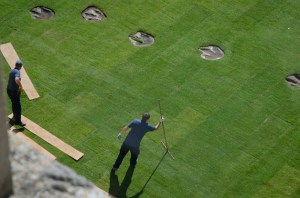
Megalosaurus prints on the Museum lawn

Regular visitors to the Museum will know that we have a trackway of dinosaur footprints marching across our lawn. These casts were taken from the famous fossils discovered just up the road from Oxford, at Ardley Quarry, in 1997. It was staff from the Museum who identified the Jurassic dinosaur Megalosaurus as the likely culprit for the Ardley prints. Could this new pair of prints have been made by something similar? The Museum’s Palaeontologist Research Fellow Dr David Legg decided to jump on a train heading south west.

Dr David Legg carefully reveals the footprints with Dr Jo Elworthy (Eden Scientist)  Credit: Emily Whitfield-Wicks
Dr David Legg carefully reveals the footprints with Dr Jo Elworthy (Eden Scientist)
Credit: Emily Whitfield-Wicks

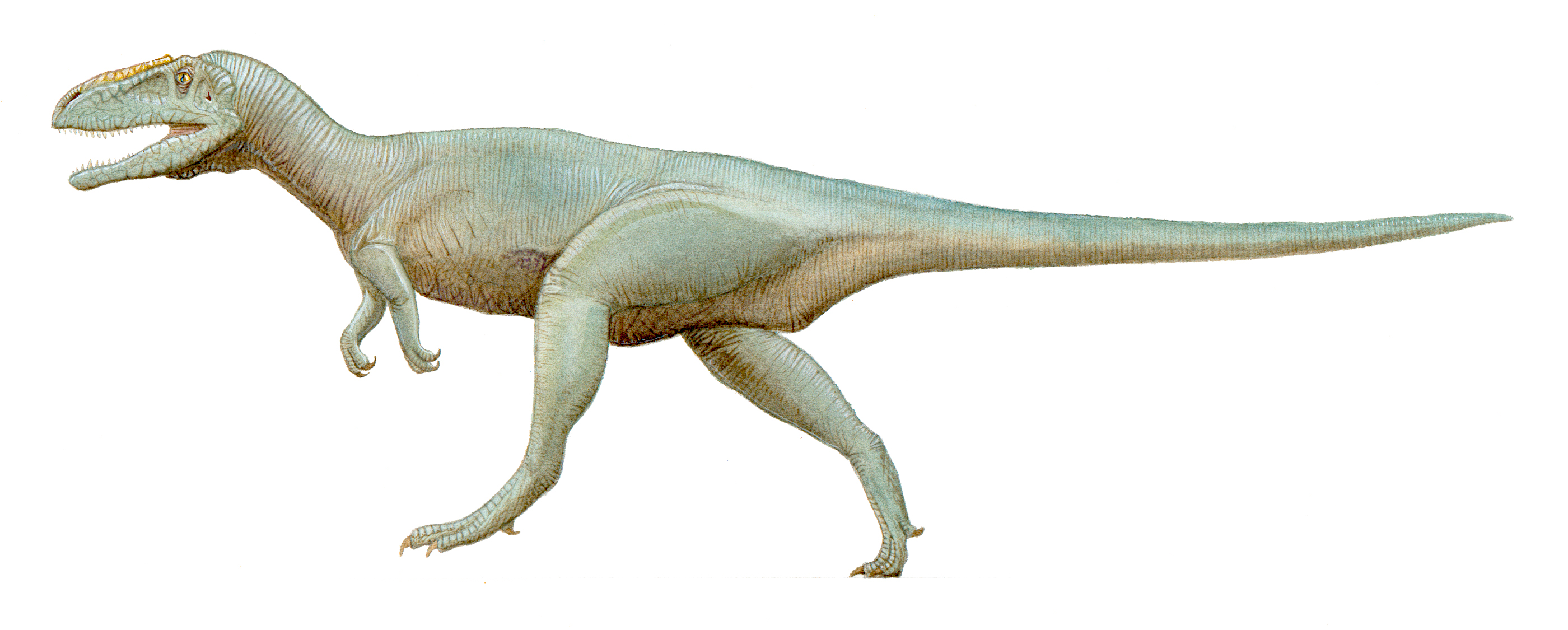
Today we’re excited to reveal that David has confirmed that the footprints were indeed created by Megalosaurus, a carnivorous dinosaur native to Southern England during the Middle Jurassic period. But there’s something a little unusual about this pair of prints…

Dr Legg said: “This is a truly remarkable find. Not only is there no doubt in our minds that the prints are those of a Megalosaurus, but they almost certainly represent a new species altogether.

Artist's impression of Megalosaurus
Artist’s impression of Megalosaurus

“With track marks like these you would normally expect to see variation between the right and left prints but these two are very similar, if not identical. This suggests to me that this particular specimen preferred to hop everywhere or maybe even had just one leg.”

This is a revolutionary discovery and will alter the understanding of dinosaur movement for palaeontologists across the world. Dr Legg adds, “This is the first time we have found evidence of Megalosaurus this far to the west, and we are proposing that the creature be named Megalosaurus cornwallis-prilaeno.”

To find out more about this truly incredible discovery, watch this short report put together by the Eden Project.

Today, the Biome team are setting up a cordon around the 74 cm x 57cm prints in the West Africa section to protect them from possible accidental damage by the thousands of visitors who come to the Project every week. They are also checking the surrounding area for more prints or possibly even bones from the Megalosaurus. Of course, we’ll keep you fully up to date with the story, as it emerges.

Rachel Parle, Interpretation and Education Officer