What colour were the dinosaurs?

This article is taken from European research magazine Horizon as part of our partnership to share natural environment science stories with readers of More than a Dodo. 

What colour were the dinosaurs? If you have a picture in your head, fresh studies suggest you may need to revise it. New fossil research also suggests that pigment-producing structures go beyond how the dinosaurs looked and may have played a fundamental role inside their bodies too.
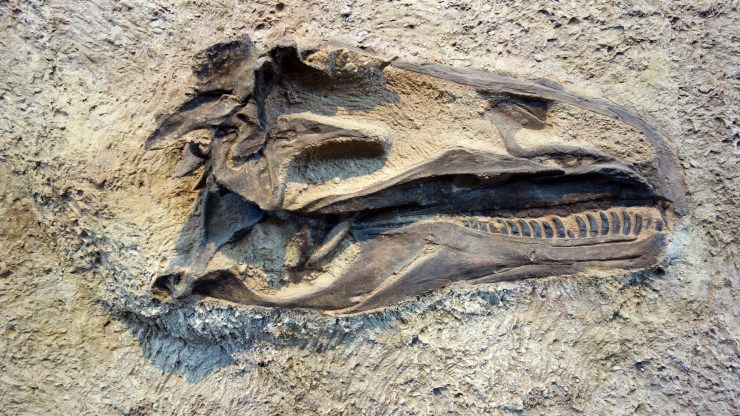
The latest findings have also paved the way for a more accurate reconstruction of the internal anatomy of extinct animals, and insight into the origins of features such as feathers and flight.

Much of this stems from investigations into melanin, a pigment found in structures called melanosomes inside cells that gives external features including hair, feather, skin and eyes their colour – and which, it now turns out, is abundant inside animals’ bodies too.

‘We’ve found it in places where we didn’t think it existed,’ said Dr Maria McNamara, a palaeobiologist at University College Cork in Ireland. ‘We’ve found melanosomes in lungs, the heart, liver, spleen, connective tissues, kidneys… They’re pretty much everywhere.’

The discoveries in her team’s newest research, published in mid-August, were made using advanced microscopy and synchrotron X-ray techniques, which harness the energy of fast-moving electrons to help examine fossils in minute detail.

Using these, the researchers found that melanin was widespread in the internal organs of both modern and fossil amphibians, reptiles, birds and mammals – following up a finding they made last year that melanosomes in the body of existing and fossil frogs in fact vastly outnumbered those found externally.

What’s more, they were surprised to discover that the chemical make-up and shape of the melanosomes varied between organ types – thus opening up exciting opportunities to use them to map the soft tissues of ancient animals.

Secondary

These studies also have further implications. For one, the finding that melanosomes are so common inside animals’ bodies may overhaul our very understanding of melanin’s function, says Dr McNamara. ‘There’s the potential that melanin didn’t evolve for colour at all,’ she said. ‘That role may actually be secondary to much more important physiological functions.’

Her research indicates that it may have an important role in homeostasis, or regulation of the internal chemical and physical state of the body, and the balance of its metallic elements.

‘A big question now is does this apply to the first, most primitive vertebrates?’ said Dr McNamara. ‘Can we find fossil evidence of this? Which function of melanin is evolutionarily primitive – production of colour or homeostasis?’

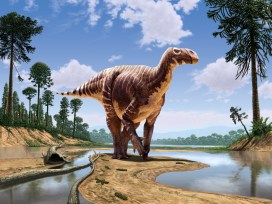
Choosing colours for dinosaur reconstructions is a combination of evidence, modern references, and artistic guesswork. Image copyright: Julius Csotonyi

At the same time, the findings imply that we may need to review our understanding of the colours of ancient animals. That’s because fossil melanosomes previously assumed to represent external hues may in fact be from internal tissues, especially if the fossil has been disturbed over time.

Dr McNamara says her research has also shown that melanosomes can change shape and shrink over the course of millions of years, potentially affecting colour reconstructions.

Further complicating the picture is that animals contain additional non-melanin pigments such as carotenoids and what is known as structural colour, which was only recently identified in fossils. In 2016, a study by Dr McNamara’s team on the skin of a 10-million-year-old snake found that these could be preserved in certain mineralised remains.

‘These have the potential to preserve all aspects of the colour-producing gamut that vertebrates have,’ said Dr McNamara.

She hopes over time that these findings and techniques will together help us to much more accurately interpret the colours of ancient organisms – though in these early days, she doesn’t have examples of animals for which this has already changed.

We’re just at the tip of the iceberg when it comes to fossil colour research.

Dr Maria McNamara, University College Cork, Ireland

Deep time

Many of the significant strides in this area have come out of a project that Dr McNamara leads called ANICOLEVO, which set out to look into the evolution of colour in animals over deep time – or hundreds of millions of years.

The project’s starting point was that previous animal colour studies largely omitted in-depth fossil analysis, leaving a significant gap by basing what we know about colour mainly on modern organisms.

But it has since led to even wider investigation. Dr McNamara says it is providing fresh hints on the kinds of biological structures and processes that are essential for survival in terrestrial and aquatic environments. ‘It looks like we’ll be able to look into much broader, exciting questions about what it means to be an animal,’ she said.

Part of her research on two fossils found in China even showed that flying reptiles known as pterosaurs had feathers, potentially taking the evolution of these structures back a further 80 million years to 250 million years ago. The fossils contained preserved melanosomes with diverse shapes and sizes, one of the tell-tale signs of feathers.

Two fossils found in China showed that flying reptiles known as pterosaurs had feathers, indicating the structures evolved earlier than previously thought. Image credit – Zixiao Yang

‘We were able to show for the first time that not only were dinosaurs feathered, but an entirely different group of animals, the pterosaurs, also had feathers,’ said Dr McNamara.

Another project she worked on, called FOSSIL COLOUR, compared the chemistry of colour patterns between fossil and modern insects. Again, says Dr McNamara, these don’t entirely map onto each other.

‘It’s already clear that the fossilisation process has altered the chemistry somewhat, so we’re doing experiments to try to understand these changes.’

What’s evident is that there’s lots still to find out about colour. ‘We’re just at the tip of the iceberg when it comes to fossil colour research,’ said Dr McNamara.

Thermoregulation

Other researchers agree that there’s more to animal colour than meets the eye. Dr Matthew Shawkey, an evolutionary biologist at Ghent University in Belgium, said that looking into properties and functions beyond colour’s use for visual means like signalling and camouflage will be critical to understanding its true significance.

‘For example, how do colours affect thermoregulation? Flight? Such functions may be complementary to, or even more significant, than purely visual functions,’ he said.

Dr Shawkey is looking into such questions, with one of his recent studies indicating that the wing colour of birds may play an important role in flight efficiency by leading to different rates of heating.

‘What started as a novelty of deciphering dinosaur colours has turned into a very serious field which is studying the origins of key pigment systems, how the evolution of colourful structures may have helped drive major evolutionary transitions like the origin of flight, and how colour is related to ecology and sexual selection,’ said Dr Steve Brusatte, a vertebrate palaeontologist and evolutionary biologist at the University of Edinburgh, UK.

Ultimately, we may be able to find out more about colour than once thought possible. ‘When I was growing up, so many of the dinosaur books I read in school said that we would never know what colour they were,’ said Dr Brusatte. ‘But as is so often the case in science, it was silly to treat this as impossible.’

He said he is excited to see what comes next, with the field just in its infancy: ‘Palaeontologists now have a whole new window into understanding the biology and evolution of long-extinct organisms.’

Top image: Aline Dassel/Pixabay, licensed under Pixabay licence

The research in this article was funded by the EU. If you liked this article, please consider sharing it on social media.

The article Fossil colour studies are changing our idea of how dinosaurs looked was originally published on Horizon: the EU Research & Innovation magazine | European Commission.
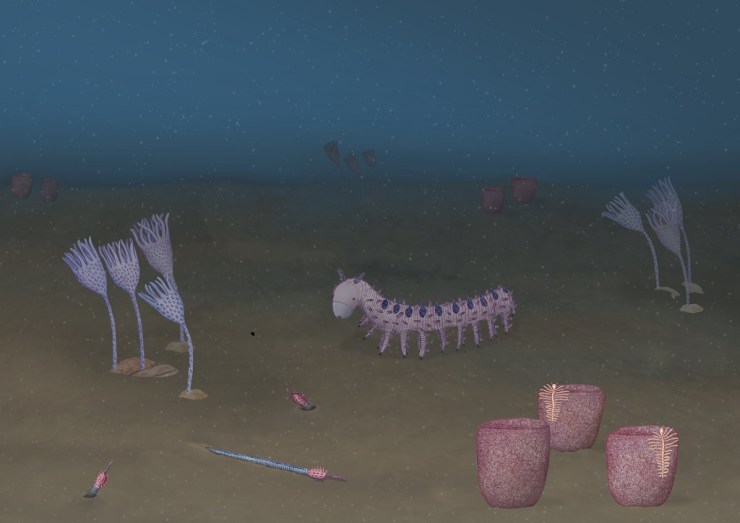
Abigail Harris - artwork showing reconstruction of Cambrian ocean animal life

Cambrian creation

Abigail Harris - artwork showing reconstruction of Cambrian ocean animal life

by Abigail Harris

Over the past few months our researchers have been working with University of Plymouth illustration student Abigail Harris, who has delved into the weird and wonderful world of some of the earliest animals. Here, Abigail tells us about the process that led to the creation of her Cambrian artwork, inspired by our First Animals exhibition.

I first visited the Museum in April this year when I was given the opportunity to collaborate with scientists as part of a module in my BA in at the University of Plymouth. Things kicked off with a short talk about the Ediacaran and Cambrian geological periods, when Earth’s first animal life started to appear.

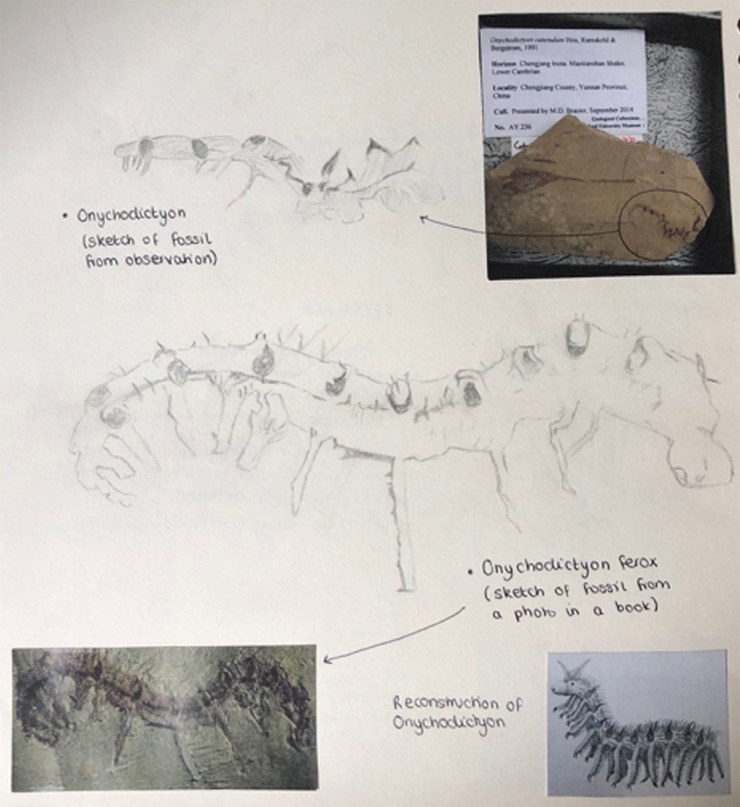
I quickly narrowed my interest down to fossils from the Cambrian period which are more complex life forms, more similar to life today. A collection of small fossils from the Chengjiang fossil site in Yunnan province, China was the inspiration for some initial observational drawings.

Abigail Harris - sketches for artwork showing reconstruction of Cambrian ocean animal life
A sketchbook page showing initial sketches and observations of Onychodictyon
Final illustration of Cotyledion

After returning to Plymouth University, I began to develop these initial sketches and observations, continuing to research the Chengjiang material and learning more about the characteristics of some of the creatures preserved as fossils.

I wanted to create an under-the-sea ecology reconstruction showing a diversity of life forms, focusing on Onychodictyon, Cotyledion, Cricocosmia, Luolishania, and Paradiagoniella.

A five-step process was used for each reconstruction. Initially, I would sketch the fossil as I saw it, then I would research the characteristics and features of that animal, making a list of things to include in my drawing. A second drawing would then include all of these characteristics, not just what was initially visible in the fossil.

These rough sketches were then sent to the scientists for feedback, helping me to redraw and paint the illustrations with watercolour, before scanning and digitally editing each painting. Lastly, I created a background and added my illustrations.

Initial under under the sea ecology reconstruction.

Although the reconstructions were not completely finished by the time of my project deadline, I returned to the Museum in July and was given a tour of the First Animals exhibition by Deputy Head of Research Imran Rahman, as well as the opportunity to discuss how to improve my artworks for accuracy.

Another round of sketching and painting led to the final piece, shown at the start of this article, complete with an added digital background of the seafloor, and darkened to reflect the murky world of a Cambrian ocean, 50 metres below the surface.

Tests of time: Foraminifera and Radiolarians in science, art and 3D

Doctoral researcher Elaine Charwat is exploring the value and meaning of models and casts in the Museum’s collections as part of her PhD. She has recently been studying some fabulous models that help to visualise and understand some of the very, very smallest of specimens…

By Elaine Charwat

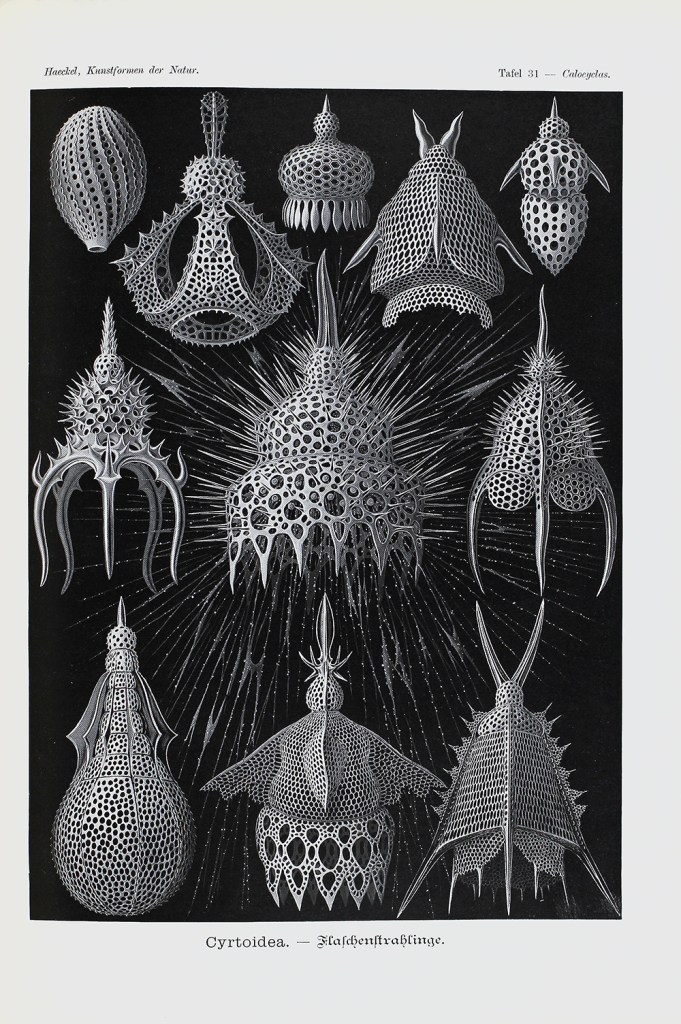
The first time I encountered a Radiolarian was in a book – Ernst Haeckel’s (1834-1919) weird and wonderful Kunstformen der Natur (Art Forms in Nature, 1899-1904). It took comparative morphology – comparing the shapes of organisms – to new giddy heights, scientifically, philosophically and artistically. I felt that giddiness when looking at page after page crammed with crustaceans, orchids, hummingbirds, moths and even bat faces, all exquisitely arranged to celebrate their symmetries, the evolution and kinship of their shapes and forms. It also made visible organisms that are normally all but invisible.

Illustration of Cyrtoidea (table 31) from Kunsterformen der Natur (1899 – 1904) by Ernst Haeckel. By permission of the Linnean Society of London.

Foraminifera and Radiolarians are microscopic sea-dwelling organisms. Species may be found as fossils dating from Cambrian times, ca. 500 million years ago, right up to living specimens today.

To Haeckel, they were living proof of Darwin’s theory of evolution, and for his own belief that morphology was the key to understand the actual processes of evolution, catching it in the act. However, these organisms had two big disadvantages – their unwieldy taxonomy, or the way they are classified, and their minute size: they were difficult to examine and display.

Illustrations of Radiolarians, (table 28). from Die Radiolarien (1862) by Ernst Haeckel. By permission of the Linnean Society of London.

Through his illustrations, Haeckel widely popularized them – triggering a Victorian craze for microscopes and microorganisms, as well as influencing art nouveau art and architecture. But there were limits to what an illustration could communicate. Models stepped in, representing these organisms in ways illustrations could not.

Detail from Haeckel’s Kunstformen der Natur (1899 – 1904)

One defining feature of Radiolarians and Foraminifera is their shells – called “tests”. Variations in shapes of the tests not only indicate that they are different species, but also, excitingly, provide clues about space and time. The tests of Neogloboquadrina pachyderma, for instance, record ocean temperature over geological timescales – their shells coil to the left when water temperatures are relatively cold, and to the right when it is warmer. The potential for research into climate change is obvious. Foraminifera are also important “signature fossils”, helping geologists to determine geological strata.

You really need to see them in glorious 3D to appreciate these tests across geological time, to understand their complex, beautiful shapes. And I felt a similar twang of excitement to my first encounter with them through Haeckel when discovering these extraordinary models here in the Museum as part of my PhD research.

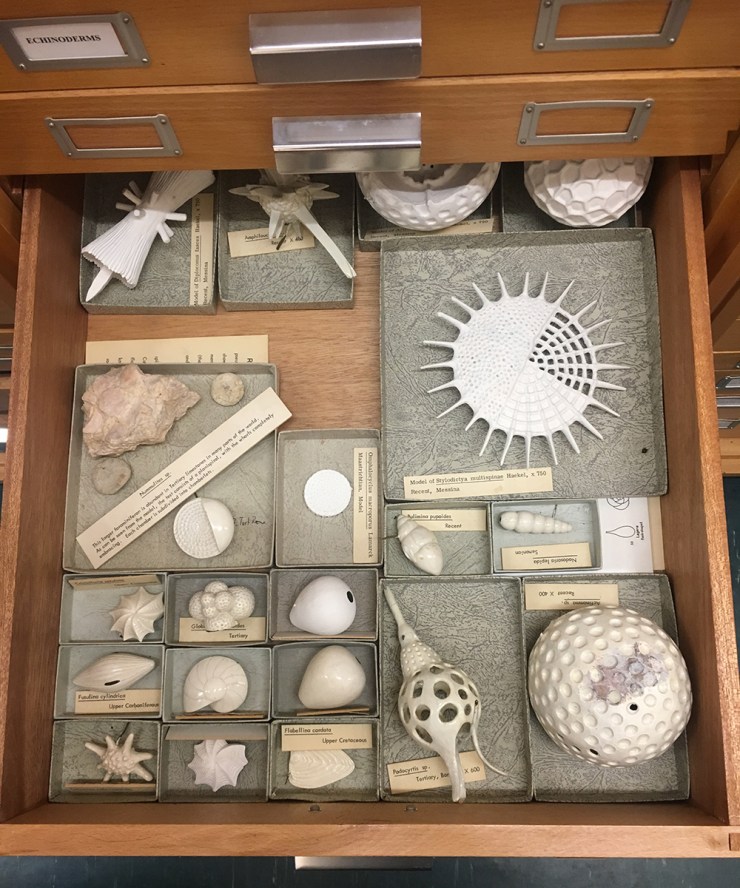
Václav Frič (1839-1916) was a natural history dealer based in Prague. He developed a series of 100 plaster of Paris models of Foraminifera (1861), as well as the stunning papier-maché models of Radiolaria (listed in his catalogue of 1878). He worked closely with Ernst Haeckel.

A selection of Frič’s models in the Museum’s stores

The Frič models oscillate between visible and invisible, illustration and model, art and science, philosophy and theory. They bear witness to a key period in the history of science when they were used to give tangible shape and proof to Charles Darwin’s poignant phrase:  “[…] from so simple a beginning endless forms most beautiful and most wonderful have been, and are being, evolved.”

Through the models we can “grasp” microorganisms that have been around for over 500 million years; organisms that truly have stood the tests of time.

Exceptional Chinese fossils come to Oxford in new partnership

by Imran Rahman, Deputy Head of Research

China is world-famous for its unique and exceptionally preserved fossils, which range from some of the oldest animals on Earth, to spectacular feathered dinosaurs. We are therefore very excited to announce that the Museum, along with other institutions from across Europe, is a partner in a major new venture with Yunnan University in China: the International Joint Laboratory for Palaeobiology and Palaeoenvironment.

Collaboration between this Museum and Yunnan University dates back to the 1990s, driven by the work of Professor Derek Siveter – a former Senior Research Fellow and current Honorary Research Associate at the Museum. He collaborated with Professor Hou Xianguang, director of the International Joint Laboratory for Palaeobiology and Palaeoenvironment, to study fossils from the internationally renowned Chengjiang biota, which was discovered by Hou Xianguang in 1984.

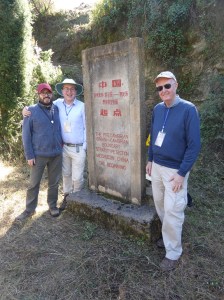
Museum researchers Duncan Murdock, Jack Matthews and Derek Siveter (l-r) visit the Precambrian-Cambrian Section

The Chengjiang fossil site is important and exciting because it preserves both the soft and hard parts of a range of early animals. This fossil record captures the rapid diversification of life about 520 million years old – in an event referred to as the Cambrian explosion. Derek Siveter was instrumental in a successful bid to have the Chengjiang biota designated a UNESCO World Heritage site in 2012, preserving it for future generations.

In December 2018, Museum researchers Duncan Murdock, Imran Rahman and Jack Matthews travelled with Derek to Kunming, China, for the first meeting of the International Joint Laboratory for Palaeobiology and Palaeoenvironment. The lucky researchers spent three days on field trips to the region’s most spectacular fossil sites, including Lufeng World Dinosaur Valley and the Chengjiang biota itself, followed by two full days of scientific talks and discussions.

The International Joint Laboratory is funded by the Ministry for Education of China and includes the University of Leicester, the Natural History Museum, London, the University of Munich, and the Bavarian State Collection of Zoology, along with Oxford University Museum of Natural History and Yunnan University.

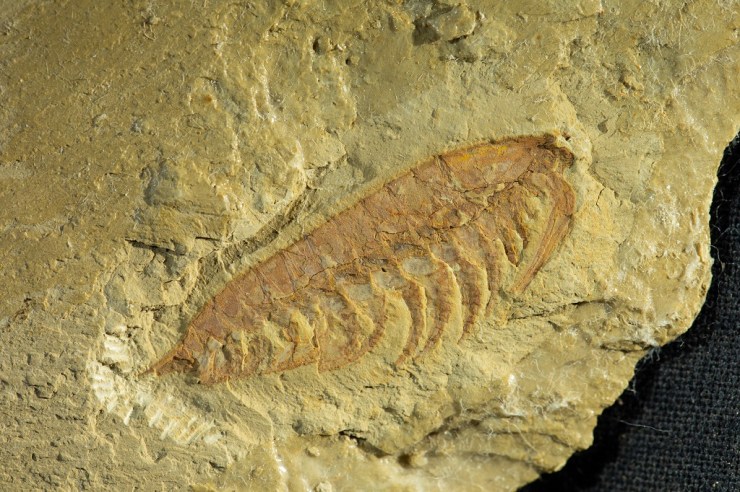
The arthropod Haikoucaris ercaiensis. Sometimes referred to as a ‘short-great-appendage’ arthropod, Haikoucaris had a pair of prominent grasping appendages adjacent to the head (right-hand side of this image). Credit: Scott Billings
The arthropod Leanchoilia illecebrosa. Sometimes referred to as a ‘short-great-appendage’ arthropod, Leanchoilia illecebrosa had a pair of prominent grasping appendages adjacent to the head (right-hand side of this image). Credit: Scott Billings

A significant first outcome of this new partnership will be the loan of iconic Chengjiang fossil specimens from Kunming to Oxford for our First Animals exhibition which opens on 12 July and runs until February 2020. Most of these fossils have never been outside of China before, and some have never been seen by the public before. We invite you to visit First Animals to see these exceptional fossils first hand!

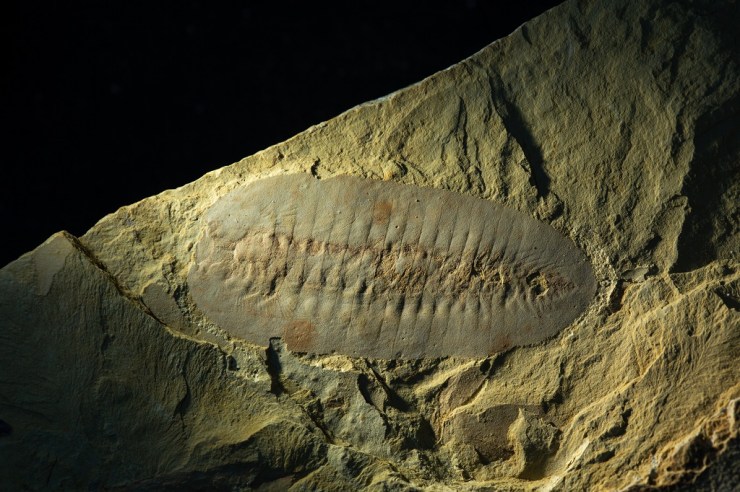
The arthropod Saperion glumaceum. Saperion had a flattened, segmented body and jointed appendages (not visible in this specimen). Credit: Scott Billings.

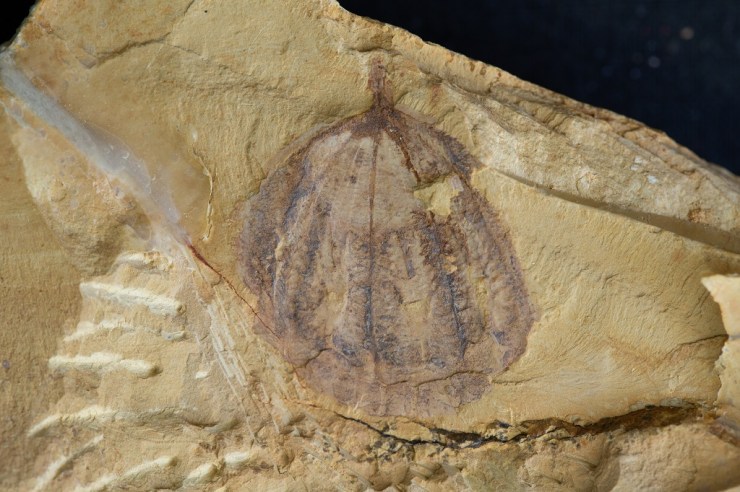
Top image: The comb jelly Galeactena hemispherica. Unlike modern comb jellies, which are soft-bodied animals, Galeactena and its relatives had hardened ‘spokes’ on the sides of the body (appearing as dark bands in this photograph). Credit: Scott Billings.

How the sea cucumber lost its armour

By Imran Rahman, Research Fellow

You have probably heard of sea cucumbers. If you’re lucky, you might have seen one, if not in the wild, then perhaps in a nature documentary like Blue Planet or the children’s cartoon Octonauts. If you’re less lucky, you might have eaten one – they are most commonly described as slippery and bland in taste!

Despite their appearance, sea cucumbers are actually marine animals most closely related to sea urchins, rather than to worms or slugs. Over the past century palaeontologists have uncovered a range of ancient fossil relatives of modern sea cucumbers that allow us to piece together the story of how they evolved from armoured ‘tanks’ into the naked slug-like forms we see today. One such fossil is described in a new paper by my colleagues and I, just published in the journal Proceedings of the Royal Society B.

The fossil in question is 430-million-years-old, and it comes from a site of exceptionally-preserved fossils in England called the Herefordshire Lagerstätte. Herefordshire has produced many exciting discoveries over the years, from prehistoric parasites to an ancient ‘kite runner’. The new fossil is the first of its kind from this deposit.

Like all fossils from Herefordshire, the specimen was preserved in an egg-shaped nodule of rock. Because the rock has the same chemical composition as the fossil, it could not be studied with modern imaging methods such as CT scanning. Instead, it had to be studied by painstakingly grinding away the fossil, a few hundredths of a millimetre as a time, with photographs taken of each exposed surface using a digital camera. This allowed us to build up a dataset of hundreds of slice images through the fossil, which were digitally reconstructed as a 3-D ‘virtual fossil’ on a computer.

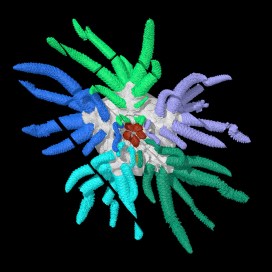
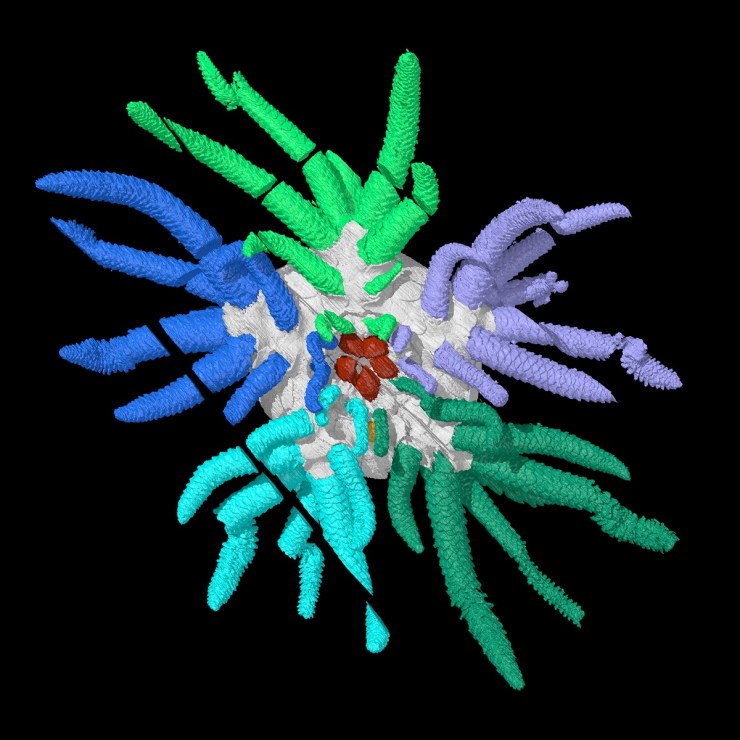
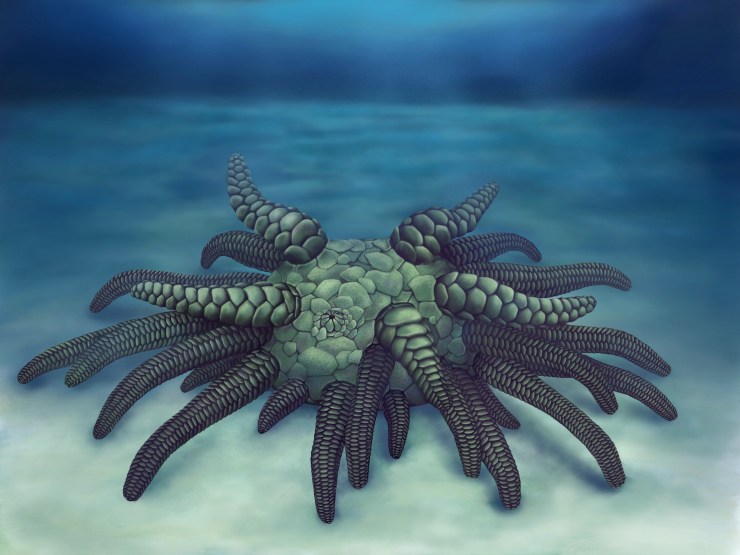
The 3D computer reconstruction revealed a very peculiar animal, about 3 cm wide, with 45 tentacle-like ‘tube feet’ and a large mouth surrounded by five teeth. The animal had a skeleton made up of numerous hard plates, which were composed of the mineral calcite. After studying this fossil and comparing it to other similar ones from the same time period, we were able to identify it as a species new to science. We named the species Sollasina cthulhu, for its resemblance to monsters from the Cthulhu universe created by author H.P. Lovecraft.

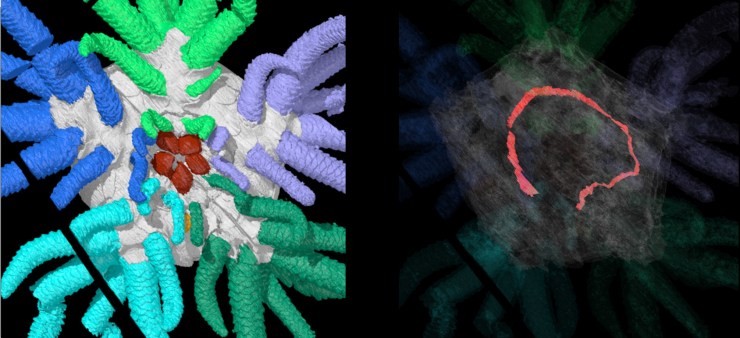
One of the most useful things about our 3D computer reconstruction was that it enabled us to study the inner features of the fossil, as well as the parts visible on the outer surface. This revealed internal soft parts that had never previously been described in this group of fossils. In particular, it allowed us to see an internal ring-like structure within the main body cavity.

3D reconstruction of Sollasina cthulhu. Left-hand image shows part of lower surface. Right-hand image shows same view with outer surface partly transparent to reveal inner ring (in red). Credit: Imran Rahman, Oxford University Museum of Natural History

We interpreted this inner ring as part of the water vascular system – the system of fluid-filled canals used for feeding and movement in modern sea cucumbers and their relatives, such as sea urchins and starfish. In life, the ring was connected to the large tube feet, which were filled with seawater. Most of these tube feet were used for crawling over the seafloor, with those nearest the mouth used for capturing food. The teeth could cut and crush food items, which were then eaten by the animal.

Life reconstruction of Sollasina cthulhu. Credit: Elissa Martin, Yale Peabody Museum of Natural History

To work out the evolutionary relationships of Sollasina cthulhu, we assembled a list of characteristics for various fossil and modern sea cucumbers and sea urchins. We analysed this matrix using several computational methods to determine how these different animals were related to one another. The results confirmed that Sollasina cthulhu and closely-related forms were ancient relatives of modern sea cucumbers. This allowed us to reconstruct the early evolution of sea cucumbers, back to their shared common ancestor with sea urchins, over 450 million years ago. Our study demonstrates this was a story of loss, with fossil sea cucumbers becoming progressively less armoured as they evolved into modern forms.

This discovery has greatly improved our understanding of sea cucumber evolution, but several questions remain. One intriguing question is when and how did sea cucumbers lose their teeth, and did these evolve into any features seen in living sea cucumbers? Future study of existing and new fossil sea cucumbers and sea urchins will help to answer this and other intriguing questions.

Happy 250th William Smith

Today is the 250th birthday of the remarkable English geologist William Smith, creator of the first geological map of England and Wales – ‘the map that changed the world’. Here Danielle Czerkaszyn, Senior Archives and Library Assistant, tells us more about Smith’s achievements and his relationship to the Museum.

William Smith (1769-1839)

William Smith (1769-1839) began his career as a land surveyor’s assistant in his home village of Churchill, Oxfordshire. He soon travelled the country working on mining, canal and irrigation projects. This gave him the opportunity to observe the patterns in layers of rock, known as strata, and to recognise that they could be identified by the fossils they contained. This would earn him the name ‘Strata Smith.’

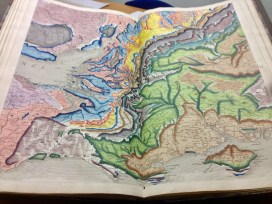
Smith’s observations of strata over hundreds of miles led to the ground-breaking 1815 publication of his map A delineation of strata of England and Wales (pictured top) that ultimately bankrupted him.

Smith’s map set the style for modern geological maps and many of the names and colours he applied to the strata are still used today. While Smith’s accomplishment was undoubtedly remarkable, he was only officially recognised for his discoveries late in life. His lack of formal education and his family’s working class background made him an outcast to most of higher society at the time.

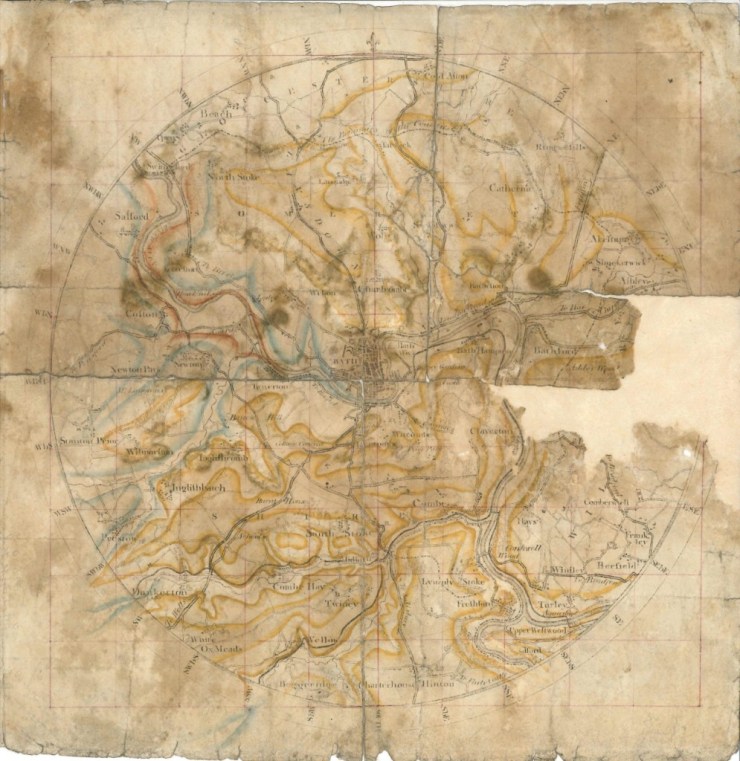
Geological Map of Bath, 1799. This map is considered to be one the earliest geological maps ever created. It demonstrates an early use of Smith’s ‘fading’ colouring technique which emphasised the outcrops of each stratum. The yellow tint represents the Bath Oolite, the blue marks the base of the Lias, and the red the base of the Trias.

It wasn’t until a few years before he passed away that Smith received any recognition for his contribution to the science of geology, receiving a number of awards, including the prestigious Wollaston Medal from the Geological Society of London in 1831, and an honorary degree from Trinity College Dublin in 1835.

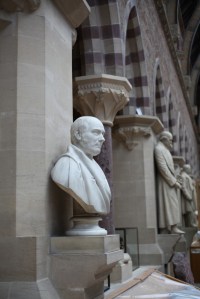
A bust of William Smith is on display in the Museum’s court

His legacy lived on with his nephew John Phillips, one of our Museum’s founders and Professor of Geology at Oxford. Recognising its importance, Phillips left Smith’s archive to the Museum on his death in 1874. Thanks to generous funding from Arts Council England a few years ago, the Smith collection has been catalogued, digitised and is available online to the public.

Few men in the history of science contributed as much, but are as little known, as William Smith. He was a hardworking and determined man who dedicated his life to understanding the world beneath us. So here’s a big Happy 250th birthday to William Smith – the ‘Father of English Geology.’

A small display, Presenting… William Smith: ‘The Father of English Geology’ 250 years on, is running in the Museum until 2 May 2019.