Dodo Roadshow: Derby Museum and Art Gallery


To mark our selection as a Finalist in the Art Fund Prize for Museum of the Year 2015 we’re embarking on a unique and ambitious tour of the country – the Dodo Roadshow.

Beginning at Land’s End on 8 June and concluding in John O’Groats one week later, the famous Oxford Dodo will visit more than 20 museums and galleries along the way. At each stop the Dodo will ‘interview’ one of the venue’s star objects.

Derby Museum: ‘The Alchymist’

So, tell me about yourself – who are you and where do you come from?
I’m Joseph Wright of Derby’s famous painting of an ‘Alchymist’. I have a very long title “The Alchymist, in Search of the Philosopher’s Stone, Discovers Phosphorus, and prays for the successful Conclusion of his operation, as was the custom of the Ancient Chymical Astrologers” that very few people can remember. Painted in 1771, I came to the Derby Art Gallery after they launched a public campaign to buy me in 1883 and the people of Derby raised the money for me to take pride of place in the gallery where I still live.

What is it that makes you so special?
Paintings that show alchemists in a good light are rare – many pictures of alchemists poked fun, but Wright’s is more respectful. I show that sometimes it is possible to discover something by accident. As I search for the magic ingredient to turn base metal into gold I find phosphorus. Only the most forward thinking and controversial philosophers believed it was possible to discover things by accident when I was painted.

Who looks after you in this place?
My guardian is the Senior Curator of Art, Lucy Bamford. She makes sure that I am cared for and studied so that I am better understood in the future.

Do you remember life before the museum?
I was painted in 1771 but no one bought me. Joseph Wright took me to Italy to try to sell me there but I was still in his studio when he added to me in 1795 and remained there until he died. I was never really loved until I came here.

What does the future hold for you?
I have never been so happy as in 2011, when Derby Museums included me as part of the collection that Arts Council England recognised as being of national importance. Since then the collection has been redisplayed and Joseph Wright’s drawings like the sketch of me are available in a study room. I’m now planning to be part of a big touring exhibition with lots of other paintings by Wright and will hopefully travel all the way to America in a few years time.

Stickers small - Dodo Roadshow_crop

Dodo Roadshow: Compton Verney

Cedar 850px

To mark our selection as a Finalist in the Art Fund Prize for Museum of the Year 2015 we’re embarking on a unique and ambitious tour of the country – the Dodo Roadshow.

Beginning at Land’s End on 8 June and concluding in John O’Groats one week later, the famous Oxford Dodo will visit more than 20 museums and galleries along the way. At each stop the Dodo will ‘interview’ one of the venue’s star objects.

Compton Verney: Cedar of Lebanon

So, tell me about yourself – who are you and where do you come from?
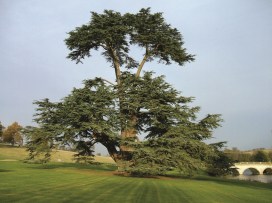
I am a Cedar tree, known botanically as a Cedrus libani. My parents come from the Lebanon.

What is it that makes you so special?
I was planted here at Compton Verney when the famous gardener Lancelot ‘Capability’ Brown redesigned the garden nearly 250 years ago.

Who looks after you in this place?
I’m looked after by a collection of experts, brought together by Head of Landscape and Gardens, Gary Webb.

Do you remember life before the museum?
I have enjoyed much care and attention over the decades, but some of my larger branches have been broken by storms. I still remember when the Verney family used to play beneath my spreading evergreen branches though; they are my fondest moments.

What does the future hold for you?
The future looks much brighter following my root aeration last summer, and of course the feed of seaweed; my leaves are looking greener already! I’m in good hands of course and even have a new rope barrier so my delicate roots aren’t squashed by the many visitors to Compton Verney.

Stickers small - Dodo Roadshow_crop

Dodo Roadshow: Black Country Living Museum

Steam hammer

To mark our selection as a Finalist in the Art Fund Prize for Museum of the Year 2015 we’re embarking on a unique and ambitious tour of the country – the Dodo Roadshow.

Beginning at Land’s End on 8 June and concluding in John O’Groats one week later, the famous Oxford Dodo will visit more than 20 museums and galleries along the way. At each stop the Dodo will ‘interview’ one of the venue’s star objects.

Black Country Living Museum: Steam Hammer

So, tell me about yourself – who are you and where do you come from?
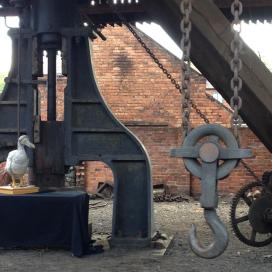
Like you Mr Dodo I’m one of the last of my kind. I’m the steam hammer from Cradley Heath Anchor Forge. I was the last one to operate in the Black Country. You wouldn’t think it, but for a machine working so far from the sea, I helped make chains and anchors for some fine ships, and for the Royal Navy because me and my makers had the best skills with wrought iron.

What is it that makes you so special?
I combine power with precision. I could delicately crack you an egg or shape a ton of hot metal with a blow of my mighty hammer. In my prime I could do the work of ten men and never get tired thanks to my steam powered piston. I can make your whole house shake.

Who looks after you in this place?
I’m looked after by John Beckerson and his team of curators who manage the museum collections. I think I am one of their favourites.

Do you remember life before the museum?
Of course! Industrial objects like me may not say much: but we have long memories. I can remember busy days working with my men in all weathers in the open-sided forge, hammering away until the wrought iron I needed stopped being made. Then I had no more work to do and I came here for retirement in 1979 after 140 years of anchor making.

What does the future hold for you?
Well I’m not in steam at the moment because I have a few issues with my boiler – so what I would really like to do is to get back into full working order so that museum visitors can enjoy my mighty power. I have been talking to my curators and my fundraising colleagues about that. In the meantime I like warm dry weather that doesn’t make me rust, when I can watch the boats on the canal dock and keep an eye on my next-door neighbour the steel rolling mill. The chain making behind me is nice, it reminds me of old times – it’s grand to see hot metal being worked.

Stickers small - Dodo Roadshow_crop

Dodo Roadshow: National Museum Cardiff

To mark our selection as a Finalist in the Art Fund Prize for Museum of the Year 2015 we’re embarking on a unique and ambitious tour of the country – the Dodo Roadshow.

Beginning at Land’s End on 8 June and concluding in John O’Groats one week later, the famous Oxford Dodo will visit more than 20 museums and galleries along the way. At each stop the Dodo will ‘interview’ one of the venue’s star objects.

National Museum Cardiff: Blaschka glass models

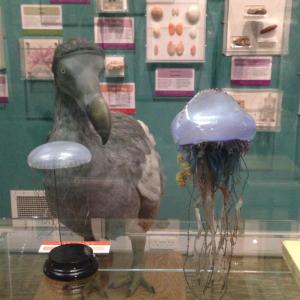
Dodo and BlaschkaSo, tell me about yourself – who are you and where do you come from?
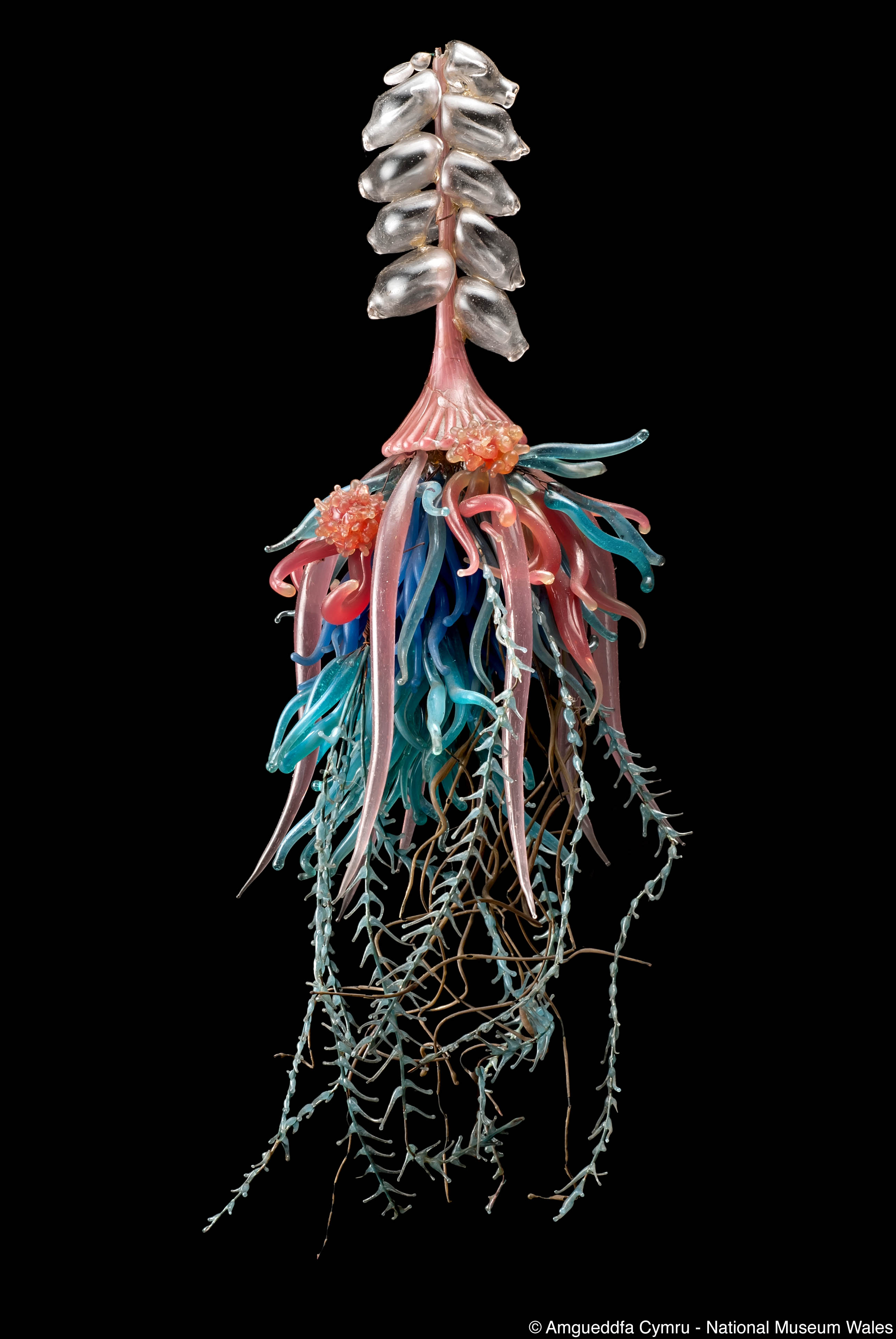
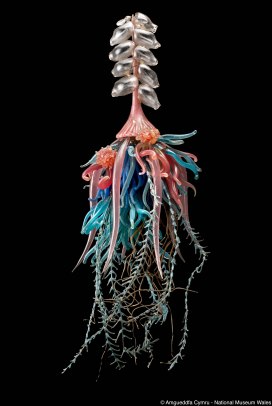
I’m a Blaschka glass model of a marine animal called Physophora hydrostatica – a jellyfish-like animal known as a siphonophore. I was originally made in the 1880’s by the Blaschkas for the Science Museum in London who donated me to Amgueddfa Cymru – National Museum Wales in 1927.

What is it that makes you so special?
I am made of glass! The Blaschkas were very skilled glass workers and had a great interest in natural history. Animals like me are difficult to preserve with lifelike shapes and colours. The Blaschkas came up with the idea of making models of such animals in glass so they could show people how we looked in real life. Today we are still greatly admire by artists and scientists alike for the special skills used to make us.

Who looks after you in this place?
The natural science conservators look after me and all the other glass models. Lots of people are fascinated by us so we are regularly going on journeys to be shown in other museums and galleries. This requires lots of careful handling by the conservators!

Do you remember life before the museum?
After being made I was carefully shipped all the way to Britain where I spent many years on display at the Science Museum before moving onwards to Wales.

What does the future hold for you?
At the moment I’m back in store after touring around for a couple of years with lots of other wonderful objects in an art exhibition called ‘Curiosity’. The conservators are currently starting to do a condition check on me and the other models to ensure we remain in good shape, and can continue to inspire people in the future!

However, whilst I may not currently be on display the museum does have a permanent display of some of the other Blaschka models in the natural history galleries, including my wonderful cousin the Portuguese man’o’war. Please visit!


Stickers small - Dodo Roadshow_crop

Dodo Roadshow: Plymouth City Museum

Lead image

To mark our selection as a Finalist in the Art Fund Prize for Museum of the Year 2015 we’re embarking on a unique and ambitious tour of the country – the Dodo Roadshow.

Beginning at Land’s End on 8 June and concluding in John O’Groats one week later, the famous Oxford Dodo will visit more than 20 museums and galleries along the way. At each stop the Dodo will ‘interview’ one of the venue’s star objects.

Plymouth was a special treat; the Museum is currently closed so the Dodo got to explore behind the scenes.

Plymouth City Museum and Art Gallery: Tub Gurnard

OLYMPUS DIGITAL CAMERASo, tell me about yourself – who are you and where do you come from?
I am a fish. Marine biologists call me Trigla lucerna. But that is a bit of a tongue twister, so you can call me a Tub Gurnard. Marine biologists give me that name so they know what they are looking at when they read about me in books and articles around the world. I was caught in a mackerel fishing net near Plymouth in October 1902 so I’m a pretty old fish – 113 years old in fact! I am a deformed fish, but I have lived a good life. For over 100 years I have been informing researchers about my distribution, as well as the rich ecosystem my species live in.

What is it that makes you so special?
My species can be found in a few spots along the south west and south east coasts of England, along with some spots around Wales and north eastern Scotland. What makes me special is that I am an example of what makes Plymouth the city it is today. Plymouth lies by the sea. This sea has helped to shape Plymouth. The city has a rich maritime history which includes famous characters like Drake and the Spanish Armada. It also has a large Dockyard and Naval Base and occupied a strategic position during World War II. This heritage and more is reflected in the rich collections at the City Museum and Art Gallery and the Plymouth and West Devon Record Office.

Who looks after you in this place?
At the minute I am in a store room with my other pickled friends. The Curator of Natural History, Jan Freedman, looks after me here. He is pretty good. He makes sure we are well taken care of, that we don’t get too warm and have enough fluids. He takes me out to teach University students about marine zoology who gaze through my curved jar and always seem excited to see me. In fact I get out quite a lot, to events in the museum and beyond. I like the reaction people have when they see us and the smiles it brings. I am in good, passionate, hands.

Do you remember life before the museum?
I arrived at the Museum and Art Gallery in 2000, as a donation along with 3,500 other creatures in jars. Before that I lived with the collections at the Marine Biological Association of the United Kingdom. I was swimming, like you do, and then used for scientific research. It felt good to be part of science: to help people understand marine ecosystems and the impact of humans on it.

What does the future hold for you?
There are exciting times ahead. We should be ‘online’ in a few years. Photos of me will be available for you to see no matter where you are in the world! The internet is an amazing place with so much potential. It was the stuff of sci-fi novels when I was growing up.

One of the most exciting things in the coming years is the History Centre project. Plymouth City Museum and Art Gallery, the Plymouth and West Devon Records Office, the South West Film and Television Archive and the South West Image Bank are working together (and with other partners such as Plymouth University), to create a brand new extension to the existing museum to house all our nationally and internationally important collections. Who knows, perhaps my 4000 or so friends and I will be sat comfortably on a glass shelf in a glass store room in the new building. It would be nice to watch you watching me every day.

Stickers small - Dodo Roadshow_crop

Dodo Roadshow: RAMM

RAMM passenger pigeon 850px

To mark our selection as a Finalist in the Art Fund Prize for Museum of the Year 2015 we’re embarking on a unique and ambitious tour of the country – the Dodo Roadshow.

Beginning at Land’s End on 8 June and concluding in John O’Groats one week later, the famous Oxford Dodo will visit more than 20 museums and galleries along the way. At each stop the Dodo will ‘interview’ one of the venue’s star objects.

RAMM: Passenger Pigeon

RAMM pigeon

So, tell me about yourself – who are you and where do you come from?
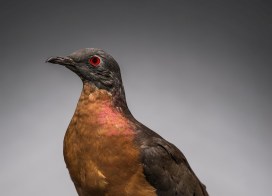
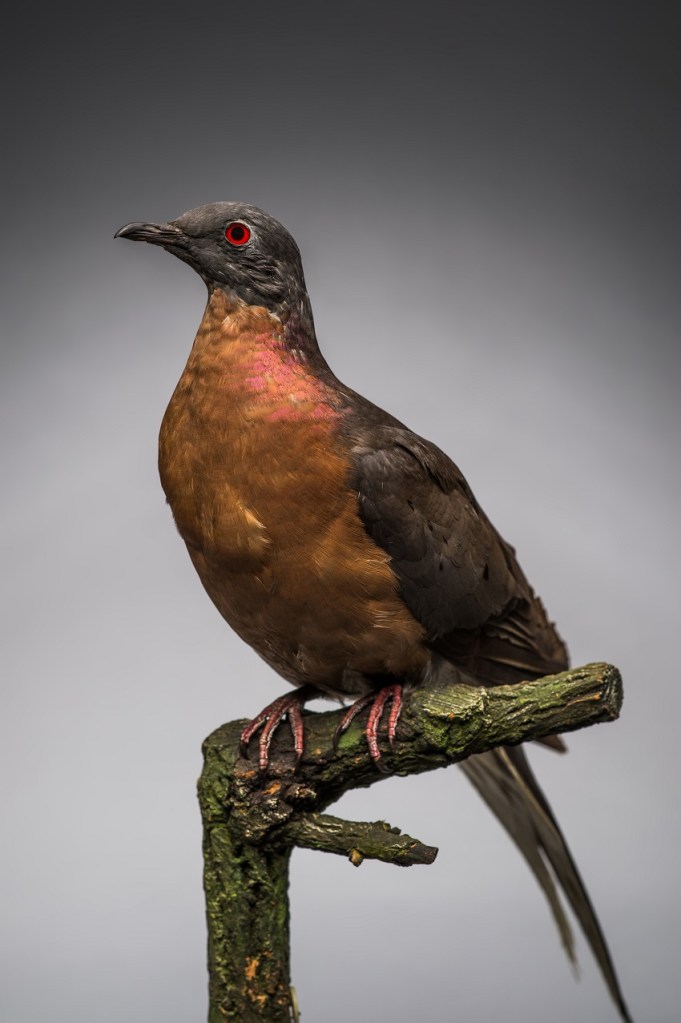
I am a passenger pigeon (Ectopistes migratorius) from North America. I have lived at RAMM since 1865 – that’s 150 years this year!

What is it that makes you so special?
When I was alive there were around 3 billion of my kind – passenger pigeons were possibly once the world’s most numerous bird. But in 1914 the last one, named Martha, died in Cincinnati Zoo. She had never lived in the wild. My species became extinct due to hunting with guns and nets and destruction of my habitat. So like you, I can now only be seen in museums.

Who looks after you in this place?
The Curator of Natural History is responsible for me, but a team of conservators cleaned and preened my feathers before I was put on permanent display so I look at my very best.

Do you remember life before the museum?
I was once part of an enormous flock of pigeons – we would migrate across America each summer and winter. But one year I was captured, brought back to England and found myself in the studios of Rowland Ward – a famous taxidermy company in London. I spent some time with a Mr William Tombs until he donated me to RAMM with 50 cases of other birds.

What does the future hold for you?
I will be spending the foreseeable future on display here in the Finders Keepers? gallery in the heart of RAMM.  I am in a case with other extinct and endangered animals – the ivory-billed woodpecker, California parakeet, huia and orang-utan – and the display explores ethical collecting and use of natural resources. Please come and visit me – there are no dodos here but see if you can find the picture of one in my case.

Oh, and I’m on the internet so future possibilities are endless! Leave comments for me on my webpage and learn about my fellow birds on RAMM’s online Collections Explorer.

Stickers small - Dodo Roadshow_crop