All the fun of the Fossil Festival

Lead image

By Monica Price, Head of Earth Collections

Glowing from the success of our ‘Goes to Town’ and ‘Goes for a Pint’ events, which helped us win this year’s Museums and Heritage Award for best marketing campaign, we decided to ‘Go to the Festival’: the Lyme Regis Fossil Festival to be precise. Thousands of fossil collectors and holiday makers came to a marquee on the beach to discover more about fossils and enjoy all sorts of activities led by museums, universities, societies and conservation groups.

Monica and a festival-goer discuss William Smith's map
Monica and a festival-goer discuss William Smith’s map

This year marked the 200th anniversary of the very first geological map of Britain, made by geologist William ‘Strata’ Smith. As we hold the largest archive of his maps and papers, we were delighted to come and exhibit at the festival.

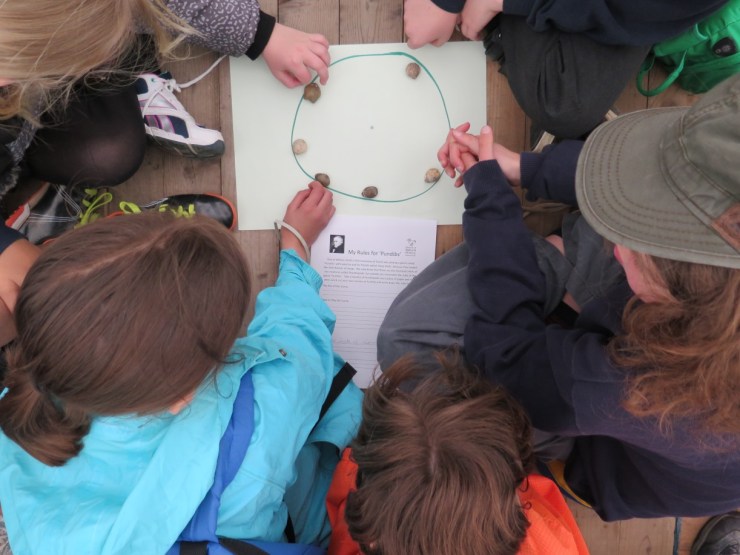
We brought with us some beautiful old specimens and archives from our collections, and let everyone enjoy and even play with real fossils. Play? Well, William Smith grew up in the Oxfordshire village of Churchill and used to play a game he called ‘pundibs’ using fossil brachiopods. He didn’t say what the rules were, and it appears that nobody living there today can remember either. We decided to challenge festival-goers to devise new rules.
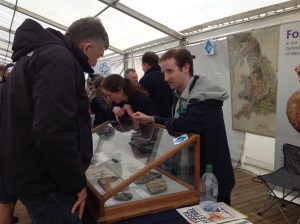
Phil from Earth Collections shares some of the Museum's fossil specimens
Phil from Earth Collections shares some of the Museum’s fossil specimens

Brachiopods are curious aquatic animals that are very common in the fossil record, but are much rarer today. They have shells composed of two valves, a bit like a clam, but with a very different kind of body inside. The brachiopod holds onto a rock with its long stalk-like ‘pedicle’, opens its shell, and as the water filter through, catches food with tiny fibres on its loop-like ‘brachia’ or arms. The shell can be shaped like a pottery oil lamp, giving brachiopods their common name ‘lamp shells’.

Our brachiopod fossils proved quite challenging to play with. If you rolled them, they veered sideways. If you threw them, they’d bounce in all directions. Variations on skittles, boules, bowls and dice were all suggested, and even a race game to see which would fall to the bottom of a bowl of water first. Perhaps the original game is the one suggested by a former school teacher; children in his school used to play ‘dibs’, a throwing and catching game now better known as ‘knuckle bones’, ‘jacks’ or ‘five stones’.
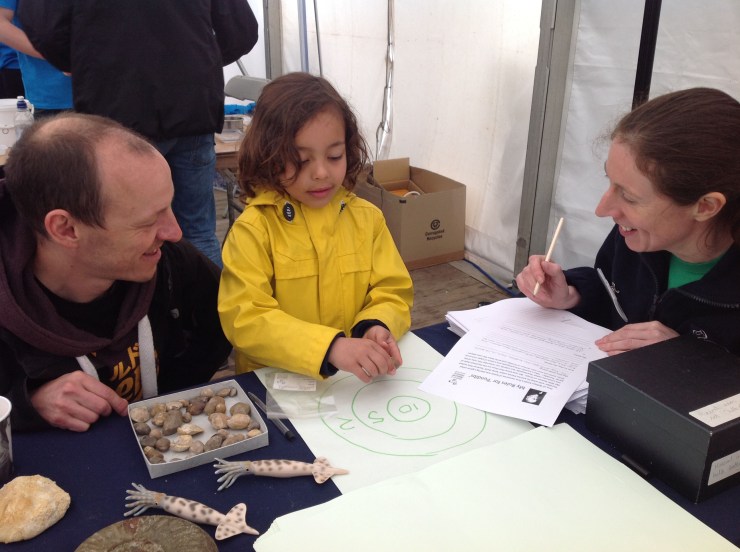
Writing down the rules with Eliza

We thoroughly enjoyed our time at Lyme Regis, talking about fossils, answering enquiries, helping people have fun discovering the amazing world of geology – and of course, playing ‘pundibs’!

One for the mantelpiece

Museum_Heritage_Awards_2015_MNH small

If you live in Oxford or have been reading our blog for a while you may remember a project we created called Goes to Town: twelve specimens escaped from the Museum, set themselves up in locations around Oxford city and provided a treasure-hunt style trail around town. They then returned in time for our reopening party in 2014.

It was a fun project with many elements so we are very pleased indeed to say that it picked up the winning trophy in last night’s Museum + Heritage Awards show, in the marketing campaign category. Here’s the first video we made to promote Goes to Town:

All around the world

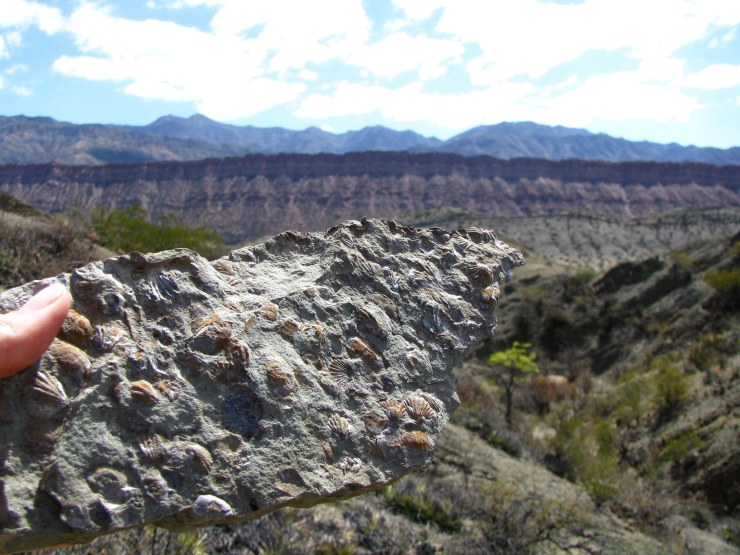
Photo 5 Argentina brachiopods

As a Museum research fellow, my work on arthropod palaeontology often takes me to exotic places to examine and collect fossils. I recently returned from a packed five-week trip to Australia and Argentina. During this time I managed to squeeze in two fieldwork trips, a museum visit to examine some collections, and an international conference.

It began in early September when I flew to Adelaide, Australia, to meet up with friends and colleagues at the South Australia Museum (SAM) for some fossil-collecting fieldwork. A group of eight of us piled into fully loaded trucks and started the drive to Cape Jervis, where we boarded the ferry to Kangaroo Island. On this beautiful island, there is a spectacular fossil site known as the Emu Bay Shale. The fossils here preserve 510 million year old Early Cambrian animals in incredible detail, including soft parts not normally found in fossils, such as eyes, gills, skin and guts.

A beautiful trilobite fossil from the Emu Bay Shale quarry

Dr John Paterson, Dr Diego Garcia-Bellido and other researchers from the SAM have published numerous papers on the weird and wonderful animals from this site. I had already been fortunate enough to work with these guys on the anomalocaridids – very early marine animals – from the Emu Bay Shale a couple of years ago. After the fieldwork this time, we returned to Adelaide with a truckload of fossils to add to the SAM collections. I then spent two weeks working in the museum on previously collected specimens, and making research plans for the years to come as part of the ongoing collaborations between this Museum and the SAM.

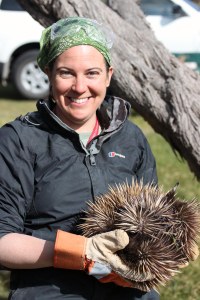
Me, taking a break from fossil hunting to cuddle an echidna.
Me, taking a break from fossil hunting to cuddle an echidna. Photo: John Paterson

One of my favourite things about working in Australia is the chance for close encounters with the local wildlife, and this trip did not disappoint. During our time on Kangaroo Island, we saw many wallabies, Little Penguins, countless types of birds, and kangaroos of course. I even got to hold an echidna.

John, Diego and I then met up in Sydney airport for the long journey to Mendoza, Argentina where we joined nearly 900 colleagues for the 4th International Palaeontological Congress. This is one of the biggest conferences in our field, and takes place only every four years. We enjoyed a week of fantastic talks, including some given by the Museum’s researchers Dr David Legg and Prof Derek Siveter.

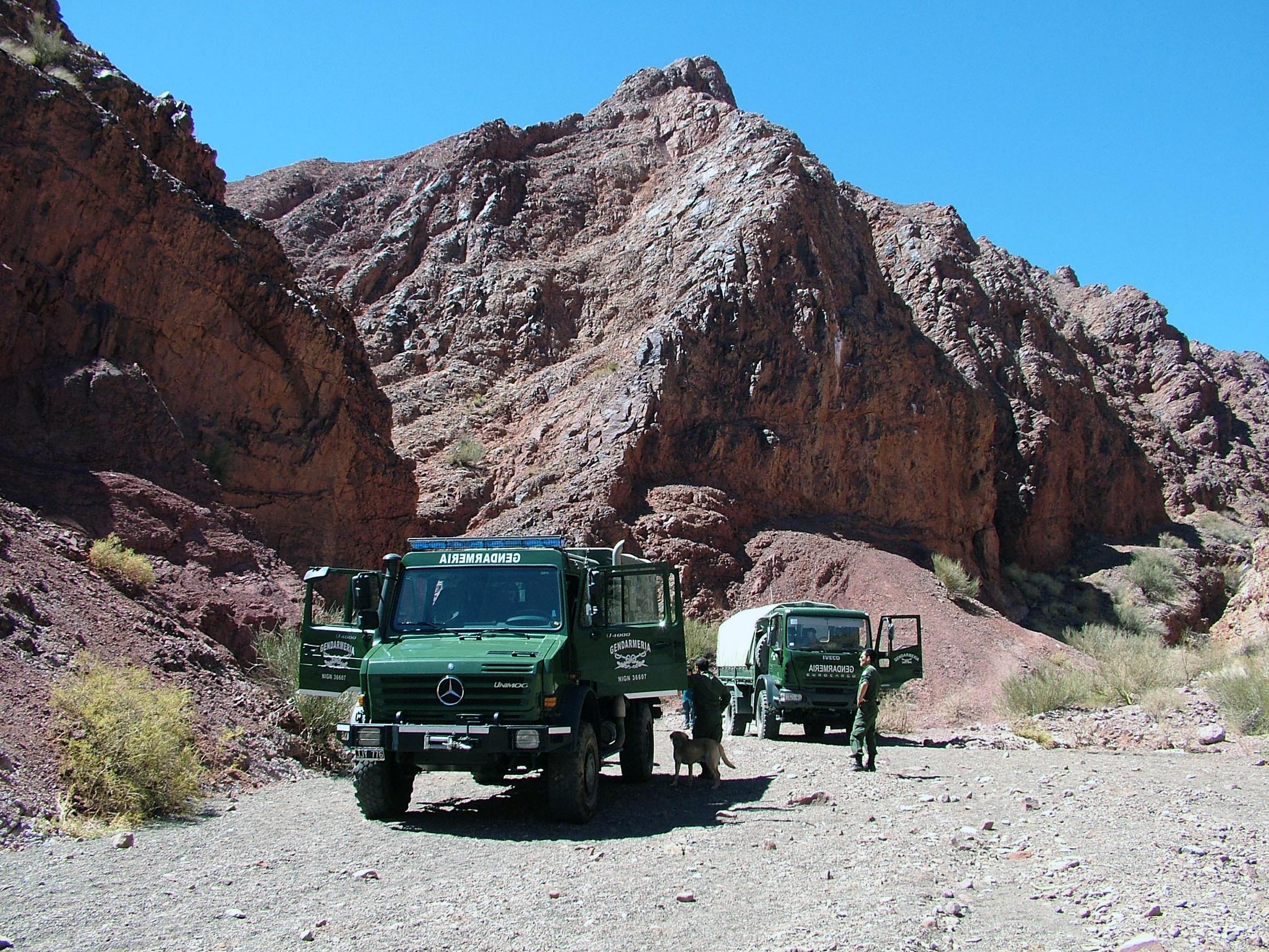
After the five-day conference, 30 of us headed out on a related field trip to the Argentinian Precordillera for a Palaeozoic marine journey to explore the wonderful rocks and fossils of western Argentina, near the border with Chile. We saw lots of lovely fossils, including trilobites, brachiopods, bivalves, corals and sponges. The terrain was so rugged at times that the field trip leaders had brought in the Argentine National Gendarmerie to transport us in army vehicles!

The army vehicles arranged for transporting the field trip participants to the rugged terrain of the Argentine Precordillera

The scenery was spectacular, with impressive views over the Andes mountain range. After four marvelous field trip days, I then returned to Oxford, completing my journey around the world. The conversations and feedback from the conference and fieldtrip will help with my future research directions at the Museum. The fossil work in Australia provided important comparisons for the research I do here in Oxford on local collections, and will undoubtedly be the subject of future publications (and, of course, blog posts…).

Allie Daley, Museum Research Fellow

At home in Yorkshire

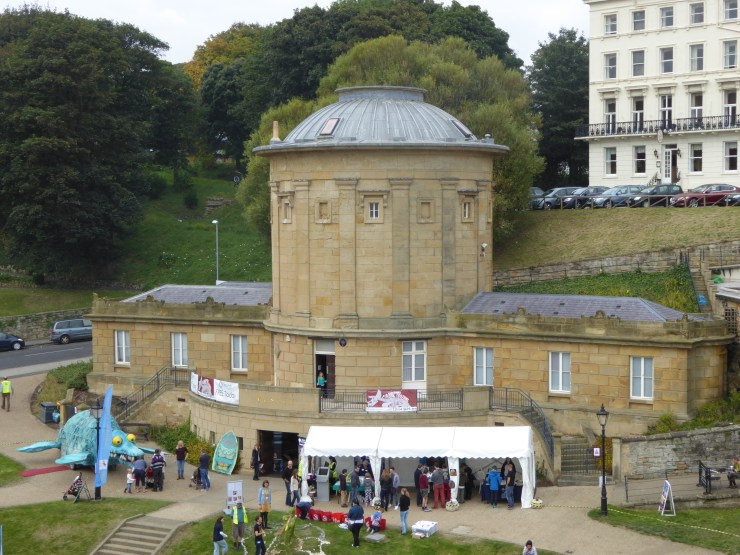
P1000251In rush hour traffic, carrying a precious cargo, the Museum’s Director, Professor Paul Smith and Head of Archival Collections, Kate Santry, headed north. They took the William Smith archive on tour to the Yorkshire Fossil Festival, in lovely Scarborough. Hosted by the Scarborough Museums Trust, in partnership with the Paleontological Association, the Yorkshire Fossil Festival had a wide array of exhibitors, lectures and events all celebrating fossils over the course of three days.
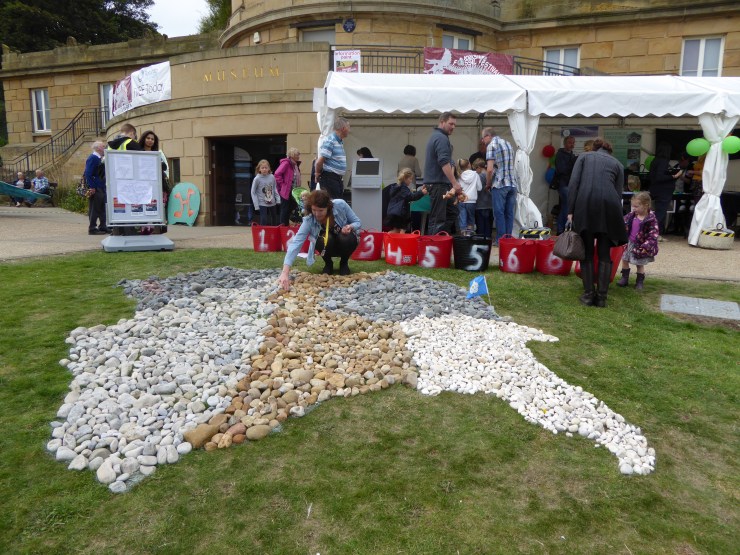
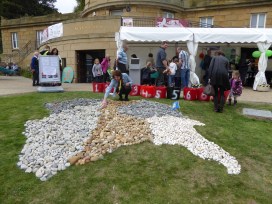
Festival-goers constructing a geological map of Yorkshire using stones. Smith would have been proud!

Despite some chilly and cloudy weather the festival saw a great turn-out. On Friday 12th September, a number of local primary and secondary schools made a visit, participating in activities that gave hands-on experience in understanding more about fossils. The school groups who visited our stall had the opportunity to act out a play exploring how fossils are made with our Director, Paul Smith, as the narrator!

P1000259
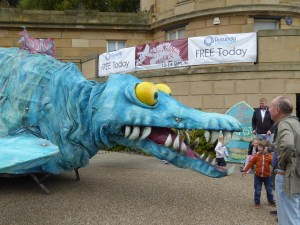
Horace the travelling Pliosaur cinema

The crowds visiting the festival over Saturday and Sunday got a rare look at original material from the William Smith archive and were asked to help us transcribe the collection, which has recently been digitised and catalogued. Although he is ‘the father of English geology’, William Smith is not a universally known figure in the history of science. But it was a very different matter with the Scarborough crowd.

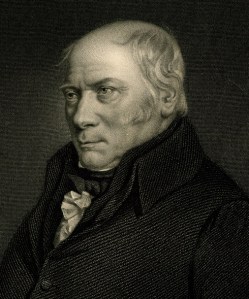
William Smith
William Smith, ‘Father of English geology’ and Scarborough resident

Born here in Oxfordshire, Smith lived in Scarborough at the time he died in 1839 and was an active and important figure in the town. In addition to being an early member of the Philosophical Society, he was also consulted to solve the town’s water supply issues, select stone for the bridge between the town and its newly discovered spa, and most notably in helping to design the Rotunda Museum that was our base for the three days.

The biggest hit at our table over the weekend was the Geological Map of Yorkshire, published by Smith and Cary in 1820 as part of his County Map series. While approximately 400 people spent time looking closely at, and talking with us about this important map, its popularity was followed closely by a copy of Smith’s wine merchant’s bill from Scarborough dated 1839. It certainly appears that Smith was a fan of gin and marsala…

Carnival carry-on

IMG_0180

Hi, I’m Aisling, a trainee education officer taking part in the HLF Skills for the Future programme across the Oxford University Museums and Collections.

Aisling setting up the carnival activities

I’ll be spending a year working with the education teams, learning the skills it takes to become a great museum education officer.
My placement starts with 4 months here at the Museum of Natural History, before moving to the Ashmolean, and finishing in the Pitt Rivers Museum.

Last Sunday I was lucky enough to work at Cowley Road Carnival with the rest of the trainee team. When we met in the morning the sun was shining, music was playing, the whole street already smelt delicious from the many street food stalls… we just knew it was going to be a good day!

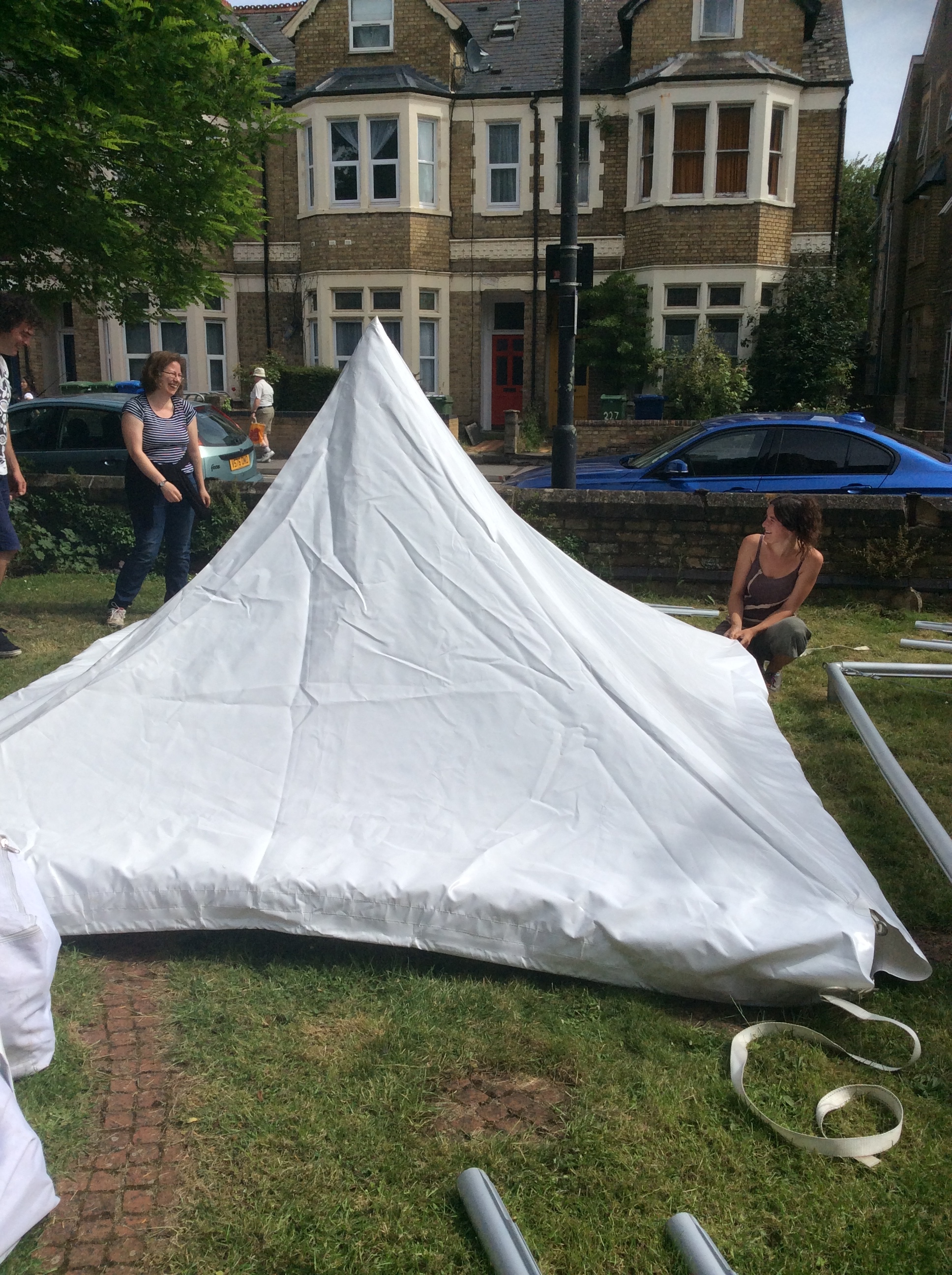
IMG_0119Before all the fun could start we had to set up base at our spot in the grounds of St Mary and St John Church. How many trainees does it take to set up two tents and a few tables?

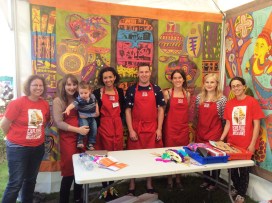
The answer is five trainees, a project coordinator, a head of education and three additional helpers. It took teamwork, perseverance and the truly superhuman strength of Andy, head of education at the Pitt Rivers, but we got there in the end, and didn’t it just look beautiful!?

image23

After we had rewarded our hard work with a much-needed tea break we began setting up our handling objects. We took lots of beautiful masks, quite fitting for the theme ‘the many faces of Oxford.’ We also took a horse skull, a cast of a velociraptor skull, and some fossilised dinosaur poo. The last of which created some very funny reactions when the person holding it found out what it was.

IMG_0147The make and take activity we chose to run was mask-making, which is always a hit with the children (and some grown-ups too!) There was shiny paper, glitter and sequins everywhere, and we mean everywhere, and a fun time was had by all.

Our activity proved very popular and we counted 220 children who left for home as Egyptian pharaohs, samurai warriors or fierce dinosaurs. What’s more, the sun stayed shining for the whole day, despite the forecasts predicting otherwise, and we even got time to catch some of the procession. Definitely a good day!

Aisling Serrant, Trainee Education Officer