At home in Yorkshire

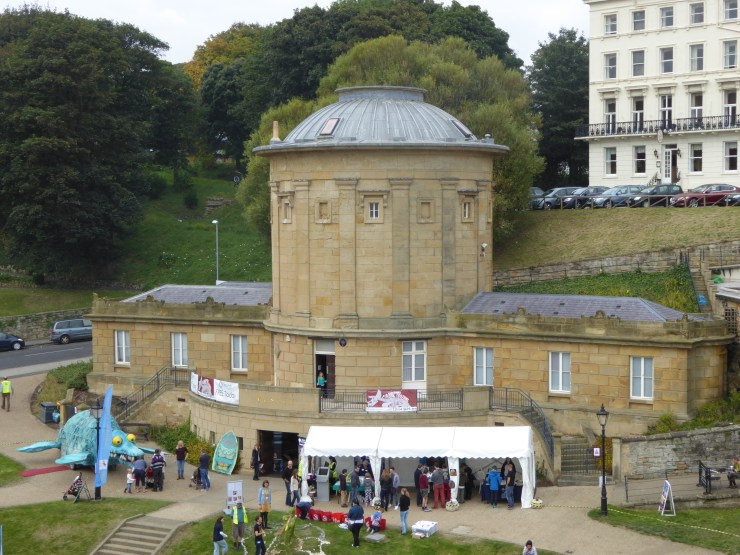
P1000251In rush hour traffic, carrying a precious cargo, the Museum’s Director, Professor Paul Smith and Head of Archival Collections, Kate Santry, headed north. They took the William Smith archive on tour to the Yorkshire Fossil Festival, in lovely Scarborough. Hosted by the Scarborough Museums Trust, in partnership with the Paleontological Association, the Yorkshire Fossil Festival had a wide array of exhibitors, lectures and events all celebrating fossils over the course of three days.
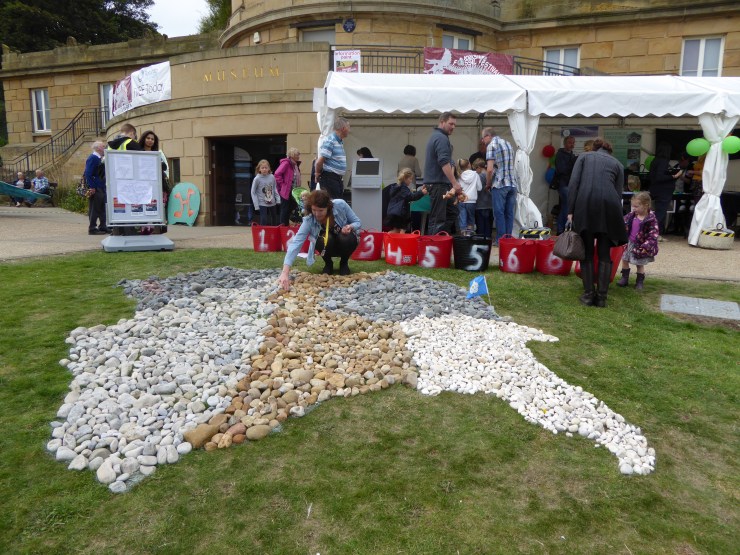
Festival-goers constructing a geological map of Yorkshire using stones. Smith would have been proud!

Despite some chilly and cloudy weather the festival saw a great turn-out. On Friday 12th September, a number of local primary and secondary schools made a visit, participating in activities that gave hands-on experience in understanding more about fossils. The school groups who visited our stall had the opportunity to act out a play exploring how fossils are made with our Director, Paul Smith, as the narrator!
P1000259
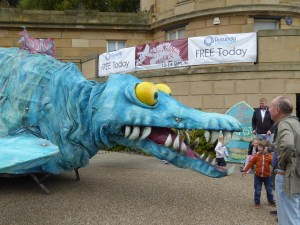
Horace the travelling Pliosaur cinema

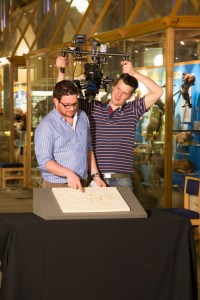
The crowds visiting the festival over Saturday and Sunday got a rare look at original material from the William Smith archive and were asked to help us transcribe the collection, which has recently been digitised and catalogued. Although he is ‘the father of English geology’, William Smith is not a universally known figure in the history of science. But it was a very different matter with the Scarborough crowd.
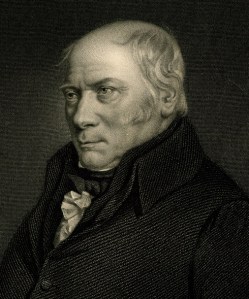
William Smith
William Smith, ‘Father of English geology’ and Scarborough resident

Born here in Oxfordshire, Smith lived in Scarborough at the time he died in 1839 and was an active and important figure in the town. In addition to being an early member of the Philosophical Society, he was also consulted to solve the town’s water supply issues, select stone for the bridge between the town and its newly discovered spa, and most notably in helping to design the Rotunda Museum that was our base for the three days.

The biggest hit at our table over the weekend was the Geological Map of Yorkshire, published by Smith and Cary in 1820 as part of his County Map series. While approximately 400 people spent time looking closely at, and talking with us about this important map, its popularity was followed closely by a copy of Smith’s wine merchant’s bill from Scarborough dated 1839. It certainly appears that Smith was a fan of gin and marsala…
Experience gained

IMG_2199

Over the past few days the ranks of the Museum have been swelled by the arrival of a host of summer interns from the University of Oxford Internship Programme and the EPA Cephalosporin Fund scheme. Overall, twelve internships are being run at the Museum, and the new faces have been squirreled away into the various departments and collections throughout the building.

We’ve got people working on a wide variety of activities, from audience research for Oxford ASPIRE, to the curation of longhorn beetles (Cerambycidae) in the Life Collections, to work on the archive of 19th-century entomologist James Charles Dale.

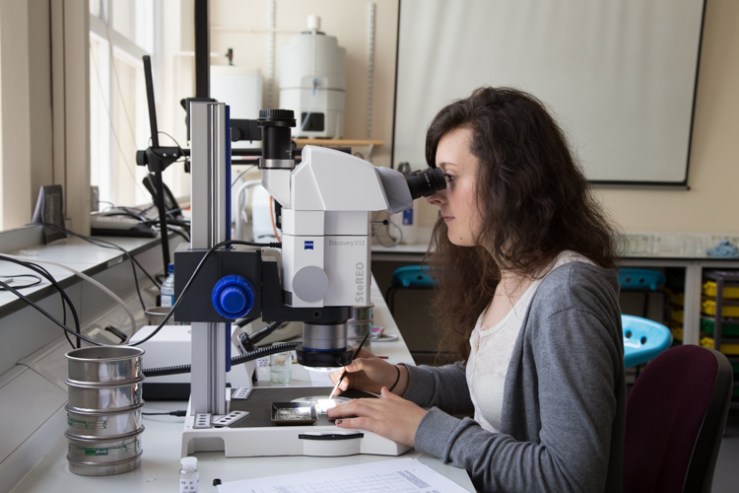
One of the interns, Grace Manley, is pictured above peering into a microscope. Grace is working with Dr Tracy Aze, a research fellow at the Museum who is studying planktonic foraminifera – fossils of single-celled organisms found in deep-sea sediments – to investigate marine extinctions. Tracy explains how Grace is contributing to the work during her internship:

Grace is helping me to test some methodological practices that will feed into how I conduct my future research. She has been involved in all the stages of micropalaeontological processing, from washing down core sediments and microfossil identification, through to imaging specimens on the scanning electron microscope.

The project gives her the opportunity to learn many of the common practices that micropalaeontologists use in a lab today and is excellent experience should she decide to continue to work in this field, or other areas of palaeontology.

Caption
Grace Manley working on the planktonic foraminifera as part of her internship with Research Fellow Dr Tracy Aze

For Grace, the internship provides ‘a practical experience of scientific research in the field of environmental change and extinction’. At the same time, she is enjoying ‘the chance to learn about the hugely diverse range of collections in the Museum and how they are actively used for scientific research today.’

We hope that all the interns across the Museum are finding a similarly rich and rewarding experience and we’ll feature some of the highlights of their work on this blog over the coming weeks.

In the meantime, a big welcome to Naomi Saunders, Stephanie Faulkner, Grace Manley, Emily Giles, and Samuel Peacock on the University of Oxford programme; and to Branwen Snelling, Keyron Hickman-Lewis, Ellen Foley-Williams, Max Brown, James Evry, Cecilia Karlsson, and Emily Tibly on the EPA Cephalosporin Fund scheme.

Scott Billings – Public engagement officer


Carnival carry-on

IMG_0180

Hi, I’m Aisling, a trainee education officer taking part in the HLF Skills for the Future programme across the Oxford University Museums and Collections.

Aisling setting up the carnival activities

I’ll be spending a year working with the education teams, learning the skills it takes to become a great museum education officer.
My placement starts with 4 months here at the Museum of Natural History, before moving to the Ashmolean, and finishing in the Pitt Rivers Museum.

Last Sunday I was lucky enough to work at Cowley Road Carnival with the rest of the trainee team. When we met in the morning the sun was shining, music was playing, the whole street already smelt delicious from the many street food stalls… we just knew it was going to be a good day!

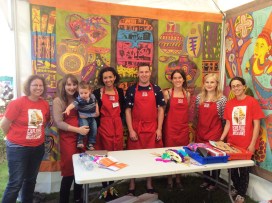
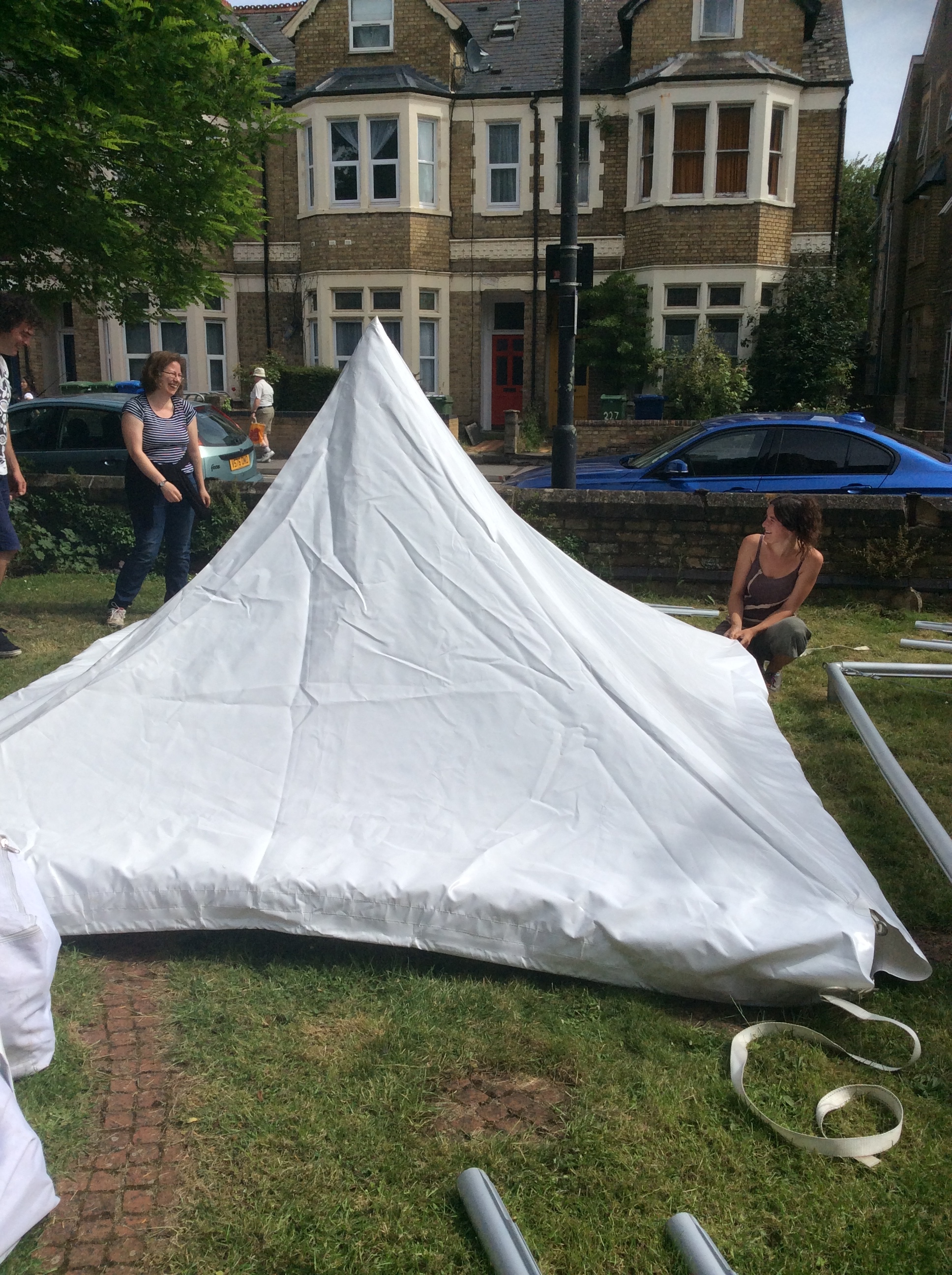
IMG_0119Before all the fun could start we had to set up base at our spot in the grounds of St Mary and St John Church. How many trainees does it take to set up two tents and a few tables?

The answer is five trainees, a project coordinator, a head of education and three additional helpers. It took teamwork, perseverance and the truly superhuman strength of Andy, head of education at the Pitt Rivers, but we got there in the end, and didn’t it just look beautiful!?

image23

After we had rewarded our hard work with a much-needed tea break we began setting up our handling objects. We took lots of beautiful masks, quite fitting for the theme ‘the many faces of Oxford.’ We also took a horse skull, a cast of a velociraptor skull, and some fossilised dinosaur poo. The last of which created some very funny reactions when the person holding it found out what it was.

IMG_0147The make and take activity we chose to run was mask-making, which is always a hit with the children (and some grown-ups too!) There was shiny paper, glitter and sequins everywhere, and we mean everywhere, and a fun time was had by all.

Our activity proved very popular and we counted 220 children who left for home as Egyptian pharaohs, samurai warriors or fierce dinosaurs. What’s more, the sun stayed shining for the whole day, despite the forecasts predicting otherwise, and we even got time to catch some of the procession. Definitely a good day!

Aisling Serrant, Trainee Education Officer

Dinosaurs amongst us

IMG_1510

Earlier this year we had the pleasure of hosting the BBC iWonder team and evolutionary biologist and presenter Ben Garrod for a filming session all about the evolution of birds. BBC iWonder is a growing series of short but rich guides to subjects as wide-ranging as salt in your diet, the World Cup, and the holocaust, each designed to pique people’s interest and curiosity.

Ben Garrod filming with the Archaeopteryx cast

Ben’s guide is titled ‘Do Dinosaurs Still Live Among Us?’. This is a good question indeed and the answer is (sort of) ‘yes’. You can find out a lot more in the guide itself, which has just been launched here and features some lovely footage of the Museum and our cast of the famous Archaeopteryx fossil, the first found to show the traces of feathers on a dinosaur.

Needless to say we were very pleased when the iWonder team contacted us about their idea to look at the evolution of birds from dinosaurs using specimens in the Museum. The guide’s producer and director Ben Aviss explains how it came about:

We brainstorm ideas for new content for the guides and one of those was to look at dinosaurs, but what question might we ask? The idea of dinosaurs and birds sharing a common ancestry is something that not everyone may know about so we decided to look at that.

Ben Aviss had already seen the Museum on Ben Garrod’s BBC4 series Secrets of Bones and thought it looked great. “The more we chatted about the things we might want access to, the more we realised you offered everything we needed,” he adds.

Ben Garrod tracks along the Iguanodon tail.
Ben Garrod tracks along the Iguanodon tail

It was a third return to the Museum for Ben Garrod who, as well as filming sequences for Secrets of Bones, had also run our Capybara Construction special event earlier in the year. He explains the appeal of returning for the iWonder guide:

This iWonder guide represents a new and fun way to retell a key moment in evolutionary history – the transition from dinosaurs into modern birds and I’m pleased with the final result. It’s informative and interesting but more than that, it looks good and that is in no small part down to the setting in which we filmed.

I keep coming back again and again because I genuinely love the Museum. The collection is laid out in a way that gives the visitor lots of time and space to explore and the specimens themselves are great – I’m still finding new things every time I visit.

There are plans for further iWonder guides that go richer and deeper, with greater interactivity and content. Let’s hope the collections – and Ben’s enthusiasm – brings the team back to tell another story here soon.

Scott Billings – Communications officer

Ento Kids R Us

bee2

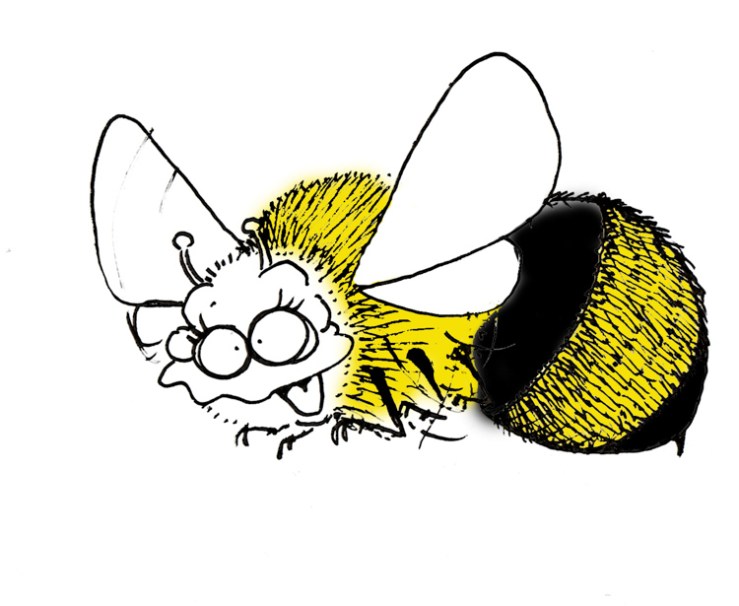
As we head towards the end of National Insect Week this year it seems like a very good time to introduce you to one of the hardest-working people in bugworld – Sally-Ann Spence of Minibeast Mayhem. If you’ve ever visited the Museum on one of our bug-handling days you may well have met Sally already, quite probably holding a stick insect.

Through Minibeast Mayhem, Sally does a lot of work to support the budding entomologists of tomorrow, running invertebrate-based educational workshops for schools and public outreach events around Oxfordshire. Sally is also a committee member of the Amateur Entomologists Society’s Bug Club, an entomological club for children.

We asked Sally to tell us a bit more about her work and her desire to encourage bug-loving kids. Here’s what she has to say:

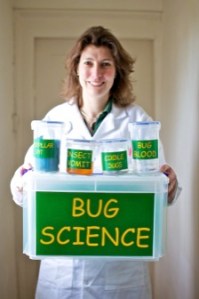
Sally-Ann Spence and her Minibeast Mayhem Bug Science kit

“When I meet a child with a passion for bugs I always suggest to their family that they should join a society such as the AES Bug Club where they can take part in many events and their interest can be nurtured. Sometimes it becomes apparent that a child has more than just a passing interest in bugs; in fact they have a true passion that could extend well beyond childhood. Unfortunately the UK has no BSc in Entomology so the subject is often missed in our schools careers advice. This can leave some children and their families at a loss for how to pursue their interest.

So I decided to set up a voluntary mentoring scheme – the Ento Kids – not only for enthusiastic children but also to support their families. The scheme has been successful, thanks to the incredible support I have received from expert individuals, landowners, universities, entomology-related companies and museums and their staff.

The aim of the Ento Kids is to support children through a CREST Award and a two week work experience placement. We offer advice on GCSE and A level choices and suitable university courses, as well as provide access to sites for research projects (and potential future employers).

Ento Kids hard at work in the Museum

Ento Kids take part in active fieldwork on research experiments to learn practical skills and are introduced to a network of professional entomologists who share their expertise from previous experience.

Theory is also fundamentally important and this is where museums such as the Museum of Natural History in Oxford are vital. Darren Mann, Head of Life Collections, and his team in the Entomology Department encourage the Ento Kids unreservedly. The children are taught about fieldwork in various habitats around the world and about the processes involved for collected specimens. They are taught about active scientific research, the importance of the collections and how to conserve them. Best of all, they learn all of this in a hands-on way with the staff in the Museum itself.

We need our entomologists, both from the past and today, and National Insect Week is a celebration of insects that everyone can take part in.”

Sally-Ann Spence – Minibeast Mayhem

Taxidermy for all

IMG_2137

Taxidermy has enjoyed a bit of a surge in popularity in the last few years, as surveyed by Alexis Turner in his 2013 book Taxidermy. In the Museum, the touchable taxidermy animals are always popular, especially Mandy the much-stroked pony, the removal of which we fear might cause a public outcry.

photoall
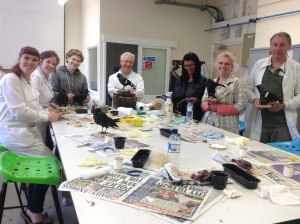
Derek Frampton, centre, leads the workshop

Of course it’s all very well stroking cute, furry taxidermy animals, but have you got the, well, guts to have a go at it yourself? We suspected that plenty of people not only have the guts but also the desire so we set up a workshop with professional taxidermist Derek Frampton, whose work is regularly on display in the Museum. It’s the first time we have offered a taxidermy workshop, but despite the £175 cost for the specimen, materials and tuition, the day was easily oversubscribed.

And what a great session it was. Five excited and enthusiastic members of the public (and one equally excited education officer) were given expert tuition in a step by step guide to create their very own taxidermy jackdaw.

Taxidermy
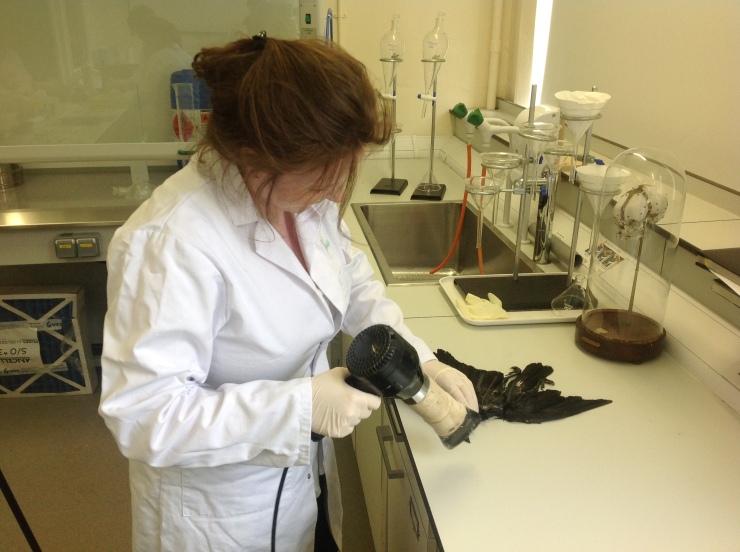
Blow dry in the lab

It wasn’t for the squeamish either because the birds were not pre-skinned, so there was some down and dirty hands-on work to be done before the pretty stuff could begin. The whole process took from 10am until 6.30pm with barely a break. Nonetheless, one participant said that the time flew by (no pun intended, we assume) and another said:

I don’t believe it, I thought we were just going to get a pre-prepared skin, not do the whole thing in a day! That was excellent!

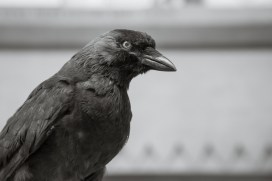
The bird you can see at the top of the post is the creation of the over-excited education officer, Chris Jarvis. He’s named it Scratch because it was made entirely from – yep – scratch. Being a remarkably clever corvid, he (she?) now perches loftily above the rest of the Education team, squawking edicts from time to time.

Given the success of the workshop we may well run another in the future, so keep your eye on our quarterly programme for that. And if you’d like to join our mailing list, email communications@oum.ox.ac.uk and I’ll add your address.

Scott Billings – Communications officer