Viva Volunteers!

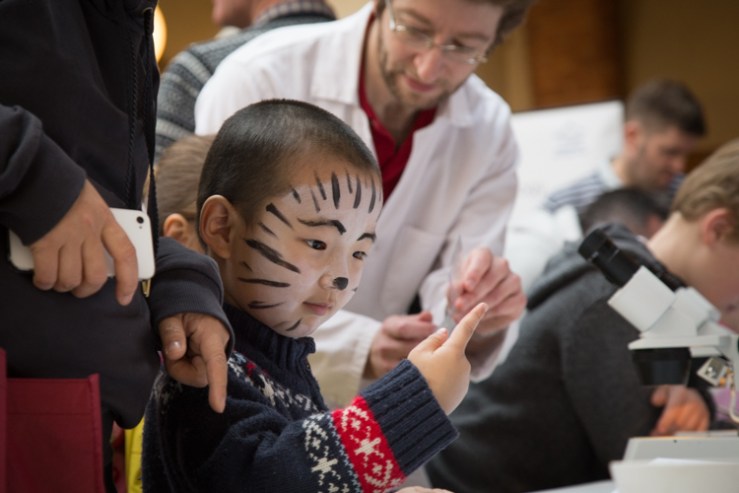
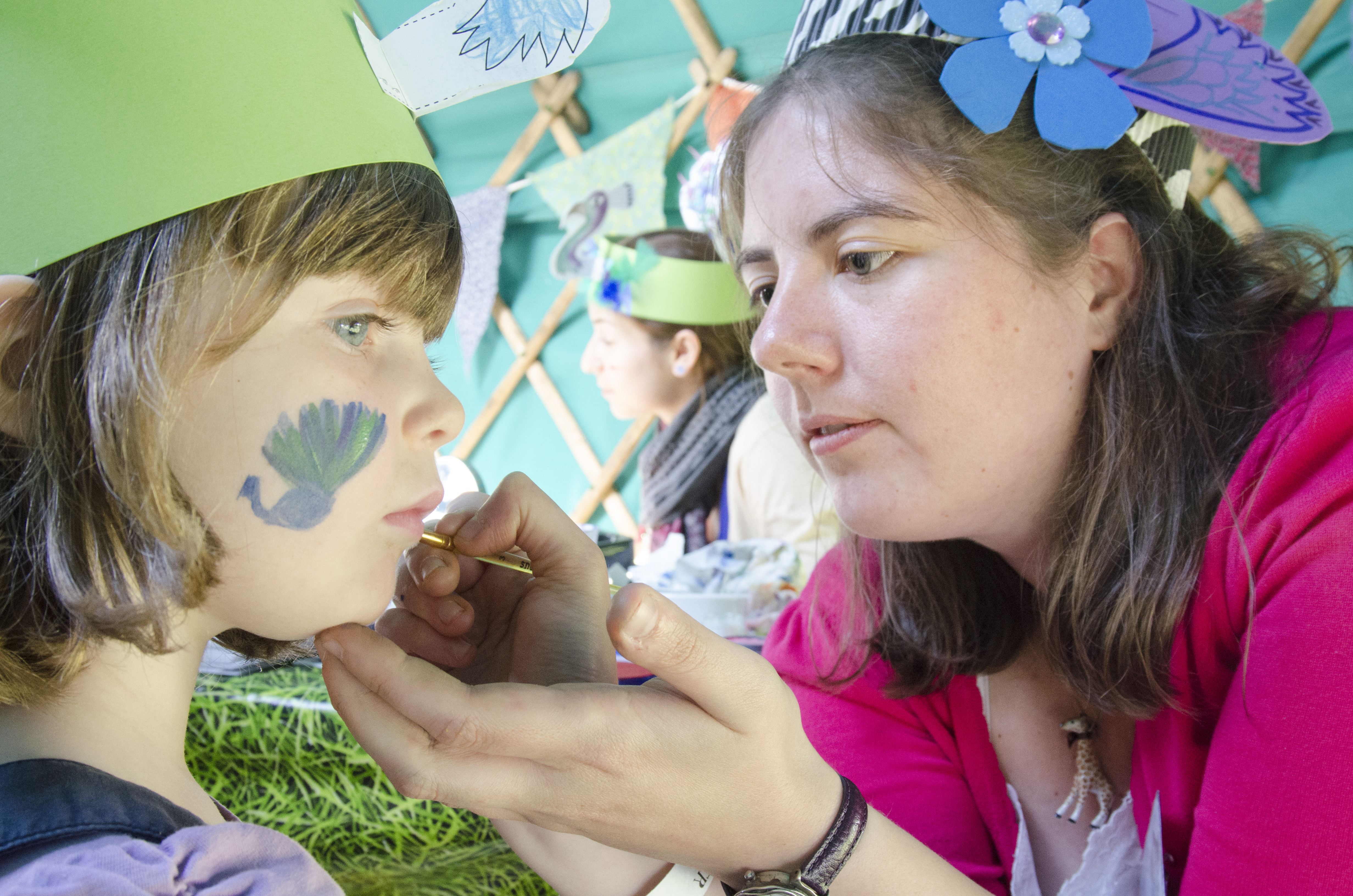
Alice facepaintingThey sort, they scan, they stick, they smile: who are they? Our team of brilliant Collections and Public Engagement Volunteers of course! This week has been the 30th anniversary of Volunteers’ Week, so we wanted to put the spotlight on them…

The majority of our volunteers help with public events, particularly those for our family audience. In 2014 alone, our awesome team of volunteers have given the Museum over 1500 hours of their time to help with public engagement events. This includes painting children’s faces, like the wonderful Alice Wilby (above), leading tours of the Museum’s architecture and running a pub quiz at one of our late night events. IMG_1322
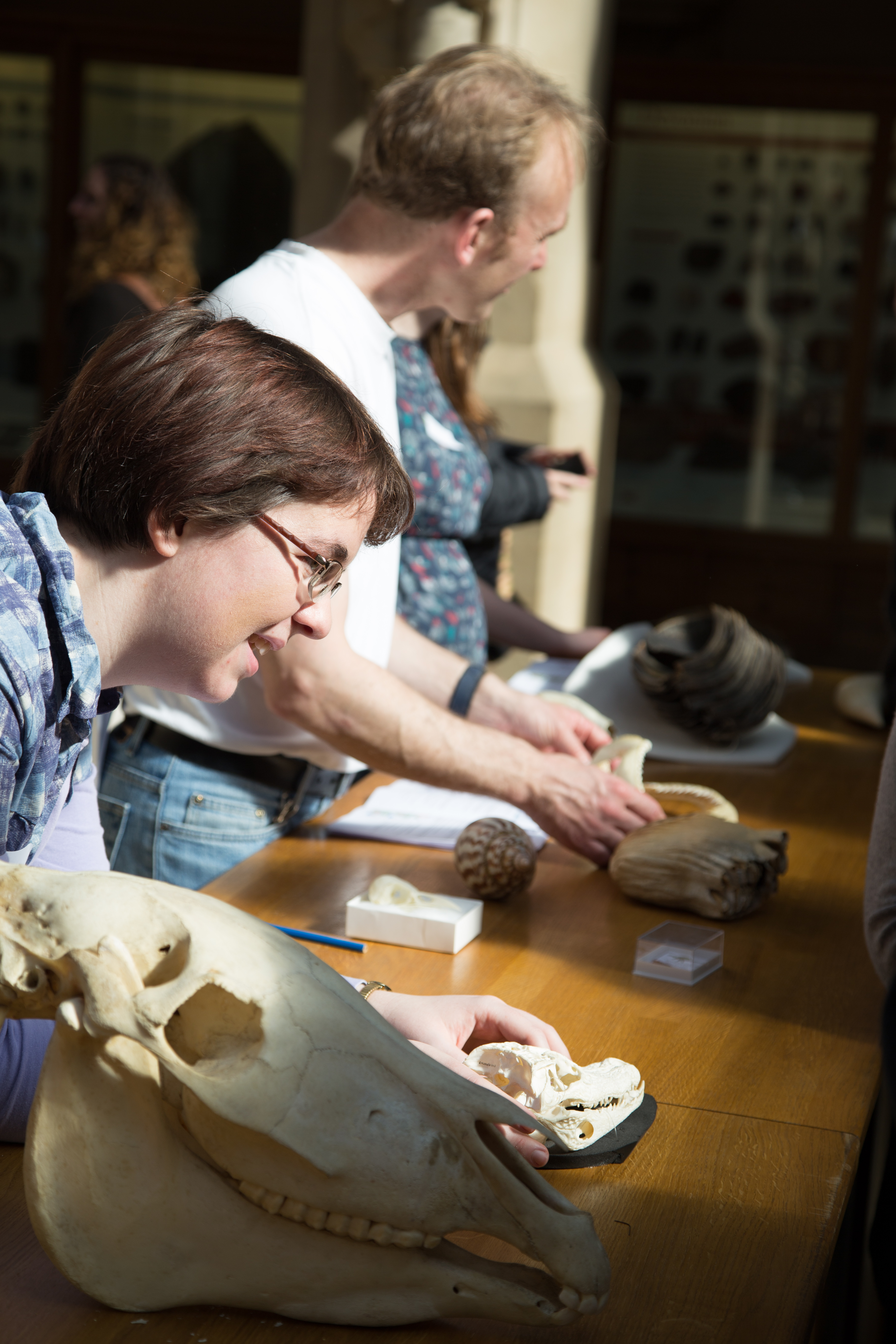
On top of that, we have a team working away behind the scenes supporting our collections staff. Here’s just a sample of the projects they’ve been working on this week…
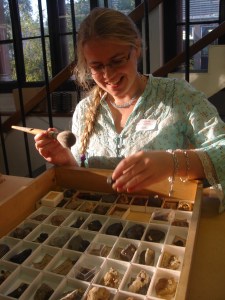
Laura Cotton in the Earth Collections.

– 5 volunteers identifying butterflies from painted images in our Archival Collections.
– 1 volunteer working in the Life Collections sorting and cataloguing bones.
– 4 volunteers tucked away in the Earth Collections cleaning ancient horse fossils or sorting Jurassic fish teeth.

Simone Dogherty is the Museum’s Education Assistant and co-ordinator of Science Saturdays – a weekly family event aimed at older children and led entirely by volunteer scientists. So why does she think volunteers are so valuable?

We’re very lucky here to have such a large quantity and high quality of volunteers. They help us with a huge range of activities and with the increase in visitor numbers that the Museum has been experiencing since re-opening in February, I just don’t know how we’d cope without them.
For Science Saturdays we use volunteers with a specific expertise. This gives children access to enthusiastic and inspiring individuals that they can look up to. And, in return, the volunteers gain valuable science communication skills.

Fancy joining our merry band of volunteers? Whether you’re into making masks or dusting off molluscs, we need you! You can simply sign up to help out on our Volunteers website.

But what’s in it for you? Aside from the glow of knowing you’ve simply helped us do more, you can develop your confidence when working with the public, learn a new skill or get up close with the treasures stashed away behind the scenes. But that’s forgetting the most important part – you’d be joining a fantastic team of people who, like you, think this museum is a pretty exciting place to be!

Rachel Parle, Interpretation and Education Officer
Get on your soapbox


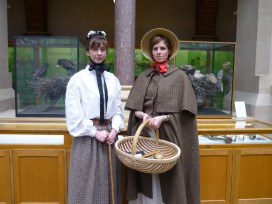
Mary Kingsley (l) and Mary Anning (r) prepare for their appearance in Soapbox City
Mary Kingsley and Mary Anning prepare for their appearance in Soapbox City

As April draws to a close, Oxford prepares for the traditional May Morning celebrations. Alongside the choir singing on Magdalen Tower, the reckless students leaping from the bridge and morris dancing in the medieval streets, you will find staff from Oxford University Museums joining in with the revelries.

An early-morning dung beetle will be taking to the soapbox

The Museums have taken charge of a one hour slot, from 8-9am, with staff from the Museum of the History of Science, Pitt Rivers Museum and, of course, the Museum of Natural History taking to the stage during the hour. If you’re willing to get up bright and early, you’ll be able to see a giant dung beetle arguing the value of his species, a T rex in a rap battle with a dodo, and two dignified ladies visiting from the past to remind everyone just how significant they really were.

Ellena Smith, ASPIRE Assistant across the Museums, is co-ordinating the Museums’ slot. She says;

Soapbox City is a fantastic opportunity to share knowledge and insight from Oxford University Museum staff in a fun and exciting way, and a great chance for the Oxford University Museums to reach out to a new audience.

Here’s the full timetable for the Museums’ shift:

08:00 Shooting Holes in Pitt Rivers Myths, Helen Adams (Pitt Rivers Museum)

08:05 Music in the Museum, Kelly Smith (HLF Trainee)

08:10 Conservation Station, Bethany Palumbo (Museum of Natural History)

08:15 Cockroaches: Pets or Pests, Darren Mann (Museum of Natural History)

08:20 Why the World needs Dung Beetles, Chris Jarvis (Museum of Natural History)

08:25 Natural History Stand-up, David Legg (Museum of Natural History)

08:30 T rex Vs the Dodo Rap Battle, Steven Williams (Museum of Natural History)

08:35 A Tale of Two Marys, Caroline Cheeseman and Rachel Parle (Museum of Natural History and Joint Museums Volunteer Service)

08:40 Why older people are radical, Helen Fountain (Museum of Oxford)

08:45 Geek is Good, Scott Billings (Museum of the History of Science)

08:50 When History Goes Wrong, Stephen Johnston (Museum of the History of Science)

08:55 You think you are smart?! Silke Ackermann (Museum of the History of Science)

If you’re up early for the festivities (or still awake from the night before!), do join us on Broad Street for a little May Morning museum madness.

Rachel Parle, Interpretation and Education Officer


He’s behind you…

Dino Zoo

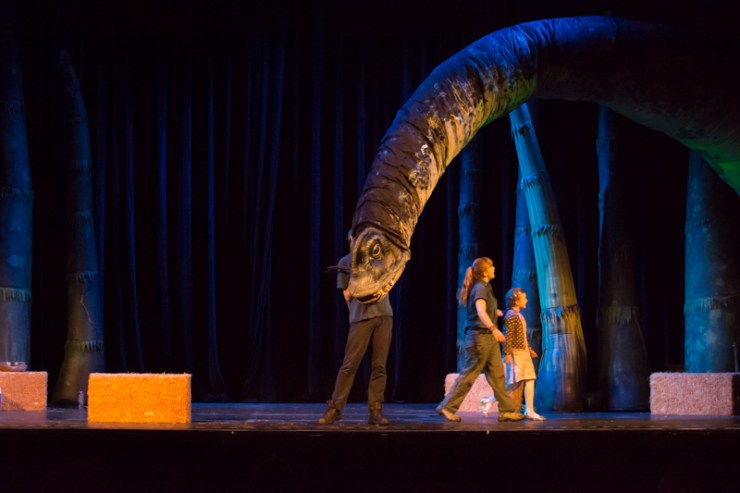
Last weekend the dinosaurs rumbled into town; a whole menagerie of them. Indeed, it was a veritable Dinosaur Zoo. They’d come a long way too – all the way from Australia – and so their names were not so familiar to us: the Australovenator, the Titanosuar (above), the Dryosaur, and the cutely-named Leaellynasaura, so-called after the discoverer’s daughter Leaellyn (Leaellyn’s lizard, see?).

If you didn’t catch it, these creatures were all part of a show at Oxford’s New Theatre. There was a sneak preview of this in the Museum earlier in the year. Produced by Australian company Erth Visual and Physical, the Dinosaur Zoo Live production mixes the thrill of brilliant puppetry with facts and explanations about the adaptations, environments and possible behaviours of these long-lost Australian lizards.

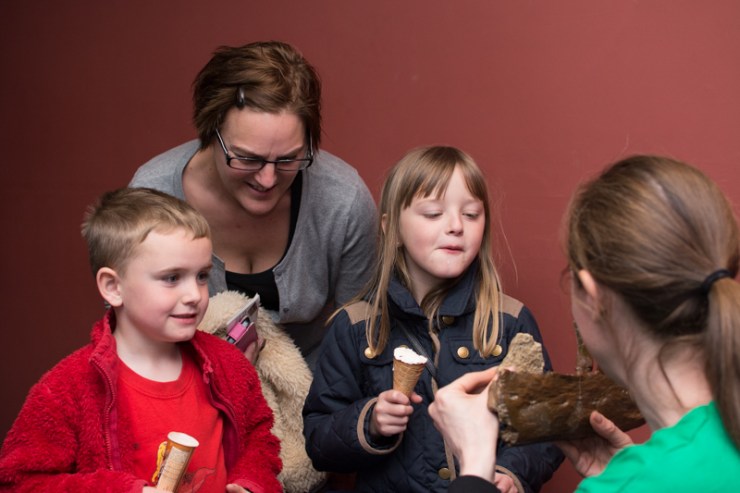
This wasn’t an opportunity to be missed, so we teamed up with the New Theatre and the show’s production team to bring some of our own fossil specimens to the event. With a handling table set up in the theatre’s bar area, families spent up to an hour before the show examining our selection of theropod and sauropod material, getting up close to teeth, eggs, jaws, and more.

We had the lower jaw and fossilised tooth from Oxfordshire’s very own Megalosaurus, famous for being the first dinosaur to be scientifically described, by William Buckland in 1824 (actually the term Dinosauria came later, coined by Richard Owen in 1842). As it was Easter we had some ancient eggs too, including the fossil of an egg laid, probably, by a sauropod dinosaur, cracks in the shell still clearly visible.

A family enjoy pre-show ice creams while learning about the Megalosaurus

To represent the the Cretaceous period, which is when the Australian beasts in the show were around, we brought the teeth and a hefty vertebra of an Iguanodon. Unlike the still-serrated Megalosaurus tooth fossil, the flat Iguanodon teeth show that this dinosaur was a herbivore. There’s a nice story, possibly apocryphal, that these teeth were actually spotted not by Gideon Mantell, the geologist who described Iguanodon in 1825, but by his wife Mary Ann as she waited in their carriage for her husband to visit a patient in Sussex.

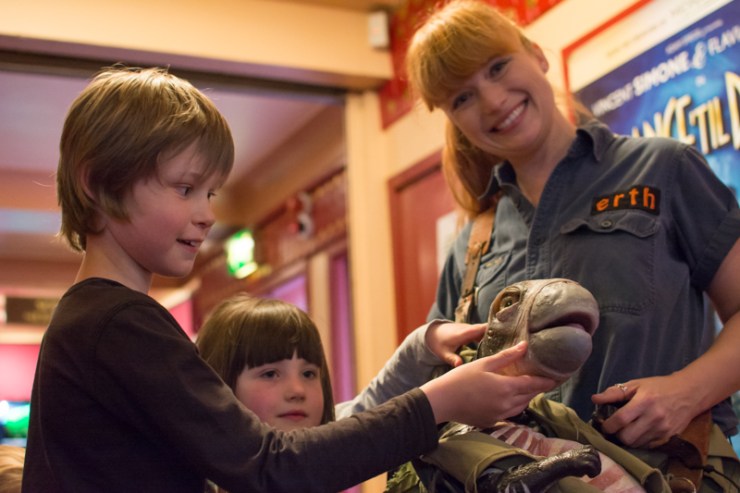
Meeting the stars after the show with brilliant host Lindsay Chaplin
Meeting the stars after the show with brilliant host and zoo-keeper Lindsey Chaplin

We threw in a couple of tricksy things too. On the handling table there were two non-dinosaur specimens – could people work out which they were? In many cases, yes they could: if there’s one thing we learnt it’s that young kids know a heck of a lot about dinosaurs. The two red herrings were an ichthyosaur skull, because ichthyosaurs were marine reptiles rather than dinosaurs; and the fossil imprint of a leathery egg, probably laid by a prehistoric crocodile or turtle.

All in all, everyone had a great big dinosaur overdose. Still, better that than chocolate eggs.

Scott Billings, Communications coordinator

A Sad Tail

IMG_5790crop

Last week we celebrated the return of our beloved Nile crocodile skeleton. It’s been out on loan to the Oxford University Zoology Department during our closure year, but is now back in position in the Museum gallery for all to see.

Nicola working on the crocodile
Nicola working on the crocodile in the Museum

To mark the occasion, the conservation team decided to give the crocodile some much needed care. Originally this piece was displayed on carpet tiles, which can be potentially harmful to the specimen as they deteriorate… as well as looking pretty ugly! My first step was to remove these from the base of the specimen. I was then able to assess the skeleton for priority areas.

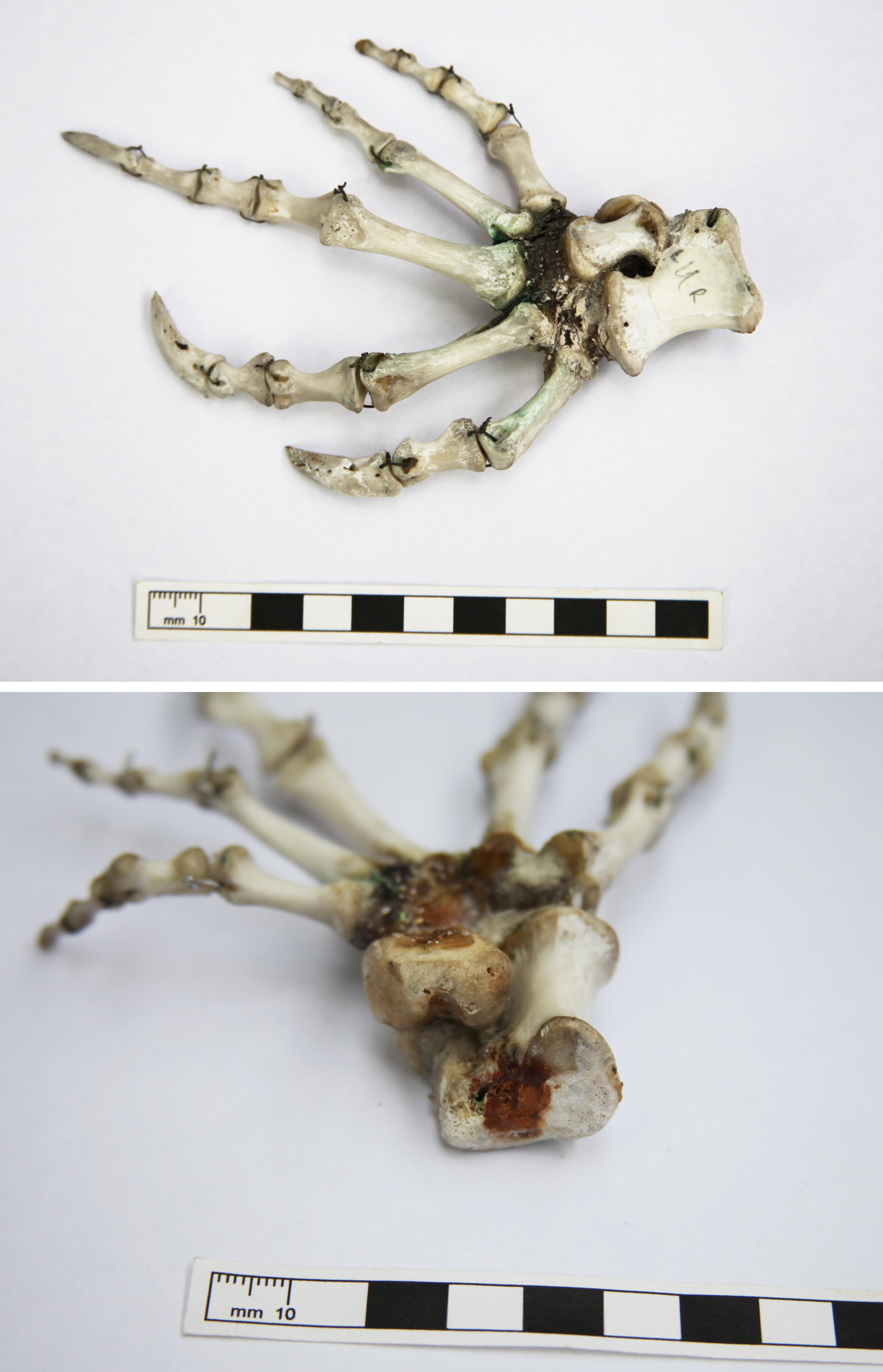
The crocodile's foot showing signs of damage from corroded wire
The crocodile’s foot showing signs of damage from corroded wire

Originally the specimen was articulated (held together) using a combination of iron and copper wire. This skeleton is over 150 years old and, during its time on display, these wires have corroded and stained the bone; this was particularly prominent in areas of existing cartilage, such as around its ribs. So I removed the old wire and replaced it with stainless steel, which has a longer life span.

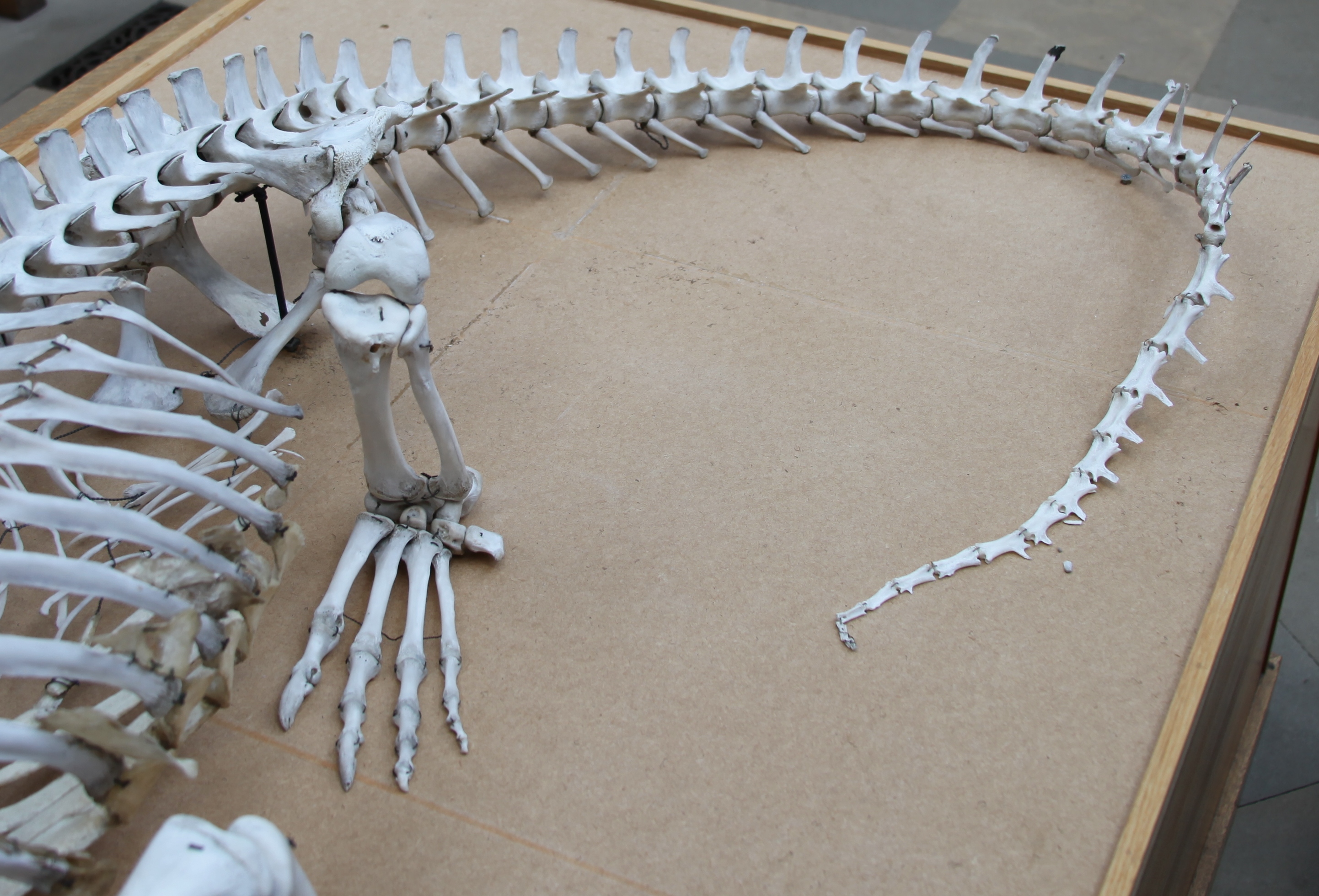
The existing articulation had also failed in some areas; this was most obvious on the tail, which had lost its natural curve and gained a limp collapse – lovingly referred to by visitors as a ‘sad tail’. A ‘happier tail’ was obtained by threading a stainless steel wire through the vertebral column, meaning no new holes would need to be drilled.

The crocodile's tail before Nicola worked her magic
The crocodile’s tail before Nicola worked her magic

The alignment of the rear of the skull and the atlas and axis bones at the top of the spine were not correct. To treat this, I removed the skull, allowing access for wire replacement. The skull was returned to its original supporting armature, now with conservation grade cushioning to relieve any unnecessary pressure on the bone. I guided the skull into its new position and fastened it in place.

The crocodile skeleton complete with 'happier tail'
The crocodile skeleton complete with ‘happier tail’

IMG_5785Once complete, I coated the base of the specimen with sand (a more natural environment for a crocodile than carpet!) and called in some strong helpers to replace the heavy glass lid.

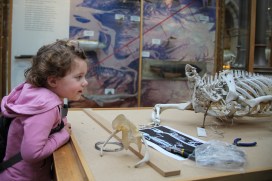
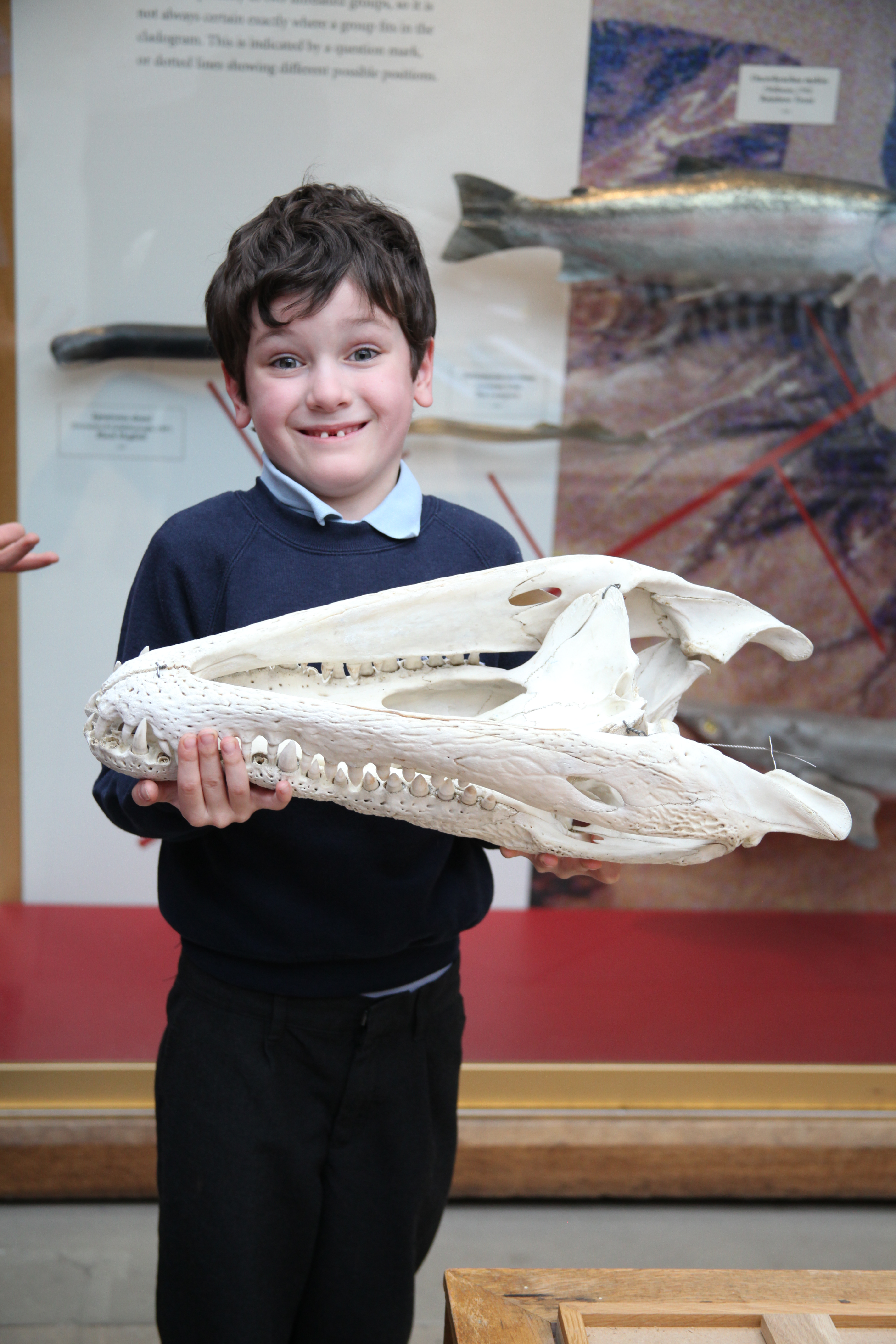
This project was particularly exciting to work on as it offered an opportunity to discuss the work of the conservation department with the passing museum visitors. I was able to make a few school trips a little more exciting with the phrase “Would you like to hold a croc skull?”.

Nicola Crompton, Conservation Intern

A learning experience

IMG_1177

Each year our Education team hosts two students from Oxford Brookes University’s PGCE course in Primary Education. The students are in the third and final year of their degree and get the chance to spend a week here to learn about the techniques and strengths of museum education and to plan their own class session using the collections.

Handling a Chilean rose tarantula

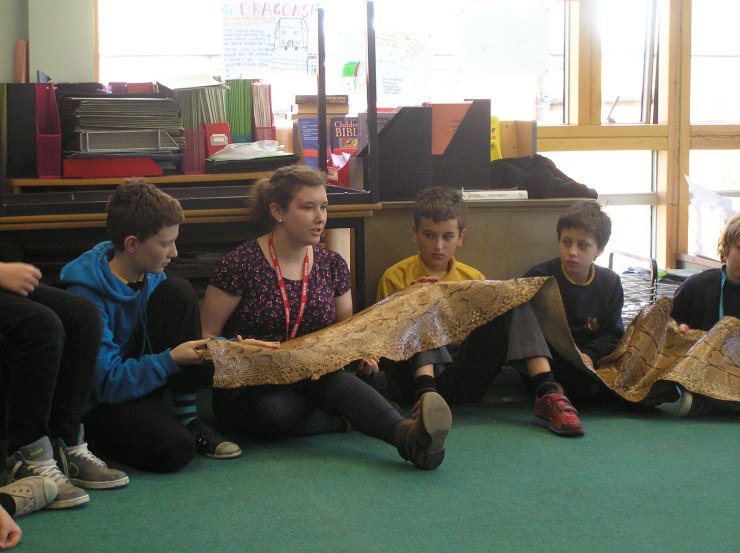
This year’s students were Hannah Fry and Ryan Bratley, who have been working with St. Aloysius School in Oxford. After a week observing and developing ideas with our education officer Chris Jarvis, Hannah and Ryan delivered a session for their class in the Museum looking at adaptations and food chains. They also brought Chris and a rock python skin in to the school to help facilitate a Philosophy for Children discussion about whether it is acceptable to kill animals for science.

“School trips are active and multi-sensory with new smells, sights, sounds and sensations, and mind and body work together to promote active learning and recall,” says Chris. “At school you might see a picture of a polar bear and read about its adaptations but only in a museum can you run your fingers through its coarse fur, hold your hand next to its immense claws for comparison, or smell the oily, fishy odour of its skin.

“For teachers this type of learning may highlight different relationships and behaviour between children, different knowledge and understanding or thought processes and learning styles that children may not necessarily exhibit in the classroom and so school trips can also be extremely beneficial in understanding individual pupils by seeing them in a different light.”

The primary pupils got the chance to hold live insects – a Madagascar hissing cockroach and a Chilean rose tarantula – as well as handle many other specimens. They learnt how to predict what animals eat by examining their teeth and discovered the many other ways that animals have adapted to their environments.

“Ryan and Hannah did a fantastic job, preparing the children beforehand by asking for predictions about what they’d see, with homework topics to research based on those predictions and linking the trip to their literacy book Journey to the River Sea. They then delivered a fantastic session in the Museum and, most importantly, really capitalised on the children’s excitement by building what they’d learned and seen into their teaching back at school,” says Chris.

We also asked Hannah and Ryan for some of their thoughts on the experience of planning and delivering sessions in the Museum. Here’s what Hannah had to say:

Just being in the Museum for a week was brilliant. We spent lots of our time getting distracted by all of the incredible things so it was no wonder that visiting children had a similar reaction.

Observing Chris and working with visiting schools gave us the confidence to teach our own class in the Museum and this in turn really enriched our work with them back in the classroom. The children loved their time in the Museum and they really impressed us with their background knowledge, behaviour and bravery when holding the creepy-crawlies.

Pupils use a rock python skin from the Museum to help stimulate a Philosophy for Children session discussing whether it is acceptable to kill animals for science.

Ryan was already keen on science before his week at the Museum, but still found it very rewarding:

At one point, I was coming home each day with so much new information and so many new ideas buzzing around my head that I was having trouble sleeping!

I didn’t come to the Museum looking to learn about biology or geology; I came to see what experiences I could give the children in my class which would make them love the subject as much as I do. I came away with a whole new outlook on the complexities of taking children to a museum and, most importantly, the things that could be gained from such a visit.

Needless to say we’re very pleased to hear such enthusiasm from the next generation of teachers and, who knows, maybe some of the pupils in Hannah and Ryan’s group will now nurture their own lifelong interest in natural history.

Welcome back Wow!How?

IMG_1283

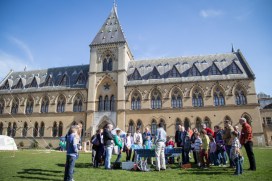
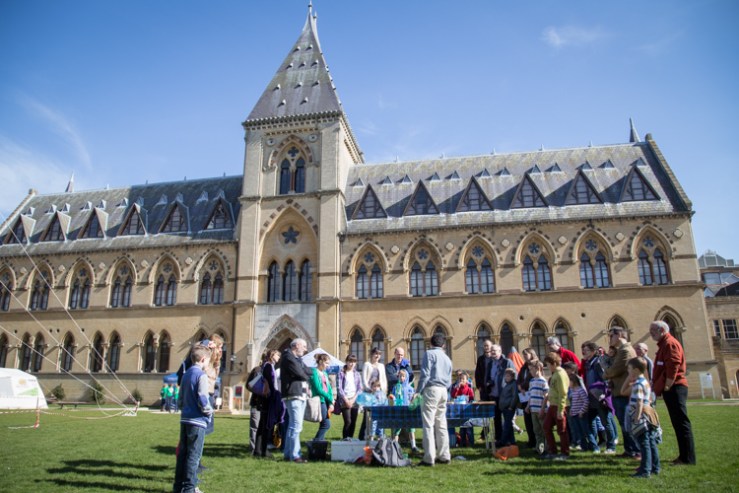
We’re in the middle of National Science and Engineering Week (14 – 23 March), and Oxfordshire Science Festival (7 – 23 March), so it’s not surprising that the Museum has been packed with all sorts of exciting activities. But the big one for us is always our annual Wow!How? family science fair, which took place on Saturday 15 March. With the Museum closure in 2013, it’s had a short break, but the fair returned last weekend with a fizz, pop and a bang!

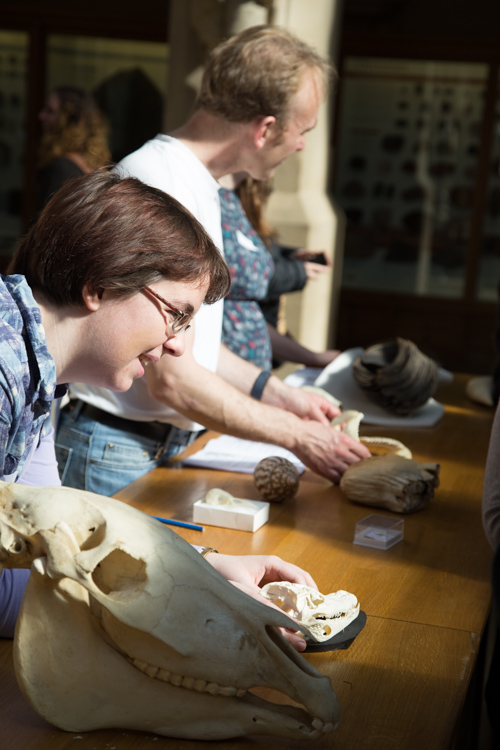
Volunteers on the What Big Teeth You Have object handling stall

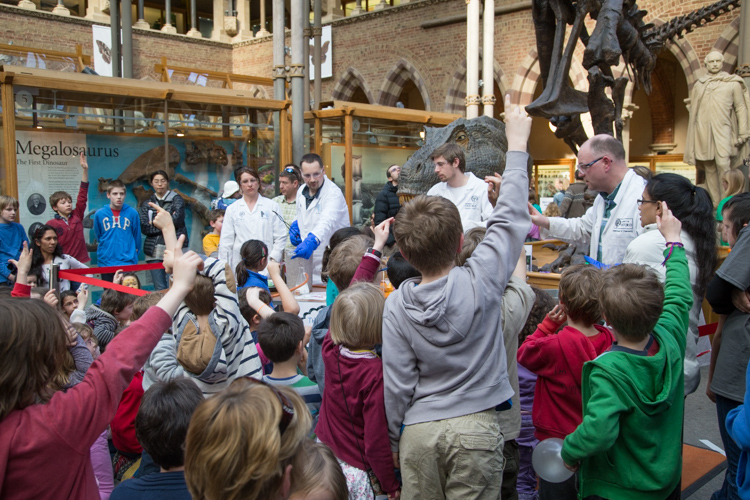
This might have been the tenth Wow!How?, but the set up for such an enormous event never gets any easier. 150 volunteers were involved, running around 40 stalls across the Museum of Natural History and through into the Pitt Rivers Museum.

Education staff Simone Dogherty and Caroline Cheeseman have been working with scientists, staff and volunteers for months to make sure logistics and the all important risk assessments were all under control.

Sally Le Page sets up the forensic science experiments on the Murder Mystery at the Museum stall

The set up for the fair began a full 24 hours before the event, with most of the Museum’s staff helping to move exhibits and put up tables, gazebos or display stands. Then the scientists arrived with their myriad of exciting and bizarre demonstrations and experiments. From live maggots and rotting meat on the Murder Mystery at the Museum stall, to liquid nitrogen on the Oxford University Chemistry Department’s Supercool Show, or bowls full of custard, there was a lot to think about.

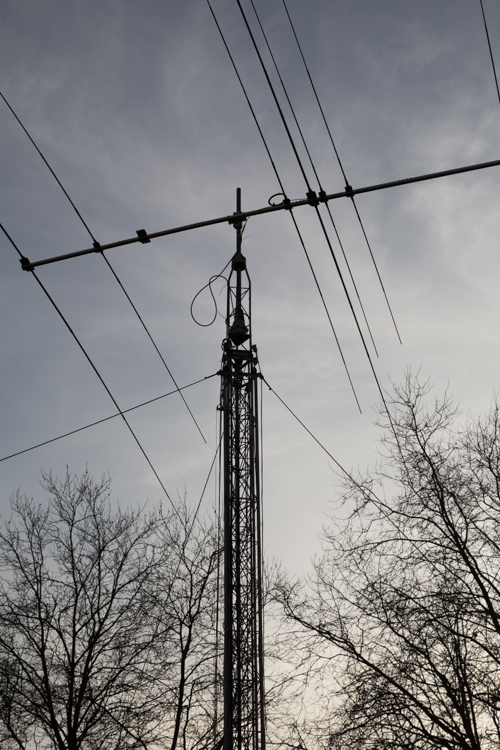
GB4WOW radio mast
GB4WOW radio mast

There was even a radio mast set up on the lawn, which communicated with radio enthusiasts across the world to tell them all about Wow!How?.

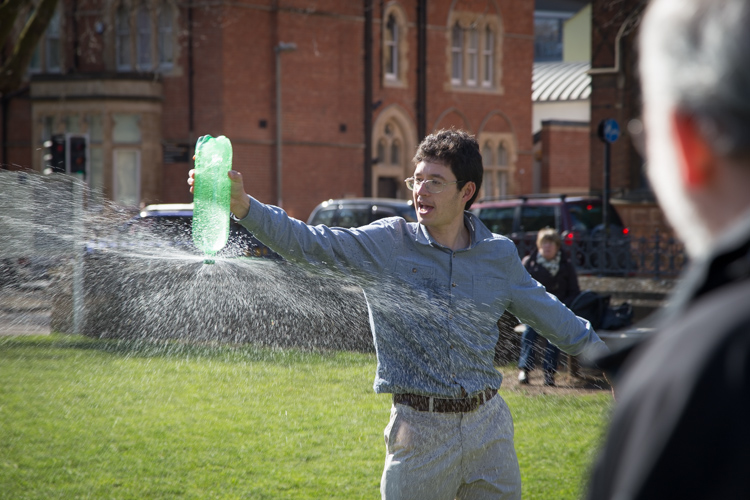
Dr Yan Wong of BBC TV’s Bang Goes the Theory popped up with Street Science – a collection of amazing demos using everyday objects, like setting a bowl full of wire wool on fire using just a battery!

Dr Yan Wong on the Museum lawn
The Cold Show in action
The Supercool Show in action
Facepaints and fingerprints
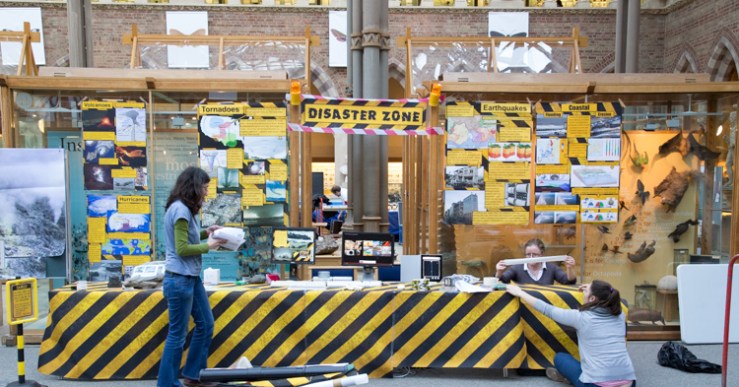
Earth Sciences Department's Disaster Zone
Earth Sciences Department’s Disaster Zone

On the day itself, 4500 visitors took part in this inspiring and engaging event. Now that the plaster, pipettes and plastic bottles have been put away for another year, Simone has had time to reflect on the success of the event:

IMG_1365
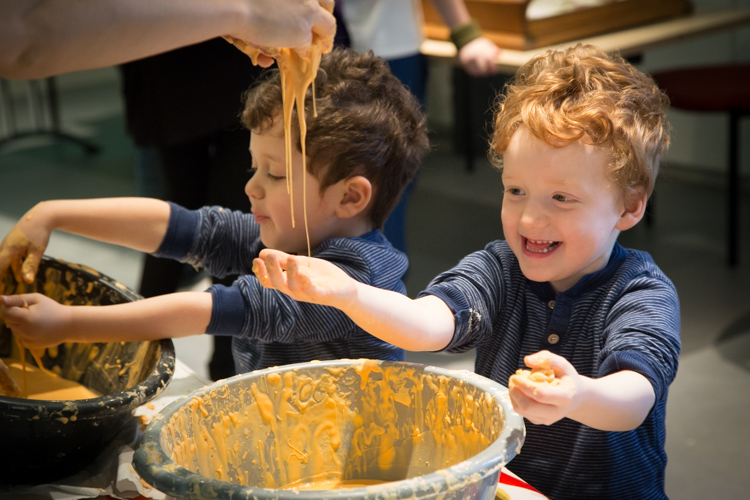
Playing with custard is a great way to learn about non-Newtonian fluids

“Wow!How? is very different from the family events we normally run at the Museum of Natural History. Instead of devising and developing the ideas ourselves, we give the opportunity to anyone who is passionate and enthusiastic about science to come up with activities themselves. This means that not only do families get the chance to speak face to face with real scientists, experts and enthusiasts, but also it gives those who really love science the space to talk about what they love best.”

Here’s to next year’s extravaganza!

Rachel Parle, Interpretation and Education Officer