Ode to a Dodo

Professor Dodo

Now here’s a sad story
That you all should hear
About a funny old bird
Who had never known fear

Till explorers landed
Upon the isle of Mauritius
And the creatures they brought
Found this Dodo delicious

Too docile to fight
Too flightless to flee
Now a head and a foot
Are all you can see

There’s a rather nice article on the Guardian website today all about our famous Dodo remains. Journalist Henry Nicholls interviewed our zoological collections manager Malgosia Novak-Kemp, who showed Henry the only known surviving soft tissue remains from the extinct Dodo.

The article includes a reference to Hilaire Belloc’s poem, so it seemed appropriate to share this little Ode to a Dodo with you. We wrote it as part of our Goes to Town trail, which is launching in Oxford next week.

You can watch a short trailer about this at goestotown.com, but suffice to say that the Dodo will feature, along with his Ode, in one of our partner venues. See if you can find him and all the other exhibits from Tuesday next week.

Scott Billings, Communications coordinator

Look out Oxford…

GTT

There’s a flurry of last minute activity around here at the moment. Display cases are being collected; a funny proto-human ape creature model is being cleaned and prepared for the limelight; and logo-adorned lab coats are being freshly starched and pressed. We are preparing to go to town.

Mobile site
The smartphone-friendly Goes to Town website

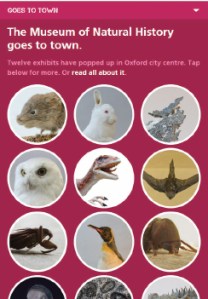
You may have seen our teaser trailer a few weeks back. If not, you can check it out here. It didn’t give much away, but regular readers of this blog deserve a proper heads-up: Next week we will be installing twelve specimens in venues all around Oxford city centre, creating the Goes to Town trail, accompanied by a specially-designed mobile website.

You can see what the goestotown.com website will look like on the right here. It features lots of extra info about each specimen on the trail, along with audio recordings about each exhibit made by Museum staff and Oxford University scientists. The site will go fully live after the specimens are all safely in their new homes next week.

Goes to Town will remain in the twelve Oxford venues for six months. During that time residents and visitors to the city can complete the trail and enter our competition. Every specimen display has two Top Trumps-style ratings, one for Danger and one for Rarity. If you tell us which has the highest rating in each category we’ll enter you into a draw for prizes to be awarded when the Museum reopens in February 2014.

There will be another little film to follow too, so watch out for that. In the meantime we need to get back to preparing our crate-clad displays. As you can see below, the workshop chaps are beavering away at this right now…

See you in town!

Crate
Preparing the displays

Scott Billings – Communications coordinator

Red rug to a dodo

Red carpet OxTalent
Enjoying our moment on the red carpet

Wow, we have an award-winning blog! I’m pleased to say that Darkened not Dormant was announced as a runner up for an OxTALENT award this evening. The awards “recognise and reward excellence in teaching and learning supported by ICT” within Oxford University.

Communications Officer Scott Billings and I attended the celebrations and we were genuinely flattered to have been nominated, let alone get a prize.

OxTalent celebrations
Celebrations after the awards

The blog was recognised in the Use of Technology for Outreach and Engagement category, and there was also a mention of the Museum’s Twitter account @morethanadodo. It turns out that the Dodo has quite a following around Oxford!

Rachel Parle, Education Officer

Fascinating Plants

Girl with bee

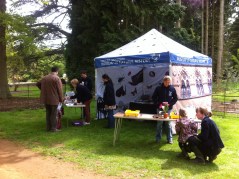
As part of the annual Fascination of Plants day, the Education Team headed off to Harcourt Arboretum for what promised to be a fun day in the great outdoors, inspiring visitors with the amazing things plants do for us.

General Gazebo shot
Our gazebo pops up again!

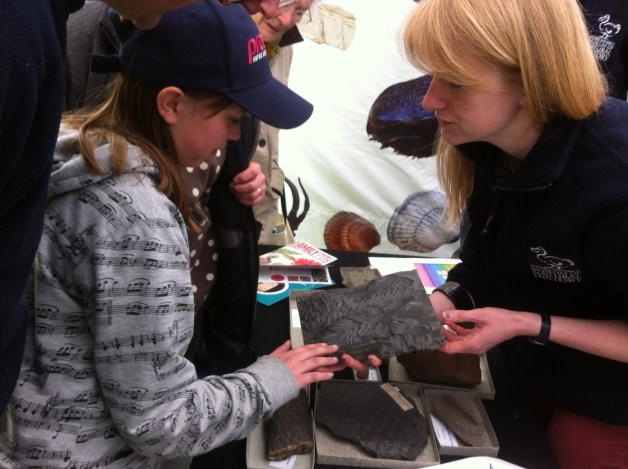
Our stall, ‘Bees, Seeds and Dinosaur Feed!’ offered three activities to entertain visitors. For one, we were lucky enough to have been lent some beautiful fossils from the Geology department. Armed with ‘wow’ examples of prehistoric ferns, horsetails and clubmosses, we certainly impressed passers-by with the fossilised ancestors of many plants they could see in the Arboretum today.


Fossil handling
Simone shows off a beautiful fossilised specimen

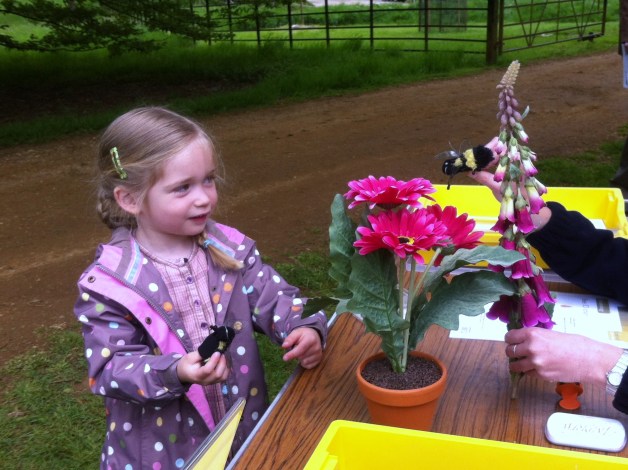
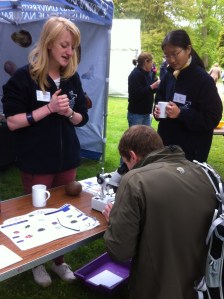
Man with microscopeAlso, our ‘Science Saturdays’ family activities came out of closure-hibernation. We took out our Entomology activity, which allowed visitors to see some bee specimens up close and discover how important they are for pollination. And the day saw the maiden voyage of our brand new activity ‘Plant Power’, designed especially for the day. Families identified some of the pressed specimens on display in the Museum, tried out a microscope and learned about the amazing properties plants have. 
Throughout the day there were hands-on activities and displays, guided walks and trials from many other organisations. The University of Oxford Plant Sciences Department, Plant Life, and Berkshire, Buckinghamshire and Oxfordshire Wildlife Trust to name a few.

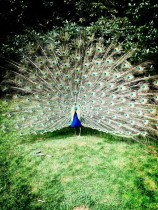
peacockWith a steady flow of people all day, Janet, Sarah, our intrepid volunteers and myself were kept busy with questions and interested visitors. Entertained every now and then with the occasional peacock display of course!

Huge thanks to the Harcourt Arboretum and Botanic Garden teams for organising such a great day, and the volunteers who came along to give us a hand!

Simone Dogherty, Education Assistant

Meet Professor Dodo

Professor Dodo

A couple of weeks ago we opened Natural Histories, our temporary exhibition developed in collaboration with, and hosted at, the Museum of the History of Science. If you’re in Oxford and haven’t been to see it, pop in to the MHS on Broad Street; the exhibition’s in the basement.

There’s a host of interesting things to look at, including the jaw of the first scientifically described dinosaur, the Megalosaurus; a gigantic ammonite fossil which you can touch; and specimens collected by Charles Darwin during his famous voyage on board The Beagle.

Monstrosities
This ‘Monstrosities’ drawer features specimens collected by John Obadiah Westwood (1805–1893), each exhibiting some kind of deformity.

We were keen to put something specifically for families and children into the exhibition too. So our education officer Rachel Parle coaxed our primary education officer Chris Jarvis, who is also a splendid cartoonist, to create the Professor Dodo character you see above.

Prof D narrates and guides younger visitors through the exhibition, pointing out interesting things and raising a few questions along the way. So if you have children, bring them along too.

Finally, if you can’t make it to the exhibition, or would like to read about some of its themes and specimens at your leisure, then check out the dedicated Natural Histories website, which contains a selection of images and text from the gallery displays.

As ever, let us know what you think, either in the comments below or via Twitter @morethanadodo.

Scott Billings, Communications coordinator