A Seed of Doubt

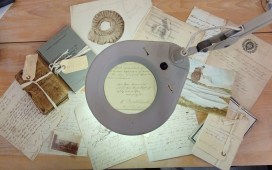
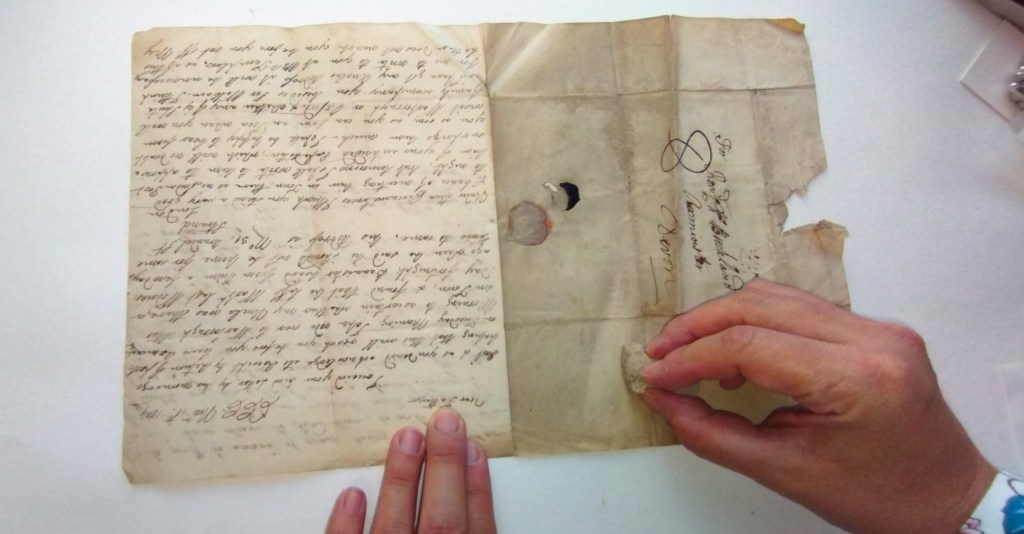
In February 2023, the Museum was lucky enough to acquire an important historical archive – a collection of notes, correspondence, artworks, photographs and family documents belonging to geologists William and Mary Buckland. But before the archive can be enjoyed by visitors and researchers, it must first be cared for, ensuring its preservation for generations to come. Thanks to generous funders, the Museum was able to hire a Project Paper Conservator, Anna Espanol Costa. Considering the Museum had not had a paper conservator since the mid-1990s, Anna was incredibly resourceful with her use of tools and materials, utilising everything from makeup sponges and soft brushes to tweezers and dental picks. In this blog post, we share insights from the eight months she spent assessing, cleaning and repairing some of the most at-risk and important material in the archive, as well as some unexpected surprises she found along the way…


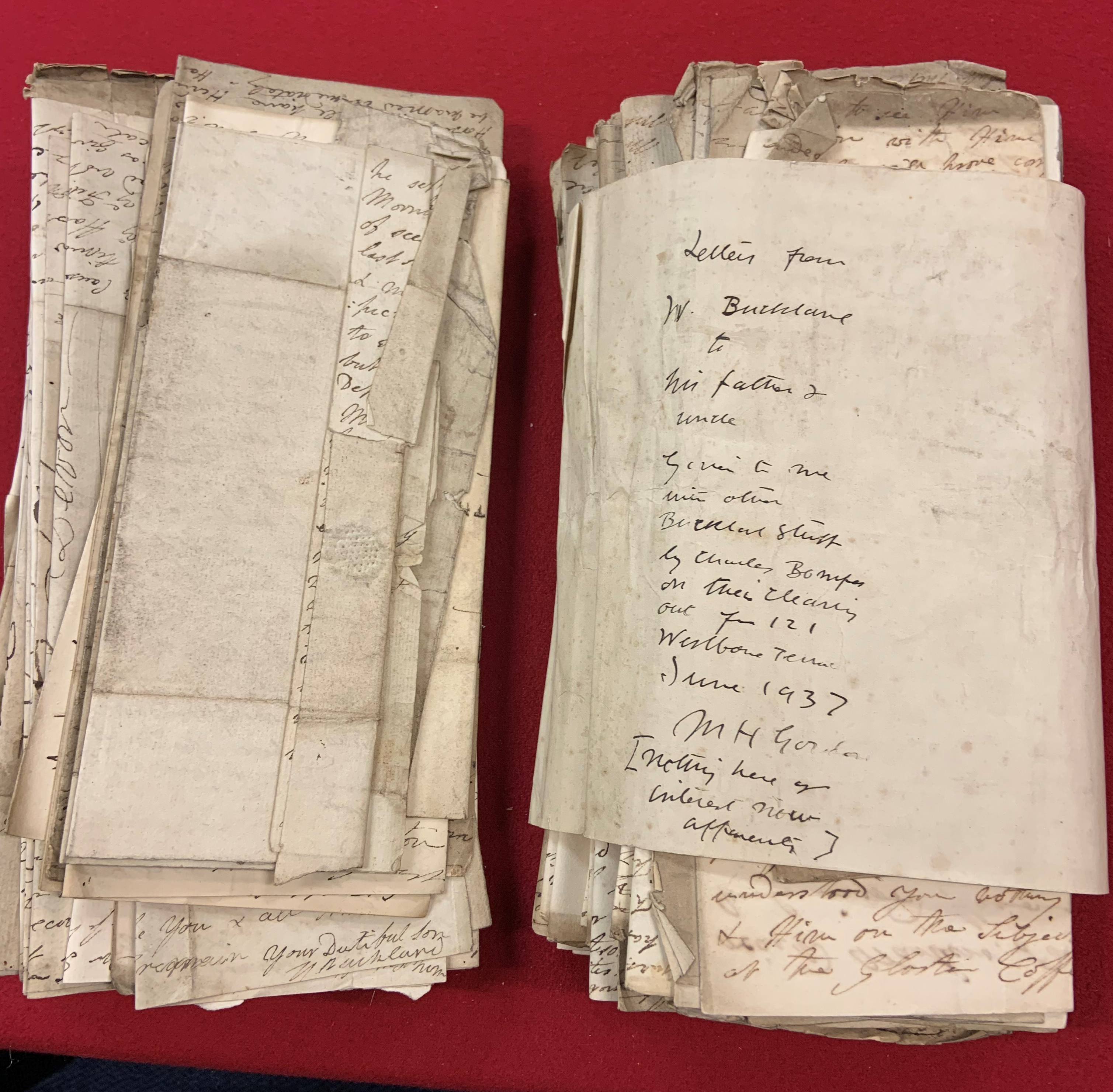
Paper can be used to store information for decades, if not centuries, but it is still vulnerable to frequent handling and poor environmental storage conditions. When the Museum acquired the Buckland archive it was around two hundred years old and, unsurprisingly, many of its items needed care and restoration. Over the years, the papers had been housed in the standard file folders and boxes you would use for office documents, rather than an important historical archive. Many of the folders were overcrowded and had been tied together with string. Some manuscripts had been damaged due to too many items being stored in the same folder, and there were places where the string had cut into the larger pieces of paper causing tears. The most fragile and vulnerable items showed signs of chemical and physical damage, including iron-gall ink corrosion; chemicals in the ink had started to eat through the paper, causing cracks and loss of ink, and consequently text, in some areas.
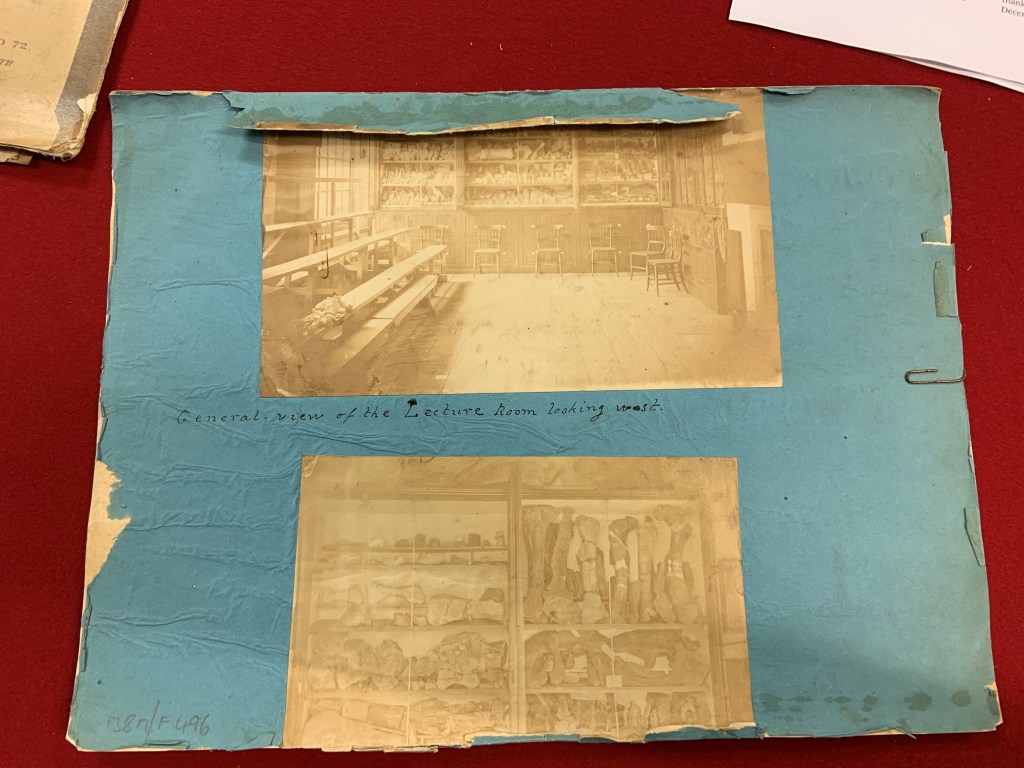
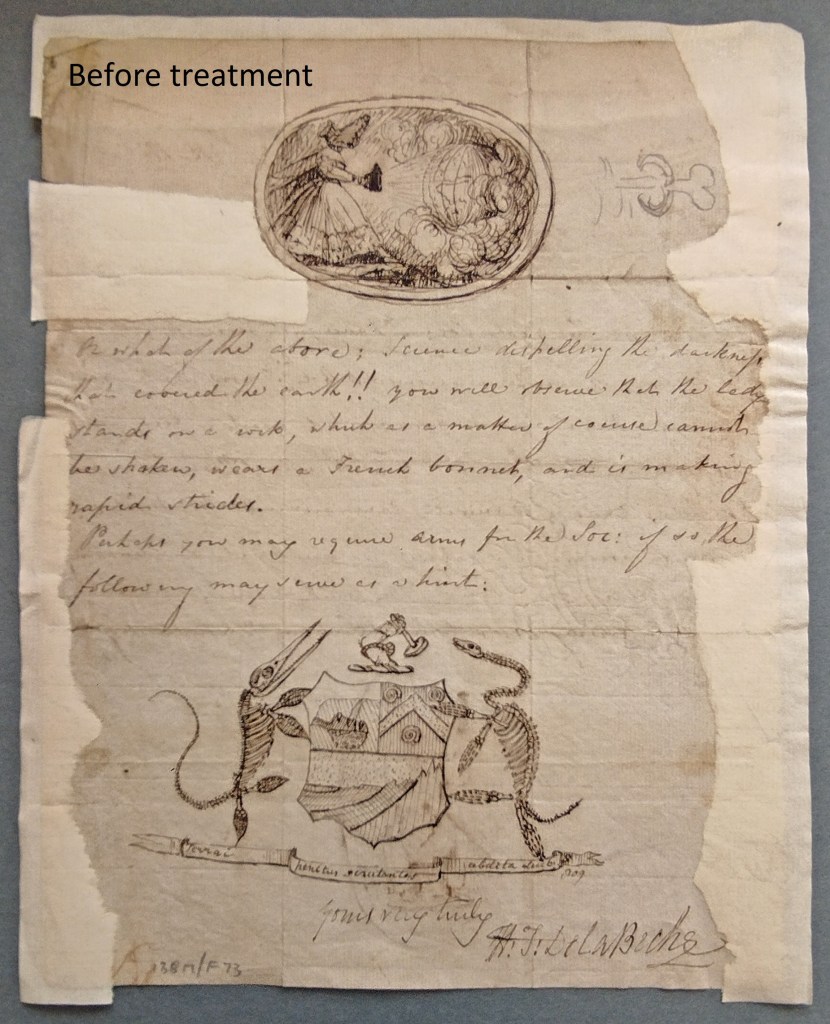
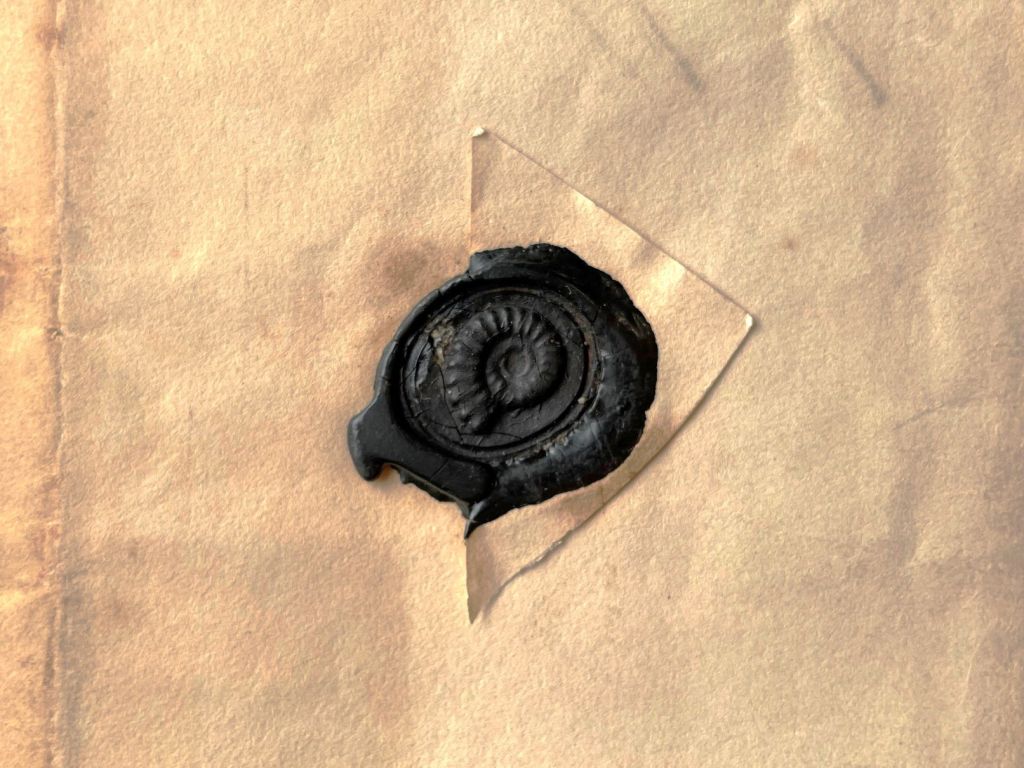
Past efforts had been made to restore the documents, but sometimes these had disfigured the original manuscripts: “in-fills” had been made with unsuitable paper, and backing sheets had been added in bright colours like blue or green. The archive was also being held together with unstable and rusty paper clips, and many of the original wax seals had cracks. It would have been a great shame to lose any of the seals, which feature beautiful examples of natural history icons, like ammonites and cephalopods.

PRESERVING HISTORY

The objective of my work was to stabilise the Buckland archive to ensure its long-term preservation and restore the appearance of the collection so it could be safely handled, digitised and exhibited in future.

One of the most important principles behind conservation is doing the ‘least amount to do the most good’. Conservation aims to slow down the ageing and deterioration process by using treatments that will not damage or disfigure the integrity of the original document. Conservation may be preventative — for instance, moving documents to a new box that creates the right ‘microclimate’ for their preservation. It may also be interventive — e.g. repairing with non-acidic and reversible materials that can be easily removed at any time, and that also can stand the test of time.

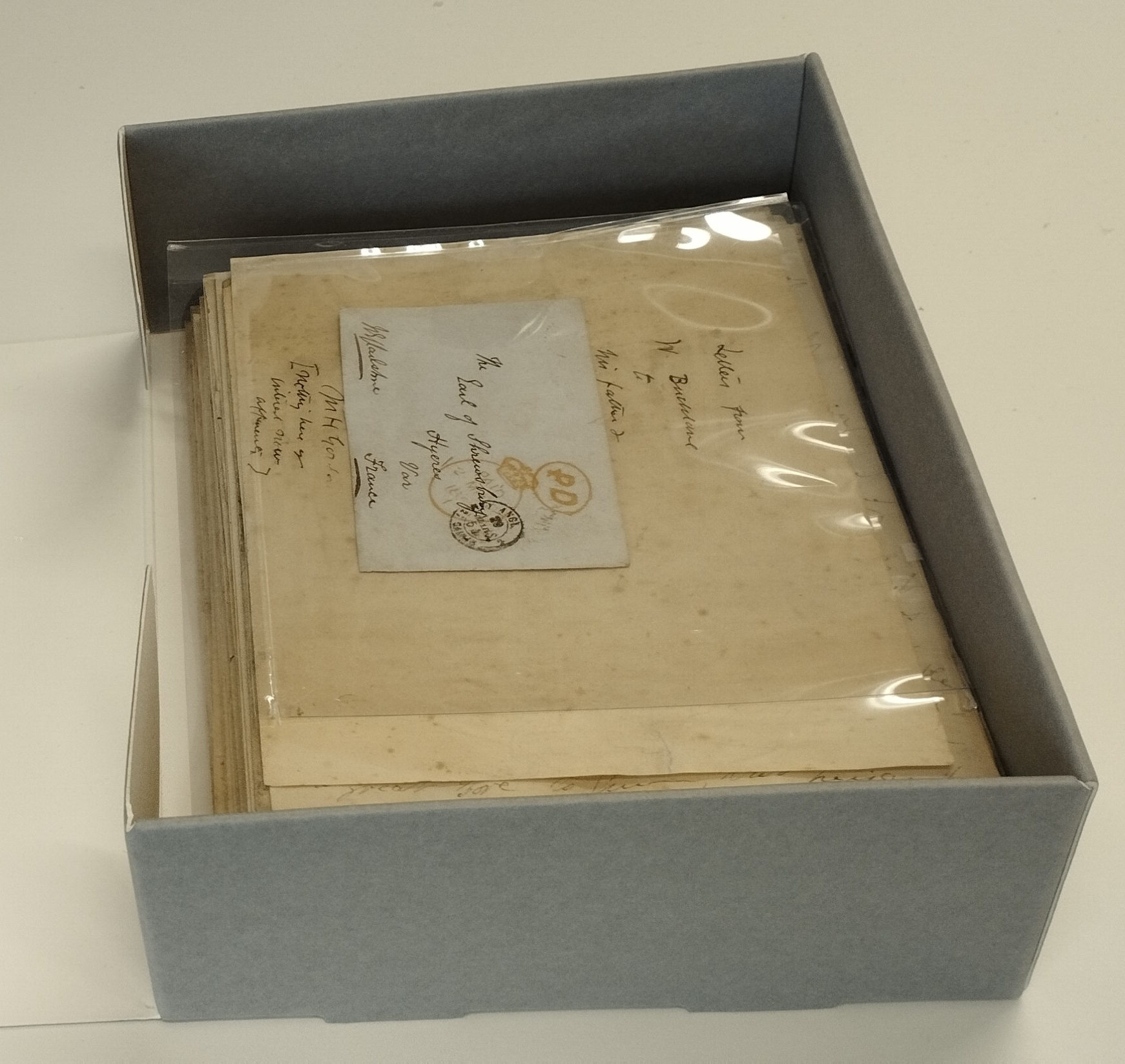
During my time at the Museum, I have been able to conserve a number of the most at-risk and important pieces of archival material. In some cases, this involved a light clean with a soft brush and re-housing of the most overcrowded items. In other cases, I performed more interventive and invasive conservation treatments including mechanical surface cleaning with smoke sponges, relaxing folds with paperweights or steam, stabilising iron-gall inks with gelatin to prevent further corrosion, mending tears with different grades of Japanese papers and tissues, and cleaning and consolidating cracks in the wax seals on the letters to prevent further loss. I also tackled some of the previous ‘repairs’ by eliminating old animal glue which had left the manuscripts shiny in places, carefully removing the unsuitable paper, and adding supports where necessary, thus leaving no traces of the bright blue backing paper.
INTERESTING AND UNEXPECTED STOWAWAYS

As well as undertaking conservation repairs, I also documented the condition of the items; photographing the manuscripts before and after conservation treatments to ensure the Museum, or any other future conservators, have a record of my work. Whilst undertaking conservation treatments, I found some interesting and unexpected stowaways in the archive. What looked to be small holes in one of the pages of a letter ended up being recognised by one of the Museum’s entomologists as spider frass (poop). A moth had also decided to call the papers home at some point in the last two hundred years as I came across a small cocoon that was now long dead, desiccated (dry) and dusty. The most unusual find, however, was a small black dot that I initially thought was an insect. However, employing the help of a microscope and one of the Musuem’s entomologists, we realised that it was actually a seed! What kind of seed, and how or when that seed came to reside in the Buckland archive, we don’t know, but it shows the archive had a life and story of its own long before it came to rest here in the Museum.

A JOB WELL DONE

Overall, I was pleased with the amount of work I was able to accomplish at the Museum. I managed to conserve a significant amount of the archive and was fortunate enough to work with, and learn from, a range of museum staff, including palaeontologists, geologists, zoologists, entomologists and the Life and Earth collections conservators. It has been a privilege to share and exchange knowledge with my colleagues and work collaboratively on the preservation of an important archive. I look forward to hearing about some of the research findings it produces, and to see it shared with the public in future exhibitions and displays.
Thank you to the National Manuscripts Conservation Trust and Helen Roll Charity for funding Anna’s work. Items from the Buckland archive will feature in the Museum’s upcoming exhibition ‘Breaking Ground’ opening 18th October 2024.
Ubiquitous and Inconspicuous

THE INVISIBLE HISTORY OF THE MUSEUM’S GLASS DISPLAY CASES


Glass cases play an integral role in museums and galleries, but they are designed to be overlooked and ignored. In this blog post, Librarian and Archivist Danielle Czerkaszyn uses research collected by Helen Goulston (AHRC Collaborative Doctoral Partnership PhD Candidate) to uncover the invisible history of OUMNH’s glass display cases and considers how they have evolved alongside the museum during its 160-year history.


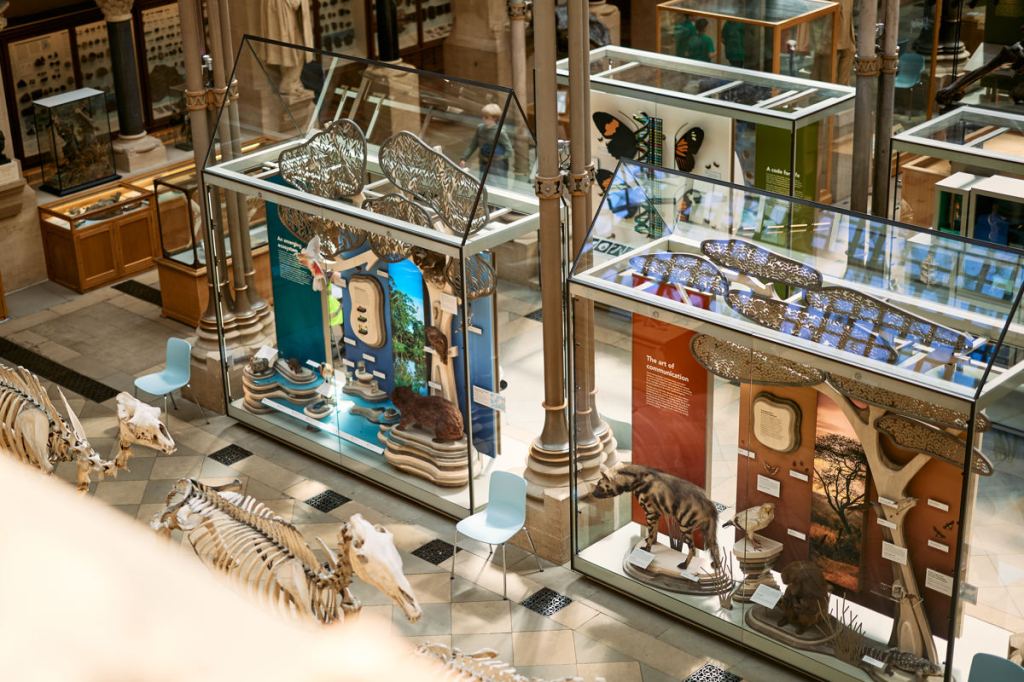
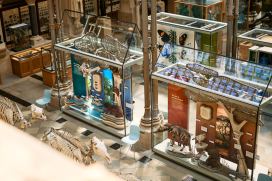
Since 2018, the Museum has been working to refresh its Main Court by installing new permanent displays. This morning, we placed the final specimen in our brand new “Open Oceans” display, concluding the latest phase of the redisplay project. The “Open Oceans” display is housed in one of eight new conservation-grade glass cases installed last year. While some visitors have welcomed the new cases, others have mourned the loss of the wooden cases or questioned why they needed to be replaced. Others have wondered why the tops of the new glass cases have roofs with different heights. To answer these questions, we need to dive into the museum archive…

A CASE HISTORY

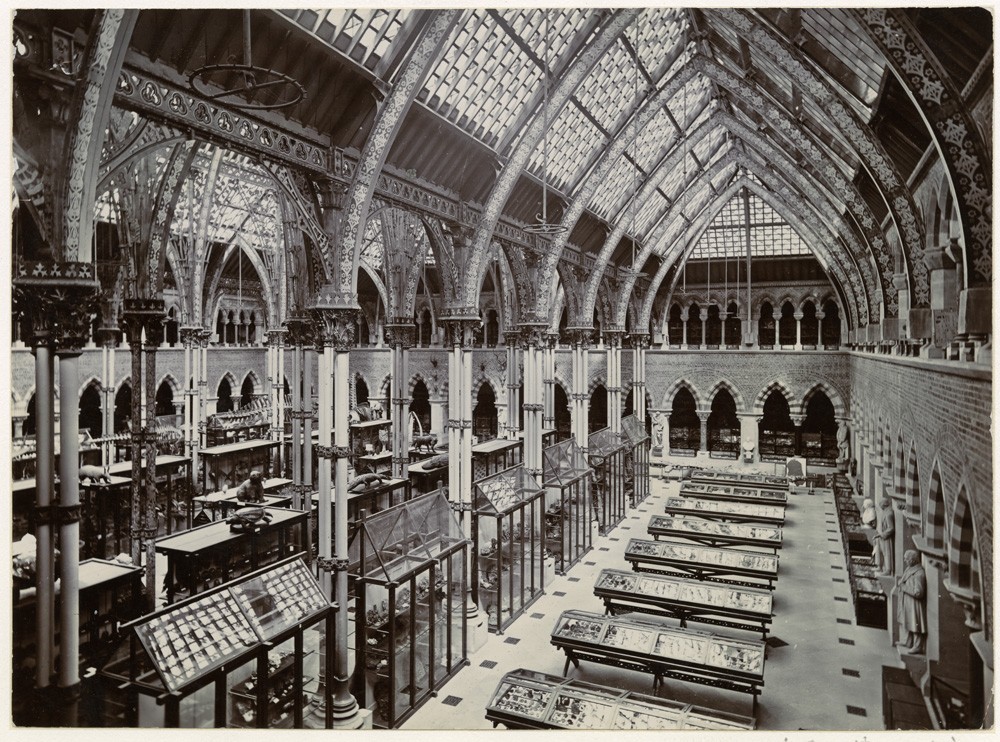
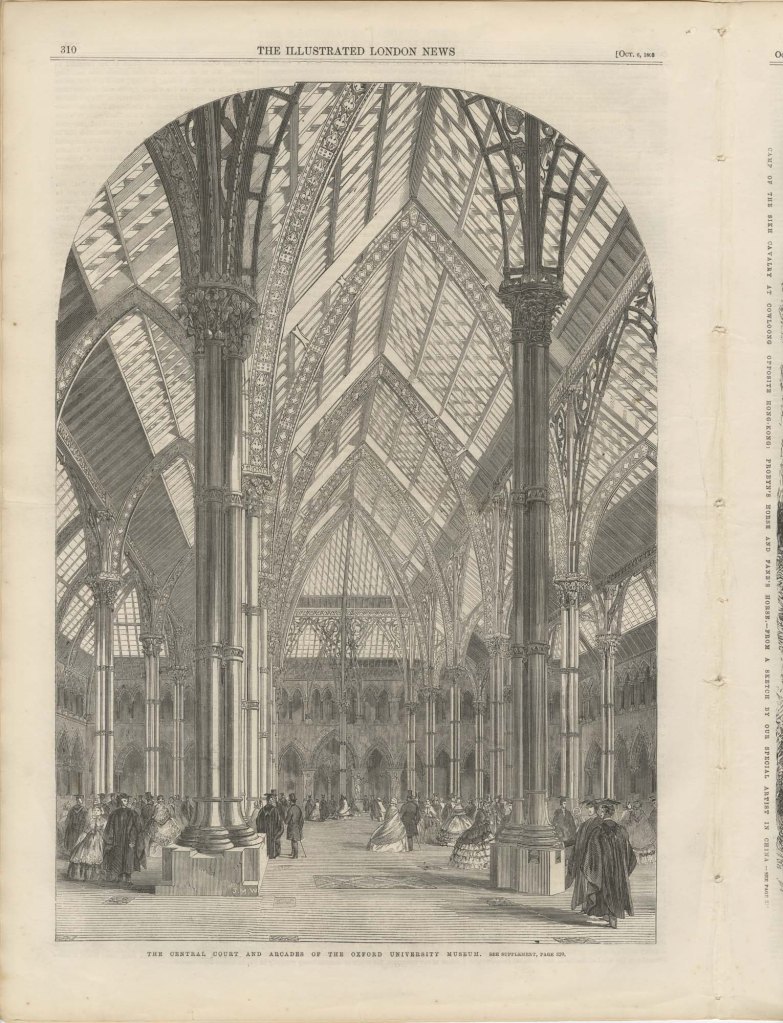
When visitors arrived at the newly-opened museum in 1860 they would have been greeted by an empty central court, devoid of displays. While the fabric of the building was more or less complete, and preparation for the installation of displays had already begun, the university’s scientific and natural history collections had not yet been transferred to the building.

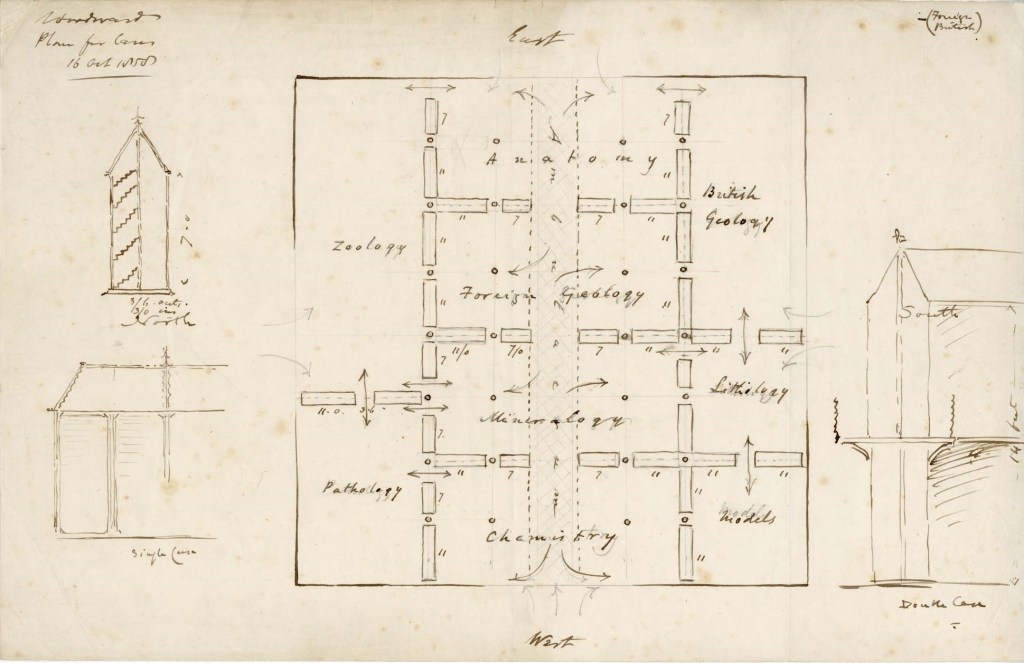
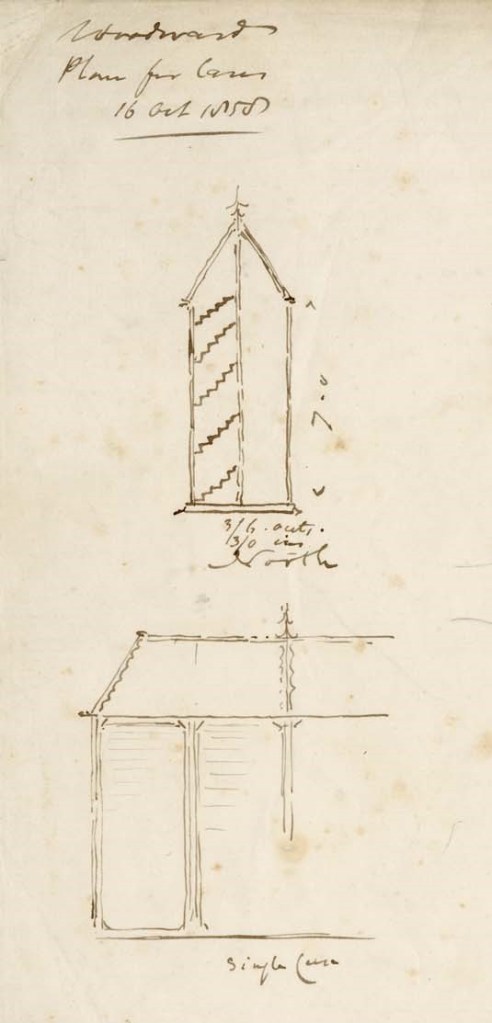
A sketch in the archive dated 16 October 1858 by architect Benjamin Woodward shows an early plan for the display cases to be arranged between the iron columns in the Main Court, allowing visitors to circulate among the exhibits, with display cases echoing the Gothic revival architecture. The right of the document shows grand double-height displays with a central balustrade that were never realised, but cases similar to those on the left would be ordered in January 1862.

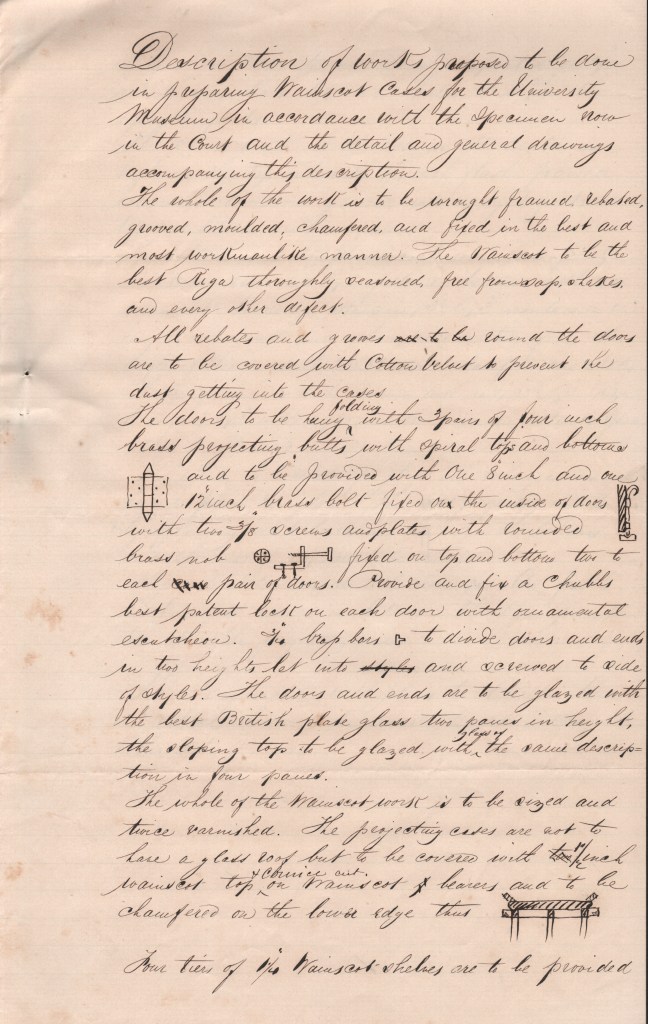
The 1862 tender document written by William Bramwell, Clerk of Works at the Museum, shows two types of upright display cases ordered for installation between the iron columns — some with pitched roofs and others with flat tops, which were considerably cheaper. Though the design of the cases resembles Woodward’s original sketches, the tender included detailed specifications that addressed the practicalities of displaying specimens, such as cotton velvet door linings to stop dust from getting in.

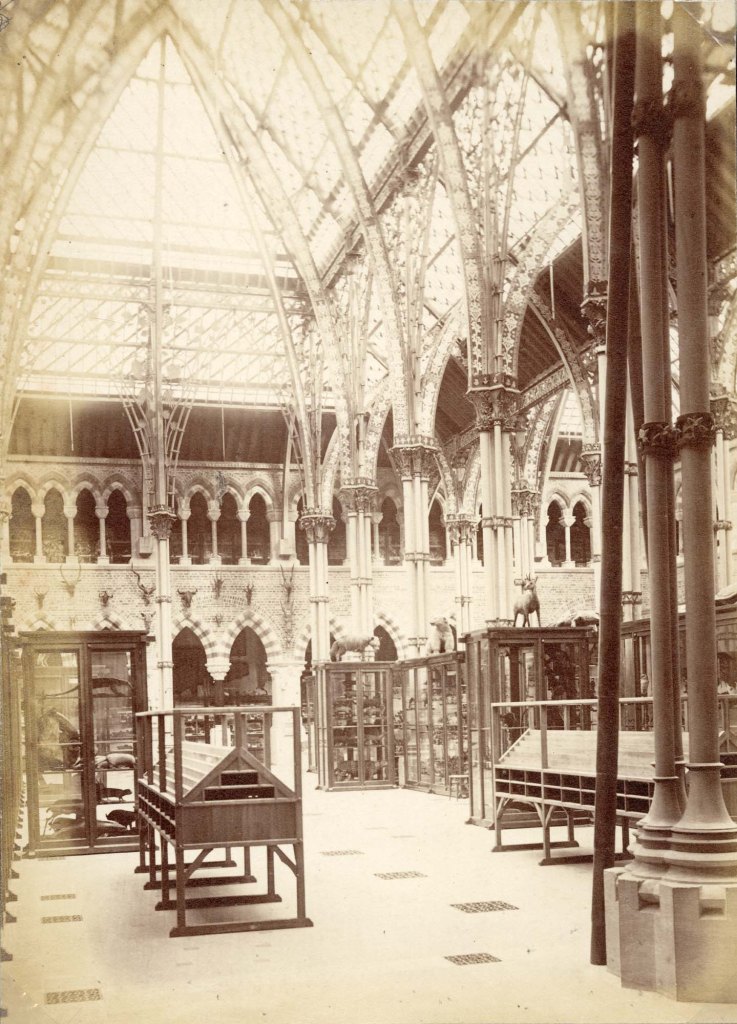
In addition to the upright centre court cases, ten table cases were ordered from the high-end London cabinet makers, Jackson and Graham, at a cost of £344.10. The same firm was also commissioned to fit the tall wall cases in the outer corridors. Plans and photographs from the archive show that the installation of these cases was piecemeal and it wasn’t until 1866 that all the display cases were fully in place.

WHY REPLACE THE CASES?

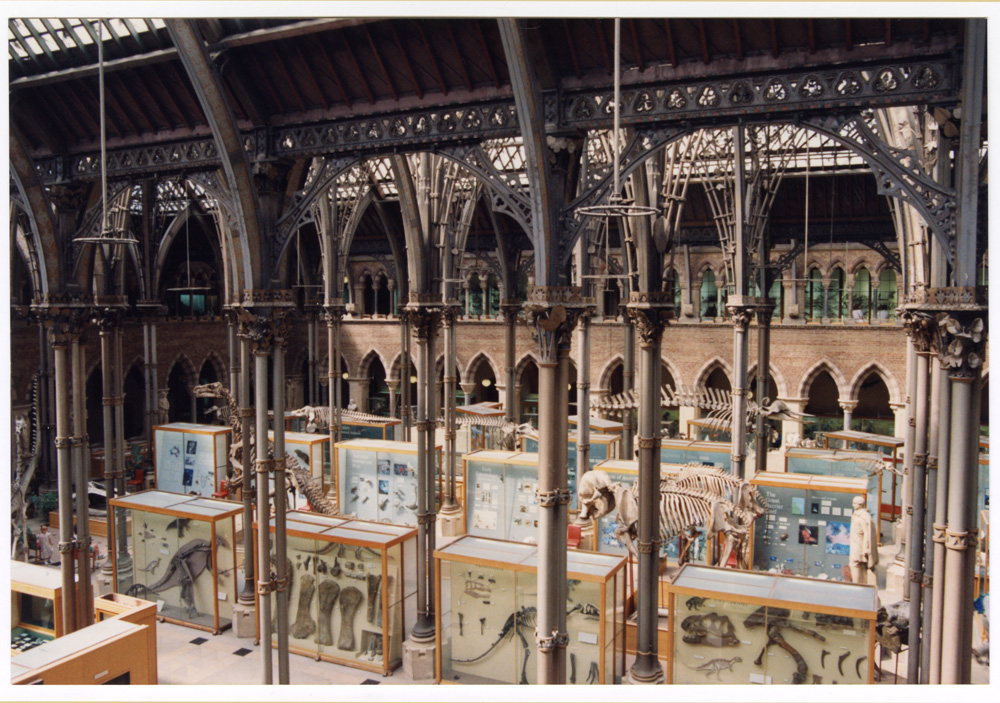
The wooden display cases that we have been replacing may look old, but few of the original cases from 1866 survive. While some of the old display cases were moved behind the scenes for preservation, others found homes in different museums or were disposed of when they were beyond repair. The most recent timber-framed cases in the Main Court are 20th-century replicas that have been heavily modified, particularly in the late 1960s-early 1970s, and again in the early 2000s when the clear acrylic roofs were added. Some of these modifications affected the stability of the cases, particularly when the doors were opened, making them unsafe for staff to access. Other modifications meant the cases were no longer dust or pest-proof, which poses a risk to specimens.

As these wooden display cases neared the end of their life, the museum and Oxford University Estates worked with Oxford City Council and Historic England to approve the replacement of the cases and ensure the redevelopment was historically sensitive to our Grade 1 listed Victorian building.

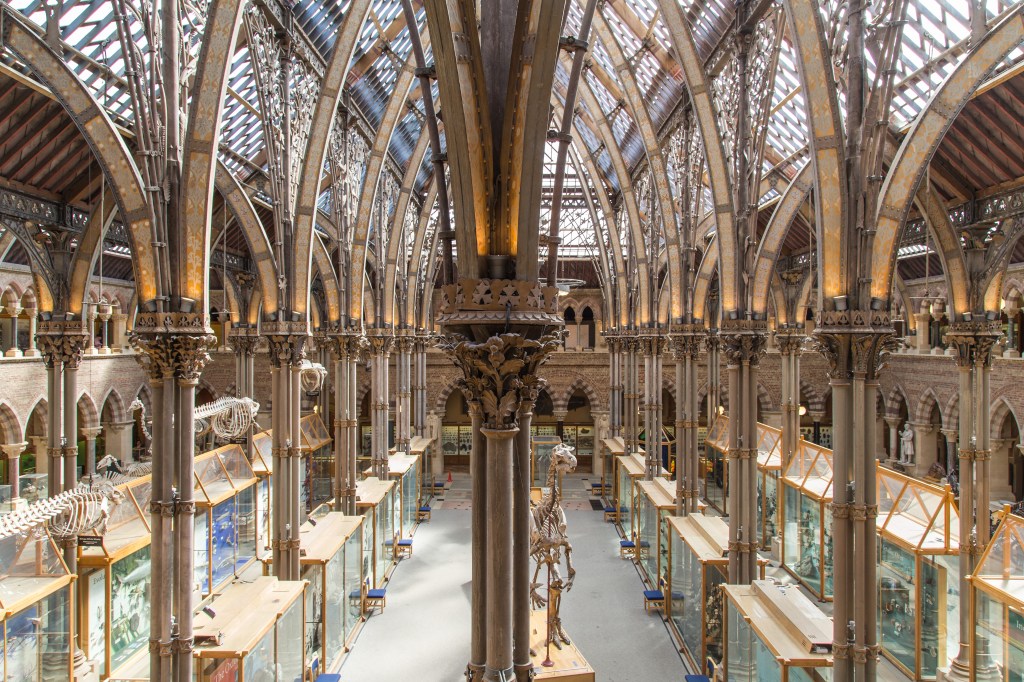
For this reason, the new cases retain the original 1866 arrangement and are built to the same dimensions. We have also returned to the original form, including outer aisle cases with alternating pitched and flat roofs. It was decided early on that the new cases would not be lined in wood because timber can be detrimental to the conservation of certain specimens. However, the design of the edges of the new cases sought to mirror the craftmanship of the 1866 cases by emulating the beading on the edges – albeit much more subtly, and in bronze rather than timber – complementing the colours of the ironwork in the museum roof.

A CASE FOR THE FUTURE

The new glass cases are built by museum showcase experts ClickNetherfield and provide a stable, pest-proof environment for our delicate and historically important specimens. Their design artfully captures the character of the museum building, while still focusing the visitor’s attention on their contents. It is hoped that the new displays will last for at least another two decades, and the cases even longer. During that time, millions of eyes will be cast over our displays, but the glass cases that protect them may barely even be noticed.


Buckland Papers Appeal


By Danielle Czerkaszyn, Librarian and Archivist


The Museum is currently leading a major fundraising campaign to purchase, catalogue, conserve, and digitise an important collection of archive material related to the geologist William Buckland (1784-1856).

Buckland was an English theologian and one of the greatest geologists of his day, becoming Oxford University’s first Reader in Geology in 1818. When he died in 1856, papers related to his teaching and research, as well as around 4000 specimens, were given to the University. These were later transferred to the Museum when it opened in 1860, and the Buckland collection remains one of the greatest research resources in our collections.

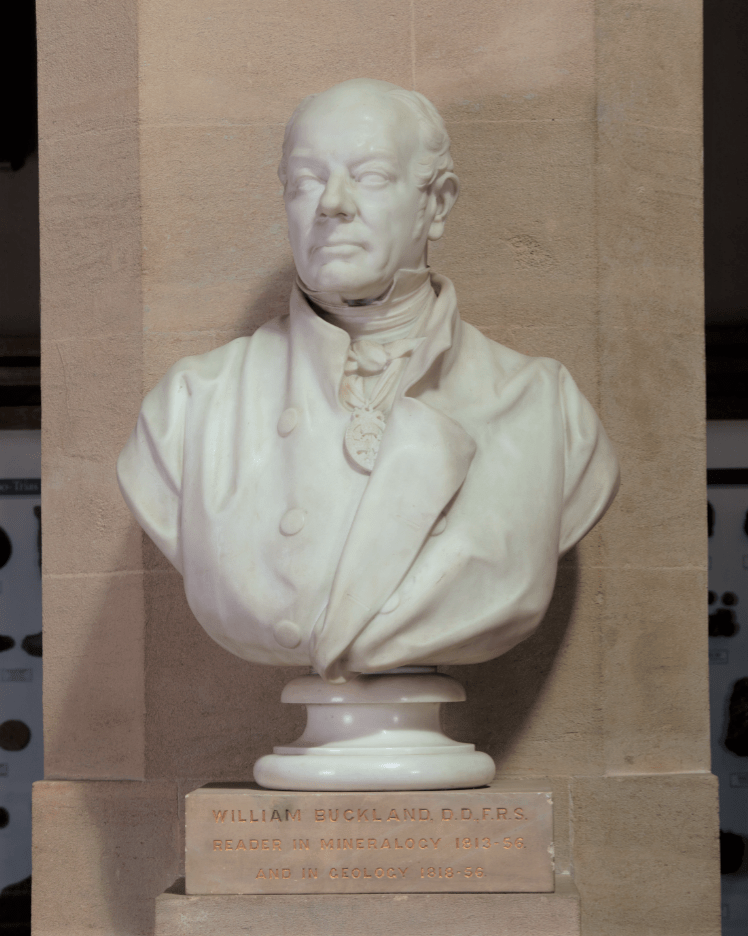
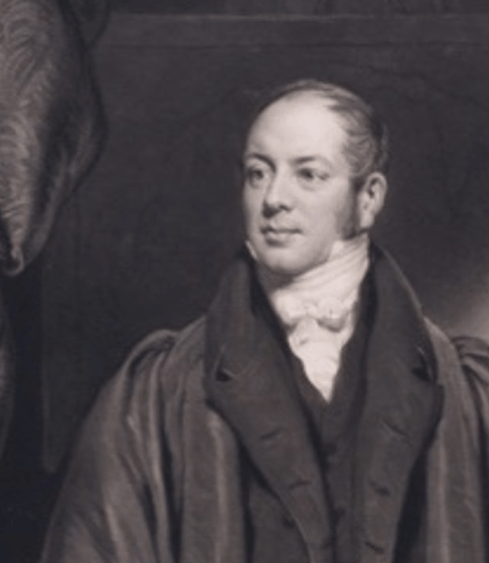
Left: A bust of William Buckland in the Museum of Natural History. Right: A portrait of the young Buckland.

The Museum has recently been offered a unique opportunity to acquire another extremely important collection of archive material related to Buckland. Passed by descent to the current owners, this archive consists of just over 1000 items of correspondence, geological notes, works of art, and other family papers — including a substantial number of items relating to his wife Mary (née Morland) and their eldest son, the naturalist and author Francis (Frank) Buckland.

This ‘new’ material fits beautifully with the existing Buckland archive here, providing missing pieces of the jigsaw and helping to paint a more comprehensive picture of this extraordinary geological pioneer, and the work he did together with Mary. It also offers greater insight into the scientific thinking and institutions of early 19th-century England, and the scientific contributions made by other ‘invisible technicians’ such as quarrymen, collectors, preparators, and replicators, giving us a more accurate, balanced, and inclusive picture of natural history at the time.

The campaign is aiming to raise £557,000 to acquire, conserve, rehouse, and digitise the Buckland archive. We have been fortunate to secure funding from a range of funders towards our goal, and we are now within £75,000 of this target.

The Museum is the obvious home for the ‘new’ archive, given Buckland’s close connection to Oxford University, and our holdings of his specimens and archive. With your help, we will reunite these two archive collections in one place and ensure researchers and the public can utilise these scientifically, historically, and culturally important resources for years to come.

Learn more about the Buckland Papers Appeal

Donate to the Buckland Papers Appeal

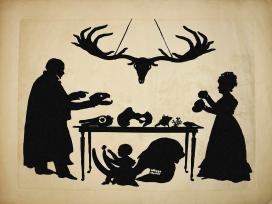
Header image: Silhouette of William Buckland and Mary Buckland

Reading Archival Silences

MAUD HEALEY AND HER GEOLOGICAL LEGACY


By Chloe Williams, History Finalist at Oxford University and Museum Volunteer

Email: chloegrace1000@gmail.com


“The professor regrets to have to record the loss of the invaluable services of Miss Healey, who as a result of overwork has been recommended to rest for an indefinite period. This will prove a serious check to the rate of progress which has for some time been maintained in the work of rearrangement, and it is hoped that her retirement may be only temporary.” So ends the Oxford University Museum of Natural History’s 1906 Annual Report, marking the near-complete departure of Maud Healey from the archival record.

Despite how little of her history has been preserved, it is clear that Maud Healey made significant contributions to the field of geology. After studying Natural Sciences at Lady Margaret Hall in 1900, Healey worked at the Museum as an assistant to Professor William Sollas from 1902–1906. Here, she catalogued thousands of specimens and produced three publications. These publications were at the centre of debates about standardising the geological nomenclature, and turning geology into a practical academic discipline that could sustain links across continents. However, Healey was continually marginalized on the basis of her gender. Closing the Geological Society of London’s discussion of one of her papers, “Prof. Sollas remarked that he had listened with great pleasure to the complimentary remarks on the work of the Authoress, and regretted that she was not present to defend before the Society her own position in the disputed matter of nomenclature.”[1] Predating the Society’s 1904 decision to admit women to meetings if introduced by fellows, Healey had been unable to attend the reading of her own paper.

Photo of the Geological Society of London centenary dinner in 1907, at which Maud Healey was present. Healey can be seen seated in the fourth row from the front, three chairs to the left. Of the 263 guests, 34 were women, 20 of whom were the wives or daughters of academics, and only 9, including Healey, were present ‘in their own right’. [2] Source: Burek, Cynthia V. “The first female Fellows and the status of women in the Geological Society of London.” Geological Society, London, Special Publications 317, no. 1 (2009): 373-407.

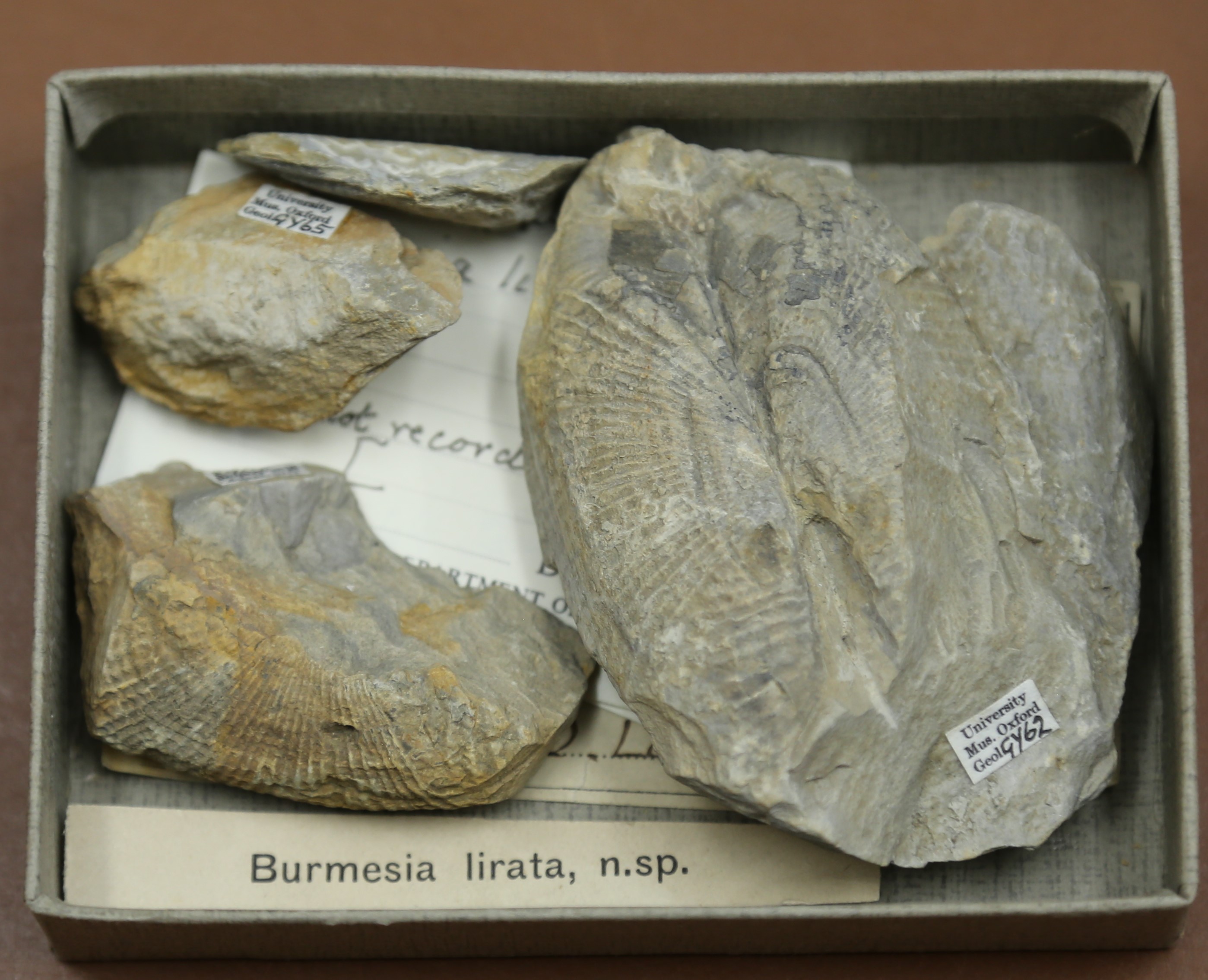
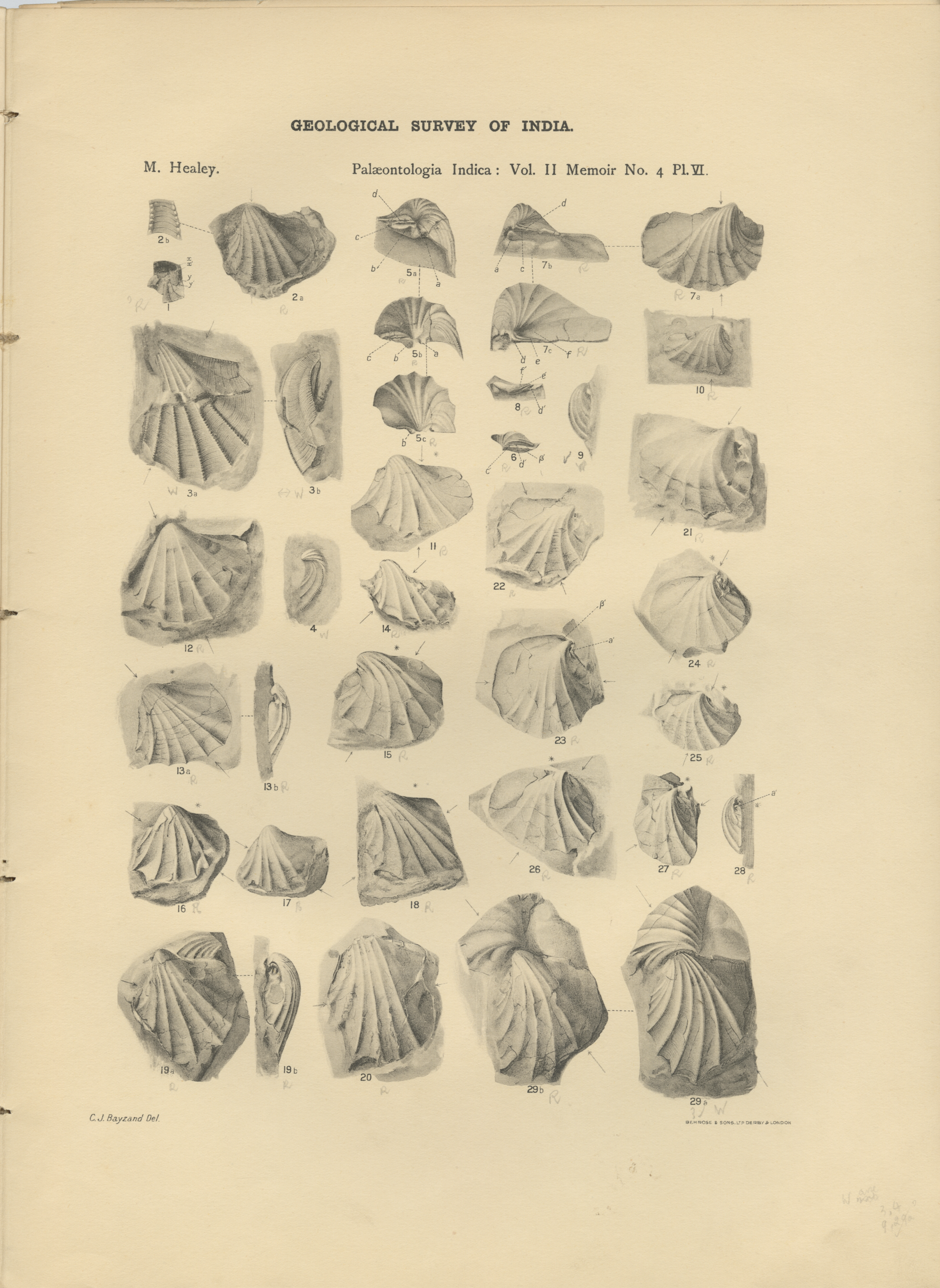
Healey later worked with specimens collected by Henry Digges La Touche in colonial Burma (now Myanmar). While Healey worked with the identification of species, acknowledged by La Touche himself as ‘a more difficult lot to work at’ than similar specimens assigned to her male contemporaries, the physical collection and therefore its name and record is attributed to a male geologist. [3] She continued her work identifying La Touche’s collection of Burmese fossils after retiring from the Museum in 1906 and published a report about them in 1908. What happened to her afterwards is unclear. Tantalizing snippets like a 1910 marriage record might suggest that she turned to a life of domesticity, but whether Healey continued to engage with geology as a hobby remains uncertain.

It is almost unbelievable that a professional of Healey’s calibre could abandon the work in which she excelled. However, Healey lacked any familial connections to geology, and apparently did not marry into money, which would have made it difficult for her to retain access to organizations like the Geological Society of London. The diagnosis of ‘overwork’ mentioned in the Annual Report makes it possible that a medical professional could have discouraged her from engaging further in academia. Unfortunately, any diaries or letters which might have provided us with further clues were not deemed worthy of preservation.

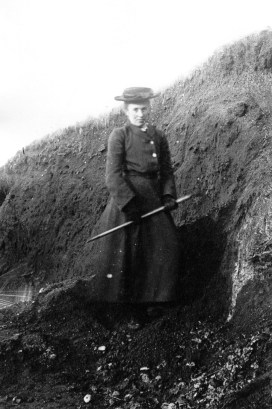
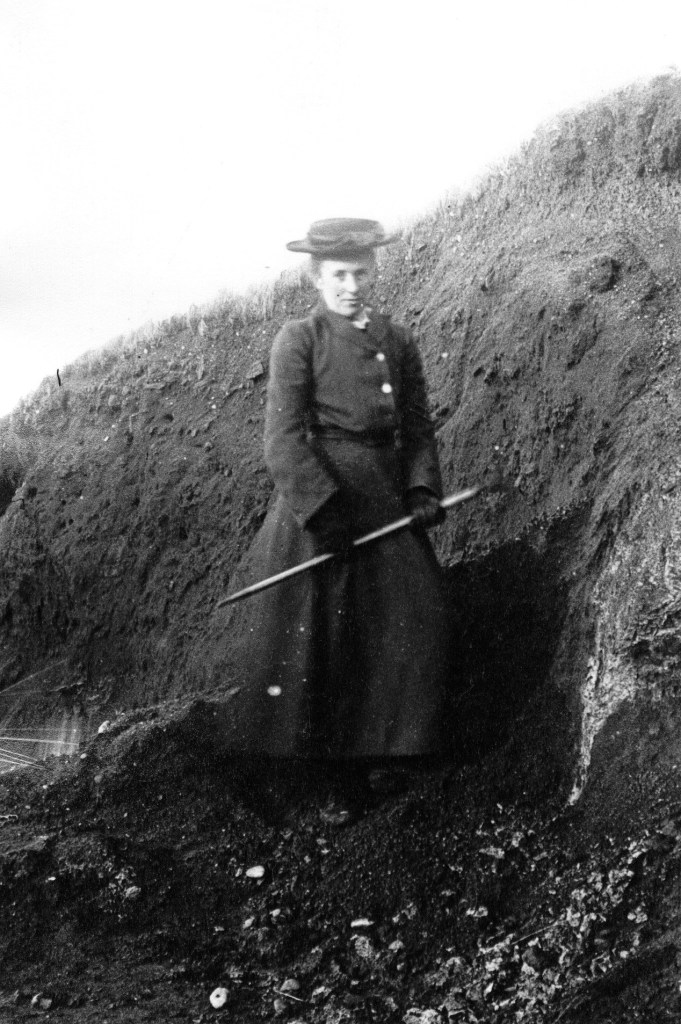
Maud Healey on a dig site (location unknown). Image from the Archives at Oxford University Museum of Natural History.

Tracing Maud Healey’s history to 1910, it might seem as though we hit a depressing dead end. Healey is one of many nineteenth-century female geologists who participated in an international community in a range of roles including collecting, preserving samples, and actively producing knowledge. However, like many of her colleagues, her contributions are largely absent from the historical record. My research doesn’t aim to simply ‘rediscover’ these exemplary women after previously being ‘hidden’ from history, but instead considers how history itself is constructed from a material archive created along lines of gender and class. A subjectivity which surfaces only rarely in appended discussions to academic papers, and in spidery cursive on ancient fossils, Maud Healey ultimately suggests the need for women’s history to read archival silences as their own stories.


Works cited

[1] Healey, M. ‘Notes on Upper Jurassic Ammonites, with Special Reference to Specimens in the University Museum, Oxford: No. I’, Quarterly Journal of the Geological Society of London 60, (1904), p.1-4.

[2] Burek, Cynthia V. “The first female Fellows and the status of women in the Geological Society of London.” Geological Society, London, Special Publications 317, no. 1 (2009): 373-407.

[3] La Touche, H.D. Letter to Anna La Touche, 1 August 1907. La Touche Collection. MSS.Eur.C.258/77. Asian and African Studies Archive, The British Library, London, UK.


Read more

Earworms and Hummingbirds

Music and film from the Museum Library


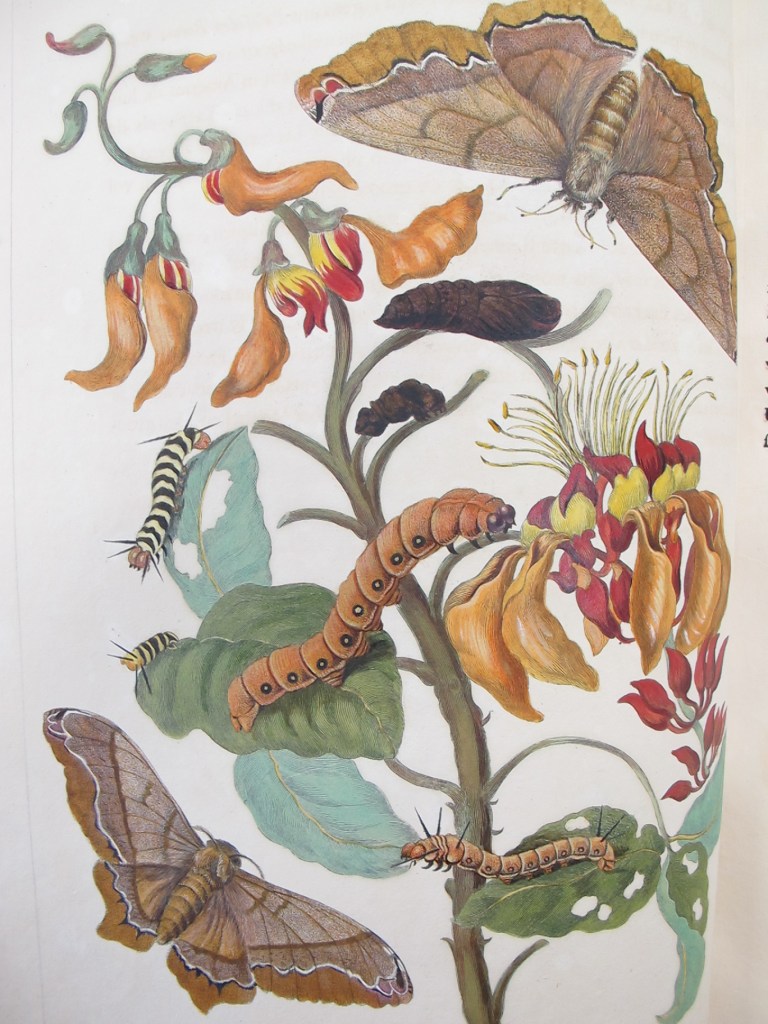
As a part of her Master’s in Wildlife Filmmaking, Alicia Hayden recently visited OUMNH to produce the short film “A Song for Maria”. Featuring the music of Will Pearce, “A Song for Maria” takes its inspiration from the eighteenth-century naturalist Maria Sibylla Merian.

In 1699, aged 52, Maria Sibylla Merian made a trip to Suriname with her daughter to document the metamorphosis of insects, where she spent 2 years illustrating unique species and behaviours. Many of these illustrations are featured in Merian’s incredible publication Metamorphosis Insectorum Surinamensium (1705), or Insects of Suriname.

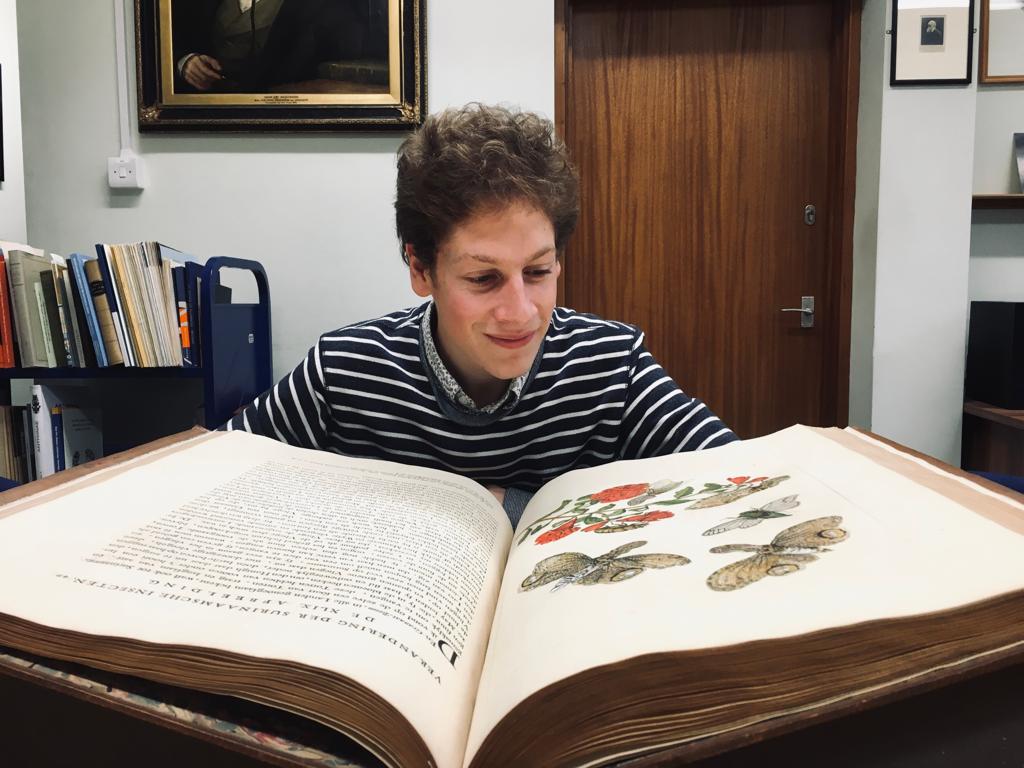
Over three hundred years later, Will and Alicia visited the OUMNH library to view our copies of Insects of Suriname. Here, the pair discuss film-making, songwriting and the impact of Maria’s legacy.


Alicia: Hi Will! You’re a physics student and amateur entomologist at Oxford University. Why were you so keen to visit OUMNH’s copies of Insects of Suriname and what did you think of Maria’s gorgeous illustrations?

Will: I first found out about Maria from a postcard, which was part of a series on influential female scientists. When I got to see OUMNH’s copies of Maria’s work, they did not disappoint. Maria reared all of the insects that she illustrated, allowing her to observe their life cycles in incredible detail.

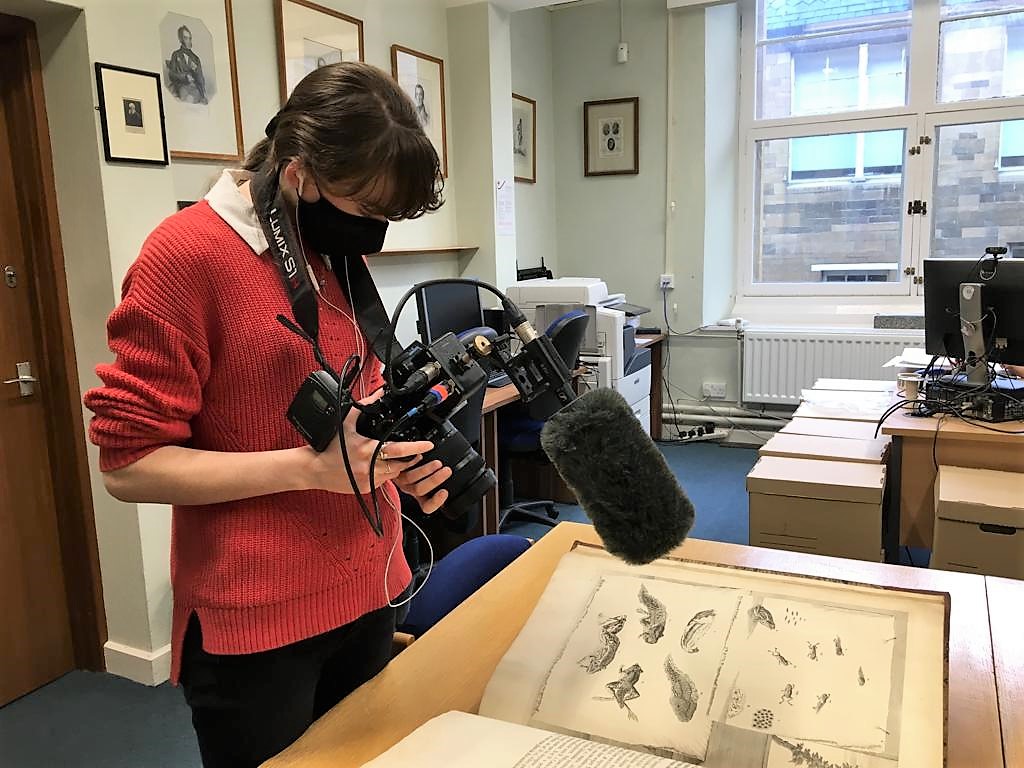
Alicia shooting for “A Song for Maria” in the Library at Oxford University Museum of Natural History

What about you, Alicia? Can you tell me a little bit about why you decided to make a film inspired by Insects of Suriname for your Master’s film project?

Alicia: In addition to studying film-making, I also do a lot of art and poetry, and I was really keen to try and incorporate my love for wildlife-art and creativity into my Master’s film project. After chatting with you about your music, I thought it would be so exciting to merge our mutual love for art and insects into the film!

Like you, I first found out about Maria through a set of women in science postcards, and since then she’s been a big inspiration in my own work, so it was also really special to see her art in person!

I know that you have recently been working on a series of songs about beetles, Will. Why do you choose to sing about nature, and how did Insects of Suriname influence your latest song, “Watercolour Caterpillar”?

Will: During lockdown, the things which kept me going were music and the pond that I built with my dad. For the first time, I started paying attention to nature, and it quickly became as big a part of my life as music. After that it just made sense to combine the two interests! I am constantly looking for inspiration, and almost always find it in either the natural world or others’ art. The life and work of Maria Sibylla Merian seemed like the perfect topic to make a song about.

What were your first impressions when you saw Maria’s books, Alicia? You work in watercolour yourself — did any piece in particular catch your eye?

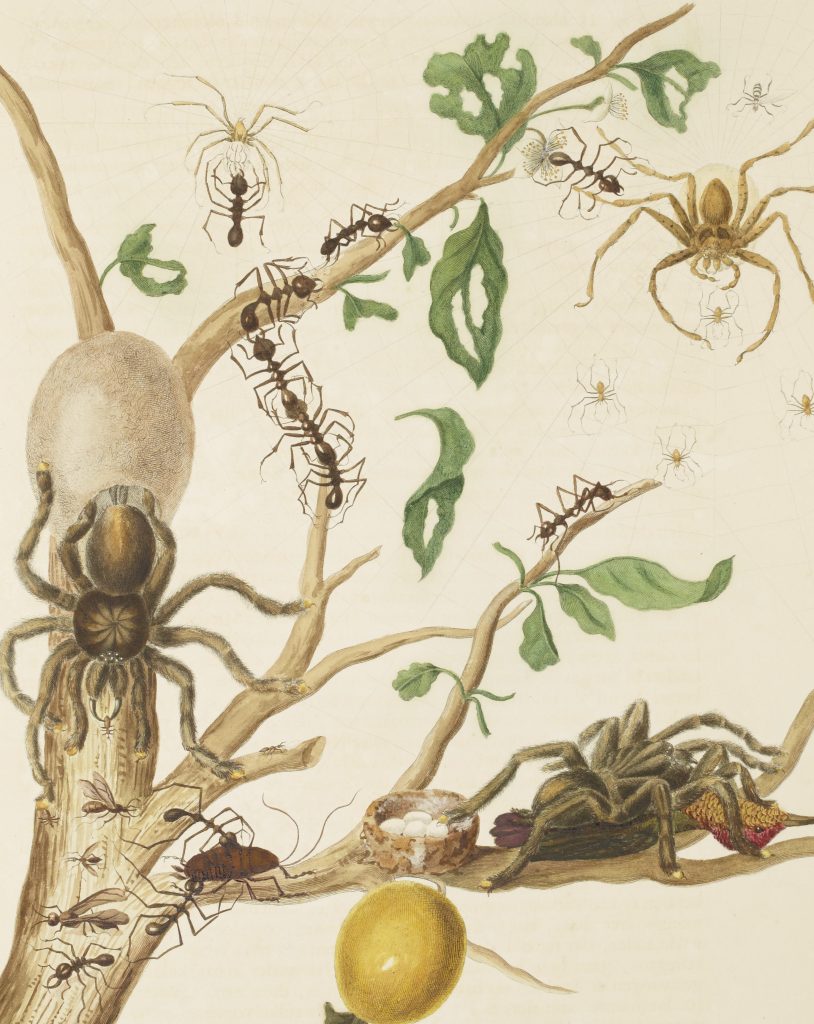
Alicia: I already knew about Maria’s work, and the intricacies of her drawings, before we saw them. But her illustrations are just phenomenal! She was an exceptional scientific illustrator. The drawing which stays with me the most is of the tarantula eating the hummingbird. The detail of the hairs and feathers is just exquisite, and I’m really pleased you can see some of this in the film.

When we were filming “A Song for Maria” together at the Museum, you decided that you not only wanted to write about the invertebrates Maria drew but also her life. How did this impact the final song?

Will: Well, originally the song was going to be about beetles (I’m a bit obsessed with them), but Maria documented a range of incredible species during her time in Suriname. So it seemed only right to diversify. The wafer-thin Surinamese Toad and handsome Hawk-moths were hard to deny! Her life was a real mixed bag, but her determination and her love for the natural world shine through.

Alicia: I had so much fun filming with you in the Museum’s Library, and I could see how much you loved looking at Maria’s work! I was wondering if you had a favourite illustration?

Will: There was one page in particular which I kept flipping back to — in fact you’ve already mentioned it! It shows leaf-cutter ants bridging between twigs using their own bodies, as well as a tarantula tackling a hummingbird! Many of Maria’s illustrations were called into question when the book was published, as they described behaviours not seen before by Europeans and they seemed all too fantastical to be real!

Hopefully, we were able to capture some of the magic of the illustrations in our film. What do you want people who watch the film to take away about Maria?

Alicia: Like you, I really want more people to know about Maria Sibylla Merian and the fantastic contributions she made to entomology. I hope that by watching “A Song for Maria”, people will realise the importance of Maria and her work, and she starts getting as much recognition as her male counterparts of the same era.


A Song for Maria” is available to watch on Alicia’s YouTube channel. You can find out more via Alicia’s website, Alicia’s instagram, and Alicia’s facebook.

Will’s song about Maria “Watercolour Caterpillar” is available to listen to on YouTube. You can find out more via Will’s website and Will’s instagram.

Iconotypes: A Compendium of Butterflies and Moths

By Danielle Czerkaszyn and Kate Diston

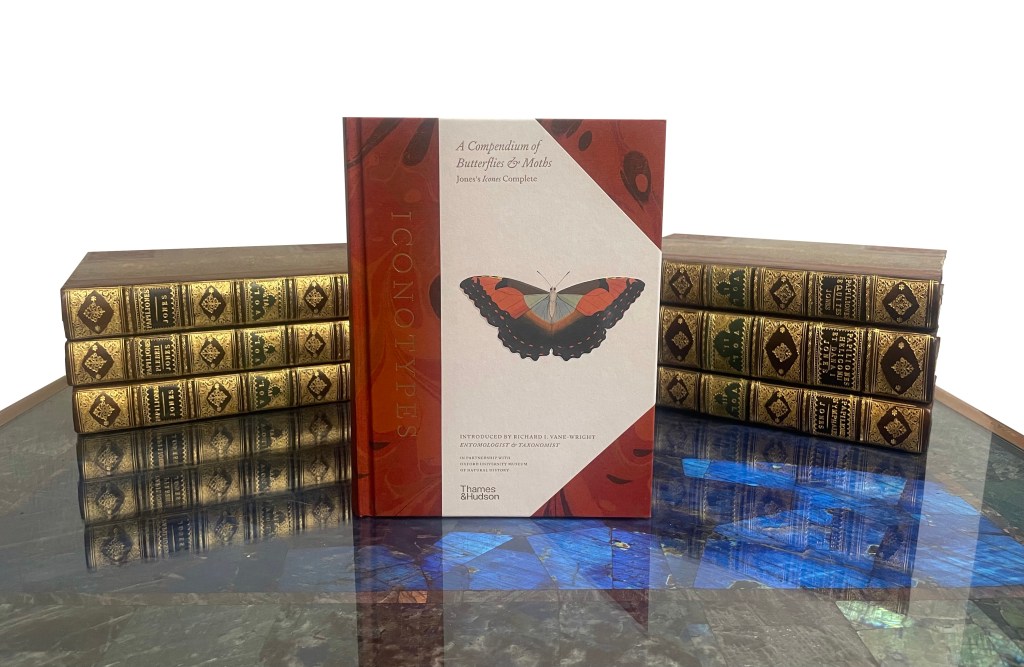
Today, the Museum is celebrating the publication of Iconotypes: A Compendium of Butterflies and Moths based on William Jones’ unpublished, six volume manuscript. Danielle Czerkaszyn, Librarian and Archivist, tells us more about the importance of Jones’ work…

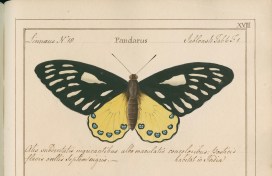
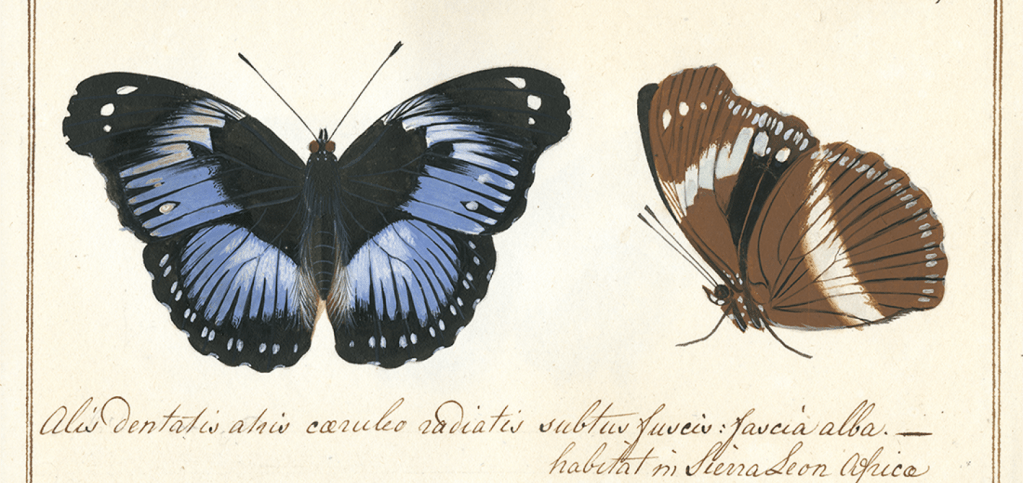
Since the 1920s the Museum has had in its care an original, unpublished manuscript containing 1,292 beautifully detailed and colourful paintings of butterflies and moths. Known as Jones’ Icones, this one-of-a-kind work was created in the late 18th century by retired London wine merchant, natural historian and Lepidopterist, William Jones (1745-1818).

In six volumes Icones depicts over 760 butterflies and moths from the collections of some of the most eminent naturalists in London at that time, including entomologist Dru Drury, explorer Sir Joseph Banks, the founder of the Linnean Society, Sir James E. Smith, and Jones’s own collection. A labour of love, Jones spent 30 years of his life – from 1780-1810 – using the finest materials to ensure Icones was both accurate and beautiful.  

In addition to being a stunning work of art, Jones’ Icones is an extraordinarily important document in the history of entomology and insect collecting in Britain. At the time Jones was making these paintings, the British Empire was rapidly expanding. This was an exciting time to be an entomologist, and species from as far away as Africa, India and Australia were being described for the first time. Over such a long period of time, some of the butterfly specimens illustrated by Jones have been destroyed, lost or divided among private collectors, so Jones’s work represents a singular historical document of these early collections. 

Jones’ Icones was even consulted by a student of Linnaeus, Johann Christian Fabricius – the man credited as the first to describe over 10,000 insects. Fabricius named 231 new species from the images in the Icones, citing Jones’ work in his publication Entomologica Systematica in 1791. The images from which new species are described are known as iconotypes. As the six volumes hold 231 iconotypes, Icones constitutes part of the foundations of butterfly taxonomy and systematics making it one of the most scientifically important items in the Museum’s archive. 

Icones also provides early documentation of global butterfly fauna in a pre-industrial world which carries important messages for today’s conservation biologists. Studies show that global insect abundance has declined by as much as 45% in half a century and several of species illustrated in the manuscript are now in decline or locally extinct.

In spite of Jones Icones huge importance to the history of entomology in Britain, the manuscript was not made available beyond the reading room of the Museum’s archive until recently. Several attempts to publish Icones for a wider audience failed or were abandoned. However, as a part of a 2013-14 National Heritage Lottery Fund project, Flying Icons, all 6 volumes were digitised and keen amateurs and specialist entomologists were invited to identify all the species represented in Jones’s Icones

Expanding on this momentum, Oxford University Museum of Natural History’s newest publication, Iconotypes: A compendium of butterflies and moths, publishes Jones’s seminal work for the very first time. This enhanced facsimile is accompanied by expert commentary, contextual essays and annotated maps with modern taxonomic names and historical references clarified. Moreover, with over 1,600 colour illustrations, Iconotypes is visually stunning. This book represents an exciting step in the long history of trying to make William Jones’s masterpiece more accessible and we could not be more excited to share it with you all.