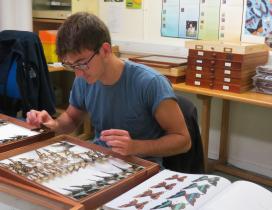
It must be autumn – the interns have flown

James organising the South Sudanese butterflies
James Evry organising the South Sudanese butterflies

It seems very quiet this week, now the last of our undergraduate interns has left us. A week ago, third year Earth sciences student Keyron Hickman-Lewis identified and numbered his last tray of specimens from the 19th century Parker collection, photographed some of the finest Jurassic fish jaws, sharks’ teeth, and other beautifully preserved fossils, before heading home to enjoy a well-earned break.

We’ve been running paid undergraduate internships for several years now, supported by grants from the University’s E.P.A. Cephalosporin Fund. The students tackle curatorial projects – sorting, identifying, numbering and cataloguing specimens, or helping to organise and list archives. This enables us to get a lot of curatorial work done, and it gives the interns a chance to handle and learn about a wider range of specimens and materials than they would ever see on their degree courses, while learning new skills which will be useful in their future careers. This year we also had interns funded through Oxford University’s own internship scheme, all tackling projects with more of a research focus.

Naomi (l) and Branwen (r) numbering Freeman collection minerals

Second year biologist, Ellen Foley-Williams worked on the Long-horn Beetle collection, but she’s really interested in science communication, so we set her an extra challenge of running a blog where all the interns could share their experiences; have a look at More Than an Intern to discover more.

Naomi (r) showing off some Cumbrian iron ore from her home county, and a an iron meteorite from space in ‘Spotlight specimens’

Some of the interns rose to the challenge of joining our ‘Spotlight Specimens’ rota. Every weekday afternoon at 2.30, a member of staff takes some favourite specimens from behind-the-scenes, and talks about them to museum visitors. It may be a bit scary first time, but every one of the interns said it was really fun to do – if sometimes a little challenging with such a varied audience.

In total, we had eleven interns, each spending six weeks working on a specific project. So Branwen, Cecilia, Ellen, Emily G., Emily T., Grace, James, Keyron, Max, Naomi, and Steph, we’d like to thank you all for being hard-working and lots of fun to have around. We hope we’ll see lots more of you all in coming years.

Monica Price, Head of Earth Collections
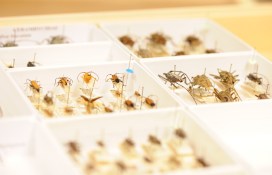
Not Just Dead Bugs

A glimpse from behind the scenes in our Life department to see what the interns are getting up to.

morethananintern's avatarMore Than An Intern

Longhorn4Not many people know that the Oxford University Museum of Natural History doesn’t just consist of the specimens on display – it also houses the Hope Entomological Collection: the second largest entomological collection in the UK. The space contains thousands of incredible pinned specimens as well as some live ones too (Geraldine the stick insect on the right). Entomology is the study of insects, and so the department is responsible for the curation of thousands of invertebrate specimens collected over hundreds of years by biologists such as Darwin and Wallace. We have all sorts in the collection – from beetles and flies (Coleoptera and Diptera) to bees and ants (Hymenoptera).

The collection consists of over five million specimens, which keeps the staff, volunteers and interns well occupied.  Each person working in the department has their own role and

Max6often their own speciality. Not only are the permanent staff experts, but the…
View original post 220 more words

Experience gained

IMG_2199

Over the past few days the ranks of the Museum have been swelled by the arrival of a host of summer interns from the University of Oxford Internship Programme and the EPA Cephalosporin Fund scheme. Overall, twelve internships are being run at the Museum, and the new faces have been squirreled away into the various departments and collections throughout the building.

We’ve got people working on a wide variety of activities, from audience research for Oxford ASPIRE, to the curation of longhorn beetles (Cerambycidae) in the Life Collections, to work on the archive of 19th-century entomologist James Charles Dale.

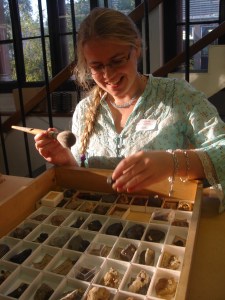
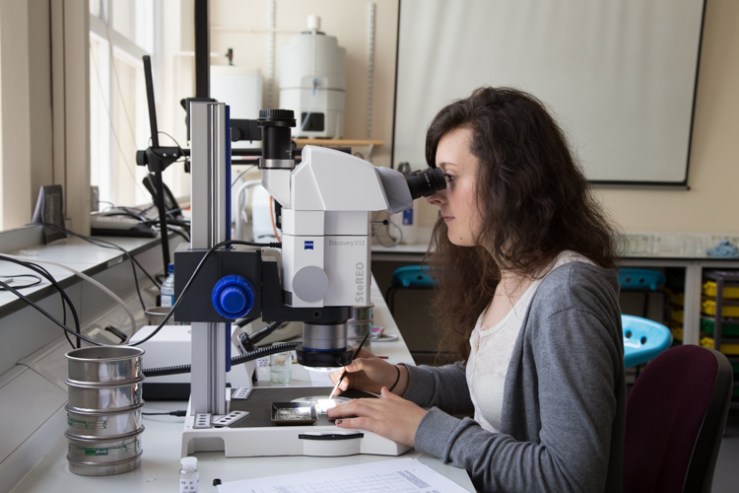
One of the interns, Grace Manley, is pictured above peering into a microscope. Grace is working with Dr Tracy Aze, a research fellow at the Museum who is studying planktonic foraminifera – fossils of single-celled organisms found in deep-sea sediments – to investigate marine extinctions. Tracy explains how Grace is contributing to the work during her internship:

Grace is helping me to test some methodological practices that will feed into how I conduct my future research. She has been involved in all the stages of micropalaeontological processing, from washing down core sediments and microfossil identification, through to imaging specimens on the scanning electron microscope.

The project gives her the opportunity to learn many of the common practices that micropalaeontologists use in a lab today and is excellent experience should she decide to continue to work in this field, or other areas of palaeontology.

Caption
Grace Manley working on the planktonic foraminifera as part of her internship with Research Fellow Dr Tracy Aze

For Grace, the internship provides ‘a practical experience of scientific research in the field of environmental change and extinction’. At the same time, she is enjoying ‘the chance to learn about the hugely diverse range of collections in the Museum and how they are actively used for scientific research today.’

We hope that all the interns across the Museum are finding a similarly rich and rewarding experience and we’ll feature some of the highlights of their work on this blog over the coming weeks.

In the meantime, a big welcome to Naomi Saunders, Stephanie Faulkner, Grace Manley, Emily Giles, and Samuel Peacock on the University of Oxford programme; and to Branwen Snelling, Keyron Hickman-Lewis, Ellen Foley-Williams, Max Brown, James Evry, Cecilia Karlsson, and Emily Tibly on the EPA Cephalosporin Fund scheme.

Scott Billings – Public engagement officer


Ento Kids R Us

bee2

As we head towards the end of National Insect Week this year it seems like a very good time to introduce you to one of the hardest-working people in bugworld – Sally-Ann Spence of Minibeast Mayhem. If you’ve ever visited the Museum on one of our bug-handling days you may well have met Sally already, quite probably holding a stick insect.

Through Minibeast Mayhem, Sally does a lot of work to support the budding entomologists of tomorrow, running invertebrate-based educational workshops for schools and public outreach events around Oxfordshire. Sally is also a committee member of the Amateur Entomologists Society’s Bug Club, an entomological club for children.

We asked Sally to tell us a bit more about her work and her desire to encourage bug-loving kids. Here’s what she has to say:

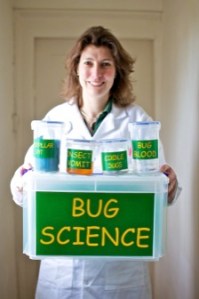
Sally-Ann Spence and her Minibeast Mayhem Bug Science kit

“When I meet a child with a passion for bugs I always suggest to their family that they should join a society such as the AES Bug Club where they can take part in many events and their interest can be nurtured. Sometimes it becomes apparent that a child has more than just a passing interest in bugs; in fact they have a true passion that could extend well beyond childhood. Unfortunately the UK has no BSc in Entomology so the subject is often missed in our schools careers advice. This can leave some children and their families at a loss for how to pursue their interest.

So I decided to set up a voluntary mentoring scheme – the Ento Kids – not only for enthusiastic children but also to support their families. The scheme has been successful, thanks to the incredible support I have received from expert individuals, landowners, universities, entomology-related companies and museums and their staff.

The aim of the Ento Kids is to support children through a CREST Award and a two week work experience placement. We offer advice on GCSE and A level choices and suitable university courses, as well as provide access to sites for research projects (and potential future employers).

Ento Kids hard at work in the Museum

Ento Kids take part in active fieldwork on research experiments to learn practical skills and are introduced to a network of professional entomologists who share their expertise from previous experience.

Theory is also fundamentally important and this is where museums such as the Museum of Natural History in Oxford are vital. Darren Mann, Head of Life Collections, and his team in the Entomology Department encourage the Ento Kids unreservedly. The children are taught about fieldwork in various habitats around the world and about the processes involved for collected specimens. They are taught about active scientific research, the importance of the collections and how to conserve them. Best of all, they learn all of this in a hands-on way with the staff in the Museum itself.

We need our entomologists, both from the past and today, and National Insect Week is a celebration of insects that everyone can take part in.”

Sally-Ann Spence – Minibeast Mayhem

Peanut-Head Bug

IMG_3185

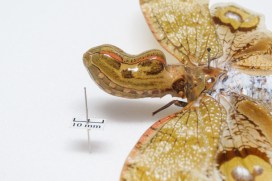
It’s National Insect Week this week, and insects are creatures close to the hearts of many people in the Museum. So to celebrate here’s a Peanut-Head Bug, chosen as a favourite specimen from Hope Entomology Collections by Gina Allnatt in our Life Collections department. Gina explains why:

This species – Fulgora laternaria – is also referred to as the “Alligator Bug” because of the grin-like markings on the head process when viewed from the side. This is probably the biggest specimen of this species I have ever seen in any collection. It was obtained from the Amazon by Rev. A. Miles Moss who presented them to Edward Bagnall Poulton, the second Hope Professor of Zoology at the University of Oxford. The specimen was exhibited at the Royal Entomological Society in 1932.

It's pretty big!
It’s pretty big.

The strange looking head is hollow, and its purpose may be to afford the insect some protection through mimicry. The insect sits on the side of a tree trunk, with its head pointing upwards. When viewed from the side it looks like a lizard. And if this doesn’t deter a predator it will then open its wings to reveal “eye” spots, complete with white markings that mimic light reflection.

Despite its fearsome appearance, the insect is completely harmless, and is a stunning example of adaptation in the insect world.

Gina Allnatt, Life Collections

Viva Volunteers!

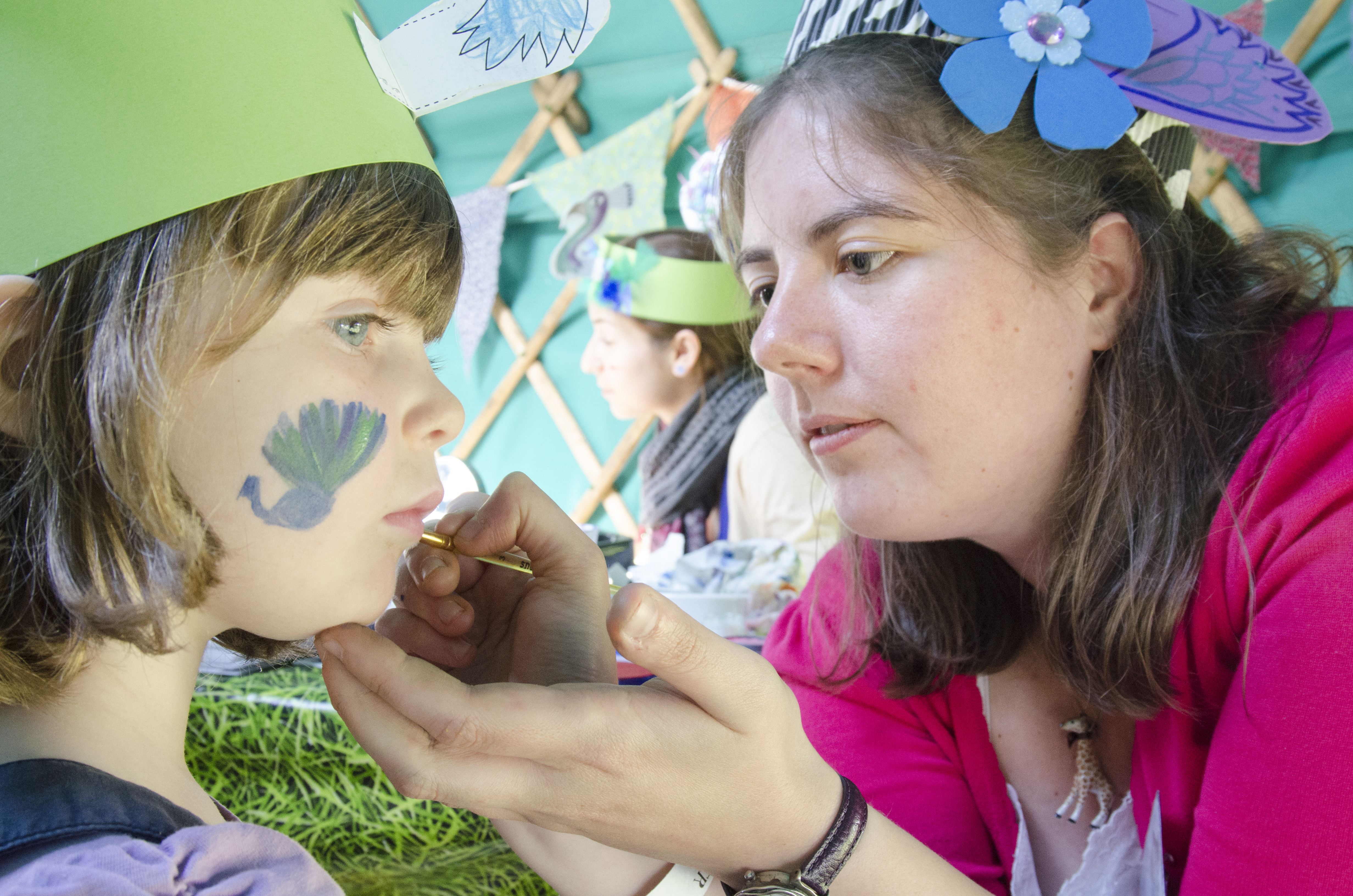
Alice facepaintingThey sort, they scan, they stick, they smile: who are they? Our team of brilliant Collections and Public Engagement Volunteers of course! This week has been the 30th anniversary of Volunteers’ Week, so we wanted to put the spotlight on them…

The majority of our volunteers help with public events, particularly those for our family audience. In 2014 alone, our awesome team of volunteers have given the Museum over 1500 hours of their time to help with public engagement events. This includes painting children’s faces, like the wonderful Alice Wilby (above), leading tours of the Museum’s architecture and running a pub quiz at one of our late night events. IMG_1322

On top of that, we have a team working away behind the scenes supporting our collections staff. Here’s just a sample of the projects they’ve been working on this week…

Laura Cotton in the Earth Collections.

– 5 volunteers identifying butterflies from painted images in our Archival Collections.
– 1 volunteer working in the Life Collections sorting and cataloguing bones.
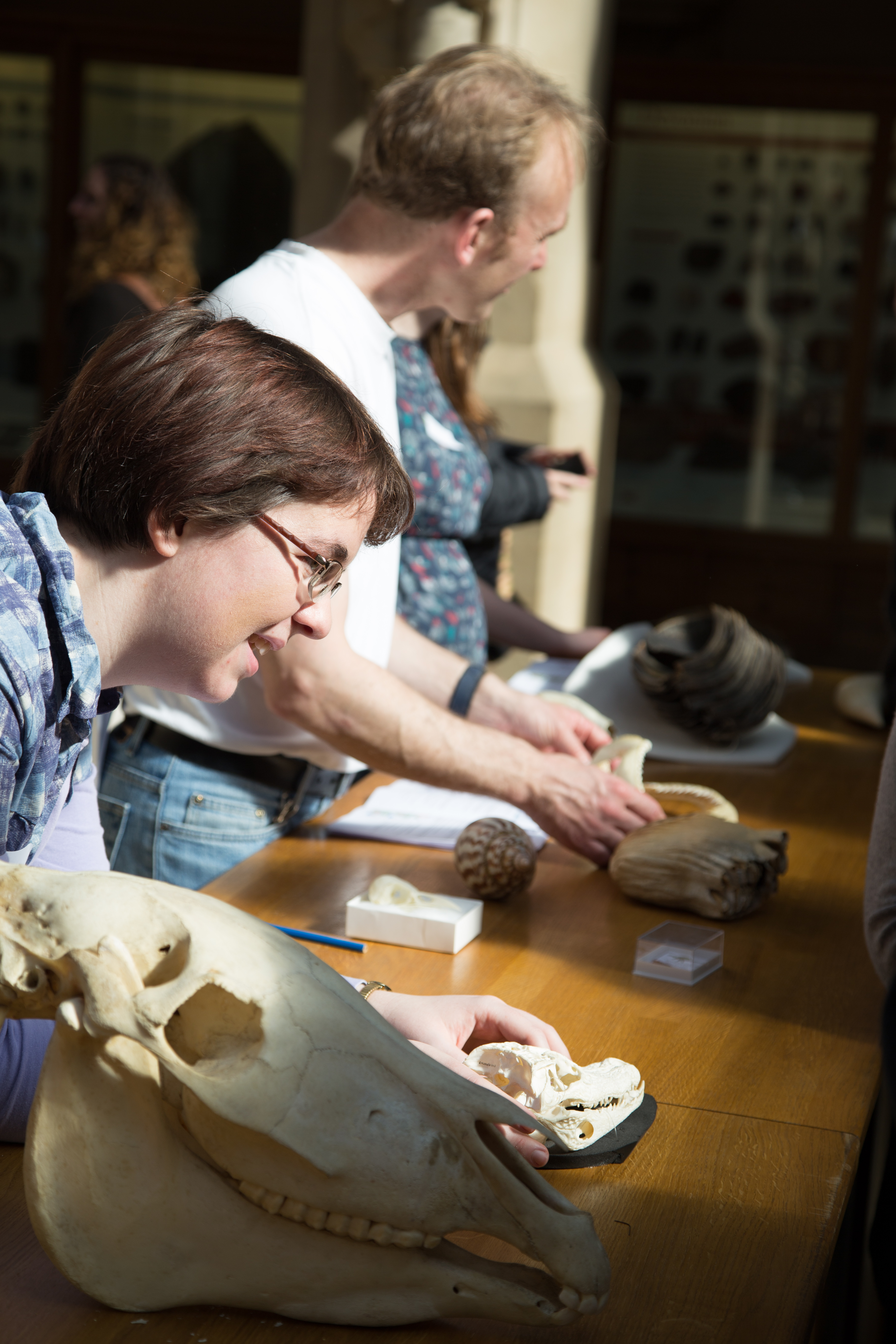
– 4 volunteers tucked away in the Earth Collections cleaning ancient horse fossils or sorting Jurassic fish teeth.

Simone Dogherty is the Museum’s Education Assistant and co-ordinator of Science Saturdays – a weekly family event aimed at older children and led entirely by volunteer scientists. So why does she think volunteers are so valuable?

We’re very lucky here to have such a large quantity and high quality of volunteers. They help us with a huge range of activities and with the increase in visitor numbers that the Museum has been experiencing since re-opening in February, I just don’t know how we’d cope without them.
For Science Saturdays we use volunteers with a specific expertise. This gives children access to enthusiastic and inspiring individuals that they can look up to. And, in return, the volunteers gain valuable science communication skills.

Fancy joining our merry band of volunteers? Whether you’re into making masks or dusting off molluscs, we need you! You can simply sign up to help out on our Volunteers website.

But what’s in it for you? Aside from the glow of knowing you’ve simply helped us do more, you can develop your confidence when working with the public, learn a new skill or get up close with the treasures stashed away behind the scenes. But that’s forgetting the most important part – you’d be joining a fantastic team of people who, like you, think this museum is a pretty exciting place to be!

Rachel Parle, Interpretation and Education Officer