The Iron Snail

5

The Museum has recently received specimens of the enigmatic deep-sea vent snail, Chrysomallon squamiferum, the scaly-foot snail. In this post, Dr Chong Chen explains why this species is so extraordinary.

*

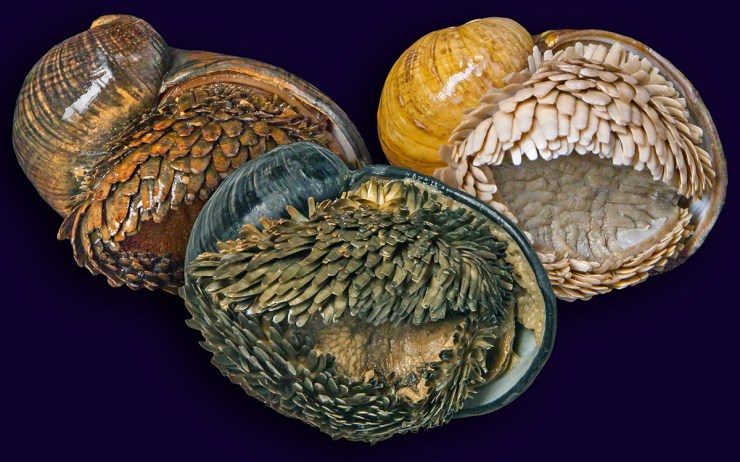
This is no ordinary snail. First of all, it lives in deep-sea hydrothermal vents in the Indian Ocean, more than 2,500 metres deep, just beside black smokers that are churning out superheated water exceeding 350°C. Second, it is the only known gastropod with a suit of scale armour. Thirdly, the scales as well as the shell are mineralised with iron sulfide. That’s right – these snails make a skeleton out of iron, and are the only animal so far known to do so.
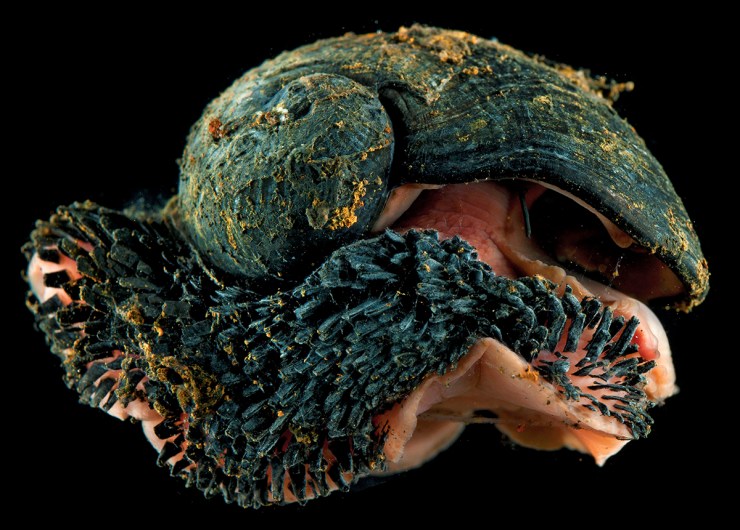
A specimen of Chrysomallon squamiferum photographed live (Photo: David Shale)

Hydrothermal vents were first discovered in the Galápagos Rift as recently as 1977. This is just off the Galápagos Islands whose fauna famously inspired Charles Darwin in the development of his theory of natural selection. Vents are deep-sea ‘hot springs’ fuelled by geological activity; the hot erupting fluid is usually acidic and contains various metals, as well as hydrogen sulfide. This is what makes rotten eggs smell bad, and is toxic to most organisms. Some bacteria, however, are able to use it to produce energy in a process known as chemosynthesis.
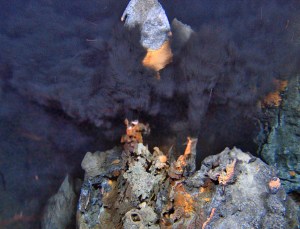
Hydra, an active ‘black smoker’ vent chimney in Longqi field, Southwest Indian Ridge

Over geological timescales many remarkable organisms have adapted to live in these ‘toxic utopia’, and flourish by exploiting the energy produced by these bacteria. The scaly-foot snail has also harnessed the power of chemosynthesis, housing endosymbiotic bacteria – bacteria living inside another creature to mutual benefit – in an enlarged part of its gut. This produces the energy it needs. In another words – it has a food factory inside its body and doesn’t even need to feed! This is likely the reason it can grow to about 45mm in size, when most of its close relatives without endosymbionts are only 15mm or smaller.
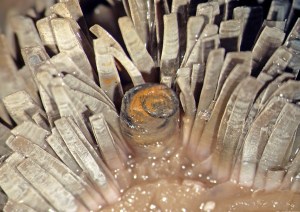
Close-up of the scales, also showing the reduced operculum in middle

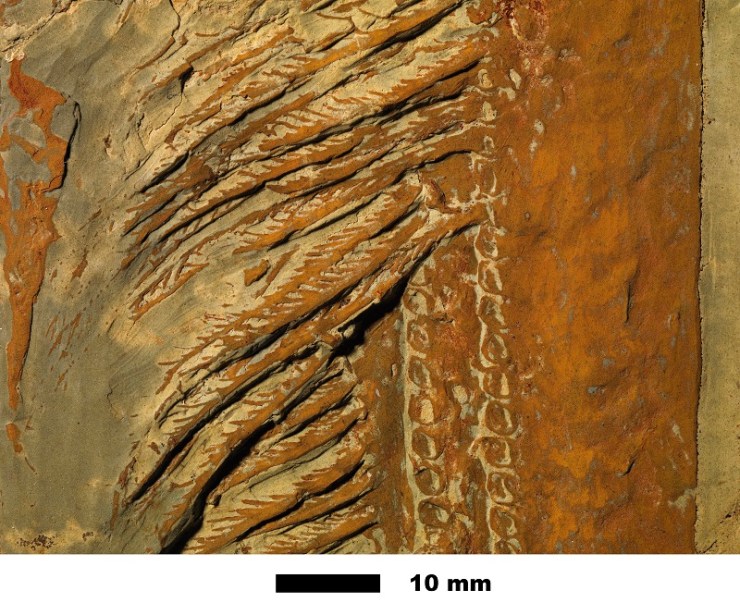
Scaly-foot snails were first discovered in 2001, at the Kairei vent field in the Indian Ocean. Its discovery came as a great surprise as even among those animals specialised for living at vents, it was very, very strange. And cool. Although the shell of a snail is well-known to be modified into a great variety of forms, this is not the case with hard parts on the foot, and apart from an operculum (the ‘trap-door’ serving as a lid when the animal retracts to its shell) no other gastropods have other mineralised structures on the foot. Yet C. squamiferum has thousands of scales!

The shell, although not particularly exciting in form, isn’t exactly ordinary either as the outermost layer is made of iron sulfide. And so are the scales. So this entire animal is covered in iron compound, mainly pyrite (FeS2, or ‘Fool’s gold’) and greigite (Fe3S4). As greigite is magnetic, the animal actually sticks to magnets. The function of the scales is postulated to be either protection or detoxification but their true use remains a mystery.
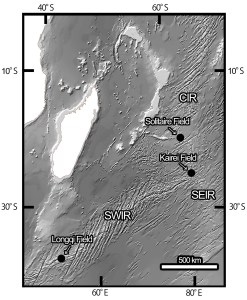
The three vent fields where Chrysomallon squamiferum is known from

So why blog about the ‘scaly-foot’ now, if it has already been known to science for more than a decade? Well, actually, despite numerous studies and publications on its strange biology this species has never been formally described and named, until now. A recent paper by Dr Chong Chen (Department of Zoology, University of Oxford) and colleagues finally gave it the scientific name you see here – Chrysomallon squamiferum.

The Museum received a set of five specimens as part of the description process, which will serve as key references for scientists who wish to study this extraordinary species in the future.

Here’s a video of the Longqi hydrothermal field featuring Chrysomallon squamiferum in their natural habitat:


We are a finalist!

MOTY15_Digital Assets_Oxford Natural History_All sizes-01

This is very exciting. We’ve been waiting to tell everybody for some weeks that we have been selected as one of six finalists in the Art Fund Prize for Museum of the Year 2015. It’s the top prize for a museum or gallery in the UK and we are delighted that the Museum’s work over 2014 has been recognised to this extent.

The other finalists are Dunham Massey, IWM London, The MAC, HM Tower of London, and The Whitworth. The winner will be announced on 1 July at a ceremony at Tate Modern and will receive £100,000. To drum up the excitement we made a short film with Art Fund as part of the award campaign:

As regular readers of this blog and our previous Darked not dormant blog will know, the Museum undertook a major roof restoration and lighting project during 2014. And while we were closed we spent some time thinking about how we communicate with our visitors and the world beyond, trying out some fun forms of public engagement such as the Goes to Town project (shortlisted for a Museums + Heritage Award).

Photographer Martin Parr's lead image from a shoot at the Museum
Photographer Martin Parr’s lead image from a shoot at the Museum

At the same time our whale skeletons underwent a major conservation and redisplay, documented at Once in a Whale. In other words, 2013 and 2014 were big years for the Museum and it’s wonderful to be celebrating them as Finalists in the Art Fund Prize competition. As our director Paul Smith says:

Our public programme encourages visitors of all ages to understand and engage with the natural environment, and sits alongside our world-class research and teaching.

The museum’s small team and our volunteers are delighted that this transformation has led to being named as a finalist in the prestigious Art Fund Prize for Museum of the Year 2015.

Keep an eye on the blog next week and you’ll see more about Martin Parr‘s photography of the Museum, as well as a photography competition that you can enter yourself, judged by Martin and the public. In the meantime, here’s a sneak preview of Martin Parr at work here, capturing the image you can see above.

Martin Parr captures the lead image in the Art Fund Prize for Museum of the Year 2015 campaign

Scott Billings – Public engagement officer

‘Welcome to My Museum’

WTMM2

I’ve been to see the dinosaurs at the Pitt Rivers Museum!

It’s a common exclamation, but alas, there are no dinos in the Pitt Rivers, nor totem poles in the Museum of Natural History. Rather, there are two museums with a shared front door, and a fair amount of confusion.

To address this perpetual museum muddle we present a short play, Welcome to My Museum, where the Victorian founders of each institution come to life to discuss ‘two marvellous museums under one roof’.

A small grant from the Oxford University Museums Partnership allowed a collaboration between us, the Pitt Rivers Museum, Pegasus Theatre, and Film Oxford to produce two versions of the play – one for public performance and another for a film adaptation, which is the one you can watch below.

Caption
Ciaran Murtagh (left) as General Augustus Henry Lane-Fox Pitt Rivers and Andrew Jones as Henry Acland

Working with Pegasus Theatre, Rachel Barnett scripted an imagined conversation between the founders of the two museums, Henry Acland and General Augustus Henry Lane-Fox Pitt Rivers. Pegasus helped to source actors and costumes and even a prop-maker for Pitt Rivers’s fine pufferfish helmet.

Film Oxford spent several late nights with a very patient rent-a-crowd, immortalising their adaptation of the play on film. The public performance was well attended, with over 250 visitors dropping in to watch General Pitt Rivers rudely interrupt Henry Acland’s speech welcoming visitors to his museum. Pitt Rivers rightly points out that there must be two museums as the building has two gift shops and even two differently-branded pencil sharpeners for sale in them – ‘scientifically incontrovertible’ proof!

So if you think that you have ever been to the Pitt Rivers Museum to see the dinosaurs, or the Museum of Natural History to look at the totem-pole, watch the film below and you will discover that our building is actually ‘two sublime museums under one roof’.

Chris Jarvis – Education officer

‘Dead Shrimp Blues’

SONY DSC

I woke up this mornin’ and all my shrimps was dead and gone

So sang the legendary blues artist Robert Johnson back in 1937. Sadly, it’s a lyric which resonates today, according to a study led by the Museum and the International Union for Conservation of Nature (IUCN).

Almost 28% of the world’s 762 freshwater shrimp species, a group which supports the livelihoods of some of the world’s poorest communities, are now threatened with extinction, according to the IUCN Red List of Threatened Species. The main threats include urban and agricultural pollution, human intrusions and disturbance, and invasive species.

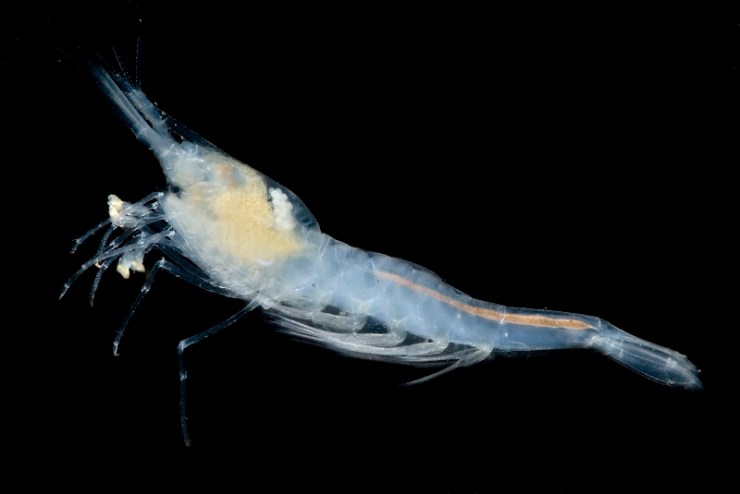
Euryrhynchus amazoniensis, a widespread Amazonian species. Photo: W Klotz

“Freshwater shrimps are extensively harvested for human food, especially by the poorest communities in tropical regions, where they often dominate the biomass of streams and play a key role in regulating many ecosystem functions. However, little is known about the impacts the loss of these species may cause to ecosystem services,” say the Museum’s Sammy De Grave, lead author of the report, which is published in the journal PLOS ONE.

Two species were declared as Extinct and a further ten are also Possibly Extinct, but require field surveys to confirm that status. Several of these species are only known from a single cave or stream in locations which have undergone significant levels of habitat degradation and conversion, and have not been sighted for decades. For example, Macrobrachium purpureamanus is only known from peat swamps on Kundur Island, Riau Archipelago (Indonesia), an area which from 1998 has been extensively converted to an oil palm plantation.

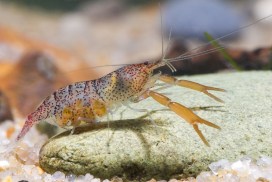
Caridina woltereckae, endemic to Lake Towuti (Sulawesi), currently under threat due to overharvesting for the aquarium trade, pollution and invasive fish species. Photo: C Lukhaup

The research, which collated distribution data for all species, identified areas containing high levels of species diversity in the Western Ghats, Madagascar, the Guyana Shield area, the upper Amazon, Sulawesi and Indo-China.  Additionally, high concentrations of cave-dwelling species were found in areas of China, the western Balkan Peninsula, the Philippines and Cuba.

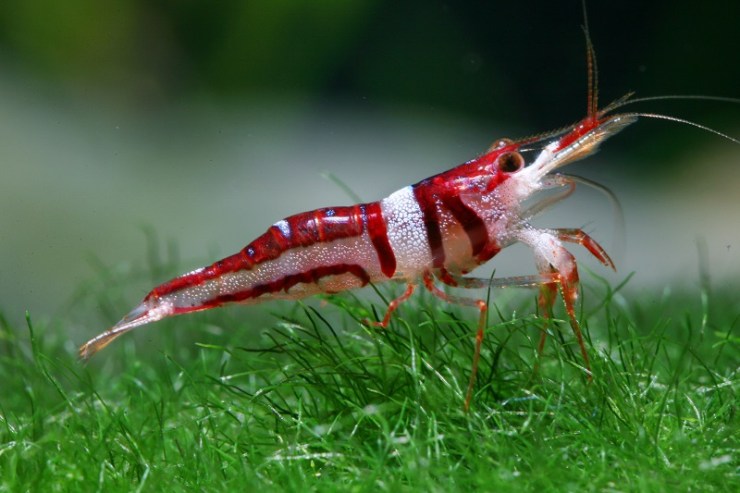
Palaemonias alabamae. Photo: D Fenolio

Although threatened species are found across the globe, notable concentrations were found in Sulawesi (Indonesia), Cuba, the Philippines and southern China, many of which are restricted to cave habitats. As well as cave-dwelling species, those restricted to lakes and freshwater springs also face higher levels of threat. The Alabama Cave Shrimp (Palaemonias alabamae), for example, is listed as Endangered, and is known from only four cave systems in Alabama, USA that are currently under threat from groundwater abstraction and habitat change.

Global species richness of freshwater shrimps

As well as making a number of recommendations for conservation actions, the report stresses the urgent need for field research to increase understanding of the life histories, threats and distribution of many shrimp species.

“The high levels of extinction threat that the team found for freshwater shrimps have also been found for freshwater crabs and crayfish, and these studies of global faunas highlight the fragile state of freshwater invertebrates across the world,” says Neil Cumberlidge, Chair of the IUCN Species Survival Commission (SSC) Freshwater Crustacean Specialist Group.

“Sadly, the prospect of losing these important species often goes unnoticed. The information on these threatened freshwater crustaceans is readily available on the IUCN Red List and needs to be incorporated into decision making at all levels if we are to protect the world’s rapidly deteriorating freshwater habitats and the amazing but highly threatened species that live there.

Werner Klotz, one of the co-authors of the study collecting a new species of freshwater shrimp in Taiwan.
Werner Klotz, one of the co-authors of the study collecting a new species of freshwater shrimp in Taiwan

The study, Dead Shrimp Blues: A global assessment of extinction risk in freshwater shrimp (Decapoda: Caridea), involved researchers from the UK, Australia, Austria, Brazil, Indonesia, Mexico, Singapore and Taiwan.

Sammy De Grave – Head of Research

Back to your roots

IMG_4714

If you have ever tried to trace your family tree and come to a dead end, the chances are that your missing ancestors were still living in the same place over a thousand years ago. A paper just published in Nature, and co-researched by the Museum’s environmental archaeologist Professor Mark Robinson, looked at the genotypes of more than 2,000 people and found some surprising results.

The People of the British Isles (POBI) survey selected people with grandparents who were born in shared rural locations, so as to remove the effects of recent population movements, and created the first fine-scale genetic map of any country in the world. It showed that the UK’s population could be divided into 17 genetically distinct groups, most with very little interbreeding for the last thousand years or more.

A genetic map of Britain created by the People of the British Isles study

The Romans, Danish Vikings and Normans, despite conquering Britain, seem to have made not much of a mark genetically. However, there is an Anglo-Saxon component to the population of south east, central and eastern England and, as might be expected, the inhabitants of Orkney are partly Norse (Norwegian). In both these areas, the earlier populations were not wiped out but merged with the invaders.

Amongst the surprising discoveries was the fact that many of the groups in north and west Britain seem to have been living in the same areas as their Celtic-speaking tribal ancestors since at least the 6th century. If you’re Welsh you may be more genetically similar to an Ice Age settler than you are to someone from Bristol or Liverpool. If you’re Cornish, you are most likely from a genetically different group to a Devonian.

And if you have ever thought of yourself as belonging to an ancient Celtic kingdom, you’d better decide which one as there was no single ‘Celtic’ genetic group. In fact, the parts of the UK in which the Celtic language survived longest (Scotland, Northern Ireland, Wales and Cornwall) are among the most different from each other genetically.

While our ancestral history is very interesting, it is not the primary purpose of the research study. Instead, the research group, led by Sir Walter Bodmer and Professor Peter Donnelly, is looking to decipher the genetic structure of the UK in order to track down genes associated with common human diseases.

Ancient arthropods

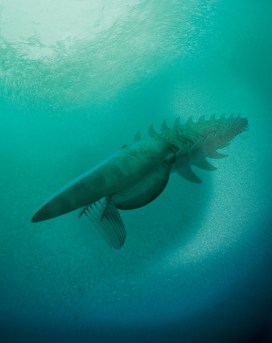
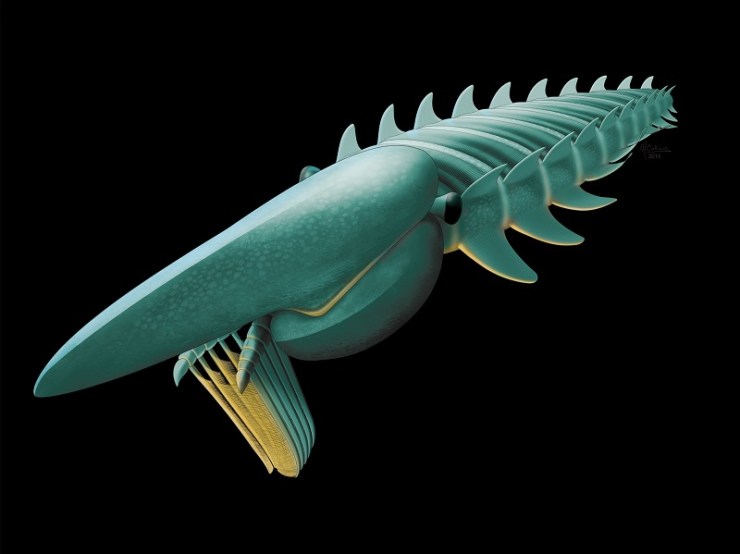
3. Aegirocassis benmoulae reconstruction low Meet Aegirocassis benmoulae – a 480 million year old, two-metre sea monster. This unlikely looking creature has been described, and imagined in this illustration, thanks to the work of one of the Museum’s research fellows, Dr Allison Daley.
Through collaboration with Dr Peter Van Roy and Professor Derek Briggs at Yale University, Allie has published a paper on Aegirocassis that is published in Nature this week. Here, Allie tells us a little bit more about it…

*

In December 2012, I met Peter Van Roy at the Palaeontological Association annual general meeting in Dublin. He told me about a new specimen that had just been unearthed in Morocco, and I almost couldn’t believe what I was hearing. Peter was working with professional fossil hunter Mohamed Ben Moula, discovering ancient Cambrian-type animal communities in the much younger rocks of the Ordovician period. What you can see above is a recreation of one of their finds, which was spectacularly preserved in three dimensions. Peter invited me to join him in studying this material, and I accepted with great excitement.

Reconstruction of the giant filter-feeding Aegirocassis benmoulae feeding on a plankton cloud in the sea approximately 480 million years ago. Aegirocassis grew to over 2 meters. Reconstruction by Marianne Collins, ArtofFact

Aegirocassis benmoulae belongs to a group of long extinct sea-dwelling animals called anomalocaridids. These were fearsome looking things: segmented bodies with wide swim flaps, a head bearing large eyes, a circular jaw with sharp teeth, and a pair of large claws. Anomalocaridids first appear in the fossil record during the Cambrian Explosion, a major evolutionary event that saw the rise of all animal life in a relatively rapid period of time.

They were early ancestors of the arthropods, the animal group that today includes spiders, insects, centipedes and lobsters. When they first evolved, in the Cambrian, anomalocaridids were apex predators and the biggest animals around, reaching up to about 50cm in size, but Aegirocassis benmoulae is a very different breed indeed.

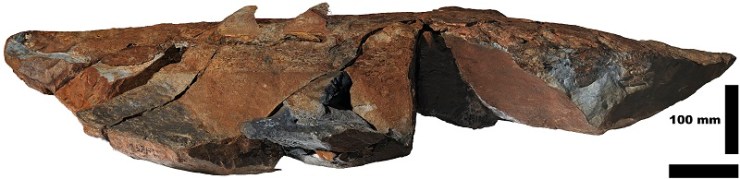
Side view of a complete Aegirocassis benmoulae fossil, showing the pointed ‘flaps’ on the animal’s back. Photograph by Peter Van Roy, Yale University.

Most Cambrian anomalocaridids have one set of triangular swim flaps sticking out the side of the body, but the new Ordovician animal, Aegirocassis, shows us that the anomalocaridids actually had two pairs of body flaps. These two flaps correspond to the two branches of a limb that is characteristic of crustacea and represents an evolutionary stage before the two branches had fused. In other words, It allows us to trace the evolution of one of the key body features that made arthropods such a successful group of animals right through to the present day.

A side view of the fossilized spiny ‘net’ which Aegirocassis benmoulae used to filter its plankton food from sea water. Photograph by Peter Van Roy, Yale University.

As if that wasn’t enough, Aegirocassis also had a very different ecology from most anomalocaridids. While the Cambrian forms were mostly apex predators, this animal was a filter feeder – it used fine comb-like spines on its head appendages to filter plankton from the sea water. Only one Cambrian anomalocaridid also used filter feeding, but it remained a relatively modest size, while Aegirocassis was one of the largest arthropods ever to have existed.

This combination of gigantic size and filter feeding evolved from a previously predatory animal group is similar to the type of evolution seen later in whales. It makes Aegirocassis a very important animal for understanding both ecology and evolution in the oceans 480 million years ago.

Allison Daley holds up an Anomalocaridid fossil at the Burgess Shale in Canada. This area has yielded many previous Anomalocaridid fossils. Photograph by Parks Canada

Allison Daley – Research fellow You can also listen to an Oxford Sparks podcast with Allie, where she talks about the Cambrian Explosion, in the player here.