Deal or no deal

Melinopterus

by Darren Mann, Head of Life Collections

In a previous article on this blog I reported the discovery, in an insect collection, of the 21st British specimen of the ‘Regionally Extinct dung beetle Melinopterus punctatosulcatus. And since then, I’ve been on the hunt for more…

Heading out to numerous other museum collections I discovered more specimens, all collected in the same locality – Deal in Kent. In Ipswich Museum there are six, collected by C. Morley in 1896; there are two in the Natural History Museum, London, collected by G.C. Champion; and in the Museum of Zoology, Cambridge there are two collected by G.C. Hall in 1883.
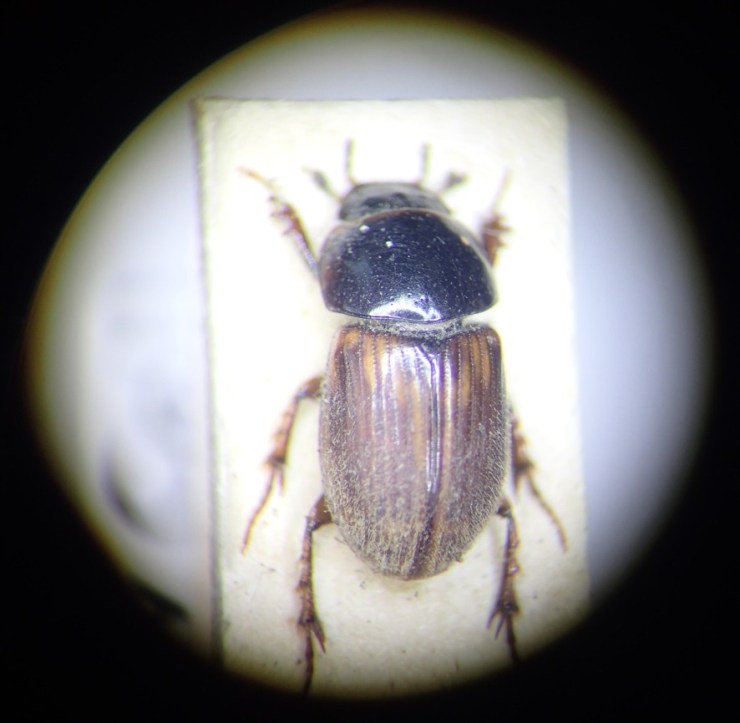
Ipswich Museum
A view through the microscope of Melinopterus punctatosulcatus held in the collections of Ipswich Museum, collected by C. Morley in 1896

But the earliest and most recent finds are both in the National Museum of Scotland – one from May 1871, in the G.R. Waterhouse collection, and one from 1923, in the T. Hudson-Beare collection. So now we know of 42 specimens of this beetle with data and we know that the species occurred at Deal for about 50 years. But why are there no records after this time?

The Deal sandhills in Kent were famous for their insects, but even as long ago as 1900 entomologists* were discussing the negative impact of “summer camping-out stations and the modern craze for the ‘Royal and Ancient Game of Golf'” on beetles and butterflies in the area.

Today, most of the sandhills are gone and there are no grazing animals other than a few rabbits. Most of the surrounding land is either developed as a golf course or under agricultural management. So, is the possible local extinction of this dung beetle due to habitat loss and a lack of dung?

Deal
Deal, Kent: the original locality for Melinopterus punctatosulcatus, with remnants of the sandhills in the distance

To try and answer this question, naturally I went looking for poop in Deal. In a field in Sandwich Bay I could hear sheep bleating in the distance, although poo was scarce. Eventually I found a few old plops and inside were ten Calamosternus granarius, a small dung beetle. This was good, but my main target was Melinopterus punctatosulcatus.
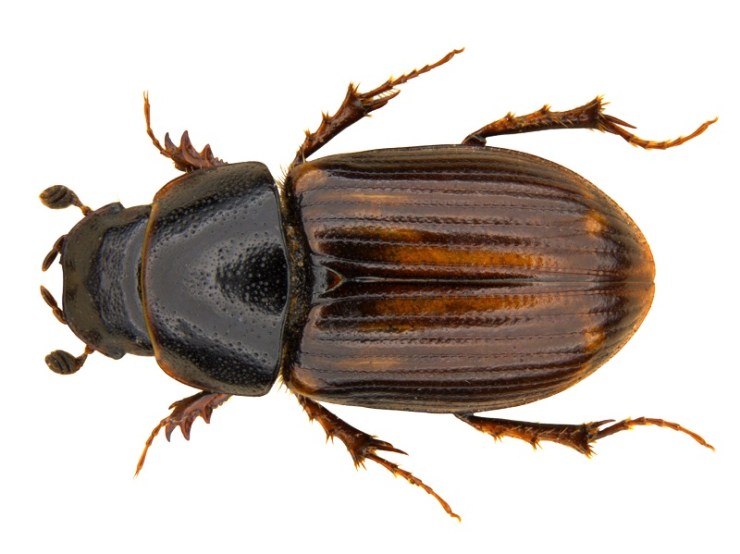
Melinopterus punctatosulcatus edit
A specimen from the Museum of Melinopterus punctatosulcatus, previously listed as ‘Regionally Extinct’ in Britain, but now rediscovered in Deal, Kent

I probed the poop further. To my delight, crowded in the remaining squishy bit were four other species. On close inspection, one of these was hairy, so a male, and much darker than its close relatives. It fitted perfectly with my expectations for Melinopterus punctatosulcatus after seeing so many examples in museum collections. Success! This beetle, misidentified in museum collections for so long, and not seen since the 1920s in Deal, is indeed hanging on in Kent.

Disappointingly, after a further few days of searching, only a handful more specimens were seen. This suggests that either the species exists at low population levels, or that it was it was not the peak emergence period when I was there. Nonetheless, a species not recorded anywhere in the UK for over 70 years is actually still here.

Now hopefully we can encourage local land owners to help conserve this all-important dung fauna and flora.

* Walker, J.J. 1900. The Coleoptera and Hemiptera of the Deal Sandhill. Entomologist Monthly Magazine 36: 94-101.

Who shot the Dodo?

By Scott Billings, Digital Engagement Officer

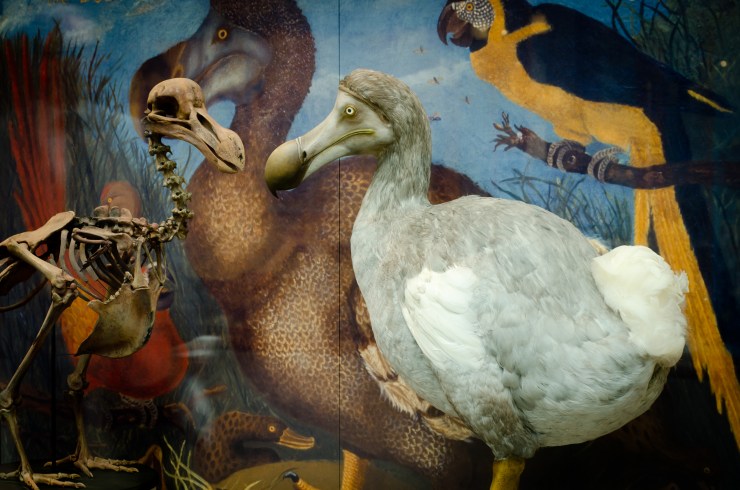
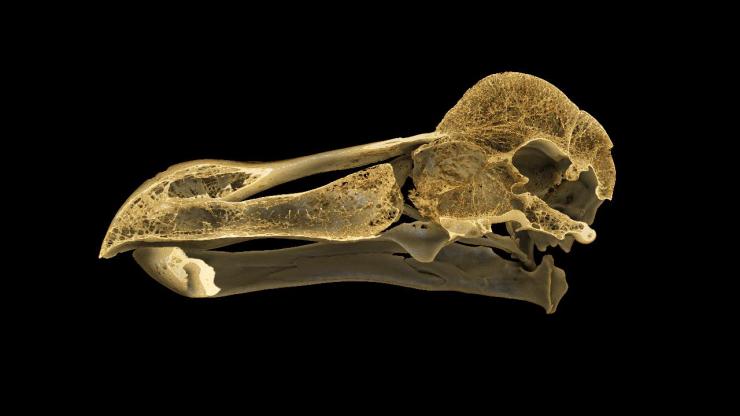
If ever the Oxford Dodo were to have squawked, its final squawk may have been the saddest and loudest. For the first time, the manner of death of the museum’s iconic specimen has been revealed: a shot to the back of the head.

This unexpected twist in the long tale of the Oxford Dodo has come to light thanks to a collaboration between the Museum and the University of Warwick. WMG, a cutting-edge manufacturing and technology research unit at Warwick, employed its forensic scanning techniques and expertise to discover that the Dodo was shot in the neck and back of the head with a 17th-century shotgun.

Mysterious particles were found in the specimen during scans carried out to analyse its anatomy. Further investigation of the material and size of these particles revealed them to be lead shot pellets of a type used to hunt wildfowl during the 1600s.

The Oxford Dodo specimen, as it has come to be known, originally came to the University of Oxford as part of the Tradescant Collection of specimens and artefacts compiled by father and son John Tradescant in London in the 17th century. It was thought to have been the remains of a bird recorded as being kept alive in a 17th-century London townhouse, but the discovery of the shotgun pellets cast doubt on this idea, leaving the bird’s origins more mysterious than ever.

Dodos were endemic to the island of Mauritius in the Indian Ocean. The first European accounts of the bird were made by Dutch explorers in 1601, after they rediscovered the island in 1598. The last living bird was sighted in 1662.

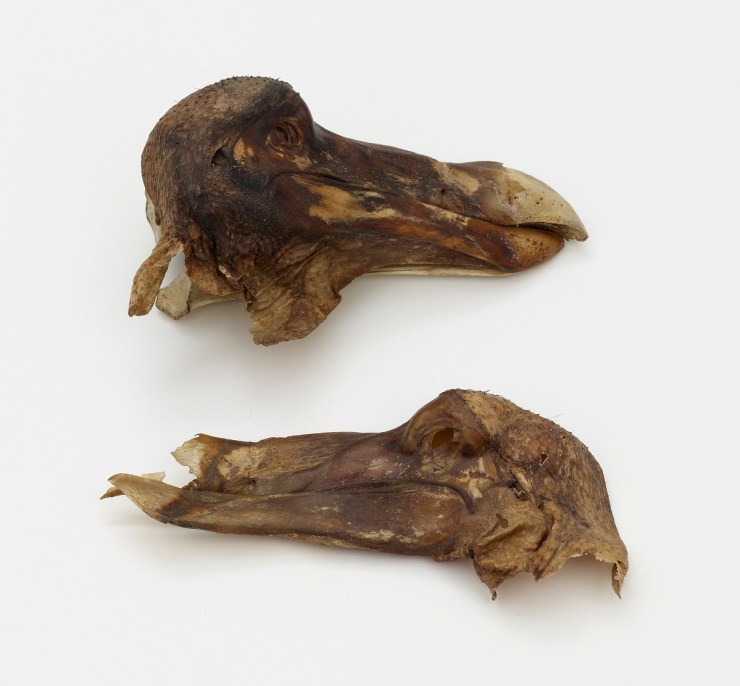
The story of the Oxford Dodo is especially significant because it represents the most complete remains of a dodo collected as a living bird – the head and a foot – and the only surviving soft tissue anywhere in the world.

This discovery reveals important new information about the history of the Oxford Dodo, which is an important specimen for biology, and through its connections with Lewis Carroll and Alice’s Adventures in Wonderland of great cultural significance too.
– Professor Paul Smith, Museum director

The Oxford Dodo represents the only soft tissue remains of dodo in the world. This iconic specimen was taken from the Museum to WMG at the University of Warwick for CT scanning.

WMG’s CT scans show that this famous symbol of human-caused extinction was shot in the back of the head and the neck, and that the shot did not penetrate its skull – which is now revealed to be very thick.

The discovery of such a brutal demise was quite a surprise as the scans were actually focused on discovering more about the Dodo’s anatomy, as well as how it lived and died. This work will continue, but we now have a new mystery to solve: Who shot the Dodo?

What’s the next step? It is possible that the isotope of lead in the shot could be analysed and traced to a particular ore field. This might tell us what country it was mined in, and perhaps what country is was made in, and ultimately reveal who shot the Dodo.

What is a tree of life?

A phylogeny? An evolutionary tree? A cladogram? We see the branching lines of these diagrams in many museum displays and science articles, but what do they tell us and why are they helpful?
Duncan Murdock, research fellow, explains. 

You are a fish.

Starfish, jellyfish and cuttlefish are not fish.

Actually, no, there’s no such thing as a fish. Let’s take a step back…

The Jackson 5 – the ultimate singing family tree?
Credit: Wikimedia Commons

It all comes down to common ancestry. All life is related, and we can think of it in terms of a family tree (or ‘phylogeny’): Jackie, Tito, Jermaine, Marlon and Michael were all Jacksons. United not only by a collective inability to control their feet, but also by common descent – they are all their parent’s children*.

By tracing further and further back in MJs family tree we could define ever larger groups united by common ancestors, first cousins (grandparents), second cousins (great-grandparents), all the way to every human, every mammal, every animal, and eventually all life – we are family (ok, that was Sister Sledge, but you get the point).

In the case of the tree of life, species are at the tips of branches and their common ancestors are where branches meet. A true biological group consists of a common ancestor and all its descendants, and we can use characteristics common between two species to imply common descent. Siblings look a lot like each other because they have inherited much of their appearance via common ancestry (i.e. their parents). In a similar way, two closely related species will share lots of inherited characteristics.

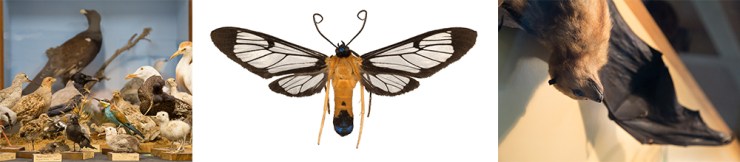
However, things are not quite that simple. Wings of bats, birds and insects are not inherited from a common ancestor but independently evolved for the same purpose, in this case flight. To complicate things further, as species evolve they may lose features inherited from their ancestors that other descendants retain. Snakes have lost their limbs, but still sit in the same group as lizards. These problems can be overcome by looking at many characteristics at once, using genetic information to test predicted relationships, and adding fossils to the tree to track change or loss through time (as in snakes).

Birds, insects and bats have all evolved wings for flight, but did not inherit this feature from a common ancestor. This is a good example of convergent evolution.

So, what about fish? ‘Fish’ is used to refer to pretty much anything that swims in water, but this lifestyle in animals like starfish (a relative of crinoids and sea urchins), jellyfish (a relative of corals) and cuttlefish (a relative of squid and octopus) evolved independently from more familiar fish like cod and carp. So, they’re not really ‘fish’ at all. With that in mind, how can we be fish? Well, the last common ancestor of, say, hagfish, salmon, shark and lungfish, is also the common ancestor of frogs, lizards, cats and us! All four-limbed animals with backbones descend from a fish-like ancestor. To complicate things further some have adapted to life back into the water and look much more like a ‘fish’ again, like dolphins, seals and the extinct ichthyosaur. Without a tree of life, we could not begin to unravel the evolutionary path that lead to all the diversity of life we see today.

The Blue Fin Tuna on display in the Museum is definitely a fish… right?!

You are closer to a chimp than a monkey, closer to a starfish than a snail, and closer to a mushroom than a tree. And, of course, there’s no such thing as a fish, but they still go well with chips.

*Joseph Jackson and Katherine Scruse had ten children, including the members of the Jackson 5, twenty-six grandchildren and several great-grandchildren.


A genetic map of Britain

Our Settlers exhibition tells the story of the peopling of Britain, from the arrival of the earliest modern humans over 40,000 years ago to the population of the present day. At the centre of the exhibition is a genetic map of Britain – the first of its kind to be produced of anywhere in the world. But what exactly does this map show us and how was it created? Brian Mackenwells from the Wellcome Centre for Human Genetics explains…

While maps can be used to show us where we need to go, the one at the heart of the People of the British Isles study was used to show us where we’ve been. Researchers from the Wellcome Centre for Human Genetics wanted to reach back through time by looking at our genetic code.

We obviously can’t travel back a hundred years and sequence people’s DNA, so the next best thing is to sequence the genome of people whose grandparents were all from the same rural area. This is because people in rural areas at that time had a tendency not to travel very far, so the researchers guessed that the genes of their descendants would be like (slightly jumbled) snapshots of the genetic history of the area they were from.

This video, commissioned from Oxford Sparks especially for the exhibition, expands on this idea.

So the People of the British Isles researchers sequenced the DNA of just over 2,000 people and set to work analysing it all. The scientists looked for individuals with common genetic patterns and grouped them together. They had no idea where the individuals were actually from; the system just grouped people whose small genetic variations seemed to be the most similar to each other.

Here’s an example of the process. Imagine you were presented with a list of colours like these and asked to group them.

You would probably group them something like this:

There would be a ‘sort of red’ group, a ‘sort of green’ group, and a ‘sort of blue’ group. This is what the pattern-matching system was trying to do with genetic codes: make clusters of people who seemed to be similar to each other based on very small genetic variations.

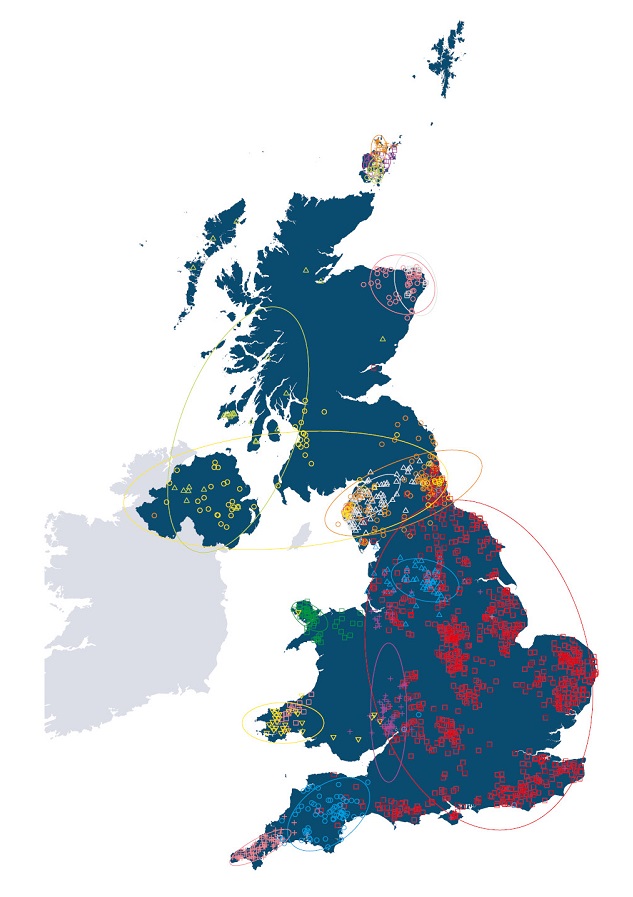
But the really surprising bit came next. We took each individual in the study and plotted them on a map of Britain based on the location of their grandparents, using a symbol to denote which genetic cluster they had been placed in.

We weren’t sure what to expect. Would the symbols be spread out randomly over the map,  or would there be groupings? What might the groupings mean?

The result was striking: the genetic clusters are, for the most part, linked to quite specific geographical areas, as you can see in the final map here.

The People of the British Isles genetic map of Britain was the first map of its kind of anywhere in the world. Each marker represents a participant in the study, and the different symbols represented different genetic clusters. It’s clear that the genetic clusters are connected with geography.

What is this map revealing to us? When we compared these different groups to the unique genetic markers of different European populations, working with archaeologists and geographers, we were able to start to understand the meaning of the map. You can clearly see the genetic footprints left by historical migration and events from hundreds of years ago. The video below explains more about this.

The locations of many of the clusters correspond to regions controlled by known historical tribes and kingdoms. The map also shows how places like Northern Ireland and Western Scotland seem to share a genetic heritage.

You can learn more about the map, and the things we’ve learned from it, at the Settlers exhibition until the 16 September 2018.

Death, decay and fossilization

By Duncan Murdock, Research Fellow

Our oceans, rivers and lakes teem with life of all shapes and sizes, and have done so for hundreds of millions of years. We can get a glimpse of the wonderful diversity of life deep in the Earth’s past from fossils that can be found in the rocks beneath our feet. But the fossil record is as much a history of death as it is of life.

All animals die, in huge numbers every day, but the sea beds and forest floors of the Earth are not filling up with their remains. Decay is as inevitable as death. This is good news for those left behind, but bad news for fossil hunters.

Being preserved as a fossil is very much the exception, not the rule, and the chances of anything surviving the various processes by which the component parts of an animal are lost forever are vanishingly small, even for hard parts like shells, teeth and bones. For the ‘soft’ parts of animals, such as the muscles, eyes, guts and nerves, it is nearly impossible.

But ‘nearly impossible’ is good enough when you can consider every animal that ever lived, or more importantly, died. In exceptional circumstances ‘soft’ tissues do become fossils, and when they do they invariably give an unrivalled view of an otherwise completely lost world.

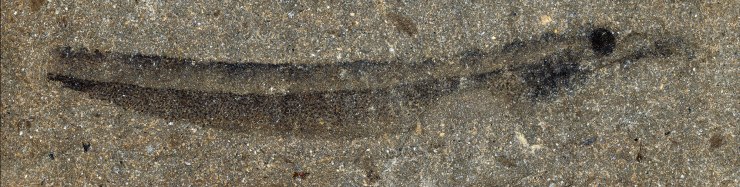
Although exceptionally well preserved, this fossil of a jawless fish is not entirely complete. Some features have been preserved, like the prominent dark eye spot and gill supports just beneath, but others, such as the guts and fins, have rotted away before they could be preserved. Image: Mark Purnell, Sarah Gabbott, Robert Sansom (University of Leicester)

We know from these exceptional fossils that the path from death to fossil is not random. Yes, you have to be lucky, but the odds are very much stacked towards certain combinations of who, what, where and when.

Furthermore, decay is not the whole story. Not only does anatomical information have to survive decay, it has to undergo parallel (but distinct) processes of preservation – conversion into materials that are stable over millions of years as part of a rock. It is the balance between the loss and retention of information that seals the fate of an organism’s remains.

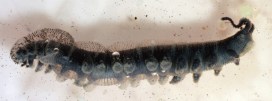
Three hundred million years ago, a small worm gulped its last breath and died. Its body began to rot and, were it not for the peculiar conditions of the sediments it was laid to rest in, would have been lost forever. Fortunately for us, what remained was preserved in rock – a rotten fossil. But how much rotted away before it was fossilized? By decaying modern relatives in the lab we can model this missing history, and build better-informed reconstructions of extinct animals. Image: Duncan Murdock

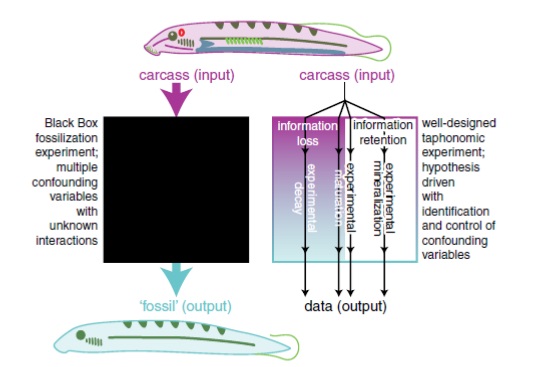
Left with only the lucky few, the parts of animals where retention exceeded loss, the fossil record is profoundly biased. One way to unravel this lost history of loss is it to conduct experiments, replicating decay and preservation. However, trying to make fossils in the lab, by contriving one particular set of conditions, is fiendishly complex – there are simply too many variables to set.

I have been working with researchers from the Universities of Leicester, Bristol, Manchester and University College Cork, and together we have described an alternative approach to unpack the ‘black box’ of fossilization and take each variable in turn, individually examining the different processes that result in retaining information as potential ‘fossils’ and, crucially, those that result in loss.

This cartoon illustrates the difference between experiments that attempt to replicate fossilization, treating the process as a black box, and the approach we are taking. The black box approach reveals little about the processes of information loss and information retention, the cumulative effects and interactions which ultimately results in a fossil (or, more often, not). Image: Purnell et al. 2018.

Ultimately this approach will allow more and more complex experiments to be designed, to unpick the interactions between the who, what, where and when in the lost history of death.

The techniques described here are published in Palaeontology today as ‘Experimental Analysis of Soft-Tissue Fossilization: Opening the Black Box‘, Purnell et al. 2018.

Spiders’ eyes cast in Diamond Light

by Imran Rahman, Deputy Head of Research

There are plenty of reasons to visit Didcot. The railway station is an important junction between Oxford and the west of England, the Didcot Railway Centre houses a great collection of trains, if you like that sort of thing, and Didcot Town Football Club are currently a respectable fourth* in Division One West of the Southern League…

But if that’s not enough to tempt you, Didcot is also home to the UK’s only synchrotron – a multi-million pound facility that goes by the name of Diamond Light Source. In February, six members of the Museum’s research team visited Diamond to carry out some important experiments on spiders.

But before we get to that, what exactly is a synchrotron light source? Well, it is a type of particle accelerator which uses huge magnets to speed up tiny particles, usually electrons, until they are moving almost as quickly as the speed of light. The particles are sent flying around a ring-shaped machine hundreds of metres across – the ‘doughnut’ structure in the photo.

The Diamond Light Source synchrotron in Didcot, Oxfordshire. Particles are accelerated to close to the speed of light around the ‘doughnut’ structure. Image: Courtesy of Diamond Light Source

This beam of high-energy particles gives off large amounts of ‘light’, or electromagnetic radiation, when its direction is changed. This radiation, usually in the form of X-rays, can be funnelled down to experimental stations, known as beamlines, and used for lots of different measurements and experiments. As the UK’s national synchrotron light source, Diamond is visited by scientists from all over the world every year.

So what does a museum want with a powerful X-ray beam? One of our research fellows, Lauren Sumner-Rooney, is particularly interested in studying the eyes and brains of spiders. So the team, led by Lauren, went to Didcot to create some X-ray images of spiders from the Museum’s collections.

Ready for your X-ray close -up? A spider specimen is mounted in the I13-2 beamline at Diamond Light Source. Image: Lauren Sumner-Rooney

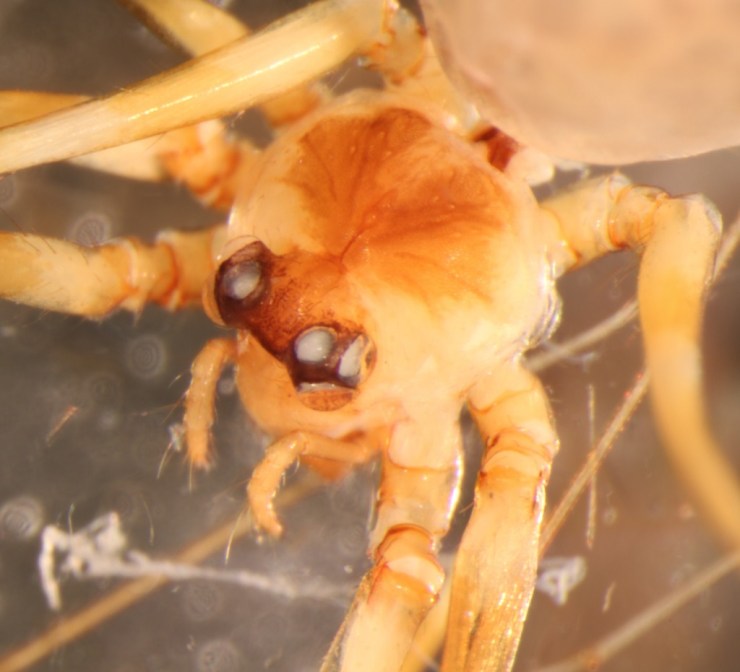
You may not have looked too closely at a spider’s head before, but they usually have eight eyes as well as eight legs. That said, there is actually quite a lot of variation in the number and structure of eyes between different species, and Lauren is interested in documenting this variation across selected spider families to investigate how it affects spiders’ brain structures.

Using the I13-2 beamline at Diamond, and fighting severe sleep deprivation with the aid of strategically-selected songs and snacks, the team was able to visualize details measuring less than one thousandth of a millimetre without damaging the precious specimens. They were assisted by Andrew Bodey, a senior support scientist at Diamond, and Emelie Brodrick, a PhD student at the University of Bristol.

The research team following 72 hours of very little sleep! From left to right: Ricardo Pérez-de la Fuente, Lauren Sumner-Rooney, Imran Rahman, Jack Matthews and Emelie Brodrick. Image: Emelie Brodrick

Over the course of 72 straight hours, the team scanned 116 spiders, creating about 14 terabytes of data. This will form the basis of a variety of exciting scientific research projects at the Museum over the coming years. Watch this space for the results!

*Didcot Town were fourth in the Southern League Division One West table on 8th March. The Museum accepts no responsibility for any change in their position after this date.

Top image of Pholcus moca courtesy of Smithsonian Institution.