The museum not only contains a huge array of specimens both on display and on the collections, but is home to active research undertaken by research fellows.
My internship involves the study of microfossils formed from organisms known as planktonic foraminifera: single celled organisms which create a shell up to the size of a few millimetres. As they die these shells fall to the seafloor and often become preserved in the deep sea muds, which may then be drilled up and prepared for study by washing over a sieve. Though a tray of foraminifera may look suspiciously like a tray of white dust, underneath a binocular microscope these small grains reveal a wide variety of shapes from which it is possible (though not always easy!) to identify different species. Study of foraminifera can therefore be carried out at species level over a long period of time; this is not possible…
Not many people know that the Oxford University Museum of Natural History doesn’t just consist of the specimens on display – it also houses the Hope Entomological Collection: the second largest entomological collection in the UK. The space contains thousands of incredible pinned specimens as well as some live ones too (Geraldine the stick insect on the right). Entomology is the study of insects, and so the department is responsible for the curation of thousands of invertebrate specimens collected over hundreds of years by biologists such as Darwin and Wallace. We have all sorts in the collection – from beetles and flies (Coleoptera and Diptera) to bees and ants (Hymenoptera).
The collection consists of over five million specimens, which keeps the staff, volunteers and interns well occupied. Each person working in the department has their own role and
often their own speciality. Not only are the permanent staff experts, but the…
Last Friday afternoon at around 5.30pm, just as I was about to go home after a busy week, the phone rang. It was BBC Radio Oxford asking if I would appear on the breakfast show at 7.50am the following Monday morning. They wanted me to talk about a new study published this week about the extinction of the dinosaurs…
The research, led by Dr Steve Brusatte from the University of Edinburgh, suggests that perhaps dinosaurs were rather unlucky not to have survived a meteorite impact 66 million years ago. The paper, which is published in Biological Reviews, suggests that a number of other factors were already weakening the dinosaurs’ survival chances, presenting a perfect storm of bad luck.
Commenting on this research on the BBC Oxford show, I explained to presenter Phil Gayle that the dinosaurs died out at the end of the Cretaceous period when an asteroid hit what is now the coast of Mexico (apart from the earliest birds, which had already evolved from dinosaurs and mostly survived).
Hilary at the BBC Oxford radio studio in Summertown, talking to Mike Reid on BBC Radio Berkshire, later the same day.
But even before their extinction, the end of the Cretaceous was a time of great change. The climate became cooler than it ever had been during the 160 million years of dinosaur reign, and sea levels were changing quite dramatically, although this was not so out of the ordinary. More unusually, there was a massive amount of volcanic activity going on in India, forming one of the largest volcanic features on Earth – the Deccan Traps. This caused acid rain and cooling of the atmosphere in the short-term.
On top of this there was the enormous impact, thought to have been an asteroid around 6 miles in diameter. It left a crater over 100 miles wide and 10 miles deep near Chicxulub in Mexico. The impact would have caused massive earthquakes and tsunamis, acid rain, and a temporary removal of the ozone layer. A thick cloud of dust thrown up by the impact would have darkened the Earth and cooled the planet by several to a few tens of degrees.
The Chicxulub impact crater in Mexico. Image: NASA/JPL-Caltech, modified by David Fuchs at en.wikipedia [Public domain], via Wikimedia Commons.Unfortunately, due to the coarseness of the fossil record scientists have found it difficult to reach a consensus on which environmental change, if any, caused the dinosaurs’ demise. Was it solely due to the massive asteroid impact? Was it just temperature change? Was it a combination of all four factors, or even none at all?
The new study uses the most up to date information on the fossil record, and combines this with new and powerful statistical techniques to try and shed more light on these questions. The researchers found that the extinction of the dinosaurs was abrupt, coinciding almost exactly with the asteroid strike, although there was no evidence to suggest that dinosaurs around the world were already dying out before then, as some people have claimed.
However, they did find a decrease in the diversity of plant-eating dinosaurs in North America shortly before the impact; this might have disrupted the food chain and made the dinosaurs more susceptible to extinction. The decrease in diversity could have been caused by climate change, sea-level change or the volcanic activity, but without more data it’s still not possible to pin the reason down.
The findings led Dr Brusatte to suggest that if the asteroid hit at any other time in the dinosaurs’ history, they might well have survived. They were essentially just very unlucky, he claims. This is an interesting idea, but unfortunately there’s no way we can test it in a scientific way. A 6-mile wide asteroid hitting the Earth is an experiment you can only really run once, and it’s one I personally don’t want to see repeated!
It’s amazing that these incredible creatures, including the largest carnivore that ever lived on land, T. rex, could have become extinct in such a short space of time. They ruled the earth for nearly 160 million years and seemed invincible. The end of the Age of Reptiles seems somewhat poetic. And it makes me wonder, what might give rise to the end of the Age of Mammals?
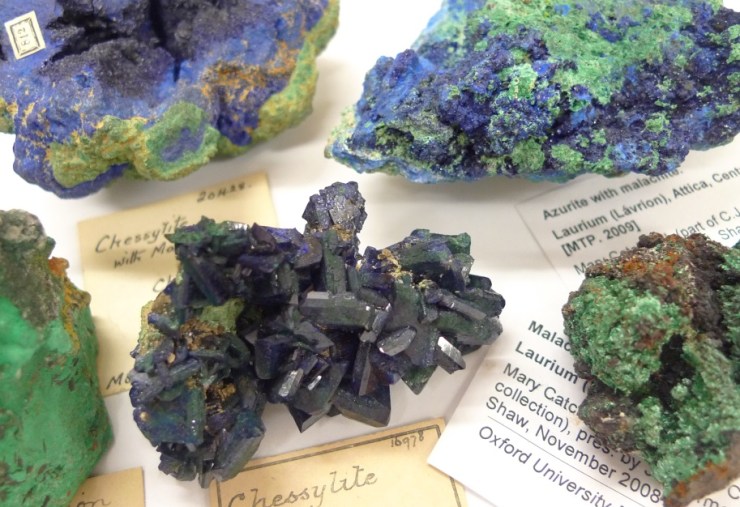
Azurite (formerly called chessylite) and malachite are two copper minerals that were used as pigments 9,000 years ago.
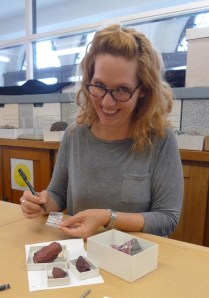
Last week, Ina St George visited to photograph and sample some of our most colourful minerals. As part of research for her DPhil at the Archaeology Department in the University of Oxford, she is studying the pigments used at an archaeological site in Turkey.
Ina St George
Our Museum’s collections include samples of the kinds of minerals used for colouring in paintings, artefacts, and body decoration, obtained from countries all around the world. Ina tells us:
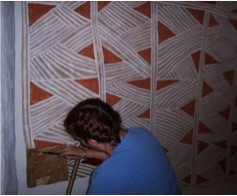
“My project is looking at paintings and pigments from a Neolithic, 9,000 year old site in Turkey called Çatalhöyük. Part of the project is to characterise these pigments using techniques for mineralogical and chemical analysis. The palette of colours at my case study site has both pigments often used in prehistoric times such as iron oxides and carbonaceous blacks, and much rarer ones such as the minerals cinnabar, azurite, and malachite.
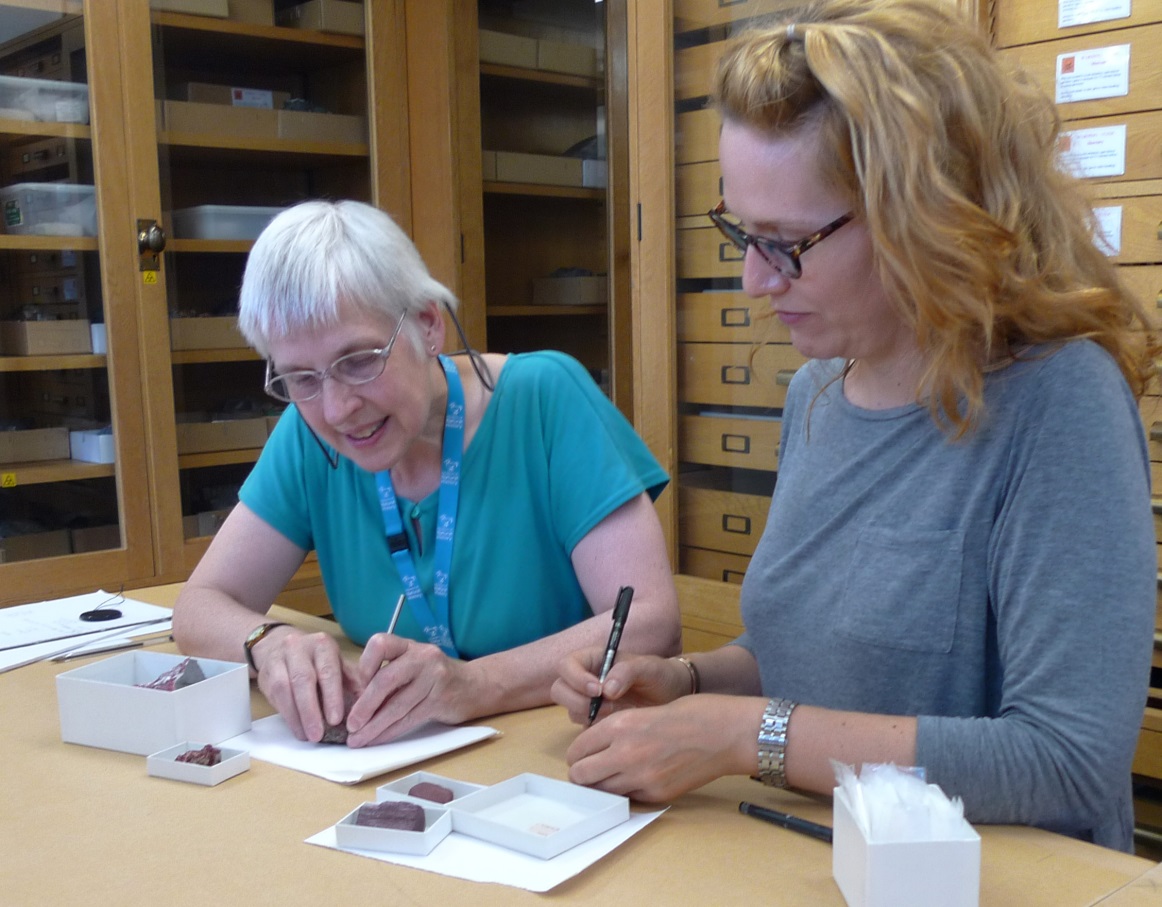
Monica Price (l) and Ina St George (r) are removing tiny samples from the mineral specimens, ready to analyse
“Historically, pigment analysis, referred to as ‘technical art history’, focuses on the actual material that gives the colour, such as hematite or cinnabar. This is more appropriate for historical or modern pigments where preparation techniques and tools were more refined, allowing the artist to use grains of pure colourant.
“In prehistoric times, tools for the preparation of pigments were cruder, and so archaeological samples of pigment tend to have more of other minerals contaminating them. For instance, we see a higher proportion of quartz in a cinnabar sample, or iron minerals in an azurite or malachite sample. In my project, I will be able to see this using a microscope, looking at particles at high magnifications, and analyse the minerals using techniques such as X-ray diffraction or scanning electron microscopy.
“Seeing the minerals in the Museum of Natural History’s collection is an opportunity to better train my eye to see the source minerals for pigments, and to photograph mineralogical samples with a confirmed provenance for my D.Phil thesis.”
Over the past few days the ranks of the Museum have been swelled by the arrival of a host of summer interns from the University of Oxford Internship Programme and the EPA Cephalosporin Fund scheme. Overall, twelve internships are being run at the Museum, and the new faces have been squirreled away into the various departments and collections throughout the building.
We’ve got people working on a wide variety of activities, from audience research for Oxford ASPIRE, to the curation of longhorn beetles (Cerambycidae) in the Life Collections, to work on the archive of 19th-century entomologist James Charles Dale.
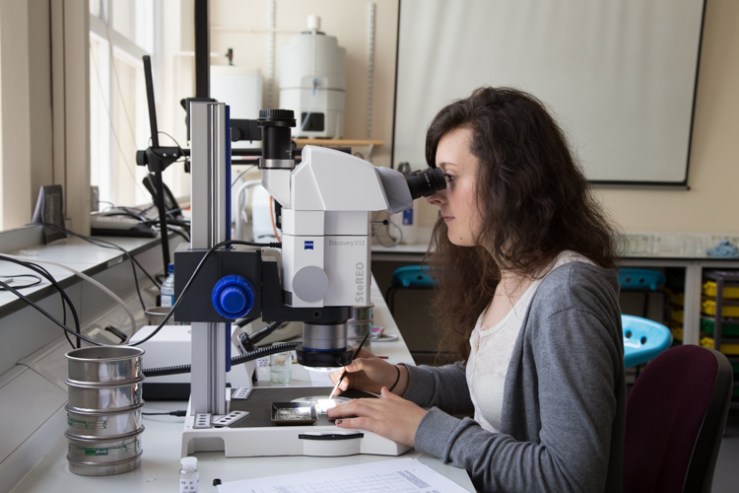
One of the interns, Grace Manley, is pictured above peering into a microscope. Grace is working with Dr Tracy Aze, a research fellow at the Museum who is studying planktonic foraminifera – fossils of single-celled organisms found in deep-sea sediments – to investigate marine extinctions. Tracy explains how Grace is contributing to the work during her internship:
Grace is helping me to test some methodological practices that will feed into how I conduct my future research. She has been involved in all the stages of micropalaeontological processing, from washing down core sediments and microfossil identification, through to imaging specimens on the scanning electron microscope.
The project gives her the opportunity to learn many of the common practices that micropalaeontologists use in a lab today and is excellent experience should she decide to continue to work in this field, or other areas of palaeontology.
Grace Manley working on the planktonic foraminifera as part of her internship with Research Fellow Dr Tracy Aze
For Grace, the internship provides ‘a practical experience of scientific research in the field of environmental change and extinction’. At the same time, she is enjoying ‘the chance to learn about the hugely diverse range of collections in the Museum and how they are actively used for scientific research today.’
We hope that all the interns across the Museum are finding a similarly rich and rewarding experience and we’ll feature some of the highlights of their work on this blog over the coming weeks.
In the meantime, a big welcome to Naomi Saunders, Stephanie Faulkner, Grace Manley, Emily Giles, and Samuel Peacock on the University of Oxford programme; and to Branwen Snelling, Keyron Hickman-Lewis, Ellen Foley-Williams, Max Brown, James Evry, Cecilia Karlsson, and Emily Tibly on the EPA Cephalosporin Fund scheme.
Ever heard of the Bone Wars? Probably not, but this was the name given to a period of intense academic rivalry between American anatomist and palaeontologist Edward Drinker Cope and his erstwhile academic partner Othniel Charles Marsh. This 20-year fued at the end of the 19th century saw each man trying to out-compete the other by naming as many new Paleocene vertebrate species from North America as possible. And it was during this intense period of fossil collecting that Cope noticed something remarkable…
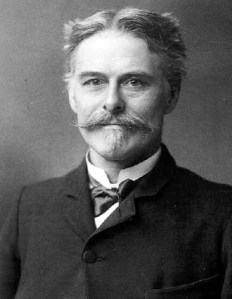
Edward Drinker Cope (1840-1897)
Observing many specimens and publishing an astonishing number of academic papers (over 1,300 in his lifetime, still the highest number by a single individual), Cope uncovered what appeared to be a tendency towards larger body size in a population’s lineage over evolutionary time. This was, he suggested, because new groups are commonly founded at smaller sizes, but it was generally advantageous to be larger. This became known as Cope’s rule.
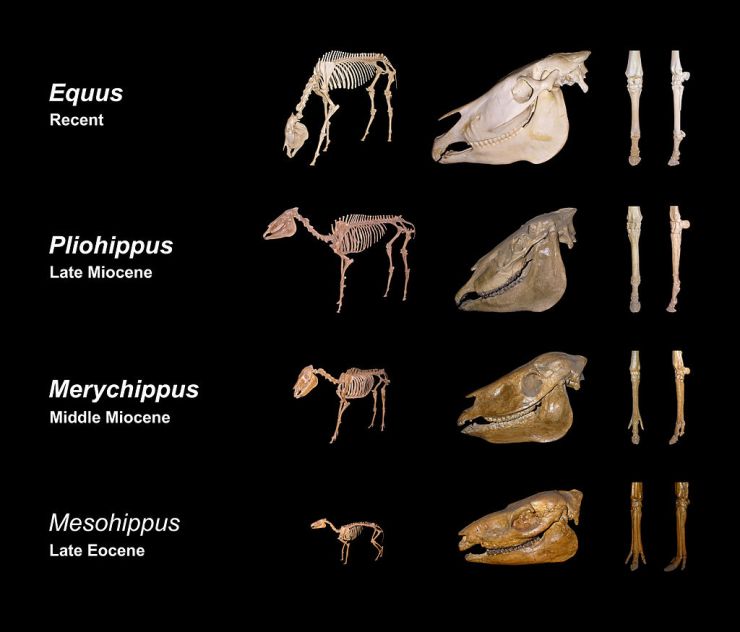
A classic example of a group of organisms that conforms to the rule is that of horses, or the Equidae lineage. Early ancestors of modern horses were no bigger than dogs during the Eocene period (56-37 million years ago), as illustrated below.
Late Eocene: 37-33.7 million years ago; Middle Miocene: 16 – 11.5 million years ago; Late Miocene: 11.5 – 5.3 million years ago. Image: H. Zell
Cope’s rule now has an extensive history of research, with some studies supporting a trend of size increase and others countering it. The notable palaeontologist Stephen J. Gould proposed that the best way to test Cope’s rule would be to study all lines of ancestry within large groups with excellent data over substantial geological time. Not so easy – much of the fossil record is just too poor to support this approach.
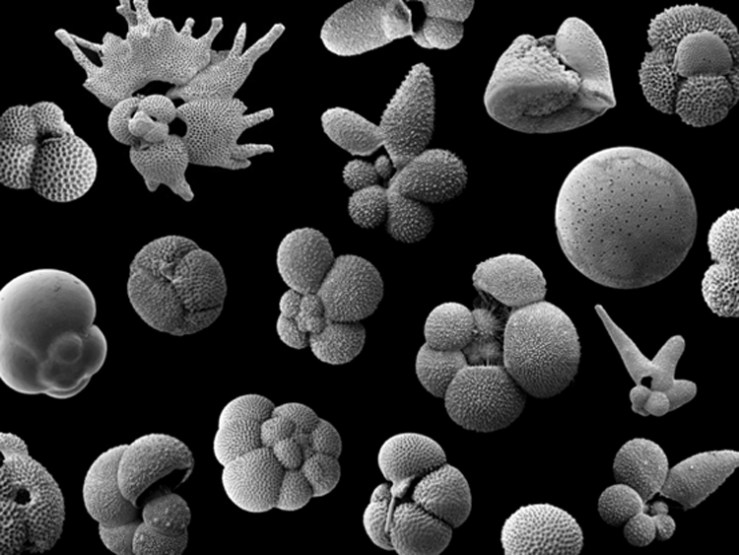
That’s where the little fellas you can see in the picture at the top of the post come in. At the Museum I am investigating the validity of Cope’s rule by using the fossil record of something called planktonic foraminifera. These are single-celled organisms that make a hard shell no bigger than a grain of sand. But when viewed under a microscope these shells display a wide variety of shapes, as you can see in the photograph, making it possible to identify different species.
They live in our modern oceans, but have existed for over 100 million years and can be found from the poles to the equator. Crucially, they have the best-documented species-level fossil record of any group for the last 65 million years and a well-constrained family tree (phylogeny).
This means we can drill deep-sea cores and collect countless planktonic foraminifera specimens from all the world’s oceans. These specimens can then be sorted into different species and measured. And that’s what I am doing. With over 30,000 specimens measured, the project I’m running at the Museum will be the largest and most robust test for Cope’s rule anyone has ever attempted. Hopefully it will shed some light on this fascinating phenomenon.


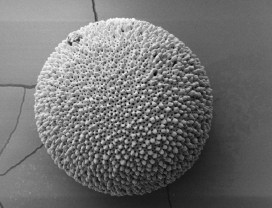

 organisms which create a shell up to the size of a few millimetres. As they die these shells fall to the seafloor and often become preserved in the deep sea muds, which may then be drilled up and prepared for study by washing over a sieve. Though a tray of foraminifera may look suspiciously like a tray of white dust, underneath a binocular microscope these small grains reveal a wide variety of shapes from which it is possible (though not always easy!) to identify different species. Study of foraminifera can therefore be carried out at species level over a long period of time; this is not possible…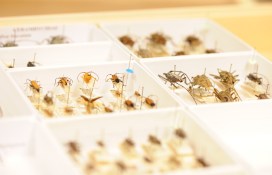

 often their own speciality. Not only are the permanent staff experts, but the…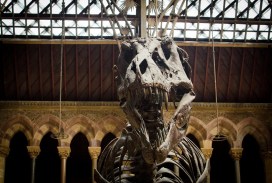


![This shaded relief image of Mexico's Yucatan Peninsula show a subtle, but unmistakable, indication of the Chicxulub impact crater. Most scientists now agree that this impact was the cause of the Cretatious-Tertiary Extinction, the event 65 million years ago that marked the sudden extinction of the dinosaurs as well as the majority of life then on Earth. Image: NASA/JPL-Caltech, modified by David Fuchs at en.wikipedia [Public domain], via Wikimedia Commons.](https://morethanadodo.com/wp-content/uploads/2014/08/256px-yucatan_chix_crater.jpg?w=740)
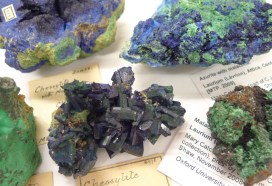
 “In prehistoric times, tools for the preparation of pigments were cruder, and so archaeological samples of pigment tend to have more of other minerals contaminating them. For instance, we see a higher proportion of quartz in a cinnabar sample, or iron minerals in an azurite or malachite sample. In my project, I will be able to see this using a microscope, looking at particles at high magnifications, and analyse the minerals using techniques such as X-ray diffraction or scanning electron microscopy.

 More Than A Dodo