Bacteria: captured and cultured

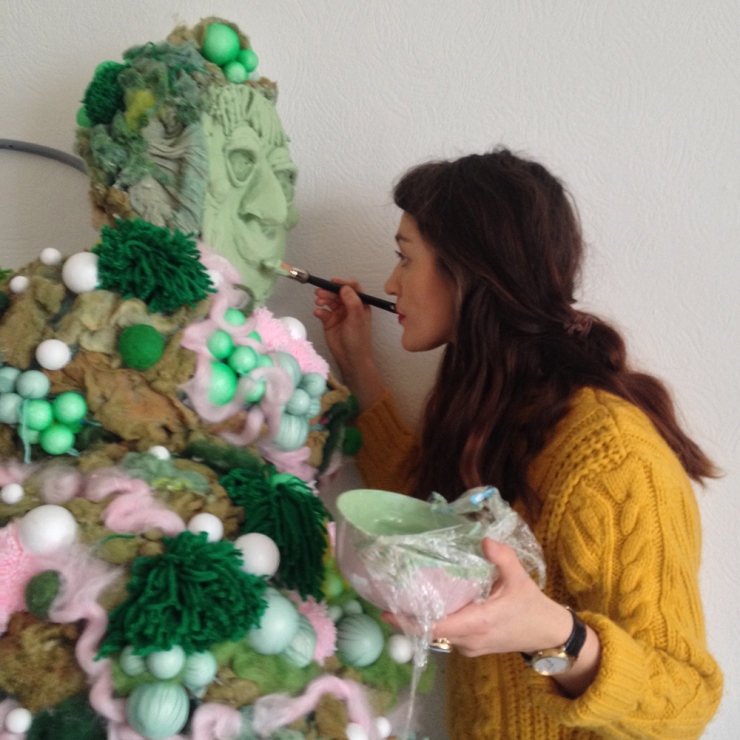
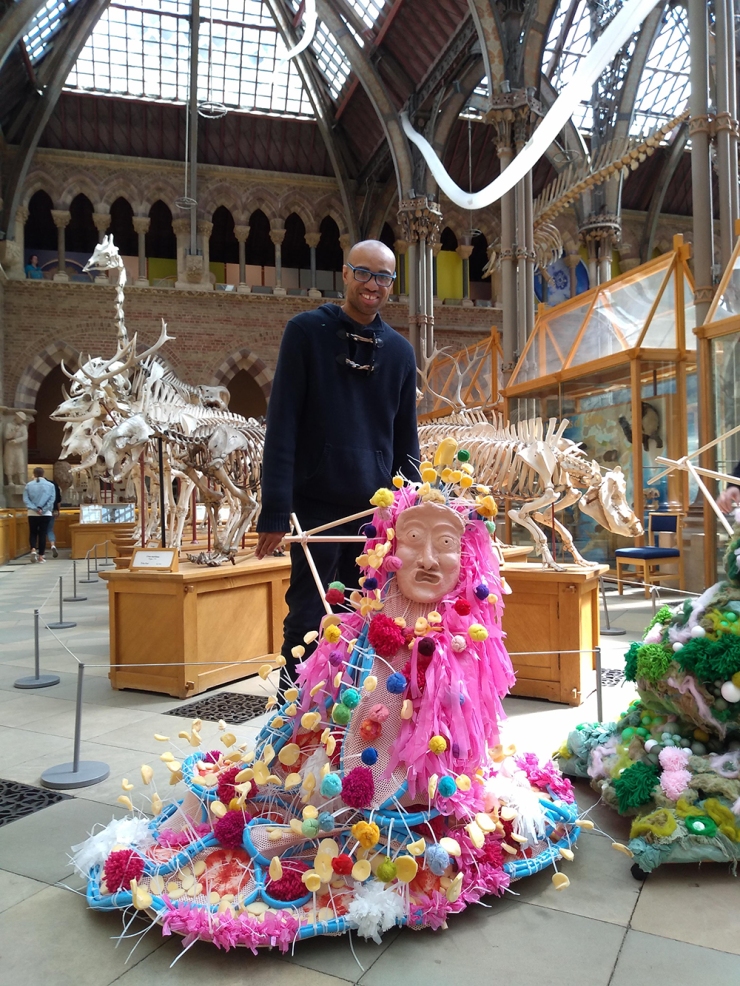
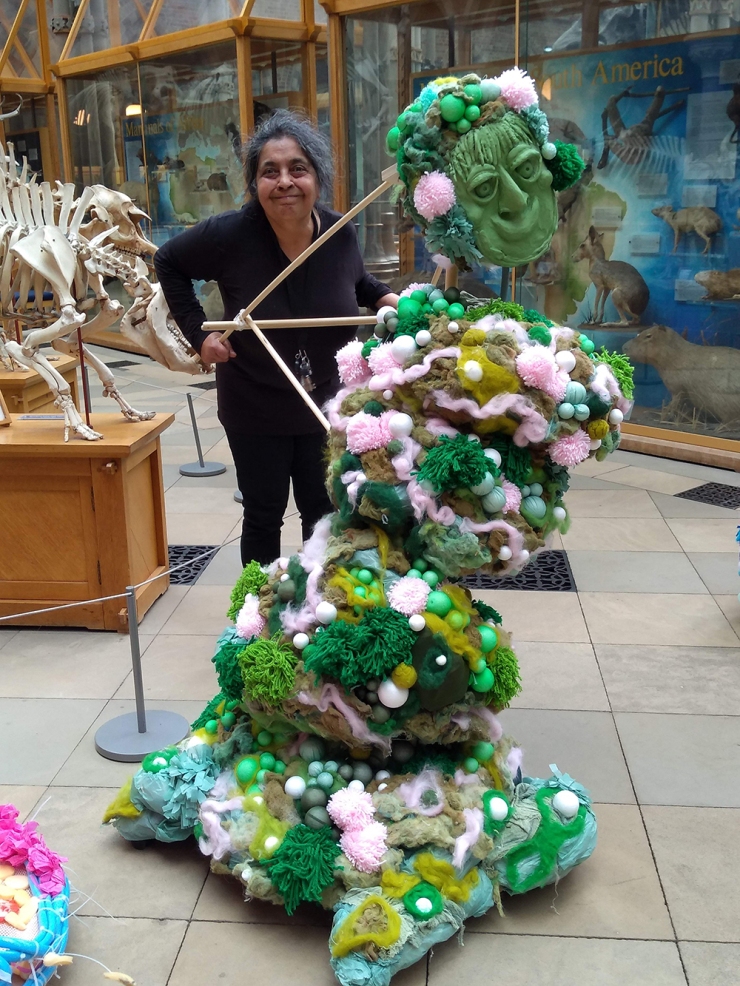
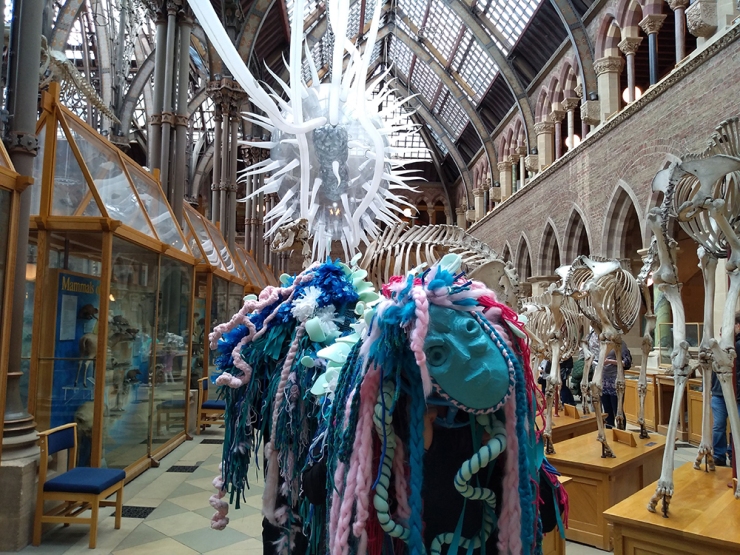
For our new exhibition, Bacterial World, we embarked an exciting science/art experiment to make visible the colonies of bacteria present on a wide range of our everyday items and belongings. Once cultured and photographed, eight of these colonies were captured by artist Elin Thomas as a set of crochet artworks that are on display in the exhibition. Our exhibitions officer Kelly Richards tells us more…

For every human cell in your body, a bacterial cell is also present. These bacteria are part of our microbiome, a vast array of microorganisms that use our body as a home and our food as a source of nutrients. In return, the bacteria help us to digest food, maintain our immune systems and keep dangerous bacteria at bay. In fact without these bacteria we would be very sick indeed.

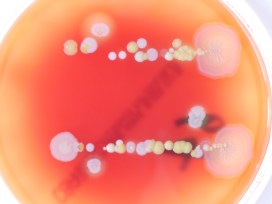
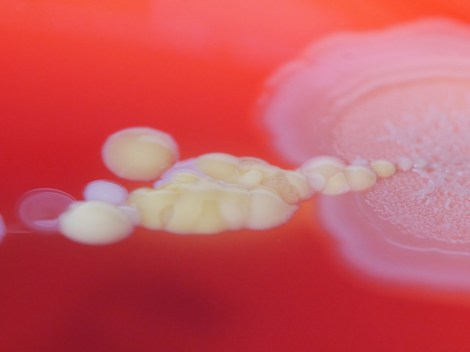
It’s hard to see our microbiome because individual bacteria can easily be as small as 0.2 microns; you could fit over a thousand of these smallest bacteria on one side of a red blood cell. But if we can select and artificially grow the bacteria, their colonies become living, breathing cities visible to the naked eye.

Click the images above to find out more about culturing bacterial colonies

Colonies, both natural and artificial, can contain billions of bacteria as well as the materials that they secrete such as slime, which helps them to move across surfaces, and antibiotics, which kill off other bacterial colonies that could compete for food and space. In their attempts to dominate the space and food available, as well as get enough oxygen to live, colonies can create beautiful, complex structures.

We had a go at visualising the bacteria that live invisibly alongside us by asking visitors to take part in a simple experiment. With the help of microbiologist Rachael Wilkinson, we took items such as coins, keys and jewellery and touched them lightly against agar plates – dishes containing a nutrient-rich jelly that aids bacterial growth. The agar plates were then given to Nicole Stoesser, a clinical microbiologist at the John Radcliffe Hospital, who grew them in the safe environment of the laboratory.

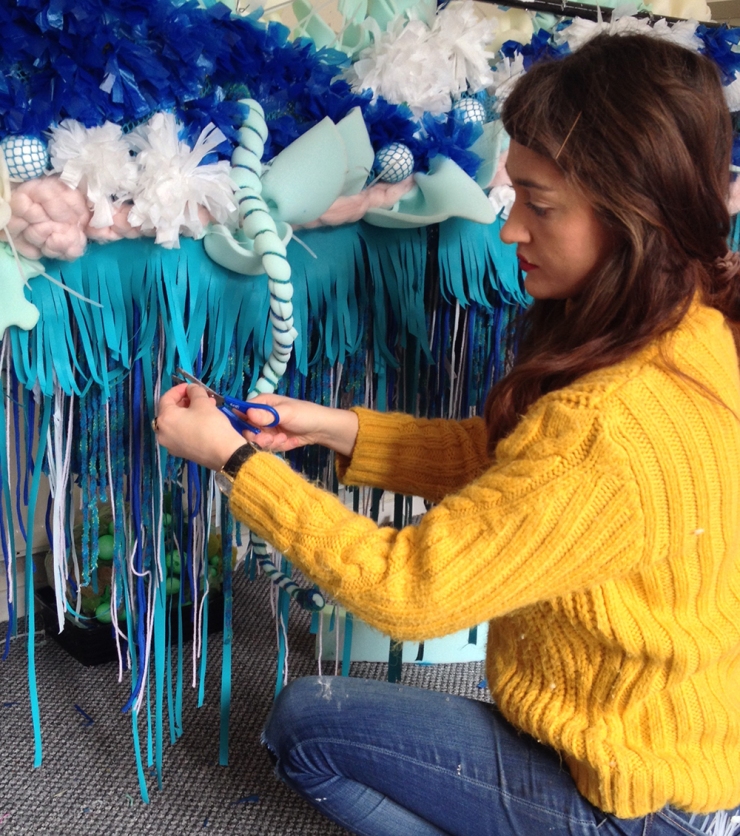
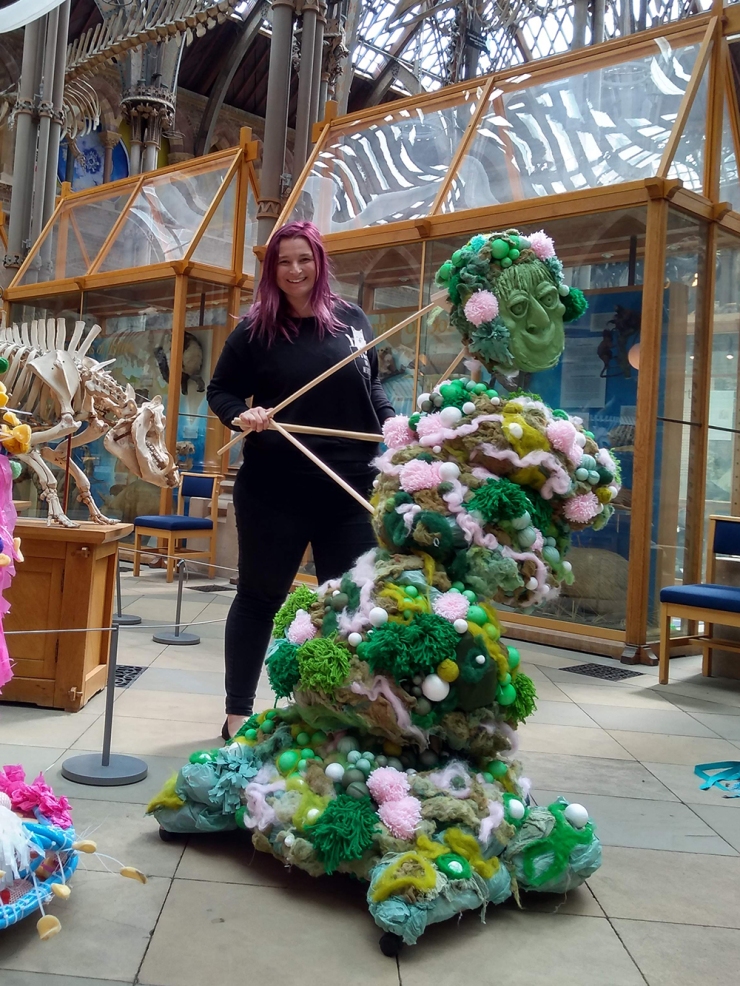
Many different types of colonies grew from the objects we printed. In the collage above, eight of these colonies have been represented as crocheted Petri dishes by artist Elin Thomas. These artworks are on display in the Bacterial World exhibition until 28 May 2019.

In the gallery below is a photograph of every participant’s plate, whether anything grew in it or not. Click on an image to see a larger version. If you took part in the experiment you will be able to identify your own plate from its number.

The results go to show that we really are living in a bacterial world!

From pin to paper

Katherine Child, image technician in the Museum’s Life collections, doesn’t just use photography to capture the beauty of specimens. She is also an artist and has been trying out innovative techniques for her paintings. You may remember her amazing moth illustrations created with deposits of verdigris on pinned insects and she’s now using that technique to explore Museum staff’s favourite insect specimens.

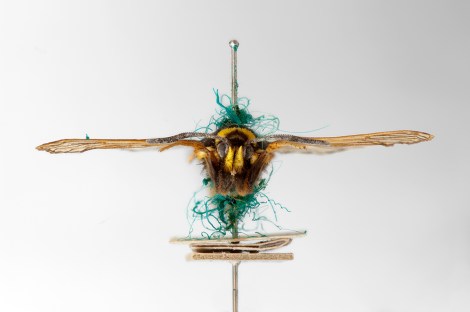
Verdigris is a green corrosion often found on old pins within entomology collections (as well as elsewhere, on things like statues and copper pipes). Last year, after learning that the substance was once used as a pigment, I decided to try and make my own paint.

A clearwing moth before conservation, showing verdigris spreading where metal reacts with insect fats, or lipids.

Verdigris forms when copper or a copper alloy reacts with water, oxygen, carbon dioxide or sulphur. While a beautiful shade of green, the substance is damaging in natural history collections, where it can actually develop inside specimens and if left, split them irreversibly. So as part of the conservation of the Hope Entomological Collections, verdigris is removed.

I started to collect up the substance as it was cleaned from specimens and after about three years (you only get a little bit per pin) I was ready to make my paint! After my first moth project, the only question was, what to paint next…?

Attelabid_small
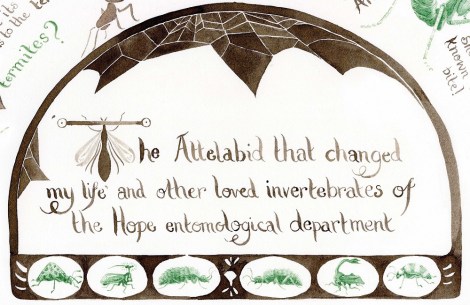
Byctiscus populi or ‘The Attelabid that changed my life’, chosen by Zoë (collections manager) who said ‘I saw a pink version of this species in the Natural History Museum in London and that’s when I decided I wanted to study entomology’.

With an estimated 6 million insects and arachnids in the entomology collections, it’s very easy to feel overwhelmed. You can pull open any one of thousands of draws and find astonishing specimens. While I have favourites, my first inclinations as to what to paint still felt a little arbitrary. After mulling over various possibilities, I decided to get help!

Chosen by DPhil student Leonidas, Agalmatium bilobum is a little bug which lays its eggs on tree bark, then covers them with mud to protect them.

I asked my co-workers what their favourite insects were, then opened the question out to regular volunteers and visitors of the Life collections. I loved finding out why people chose the things they did. Answers varied from ‘It was the first spider I ever looked at under a microscope aged 12’ to ‘Because they’re cool’ to ‘Because they have an ingenious way of manipulating spiders!’

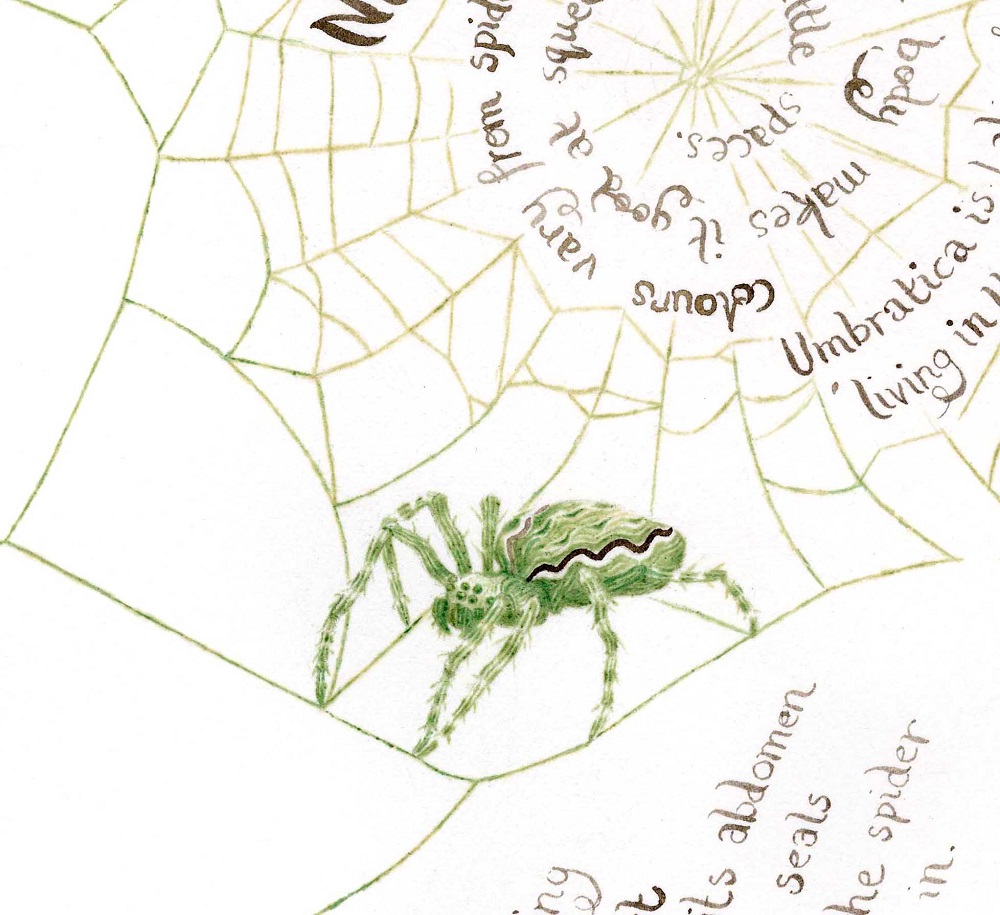
Nuctenea_small
One of arachnologist Russell’s favourite spiders: Nuctenea umbratica. Though common in the UK, umbratica is Latin for “living in the shadows”, and it often hides away during the day. The slight transparency of the paint lends itself to a spider’s glittering eyes.


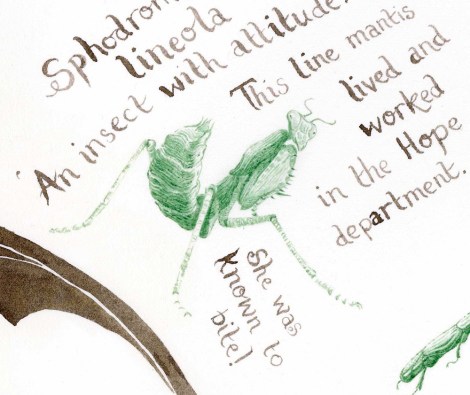
Painting this live African Mantis Sphodromantis lineola (chosen by conservator Jackie) was made slightly more challenging by the fact that the subject thought Katherine’s pencil might be tasty.

Most of the subjects I painted were based on specimens from the Museum’s collections or specimens individuals had brought in from their own collections, but one favourite was a live African Mantis, housed in the department to help with education and outreach. When I began to draw her she was intrigued by the movement of my pencil and came to the front of the tank, to follow every mark I made with her intimidating gaze.

A detail from the final painting
Attelabid that...
Katherine’s fabulous finished painting, which will be framed and displayed in the Life collections department.

Though time consuming, the painting was loads of fun to research and do. It’s fantastic to be surrounded not only by extremely knowledgeable people, but also by people with a genuine passion for what they do and a love for the insects (and spiders) they study.

Where Do We Come From? What Are We? Where Are We Going?


These are some of the big questions asked in our current special exhibition, Settlers. It’s also the title of a new artwork by Ian Kirkpatrick that has just been commissioned by the Museum.

You may remember, back in July we put out a call for artists to respond to the main themes of the upcoming Settlers exhibition. We received an incredible response, with almost 100 proposals, so needless to say we were spoilt for choice! After several rounds of shortlisting, discussion and deliberation, we chose Ian Kirkpatrick, a Canadian artist now based in York.

Lit up for the Settlers exhibition launch.
Credit: Ian Kirkpatrick

We were excited by Ian’s bold iconography and references to the history of art and design, while using shapes and colours usually seen on contemporary street signage. His approach to the themes and issues around migration, genetics and settlement were innovative and brave. We also couldn’t wait to see how his work would look in our Victorian neo-Gothic building.

Ian working in his studio. Credit: Ian Kirkpatrick

Over a period of four months, Ian researched, planned and created his spectacular final piece Where Do We Come From? What Are We? Where Are We Going? Here he explains a little about his artistic process:


Most of my projects begin with a period of research – often looking at historical events or interesting facts related to the brief. I often sketch out a very rough layout of the design in my notebook, then create the actual artwork directly onto the iPad or computer. Because I use vector-based software, I can easily rearrange or modify graphics – so the design is constantly shifting until the artwork is finished.

Ian Kirkpatrick’s final design. The two smaller panels (L and R) can be seen on display in the Settlers exhibition gallery.

Ian created a series of six panels that explores the social and natural causes behind human migration, both in ancient times and in the present day. It presents historical and modern peoples moving across a landscape in response to conflict, climate change and urbanisation, and remixes imagery from classical paintings alongside iconography from Great War postcards, Roman coins and the Bayeux Tapestry.

Ian, Peter Johnson and Adam Fisk installing the main panels of the artwork.

Of course, in a building like ours, the installation of such a large, bold piece of work would never be easy. Peter Johnson, the Museum’s Building Manager, came up with an ingenious solution to hold the panels into the arches, without damaging the masonry by drilling or glueing.

Pieces prepared in the workshop, to sit on the capitals and support the artwork

Hand-cut pieces of plywood were made to snugly fit round the capitals, so that the Dibond aluminium sheets don’t rest on the stone.

Credit: Ian Kirkpatrick

So, standing back and looking at the finished piece, looking resplendent in the winter sunshine and attracting the attention of hundreds of museum visitors, how does Ian feel?

The project was a lot of work – but it’s also been very satisfying to see it finally installed. Although the piece initially started as a comment on contemporary British settlement, it evolved into something that explored global migration throughout all of history.  Trying to find a way to tackle a theme that big, while still remaining visually coherent, is quite tricky!  But I was really pleased with the results and love seeing the finished piece housed within the magnificent neo-Gothic architecture of the Museum!


Calling all artists

We’re happy to announce an exciting opportunity to coincide with our  new exhibition – Settlers, opening at the Museum of Natural History in February 2018.

Settlers is the upcoming exhibition in our Contemporary Science and Society series. The latest of the series, Brain Diaries: Modern Neuroscience in Action is currently running until 1 January 2018.

The history of the people of Britain is one of movement, migration and settlement. Tracing patterns revealed by genetics, archaeology and demography, Settlers: Genetics, Geography and the peopling of Britain will tell the dynamic story of Britain’s ever-changing population.
DNA image for call out blog post

Planning for Settlers is going well and we’re happily getting to grips with the science and archaeology, but we’d also love to have some artistic input. Can you help us?

The Museum would like to commission up to two pieces of contemporary art that explore themes such as genetics, DNA, migration, settlement and ancestry.

We’re particularly interested in work that will provoke thought and discussion and engages with 18-25 year olds, and we welcome all media, including digital and installation art.

The artwork could be displayed in the gallery itself, in the main court or even on the museum lawn.

centre-court
The Museum’s centre court

If you like the sound of adding some artistic flair to Settlers, you can find out more here:.  Don’t delay, though; the deadline for applications is Friday 1 September 2017.

Imitation game

Last month we had the pleasure of hosting artist and scientist Dr Immy Smith as part of her week-long takeover of @IAmSciArt on Twitter. Drawing inspiration from the Museum’s collections, Immy has created some beautiful paintings. Here she tells us a little more about her interests and work…

My current artwork is focused on crypsis and mimicry – the ways that animals and plants disguise themselves or pretend to be something they’re not. Cryptic camouflage helps animals to avoid being seen, often to help them catch prey – or to avoid becoming prey themselves! Mimicry is also often about trying not to get eaten: the harmless hornet moth, for example, mimics a stinging insect to deter predators. I use these themes to develop print art projects, and also public workshops to help people learn more about the ecology of cryptic animals.

Cryptic Cards by Immy Smith

In my arts practice I try to imagine how animals and plants might evolve to camouflage themselves on human-made materials, and what they might look like. Will we one day find moths adapted to hide on advertising hoardings, or beetles mimicking litter? I made an entire deck of Cryptic Cards as a response to this kind of question.

Another project I’m working on at the moment is called Emergent Crypsis. This is a collaboration with Norweigan generative artist Anders Hoff who makes art using algorithms executed by a computer. I’m imagining how creatures might adapt to an extreme example of human-made patterns – computer generated abstract images.

Violin Beetle (Mormolyce phyllodes) by Immy Smith

My work requires me to closely study many animals and plants, but how do I learn about all these species in order to draw their imaginary relatives? How do I make my art a convincing representation of how life might find ways to hide on human-made art?

One answer is of course, the internet. I’ve been lucky enough to find many wildlife photographers online who are kind enough to let me use their images as reference. But photographs alone are not always enough to get to know the fine details and defining characteristics of a species: the joints and articulations of small insects, for example, are best studied from specimens. And some species are rare, or even extinct, and it can be hard to find photographic a reference.

Leaf-footed Bug (Diactor bilineatus) by Immy Smith

This is where scientific collections come into the picture. The collections held in museums and other institutions are not only essential for scientists and scientific illustrators, they are also an invaluable resource for artists of many disciplines, science communicators, and educators of many kinds. In the collections at the Oxford University Museum of Natural History I can photograph and sketch leaf-mimicking insects, for example, that are native to the forests of South America which I may never visit. I can study in minute detail the articulation of beetles that are rarely seen, and which might be difficult to find – and irresponsible to collect – myself.

A display of terrestrial bugs (Heteroptera) in the Museum, including the Leaf-footed Bug painted by Immy Smith

Not only do I find specific species that I want to study in natural history collections, I often see new ones – animals I didn’t know about or hadn’t thought of drawing before. In the same week that I visited Oxford, I also made a trip to Herbarium RNG in Reading to study plant mimicry, and found similar inspiration there. I can channel all this into both aesthetic art destined for print and sciart workshops that communicate the wonders of insects or plants with the wider community.

Working on sciart projects and educational workshops helps me appreciate the multitude of ways in which collections benefit research and education. We must try to communicate the plethora of roles they play, and the host of ways they cross into our lives – whether through scientific research on insects pollinators of the crops we eat, or via a deck of cards made by someone like me for mainly recreational purposes. We must fight to protect scientific collections because they are a resource that benefits all of us as a society.

Stories from Stone, Body and Bone

rosehill exhibition postcard image for web

Each year the Museum works with members of the community on a wide variety of projects using our collections to enthuse and engage people in natural history. These projects often result in some amazing outcomes but until now we have been unable to find the right space to celebrate this work in the Museum. So this month we are very happy to unveil our new Community Case, dedicated to doing just that.

Community case front for web
Stories from Stone, Body and Bone in the new community case

Our opening display focuses on the Children in Need-funded Story Makers programme. In partnership with Fusion Arts, this initiative helps Oxford primary school pupils to develop their communication skills by taking inspiration from museum collections. And this year they teamed up with us to create Stories from Stone, Body and Bone.

Pupils from New Marston, Wood Farm, and Rose Hill Primary schools worked with Story Makers founder and arts psychotherapist Helen Edwards in two visits to the Museum, stimulating and developing imaginative ideas, stories and artwork.

During these visits the Story Makers met with our education officer Chris Jarvis and together they looked at rocks and minerals, tectonic plate formation, and the evolution of skeletons and animal posture. They explored the collections creatively through sensory observation, using the hands, body and senses to develop self-awareness and self-confidence.

story makers work 3 for web
Getting creative with chalks and textiles

We work with the children as artists and we carefully designed a series of sessions that enabled them to have direct sensory engagement with objects in the museum. We then used art processes to portray their experiences and feelings about their interactions.
Helen Edwards, Integrative Arts Psychotherapist

Back at school, the pupils used visual art, drama, movement and modelling to communicate feelings and ideas that emerged from these museum encounters, sharing thoughts with the group in a playful and trusting atmosphere.

story makers students for web cropped

Group sessions back at school involving movement, drama and art

story makers work 4 for web
Detail from one of the Stone Age caves

Each Story Maker then created a Stone Age character – someone who might dream up and pass on stories full of meaning and myth. They imagined places in which their Stone Age characters might live, thinking about what they might see looking out from these spaces, through the cracks, crevices and windows in their caves.

From these ideas emerged beautiful, bright, and colourful models of these fictional abodes, as well as stories and poetry about their characters.

Story Makers built the children’s capacity to think reflectively, enriching their speech and language, and helped them to develop their writing skills as the stories were compiled into Story Makers books.

story makers artwork for web
Stone Age houses and landscapes as part of the Stories from Stone, Body and Bone project

Everyone should get to do this, it is like a dream come true
Story Maker, from the Stories from Stone, Body and Bone project

Stories from Stone, Body and Bone is on display until Sunday 21 May in our new Community Case. The next display, installed on 22 May, will feature artwork by our community of artists who use the collections as inspiration for their work.