Excavations at Oxfordshire’s ‘dinosaur highway’ continued this summer to uncover Europe’s longest sauropod dinosaur trackway.
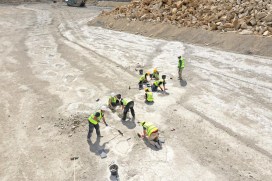
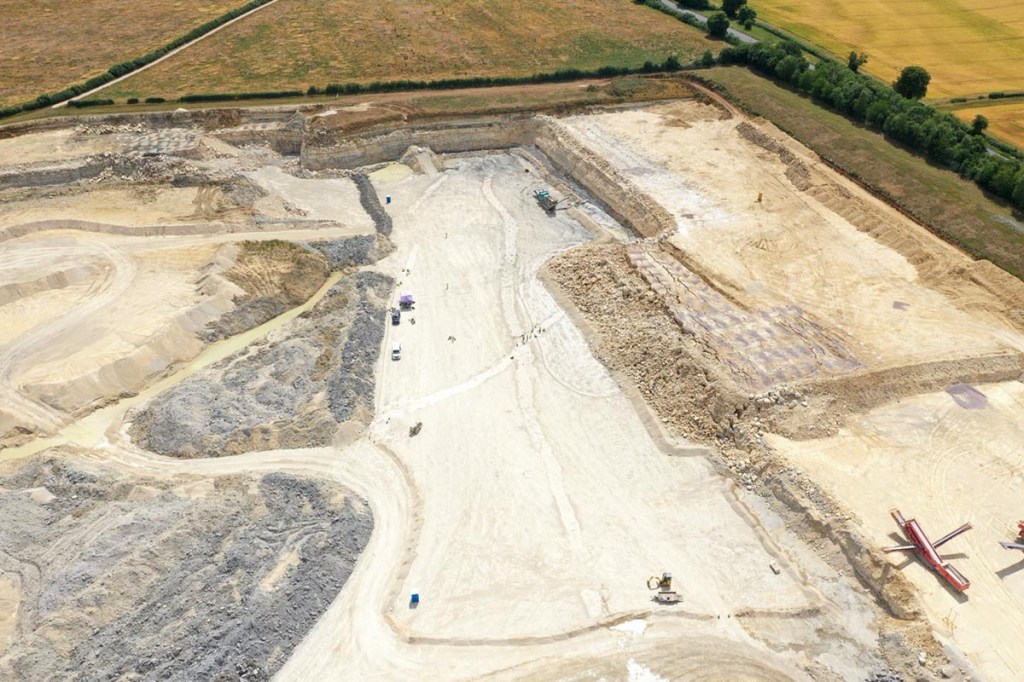
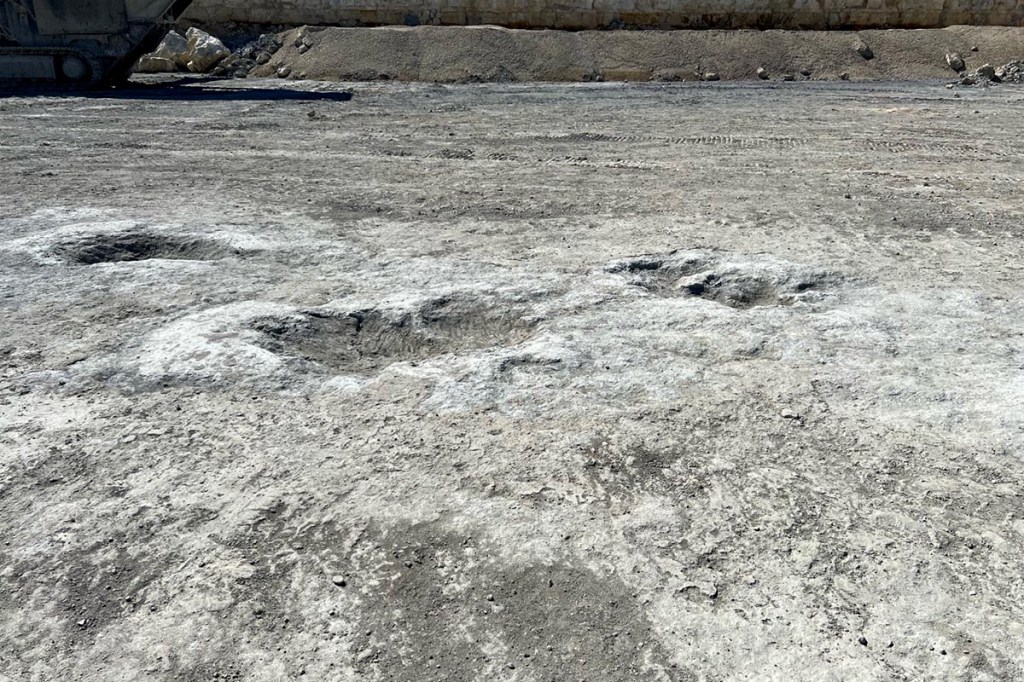
The 2025 Dewars Farm trackway site, drone photography. Credit: Richard Butler | University of Birmingham
Following the success of the excavation last summer, which featured on BBC Two’s Digging For Britain, a new area of Dewars Farm quarry near Bicester has been uncovered. Teams from the Universities of Oxford, Birmingham and Liverpool John Moores joined forces for a week-long dig in the hot, dry summer of 2025. Hundreds more individual prints from four trackways were identified and documented, including Europe’s longest sauropod dinosaur trackway at some 220 metres from the first to the last exposed footprint.
The four new trackways found at the 2025 Dewars Farm site were each made by sauropod dinosaurs, large-bodied long-necked herbivores like Cetiosaurus, that made their way along an exposed mudflat on the edge of a lagoon some 166 million years ago – during the Middle Jurassic Period.
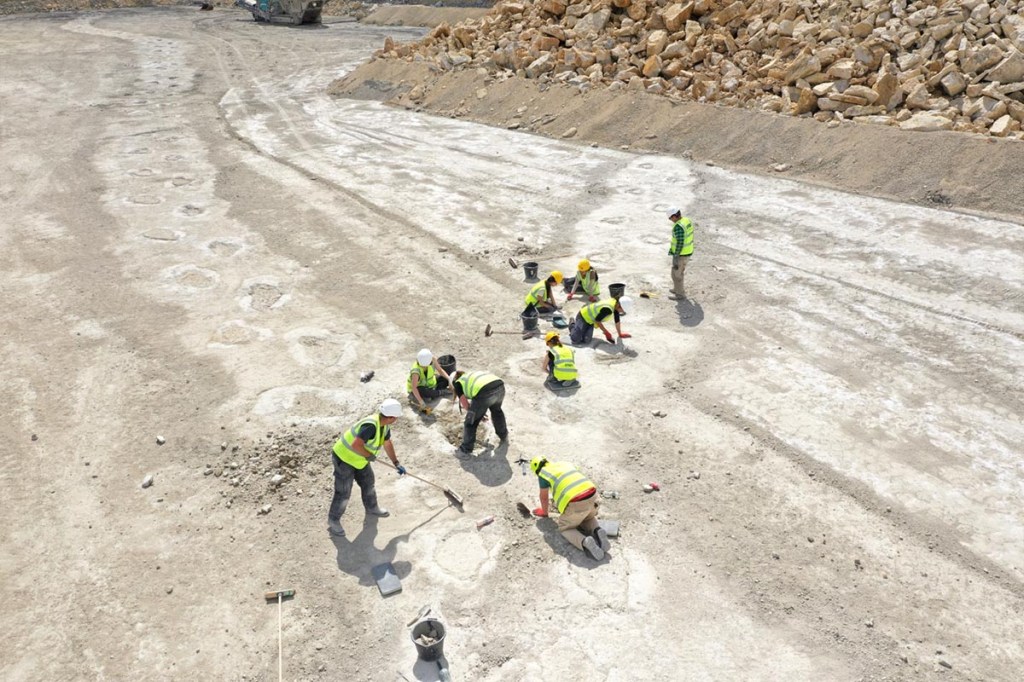
Cleaning Europe’s longest sauropod dinosaur trackway. Credit: Richard Butler | University of Birmingham
The excavation was made possible through the continued collaboration with the quarry operators Smiths Bletchington, Dewars Farm and Duns Tew Quarry Manager Mark Stanway, and his staff. As in 2024, a team of more than 100 people worked at the site, co-led by Oxford University Museum of Natural History (OUMNH) and University of Birmingham (UoB) and joined by collaborators from Liverpool John Moores University. Over seven days, the teams battled against a much drier, harder surface than the previous year focusing on a set of around 80 very large (up to 1m long) sauropod prints, that ran approximately north-south across the entire site.
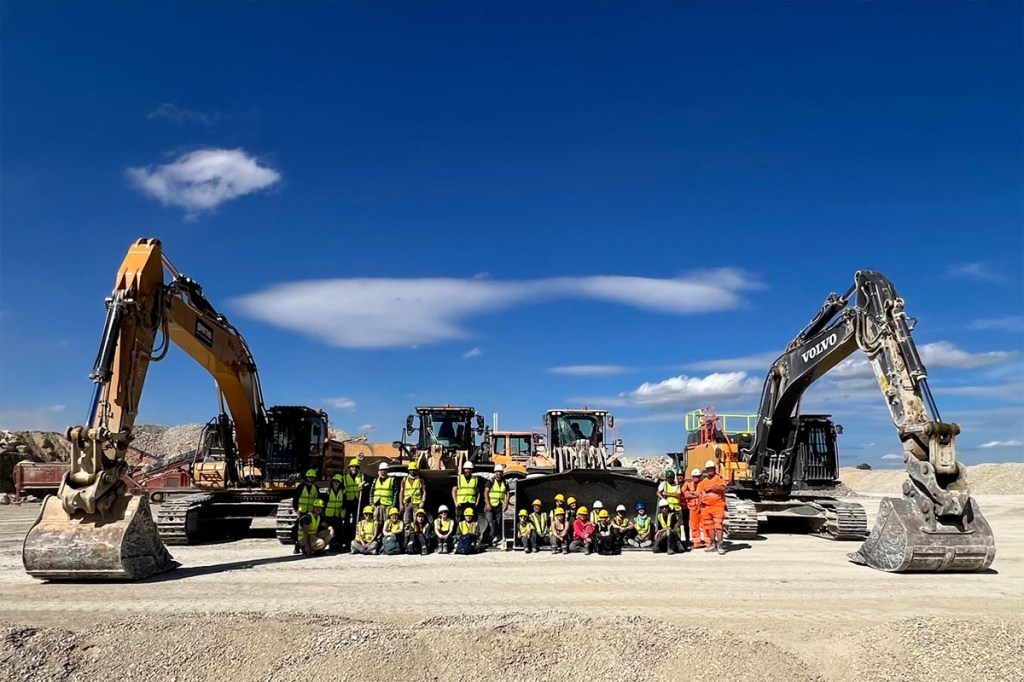
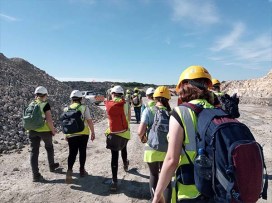
Part of the 2025 excavation team and the fantastic Smiths Bletchington staff. Credit: Emma Nicholls | OUMNH
In addition to the largest sauropod trackway, three others were uncovered, one of which is a continuation of prints first found in 2022. Although not continuously exposed, it may prove to be an even longer trackway once all the data is pieced together. Smaller finds included marine invertebrates, plant material and a crocodile jaw. New for 2025, systematic sampling of the sediments that both underlie and fill the prints was undertaken, the analysis of which is underway.
More of the footprint surface is likely to be exposed over the coming years, and a full description of the significance, new scientific discoveries and potential for future preservation of the site is expected soon.
Sets of sauropod dinosaur footprints, each up to 1 metre long. Credit: Emma Nicholls | OUMNH
Dr Caroline Wood, from the Public Affairs Directorate at Oxford University, takes us behind the scenes to uncover one of the most exciting dinosaur trackways in the world.
The information in a single footprint
The air pulses with seismic activity and under our feet deep vibrations race across the ground. Every so often, a shattering rumble rips out across the surroundings.
Dr Emma Nicholls, a vertebrate palaeontologist at Oxford University Museum of Natural History (OUMNH), has to shout to make her voice heard ‘…they are huge and they can’t see you. Remember, do not leave the designated safety area under any circumstances!’
We all nod diligently, assuring her we have understood. Looking down at the immense footprints a few metres away, I try to imagine how painful it would be to be squashed by the foot of a ten tonne sauropod dinosaur. I’m pretty sure my hard hat wouldn’t be very effective protection… however, it isn’t dinosaurs that are rumbling and thundering all around us today, but thoroughly 21st-century quarry vehicles.
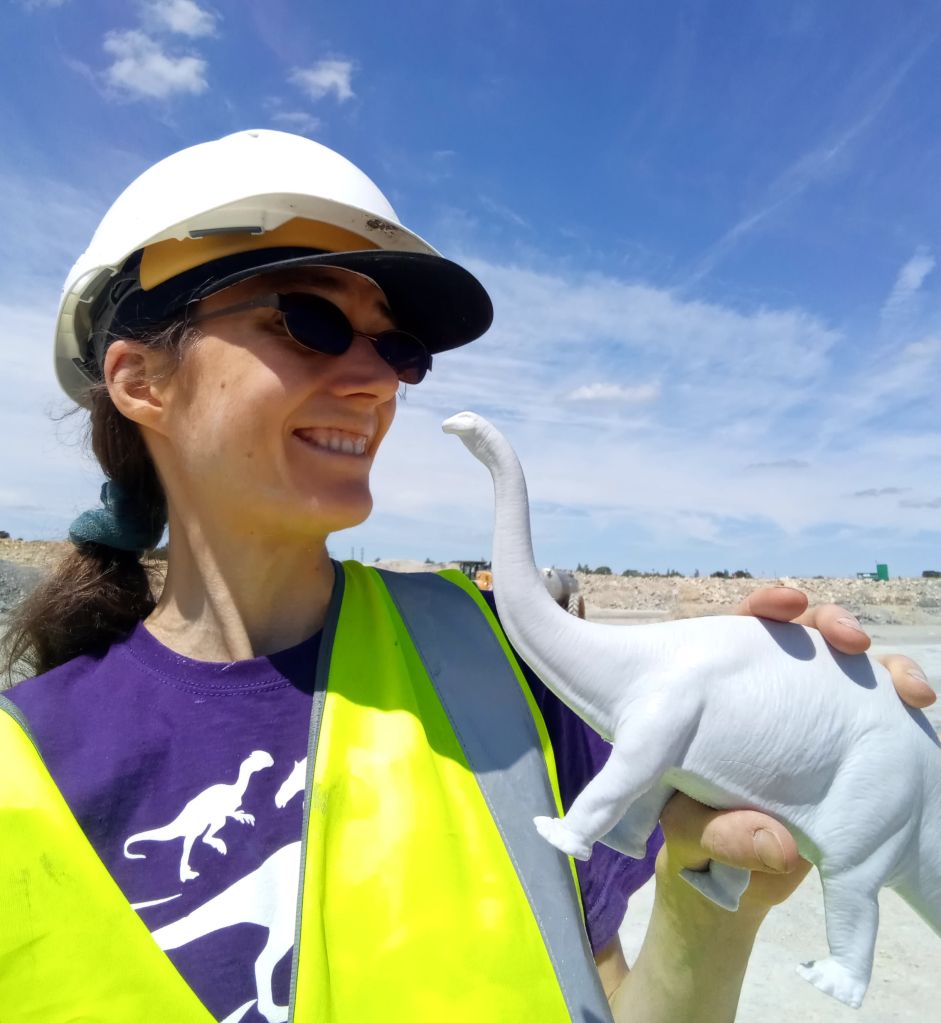
Author Dr Caroline Wood, at the dig site at Dewars Farm Quarry in North Oxfordshire
On a scorching hot summer’s day, I’ve come to help uncover a newly-discovered section of one of the longest dinosaur trackways in the world, here in North Oxfordshire. Whilst stripping back clay from the ground with his vehicle, quarry worker Gary Johnson stumbled upon a series of exquisitely preserved dinosaur footprints. The OUMNH team were called, and they soon made a visit to the site with two colleagues from the University of Birmingham. What they found was something really special; tracks from not just one type of dinosaur but at least two: a herbivorous sauropod (thought to be Cetiosaurus) and the terrifyingly-armed carnivore Megalosaurus, both hailing from the Middle Jurassic, approximately 166 million years ago.
This week, Smiths Bletchington have given site access to a team of researchers, students and staff from the Universities of Oxford and Birmingham. Our task today is to uncover the prints as much as possible, capture digital records, then create computer models to enable researchers across the world to study them further. As someone who has been obsessed with dinosaurs practically from birth (my first toy was a Triceratops), it feels like all my Christmases have come at once.
‘It’s amazing how much information you can get from a single footprint’
It is not the first time that footprints from these dinosaurs have been found in the area. In 1997, tracks from the same two types of dinosaur were unearthed at Ardley Quarry and Landfill Site in Oxfordshire, and can now be seen in the ‘Dinosaur garden’ at the Oxfordshire Museum in Woodstock. But the newly-unearthed footprints, which link up with the original, make it by far the largest and most significant dinosaur track site in the UK.
‘Some people may feel they’re not as visually dramatic as fossilised skeletons, but dinosaur footprints are incredibly useful resources for palaeontologists,’ Emma says. ‘They can give us a wealth of information about how these animals moved and travelled. In addition, footprints and other trace fossils can also give direct evidence of the environment within which the organism existed.’
‘It is possible that this huge Jurassic predator was tracking the sauropod to hunt.’
Dr Duncan Murdock
She points to the nearest Cetiosaurus tracks. ‘Each of the sauropod footprints has a distinct, raised ridge at the front. This indicates that the animal was walking in soft, wet sediment, but that it wasn’t so water-logged that the footprint collapsed. When the animal put its foot down, its weight caused the mud to splosh up in front, which has been preserved in situ.’
Dr Duncan Murdock, who is co-leading the excavation with Emma, as well as colleagues Professor Richard Butler and Professor Kirsty Edgar from the University of Birmingham, adds: ‘The climate here in the Middle Jurassic would have been warm and tropical, and the environment essentially a large, muddy lagoon.’ The sediment kicked up at the front of the prints was also the reason that the buried prints came to light in the first place, when quarry worker Gary Johnson felt the huge bumps as he worked to clear the mud with his vehicle.
Dinosaur footprints can also offer valuable clues into how different animals interacted, particularly when their tracks are found together, as they are here. ‘Here, we have trackways from at least four sauropods and one Megalosaurus,’ Duncan says. ‘Interestingly, the sauropods are a mixture of different sizes, so it is possibly a herd with juveniles or perhaps there are more than one type of sauropod represented here.’
At one point, the tracks intersect- which poses an interesting question for the research team – which dinosaur came first?
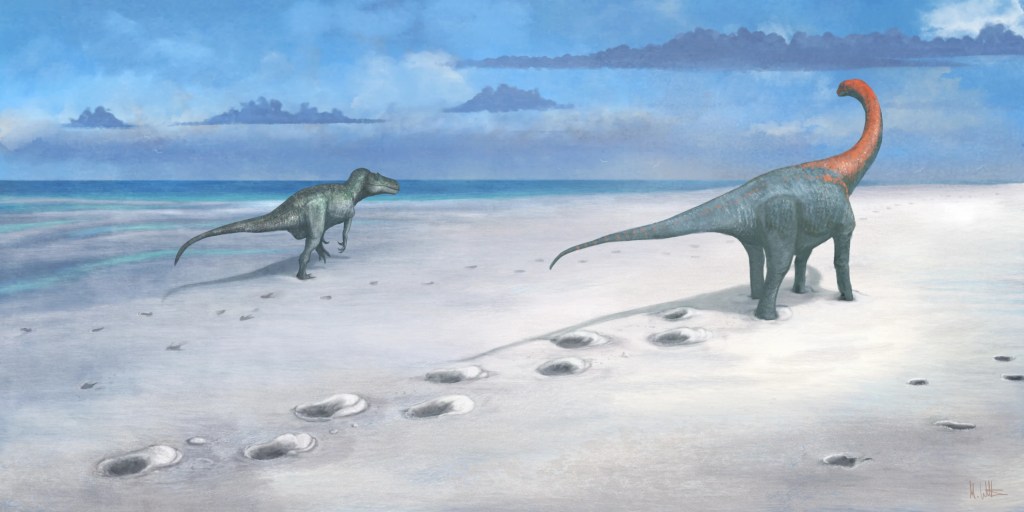
‘It looks as though the back of the Megalosaurus footprint has squished a section of the bump at the front of the Cetiosaurus print, meaning the carnivore came second,’ says Duncan. ‘Although inconclusive, it is possible that this huge Jurassic predator was tracking the sauropod to hunt.’
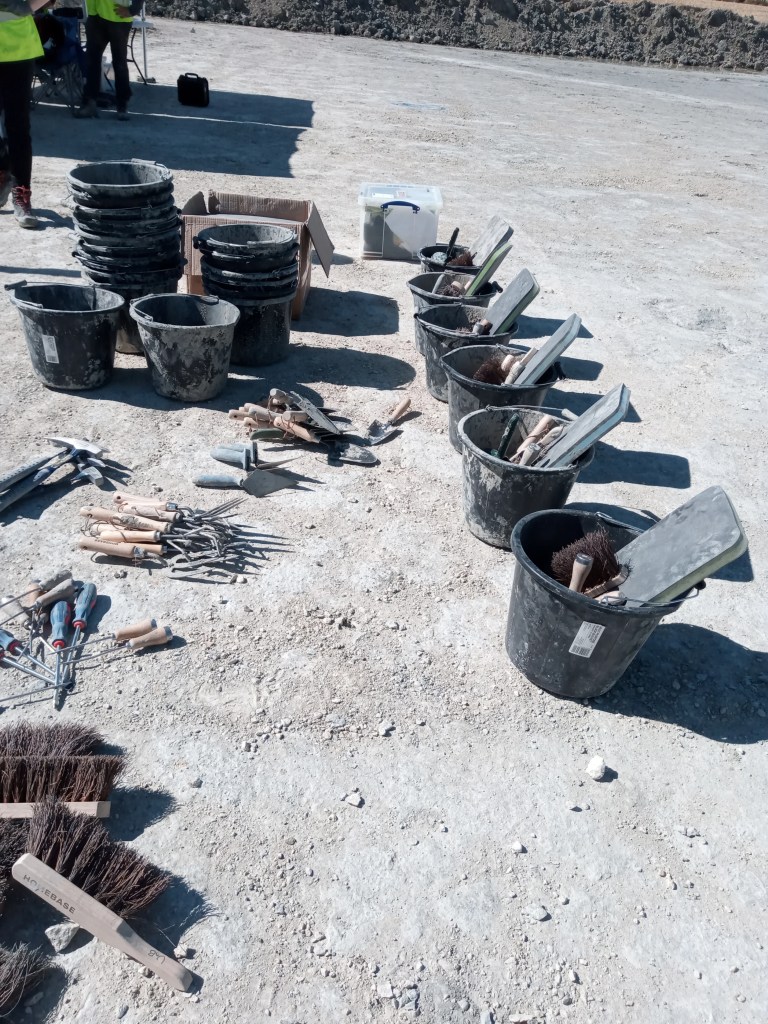
With most of the prints only partially excavated, it’s time I made myself useful. Fortunately, my lack of experience isn’t an issue; instead of high-tech specialist equipment, I am handed a bucket of supplies that could all be sourced from a hardware store. I don gloves and set to work on a sauropod print with a brush, sweeping out dust and loose stones. Besides being a good workout, it is a highly multisensory experience as I look, feel and ‘hear’ my way around the giant print. I am taught how to ‘listen’ for the edge of the print by tapping my shovel gently: the fossilised print gives a sharp, metallic ching whilst the surrounding mud makes a dull thump sound.
Excavation equipment at the dig site. Credit: Caroline Wood.
Slowly, under my hands, the full outline of the 90 cm long print is liberated. It amuses me to think how the enormous creature that stomped this way 166 million years ago would have been oblivious that, one day, a diminutive biped mammal would be sweeping out its footprints with assiduous, almost loving, attention.
I’m not the only one getting goose bumps. Emily Howard, a (second year going into third year) Earth Sciences undergraduate student at Oxford University is working on the footprint next to mine. ‘I feel really lucky to be doing this – there is no analogue for dinosaurs,’ she says. ‘When we have lessons in class, it often feels as though everything has already been found and documented… so to be involved with a new discovery and to play a part in the process of uncovering it is very special.’
‘To me, dinosaur trackways are much more “alive” than fossilised bones, which can only be from dead animals. Similar to when you see human footprints on a path ahead of you, a dinosaur track gives the impression that the creature could be miles away in the direction the tracks march on, but was here only a moment ago.’
Emily Howard
Capturing all the details
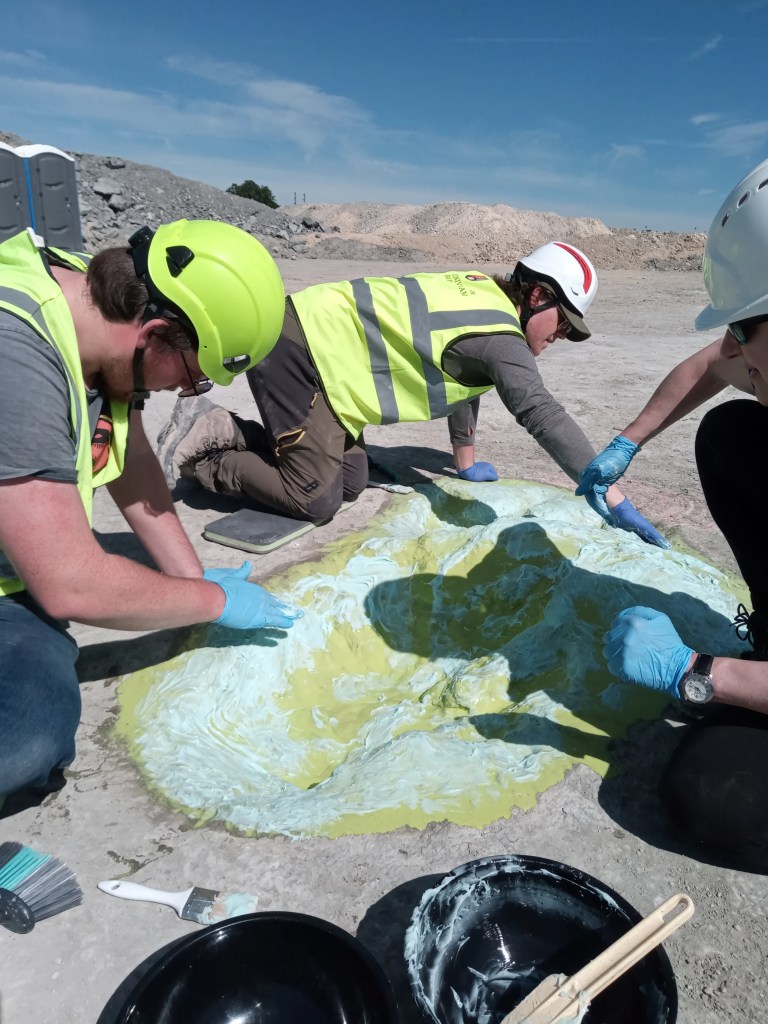
Nearby, one of the prints is undergoing more specialised treatment. Juliet Hay, a conservator in palaeontology at OUMNH, is massaging what looks like viscous turquoise toothpaste into the centre of a print. In the intense midday heat (which helps the materials work more quickly than on a cold wet day), the various layers that make the cast will soon bind together and solidify to create a mould that can be peeled off like a beauty mask.
‘Using the mould, we will be able to make 3D casts of the prints from various different materials, both for research and public engagement.’
Juliet Hay
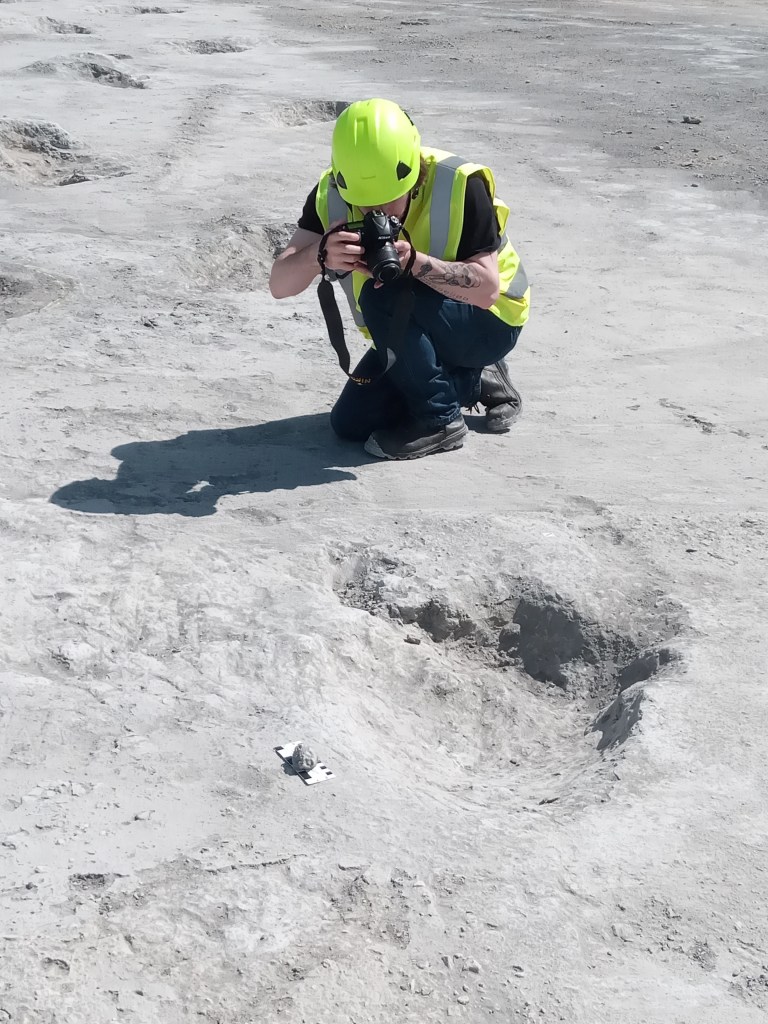
Creating a mould of one of the Megalosaurus footprints. Credit: Caroline Wood.A volunteer takes photographs of one of the Megalosaurus prints. Credit: Caroline Wood.
With so many prints to uncover, staff from all across OUMNH, as well as staff and students from the Universities of Oxford and Birmingham, have come to lend a hand, besides the collections team. ‘All the staff across the museum are excited,’ says Molly Appleby, Visitor Services Assistant at OUMNH. ‘The dinosaurs are such an iconic feature of our exhibits, so it is wonderful that we have all had the opportunity to be involved in this new discovery. This certainly makes a change to my day job!’
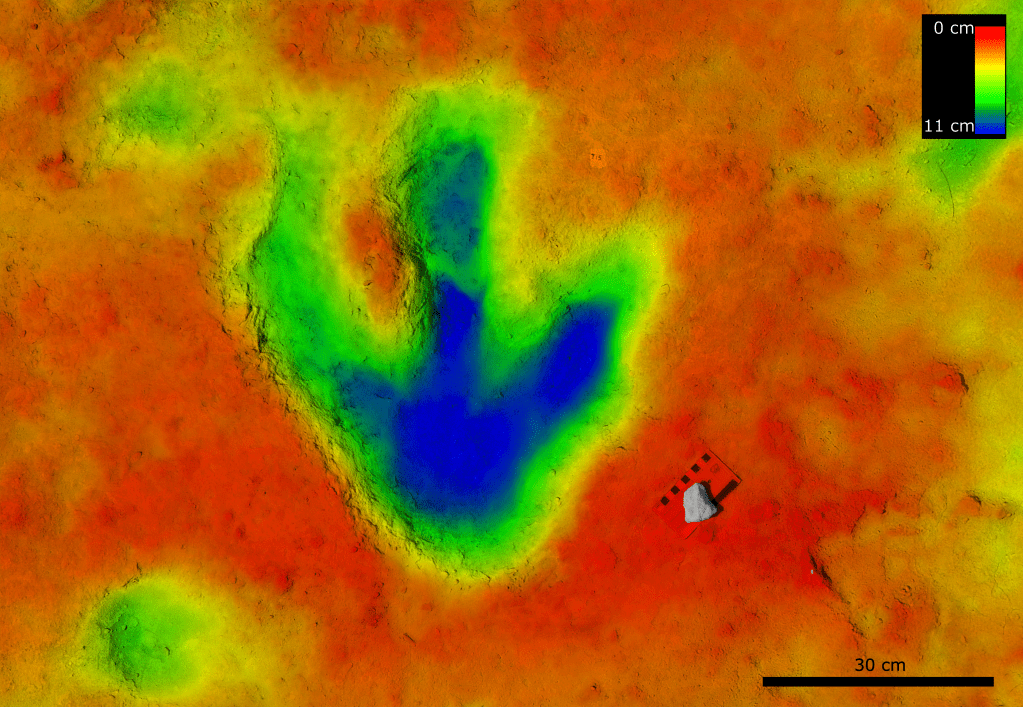
One of the Megalosaurus footprints coloured by depth. Credit: Dr Luke Meade, University of Birmingham.
The team’s aim goes beyond making physical models. A key outcome is to digitally record the prints so that computer software can reconstruct 3D virtual models, that can be used by researchers across the world.
‘Using photogrammetry and computer models, we will be able to work out details such as the height of the animals and their speed,’ Duncan says. ‘On the largest sauropod’s track, one of the prints is slightly out of sequence – almost as though the animal stopped and looked back over its shoulder. Hopefully, the computer models will help solve that mystery.’
To do this, you need data – and lots of it. I join some of the students who are busy taking close-up photographs of each footprint from as many different angles as possible. Once again, the equipment is straightforward: a standard DSLR camera. In theory, one student tells me, you could even use a mobile phone.
The photographs will be fed into computer software that will identify points of similarity and use trigonometry to reconstruct a 3D model of the print. For each print, between 60 and 100 photos will be taken. I’m told that more photographs are needed for the sauropod prints: being simpler shapes, it’s more taxing for the model to identify reference points.
‘This never ceases to be exciting’
‘Team- breaktime!’ As the sun reaches its noonday zenith, we convene under the OUMNH gazebos to escape into the shade. We refuel and reapply sunscreen, swapping stories of childhood dinosaur addictions and favourite scenes from Jurassic Park. For Emma though, the real-life science of dinosaurs will always trump fictional parodies.
‘Duncan and I have been working with Mark Stanway and the Smiths Bletchington team at the Quarry for nearly two years now, and it never ceases to be exciting,’ she says. ‘Excavating a brand-new Megalosaurus trackway in the 200th anniversary year of the discovery of Megalosaurus – the first dinosaur to be scientifically named and described anywhere in the world – is very special indeed.’
As my eyes are drawn along the length of the largest sauropod trackway, over 150 metres long in total, I realise that the huge footprints disappear under the cliff at the edge of the quarry. There are undoubtedly more tracks to be discovered…who knows what will be found in the future?
The area is still a working quarry with no public access, and will remain so in the medium term. However, Emma, Duncan, Richard and Kirsty are actively working with Smiths Bletchington and Natural England on options for preserving the site for the future.
You can learn more about the discovery and see the original Megalosaurus fossils on display at the Oxford University Museum of Natural History’s Breaking Ground exhibition.
As one of our many invaluable volunteers, Leonie Biggenden has regularly helped to run our Science Saturdays and Family Friendly Sunday activities, both of which take place under the watchful eyes of the large T. rex and Iguanodon skeletons in the Museum’s main court. Having spent so much time beside the Iguanodon, and with a lack of in-person volunteering opportunities in recent months, Leonie decided to find out some of the history of this striking cast. For Volunteers Week this week, she shares what she discovered…
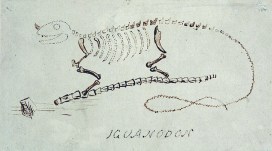
Next year will be the 200th anniversary of the discovery, by a roadside in Sussex, of the first Iguanodon teeth. Found by Mary Mantell in 1822, her husband Gideon saw their similarity with the teeth of modern iguanas and suggested they were from a huge, ancient, herbivorous lizard. He called the animal Iguanodon, and you can see his sketch reconstruction at the top of this post.
However, as an amateur palaeontologist, Gideon Mantell was not initially taken seriously by the scientific establishment. Some claimed the teeth were actually from a rhinoceros, or even a pufferfish! But in 1834, more complete remains were found by workmen who had accidentally blown up a slab of rock in a quarry near Maidstone, Kent. Iguanodon became a rock star of the dinosaur world, being only the second dinosaur – and the first herbivorous one – to be named (the first was the carnivorous Megalosaurus – another famous Museum specimen).
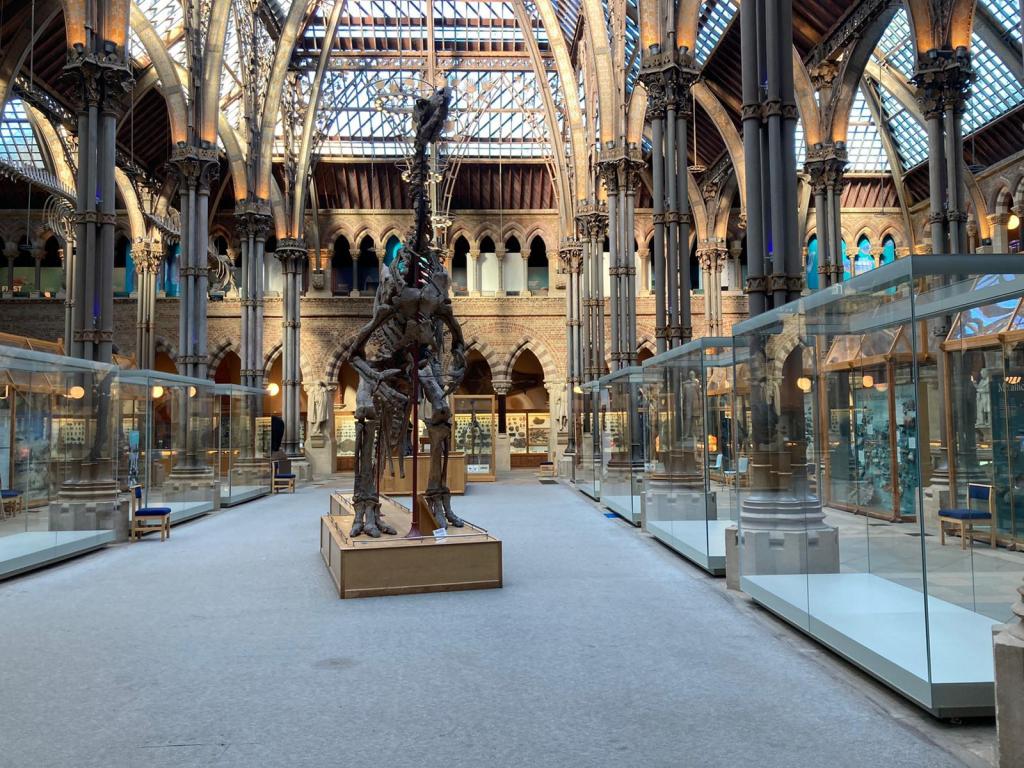
The Iguanodon bernissartensiscast in the centre court of the Museum.
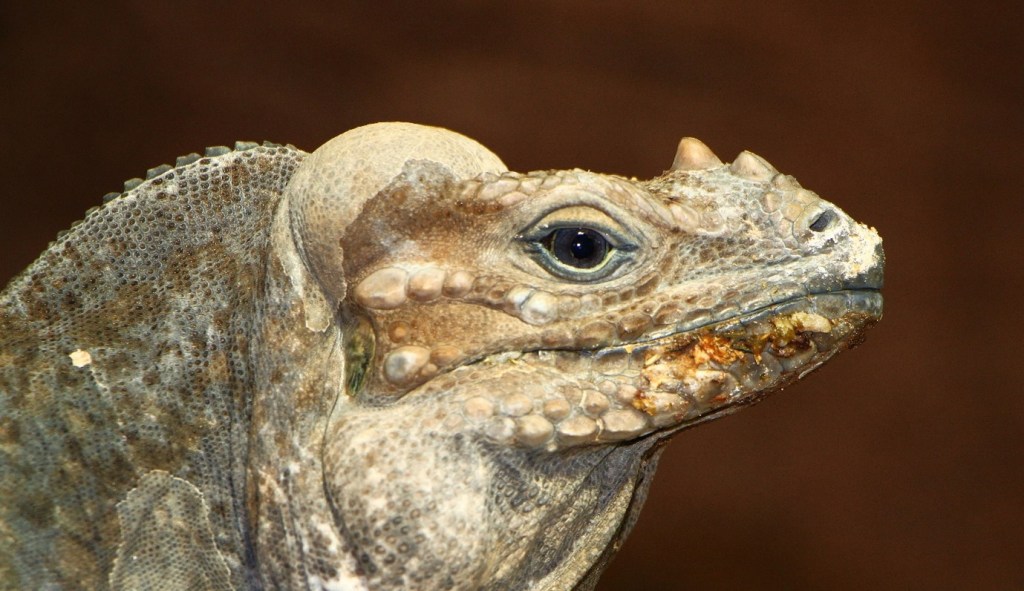
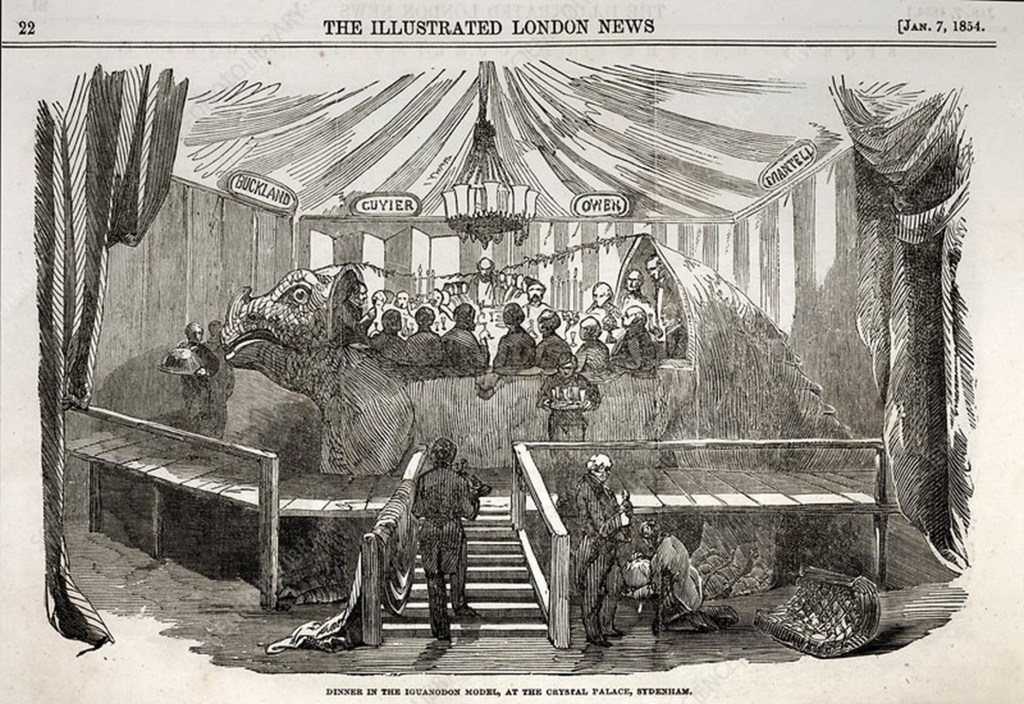
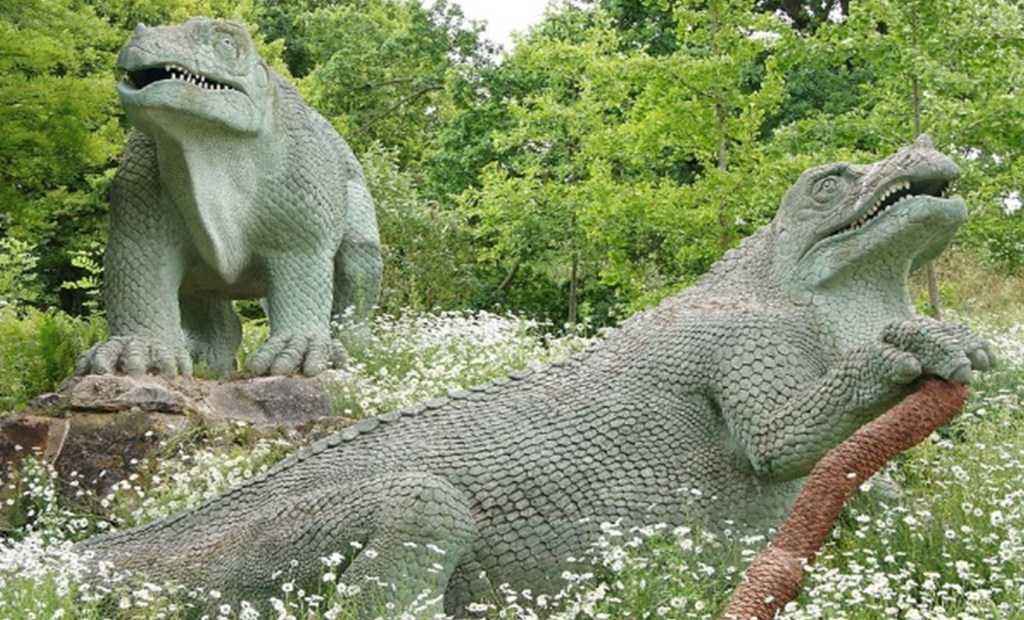
Twenty years later, a model of an Iguanodon was constructed by sculptor Benjamin Waterhouse Hawkins as one of a set of 30 life-sized models of extinct animals for the relocated Crystal Palace Gardens in South London. It was mounted in a rhinoceros-like pose, with what we now know as a thumb spike placed as a nose horn. Scientists always look to the information they have available to them, including observation of living animals, and there is an iguana called Cyclura cornuta – the Rhinoceros Iguana – which does indeed have nose horns, so at the time the nose horn made sense.
Rhinoceros Iguana, showing a nose horn. Image: H. Zell, CC BY-SA 3.0 , via Wikimedia Commons
Another 20 years on and a most significant find was made in southern Belgium. In February 1878, more than 30 fully articulated, adult Iguanodon fossil skeletons were found by miners Jules Créteur and Alphonse Blanchard, 322 m deep in the Sainte Barbe coal mine. Louis de Pauw from the Belgian Royal Museum of Natural History started to excavate the skeletons. It was a risky undertaking. In August an earthquake cut them off for two hours, and in October they were forced to return to the surface as the mine flooded.
The fossils were wrapped in damp paper, covered in protective plaster, and divided into 600 blocks. Each specimen was given a number and each block a letter, to record their exact positions in the mine. The 130 tonnes of specimens, rock, iron reinforcing rods, and plaster were then brought to the surface of the mine by horse drawn trucks and transported to Brussels.
For the first time, scientists, and later the public, could see complete dinosaur skeletons. This was important because scientists learned that the unusual spike found in the scattered fossils in the UK was a thumb spike rather than a nose horn, and they ditched rhino resemblance too, though not in time for the Crystal Palace reconstruction!
Illustrated London News January 7 1854, page 22. The Iguanodon model at the Crystal Palace in London was large enough for several people to dine inside it.
The models now in Crystal Palace park in South London. In these reconstructions the thumb spike was placed as a nose horn, and the animal is positioned in a rhinoceros-like pose. Image: Chris Sampson, CC BY 2.0 , via Wikimedia Commons
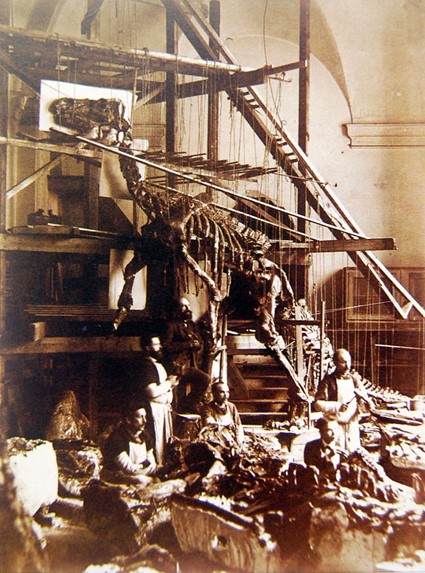
In 1882, de Pauw began assembling at least 38 Iguanodon skeletons under instruction from Louis Dollo, another famous Belgian palaeontologist. The aim was to put them in their most probable living position. A room with a high ceiling was needed because of their size, and a chapel was chosen. Scaffolding was built with hanging ropes being adjusted so the fossilized bones could be moved into their most likely position and then fixed and reinforced with iron rods.
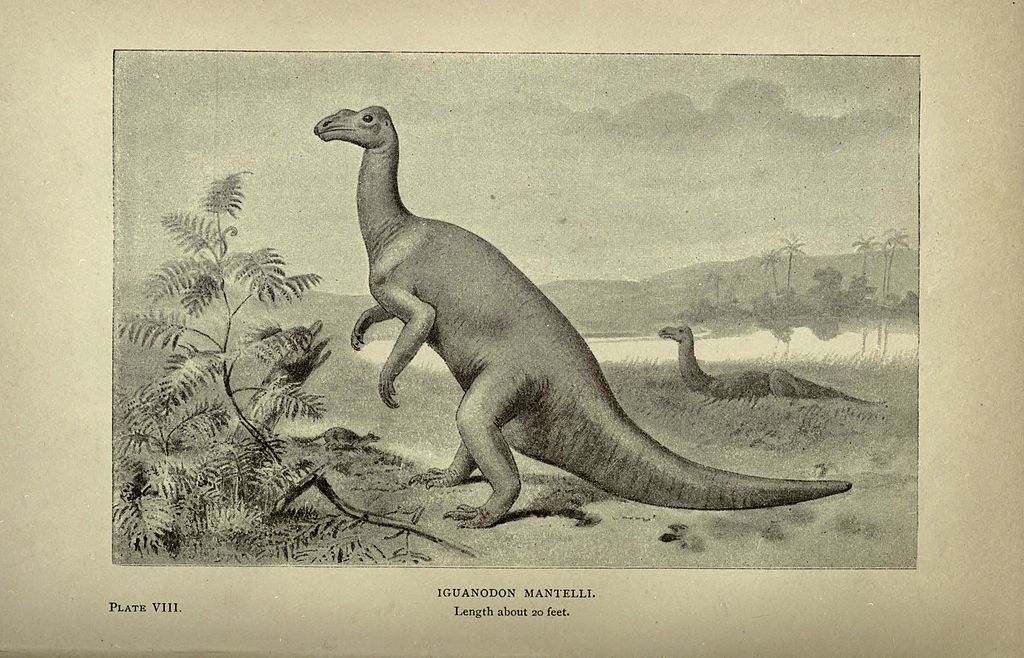
Early reconstructions of Iguanodon showed the dinosaur standing in a kangaroo-like stance. Image: Hutchinson, H. N., Public domain, via Wikimedia Commons
Workmen mounting the first Iguanodon bernissartensis skeleton in the St. George Chapel in Brussels, 1882.
Iguanodon bernissartensis, like the one on display here in the Museum, was a new species, named in 1881. It lived about 125 million years ago. The first assembly was revealed in 1882 and went on public display in Brussels in 1883. Points of reference used for the pose were the skeleton of a cassowary and a kangaroo.
On the Museum’s cast skeleton you can see rod-like structures going across the blade-like, bony processes on the back. These are ossified, or hardened, tendons and would help to stiffen the tail and therefore restrict its movement. They have been broken where the bend in the tail was made to resemble a kangaroo-like stance. The displacement shows that the true position of the tail should be straight.
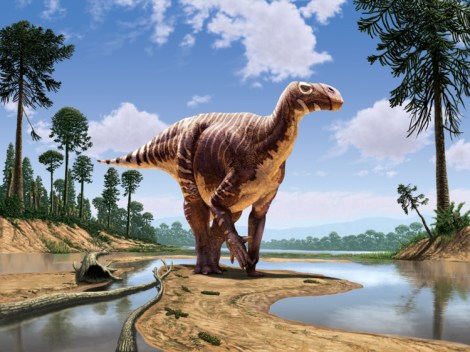
But having such a straight tail would mean that the Iguanodon would need its head and arms nearer the ground for better balance. The strong hind limbs suggest it would usually walk on two legs with its tail held aloft, as does the fact that fossil Iguanodon footprints are three-toed, and the three-toed limbs are the back ones.
By the end of 1883, six Iguanodons had been mounted this way and positioned in their own glass cage in the courtyard of the Brussels museum. So Iguanodon was one of the very first dinosaurs to be recovered in its entirety and mounted in three dimensions as though a living animal!
—
Leonie is a longstanding Public Engagement volunteer at the Museum. Unable to volunteer in the normal way during the lockdown, she researched the history of this favourite specimen and shared what she learned in a talk for other volunteers as part of an online ‘social’. This article has been adapted from that presentation.
Elaine Charwat has been on a journey into the attic storerooms behind the scenes of the Museum to discover 19th-century wax models of parasites. A strange occupation you might think, but it’s all part of her doctoral research programme with the Arts and Humanities Research Council to learn about the use of models and replicas in science, past and present. In the podcast above Elaine meets Mark Carnall, Zoology Collections Manager at the OUMNH, who talks about the differences between models and the thousands of specimens he looks after, and Dr Péter Molnár, Assistant Professor of Biological Sciences at the University of Toronto, who offers important insights into current research using mathematical models.
Different types of models and replicas are everywhere in the Museum, and they tell us much about the organisms they represent or reconstruct, but even more about processes in research and science. Made to communicate and produce data, these larger-than-life objects are as fascinating as their subjects…
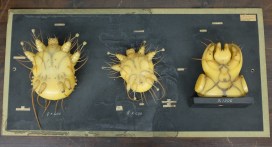
Top image: Wax models of Sarcoptes scabiei (itch mite) produced by Rudolf Weisker, Leipzig (Germany), probably late 1870s or early 1880s. These models are listed as having been on public display at the Museum in 1911, labelled: “Sarcoptes scabiei: enlarged wax models, male & female + mouth parts”.
One of the most common questions asked about our specimens, from visitors of all ages, is ‘Is it real?’. This seemingly simple question is actually many questions in one and hides a complexity of answers.
In this FAQ mini-series we’ll unpack the ‘Is it real?’ conundrum by looking at different types of natural history specimens in turn. We’ll ask ‘Is it a real animal?’, ‘Is it real biological remains?’, ‘Is it a model?’ and many more reality-check questions. Here’s your final installment…
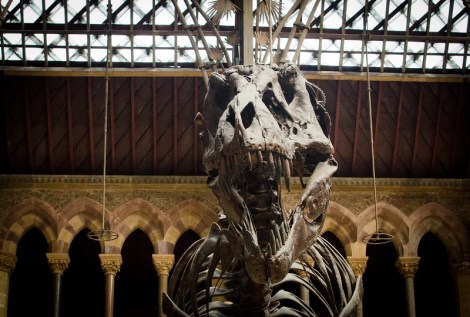
There’s nothing like standing under a huge T.rex skeleton, staring up at its ferocious jaws, to get the blood pumping. Visitors often ask “Is it real?” and look rather deflated when they find out it’s a cast. So why do we include casts, models or replicas in our displays, if they don’t have the same impact as the real deal? The truth is that they’re valuable additions to museum displays, allowing the public to engage with specimens that would otherwise be hidden behind the scenes.
Please touch! A cast of the famous Oxford Dodo helps visitors explore this fragile specimen.
On any visit to the Museum, you’ll come across labels that tell you the object you’re looking at is a cast. It could be a dinosaur skeleton, a brightly coloured fish, an amphibian specimen or even the head of the Oxford Dodo. But what is a cast? Casts are made by taking a mould of bones, or sometimes whole animals, then filling that mould with resin, plaster or fibre glass to make a copy. They can be incredibly accurate or lifelike.
It’s extremely rare to find whole dinosaur skeletons, and very difficult to mount heavy fossils (weighing tonnes) onto large armatures. Our Tyrannosaurus rex is a cast of the famous Stan, found in South Dakota, USA, and one of the best preserved skeletons of its kind in the world. But the “real” Stan is kept at the Black Hills Institute of Geological Research, so the only way we can offer the breath-taking experience of standing beneath a T. rex here in Oxford is by using a cast.
The Dodo Roadshow in 2015 would have been a lot less fun without our life-size dodo model
Even Stan has some bones missing, so sometimes casts are made up of several individual skeletons. Copies can also be made to give the impression of a more complete skeleton. For example, if a left bone is missing, a mirror of the right hand bone can be created. We call these specimens “composites”.
Animals such as fish and frogs aren’t easy to taxidermy; their skins shrivel, dry out, lose their colour and crack. Painted casts are a good way to show what these animals look like.
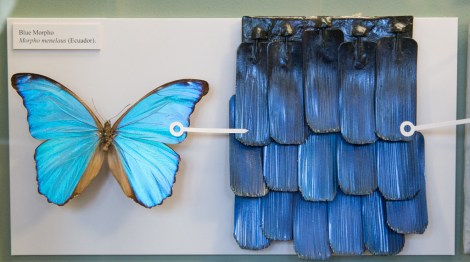
A model allows us to show the intricate scales of this Blue Morpho butterfly up close.
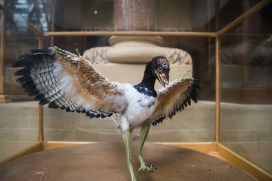
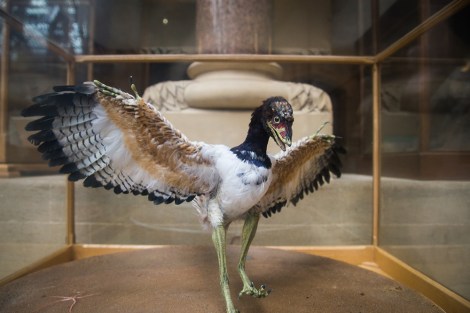
Models, such as the giant insects on the upper gallery and the Archaeopteryx in the Evolution of Flight display (at the top of this post), are very clearly not real. These are made by model makers to show something that can’t be seen or shown with real specimens. The giant insects are a way of showing the detail of very small creatures. The palaeontological models show what we think extinct animals might have looked like in life. They’re hypothetical models based on the latest scientific research, which can change very quickly, and always have an element of artistic assumption or speculation in the details.
In this series we’ve talked about taxidermy, skeletons, fossils and more, but these are just a few of the kinds of specimens we have on display. There are also nests, plastinated models, microscope slides and dioramas, which all have a mix of real and non-real elements. When you are looking around the Museum try to think about which specimens are real and which aren’t… and how does that make you think about the specimen?
In April 1842, 175 years ago this year, the dinosaurs were created – in a taxonomic sense at least. In a landmark paper in the Report for the British Association for the Advancement of Science, Richard Owen, one of the world’s best comparative anatomists, introduced the term ‘Dinosauria’ for the very first time.
Owen coined the term using a combination of the Greek words Deinos, meaning ‘fearfully great’, and Sauros, meaning ‘lizard’, in order to describe a new and distinct group of giant terrestrial reptiles discovered in the fossil record. He based this new grouping – called a clade in taxonomic terms – on just three genera: Megalosaurus, Iguanodon, and Hylaeosaurus.
In the Museum’s collections are some specimens of those three original dinosaurs, collected and described during this exciting early period of palaeontology. These discoveries, amongst others, helped to revolutionise our understanding of extinction, deep time, and the history of life on earth, and paved the way for the theory of evolution by natural selection.
Megalosaurus
The right lower jaw of Megalosaurus bucklandii from the Taynton Limestone Formation, Middle Jurassic, Oxfordshire, UK. OUMNH J.13505.
A nine metre long, 1.4 tonne carnivore that roamed England during the Middle Jurassic, about 167 million years ago, Megalosaurus has the accolade of being the world’s first named dinosaur. It was described by William Buckland, the University of Oxford’s first Reader in Geology, in 1824, and was discovered in a small village called Stonesfield, about 10 miles north of Oxford. The toothy jawbone of Megalosaurus is on display in the Museum.
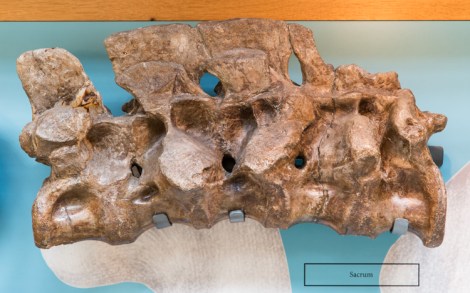
The sacrum of Megalosaurus. One of the characteristics that made Richard Owen realise dinosaurs were a distinct group was the presence of a sacrum with five fused vertebrae, visible here in the specimen on display at the Museum.
Iguanodon Iguanodon was a plant-eating reptile with a spike on the end of its thumbs, and teeth that look like those of an iguana, only 10 times bigger! Iguanodon lived in the Lower Cretaceous, around 130 million years ago and was named by Gideon Mantell in 1825.
When first discovered, Iguanodon’s spike was thought to go on its nose, like a rhinoceros or a rhinoceros iguana, rather than on its thumb, which is rather unique. In fact, we still don’t know why Iguanodon had such prominent thumb spikes.
Tooth of Iguanodon from the Wealden Group, Lower Cretaceous, Cuckfield, Sussex, UK. Gideon Mantell Collection. OUMNH K.59828.
The Iguanodon’s spike was first thought to go on its nose, rather than on its thumb. A paper label attached to the specimen reads, “Cast of the Horn of the Iguanodon, from Tilgate Forest; in the possession of G. Mantell, Castle Place, Lewes.”
Hylaeosaurus A squat, armoured, plant-eating dinosaur with long spines on its neck and shoulders. It is the least well known and smallest of the three dinosaurs originally described, but arguably the cutest. Hylaeosaurus was also named by Gideon Mantell, in 1833.
A dorsal spine, probably from the holotype of Hylaeosaurus armatus from the Wealden Group, Lower Cretaceous, Sussex, UK. OUMNH K.59799. Accompanying label in Gideon Mantell’s handwriting.
The exact specimen used by Mantell to describe Hylaeosaurus armatus is in a big block of rock in the Natural History Museum in London. But recently I spotted a specimen in our collections that Mantell had sent to William Buckland in 1834. It has the following label with it, written by Mantell himself:
Extremity of a dorsalspine of the Hylaeosaurus from my large block –
Perhaps Mantell just snapped a bit off to send to his friend. Or perhaps more likely, it was one of the broken fragments Mantell said were lying near the main block when it was dug out of the ground.
*
From just three genera included in Dinosauria in 1842, we now have around 1,200 species nominally in the group. The study of dinosaurs has come a long way since those early days; new finds, new technologies, such as micro CT scanning and synchrotron scanning, and new statistical techniques are helping us to better understand these iconic animals and re-evaluate older specimen collections.
The Museum’s dinosaur specimens are exceptionally historically important, but are still used heavily by scientists from across the world for their contemporary research. This is something that I think William Buckland, Gideon Mantell and Richard Owen would be very pleased about.
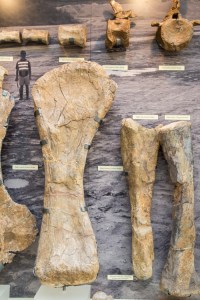
Cetiosaurus fossil bones on display in the Museum
The one that got away… Although Owen didn’t know it, other dinosaurs were known in 1842, including Cetiosaurus, the ‘whale lizard’. When Owen named it in 1841, he thought it was a giant marine reptile that ate plesiosaurs and crocodiles. By the following year, he suggested it was actually a crocodile that had webbed feet and used its tail for propulsion through the water.
It wasn’t until 1875, after more substantial remains had been found that Owen recognised Cetiosaurus as a land-living sauropod dinosaur. Interestingly, however, research published last month presented a new hypothesis for dinosaur relationships which, if the previous definition of Dinosauria had been adhered to, would have placed all sauropods outside of the group. So perhaps Owen’s earlier omission wasn’t so wrong after all.









 More Than A Dodo