Open Doors

OXFORD UNIVERSITY MUSEUMS AT THE INTERFACE OF ‘TOWN’ AND ‘GOWN’


By Rawz, Sound Artist in Residence for 2022, St John’s College, Oxford


Oxford is a curious place and, for me, it’s getting curiouser and curiouser. 

I love this city; I’ve called it my home for more than three decades. I couldn’t picture myself living anywhere else. But recently, I realised I’d only ever really seen half of my fair city, that there was a world beneath the dreaming spires that I had never even considered that I would be permitted to explore. I realised that I had never really walked through Oxford city centre; I had always been guided around it by 10 foot high fortifications and locked doors.

I grew up very much on the town side of Oxford’s notorious ‘town versus gown’ divide. I left school with no qualifications, and since then have spent much of my working life supporting the most marginalised people in the city, particularly young people struggling with formal education as I did. Doing this in a city whose very name is a buzzword for elitism and privilege means that I’m no stranger to juxtaposition. It continues to influence my art to this day.

I’m a hip hop artist, primarily focused on lyric writing and poetry. In 2009 I set up my own business, the Urban Music Foundation, with the hope that I could pass on some of the art skills that helped me get through tough times growing up, and that have enabled me to express myself fluently as an adult, and build a career around my art. I’ve found music and lyrics to be a uniquely useful tool in communicating ideas that are hard to transmit in any other way. Someone once said to me that music is what emotions sound like, and I’ve found that to be true.

After a video call with one of GLAM’s community engagement team during the lockdowns of 2020, I had an idea for a project that became Digging Crates — a decolonisation project using hip hop music to reinterpret the musical instrument collection at the Pitt Rivers Museum, next door to the Museum of Natural History. I immediately saw the project’s value as a way to analyse and address some of the divisions and imbalances I see in Oxford, and in wider society. Just over a year after I sat down and wrote the original proposal for this project, I was offered the position of Resident Sound Artist for 2022 at St John’s College. Even as I write this I feel a surreal mix of pride and disbelief — not many people from my community in Blackbird Leys would have considered the idea of being offered such a post in their wildest dreams!
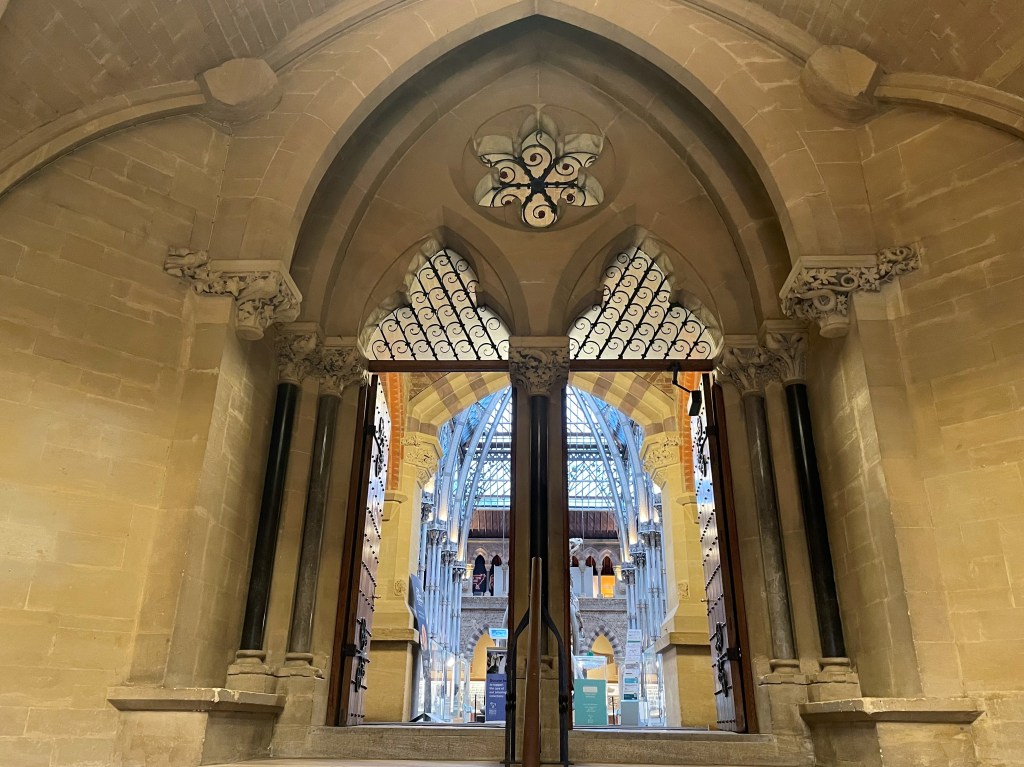
The front doors of the Museum are open every day from 10:00 to 17:00.

The past 18 months have seen doors open – both literally and figuratively – that I had never even considered walking through. I hope they continue to do so, and that they remain at least a little ajar for those following my path. Many of you, dear readers, will be glad to know that one place I have enjoyed exploring, both as a “townie” and, more recently, in my newer self-proclaimed title as “Town Ambassador to the Land of Gown”, is the Museum of Natural History. Of all Oxford’s museums, the Museum of Natural History has the biggest impact as soon as you walk through the doors (which are usually wide open). I’ve taken many “disengaged” and “hard to reach” young people to visit, and the heady cocktail of stuffed animals, dino bones, and cool rocks almost always proves irresistible to all but the most sceptical children, young and old. I would love an opportunity to get creative in this amazing space and am often trying to think of an excuse. Any ideas – you know where to find me! 

Whatever happens next, stepping through the looking glass into this strange new world of the gown with its quirky, bizarre traditions, and its fascinating, inspiring, and problematic histories, is an experience I will never forget. I’m honoured to be the person taking this step on behalf of my community, and grateful for all those who worked hard and made sacrifices for me to be able to do so.


Want to find out more?

This link will connect you to some of the projects I am working on and some of my past works: https://linktr.ee/rawz_official I’d love to connect with you on social media or via any other means, I’m always up for discussing this important work.

If you’d like to attend my next workshop at St John’s on March 10th, we will be watching the documentary made during Digging Crates and I’ll be sharing some behind the scenes photos and stories, you can sign up via this link: https://www.sjc.ox.ac.uk/discover/events/workshop-digging-crates-project-and-film-screening/
Lungfish, lithographs and libel


By Mark Carnall, Collections Manager


In addition to the many thousands of biological specimens that can be found at Oxford University Museum of Natural History, we also possess a variety of objects that originate from historical versions of the Museum’s displays. These include models, casts, and illustrations of various kinds, used to represent organisms that were otherwise difficult to preserve and display.

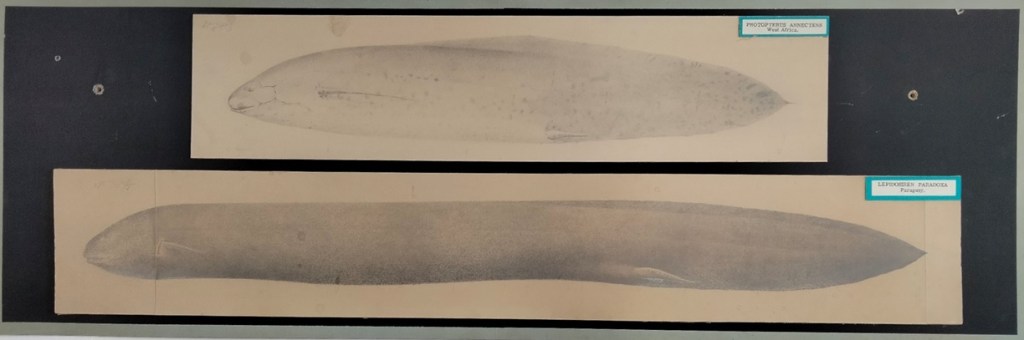
That any of these exhibition materials survive at all is down to pure happenstance and luck. At the time when they were removed from display, these artefacts would have just been seen as outdated ‘display furniture’ and all but destined to have been thrown away. One surviving piece of ex-display material, which catches my eye almost daily as it sits in my office, is a rather large pair of illustrations showing a South American and a West African lungfish mounted on a black backing board.

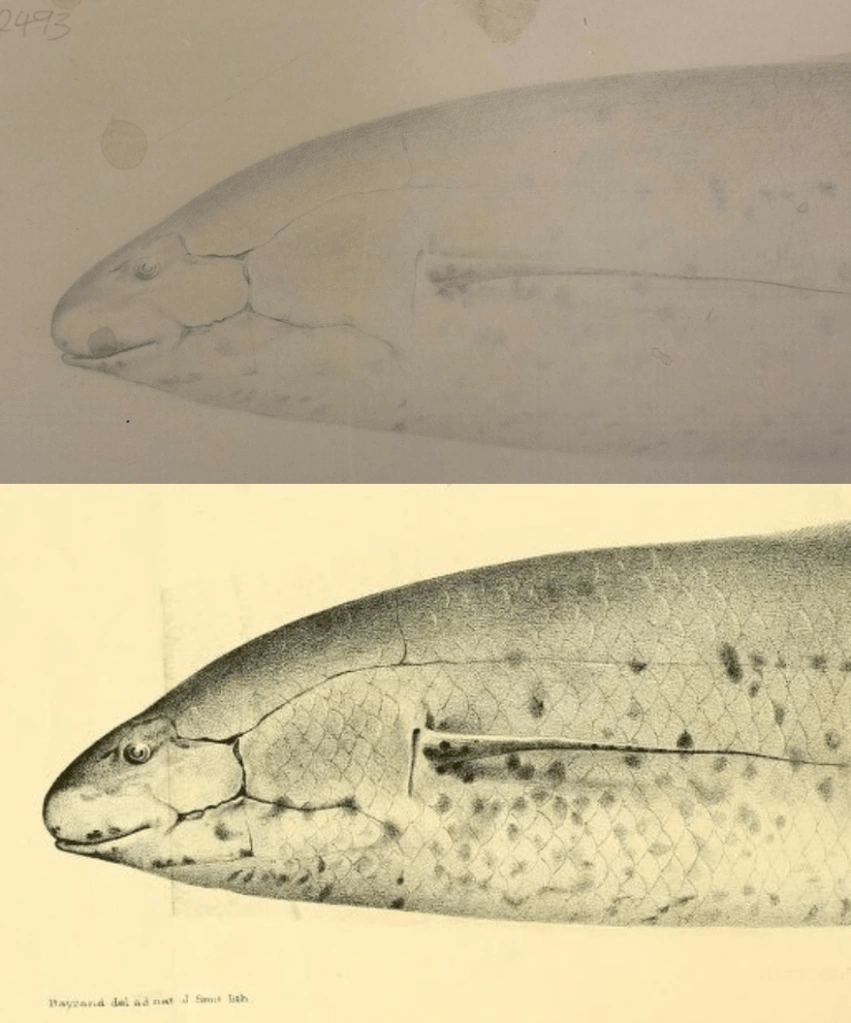
Mounted illustrations of West African lungfish, Protopterus annectens (top) and South American lungfish, Lepidosiren paradox (bottom). The board they are mounted on measures 93cm across.

By pure coincidence, I recently came across lithograph reproductions of these illustrations in an 1895 publication by E. Ray Lankester. Had these fish not have been my office-mates, I might not have paid the lithographs in the paper much attention, nor recognised their significance. 

E. Ray Lankester was a noted Zoologist who studied at Oxford University and was the holder of the Linacre Chair. He was also heavily involved in adding to the collections and displays here at OUMNH. His 1895 paper – a smash hit I’m sure we all remember – was titled On the Lepidosiren of Paraguay, and on the external characters of Lepidosiren and Protopterus, and sought to add more reliable evidence on the appearances of lungfishes. 

Lungfishes were of particular interest to scientists at the end of the nineteenth century. Though seemingly related, the different species of lungfish caused no small amount of head-scratching, given that they were found in freshwater ecosystems as far apart as Australia, Africa, and South America. As their name suggests, they are fish but also air-breathing, and the fact that they possess lungs also marked them for scientific interest at the time.

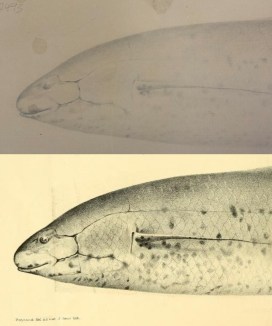
Comparison of Bayzand’s original drawing of Protopterus annectens (top) and screen-capture of the published figure (bottom). You’ll no doubt agree with Lankester that the changes to the scales are egregious and vexing. 

Interestingly (well, interesting to me!) is that Lankester adds an extensive note in the paper about the illustration of the specimens, explaining that he is unhappy with how Bayzand’s original drawings have been modified in the process of transforming them into lithographs for publication. According to Lankester, these modifications introduced inaccuracies. In particular, he complained that the lithographer had made it look like the lungfishes were covered in scales, and stresses that “[a]s a matter of fact, no scales at all[,] or parts of scales[,] are visible on the surface” of the lungfish. Instead, he makes clear that in real life (or, in this case, in preserved life) the scales of the fish are overlaid with soft tissue. Comparing the figure in the paper with the illustrations in my office confirms that the lithographer had, indeed, inaccurately reproduced the original drawings.

The happy coincidence of me finding Lankester’s paper led me to several important revelations. Firstly, we now know that Bayzand’s original drawings of the lungfish can still be found here at OUMNH. Secondly, we can surmise that, at some point in the past, these drawings were displayed in the Museum’s galleries. We can also corroborate that the original illustrations are different to the published versions, meaning that, if we are to believe Lancaster, they are also more accurate than those in the publication. Finally, we now know that two of the Museum’s specimens were cited with extra biographical information in Lankester’s paper.

Sadly, these exciting findings mean that my office mates will probably have to be relocated and take up residence in the Museum’s archives alongside their subject matter…

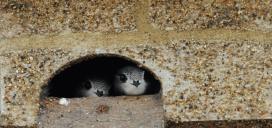
two swifts looking out from their nesting area

A Swift Return to Summer

By Chris Jarvis, Education Officer

Amidst reports during the last week of Swifts being sighted feeding over the nearby Farmoor reservoir, Museum staff have kept their eyes to the skies eagerly waiting to be the first to spot our resident birds returning to their breeding site in the nest boxes of our tower. A wet and windy weekend caused by a deep depression over Britain meant little opportunity to feed on their diet of small flies and other invertebrates that make up the aerial plankton they relish, and which normally drifts unseen above our heads in large numbers on still summer days.  The high winds would certainly also have made any attempt to land, for the first time in a whole year since they left their nest boxes and for the first time ever for those just reaching maturity, extremely precarious, and so it seems our Swifts headed farther afield, possibly back to continental Europe, for a few days to await better conditions.

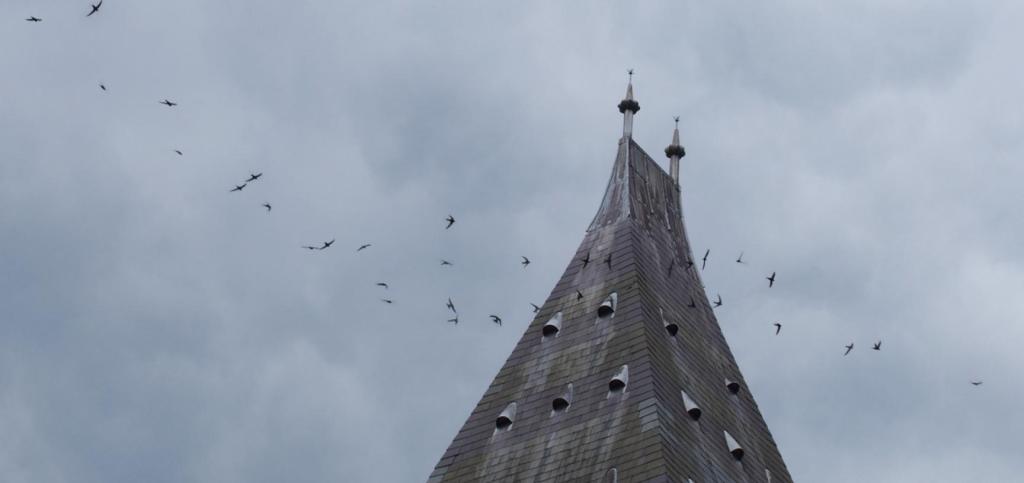
swifts flying around the museum tower against a cloudy sky
Swifts flying around the Museum tower by Mark Garrett

However, this morning, the 5th of May and right on cue, we were treated to the first two Swifts performing a low, high speed fly-by of the tower. Having flown around 14,000 miles in the last year from the Museum’s tower to their winter feeding grounds in southern Africa and back again, the Swifts have arrived on exactly the day of their average time of arrival over the last couple of decades.  We know this because the Swifts in the tower are part of an ongoing study which is the longest running study of any bird colony in the world, started by David Lack in 1947, our Keeper of the Swifts, George Candelin still climbs the spiral stone stairs and ladders each week under red lights to carefully and quietly monitor each nest box throughout the breeding season an count and ring each chick noting down all sorts of other data as he does so from wind speeds to egg rejections, weights and even altercations between birds in boxes over rights to nest sites.  Whilst you can’t be involved in the weighing and ringing of the birds, we do offer the next best way of getting involved; our nest box webcams, which you can find on our ‘Swifts in the Tower’ page, allow you to watch all the action live as it happens from the arrival of the adults to the final fledging as the next generation takes wing for the first time. Hidden microphones will also allow you to hear as screaming parties bang their wings against the nest box covers in order to ascertain if they are occupied and the keening noises of begging chicks!  George’s stats and comments will also be downloaded to the Swift’s Diary each week enabling you to get a full picture of what’s happening across the colony’s 147 nest boxes as the season progresses.

Swifts have markedly declined in numbers over the last few decades, and their breeding season is one of the few times anyone has to measure population changes and you can get involved, too.  Check out if there is a Swift City project near you like Oxford Swift City @oxford_swift or @EdinburghSwifts to get directly involved in monitoring projects or just record your Swift sightings to the RSPB at their Swift Mapper site. All your observations give us a really good idea of how these enigmatic summer visitors are doing!

Update-in the half hour it has taken to write this blog post: the number of Swift’s flying around the tower is up to 5-and they’re screaming!

Summer is here!

Hedgehog Awareness Week

For Hedgehog Awareness Week, Zoology Collections Manager Mark Carnall and Museum Librarian and Archivist Danielle Czerkaszyn discuss these prickly and charming creatures.

The 2-8 May is Hedgehog Awareness Week, which give us an excuse, not that one were needed, to talk about these charismatic mammals. Although the West European hedgehog (or common hedgehog if you’re in Europe, these vernacular names get very confusing when geography and language is taken into account), Erinaceus europaeus, is probably the hedgehog that springs to mind to many of our readers, there are nearly twenty living species of hedgehog and many fossil species are known.

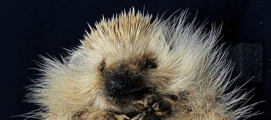
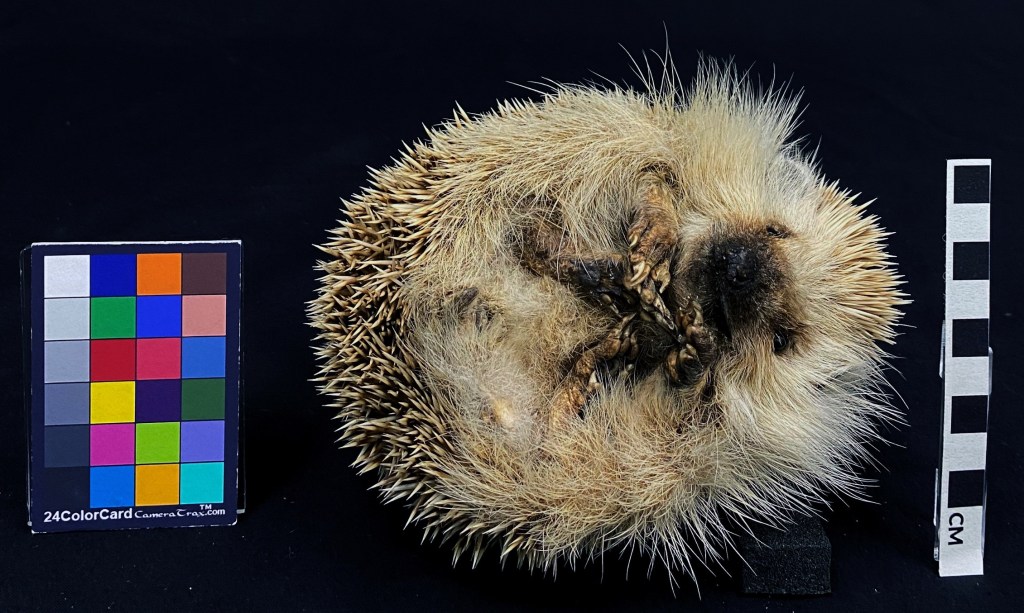
Hedgehog specimen at OUMNH

In terms of evolutionary relationships they share a family with the moonrat and the rather wonderful gynmures, distinctly un-hedgehog-like relatives.

Their characteristic spikes that run across the back of hedgehogs are modified hairs which are periodically replaced and each individual hedgehog has around 7000 spines at any one time, varying slightly with age and size. Behaviourally, they are competent climbers (and have a built in shock-absorbing coat should they fall) and surprisingly perhaps, all species are thought to be competent swimmers.

Although much loved across their native range, Erinaceus europaeus, is considered a pest species in New Zealand where it was deliberately introduced as a form of biological control, by acclimatisation societies and possible as pet animals. They have now spread to all but the highest parts of New Zealand threatening native species of birds, amphibians, reptiles and directly competing with native mammal species.

In 2020, Erinaceus europaeus was added to the Red List for British Mammals as vulnerable across the lists for Great Britain, England, Scotland and Wales informed by analysis of citizen science data although there remains some uncertainty about true population levels.

Unsurprisingly perhaps they are comparatively well represented in the collections at the Museum including specimens donated and prepared for the Museum from the 19th Century through to much more recent specimens acquired from road death animals for display. The specimen pictured above being one such relatively recent acquisition for display in the Museum’s display case on the animals featured in Alice in Wonderland.

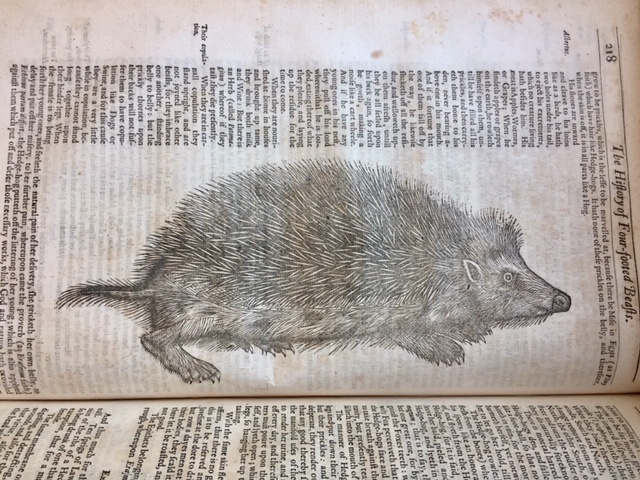
We’ll leave you with one more hedgehog from the Museum’s library and archives. Hedgehogs unusual appearance initially led to some odd beliefs about why their quills existed. For example, in his book ‘The History of Four-Footed Beasts and Serpents’ (1658) Edward Topsell wrote:

“The hedgehog’s meat is apple, worms and grapes: when he findeth them upon the earth, he rolleth on them until he hath fylled up all his prickles, and then carrieth them home to his den.”

– Edward Topsell

One of the most common questions about hedgehogs is how do they mate? The answer is of course, very carefully.

The astounding story of the fake butterfly specimen Papilio ecclipsis – would you be fooled?

For April Fool’s Day, our Senior Collections Manager Darren Mann recounts the story of an elegantly fake butterfly – Papilio ecclipsis – asking whether it was a piece of scientific fraudulence or practical joke that went awry.

James Petiver, a 17th-century London apothecary, was renowned for having one of the largest natural history collections in the world. Petiver (1665-1718) published some of the first books on British insects and created common names for some of our butterflies.

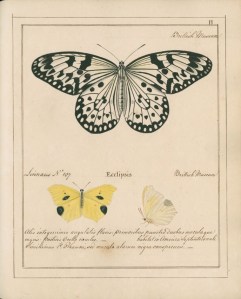
Volume 3, Plate II of Jones Icones – the two lower images are of Papilio ecclipsis

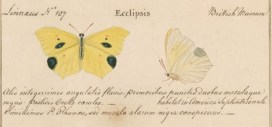
On plate 10 of his Gazophylacium naturae et artis — an illustrated catalogue of British insects (1702) he figured a unique butterfly that “exactly resembles our English Brimstone Butterfly were it not for those black Spots, and apparent blue Moons in the lower wings”. It was given to him by his late friend and butterfly collector William Charlton (1642-1702). This butterfly was later named Papilio ecclipsis by the father of taxonomy himself, Carl Linnaeus, in his 1763 work Centuria Insectorum Rariorum, and it became known as the Charlton Brimstone or the blue-eyed brimstone.

Petiver’s collection was purchased by Sir Hans Sloane (1660–1753), who later donated his entire ‘cabinet of curiosity’ to the nation, becoming the foundation for the Natural History Museum, London, originally part of the British Museum. It was here that wine merchant and naturalist William Jones (1745-1818) examined and later figured Petiver’s specimen in his Icones, an unpublished masterpiece of some 1,500 watercolour images of butterflies.

Jones’ Icones, held in the Museum’s archive, is the subject of numerous articles and is still examined by butterfly specialists the world over. Many of the specimens figured by Jones are no longer in existence, being ravished by pests or lost over time, so all that remains of these butterflies are the painted images within.

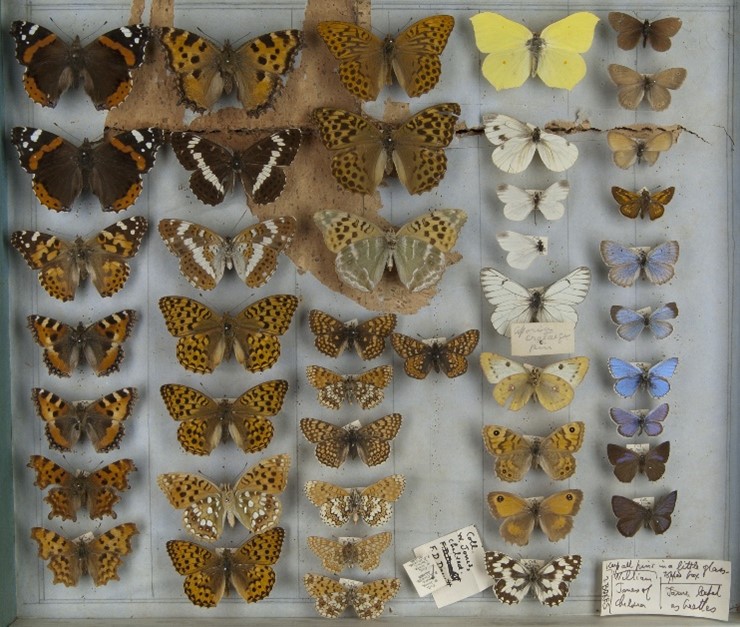
A drawer of British butterflies from the cabinet of William Jones. The Common Brimstone butterfly is the fourth from the right on the top row

When visiting London, Danish entomologist Johann Christian Fabricius (1745-1808) studied the paintings that Jones made and described over 200 species of butterfly new to science. Fabricius also visited the British Museum where he examined Petiver’s specimen of ecclipsis. In Entomologia systematica (1793) Fabricius revealed the enigmatic ecclipsis to be no more than a painted and “artificially spotted” specimen of the Common Brimstone (Gonepteryx rhamni). So, the dark spots and blue eyes were merely artistic licence, but whose?

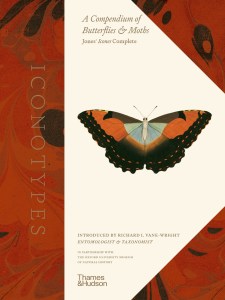
Iconotypes, published by Thames & Hudson, will be available from October 2021

Petiver’s specimen, seen by both Jones and Fabricus in the British Museum in the late 18th century, had mysteriously disappeared by the following century. It is said that when Dr. Gray (1748-1806), Keeper of National Curiosities at the Museum, heard of the deception he became so enraged that he “indignantly stamped the specimen to pieces.”

It is still unclear whether this was an example of scientific fraud by Charlton, or if it was intended as a practical joke that went awry.

There remain two specimens of ecclipsis in the collection of the Linnean Society. Although it is uncertain who created these, it is believed that these replicas were made by none other than our very own William Jones, as he was one of the few who had the artistic skills to undertake such work. The forthcoming publication of Iconotypes, showing Jones’ Icones in all its splendour, will hopefully demonstrate how he had both the knowledge and the skill to recreate these fascinating fakes.

Links and References
Salmon, M., Marren, P., Harley, B. (2001) The Aurelian legacy: British butterflies and their collectors. University of California Press.
The Linnean Society https://www.linnean.org/
Vane-Wright, R. I. (2010) William Jones of Chelsea (1745–1818), and the need for a digital online ‘Icones’. Antenna. 34(1), 16–21

Excavating amber

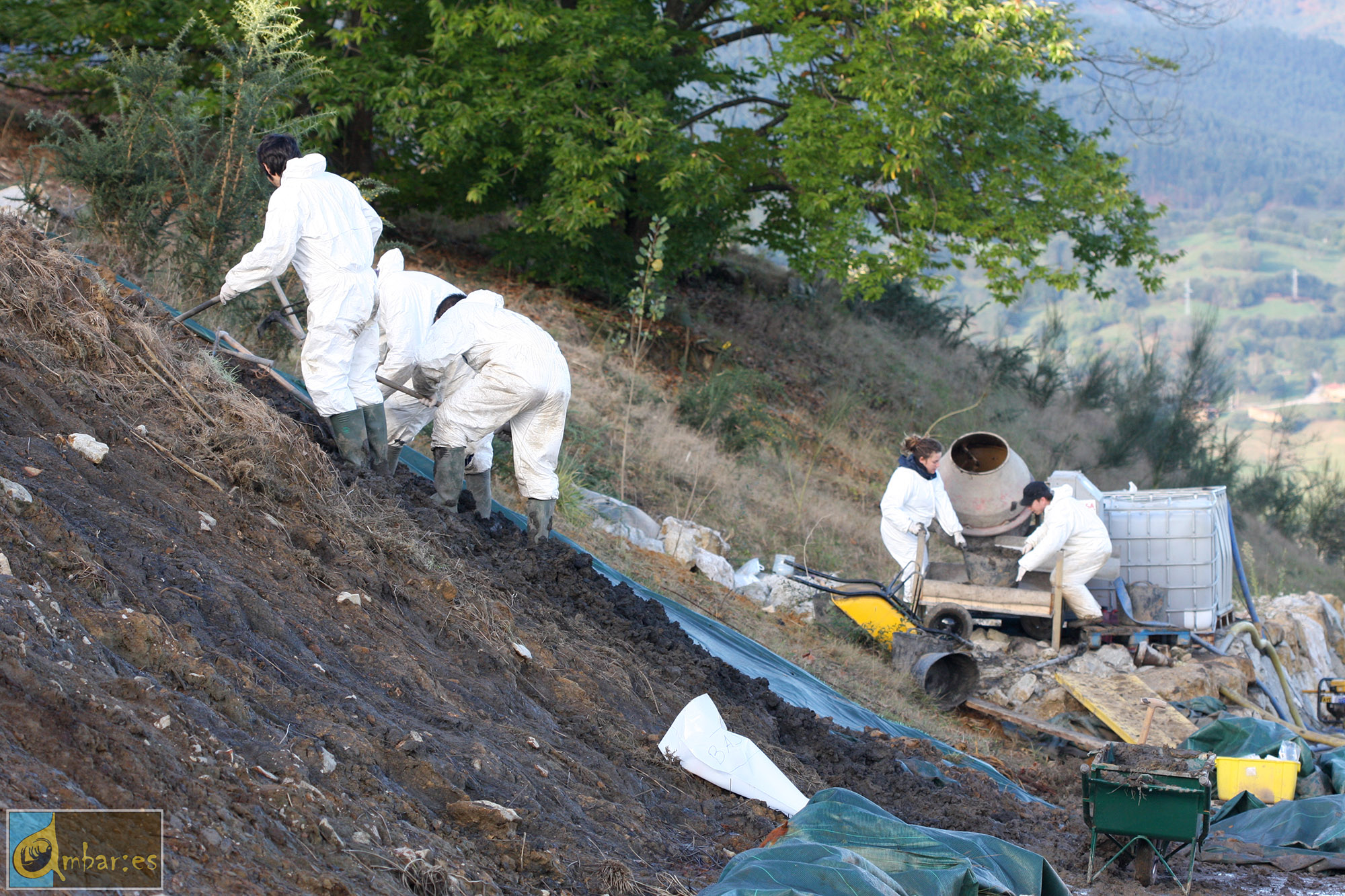
First amber excavation in the El Soplao outcrop, Cantabria, N Spain in 2008. Credit IGME-UB.

By Dr Ricardo Perez-De-La Fuente, Research Fellow

Amber, or fossilised plant resin, is a unique material to learn about the history of life on Earth. Its incredible preservation and ability to capture life “in action” are well known thanks to the Jurassic Park saga, but fewer people know where amber is found, what it looks like in the field, and how it is gathered.

Cretaceous amber, about 130 to 70 million years old, is the oldest amber that provides abundant fossils, specifically insects and spiders. Ecosystems drastically changed during this period due to global greenhouse conditions and the diversification of flowering plants, among other factors. Amber from that time has been discovered in Lebanon, Spain, France, Myanmar, eastern United States, Canada, and northern Russia.

My research team and I carry out regular amber excavations in northern Spain, working in teams of six to ten people. The outcrops that we excavate are often located next to roads and highways because amber is typically uncovered during roadworks. Excavations take place during the summer or fall to try and minimise the risk of rain, and we usually embark on one field trip each year.

The goal is to recover as much amber as possible – usually a few kilograms – from the muddy and sandy sediments. These materials were transported downstream tens of million of years ago by heavy rain and river swellings from the forests where the resin was produced, before being finally deposited in near-shore areas.

Manual extraction of amber. Credit IGME-UB
Manual extraction of amber in the El Soplao outcrop, Cantabria, northern Spain in 2008. Credit: IGME/UB.

I find amber excavations quite romantic. In the field, amber has a dull appearance that makes it difficult to distinguish from rocks or woody remains. This is due to an opaque crust resulting from oxidation in the sediments and other processes.

This outer layer makes detecting potential fossils inside the amber highly unlikely while the excavation is ongoing. So, in the field we just gather as many amber pieces as possible, and hope for the best.

Only when amber is polished – or shows broken surfaces – does its distinct yellowish to reddish shine emerge, and any possible fossils within become evident. Some ambers are highly fossiliferous, while others are very poor in fossils.

Amber can be gathered by hand using regular tools such as hammers. However, the most efficient method to extract amber from soft sediments is with concrete mixers! This rather unsophisticated piece of equipment provides the best way to recover medium quantities of amber in the field.

We charge water and amber-bearing sediments into the mixer, and after stirring for a while amber floats to the top because it is less dense than muddy water. Then, the surface of the water containing the amber is poured into sieves, which separates even the tiniest pieces.

Amber pieces recovered in a sieve after washing
Amber pieces recovered in a sieve after having been “washed” from their sediment. First amber excavation in the La Manjoya outcrop, Asturias, northern Spain in 2017.

After fieldwork, many hours will be spent looking for fossils within the amber and preparing them. Gathering raw amber is just the first part of a process in unearthing the secrets held within – fragments of encapsulated time.

Top image: First amber excavation in the El Soplao outcrop, Cantabria, N Spain in 2008. Credit: IGME/UB.