Cathedral to nature

To mark National Poetry Day 2017, former Museum poet-in-residence Kelley Swain writes about her residency, getting to know the Museum, and the Guests of Time anthology.  

Throughout 2016, I was one of three fortunate writers to be invited into the Oxford University Museum of Natural History’s first poetry residency. It was our task to engage how we wished with the collections, curators, history and architecture of the Museum, and produce seven new poems each in the first third of the year. The next two-thirds comprised editing and publishing the residency anthology, Guests of Time, and running poetry engagement events.

Kelley Swain - Guests of Time launch blog
Kelley Swain reading from the Guests of Time anthology at the launch event  – December 2016

But this wasn’t the first time poets were inspired by the Museum. The building opened in 1860, an exemplary Victorian ‘cathedral to nature,’ heavily influenced by art critic John Ruskin who involved Pre-Raphaelite artists in its design and decoration.
Guests of Time
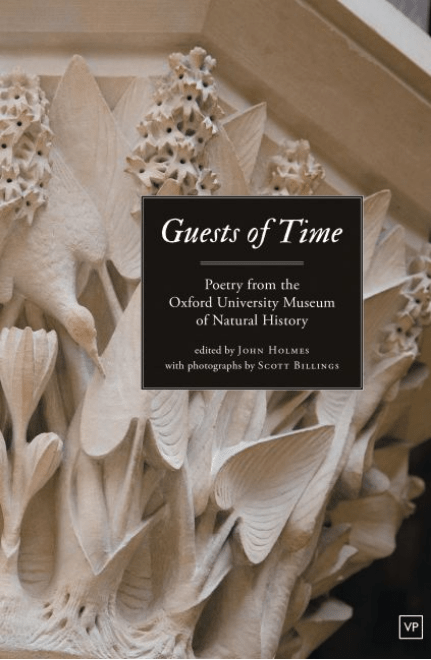
Guests of Time anthology

Guests of Time includes new work from the resident poets (myself, John Barnie, and Steven Matthews,) as well as contemporary Victorian poetry related to the Museum. This includes ‘The Lay of the Trilobite’ by May Kendall, a student at Somerville College, Oxford, and ‘A Year and a Day’ by Lizzie Siddal, who was invited to contribute designs for decorative carvings in the building (though, ultimately, decorative work was cut short due to lack of funds).
DSC_6103

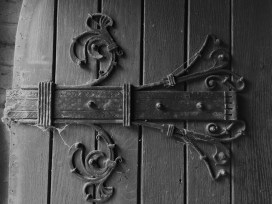
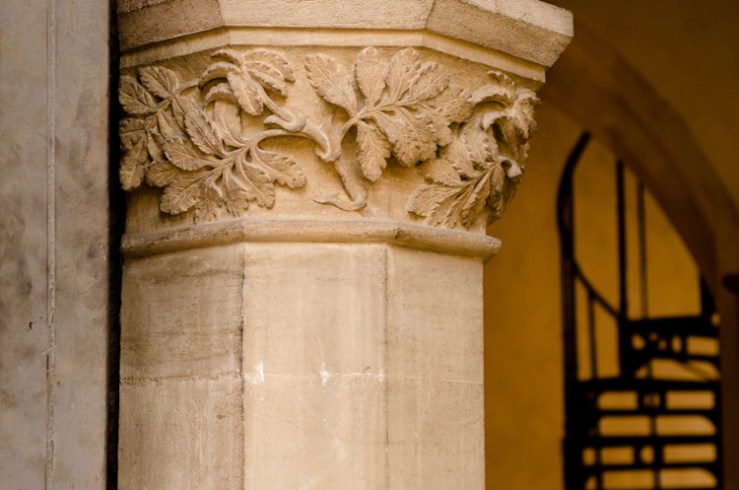
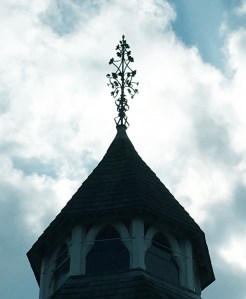
Continuing to spend time getting to know the building and its contents, I’ve been able to more fully appreciate the astonishing attention to detail throughout, and the sometimes seemingly ‘superfluous’ garnishes in which the architects indulged, such as this decorative ironwork on one of the Museum towers.
IMG_1654 (2)
Decorative ironwork on one of the Museum towers

It is not a weathervane; it is not, of course, any kind of antennae. It is beautiful, seemingly unnecessary, yet somehow integral. It was the Victorians (Darwin, always, is a good example,) who began to understand that many things in nature considered ‘superfluous,’ (such as the blue decoration of a male bowerbird’s bower,)  had in fact evolved through mate preference (sexual selection) or another competitive advantage (camouflage, fitness).

1024px-Bower_01_Pengo
Blue decoration of a male bowerbird’s bower

Oxford University held an architecture competition to choose a design for the building. The winning team included architect Benjamin Woodward, iron-master Francis Skidmore, and sculptors James and John O’Shea. The Victorians were striving, in Ruskin’s words, towards ‘truth to nature’. They were selecting for what Darwin called ‘grandeur in this view of life’. We do well to remember that no attention to detail, however small, is superfluous: in nature, in architecture, in poetry. On a grander scale, the arts are as essential to humankind as is blue to a bowerbird.



All about Alzheimer’s

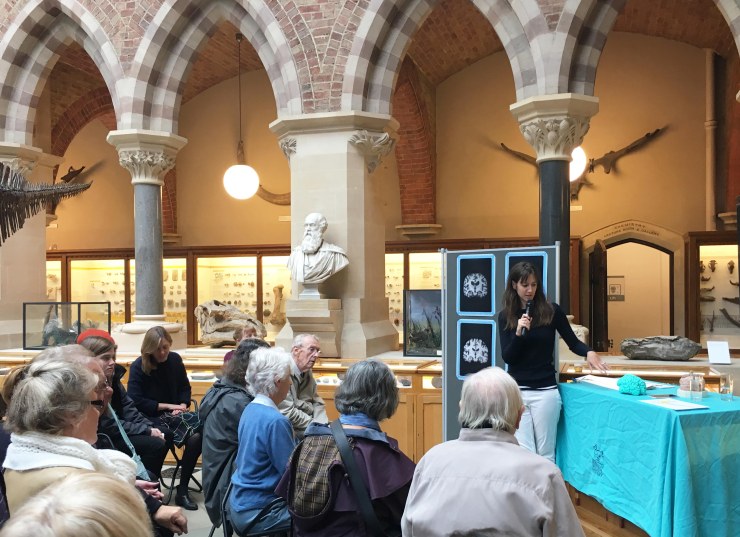
University of Toronto research fellow Jacqueline Zimmermann recently ran one of our Brain Spotlight events as part of the Brain Diaries exhibition programme. To mark World Alzheimer’s Day today, here Jacqueline tells us about the neurophysiology of Alzheimer’s disease and the risk factors we can actively reduce to lead happier, healthier, and longer lives.

Almost all of us have in some way been affected by Alzheimer’s disease, which makes the quest for a cure that much more personal. An estimated one in nine people over the age of 65 will develop the disease, and this risk also increases with age, according to the World Alzheimer’s Report in 2015.

Brain Spotlight
Jacqueline Zimmerman’s Brain Spotlight on Saturday 16 September as part of the Brain Diaries exhibition series of events.

Due to chemical toxins, and increased longevity, the incidence for Alzheimer’s disease is on the rise. But the good news is that there is a lot that you can do to reduce your risk. At the John Radcliffe Hospital in Oxford, hundreds of scientists are currently working towards identifying the cause and the solution to the disease.

At the Brain Spotlight event at the Museum I presented images of ageing brains, and explained how brains affected by Alzheimer’s have reduced volume in the temporal lobe and the hippocampus, regions critical for language and memory respectively. Diseased brains will also often show reduced frontal lobe volume, which may reflect the changes in personality and the ability to engage in planning which area associated with Alzheimer’s. The overall volume of the brain is also reduced in sufferers because cellular changes lead to the death of neurons.

Brain Atrophy in Alzheimer’s disease
Brain Atrophy in Alzheimer’s disease. Note: overall brain volume is reduced, hippocampal regions and frontal regions are particularly affected, and ventricles are enlarged. Image: http://www.lookfordiagnosis.com

Recently, a number of genes have been identified that are related to early onset Alzheimer’s, which is quite rare and much more hereditary than late-onset Alzheimer’s. At the Nuffield Department of Clinical Neurosciences, where I am a visiting researcher, we are investigating a late-onset Alzheimer’s risk gene called Apolipoprotein 4 (APOE4), looking at how it relates to subtle cognitive impairments in middle-aged people. Working with the Oxford Biobank we are trying to determine which cognitive assessments may be most effective in predicting these impairments.

Jacqueline Zimmerman
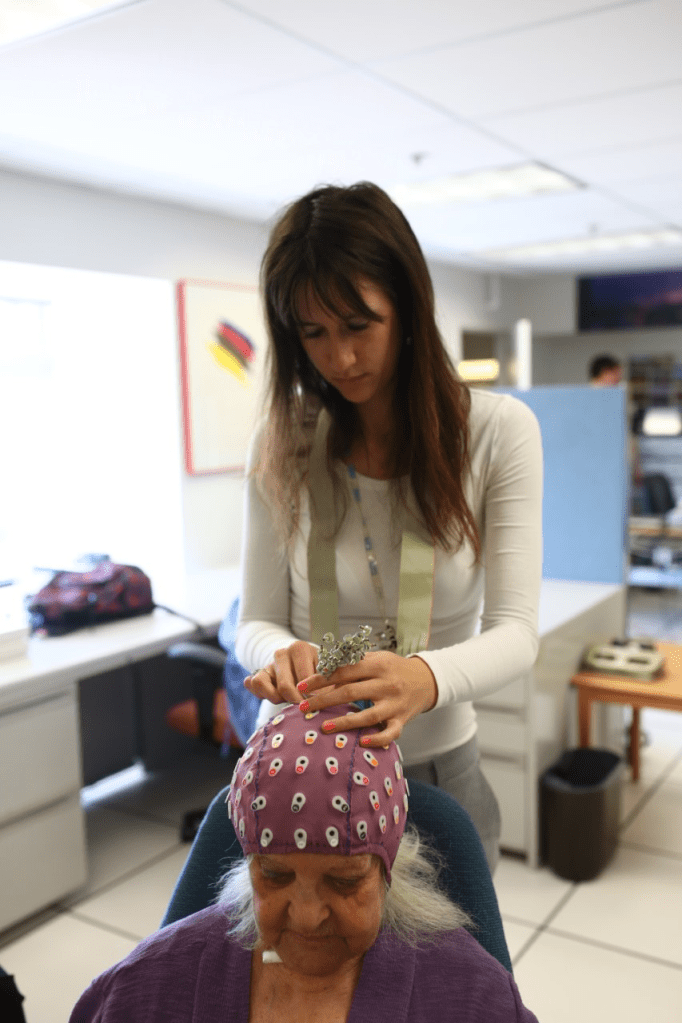
Functional brain imaging using electroencephalography at Rotman Research Institute in Toronto. Image: Rotman Research Institute

Although some of us may be more susceptible to Alzheimer’s than others, there are a number of environmental factors that contribute, including air pollution or additives in our food, like nitrogen-based chemicals which are used to preserve and flavour processed foods. It is important to reduce cholesterol in the diet, eat plenty of fruits and leafy greens, and engage in frequent physical and mental exercise.

Though there is speculation about the effectiveness of ‘brain games’ and how they translate into improvements in cognition in the real world, there are certainly large benefits of keeping your brain active.


The ancient mariner

Helen J. Bullard is a PhD candidate at the University of Wisconsin–Madison whose research aims to tell the historical and cultural stories of the horseshoe crab. After visiting the museum, and reading the story of our Natural History After-School Club member’s horseshoe crab fossil find, Helen offered to write a guest post for the blog about these amazing, ancient mariners…

You’re reading this, so I’m guessing you like museums. But have you ever heard of living fossils? Animals such as sharks and crocodiles are often referred to as ‘living fossils’ because they appear pretty unchanged from their ancient fossilized relatives. Of course, by definition, you can’t be both alive and a fossil. But fossils allow us to become primary eyewitnesses to ancient life; we can literally see what life used to look like, how cool is that? They can also dole out some pretty valuable advice, if we just choose to listen.

This summer during a visit to England, I spent some time at the Museum studying another so-called living fossil, the horseshoe ‘crab’. The horseshoe crab is not actually a crab, but is instead more closely related to spiders, scorpions and ticks. In fact, they are the closest living relatives of the extinct trilobites. But unlike their famous trilobite cousins, horseshoe crabs have survived all five of Earth’s major mass extinction events. Today, as a direct result of their ability to survive, the four remaining species of horseshoe crab play a vital role in global medical safety.

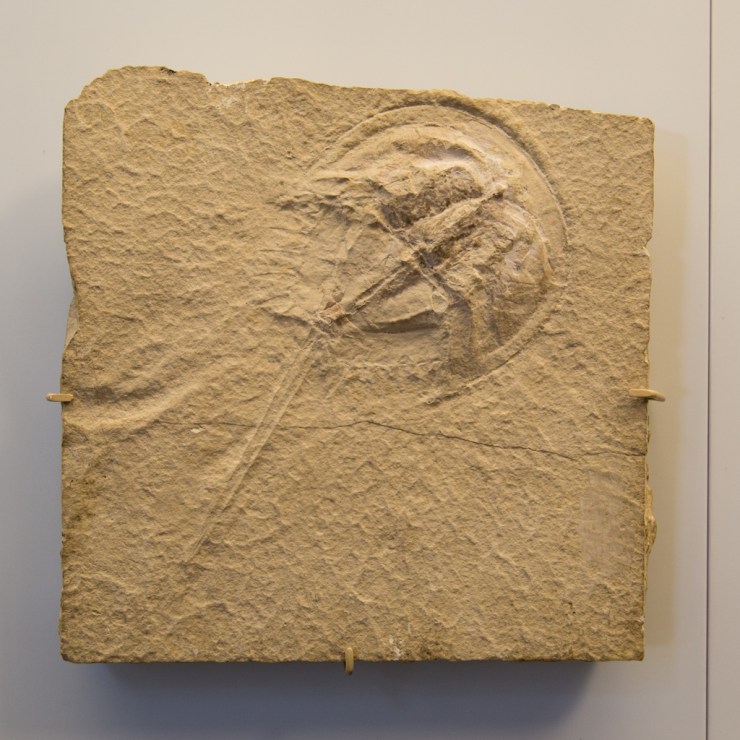
The Museum’s fossil specimen of Mesolimulus walchi, from the Upper Jurassic (163-145 million years ago), Solnhofen Germany, shows how little the form of the horseshoe crab has changed since

Not only do living horseshoe crabs look very similar to their early relations, they are also able to survive surprisingly severe injuries that often leave them missing body parts. Being able to see, through fossil evidence, how little their form has changed over time has helped to uncover the answer to this secret superpower. It lies in a very special life-saving trick that the crabs have kept for millions of years: a coagulating blood protein.

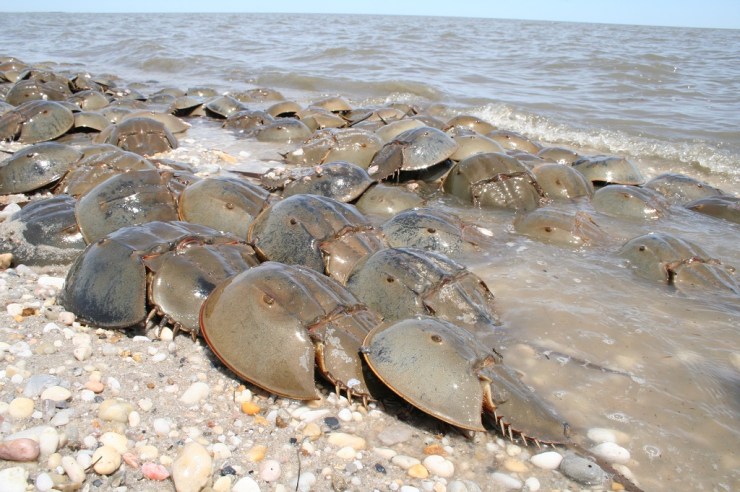
Horseshoe crabs on display in the Museum may provide food for thought for visitors

The blood of the horseshoe crab is able to clot quickly if bacteria are introduced, preventing infection, and saving the crab’s life. Since this discovery in the 1970s, this life-saving protein has been extracted from horseshoe crab blood and used in human medicine to test the safety of vaccines, medical laboratories, intravenous drugs, implants, and much, much more. The chances are that you owe a great deal of gratitude to the horseshoe crab.

But after all that surviving, horseshoe crabs, like many species, are now struggling for survival. They are losing their spawning grounds because of coastal development, industry, housing, marinas and coastal defense structures; they are collected and killed by the millions for bait, and bloodlet in their hundreds of thousands for medical use every year. It is likely that horseshoe crabs will not survive much longer.

But don’t despair. Museums are critical because they hold collections that can unlock knowledge about environmental change, and we can use that knowledge to protect life. Of course, horseshoe crabs are not alone in telling their stories through the fossils they leave – natural history museums are full of stories in stone, bones, pollen, and other traces. If you want to learn about and protect biodiversity, visit your local museum, or support organisations like Oxford’s Environmental Change Institute.

And to help the ancient horseshoe crab itself, join in with the efforts of the Ecological Research and Development Group – the crabs have saved us, so let’s return the favour.


Stories from the Stores

by Hannah Allum, Move Project Manager

Museums are space-hungry places. There’s rarely enough room to properly house the collections we currently hold, never mind finding space for new material. Roughly 90% of museum collections are not on public display, so many museums use storage beyond their main building, in offsite stores.

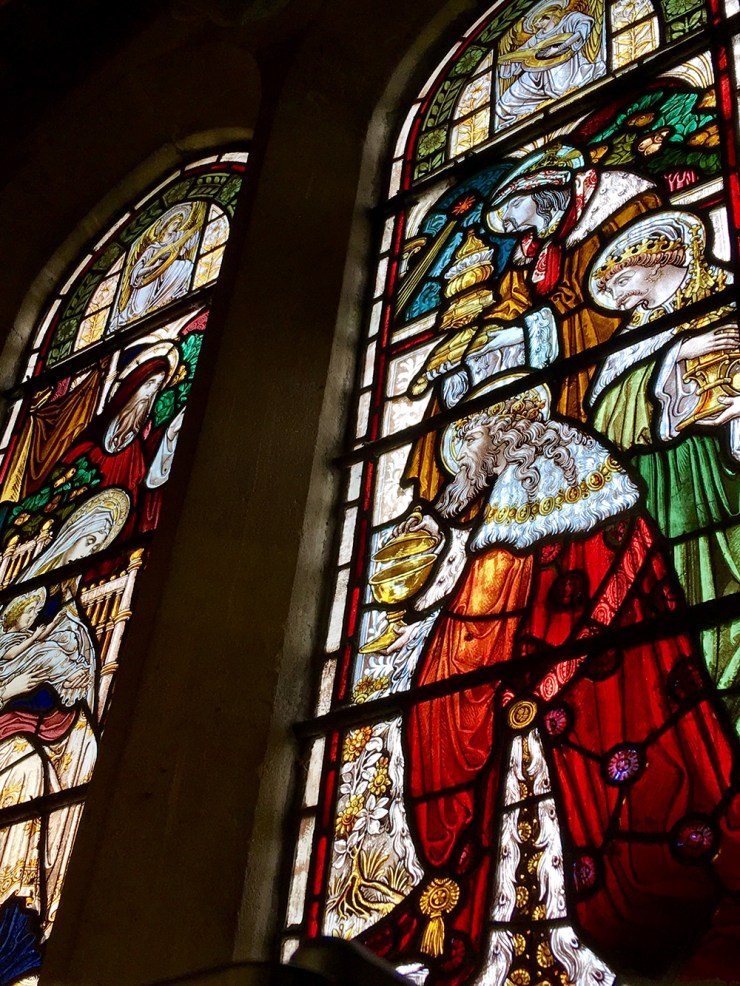
The Museum of Natural History has faced the same challenges and, for the past few decades, has found a solution in a somewhat surprising building. Where might you least expect to find a vast collection of rocks and fossils dating back millions of years? How about a nineteenth century church, complete with beautiful stained glass windows?!

Stained glass windows in the former church

As atmospheric as it is, this deconsecrated church is no place for good quality museum storage. To do the collections justice they need a monitored and controlled environment, suitable containers and pest prevention measures. Plus, it’s always a bonus to be able to access specimens without playing a very nerve-wracking game of Jenga or Tetris!

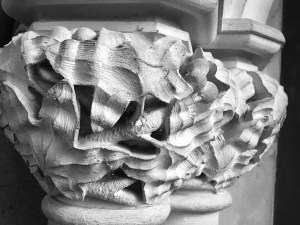
Carving detail in the former church

So, once again we are faced with the most terrifying and exciting of museum tasks; a collections move project! In 2016 we successfully relocated approximately 17,000 specimens from some of our old offsite stores and showed you some behind the scenes secrets along the way with the hashtag #storiesfromthestores. This time we have a team of eager beavers (also known as project assistants) who can’t wait to share glimpses of the project as we go, so make sure to keep an eye on @morethanadodo on Twitter.

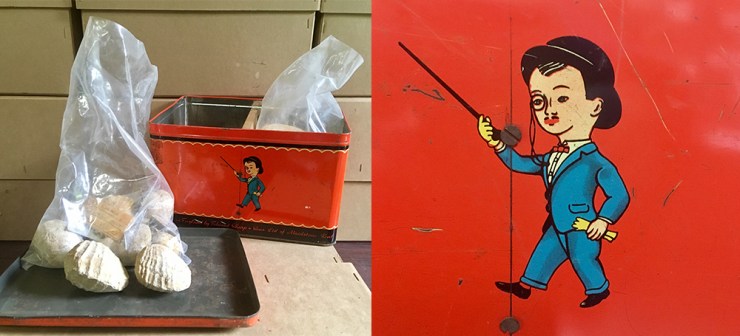
An oats box made an unusual storage solution for Earth materials

After a much needed clean of the church, we’re starting to prepare the material to be moved. Alongside the specimens, we’re already coming across some interesting historical packaging. It seems that the mass consumption of Oxo cubes was a pre-requisite for collectors of old, as many specimens are stored in these retro tins. A few other repurposed boxes include; Quaker oats, Sharp’s toffee, Fry’s chocolates, marmalade, mustard oil and even wine crates. Quite the picnic!

A toffee tin for storing fossils – just one of the interesting choices for collections tins over the years.

Once removed from the church, the project team will be working on processing these collections in a dedicated space, as well as giving them some TLC and new homes (boxes). This will take place at a specialist heritage storage site until the end of 2018. Keep your eyes peeled for more on the treasures from this trove.

Paint it green

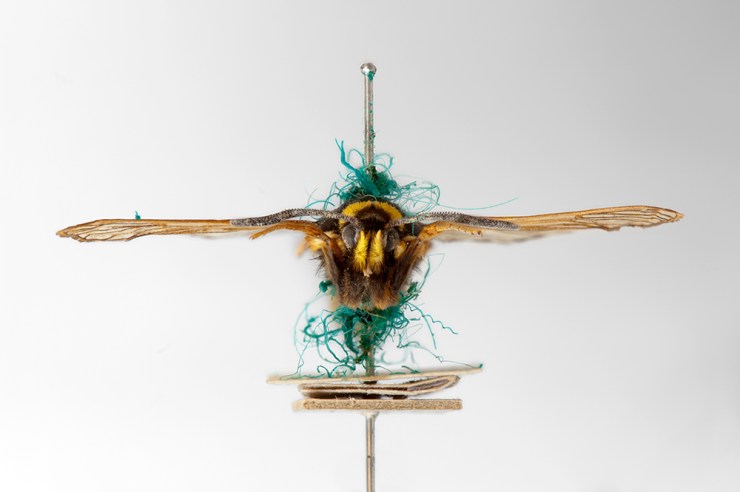
In the process of researching or conserving old pinned insects, it’s common to find a green deposit clustered around the pin. This is known as verdigris and is a natural patina created when the metal oxidizes over time. Katherine Child is Image Technician in the Museum’s Life collections and takes photos of insects for researchers, students, artists and publications. She is also an artist in her own right, so when she witnessed verdigris being removed during a conservation project, she came up with an inspired idea.

A clearwing moth before conservation, showing verdigris spreading where the metal and the insect fats, or lipids, react.

A few years ago I read a book called Colour: Travels Through the Paintbox, by Victoria Finlay, and was interested to learn that verdigris was once used as a pigment. Verdigris, which I now know translates from French as ‘Green of Greece’, is a word that’s been in my vocabulary since I was small.  I loved its rich bright blue-green colour, which is often seen on old copper piping or copper statues.

Verdigris forms when copper or a copper alloy reacts with water, oxygen, carbon dioxide or sulphur.

L: Three years’ worth of verdigris, ground and ready to make into paint.
R: A second attempt at mixing the paint, this time using linseed oil.

As early as 5thcentury AD, it was used in paint-making, and until the late 19th century it was the most vibrant green pigment available. But it was unstable – Leonardo da Vinci warned that it ‘vanishes into thin air if not varnished quickly.’ These days synthetic pigments provide a more constant alternative.

Despite its past uses, verdigris is a big problem in pinned insect collections. Nowadays stainless steel pins are used, but pins containing copper still remain in old collections and these react with air and insect fats. The more fatty the insect, the more verdigris tends to form and, if left, it can damage a specimen irreparably.

Comprising around five million or so insects, the Hope Entomological Collections here in the Museum take quite a bit of looking after. A few years ago a project to catalogue and conserve many of its butterfly and moth specimens was undertaken and the removal of verdigris and repining of insects was part of this.

With paint-making in mind, I asked that the beautiful, but problematic, substance be saved.  About three years on I finally got around to using the pigment, which I had also been adding to while photographing the collections.

I chose a variety of differently shaped moths to paint (most of the verdigris came from moths, so moths seemed the most apt subject). To narrow my options further I went for green moths. Some of the specimens I chose had verdigris on their pin, so I was able to take pigment and use it to paint the very specimens from which it came!

Katherine tested out the newly made verdigris paint in her sketchbook.

After a first failed attempt to make watercolour paint (during which pigment and water remained stubbornly separate due to the greasy insect fats still present), I tried again, this time using linseed oil to make oil paint – and it worked! Traditionally a flat bottomed tool called a muller was used to press pigment into the water or oil. Not having one of these, I used the flat end of a pestle and a mortar which did the trick.

A Miscellany of Moths, the finished verdigris painting.

The paint went surprisingly far and, following on from the 14 green moths, I plan to use up the remainder to paint beetles.

Katherine’s Miscellany of Moths painting can be seen on display in the Museum’s Community Case until 18th October.

Amber time capsules

New Museum Research Fellow Dr. Ricardo Pérez-de la Fuente talks about his fascinating work with a special collection at the Museum of Comparative Zoology, Harvard University, and what he’ll be getting up to at the Museum of Natural History. 

Amber, fossilised resin, has fascinated humanity since prehistoric times due to its mesmerising colour, shine, and fragrance when burned. From a scientific viewpoint however, what makes amber unique is the ability that the resin has to capture small portions of the ecosystem and the organisms living within almost instantaneously, in an unaltered way, preserving them for tens of millions of years. This has an unmatched fidelity among the fossiliferous materials.

Fibla_carpenteri_holotype_RPF_President_and_Fellows_of_Harvard_College
Holotype of Fibla carpenteri Engel, 1995, a snake-fly. Credit: President and Fellows of Harvard College.

During a four-year postdoctoral fellowship at the Museum of Comparative Zoology (MCZ) at Harvard University, I had the chance to curate, identify and digitise one of the premier fossil insect collections worldwide. It holds about 50,000–60,000 specimens, including around 10,000 amber inclusions. One of the unexpected outcomes of my time there was helping to rediscover a forgotten loan of about 400 Baltic amber samples that had been brought to the MCZ from the University of Königsberg during the 1930’s.  This loan ended up sparing the specimens from being destroyed during the bombardment of the city of Königsberg (renamed Kaliningrad thereafter) in World War Two. The full-story as showcased by the Harvard Gazette can be found here.

Lagynodes_electriphilus_holotype_RPF_President_and_Fellows_of_Harvard_College
Holotype of Lagynodes electriphilus Brues, 1940, a megaspilid wasp. Credit: President and Fellows of Harvard College.

As a researcher specialising in fossil arthropods, one of the most remarkable challenges for me during the digitisation project at the MCZ was to overcome the thrill to learn more about the specimens that we were imaging. In what way were they different from their modern relatives? Were they perhaps new to science? What information were they providing from the ecosystem in which they lived? At present, I can fully embrace these questions and many more thanks to becoming a Museum Research Fellow at the Museum of Natural History.

Hypoponera_atavia_cotype_RPF_President_and_Fellows_of_Harvard_College
Cotype of Hypoponera atavia (Mayr, 1868), an ant. Credit: President and Fellows of Harvard College.

My research at the museum focuses on studying interactions between organisms in deep time and their behaviours, particularly in Cretaceous amber, such as plant-insect pollination relationships around 100 million years ago. During that time, a major shift was taking place in terrestrial ecosystems due to the diversification of angiosperms (flowering plants), which ended up replacing gymnosperms (non-flowering plants) as the dominant flora. There was also the appearance of key groups of organisms from the ecological perspective — ants and bees in the case of insects, for instance.

It is a well-accepted fact that preservation in amber is biased towards small organisms because the larger ones tend to escape the sticky resin more easily. But how easy it is for one to get lost in amber when examining its secrets and trying to unravel its mysteries! Becoming forever trapped within.

Some of the most remarkable Baltic amber specimens (about 40 million years old) returned to the Königsberg collection from the MCZ. Pictures: RPF. Credit: President and Fellows of Harvard College.