The latest display in our changing Presenting… series showcases some of the incredible colours seen in many insects. Zoe Simmons, collections manager in our Life Collections, explains how such wonderful hues are created.
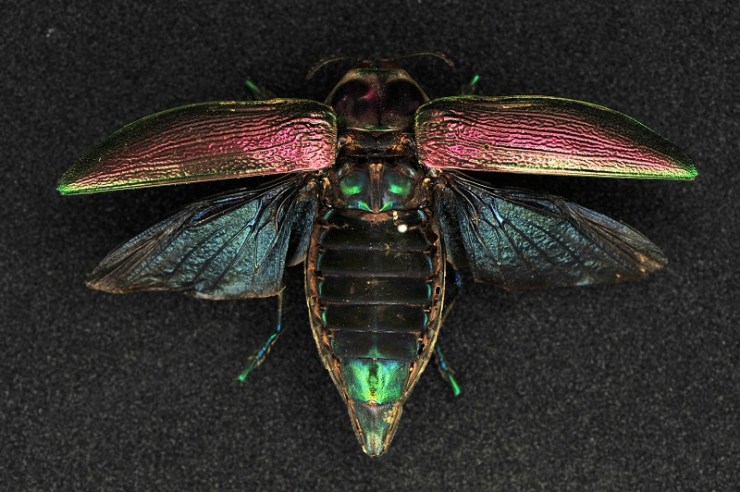
Reflected and refracted light creates the many bright and shining colours found in some insects. The dazzling natural display shown in the specimens here is formed through a combination of embedded pigments and sculpted surfaces on each insect’s external skeleton.
Some species can be variable in colour. Here a pair of Lamprima, a genus of Stag Beetles, shows off the range of colours present in the species.
Different pigment chemicals are responsible for different colours. Carotenoids produce yellow, orange and red hues, while bilins may be green, or blue if linked with proteins. They reflect and absorb different wavelengths of light, and the wavelengths that are reflected are the ones that we see as colour. Typically humans can see wavelengths of 390-700 nanometres, with the lower wavelengths perceived as blue, and the higher ones as red.
Many of the Leaf Beetles (Chrysomelidae) exhibit metallic colours.
Many insects also have multiple thin layers over their upper surfaces to help protect them and prevent dehydration. Variations in thickness and chemical composition of these layers can interfere with the transmission of light, refracting and scattering it back.
Some of the most striking metallic colours are found in the genus Chrysina, where species can be rose, silver or gold.
The shape of the surface layer can reflect light in a multitude of directions, with micro-folds, grooves, pits, hairs and scales all helping to produce complex colours and effects.
The formation and purpose of these colours is scientifically interesting, with research having applications in areas such as nanotechnology. But these insects are also simply beautiful examples of the spectacular diversity of the natural world.
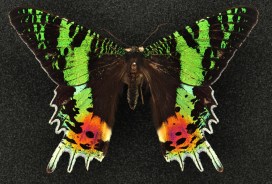
Sunset moths (Uraniidae)are so called because of the dazzling array of colours on their wings. As day-flying moths they are brightly coloured like many butterfly species.
by Chris Stimpson, visiting researcher from Queen’s University Belfast
Visitors to the museum will be familiar with the striking parade of mammal skeletons in the court, where they can get a close look at a polar bear’s jaws and peer up through the rib cages of Indian and African elephants, amongst many other things. But these mounted specimens are just a small sample of the animal skeletons that are looked after by the museum.
The main collection of skeletons is carefully stored in behind-the-scenes spaces such as the museum’s Tradescant Room. For researchers who work on animal bones found in archaeological sites, collections like these are not just important – they are essential.
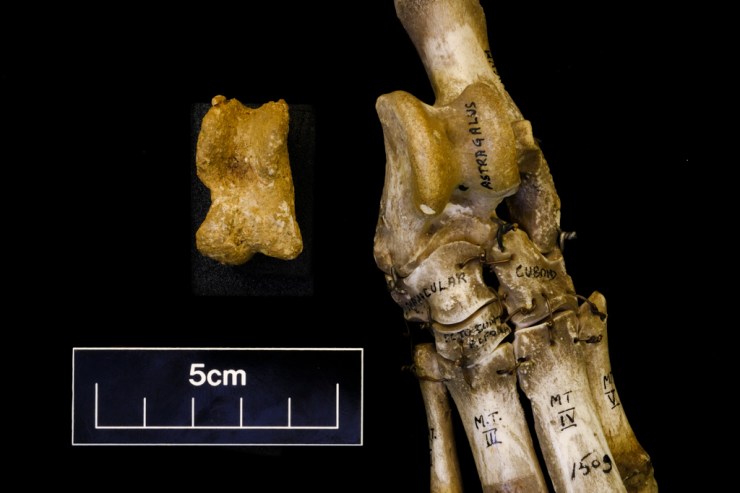
Comparison of an archaeological pig astragalus (ankle bone, left) with an articulated reference specimen from the museum collection (opposite leg, OUMNH.ZC.19948) of an Indonesian wild boar (Sus scrofa). Radiocarbon dating of charcoal indicates the archaeological specimen is over 17,000 years old.
Differences in size, shape, proportion, and the number and arrangement of bones and teeth are a great aid to identification. Teeth in particular often have features that help identify the animal they came from. Bones also have articulations and facets which can be helpful, though identification can be more challenging than with teeth.
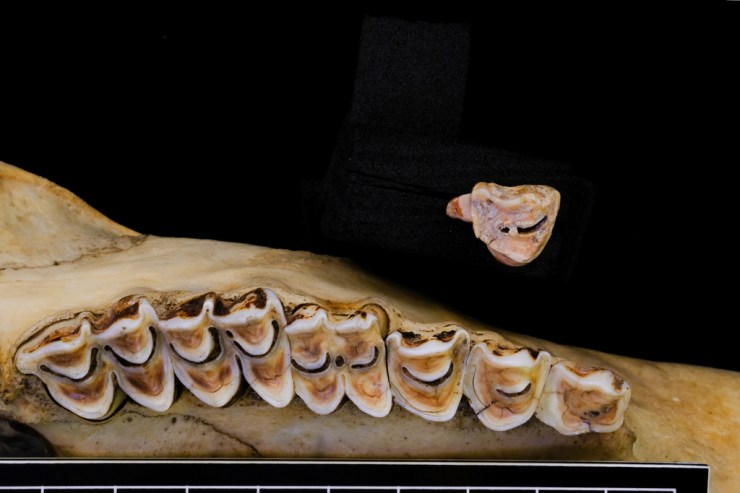
Comparison of an archaeological premolar (top), with the upper right tooth row of a goat-like animal called a serow (Capricornis sumatraensis) from the museum’s collection (OUMNH.ZC.21654). Radiocarbon dating of charcoal from the site indicates the archaeological specimen is over 5,000 years old.
These challenges are part of the work I am doing on the SUNDASIA Project which is undertaking archaeological and palaeoecological investigations in the Tràng An World Heritage Area, in Ninh Binh Province, Northern Vietnam. Working with Vietnamese colleagues, we are investigating climatic and landscape changes that have affected – and may affect – the limestone karst forest over thousands of years. In particular, we’re looking at the responses of human, animal and plant communities to these changes.
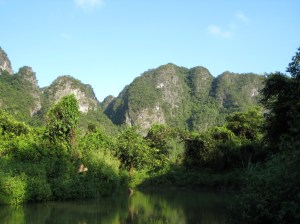
The limestone karst landscape of the Trang An World Heritage Area
During our cave excavations we have recovered bones from a variety of birds, mammals, reptiles, fish and amphibians. Radiocarbon dates from charcoal in the cave deposits suggest this material ranges from 30,000 to 5,000 years old. This is great, but what can these bones tell us of animal life and human hunters at different times in the past? What has changed and why? And what could it mean for the future of Tràng An?
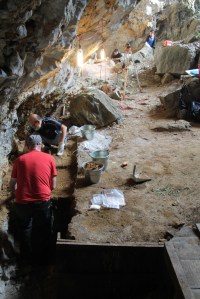
Excavations underway in Hang Moi, a cave site in Trang An
Before we can begin to answer juicy research questions like these, we need to identify the bones. This is where collections like those held in the museum really come into play. Only with access to skeletons of known animals – where there is knowledge of family, genus or species classification – can we compare the excavated material and identify what we have found.
And while old bones and skeletons may smack rather of death, with a little patience and a good comparative collection like that in the museum, it is remarkable what a few specimens can tell you of life in different times and places that we otherwise know little about. Museum collections are a key to the past, present, and perhaps even to the future.
You’re reading this, so I’m guessing you like museums. But have you ever heard of living fossils? Animals such as sharks and crocodiles are often referred to as ‘living fossils’ because they appear pretty unchanged from their ancient fossilized relatives. Of course, by definition, you can’t be both alive and a fossil. But fossils allow us to become primary eyewitnesses to ancient life; we can literally see what life used to look like, how cool is that? They can also dole out some pretty valuable advice, if we just choose to listen.
This summer during a visit to England, I spent some time at the Museum studying another so-called living fossil, the horseshoe ‘crab’. The horseshoe crab is not actually a crab, but is instead more closely related to spiders, scorpions and ticks. In fact, they are the closest living relatives of the extinct trilobites. But unlike their famous trilobite cousins, horseshoe crabs have survived all five of Earth’s major mass extinction events. Today, as a direct result of their ability to survive, the four remaining species of horseshoe crab play a vital role in global medical safety.
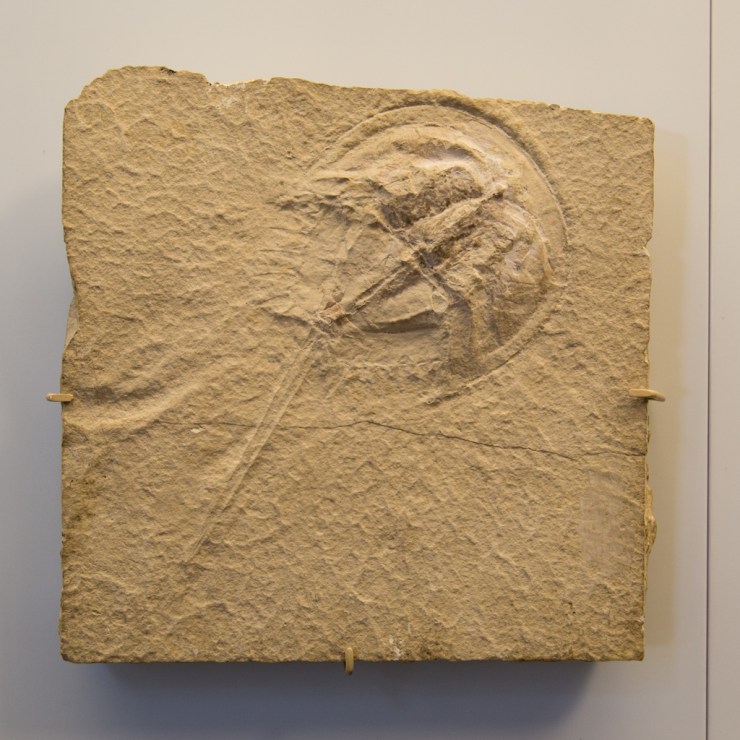
The Museum’s fossil specimen of Mesolimulus walchi, from the Upper Jurassic (163-145 million years ago), Solnhofen Germany, shows how little the form of the horseshoe crab has changed since
Not only do living horseshoe crabs look very similar to their early relations, they are also able to survive surprisingly severe injuries that often leave them missing body parts. Being able to see, through fossil evidence, how little their form has changed over time has helped to uncover the answer to this secret superpower. It lies in a very special life-saving trick that the crabs have kept for millions of years: a coagulating blood protein.
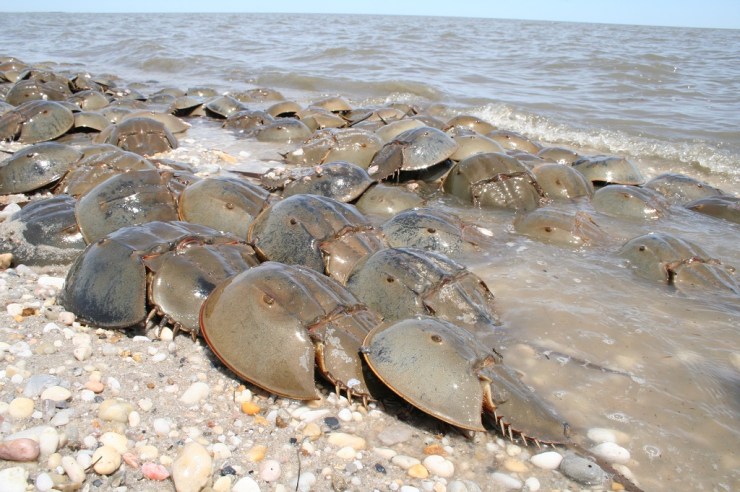
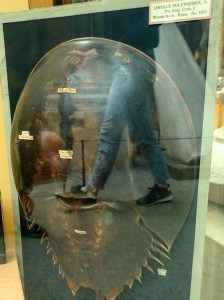
Horseshoe crabs on display in the Museum may provide food for thought for visitors
The blood of the horseshoe crab is able to clot quickly if bacteria are introduced, preventing infection, and saving the crab’s life. Since this discovery in the 1970s, this life-saving protein has been extracted from horseshoe crab blood and used in human medicine to test the safety of vaccines, medical laboratories, intravenous drugs, implants, and much, much more. The chances are that you owe a great deal of gratitude to the horseshoe crab.
But after all that surviving, horseshoe crabs, like many species, are now struggling for survival. They are losing their spawning grounds because of coastal development, industry, housing, marinas and coastal defense structures; they are collected and killed by the millions for bait, and bloodlet in their hundreds of thousands for medical use every year. It is likely that horseshoe crabs will not survive much longer.
But don’t despair. Museums are critical because they hold collections that can unlock knowledge about environmental change, and we can use that knowledge to protect life. Of course, horseshoe crabs are not alone in telling their stories through the fossils they leave – natural history museums are full of stories in stone, bones, pollen, and other traces. If you want to learn about and protect biodiversity, visit your local museum, or support organisations like Oxford’s Environmental Change Institute.
And to help the ancient horseshoe crab itself, join in with the efforts of the Ecological Research and Development Group – the crabs have saved us, so let’s return the favour.
Last summer we ran an unusual competition: finding a new residence for our four metre-long model of Utahraptor ostrommaysorum. It had been hibernating in one of our off-site stores for a while, but following a reorganisation of collections we needed to find a new place for it to live. The competition to rehome the dinosaur was fierce, with 200 venues across the world vying to become the Utahraptor‘s new keeper…
It’s taken some time, thanks to logistics and admin, but one year later we are really delighted to reveal that the Utahraptor has now been installed at the Children’s Hospital at the John Radcliffe Hospital in Oxford.
The bid to take in the Cretaceous creature came from Sarah Fletcher, who now works at the Churchill Hospital in Oxford. Sarah nominated the Children’s Hospital so that the dinosaur could amaze and inspire the young patients.
The idea of having a model Utahraptor in the hospital seemed like a lot of fun. Having been through the Children’s Hospital with my family, I knew that it would make such a difference to everyone who walks through those doors. But I never thought in a million years that we would win it – I am thrilled!
– Sarah Fletcher
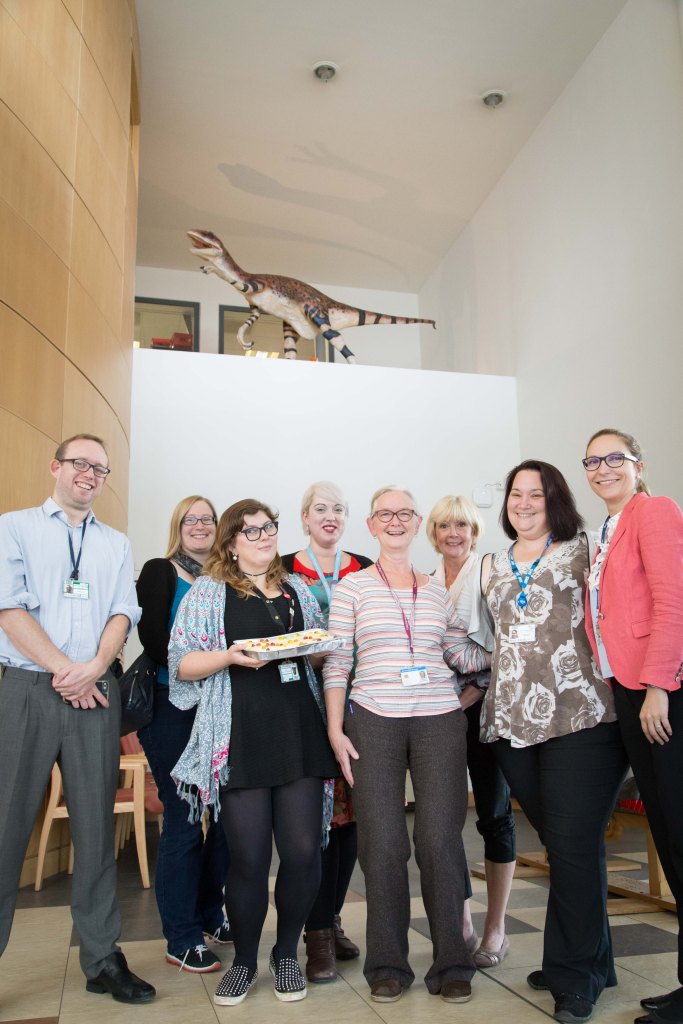
The Children’s Hospital team celebrate the arrival of their new ‘pet’
The model has been installed in the main entrance of the hospital, complete with new shadow-casting lighting, thanks to support from Oxford Radcliffe Hospitals Charitable Funds.
The team are now looking to develop new arts projects for young patients, themed around the dinosaur, including an all-important naming competition. We all hope it will bring pleasure to patients, provide a welcome distraction, and make their hospital visit a little more fun.
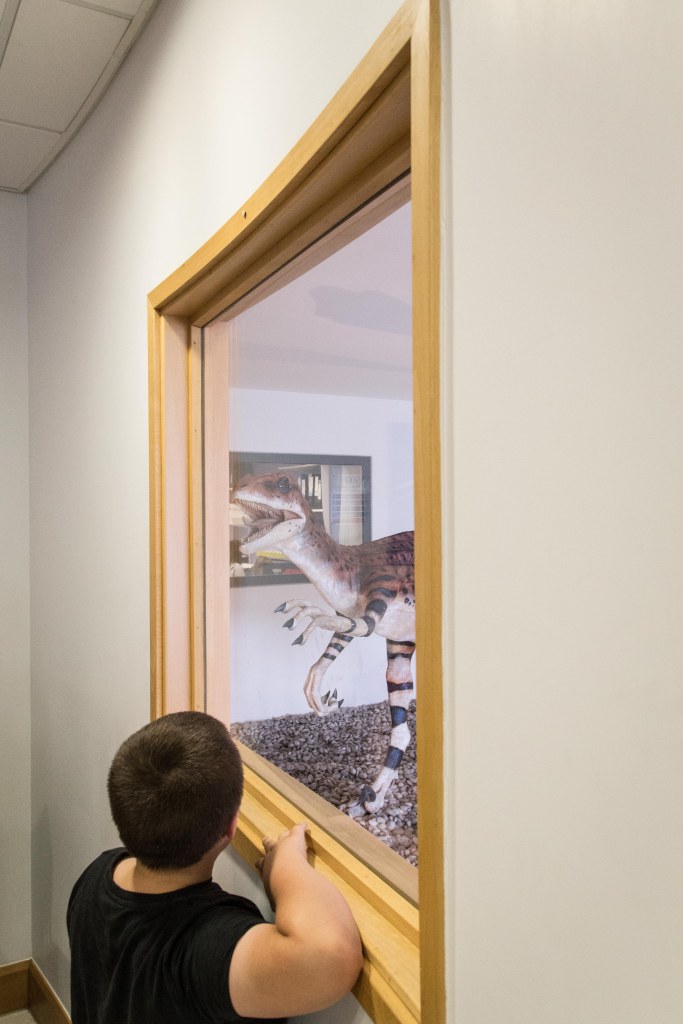
Patients, staff and visitors can peer at the dino on the way to the wards
How many species of crayfish can you name? Not many, or perhaps none? Well today, for the first time, a list of all the species of crayfish in the world has been published, thanks to a collaborative effort between Professor Keith Crandall at George Washington University and Dr Sammy De Grave, head of research here at the Museum.
The new list draws together much recent work and gives biologists access to a single, comprehensive summary of all the recognised species of crayfish for the first time. The new classifications group crayfish into 669 species, 38 genera, and five families, with two superfamilies corresponding to the Northern and Southern hemispheres.
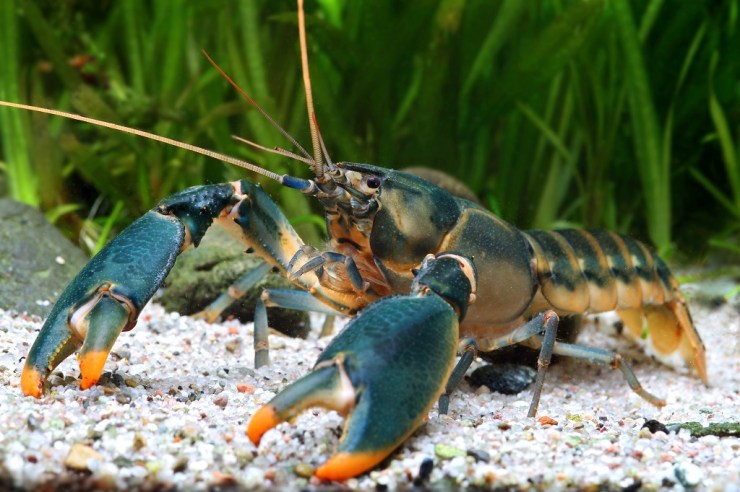
Fallicambarus devastator. Image: Chris Lukhaup
On the occasion of this taxonomic triumph it seems like a good opportunity to take a look at some interesting crayfish from around the world.
Outside biological taxonomy, crayfish are much better known as a source of food. They are eaten worldwide, but especially in the southern US, Australia, and Europe, where the Red Swamp Crayfish (Procambarus clarkii) is most commonly on the menu. As a result, the Red Swamp Crayfish has been introduced into several countries and has out-competed the local species.
Several other species are also known as invaders. The Signal Crayfish (Pacifastacus leniusculus), native to North America, is now very abundant in Europe, and is out-competing the native Noble Crayfish (Astacus astacus).
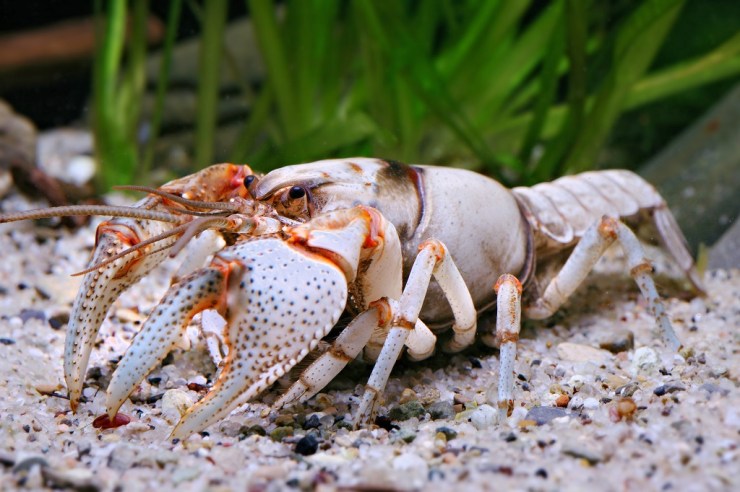
The Noble Crayfish (Astacus astacus), above, is native to Europe, but is being out-competed by the introduced Signal Crayfish (Pacifastacus leniusculus). Image: Chris Lukhaup
Another remarkable crayfish is the Marmorkrebs, a species which still has no official taxonomic name. It was first noticed in the aquarium trade in Germany in the 1990s, but no natural populations are known. But the really interesting thing about this species is that all known individuals are female: it is parthenogenetic, which means the females reproduce from eggs without fertilisation – no males involved!
The Marmorkrebs crayfish has no official taxonomic name and is parthenogenetic – all individuals are female, genetically identical and reproduce without males. Image: Chris Lukhaup
Unfortunately, Marmorkrebs has escaped from aquaria in several countries, and is outcompeting local species due to its fast reproduction. Of most concern is its occurrence in Madagascar, where it competes for food and space with the endemic Astacoides crayfish, a much larger but slower-growing species.
Astacopsis madagascariensi, above, is being out-competed in Madagascar by the Marmorkrebs, which has escaped from several aquaria. Image: Chris Lukhaup
The Tasmanian Giant Crayfish (Astacopsis gouldi) is considered to be the largest freshwater invertebrate on the globe. Although its size has declined in recent years due to over fishing, historical specimens weighed up to 6kg and could reach 80-90 cm in length.
The completion of the new world crayfish list allows for further refinements to the conservation status of the animals too. Current Red List assessments show that 32 per cent of crayfish are already thought to be threatened with extinction, a similar number to freshwater shrimps and crabs.
It is really exciting to finally have a single source for the world’s freshwater crayfish taxonomy. Such a resource will impact a wide variety of fields that rely on crayfishes as study organisms. We hope it will also advance conservation efforts of these keystone species of highly endangered freshwater ecosystems.
– Professor Keith Crandall, George Washington University
The paper, An updated classification of the freshwater crayfishes (Decapoda: Astacidea) of the world, with a complete species list, is published today in the Journal of Crustacean Biology.
At this year’s Oxford Festival of Nature I ran a spotlight session on cephalopods, the group of molluscs that includes squids, octopuses, cuttlefish, nautiluses and ammonites. While many visitors recognised the distinctive shells of nautiluses, they often weren’t too sure about the animals that made them.
Top: Chambered nautilus (Image: Manuae) Middle: Glassy nautilus (Image: Johan Jacob Tesch) Bottom: Paper nautilus, or argonaut (Image: Comingio Merculiano)
This is not surprising because, confusingly, there are three different animals often referred to as ‘nautiluses’ and which all create strikingly similar shells or shell-like structures. This is deeply mysterious because there is no direct biological relationship between either the animals or the structures they make…
To helpful clarify just what’s going, here’s a quick guide to glassy nautiluses, chambered nautiluses and paper nautiluses, and the beautiful spiral structures they create.
Glassy nautilus
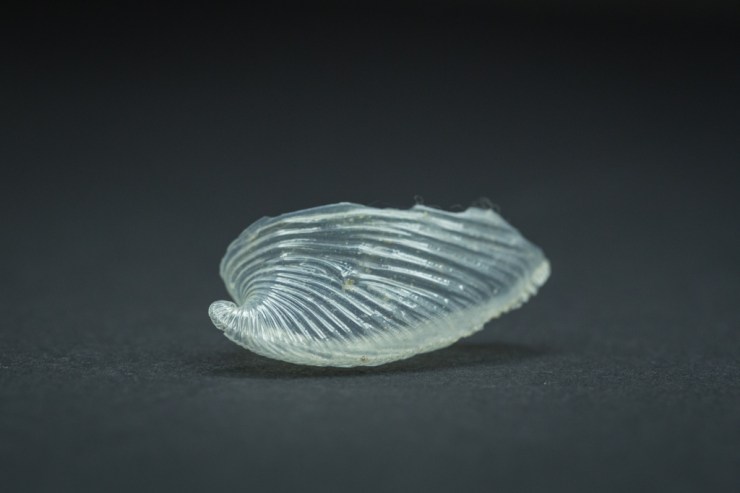
Shell of a ‘glassy nautilus’ Carinaria lamarckii.
The glassy nautilus is the outsider of the ‘nautiluses’. It is actually a free-swimming gastropod – the group of molluscs that includes snails, slugs and limpets. The glassy nautilus creates extremely fragile transparent, glass-like shells, but unlike many other shelled gastropods, it can’t retract into its shell, which only covers a small portion of the body.
These fragile shells are understandably quite rare and are said to be worth their weight in gold; unfortunately that wouldn’t be very much as they are extremely light.
Chambered nautilus
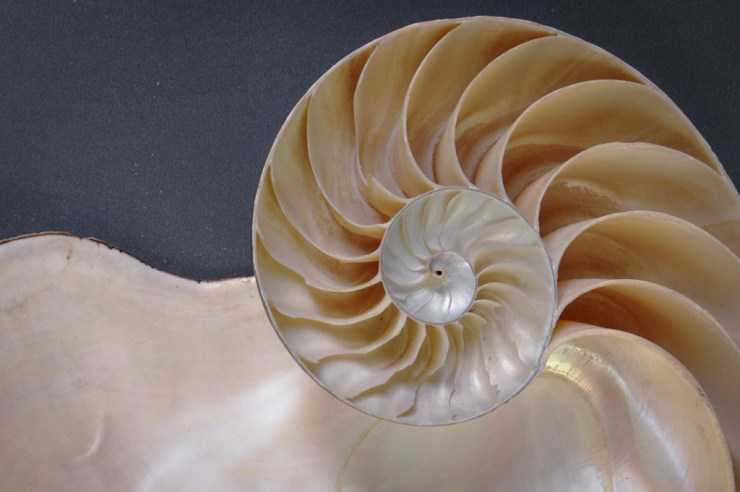
Bisected young Nautilus shell showing the internal chambers. The small tubes along the middle of the chamber walls are where a structure called the siphuncle runs; this moves fluid and gas in the chambers.
Perhaps the most familiar of the three creatures here are the chambered nautilus, cephalopods belonging to a very old group that first appeared nearly 500 million years ago. Despite being known and collected for a long time – examples of polished Nautilus shells mounted in gold and silver from the 16th century can be seen at the Ashmolean Museum – the living animals weren’t actually scientifically described until the 19th century.
‘Chambered’ refers to the internal walls of the shell which form chambers as the animals grow. The living nautilus occupies the most recently grown and largest chamber. A structure called a siphuncle runs throughout the chambers, adjusting the gas and fluid in each to aid in buoyancy.
A nautilus shell cut in half, or sectioned, is often used as a symbol to demonstrate the mathematical beauty of nature, and you’ll see it in logos worldwide. Unfortunately, as with most biology, these chambers aren’t formed with mathematical regularity; growth rates are affected by environment and diet.
It was thought that measuring the chambers in fossil nautiloids, if they were laid down regularly, could tell us how far the moon has been from Earth in the past. Disappointingly, this is not the case.
Argonauta, or paper nautilus
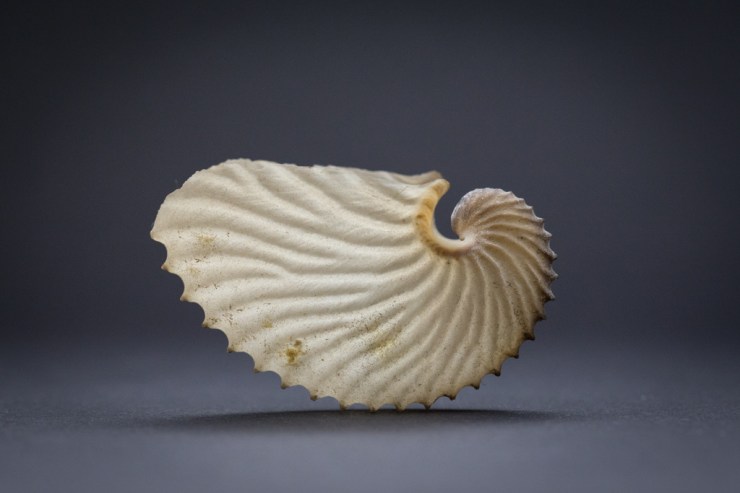
The fragile ‘paper nautilus’: the egg case and brooding chamber of an argonaut, Argonauta.
The last of our ‘nautiluses’ is the argonaut, or paper nautilus, which is a type of octopus. The structure it creates looks superficially similar to the shells of the chambered nautilus and glassy nautilus, and not surprisingly it was thought to be a paper thin shell with some affinity to the chambered nautiluses. In fact, paper nautiluses ‘shells’ are not true shells at all, but are structures secreted by female argonauts as a brood chamber for eggs.
Preparation showing series of argonaut egg cases of varying sizes.
Argonaut shells are arguably better known than the animals that make them. But unlike other kinds of mollusc shells, which can be reliably used to delineate different species, argonaut shells take a diverse array of forms across individuals thought to be of the same species. Female argonauts can also repair and replace these cases, adding to variation in their forms.
A strange similarity What’s striking about chambered nautilus and argonaut shells is their superficial similarity, despite the animals being in two distantly-related cephalopod groups. Both argonauts and nautiloids use their shells to remain buoyant in the water column but there are a myriad of different biological solutions to solving this problem, so why so similar?
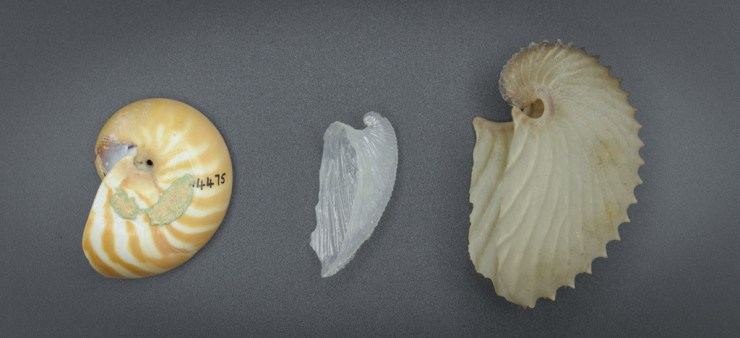
The three different kinds of ‘nautilus shells’ from left to right chambered nautilus Nautilus, glassy nautilus Carinaria and paper nautilus Argonauta.
It’s tempting, though not scientific, to suppose that argonauts are somehow tapping into their deep evolutionary history of chambered shelled relatives; however, superficial resemblance aside, the shells of argonauts are chemically, mechanically, structurally and physiologically completely different to those of the chambered nautilus.
So how and when did argonauts evolve this egg case-making behaviour? Fossil examples provide little evidence of how it happened and don’t reveal whether case-making is the ancestral state that has subsequently been lost in related free-swimming cephalopods that brood their young differently.
So the strange similarity between these three structures – the shell of the chambered nautilus, that of the glassy nautilus (not a nautilus really, but a gastropod), and the egg case of the argonaut – remains a beautiful and intriguing mystery.











 More Than A Dodo