A moving story

img_0737

For the past nine months there has been a lot of moving going on around here. Imagine moving house endlessly for weeks on end, but where your house is full of bones, insects, fossils, rocks, and weird and wonderful taxidermy. And the location of everything has to be precisely recorded. The museum move project was a bit like that.

Project assistant Hannah Allum explains…

The museums are migrating, we declared in May 2016. And so they have. The first major stage of the stores project has been completed. After we had created inventories for the largely unknown collections held in two offsite stores, the next stage was to pack them safely and transport them to a new home nearer the museum, a job which demanded almost 70 individual van trips! We now have over 15,000 specimens sitting in vastly improved storage conditions in a new facility.
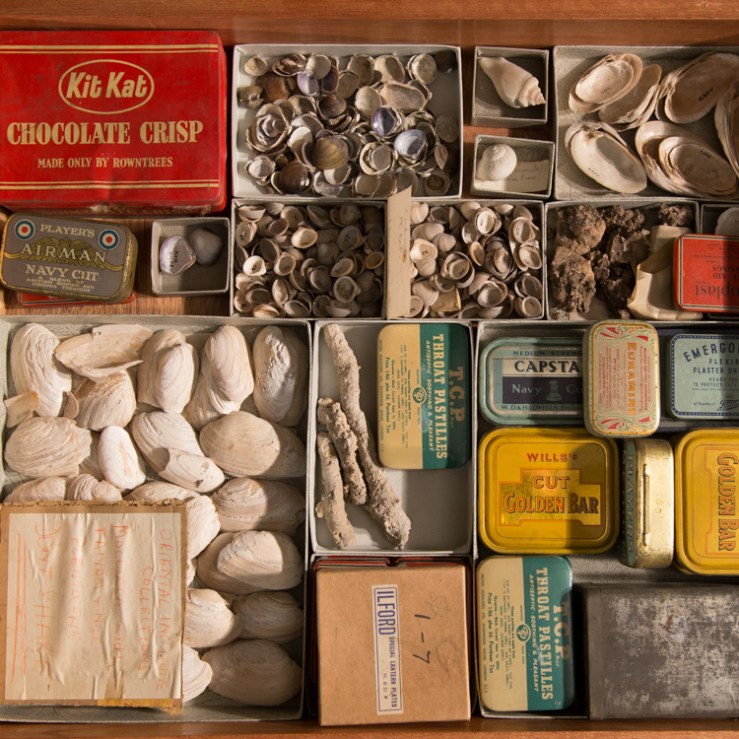
A miscellany of boxes for a collection of shells

Let’s revel in some numbers. All in all there were over 1,000 boxes of archive material, mostly reprints of earth sciences and entomological research papers; over 1,300 specimens of mammal osteology (bones); and more than 1,000 boxes and 650 drawers of petrological and palaeontological material (rocks and fossils).

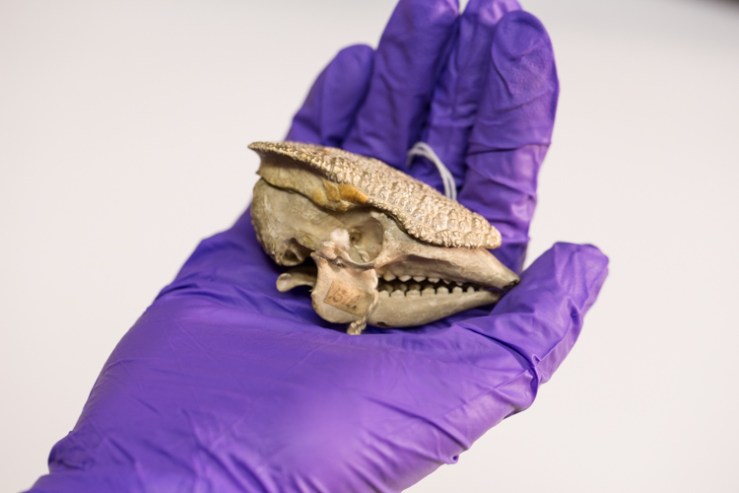
Some of the more memorable specimens include old tobacco tins and chocolate boxes filled with fossils and shells; a beautifully illustrated copy of the ‘Report on the Deep-Sea Keratosa’ from the HMS Challenger by German naturalist Ernst Haeckel; and the skull of a Brazilian Three-banded Armadillo (Tolypeutes tricinctus), complete with armour-plated scute carapace.
img_0756
The skull and carapace of a Brazilian Three-banded Armadillo (Tolypeutes tricinctus)

There were also a few objects that have moved on to more unusual homes. A 4.5 m long cast of Attenborosaurus conybeari (yep, named after Sir David) was too large to fit in our new store and so made its way to another facility along with a cornucopia of old museum furniture. A set of dinosaur footprint casts, identical to those on the Museum’s lawn, have been gifted to the Botanical Gardens for use at the Harcourt Arboretum in Oxford.

And last but not least, a model of a Utahraptor received a whopping 200 applications from prospective owners in our bid to find it a suitable home. After a difficult shortlisting process it was offered to the John Radcliffe Children’s Hospital and following a quarantine period should soon be on display in their West Wing.

Footprint casts, attributed to Megalosaurus, queuing for a lift to Harcourt Arboretum. Credit: Hannah Allum
Casts of footprints by made Megalosaurus, queuing for a lift to Harcourt Arboretum. Image: Hannah Allum

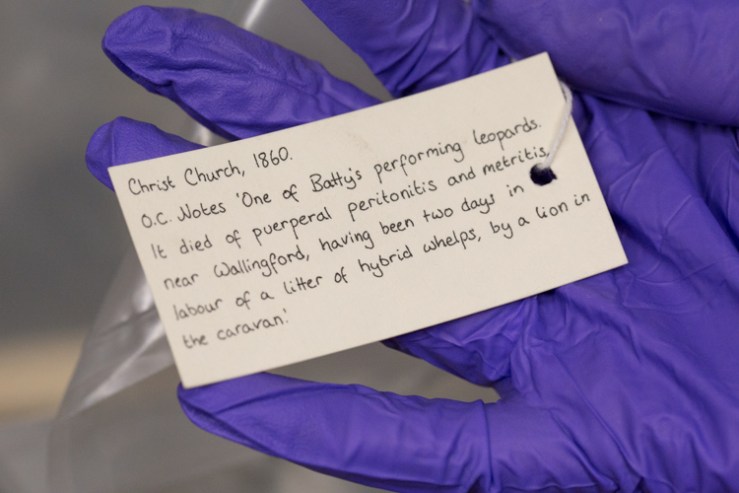
Fittingly, the final specimen I placed on the shelf in the new store was the very same one that had been part of my interview for this job: The skeleton of a female leopard with a sad story. It apparently belonged to William Batty’s circus and died of birthing complications whilst in labour to a litter of lion-leopard hybrids before ending up in the Museum’s collections in 1860.
img_0760
The sad story of a performing leopard

Though the moving part of this project is now complete there is still plenty of work to do. We are now updating and improving a lot of the documentation held in our databases, and conservation work is ongoing. The new store will also become a shared space – the first joint collections store for the University Museums, complete by April 2018.

To see more, follow the hashtag #storiesfromthestores on Twitter @morethanadodo and see what the team at Pitt Rivers Museum are up to by following @Pitt_Stores.

Pioneers of photography

The Anatomy Lesson with Dr George Rolleston by Charles Lutwidge Dodgson
Image: Victoria and Albert Museum, London

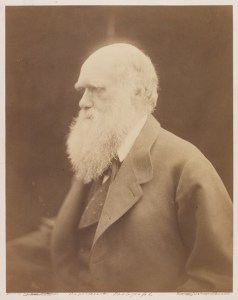
The latest display in our changing Presenting… case showcases some pioneers of photography and features a recently-discovered original print of Charles Darwin by Julia Margaret Cameron…

In the early days of photography, in the mid-19th century, a number of photographic innovators had close links to the Museum and its collections. Perhaps the most famous of these is Charles Lutwidge Dodgson (1832-1898), better known as Lewis Carroll. Dodgson was an author and mathematician at Christ Church College in Oxford, and also an accomplished early photographer.

Dodgson’s friends were often the subjects of his photos. A well-known example is Alice Liddell who, as well as sitting for portraiture, provided inspiration for Dodgson’s book Alice’s Adventures in Wonderland, as did the Dodo in the Museum’s collections.

The image at the top of the article is titled The Anatomy Lesson with Dr George Rolleston and was taken by Dodgson around 1857. It shows Dr Rolleston, Professor of Medicine at the University of Oxford at the time, pictured with a selection of specimens from the Museum’s collections.

‘Charles Darwin, Naturalist’, 1868, Julia Margaret Cameron, The Royal Photographic Society Collection © National Media Museum, Bradford / SSPL. Creative Commons BY-NC-SA

Two of Dodgson’s subjects were accomplished photographers in their own right, and perhaps the most famous female photographers of their time: Julia Margaret Cameron (1815-1879) and Sarah Angelina Acland (1849-1930).

Cameron’s innovative and distinctive style of portraiture raised photography to a true art form. Her intentional use of shifted focus and experiments with process and finish gave an ethereal look to her works resembling the artistic style of the contemporary Pre-Raphaelites.

Many prominent scientists sat for Cameron, including naturalist Charles Darwin. She took the portrait above in 1868 at her home on the Isle of Wight. An original print of this photograph, made by Cameron, was recently discovered in the Museum Archive, uncatalogued. It features her signature on the back and the blind stamp from her printseller in London on the front.

'Mr Ruskin & his old friend at Brantwood' by Sarah Angelina Acland, 1893
‘Mr Ruskin & his old friend at Brantwood’ by Sarah Angelina Acland, 1893

Sarah Angelina Acland, inspired and taught by Cameron, is best known for her innovations in colour photography, but she also took many black and white photographs while learning the art form. The portrait above features her father Sir Henry Wentworth Acland and the artist John Ruskin at his home. Both Ruskin and Acland were instrumental in the founding of this Museum, and Sarah even helped to lay the founding stone in 1855.

In a 1904 Royal Photographic Society exhibition Acland was the first to exhibit work combining images taken with red, green and blue filters, three years before the launch of the colour photography process invented by the Lumière brothers.

These images, including the original print of Charles Darwin by Julia Margaret Cameron, are on display in our Presenting… case until 24 January.

Tales from the Jurassic Coast

marybuckland_philpot_2

Britain’s Jurassic Coast is a famous location for fossil hunters. Dorset’s Lyme Regis in particular was a collecting ground for two very important Victorian palaeontologists – Elizabeth Philpot (1780-1857) and Mary Anning (1799-1847) – and the site yielded some of the earliest specimens of Ichthyosaurs and Plesiosaurs.

Last weekend Channel 4’s Walking Through Time series focused on the Jurassic Coast and featured two members of staff from the Museum, Eliza Howlett and Hilary Ketchum from our Earth Collections. To coincide with the programme, Eliza here delves into the Museum’s Philpot archive to paint a picture of the relationship between Elizabeth Philpot, Mary Anning, and Oxford University’s first Reader in Geology, William Buckland.

*

Elizabeth Philpot moved to Lyme Regis around 1805 with two of her three sisters, Mary and Margaret, where they soon became involved in fossil collecting and where they remained for life. At this time Lyme-born Mary Anning was still a young girl, but so began an affectionate relationship with the Philpot sisters which transcended any barriers of age, social origins or educational background.

Caption
A letter from Elizabeth Philpot to Mary Buckland dated 9 December 1833.

As the Philpots’ fossil collection grew it became known in the geological community. One familiar visitor was William Buckland, whose earliest published reference to the ‘Miss Philpots’ is in his 1829 paper on the pterosaur found at Lyme by Mary Anning.

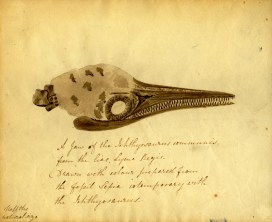
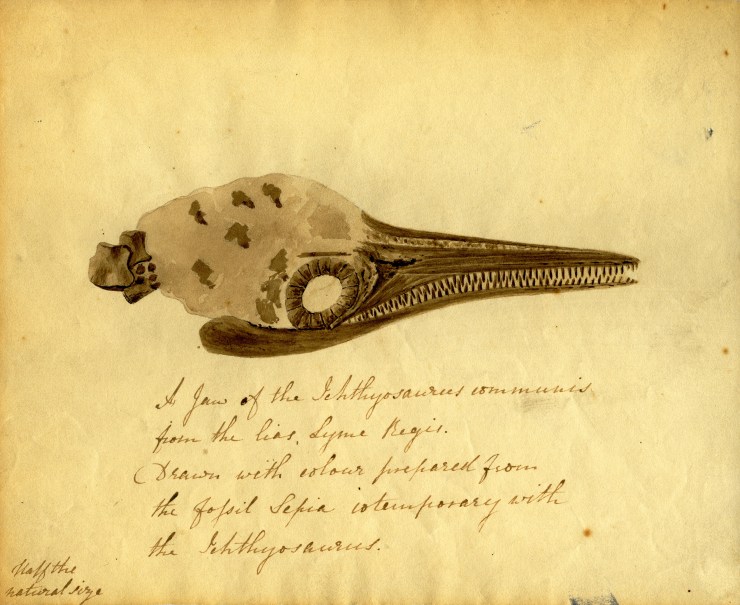
In one letter to Buckland’s wife, Mary, dated 9 December 1833, Elizabeth Philpot enclosed a sketch of an ichthyosaur head that she had painted using ink from a fossil squid of the same age as the ichthyosaur, 200 million years old; this is pictured at the top of the article. The letter also contained a colourful description of Mary Anning’s escapades:

Yesterday [Mary Anning] had one of her miraculous escapes in going to the beach before sun rise and was nearly killed in passing over the bridge by the wheel of a cart which threw her down and crushed her against the wall. Fortunately the cart was stopped in time to allow of her being extricated from her most perilous situation and happily she is not prevented from pursuing her daily employment.

Next, it sends a reminder to William Buckland, a man well-known for forgetting things:

May I beg you to remind Dr. Buckland that he has borrowed from me some Plesiosaurus vertebre. As it is some time since I will mention that it is a section of a vertebre, one with the process, ten others, and a chain set in a box.

These letters from Elizabeth Philpot are now held by the Museum, along with the Philpot collection of around 400 fossils. Mostly from Lyme Regis, this collection includes more than 40 type specimens, the reference specimen for a new species, which is a remarkable total for any collector. A brief list of people known to have examined the collection is practically a roll call of the key figures in 19th-century palaeontology: William Buckland, William Conybeare, John Lindley and William Hutton, Richard Owen, James Sowerby, and (from Switzerland) Louis Agassiz.

But the collection was also made available to the ordinary people of Lyme, and the handwritten labels by Elizabeth Philpot sometimes included detailed explanations of what these extinct animals would have looked like. Both the letters and the specimens remain deeply evocative today, conjuring up visions of what it must have been like to call on these three remarkable sisters.

Because of the risk of light damage the material is not normally on display, but it can be viewed by appointment. Email library@oum.ox.ac.uk or earth@oum.ox.ac.uk for more information.

Darwin, dolphins and a ‘Monkeyana’

macmanimalkingdompl60-crop-750

The Museum is home to a vast collection of natural history specimens but is perhaps less well-known for its substantial art and object collection. This material became the focus of Charlie Baker and Imogen Stead, two of our summer interns, as they spent six weeks researching, organising and curating it for the Museum.

The range and amount of material was formidable: numerous prints, non-scientific objects, paintings, photographs and sculptures from across the Museum, all coming together into a single organised collection for the first time. Here, Charlie and Imo unearth just a small sample of some of the items they catalogued during their time at the Museum:

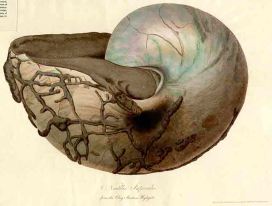
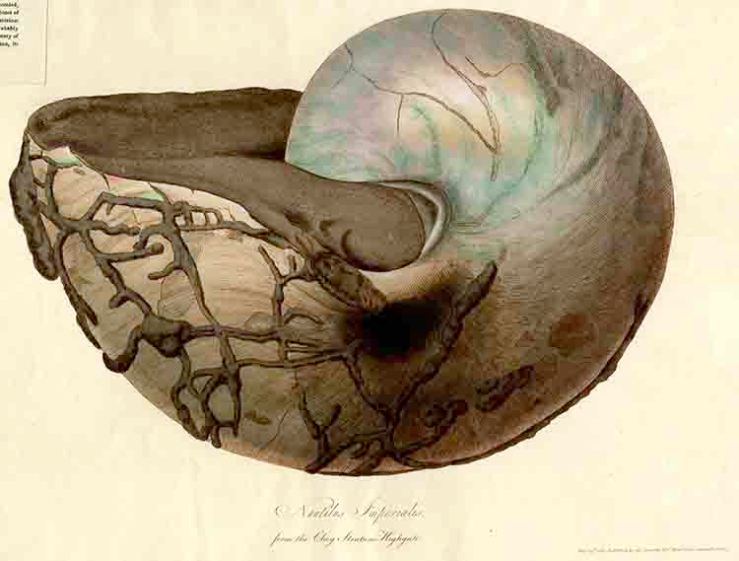
Nautilus Imperialis
This beautiful print shows a fossil of the Nautilus Imperialis. It is one of the largest prints the Museum holds: measuring 48cm x 43 cm, it’s too large for the scanner! It has a small pamphlet of text stuck to it, just visible in the picture, and we speculate that this may have been promotional material for James Sowerby’s Mineral Conchology of Great Britain, the first volume of which was published in 1812, the same year as this print.

nautilusimperialis-for-web
Nautilus Imperialis print

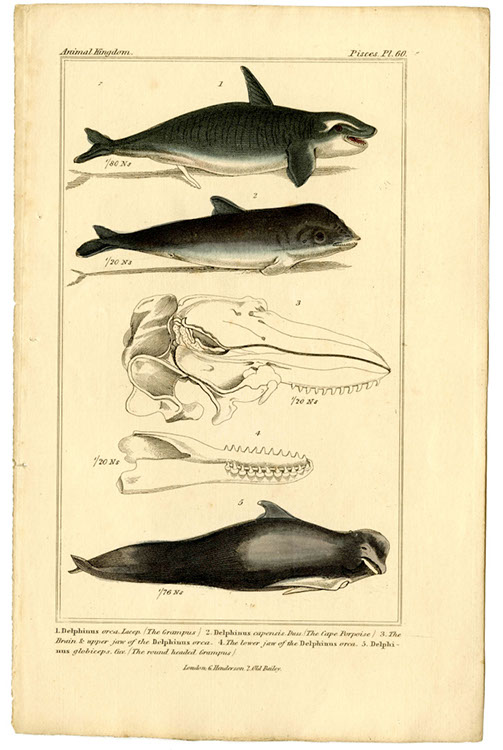
Plate 60 from The Animal Kingdom
This is a plate from Henry MacMurtrie’s translation of Georges Cuvier’s Le Règne Animal, showing a few species of the genus Delphinus, or Common Dolphins. The Museums has 32 plates from this book in the collection. The publication demonstrates the intellectual collaboration between countries and the international appeal of Cuvier’s famous work. In fact, the collections holds plates from the original French and two different English translations.

macmanimalkingdompl60
Plate 60 from ‘Animal Kingdom‘ (Le Régne Animal) by Georges Cuvier, 1829

Slide cutter
This tool was found in a chest of drawers in the Hope Library at the Museum. It initially baffled us, but staff identified it as a slide cutting tool. The circular blade scores the glass, and the notches are used to carefully break off the piece of glass. When cataloguing and storing it, we discovered the blade is still sharp enough to cut through a sheet of paper!

slidecuttercloseup
Slide cutter tool

Photo of Charles Darwin
This framed photo of the great Victorian scientist is one of 22 pieces of art hanging in the Museum’s Hope Library. What makes this copy of the photo special, however, is the caption beneath it: “I like this photograph very much better than any other which has been taken of me.”

darwin
Photograph of Charles Darwin with his annotations

Monkeyana Cartoon
One of the most bizarre items we came across was this 1828 satirical cartoon about lawyers. The collection has eight ‘Monkeyana’ cartoons, all by Thomas Landseer.

monkeyana
Monkeyana Cartoon by Thomas Landseer, 1828

On a dung beetle’s trail

dung-beetles-blog-post

Thanks to the work of our Head of Life Collections Darren Mann, and the Dung Beetle UK Mapping Project team, the conservation status of the UK’s dung beetles, chafers, and stag beetles (Scarabaeoidea) is currently undergoing a comprehensive review.

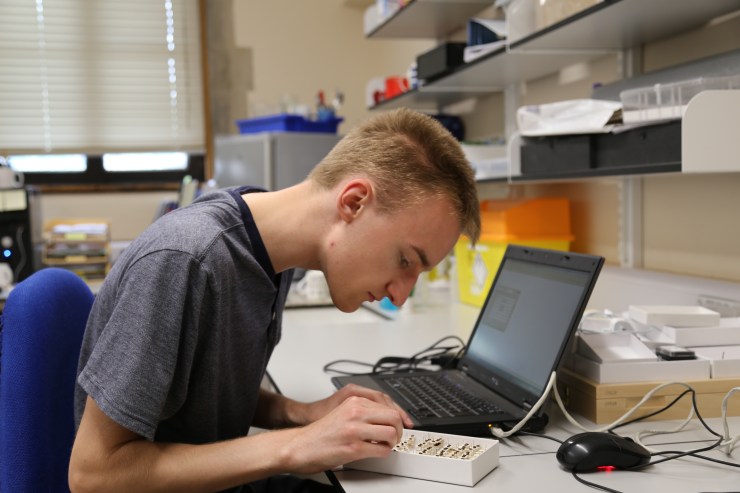
Contributing to this effort, Jack Davies, one of our summer interns, has been on the trail of a species that has proven to be particularly rare in the UK…

Aphodius lividus
Aphodius lividus

I am on the hunt for Aphodius lividus, a dung beetle with a truly cosmopolitan distribution, being found across most of the globe, but which is rather rare in Britain. Since 1990 it has been recorded at only six sites, though historical accounts suggest it was more common in the past.

Most of these historic records are from the south east of England, particularly Kent and the London area, but there are several geographically isolated records from across England and Wales too. So might A. lividus, whilst being extremely local, actually be widespread across the UK?

During my time at the Museum I have been contributing to a comprehensive review of this species’ distribution by helping to verify these records. This has involved a thorough search of collections, journals and the Museum archives, a process which revealed that many of the recordings of A. lividus were almost certainly erroneous.

We were able to discount the only two Welsh records, as well as single records from Cheshire, Leicestershire and Lincolnshire. Our reasons for doing so included a lack of supporting evidence, the unreliability of certain collectors, and the confirmed misidentifications of some specimens.

IMG_9966
Jack Davies working on a collection of Aphodius lividus

The number of known localities for A. lividus decreased further when we realised that three of the reported sites in Kent most probably all refer to the same location. This is a common problem in this type of research, due to the very broad locality names found on Victorian specimen labels.

So it has become clear that this incredibly scarce beetle is even rarer than we first thought. But it’s not all bad news for A. lividus; our research has uncovered reports from localities in Devon and Northumberland in the old literature, which we found to be trustworthy records.

Aphodius lividus
Map showing the distribution of the dung beetle Aphodius lividus in the UK

All the verified data from the project has been collated to produce this map of the distribution of A. lividus in the UK. Its very local distribution, and the very low number of recent records, confirm that this species should be classified as Vulnerable to Extinction in the UK.

Although it would be a shame to lose this species in Britain, we don’t believe it should be a priority for conservation efforts. Since Aphodius lividus has a strong preference for high temperatures, it’s likely that the UK is simply at the very edge of its range.  It is also a very abundant species in many areas around the world, and it contributes little in terms of ecosystem services in Britain compared to many of our other dung beetles.

So conservation should instead aim to preserve the dung beetle ecosystem as whole, which supports a huge number of species and also brings many benefits to agriculture.

Tongue-testing fossils, Victorian-style

IMG_9692

by Anna Dewar, Museum intern

Victorian geologist William Buckland had an impressive knack for finding fossils. He named the first dinosaur, Megalosaurus bucklandii, in 1824 after its discovery in Stonesfield near Oxford. You can see the Megalosaurus fossils on display in the Museum today.

Working as an intern here over the last few weeks, I have been confronted with hundreds of Buckland’s specimens, many of which have never been catalogued.

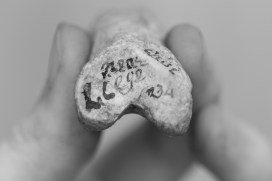
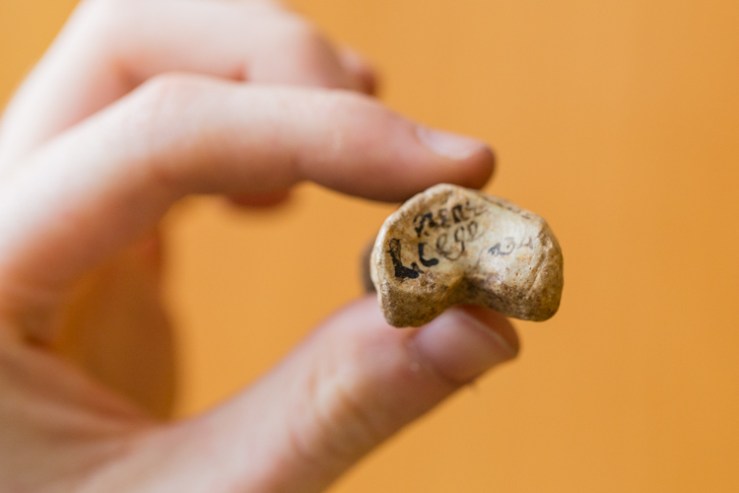
A couple of weeks ago I stumbled upon a cave bear toe bone, or phalanx, with a very unusual label. Written in Buckland’s handwriting was ‘Cave Bear Liège’ and the number ‘234’. No other fossils in this collection were numbered, and after a database search not one other specimen had been found near this Belgian city.

I then discovered something that, while it could be coincidence, demanded further investigation. On page 234 of Lyell’s Principles of Geology, Vol. II, published in 1832, appears the only mention of Liège in the entire book:

In several caverns…near Liège, Dr. Schmerling has found human bones in the same mud…with those of the…bear, and other… extinct species.

The mysterious ‘234’ perhaps references this page number; if so, it would indicate that the specimen was one of those Philippe-Charles Schmerling had discovered. But if this is the case, how did this fossil end up in Buckland’s possession?

IMG_9687
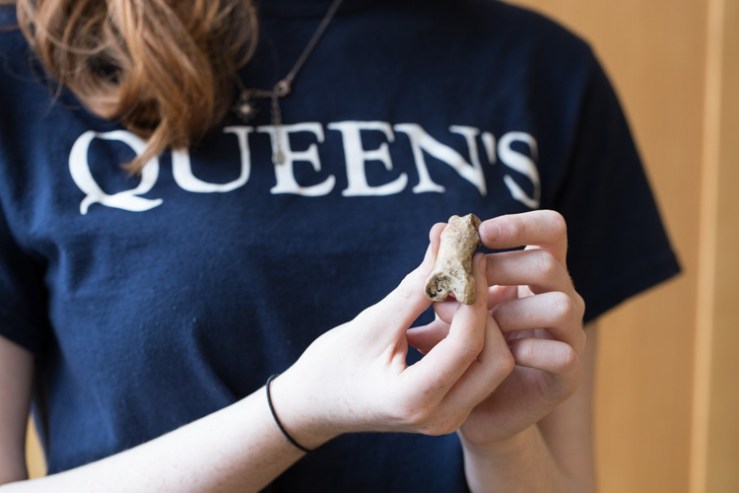
Anna holds the fossilised cave bear phalanx, or toe bone, showing the word ‘Cave Bear Liège’ and ‘234’ in William Buckland’s handwriting

After some further research, I learned that Schmerling presented his Liège findings to a group of naturalists including Buckland in 1835. Schmerling argued that the human bones he had discovered were also fossils, and so the same age as the bones of extinct animals.

Buckland countered Schmerling’s claim by saying that “these animals lived and died before the creation of man” and that, instead, the human remains found alongside extinct species could be explained by burial. French geologist Élie de Beaumont, who was present at the meeting, remembered how Buckland chose to voice this opinion:

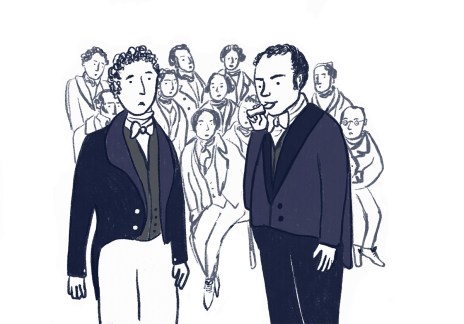
Mr Buckland took a bear bone, and put it on the tip of his tongue, to which it remained suspended…and, turning to…the assembly, Mr Buckland repeated many times…: ‘You say that it does not stick to the tongue!’ Mr Schmerling tried a few times to stick to his own tongue several human bones, but he did not succeed.

Buckland tongue test illustration_Ellena Grillo

An entirely speculative artist’s impression of William Buckland’s ‘tongue test’ demonstration

Whilst speaking to a crowd with a fossil on your tongue seems odd, Buckland did have reason. It was difficult to estimate the age of a specimen, and this ‘tongue test’ supposedly related to the mineralisation of the bone: if it stuck to your tongue, it was a fossil; if it didn’t stick, it was bone.

While Schmerling was left humiliated, it was realised after his death that he had found human fossils after all, including those of a Neanderthal. Obviously the tongue test was not as foolproof as Buckland believed.

While we’ll never know for sure, Buckland, by writing ‘234’, may have linked this bone from Liège to Schmerling.  It also happens to be a bear bone, small enough that it could conceivably adhere to a tongue. Could Buckland have slipped it into his pocket after his demonstration? Or perhaps for Schmerling, the bone, after having been coated in Buckland’s saliva while he himself stood humiliated, may have somewhat lost its appeal.

Whether or not this bone is THE bone at the heart of this spectacle, it does seem that life as a palaeontologist in the 19th century certainly wasn’t boring.